


Worried about unexpected vet bills?
Pet insurance can cover thousands in unexpected vet costs. Get a free quote from Lemonade in under 2 minutes.
Get My Free Quote →Sponsored · Opens Lemonade.com
The natural world never ceases to amaze us with its extraordinary adaptations and unique creatures. Among the most fascinating are animals that have evolved transparent bodies – an adaptation that serves various purposes from camouflage to survival in extreme environments. These see-through creatures, ranging from tiny invertebrates to surprisingly complex vertebrates, offer a literal window into animal physiology. Their transparency allows us to observe internal organs, circulatory systems, and even brain activity in real-time. This article explores 14 remarkable transparent animals, revealing how this unusual adaptation benefits their survival and what it can teach us about biology and evolution.
Glass Frogs Nature’s Living Windows

Glass frogs (family Centrolenidae) are perhaps the most well-known transparent creatures, native to the rainforests of Central and South America. While not completely transparent, their abdominal skin is so clear that you can observe their internal organs, including the heart, liver, and digestive tract. This remarkable feature has earned them their common name. Most fascinating is how they regulate their transparency – when sleeping during the day, these amphibians redirect red blood cells away from skin vessels and concentrate them in the liver, making their bodies up to 61% more transparent. This adaptation likely helps them blend into the green leaves where they rest, protecting them from predators. Scientists have identified approximately 150 species of glass frogs, with the Hyalinobatrachium yaku being one of the most recently discovered in 2017 in Ecuador’s Amazon lowlands.
Salps The Ocean’s Transparent Barrels

Salps are barrel-shaped, planktonic tunicates that drift through the ocean’s water column with transparent, gelatinous bodies that make them nearly invisible. Despite their simple appearance, these creatures are more closely related to vertebrates (including humans) than to other invertebrates like jellyfish. Salps can exist both as solitary individuals and in complex colonies that can stretch for meters, connected like chains of glass beads. Their transparency serves multiple purposes – it makes them difficult for predators to spot and allows their internal structures to harness sunlight that penetrates the ocean depths. Remarkably efficient feeders, salps filter water through their hollow bodies, consuming phytoplankton and contributing significantly to the ocean’s carbon cycle. During blooms, salp populations can increase by 250% per day, quickly becoming one of the most abundant creatures in certain ocean regions.
Transparent Juvenile Eels The Mysterious Glass Stage

European and American eels undergo a fascinating metamorphosis during their life cycle, including a stage where juveniles become known as “glass eels.” After hatching in the Sargasso Sea, the larvae (called leptocephali) drift with ocean currents toward continental shores. Upon approaching coastlines, they transform into glass eels – perfectly transparent except for a small dark spine and faintly visible eyes. This transparency offers critical protection during their vulnerable migration from the ocean into freshwater systems. These glass eels measure between 5-8 cm long and possess fully functional organs visible through their clear bodies. After reaching brackish and freshwater environments, they gradually develop pigmentation as they mature into elvers and eventually adult eels. The glass eel stage represents one of nature’s most remarkable adaptations, combining transparency with the physiological changes needed to transition between saltwater and freshwater environments.
Transparent Jellyfish Ghostly Ocean Drifters
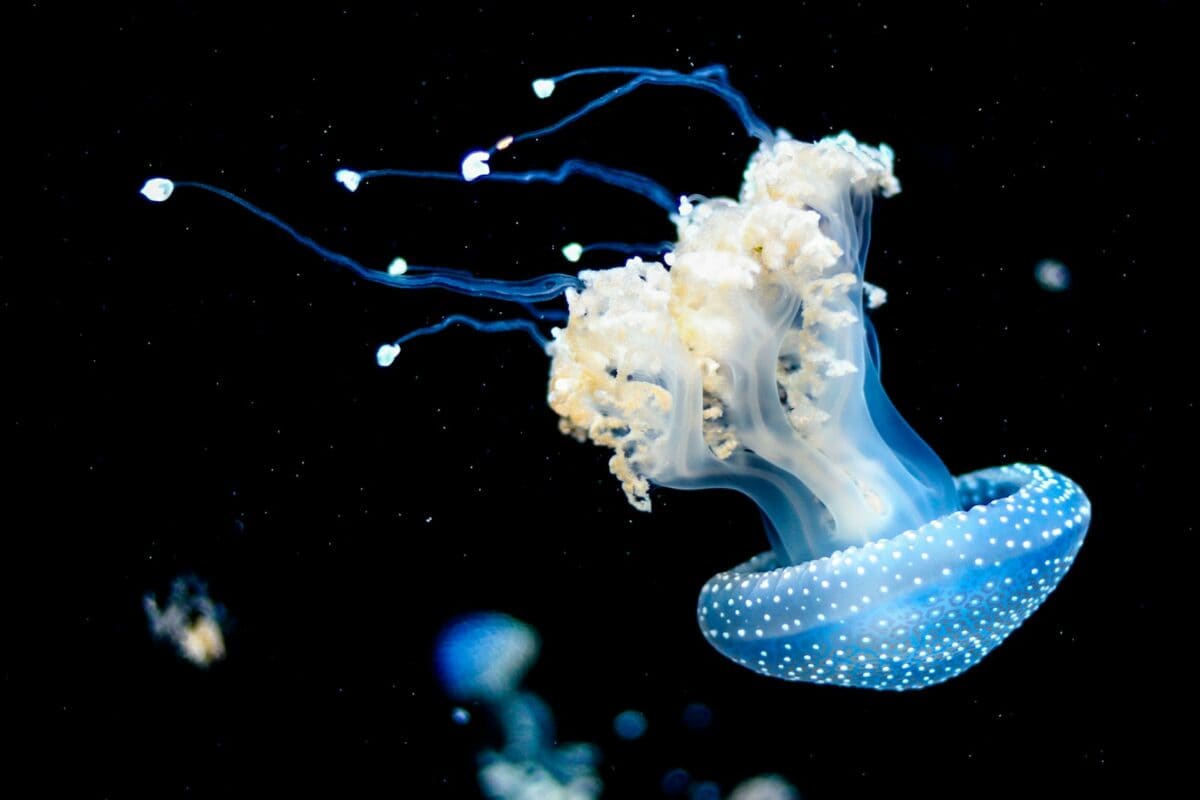
Many jellyfish species possess varying degrees of transparency, with some like the crystal jellyfish (Aequorea victoria) being almost completely see-through. Their transparent bodies consist of 95% water, with a simple organization of tissues rather than complex organs. This transparency serves multiple functions – it makes them nearly invisible to predators while allowing light to penetrate their bodies, which benefits any symbiotic algae they might harbor. The crystal jellyfish is particularly notable not just for its transparency but also for the green fluorescent protein (GFP) it produces, which has revolutionized biomedical research by allowing scientists to track specific proteins within living cells. Other remarkably transparent species include moon jellies (Aurelia aurita) and the delicate comb jellies (Ctenophora), which are not true jellyfish but similarly gelatinous and clear. For creatures that lack sophisticated nervous systems, their transparent nature has evolved into a surprisingly effective survival strategy.
Barreleye Fish: Deep Sea Windows to the Soul
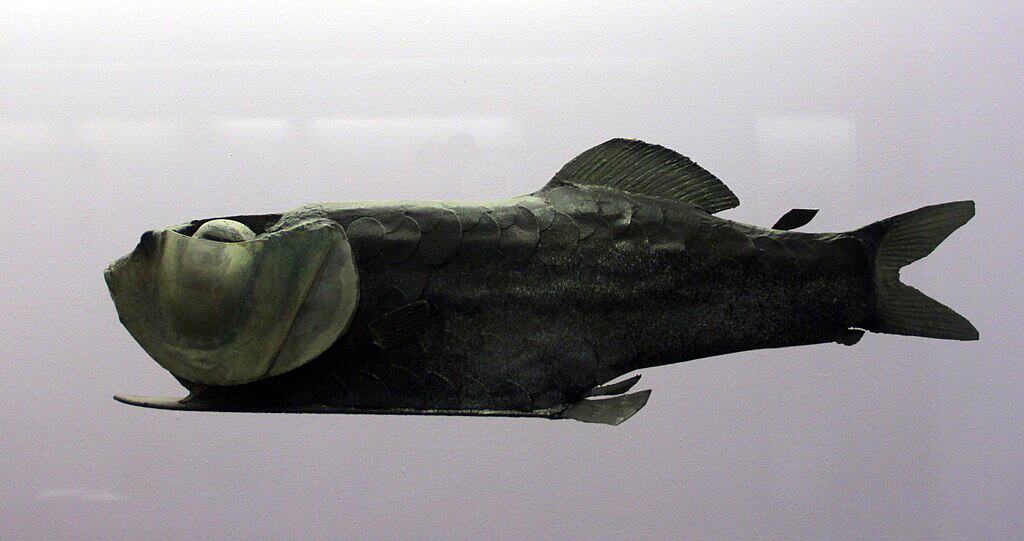
Perhaps one of the most bizarre transparent creatures is the barreleye fish (Macropinna microstoma), which inhabits the deep sea at depths between 600-800 meters. What makes this fish truly extraordinary is its transparent, fluid-filled dome that covers its head, through which its tubular, highly-sensitive eyes are visible. These specialized eyes can rotate within the transparent shield, allowing the fish to look upward for potential prey silhouetted against the faint light from above, or forward to see where it’s swimming. First discovered in 1939, the barreleye’s remarkable adaptation wasn’t fully understood until 2009, when researchers were able to observe living specimens. The transparent head serves as protection for the delicate eyes while maintaining their full range of motion and light sensitivity. This remarkable fish represents one of the most specialized applications of transparency in the animal kingdom – not for camouflage, but for enhancing its sensory capabilities in the deep ocean’s challenging environment.
Glass Squid Transparent Cephalopods

Glass squid belong to the family Cranchiidae, comprising about 60 species of remarkably transparent cephalopods found in oceans worldwide. Unlike their coastal relatives, these deep-water creatures have evolved nearly complete transparency as an adaptation to their open-ocean habitat where there’s nowhere to hide. Their bodies are so clear that only their eyes and some internal organs are visible. To counteract this problem, many glass squid species have developed bioluminescent organs that create counter-illumination – essentially projecting light downward to match the faint sunlight coming from above, eliminating their silhouette when viewed from below. One particularly fascinating species, the cockatoo squid (Taonius pavo), can rapidly change from transparent to opaque when threatened. Glass squid typically remain small, with most species measuring under 10 cm, though the colossal cranch squid can reach 3 meters. Their transparency allows them to inhabit the mesopelagic zone (200-1000 meters deep), sometimes called the ocean’s “twilight zone,” where predators abound but hiding places don’t.
Ghost Shrimp Transparent Burrowers

Ghost shrimp (family Callianassidae) are remarkable crustaceans that combine transparency with a fossorial (burrowing) lifestyle. Their nearly see-through bodies range from pale translucent white to slightly pinkish, allowing observers to see their internal organs functioning in real-time. Unlike many transparent creatures that use their clarity for open-water camouflage, ghost shrimp primarily live in burrows they create in sandy or muddy substrates of coastal waters. Their transparency likely evolved as secondary protection for when they venture outside their burrows. These industrious creatures create elaborate tunnel systems that can extend over a meter deep, significantly impacting their ecosystems through bioturbation – the biological reworking of soils and sediments. Ghost shrimp are also economically significant as popular bait for fishing and as residents in home aquariums, though their burrowing activity can sometimes damage commercial shellfish beds. Their remarkable transparency has made them valuable research subjects, providing scientists with observable models for studying crustacean physiology.
Larvae of Many Species Temporary Transparency

Transparency is a common adaptation among the larval forms of numerous marine species, providing crucial protection during vulnerable developmental stages. Fish larvae, including those of eels, herrings, and many reef species, often possess transparent bodies that make them nearly invisible in the water column. This adaptation extends beyond fish to various invertebrates – the zoea and megalopa stages of crab larvae, the veliger stage of mollusks, and the planktonic larvae of echinoderms all exhibit varying degrees of transparency. This developmental transparency serves multiple purposes: it helps these immature organisms avoid visual predators, allows sunlight to penetrate their bodies (which may benefit development), and requires less energy investment in pigmentation during rapid growth phases. As these creatures mature and adopt their adult lifestyles, most gradually develop pigmentation and opacity, making larval transparency a temporary but critical survival adaptation. This widespread evolutionary convergence across diverse animal groups underscores transparency’s effectiveness as a survival strategy for small, vulnerable organisms in open water environments.
Transparent Flatworms See-Through Planarians

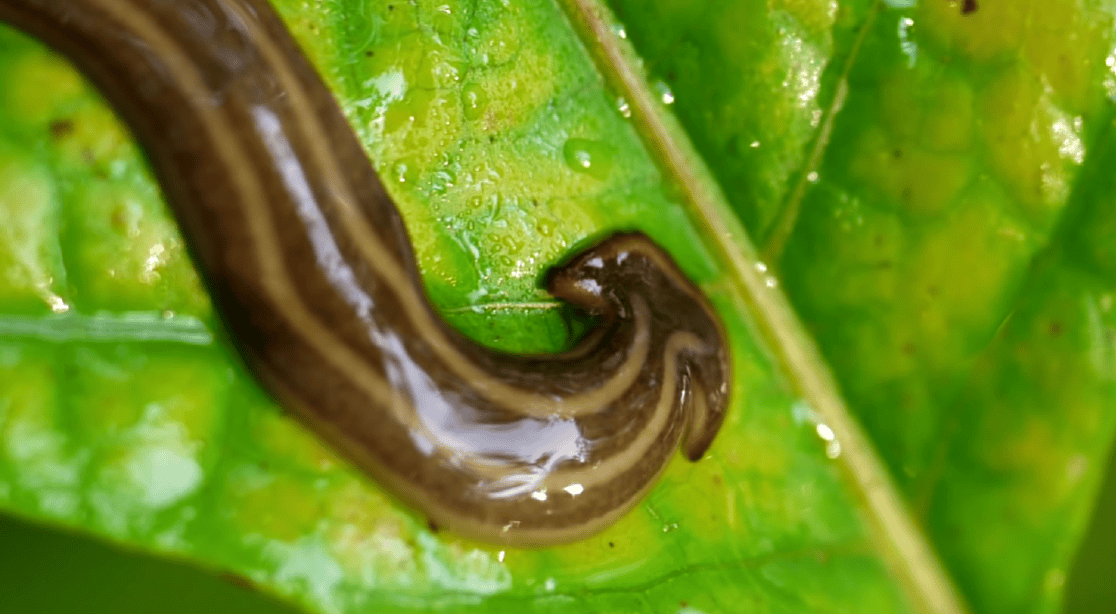
Several species of flatworms, particularly freshwater planarians, have evolved remarkable transparency that makes them valuable research subjects in biology. These simple bilateral animals possess bodies so clear that their internal anatomical features are visible without dissection. Most notably, the digestive system – typically branched throughout their flattened bodies – can be observed processing food in real-time. Beyond their transparency, planarians have attracted scientific attention for their extraordinary regenerative abilities, capable of regrowing entire bodies from small fragments. Their transparent nature allows researchers to directly observe tissue regeneration processes, cell migration, and organ development. While their transparency likely evolved partially as camouflage in freshwater environments, it has made these creatures invaluable to biological research. Species like Schmidtea mediterranea and Dugesia japonica have become model organisms for studying stem cell biology, regeneration mechanisms, and fundamental developmental processes. Their simple yet visible nervous systems also make them useful in neurobiology research.
Sea Angels Transparent Ocean Predators
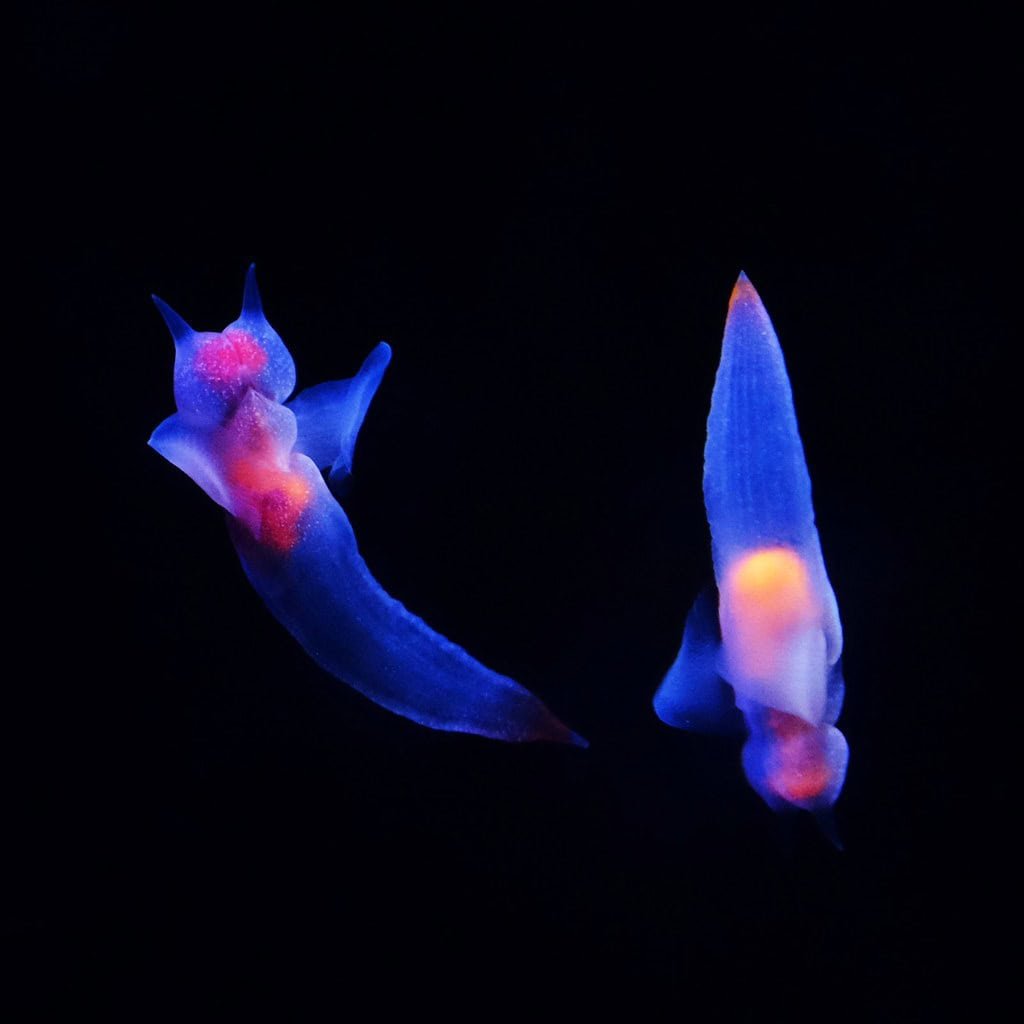
Sea angels (Clione limacina) are gelatinous, transparent mollusks that belong to the group Pteropoda, or “wing-footed” sea snails. Despite their angelic appearance and small size (typically 1-5 cm), these creatures are voracious predators that hunt their cousins, the sea butterflies. Sea angels have shed their shells through evolution, developing instead a transparently clear body that allows them to blend into the open ocean waters where they live. Their transparency is so complete that their internal organs are clearly visible, creating a ghostly appearance as they “fly” through the water using wing-like appendages. These specialized fins beat rapidly at up to 2-3 strokes per second, allowing them to hover and dart with surprising agility. Found primarily in cold Arctic and Antarctic waters, these creatures have developed specialized adaptations including antifreeze proteins that prevent ice crystal formation in their transparent tissues. Their clear bodies serve as perfect camouflage both from predators looking down from above and prey looking up from below – a classic example of transparency evolving as an adaptation to life in the open pelagic zone.
Glass Knifefish The Transparent Amazon Dweller

The glass knifefish (Eigenmannia virescens), native to the Amazon basin, represents one of the rare examples of partial transparency in freshwater vertebrates. While not completely transparent, these fish have translucent skin that reveals portions of their internal anatomy, particularly along their underside and fins. What makes glass knifefish particularly fascinating is their combination of transparency with bioelectrical capabilities – they generate weak electrical fields to navigate, communicate, and locate prey in their murky riverine environments. Their partially transparent bodies may help diffuse their electrical signals more effectively. Growing to about 30 cm in length, these elongated fish move using an undulating anal fin that extends along most of their body length, creating the impression of a knife cutting through water. Unlike many transparent creatures that live in open water, glass knifefish have adapted their partial transparency to life in complex, structured environments with low visibility, demonstrating how transparency can evolve under different selective pressures. Their unique combination of see-through tissues and electrical generation makes them valuable research subjects in both biology and bioengineering.
Transparent Sea Cucumbers Invisible Echinoderms

Among the most beautiful and delicate transparent creatures are certain species of deep-sea and pelagic sea cucumbers, particularly those from the family Pelagothuriidae. Unlike their bottom-dwelling relatives that are opaque and often brightly colored, these floating sea cucumbers have evolved nearly complete transparency as an adaptation to life in the open ocean. Their gelatinous, clear bodies can reach up to 25 cm in length, with modified tentacles forming a web-like structure that resembles an umbrella or parachute, which they use for locomotion and feeding. Their digestive systems are often visible as star-shaped patterns within their clear bodies. This transparency provides excellent camouflage in the midwater realm where they filter-feed on marine snow – particles of organic matter drifting down from surface waters. These transparent echinoderms represent a fascinating evolutionary branch from primarily benthic ancestors to specialized pelagic forms, showcasing how transparency can evolve as part of a larger suite of adaptations to new ecological niches. Unlike most sea cucumbers, these transparent species have lost the ability to eject sticky defensive threads (called Cuvierian tubules), relying entirely on their invisibility for protection.
Chameleon Shrimp Masters of Transparency Control

Chameleon shrimp (Hippolyte varians) demonstrate one of the most sophisticated forms of adaptive transparency in the animal kingdom. These small crustaceans, typically measuring just 2-3 cm, can adjust their transparency and coloration in response to their surroundings. When residing among transparent or lightly colored seaweeds, these remarkable shrimp can maintain nearly complete transparency, with only faint outlines of their internal organs visible. However, when moving to darker or more colorful environments, they can produce pigmentation to match their new surroundings over a period of days or weeks. This controlled transparency relies on specialized chromatophores (pigment-containing cells) that can expand or contract to regulate color and opacity. Found primarily in European coastal waters, these shrimp combine transparency with color-changing abilities to achieve exceptional camouflage. What makes chameleon shrimp particularly interesting is that their transparency is not fixed but represents one end of a spectrum of camouflage options they can employ, demonstrating how transparency can evolve as part of a more complex adaptive strategy rather than as a single fixed trait.
The Evolutionary Significance of Transparency in Nature
The evolution of transparency across diverse animal groups represents one of nature’s most fascinating examples of convergent evolution – where unrelated organisms develop similar traits in response to similar environmental pressures. Transparency has independently evolved in marine, freshwater, and even some terrestrial environments, demonstrating its effectiveness as a survival strategy. For most transparent creatures, the primary advantage is camouflage, particularly in open water environments where there’s nowhere to hide. However, transparency serves additional functions beyond concealment, including thermoregulation (by allowing sunlight to penetrate tissues), energy conservation (requiring less investment in pigmentation), and in some cases, enhancing sensory capabilities (as with the barreleye fish’s transparent head). The physical challenges of achieving transparency are considerable – organisms must minimize light scattering within tissues, arrange cells and proteins in specific ways, and solve problems like having non-transparent components such as digestive contents. Despite these challenges, transparency has evolved repeatedly across the tree of life, from simple invertebrates to complex vertebrates, highlighting its remarkable adaptive value. By studying these transparent creatures, scientists gain insights not just into evolutionary biology but also into biomechanics, optics, materials science, and potentially, applications in fields ranging from medicine to engineering.
Conclusion:

Transparent creatures represent one of nature’s most elegant solutions to the challenges of survival in environments where hiding places are scarce. From the depths of the ocean to freshwater systems and rainforest canopies, transparency has evolved independently across remarkably diverse animal groups, demonstrating its effectiveness as an adaptive strategy. These living glass sculptures – from delicate glass frogs to enigmatic deep-sea fish with transparent heads – offer scientists unique opportunities to study internal anatomy and physiological processes without invasive procedures. Beyond their scientific value, these transparent animals remind us of nature’s boundless capacity for innovation and adaptation. As we continue to explore Earth’s remaining frontiers, particularly the deep oceans, we will likely discover even more remarkable transparent creatures, each telling its own evolutionary story of survival through invisibility.
Worried about unexpected vet bills?
Pet insurance can cover thousands in unexpected vet costs. Get a free quote from Lemonade in under 2 minutes.
Get My Free Quote →Sponsored · Opens Lemonade.com

As a little kid, I fell in love with nature, wildlife, and animals. Living in the USA, South Africa, Italy, China and Germany gave me the opportunity to discover the world's Wildlife. My favorite animals are Mountain Gorillas, Siberian Tigers, and Great White Sharks.
I'm a certified PADI Open Water Diver, went to Everest Base Camp and Trekked Gorillas in Uganda. I hold a Master of Science in Economics and Finance.
Please send any feedback to feedback@animalsaroundtheglobe.com
- 15 Places in the U.S. That Feel Like Another Planet - June 5, 2026
- The Prehistoric Slowness of the Crocodile - June 5, 2026
- 15 Snake Species That Make Surprisingly Good Pets - June 5, 2026