


Throughout history, humans have created fantastic beasts and legendary monsters to explain the unexplainable, entertain audiences, or make sense of the natural world. While many mythical creatures seem purely imaginative, numerous legendary beings have roots in actual animals that our ancestors encountered. From misinterpreted fossils to exaggerated traveler tales, real-life animals have inspired some of our most enduring mythological creatures. This fascinating intersection of zoology and folklore reveals how human imagination transforms ordinary creatures into extraordinary legends.
14. Narwhals The Real-Life Unicorns of the Sea

The majestic unicorn, with its single spiraling horn, has captivated human imagination for centuries. However, this mythical creature likely drew inspiration from a very real marine mammal: the narwhal. These Arctic-dwelling whales are known for the males’ distinctive spiral tusk, which is actually an elongated canine tooth that can grow up to 10 feet long. During medieval times, these tusks occasionally washed ashore in Europe or were brought back by traders, becoming highly valuable “unicorn horns.” Vikings and traders from northern regions knew the true source of these spiraling horns, but would often sell them to southern Europeans as unicorn appendages, fetching prices worth many times their weight in gold. The narwhal’s mysterious nature and rarely-seen habitat in frigid northern waters only added to the mystique, allowing the unicorn legend to flourish for centuries before scientific knowledge caught up.
13. Gorillas and Orangutans The Origins of Wild Men

Tales of hairy wild men living in remote forests exist across cultures worldwide. From the Yeti of the Himalayas to the Sasquatch of North America, these legends share remarkable similarities. The most likely inspiration? Great apes like gorillas and orangutans. When European explorers first encountered gorillas in Africa during the 19th century, they brought back terrifying accounts of aggressive, human-like beasts. Similarly, orangutans (whose name literally means “forest person” in Malay) contributed to Asian legends of wild forest men. Early travelers’ descriptions often exaggerated these animals’ size, aggression, and human-like qualities. The parallel evolution of these “wild man” myths across continents suggests that when humans encounter great apes—our closest genetic relatives—we recognize something unsettlingly similar to ourselves, yet fundamentally different, providing fertile ground for mythmaking.
12. Manatees and Dugongs The Mermaids of Reality

The mermaid—half-woman, half-fish—appears in folklore worldwide, but these enchanting creatures likely originated from mariners’ sightings of manatees and dugongs. These marine mammals, collectively known as sirenians (named after the sirens of Greek mythology), possess several features that could be misconstrued as human-like when glimpsed briefly from a ship’s deck. They nurse their young at breast-like teats, have a somewhat human face when seen head-on, and can manipulate objects with their flippers. Christopher Columbus himself recorded seeing “mermaids” during his voyages, describing them as “not half as beautiful as they are painted.” This honest assessment makes perfect sense when you realize he was likely observing manatees. After months at sea, lonely sailors with poor visibility during storms or at dusk could easily transform these gentle sea creatures into the beautiful mermaids of legend, especially when combined with the power of wishful thinking.
11. Giant Squid Krakens of the Deep

Few sea monsters have terrified sailors more than the kraken, a colossal tentacled beast said to drag entire ships to the ocean floor. This legendary creature finds its basis in the giant squid (Architeuthis dux) and the even larger colossal squid (Mesonychoteuthis hamiltoni). These extraordinary cephalopods live in the ocean’s depths, with giant squid reaching lengths of up to 43 feet and colossal squid potentially growing even larger. For centuries, their existence was only known through remains washed ashore or found in sperm whale stomachs. Sailors who spotted tentacles or body parts naturally assumed the complete animal was exponentially larger. The first photographs of a living giant squid weren’t captured until 2004, and a live specimen wasn’t filmed until 2012, meaning that for most of human history, these creatures existed only as fragmentary evidence easily embellished into the terrifying kraken. Their actual hunting techniques—grabbing prey with hooked tentacles and pulling it toward their beak—mirror the kraken’s legendary ship-sinking behavior, just on a smaller scale.
10. Rhinoceros Inspiring the Mighty Unicorn
While narwhals contributed to unicorn mythology through their tusks, the rhinoceros played an equally important role in shaping the unicorn legend, particularly in eastern cultures. When Marco Polo encountered Java rhinoceroses during his travels, he identified them as unicorns but was disappointed by their appearance, noting they were “nothing like what we describe.” Early Greek accounts of “monoceros” (one-horned beasts) from India likely referred to rhinos rather than the elegant horse-like creatures of later European imagination. The Indian rhinoceros, with its single horn and armored-looking plates, particularly resembles some ancient unicorn descriptions. As tales traveled west along trade routes, these descriptions merged with other influences, gradually transforming the stocky, gray rhinoceros into the slender, white, horse-like unicorn of medieval European imagination. The rhinoceros’s renowned strength and aggression also parallel the unicorn’s legendary power in many mythological accounts.
9. Komodo Dragons The Real Dragons

Dragons appear in mythologies worldwide, but few living creatures embody draconic qualities as clearly as the Komodo dragon. These enormous lizards can grow up to 10 feet long and weigh over 300 pounds, making them the largest living lizards on Earth. Native to just a few Indonesian islands, Komodo dragons possess numerous traits reminiscent of mythical dragons: powerful jaws, a fearsome appearance, predatory nature, and even “toxic” abilities. Though they don’t breathe fire, Komodo dragons’ mouths harbor numerous bacteria that can cause fatal infections in bite victims. Recent research has also confirmed they possess venom glands, delivering toxins that prevent blood clotting and induce shock. Local folklore on Komodo Island includes tales of dragons much larger than those alive today, suggesting that cultural memory of even larger monitor lizards might have contributed to dragon myths. Their prehistoric appearance, reminiscent of dinosaurs, further reinforces the connection between these impressive reptiles and the dragons of legend.
8. Prehistoric Elephant Skulls The Cyclops Connection

The fearsome Cyclops of Greek mythology—giant one-eyed creatures—may have originated from something as simple as misinterpreted fossils. Specifically, paleontologist Othenio Abel proposed in 1914 that ancient Greeks were likely finding prehistoric elephant skulls, particularly those of dwarf elephants that once inhabited Mediterranean islands. The nasal cavity of an elephant skull is remarkably large and positioned in the center of the face, where a single eye would be on a human. Without knowledge of elephant anatomy, ancient Greeks encountering these massive skulls might reasonably conclude they belonged to giant humanoid creatures with a single central eye socket. The size difference is significant—dwarf elephant skulls could be mistaken for giants by human standards, yet were much smaller than their mainland relatives. This theory gains credibility considering that many Cyclops myths originated in areas where dwarf elephant fossils are common, particularly Sicily and other Greek islands, creating a compelling link between paleontological findings and mythological creatures.
7. Crocodiles The Basis for Dragon Legends
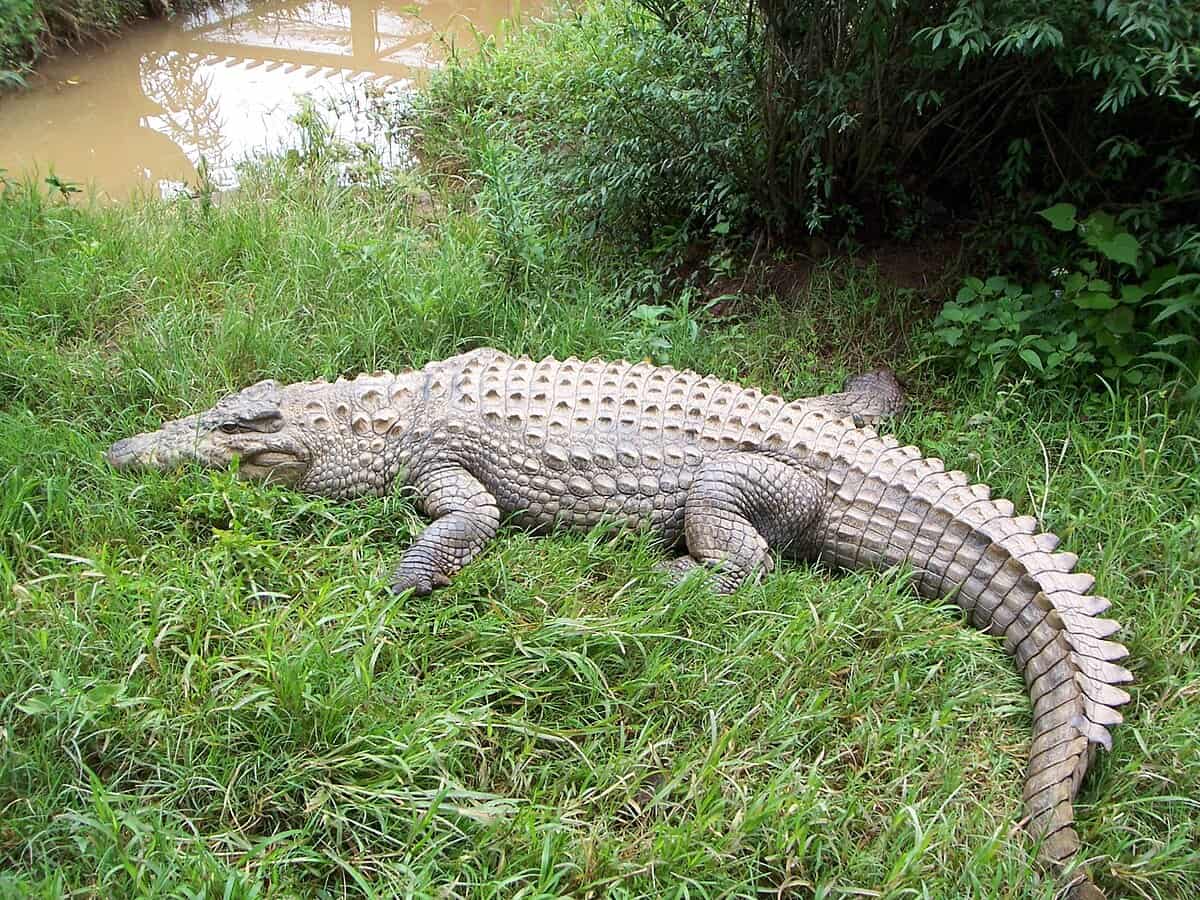
Crocodiles have contributed significantly to dragon mythologies worldwide, particularly in Egypt, Africa, and parts of Asia where these formidable reptiles are prevalent. With armored skin, powerful jaws, and an ancient lineage dating back to the dinosaur era, crocodiles embody many draconic characteristics. The Nile crocodile, which can grow over 20 feet long and weigh more than a ton, inspired numerous Egyptian deities, including the crocodile-headed god Sobek. In Chinese culture, where dragons are often associated with water, the connection to crocodiles becomes even more apparent. These predators’ ability to remain submerged for extended periods before explosively ambushing prey mirrors descriptions of dragons lurking in lakes and rivers. Their fearsome reputation for consuming humans, combined with their prehistoric appearance and predatory nature, made crocodiles natural templates for dragon legends in regions where they were known. The saltwater crocodile’s territorial displays—rising up on legs, hissing, and producing vocal sounds—could easily be interpreted as the beginning of a fire-breathing display when embellished through storytelling.
6. Griffon Vultures The Origins of the Griffin

The griffin—a majestic creature with the body of a lion and the head and wings of an eagle—stands among mythology’s most recognizable hybrid beasts. This legendary animal likely originated from observations of the griffon vulture (Gyps fulvus), a massive bird of prey native to Eurasia and North Africa. Beyond the obvious name connection, these vultures nest in mountainous regions where gold deposits are often found, paralleling ancient accounts of griffins guarding gold mines. The connection strengthens further when considering that ancient travelers along the Silk Road frequently encountered Protoceratops fossils in the Gobi Desert. These dinosaur remains feature a beaked face and four-legged body that, when partially exposed, resemble a creature with an eagle’s head and a lion’s body. The griffon vulture’s imposing size (with a wingspan up to 9 feet), powerful beak, and habit of stripping carcasses to the bone provided the avian characteristics, while the partially exposed dinosaur fossils likely contributed the mammalian body elements, creating the perfect conditions for the griffin myth to develop in ancient travelers’ accounts.
5. Oarfish The Sea Serpents of Reality

Sea serpent stories have terrified and fascinated sailors for centuries, and the oarfish (family Regalecidae) provides the most convincing living candidate for these legends. These remarkable deep-sea fish can grow up to 36 feet long with ribbon-like bodies, dorsal fins running their entire length, and bright red crests on their heads. They typically inhabit depths between 660 and 3,300 feet, but occasionally surface when dying or disoriented, creating rare but dramatic encounters. When observed swimming near the surface, their undulating, serpentine movement and incredible length perfectly match descriptions of sea serpents in maritime folklore. Japanese mythology specifically connects oarfish to the “Messenger from the Sea God’s Palace,” as they sometimes wash ashore before tsunamis, possibly due to sensitivity to seismic activity. The oarfish’s silvery, scale-less skin adds to their otherworldly appearance, and their habit of swimming vertically with their heads near the surface could explain accounts of sea monsters “standing” in the water. While harmless to humans, their bizarre appearance and rarity have ensured their place as the likely inspiration for countless sea serpent tales.
4. Hyenas Behind the Shape-Shifters

Across Africa and parts of the Middle East, hyenas have long been associated with dark magic, shape-shifting, and witchcraft. This connection stems from several unusual characteristics of these misunderstood predators. Female spotted hyenas possess enlarged external genitalia that closely resemble male organs, making sex determination difficult and generating beliefs about hyenas changing gender. Their eerie, human-like “laughing” vocalizations, nocturnal habits, and ability to crush and consume bones completely added to their supernatural reputation. In Ethiopian folklore, blacksmiths were believed to transform into hyenas at night, possibly because both break down solid materials (metal and bone) using specialized tools. The hyena’s hunched posture and distinctive silhouette, visible at dusk and dawn, also reinforced the perception of a creature caught between forms. Their intelligence and complex social structures further suggested human-like qualities to ancient observers. In many regional mythologies, witches or sorcerers were thought to ride hyenas or transform into them to perform evil deeds, making these animals pivotal inspirations for werewolf-like transformation legends outside of the European wolf-based tradition.
3. Deformed Rabbits The Jackalope Legend

The jackalope—a rabbit sporting antlers—represents one of North America’s most beloved cryptids, appearing on postcards and in tall tales throughout the western United States. While clearly a fabrication, this mythical creature has roots in a very real condition: rabbit papillomatosis. This viral disease causes horn-like growths on rabbits’ heads and bodies, creating an appearance strikingly similar to the legendary jackalope. Native Americans likely observed these infected rabbits long before European settlers arrived, potentially incorporating them into their own folklore. In the 1930s, Wyoming taxidermist Douglas Herrick popularized the modern jackalope by mounting deer antlers on jackrabbit specimens, creating tourist souvenirs that spread the legend nationwide. Similar horned rabbit myths exist globally, including the German “rasselbock” and Swedish “skvader,” suggesting that rabbits with this virus-induced condition have inspired similar legends across cultures. The jackalope myth expanded over time to include details about their rarity, ability to mimic human voices, and producing milk that has medicinal properties—embellishments that transformed a simple infected rabbit into a full-fledged cryptid with its own rich folklore.
2. Okapi The African Unicorn
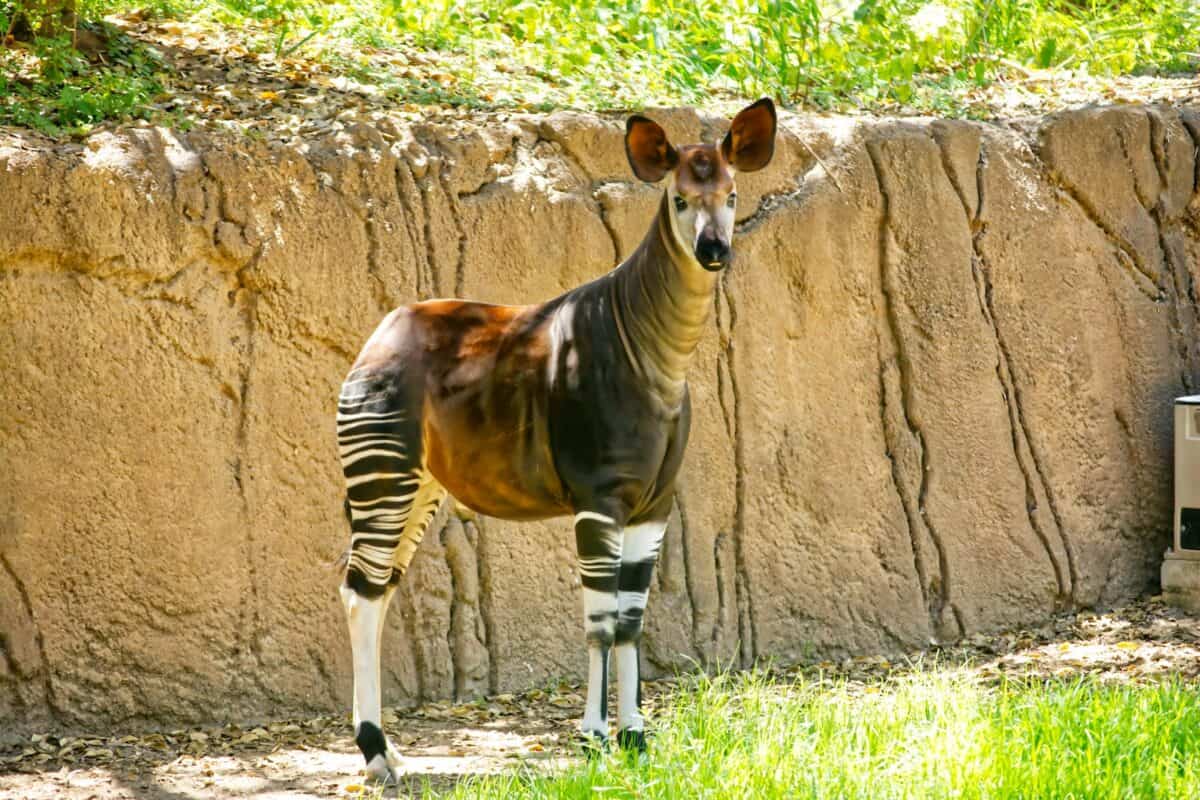
The okapi, sometimes called the “African unicorn,” remained unknown to Western science until 1901, despite being familiar to local inhabitants of the Congo rainforest. This remarkable animal, with zebra-striped hindquarters and a face resembling a giraffe, demonstrates how a real creature can seem mythical when descriptions reach those who’ve never seen it. Before its scientific documentation, European explorers heard indigenous accounts of a “forest horse” or “African unicorn” but dismissed them as folklore. The okapi’s discovery shocked zoologists, proving that large mammals could remain hidden from scientific classification into the 20th century. Male okapis possess short, skin-covered horns called ossicones, potentially contributing to unicorn-like descriptions in local legends. Their secretive, solitary nature and preference for dense rainforest habitats kept them hidden from outside observation for centuries. The okapi serves as a humbling reminder that many cryptids and “mythical” creatures described in indigenous traditions may have bases in biological reality, even if they’ve eluded scientific confirmation. Their late discovery has made them symbols for cryptozoologists arguing that other legendary creatures might likewise await verification.
1. Octopuses The Origin of the Multi-Armed Scylla
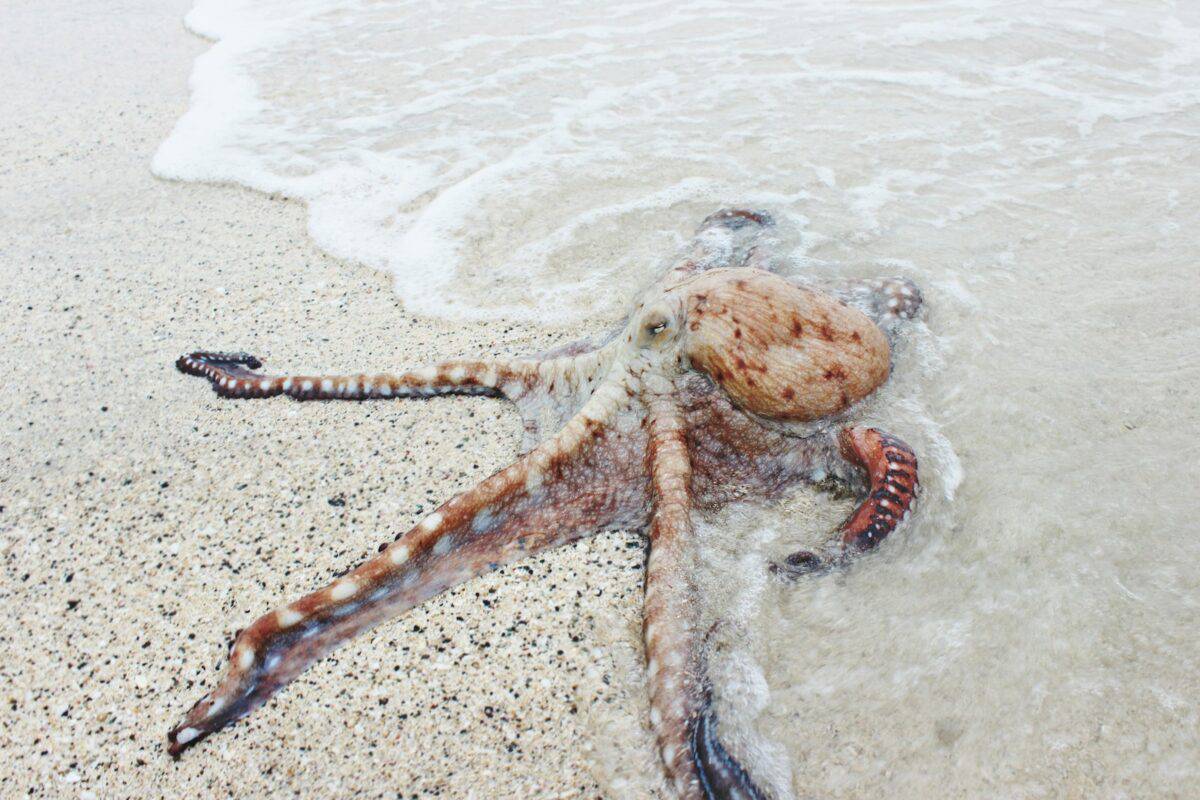
In Homer’s Odyssey, Odysseus must navigate past Scylla, a terrifying six-headed monster with twelve feet that snatches sailors from passing ships. This legendary creature likely drew inspiration from the octopus, whose intelligence, multiple limbs, and ability to ambush prey parallel Scylla’s described behavior. Ancient Mediterranean sailors regularly encountered octopuses, observing their remarkable problem-solving abilities, camouflage skills, and predatory techniques. The common octopus (Octopus vulgaris) indigenous to the Mediterranean can grow quite large, with arms spanning up to 3 feet, and has been known to grab items from boats and even attempt to pull small vessels underwater when hooked. Greek mythology places Scylla in the Strait of Messina between Italy and Sicily, an area known for dangerous currents and abundant marine life, including octopuses. The creature’s multiple heads correspond to the octopus’s arms rising from the water, while her fish-like lower parts align with the octopus’s submerged body. The description of Scylla plucking sailors from ships mirrors the swift, grabbing motion octopuses use when hunting, making these intelligent cephalopods the likely inspiration behind this enduring mythological monster.
Conclusion:

The myths and monsters that populate our cultural histories are not mere flights of fantasy—they are reflections of how humans have long interpreted the natural world through the lens of curiosity, fear, and imagination. From the deep-sea oarfish mistaken for sea serpents to narwhal tusks passed off as unicorn horns, real animals have continuously inspired some of our most fantastical legends. Whether through misidentified fossils, misunderstood anatomy, or exaggerated tales from travelers and sailors, the creatures of our world have been transformed into icons of myth. This enduring intersection between zoology and folklore not only explains the roots of many legendary beasts but also highlights the boundless creativity of the human mind. As science continues to uncover the facts behind the fiction, these stories remain a testament to our ancestors’ attempts to make sense of the unknown—revealing that the line between myth and reality is often thinner than we think.

As a little kid, I fell in love with nature, wildlife, and animals. Living in the USA, South Africa, Italy, China and Germany gave me the opportunity to discover the world's Wildlife. My favorite animals are Mountain Gorillas, Siberian Tigers, and Great White Sharks.
I'm a certified PADI Open Water Diver, went to Everest Base Camp and Trekked Gorillas in Uganda. I hold a Master of Science in Economics and Finance.
Please send any feedback to feedback@animalsaroundtheglobe.com
- 15 Loudest Animals on Earth - June 27, 2026
- How the Gulf of Mexico Became a Hotspot for Hammerhead Sharks - June 27, 2026
- 12 U.S. Parks With Incredible Wildlife - June 27, 2026