


Madagascar, the fourth-largest island in the world, sits off the southeast coast of Africa and is a biodiversity hotspot unlike any other. Separated from mainland Africa approximately 165 million years ago, this island nation has become an evolutionary laboratory, producing some of the most unique and specialized species on the planet. An astonishing 90% of Madagascar’s wildlife exists nowhere else on Earth, making it a treasure trove of endemic species. This article explores 17 remarkable creatures that call Madagascar their exclusive home, highlighting the island’s extraordinary evolutionary history and the urgent need for conservation efforts to protect these irreplaceable species.
The Evolutionary Marvel of Madagascar
Madagascar’s isolation has created perfect conditions for speciation—the process by which new biological species arise. After breaking away from the ancient supercontinent Gondwana, Madagascar became a sanctuary where plants and animals evolved in splendid isolation. This geographical separation, combined with the island’s diverse habitats ranging from rainforests to spiny deserts, has resulted in an evolutionary explosion of unique life forms. Scientists estimate that Madagascar has been isolated for at least 88 million years, allowing species to diverge dramatically from their continental ancestors. Today, the island hosts over 11,000 endemic plant species, 80% of its animal species are found nowhere else, and new discoveries continue to be made annually. This extraordinary level of endemism makes Madagascar one of the world’s top conservation priorities, as these species literally have nowhere else to go if their habitats are destroyed.
Lemurs Madagascar’s Primate Ambassadors
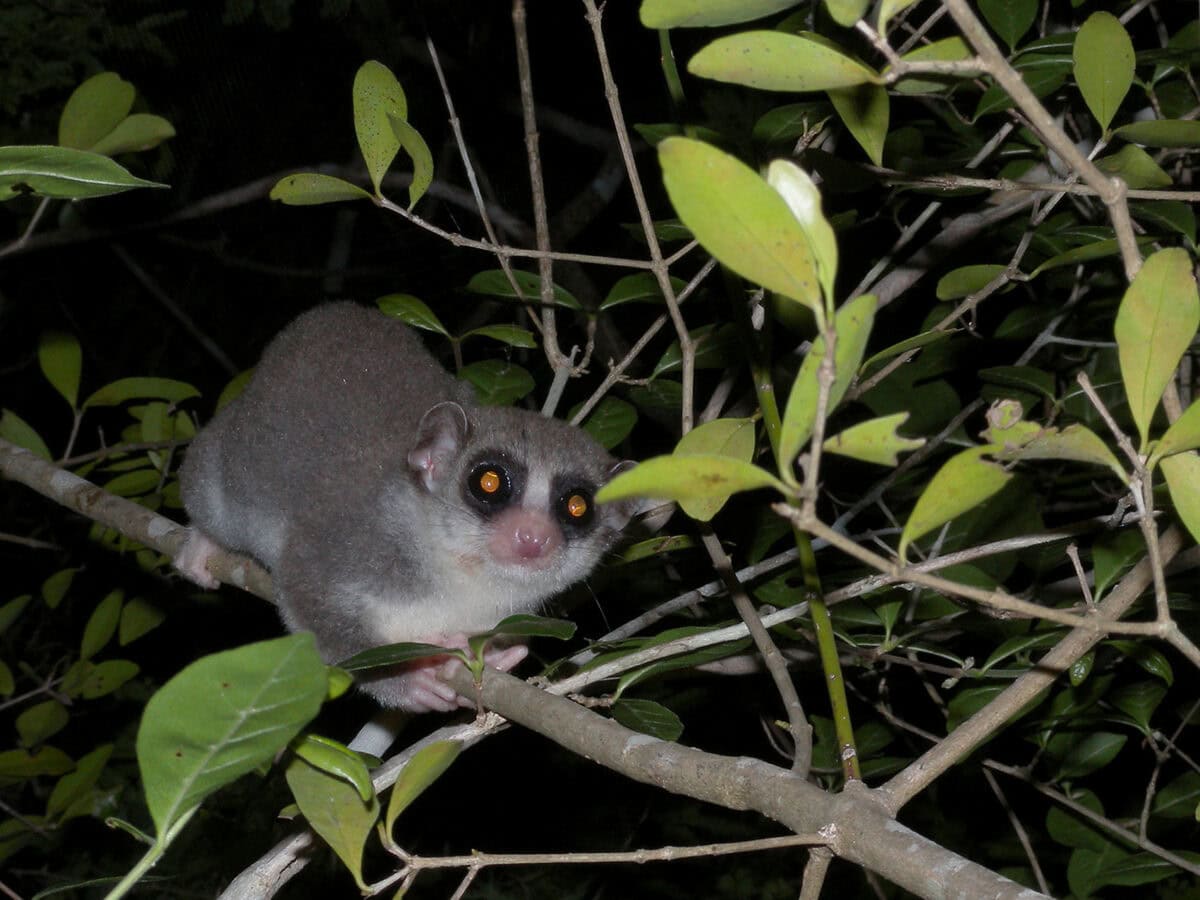
Perhaps no animals are more synonymous with Madagascar than lemurs, primates that have evolved into more than 100 different species on the island. These charismatic mammals arrived in Madagascar approximately 65 million years ago, likely floating on vegetation rafts from Africa, and have since diversified to fill ecological niches that would be occupied by monkeys elsewhere. From the tiny Madame Berthe’s mouse lemur—weighing just 30 grams and considered the world’s smallest primate—to the indri with its haunting calls that echo through the forests, lemurs showcase remarkable adaptations. The ring-tailed lemur, with its distinctive black and white striped tail, has become an iconic symbol of Madagascar. Meanwhile, the aye-aye, with its elongated middle finger used to extract grubs from wood, demonstrates how specialized these primates have become. Sadly, over 90% of lemur species are threatened with extinction due to habitat loss and hunting, making them the most endangered group of mammals on Earth.
The Fossa Madagascar’s Top Predator
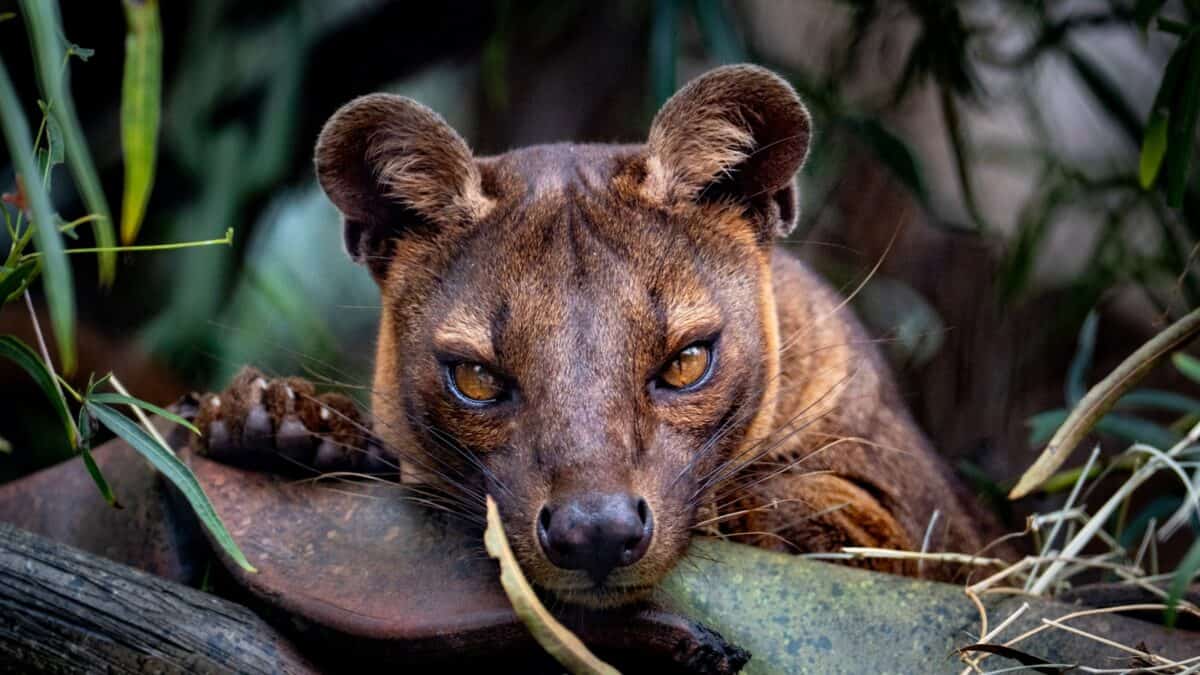
The fossa (Cryptoprocta ferox) stands as Madagascar’s largest native carnivore and top predator, though it remains relatively unknown to the world. This elusive mammal resembles a mixture between a cat, mongoose, and cougar, weighing up to 26 pounds and measuring up to six feet from nose to tail tip. Despite its catlike appearance, the fossa actually belongs to the Eupleridae family, endemic to Madagascar. As an apex predator, it has evolved remarkable adaptations, including semi-retractable claws, flexible ankles that allow it to climb down trees headfirst, and extraordinarily keen hunting senses. Fossas are primarily lemur specialists, capable of pursuing their prey through the forest canopy with impressive agility. Their mysterious nature extends to their reproduction, with females developing temporary masculinization during development. With fewer than 2,500 individuals estimated to remain in the wild, the fossa faces significant conservation challenges due to habitat fragmentation and conflict with humans who sometimes perceive them as threats to livestock.
Tomato Frogs Living Jewels of the Forest Floor

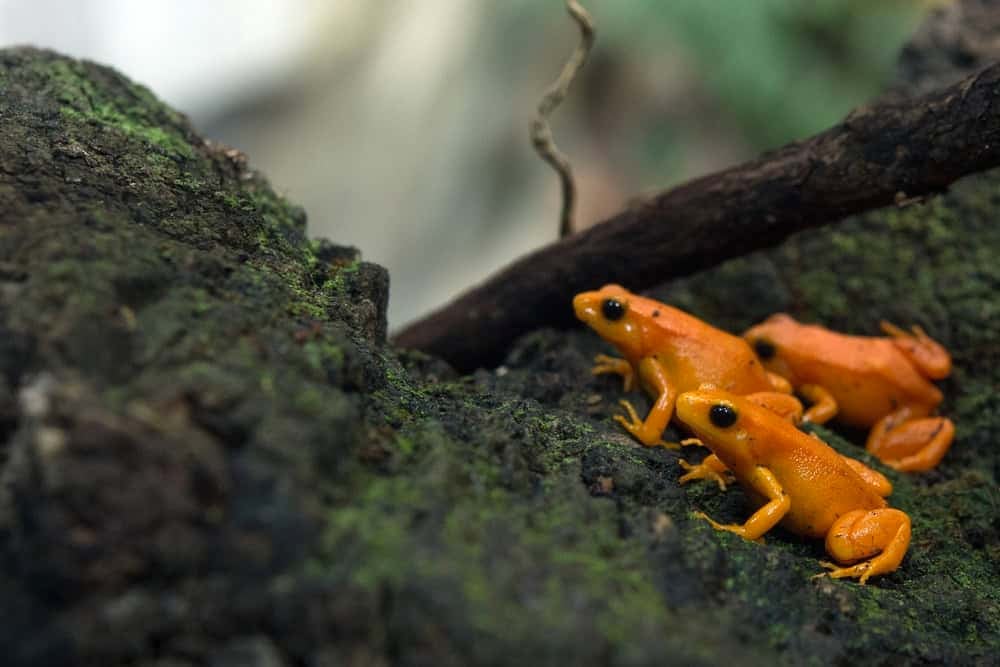
The tomato frog (Dyscophus antongilii) gets its name from its brilliant red-orange coloration that resembles a ripe tomato. Native to the northeastern rainforests of Madagascar, these amphibians grow to about 3.5 inches in length, with females significantly larger and more vibrantly colored than males. When threatened, tomato frogs secrete a thick, sticky white substance from their skin that irritates the eyes and mouths of predators and can cause allergic reactions in humans. This defensive mechanism, combined with their bright aposematic coloration, warns potential predators of their unpalatable nature. Tomato frogs breed during the rainy season in shallow pools, with females laying clutches of 1,000-1,500 eggs that hatch within 36 hours. Though currently listed as Near Threatened by the IUCN, they face ongoing challenges from habitat destruction, collection for the exotic pet trade, and the potential impacts of climate change on their sensitive breeding requirements. Conservation efforts focus on habitat protection and captive breeding programs to ensure these living jewels continue to grace Madagascar’s forest floors.
Panther Chameleon Master of Color Change

The panther chameleon (Furcifer pardalis) represents one of Madagascar’s most spectacular reptiles, renowned for its extraordinary ability to change colors. These medium-sized chameleons reach lengths of 17-20 inches and display some of the most vibrant color patterns in the reptile world. Males are particularly colorful, with different regional variants exhibiting distinct color schemes—those from Nosy Be show brilliant blues, while Ambilobe specimens display stunning reds, oranges, and greens. Unlike the common misconception that chameleons change color to match their surroundings, panther chameleons primarily change colors to regulate body temperature, communicate with other chameleons, and express emotional states like stress or aggression. Their remarkable color-changing ability comes from specialized cells called chromatophores that contain pigments and light-reflecting crystals. Panther chameleons possess other impressive adaptations, including independently movable eyes, zygodactylous feet (with toes grouped in opposable pairs), and their signature ballistic tongues that can extend to twice their body length in just 0.07 seconds. Despite their popularity in the exotic pet trade, wild populations face significant threats from habitat destruction and over-collection, highlighting the delicate balance between appreciation and conservation of these magnificent creatures.
Madagascar Hissing Cockroach Gentle Giants

The Madagascar hissing cockroach (Gromphadorhina portentosa) might not win beauty contests, but these impressive insects possess fascinating adaptations that have made them both evolutionary success stories and surprisingly popular pets. Growing up to three inches long, they rank among the world’s largest cockroach species and are distinguished by their wingless, oval bodies and glossy brown exoskeletons. Males feature pronounced horns on their thorax used in competitive pushing contests for mating rights. Their signature hissing sound, produced by forcing air through specialized breathing pores called spiracles, serves multiple purposes—from mating calls to deterring predators. Unlike many cockroach species considered pests, hissing cockroaches are forest floor decomposers that play a vital ecological role in Madagascar’s eastern rainforests. They’re exceptional climbers, capable of scaling smooth vertical surfaces and navigating forest understory with ease. These cockroaches are also unusual among insects for their social behaviors, living in family groups with distinct hierarchies and exhibiting parental care, with females giving birth to live young rather than laying eggs. Their docile nature, long lifespan (2-5 years), and ease of care have made them popular in educational settings, though this has raised concerns about potential invasive risks if released outside their native range.
Satanic Leaf-Tailed Gecko Master of Disguise

The satanic leaf-tailed gecko (Uroplatus phantasticus) represents one of nature’s most remarkable examples of camouflage. This small reptile, typically measuring just 2.5-3.5 inches in length, has evolved to mimic dead leaves with extraordinary precision. Its flattened body features irregular edges that resemble a decaying leaf, complete with apparent veins, discoloration patterns, and even what appear to be insect bite marks—all of which are actually part of the gecko’s skin pattern. The gecko’s name derives from its somewhat demonic appearance, with red eyes and spiny projections that can resemble small horns. When threatened, it opens its mouth wide to display a bright red interior, hisses loudly, and may raise its tail to appear larger to potential predators. Satanic leaf-tailed geckos are nocturnal hunters, emerging at night to ambush insects with lightning-fast strikes. Their specialized toe pads, covered in microscopic hair-like structures called setae, allow them to cling to virtually any surface, even upside-down on smooth leaves. They’re primarily found in Madagascar’s eastern rainforests, where they face significant threats from deforestation and collection for the exotic pet trade. Conservation efforts focus on habitat protection and sustainable management practices to ensure these evolutionary marvels continue to survive in their native environment.
Madagascar Pochard The World’s Rarest Duck
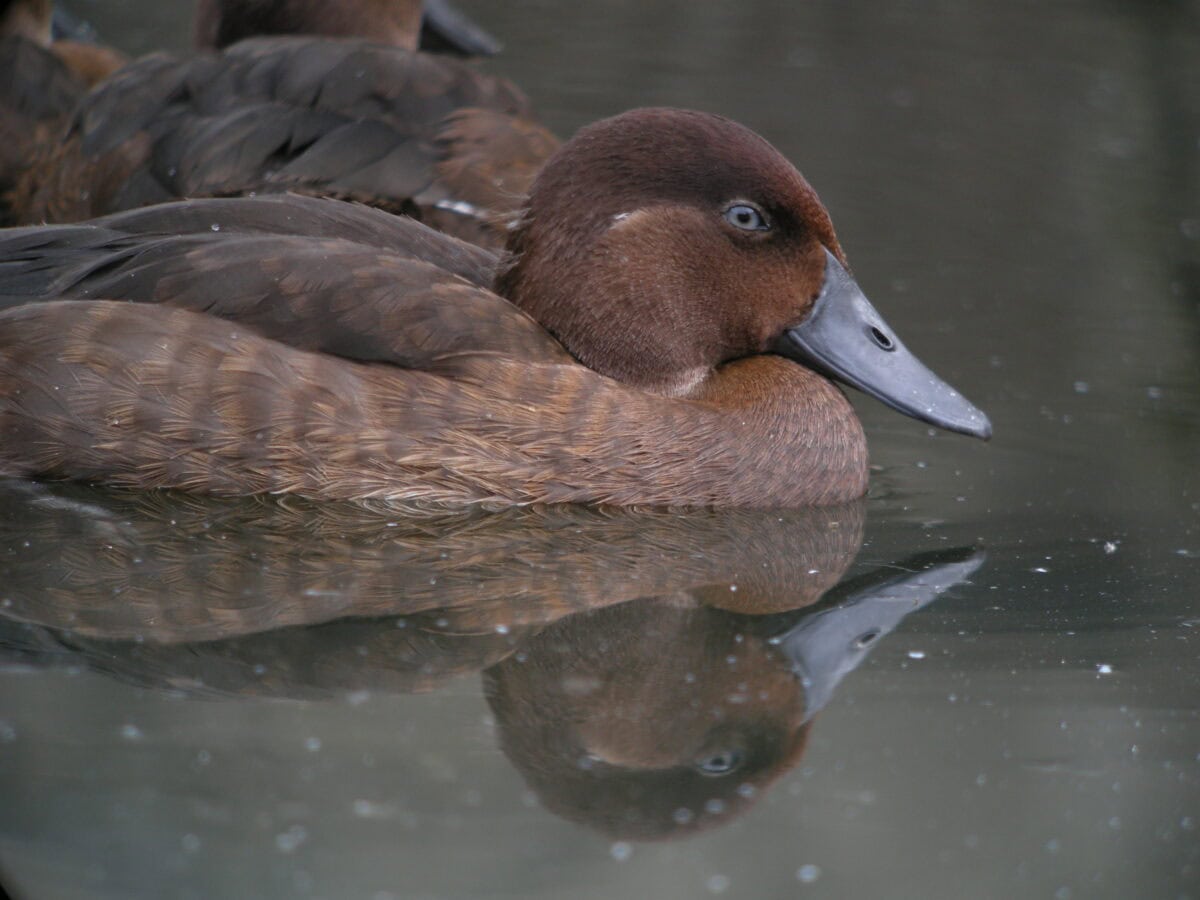
The Madagascar pochard (Aythya innotata) holds the unfortunate distinction of being the world’s rarest duck and one of the most endangered bird species on the planet. This medium-sized diving duck, characterized by its rich chestnut-brown plumage, white belly, and distinctive dark eyes, was actually declared extinct in the late 1990s after decades of absence. However, in 2006, a small population of just 22 birds was rediscovered on a remote volcanic lake in northern Madagascar, igniting hope for the species’ survival. The pochards’ decline resulted from a combination of factors, including the introduction of non-native fish species that competed for food, sedimentation of their wetland habitats from deforestation, and conversion of wetlands to rice paddies. In response to their critical status, conservationists launched an emergency rescue mission, collecting eggs for a captive breeding program. This effort has proven remarkably successful, with over 100 birds now being raised in captivity. In 2018, the first captive-bred pochards were released into the wild at Lake Sofia in northern Madagascar, where specially designed floating “aviaries” helped them adapt to their new environment. While still critically endangered, the Madagascar pochard represents one of conservation’s most inspiring comeback stories, demonstrating how concerted human effort can reverse the trajectory of even the most imperiled species.
Comet Moth Celestial Beauty with a Brief Life

The Madagascan comet moth (Argema mittrei), also known as the Madagascar moon moth, stands as one of the world’s largest and most spectacular silk moths. With a wingspan reaching up to 8 inches and extraordinary long tails extending its total length to nearly 10 inches, this moth creates an unforgettable impression. Males possess significantly longer tails than females, which they use in elaborate aerial displays during courtship. The moth’s name derives from its yellowish coloration and long trailing tails that resemble a comet streaking across the night sky. Despite their magnificent appearance, comet moths live remarkably brief adult lives—typically just 4-5 days. During this ephemeral existence, they don’t feed at all, lacking functional mouthparts and surviving entirely on fat reserves accumulated during their caterpillar stage. The caterpillars, impressive in their own right, feed primarily on tree species in the Eugenia and Weinmannia genera for approximately two months before spinning cocoons of fine silk. Found primarily in Madagascar’s eastern rainforests, comet moths face significant threats from deforestation and habitat fragmentation. Additionally, their silk cocoons have historically been harvested for the production of wild silk textiles, though conservation-focused initiatives now promote sustainable harvesting practices. Their rarity, combined with their brief lifespans and stunning beauty, has made them particularly valued specimens in entomological collections.
Giraffe-Necked Weevil Evolutionary Extravagance
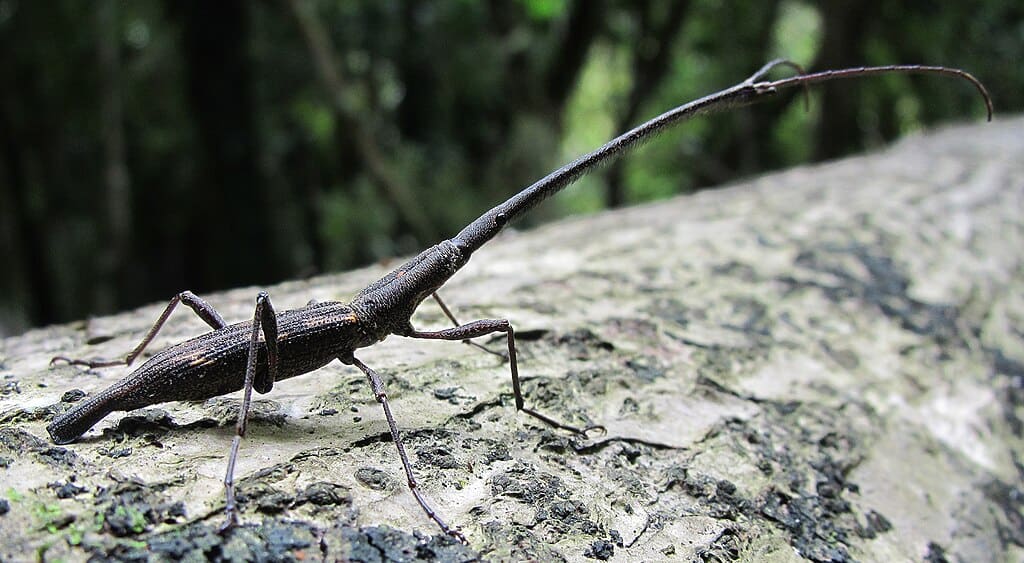
The giraffe-necked weevil (Trachelophorus giraffa) exemplifies evolution’s capacity for producing seemingly outlandish designs. This small beetle, measuring about half an inch in body length, is distinguished by the male’s extraordinarily elongated neck, which can be 2-3 times the length of its body. This neck extension is actually an elongation of the thorax (middle body segment) rather than the head itself. The striking anatomical feature serves a specific purpose: during mating season, males use their extended necks in competitive jousting matches, attempting to knock rivals off leaves to win mating opportunities. After mating, females use their more modestly extended necks to roll leaves into intricate tubes where they lay a single egg before cutting the leaf partially from the plant. This crafted leaf roll provides both protection and food for the developing larva inside. Both sexes display a brilliant red exoskeleton that likely serves as warning coloration to potential predators. These weevils are primarily found in Madagascar’s eastern rainforests, where they feed exclusively on plants in the Dichaetanthera family. Though not currently considered endangered, their highly specialized habitat requirements and diet make them vulnerable to deforestation and climate change. Their unique appearance has made them popular subjects for nature photographers and a flagship species for conservation efforts focusing on Madagascar’s invertebrate diversity.
Lowland Streaked Tenrec Spiky Vocalist

The lowland streaked tenrec (Hemicentetes semispinosus) may resemble a hedgehog or porcupine, but it represents a completely different mammalian family that evolved its spiny defense independently. This small insectivore, weighing just 7 ounces, sports a distinctive black coat with yellow stripes and a crown of specialized quills on its head and back. Unlike true porcupines, tenrec quills don’t detach easily but can be vibrated to produce a high-frequency stridulation sound used for communication between family members. This specialized form of communication makes the lowland streaked tenrec one of the few mammals capable of stridulation, a technique more commonly associated with insects like crickets. They’re also unique among mammals for their unusually low body temperature (around 75°F) and for giving birth to litters of up to 20 young—among the largest litter sizes of any mammal relative to body size. These tenrecs live in highly social family groups of up to 20 individuals that forage together, communicating through their specialized quill vibrations that create ultrasonic signals inaudible to most predators. Found primarily in Madagascar’s eastern rainforests and adjacent agricultural areas, they feed mainly on earthworms, which they locate using both their excellent sense of smell and specialized sensory whiskers. While adaptable to some habitat disturbance, they remain vulnerable to large-scale deforestation threatening their rainforest homes.
Labord’s Chameleon The Annual Life Cycle Wonder

Labord’s chameleon (Furcifer labordi) has earned scientific fame for possessing one of the shortest lifespans of any four-legged vertebrate. In a remarkable example of extreme life history adaptation, these chameleons live their entire lives within a single annual cycle. After hatching at the beginning of Madagascar’s rainy season (November), they grow at an accelerated rate, reach sexual maturity in just two months, mate, lay eggs, and then experience a synchronized death of the entire adult population by February or March. The eggs then remain dormant in the ground for 8-9 months until the next rainy season triggers hatching, beginning the cycle anew. This unusual life history strategy appears to be an adaptation to Madagascar’s highly seasonal climate, allowing them to time reproduction to coincide with optimal resource availability while avoiding the harsh dry season entirely. Physically, Labord’s chameleons display the typical chameleon traits of independently moving eyes, prehensile tails, and color-changing abilities, with males featuring distinctive whitish-yellow flanks with dark spots. They inhabit the deciduous dry forests of southwestern Madagascar, where they face significant threats from habitat destruction, particularly from slash-and-burn agriculture. Their extreme life cycle has made them subjects of intense scientific interest, offering insights into aging, development, and evolutionary adaptations to environmental pressures.
Darwin’s Bark Spider Record-Breaking Web Spinner

Discovered only in 2009, Darwin’s bark spider (Caerostris darwini) immediately made headlines in the scientific community for producing the strongest known biological material. This endemic Madagascan spider creates webs with silk that is more than ten times stronger than Kevlar and twice as strong as any previously known spider silk. These remarkable arachnids construct the largest orb webs ever recorded, spanning up to 82 feet across rivers and lakes—a feat that earned them a place in the Guinness Book of World Records. The female spiders, with leg spans reaching 2.5 inches, are dramatically larger than the males (which measure less than a quarter of their size).
Conclusion:

Madagascar is more than just an island—it is a living museum of evolutionary innovation, a place where time and isolation have given rise to a dazzling array of life found nowhere else on Earth. From gravity-defying spiders and leaf-mimicking geckos to vocalizing tenrecs and color-shifting chameleons, each species profiled in this article reflects millions of years of adaptation in splendid isolation. These 17 endemic creatures are not just natural curiosities—they are living evidence of how geographic seclusion can sculpt biodiversity into forms both beautiful and bizarre. Yet this biological wonderland is facing unprecedented threats. Rampant deforestation, illegal wildlife trade, invasive species, and climate change are placing many of Madagascar’s unique species on the brink of extinction. Conservation is no longer just an option—it is a necessity. The fate of these irreplaceable animals depends on immediate and sustained efforts to protect their habitats, support local conservation programs, and foster global awareness. By celebrating the extraordinary creatures found only in Madagascar, we not only marvel at nature’s creativity but also acknowledge our responsibility to preserve it. The survival of these species is not just a matter of national pride for Madagascar—it is a global imperative.

As a little kid, I fell in love with nature, wildlife, and animals. Living in the USA, South Africa, Italy, China and Germany gave me the opportunity to discover the world's Wildlife. My favorite animals are Mountain Gorillas, Siberian Tigers, and Great White Sharks.
I'm a certified PADI Open Water Diver, went to Everest Base Camp and Trekked Gorillas in Uganda. I hold a Master of Science in Economics and Finance.
Please send any feedback to feedback@animalsaroundtheglobe.com
- 12 Sea Animals Believed to Bring Luck or Doom - July 29, 2026
- The Lizard That Can Run on Water – Nature’s Real-Life Jesus Lizard - July 29, 2026
- Why Some Fish Can Live in Both Freshwater and Saltwater - July 29, 2026