


The animal kingdom never ceases to amaze us with its incredible diversity of behaviors and abilities. While we humans pride ourselves on our capacity for planning, strategizing, and thinking ahead, many animals also demonstrate remarkable foresight and planning capabilities. From crafty corvids that solve multi-step puzzles to primates that prepare tools for future use, the ability to plan ahead is more widespread among animals than previously thought. This article explores 15 fascinating animals that show impressive planning abilities, challenging our understanding of animal cognition and blurring the lines between instinct and intentionality.
Chimpanzees The Tool-Planning Primates

Chimpanzees are perhaps the most well-documented non-human planners. Research has repeatedly shown that these great apes can plan for future needs in sophisticated ways. In a groundbreaking study at Lund University, chimpanzees were observed collecting and storing stones that they would later use as tools to crack nuts. More impressively, they would sometimes carry these tools over long distances, anticipating needs that wouldn’t arise for hours. In captivity, chimpanzees have been observed saving tokens that could be exchanged for food later, showing an understanding of future value. This ability to delay gratification and prepare for future scenarios demonstrates a cognitive complexity once thought unique to humans.
New Caledonian Crows Nature’s Crafty Engineers

New Caledonian crows are renowned for their exceptional tool-making abilities, but their planning skills are equally impressive. These birds can solve multi-step problems that require advance planning and foresight. In laboratory settings, they’ve demonstrated the ability to use a sequence of up to three tools to retrieve food that would otherwise be inaccessible. What makes this remarkable is that the entire solution must be planned before taking the first step. Field studies have shown that these crows also create and carry specialized stick tools when foraging, adapting the tools’ shapes and sizes for specific hunting conditions they anticipate encountering. Some researchers believe their planning abilities rival those of great apes, despite having evolved independently and possessing brains that are structurally very different.
Western Scrub Jays The Forward-Thinking Hoarders

Western scrub jays showcase remarkable planning capabilities through their sophisticated food-caching behaviors. Unlike simpler cache-and-retrieve systems seen in some animals, these birds demonstrate genuine episodic future thinking. In experiments conducted at the University of Cambridge, scrub jays were observed planning for specific future scenarios by selectively storing particular types of food in locations where they anticipated those foods would be scarce. Even more impressively, they’ve been shown to re-hide their food caches if they notice another bird watching them during the initial hiding process, suggesting they can anticipate potential theft. This demonstrates not only planning but an understanding of other individuals’ knowledge states—a cognitive capacity previously thought limited to primates. Their planning abilities extend to specific future breakfasts, with studies showing they’ll cache different types of food depending on what they anticipate needing the following morning.
Orangutans Long-term Travel Planners

Orangutans exhibit some of the most sophisticated planning behaviors observed in non-human animals, particularly regarding their travel routes and communication. Research in Sumatra has documented that male orangutans plan long travel routes days in advance, often announcing their intended direction through distinctive “long calls.” These vocalizations serve multiple purposes, including informing females of their travel plans while warning rival males to stay away. What’s particularly fascinating is their ability to maintain these predetermined travel directions even when faced with obstacles or distractions. Researchers have tracked orangutans maintaining consistent travel directions for up to five days, suggesting they possess mental maps and the ability to plan complex journeys. This advanced spatial planning helps them efficiently navigate their forest habitats to find scattered fruit trees that may only produce fruit seasonally, demonstrating how crucial this cognitive skill is for their survival.
Octopuses The Eight-Armed Strategists
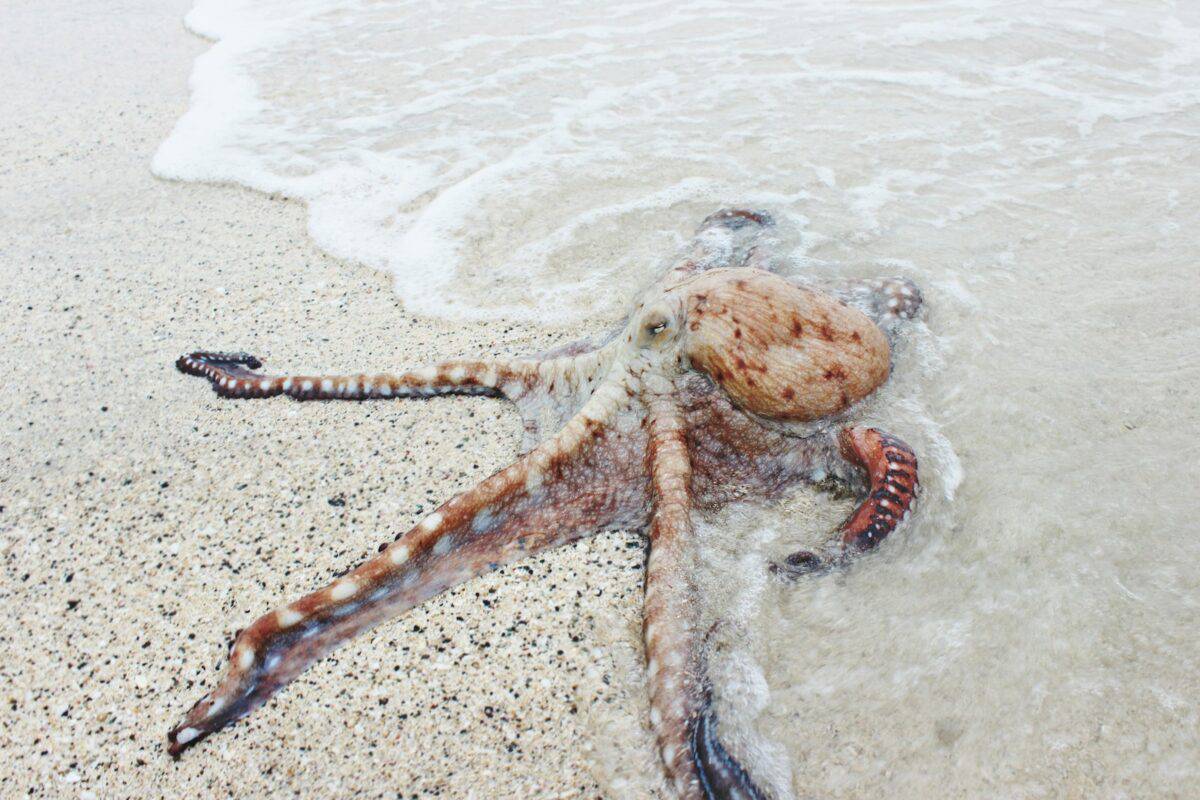
Despite having evolved along a completely separate evolutionary path from vertebrates, octopuses display remarkable planning abilities that challenge our understanding of invertebrate cognition. These cephalopods have been observed collecting coconut shell halves, carrying them cumbersomely across the ocean floor, and later assembling them into protective shelters when needed. This behavior represents a clear case of planning for future use rather than immediate need. In laboratory settings, octopuses have solved complex puzzles requiring multiple steps to access food rewards, sometimes even using tools in planned sequences. At the Seattle Aquarium, an octopus named Ink was documented regularly waiting until nighttime when staff had departed before executing an elaborate escape plan to reach a nearby tank with desirable prey, returning to its own tank before morning. These behaviors indicate not just problem-solving ability but genuine anticipation of future situations and needs, remarkable for an animal whose nervous system is organized very differently from our own.
Elephants Strategic Thinkers With Long Memories

Elephants possess extraordinary planning abilities supported by their remarkable memories and complex social structures. Field researchers have documented elephant herds planning coordinated movements to water sources across vast distances, sometimes traveling along routes unused for years but remembered by elder matriarchs. This suggests not only mapping abilities but intergenerational knowledge transfer of planned routes. Even more impressive is their demonstrated understanding of cooperation requiring planning. In studies conducted in Thailand, elephants successfully participated in experiments where they had to coordinate with a partner to simultaneously pull two ends of a rope to obtain food—if one pulled too soon, neither would succeed. The elephants quickly understood the need to wait for their partner and would even refuse to participate if their partner wasn’t given access to the rope, showing they could anticipate the necessary conditions for success. Their tool use also demonstrates planning, as elephants have been observed modifying branches into fly swatters, and creating clay balls to plug water holes they intend to dig out later.
Bonobos The Prepared Foragers

Bonobos, along with their chimpanzee cousins, demonstrate sophisticated planning abilities particularly related to tool preparation. Unlike chimpanzees who are known for more aggressive behaviors, bonobos show planning in their unique social and foraging contexts. Researchers at the Max Planck Institute have documented bonobos preparing tools in advance of specific foraging activities, modifying sticks to the appropriate size and shape before traveling to locations where those tools would be needed. What makes their planning particularly interesting is the social dimension—bonobos have been observed planning cooperative food acquisition, sharing, and even social interactions. In captivity, bonobos demonstrate remarkable foresight by saving tools for future use and selecting appropriate tools for tasks they anticipate encountering hours later. This planning ability extends beyond immediate survival needs to social planning, as they appear to strategize about forming alliances and social bonds, suggesting their planning has both practical and social dimensions vital to their cooperative society.
Rats The Methodical Decision-Makers

Rats may not enjoy the reputation for intelligence that primates or corvids do, but research has revealed they possess impressive planning abilities. In maze studies conducted at the University of Minnesota, rats demonstrated “vicarious trial and error” behavior—pausing at decision points and appearing to mentally evaluate different routes before proceeding. More compelling evidence comes from studies where rats learn to avoid choosing smaller immediate rewards in favor of larger delayed rewards, showing they can plan for better future outcomes. When navigating complex environments, rats have been observed taking detours that initially move them away from their goal but ultimately lead to better rewards, suggesting an ability to plan multi-step routes. In natural settings, rats create sophisticated burrow systems with multiple escape routes, food storage chambers, and nesting areas, indicating advanced planning for various future needs and contingencies. Their planning abilities challenge us to reconsider the cognitive capabilities of these often-underestimated rodents.
Ravens The Strategic Problem Solvers
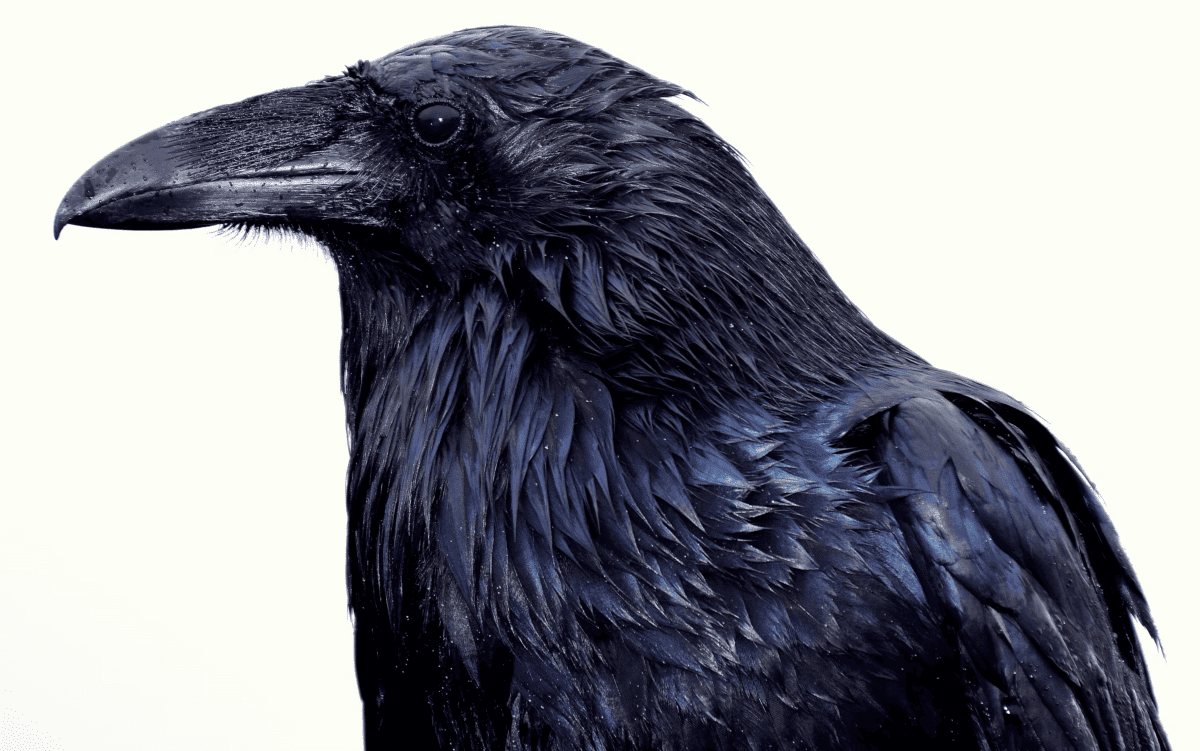
Ravens stand out even among the highly intelligent corvid family for their exceptional planning capabilities. Research at Lund University demonstrated that ravens can select tools they’ll need for future tasks, even when the tool has no current utility—a form of planning once thought exclusive to humans and great apes. In one remarkable experiment, ravens learned to use a token to trade for food with a human experimenter, and would select this token over an immediate but smaller food reward, correctly anticipating its future value. Ravens have also been observed caching food in locations where they anticipate scarcity, and like their jay relatives, will re-hide food if they believe another raven has observed the original hiding place. In the wild, ravens engage in sophisticated social planning, forming tactical alliances and remembering individuals who have cooperated or competed with them in the past. Their ability to plan extends to problem-solving contexts, where they’ve been observed preparing tools and multi-step solutions before attempting to retrieve hard-to-reach food.
Dolphins Coordinated Hunting Strategists

Dolphins display remarkable planning abilities, particularly in their hunting strategies, which often require coordination and foresight. One of the most impressive examples occurs among bottlenose dolphins in Florida, who have developed a hunting technique called “mud-ring feeding.” Here, a lead dolphin swims in a circle around a school of fish while flapping its tail against the seafloor, creating a ring of suspended mud. The dolphins plan this maneuver carefully, with different individuals taking predetermined roles—some creating the mud ring while others wait at strategic points to catch fish that jump over the barrier in their attempt to escape. In Australia, dolphins have been observed planning the use of marine sponges as protective nose covers when foraging on the sharp seafloor, a tool use behavior that is taught from mother to offspring. Researchers at the Dolphin Research Center have documented dolphins solving problems that require planning several steps ahead, including postponing an easy food reward to obtain tools necessary for acquiring a more preferred food later. Their planning extends to social contexts as well, with evidence suggesting they remember and plan interactions with specific individuals based on past cooperation experiences.
Beavers The Environmental Engineers

Beavers demonstrate remarkable planning abilities through their environmental engineering projects. Building a dam is not a simple or instinctive task but requires substantial planning and adjustment based on water flow, available materials, and terrain. Researchers at the University of Wyoming have documented how beavers will survey an area before beginning construction, appearing to assess the best location for dam placement. They’ve been observed starting construction upstream during dry periods, anticipating that seasonal rains will raise water levels to the optimal height. Even more impressive is their ability to plan multi-stage constructions, often building a series of dams in sequence to create the desired water management system. Beavers will actively maintain their dams, planning repairs before small breaches become critical failures. Their lodges are constructed with underwater entrances and multiple chambers for different purposes, including food storage areas for winter when ponds freeze over. This demonstrates planning not just for immediate shelter but for seasonal changes months in advance, making beavers among the most forward-thinking of mammalian architects.
Great Apes Varied Planning Across Species
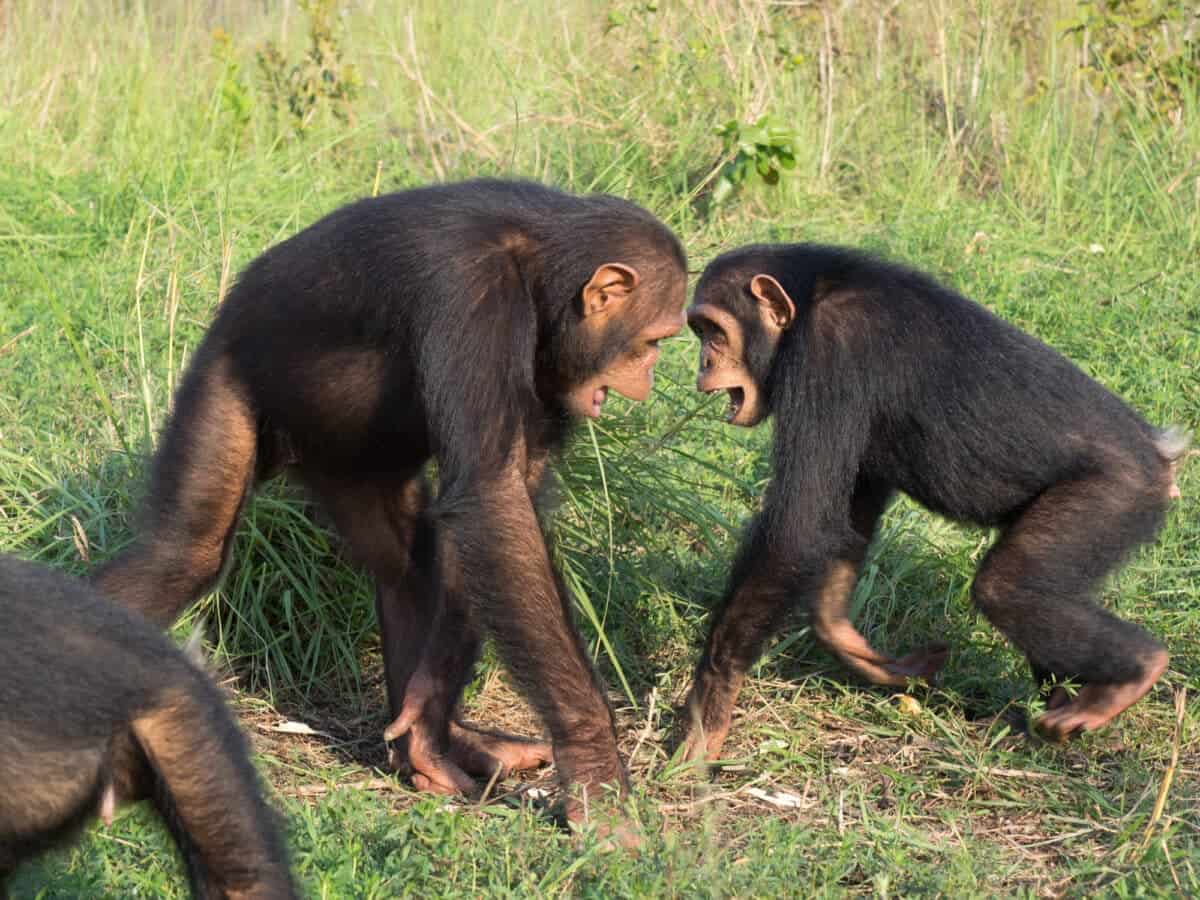
Beyond chimpanzees, other great apes including gorillas and orangutans demonstrate diverse planning abilities adapted to their ecological niches. Gorillas, despite being less studied for planning behavior than chimpanzees, show evidence of planning in their foraging patterns. Research in the Congo Basin has documented western lowland gorillas mapping and following complex routes between widely scattered fruit trees, suggesting they maintain mental maps and plan efficient travel routes days in advance. Orangutans demonstrate perhaps the most impressive planning among great apes, particularly in the wild. Researchers in Sumatra have observed orangutans constructing night nests in the direction of fruit trees that won’t be ready to eat until the following morning, suggesting they’re planning breakfast locations. They’ve also documented orangutans using specific leaf-bundle tools to extract seeds from neesia fruits, preparing these specialized tools before reaching the fruit trees. What makes great ape planning particularly fascinating is that each species has developed planning abilities specifically suited to their ecological challenges, from chimpanzees’ tool preparation to orangutans’ travel planning, illustrating how this cognitive ability has evolved to meet specific environmental demands.
Squirrels Memory-Dependent Planners

Squirrels are exceptional planners when it comes to food storage and retrieval, with abilities that go far beyond simple instinct. Research at the University of California, Berkeley has revealed that fox squirrels organize their thousands of buried nuts by category, creating sophisticated “spatial chunking” systems that help them remember where different types of food are buried. This strategy requires planning both the categorization system and future retrieval needs. Even more impressive is their “future planning” behavior, where they assess the perishability of different nuts and seeds, burying more perishable items in locations where they’re likely to retrieve them sooner. In experiments, squirrels have been observed shaking acorns to assess their quality, then strategically burying the highest quality ones in locations they’re most likely to remember. They even engage in deceptive planning, performing fake burial movements when they sense they’re being watched, protecting their actual caches from potential thieves. Eastern gray squirrels take planning to another level by burying up to 10,000 nuts each autumn, creating enough food stores to last through winter and into spring, demonstrating planning on a seasonal timescale.
Pigeons The Underestimated Time Managers
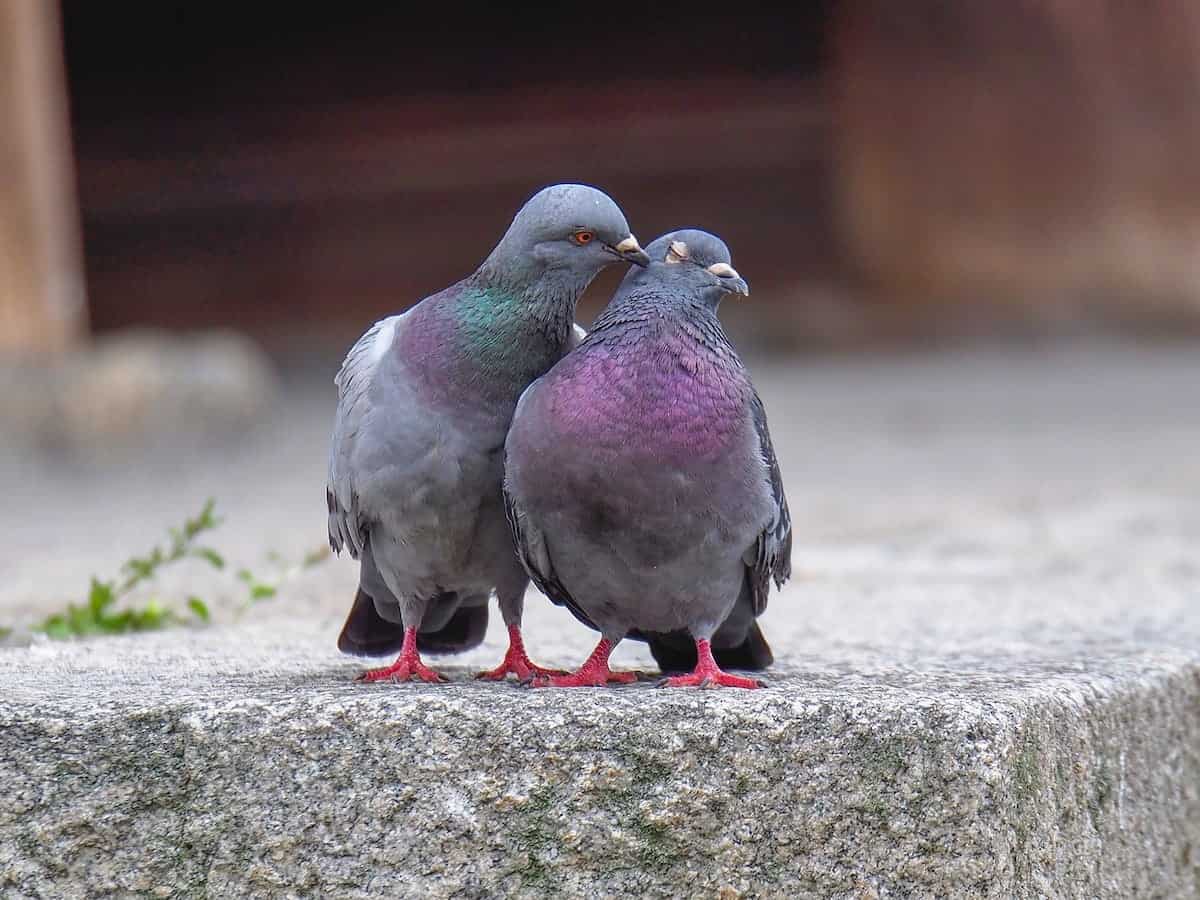
Pigeons, often dismissed as simple birds, have demonstrated surprising abilities to plan according to time schedules. Research at the University of Kentucky has shown that pigeons can learn to peck different keys based on how much time has elapsed, suggesting they can anticipate time intervals and plan responses accordingly. More impressively, studies have revealed that pigeons can learn to peck keys in a specific sequence only during particular time periods of the day, demonstrating planning based on circadian rhythms. This ability to time-plan has practical applications in their natural behavior. Wild pigeons have been observed adjusting their foraging schedules based on human activity patterns, planning visits to different food sources at specific times when food is most likely to be available. Researchers at the University of Iowa found that pigeons can also delay gratification, choosing larger delayed rewards over smaller immediate ones, indicating an ability to plan for better future outcomes. While their planning may not be as flexible as that of corvids, pigeons demonstrate that planning abilities have evolved in various avian lineages for different functional purposes.
Conclusion: Rethinking Animal Intelligence Through Planning

The planning capabilities demonstrated by these 15 animals challenge our traditional understanding of animal cognition and the dividing line between human and animal intelligence. From the strategic food-caching of western scrub jays to the multi-day travel plans of orangutans, these behaviors reveal that planning is not uniquely human but exists on a spectrum across many species. What’s particularly fascinating is how planning has evolved independently in different evolutionary lineages—in primates, birds, cephalopods, and rodents—suggesting its fundamental importance as an adaptive strategy. These discoveries have profound implications for how we conceptualize animal consciousness and welfare, as animals that can anticipate future states likely experience concerns about their future wellbeing. As research techniques improve, we will likely discover planning abilities in even more species, continuing to blur the cognitive boundaries we once believed were clear between humans and other animals.

As a little kid, I fell in love with nature, wildlife, and animals. Living in the USA, South Africa, Italy, China and Germany gave me the opportunity to discover the world's Wildlife. My favorite animals are Mountain Gorillas, Siberian Tigers, and Great White Sharks.
I'm a certified PADI Open Water Diver, went to Everest Base Camp and Trekked Gorillas in Uganda. I hold a Master of Science in Economics and Finance.
Please send any feedback to feedback@animalsaroundtheglobe.com
- The Largest Octopus Ever Recorded Off the Coast of Washington - July 1, 2026
- 10 Patriotic Animals Associated With U.S. History - June 30, 2026
- 14 Reasons Chickens Make Surprisingly Great Pets - June 30, 2026