


From the crystal-clear waters of Minnesota’s 10,000 lakes to the murky depths of Florida’s massive Lake Okeechobee, America’s freshwater ecosystems host a remarkable diversity of life. While most people are familiar with common lake dwellers like bass, trout, and turtles, there exists a fascinating world of lesser-known creatures lurking beneath the surface. Many of these organisms play crucial roles in their ecosystems yet remain largely unknown to the general public. This article explores 15 surprising creatures that call U.S. lakes home, from microscopic oddities to unexpected predators that might be swimming in your favorite vacation spot right now.
15. Freshwater Jellyfish (Craspedacusta sowerbii)
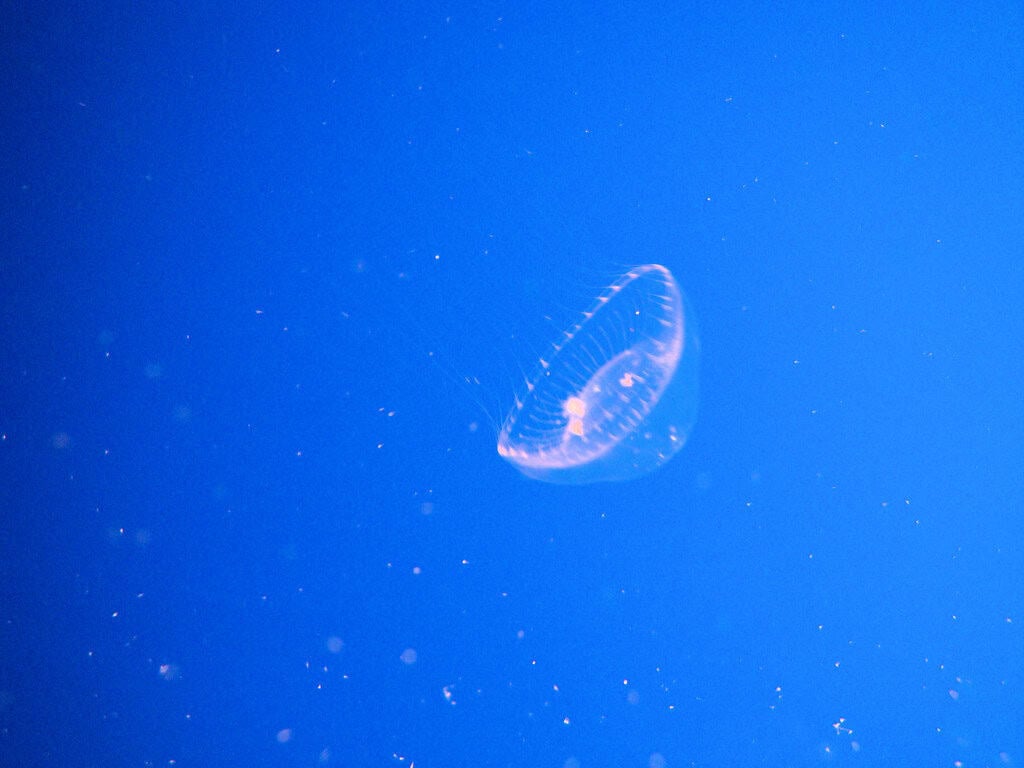
Yes, jellyfish aren’t just ocean creatures! Freshwater jellyfish, scientifically known as Craspedacusta sowerbii, have been documented in lakes across at least 44 U.S. states. These translucent, coin-sized invertebrates are native to China’s Yangtze River basin but have hitchhiked across the globe, likely through the aquarium trade or on aquatic plants. Unlike their marine relatives, their sting is harmless to humans. These jellyfish alternate between a sessile polyp stage (attached to surfaces) and a free-swimming medusa stage that appears during warm summer months. Most lake visitors never spot them due to their small size and transparent bodies, despite populations occasionally blooming into the thousands.
14. Hellbenders (Cryptobranchus alleganiensis)

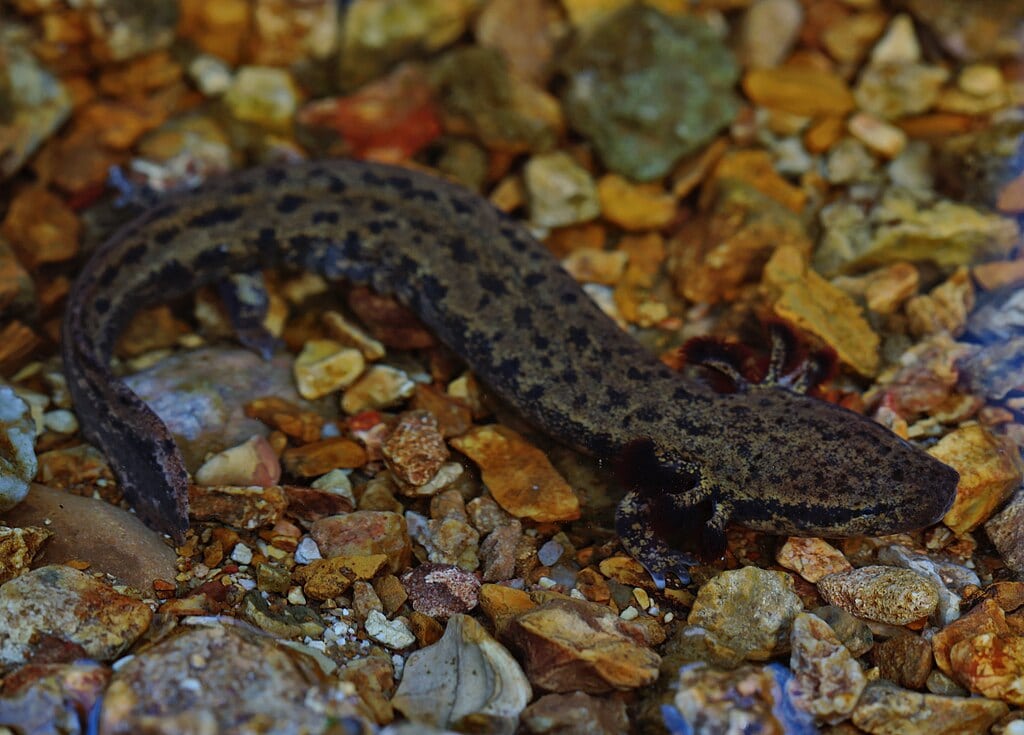
The Eastern Hellbender is North America’s largest salamander, growing up to 29 inches long. These prehistoric-looking amphibians inhabit cold, fast-flowing streams and rivers that feed into lakes throughout the Appalachian Mountain region. With their flat bodies, tiny eyes, and wrinkled skin that helps absorb oxygen directly from the water, hellbenders are perfectly adapted to life under large, flat rocks. Despite their intimidating name and appearance, these gentle giants are completely harmless to humans. Unfortunately, hellbender populations have declined by 77% in some areas due to water pollution, sedimentation, and habitat destruction. Conservation efforts are underway in states like Pennsylvania, Ohio, and New York to protect these unique salamanders.
13. Spiny Water Flea (Bythotrephes longimanus)

The spiny water flea is a tiny but troublesome invasive crustacean measuring just under half an inch long. Native to Eurasia, it was first discovered in Lake Ontario in 1982 and has since spread to all Great Lakes and numerous inland lakes across the northern United States. What makes this creature remarkable is its distinctive long, barbed tail spine that can comprise up to 70% of its body length. This spine protects it from predation by small fish and allows populations to explode unchecked. Spiny water fleas compete with native zooplankton and small fish for food, disrupting the food web. They can also clog fishing equipment and attach to boats in gelatinous masses, facilitating their spread between waterbodies. Scientists continue to monitor their expansion while educating boaters about preventing further invasion.
12. American Paddlefish (Polyodon spathula)
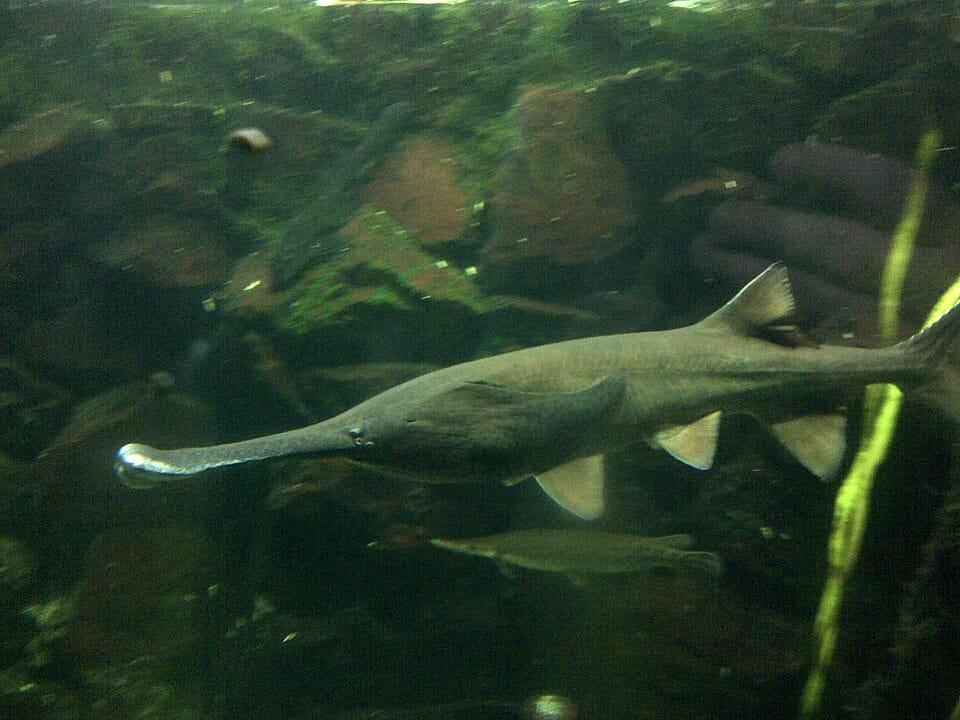
Often called the “spoonbill catfish,” the American paddlefish is one of the most bizarre-looking freshwater fish in North America. This prehistoric species has a skeleton made primarily of cartilage and can grow up to 7 feet long, weighing over 200 pounds. Their most distinctive feature is the elongated, paddle-shaped snout (rostrum) filled with electroreceptors that help them detect zooplankton, their primary food source. Unlike most fish, paddlefish don’t hunt by sight but swim with their mouths open, filtering plankton through their specialized gill rakers. They inhabit large river systems and reservoirs in the Mississippi River basin, including many major lakes. Paddlefish can live up to 30 years and are among the oldest surviving fish species, having existed for over 125 million years with few evolutionary changes. Despite their size and prehistoric appearance, paddlefish are harmless filter-feeders facing population declines due to overfishing, habitat alteration, and dam construction.
11. Water Bears (Tardigrades)
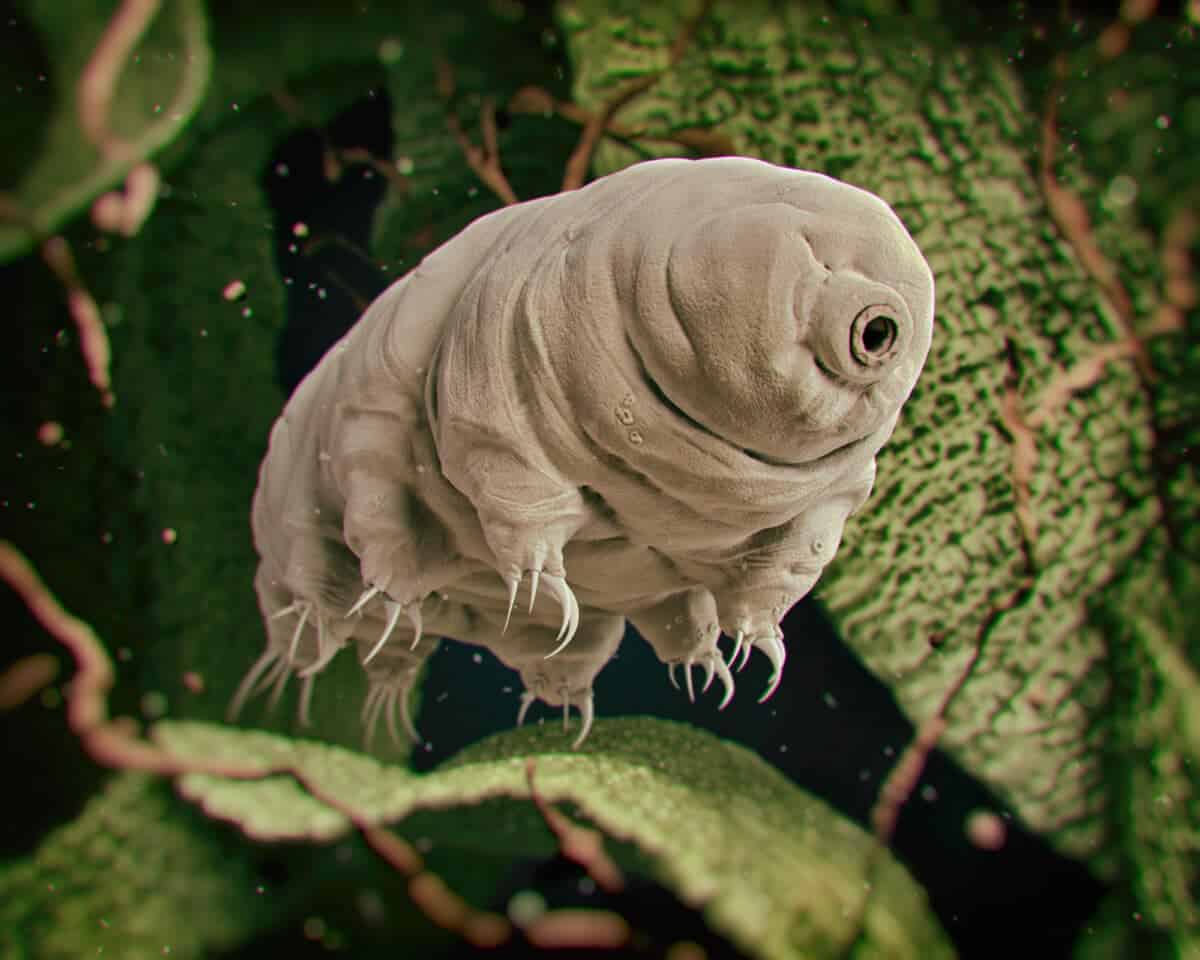
Perhaps the most resilient creatures on Earth, tardigrades—commonly known as water bears or moss piglets—inhabit virtually every U.S. lake, though they’re invisible to the naked eye. These microscopic animals (typically 0.1-1.5 mm long) possess extraordinary survival capabilities, entering a state called cryptobiosis when conditions become harsh. In this state, they can withstand extreme temperatures from near absolute zero (-458°F) to 300°F, pressure six times greater than the deepest ocean trenches, radiation levels thousands of times higher than lethal doses for humans, and can survive without water for up to 30 years. Under a microscope, tardigrades reveal their bear-like appearance with eight legs ending in claws. These remarkable creatures feed on plant cells, algae, and small invertebrates, playing an important role in the microecosystems of lake sediments and aquatic vegetation. Scientists study tardigrades to understand the biological mechanisms behind extreme survival, with potential applications for medicine and space exploration.
10. Freshwater Sponges (Spongillidae)

Most people associate sponges exclusively with marine environments, but freshwater sponges thrive in lakes across the United States. These simple, multicellular animals belong to the family Spongillidae and typically grow as crusty or lumpy formations on submerged logs, rocks, and vegetation. Colors range from gray and brown to vibrant greens (when colonized by algae). Unlike their ocean counterparts used for bathing, freshwater sponges have a rough texture due to tiny silica spicules that form their skeletal structure. They feed by filtering bacteria and organic particles from water that they pump through specialized cells. During winter or drought conditions, freshwater sponges can produce gemmules—hardy reproductive capsules that ensure survival through harsh periods. Though often overlooked, these primitive animals serve as important bioindicators of water quality, as they’re sensitive to pollution and require relatively clean water to survive.
9. American Water Shrew (Sorex palustris)
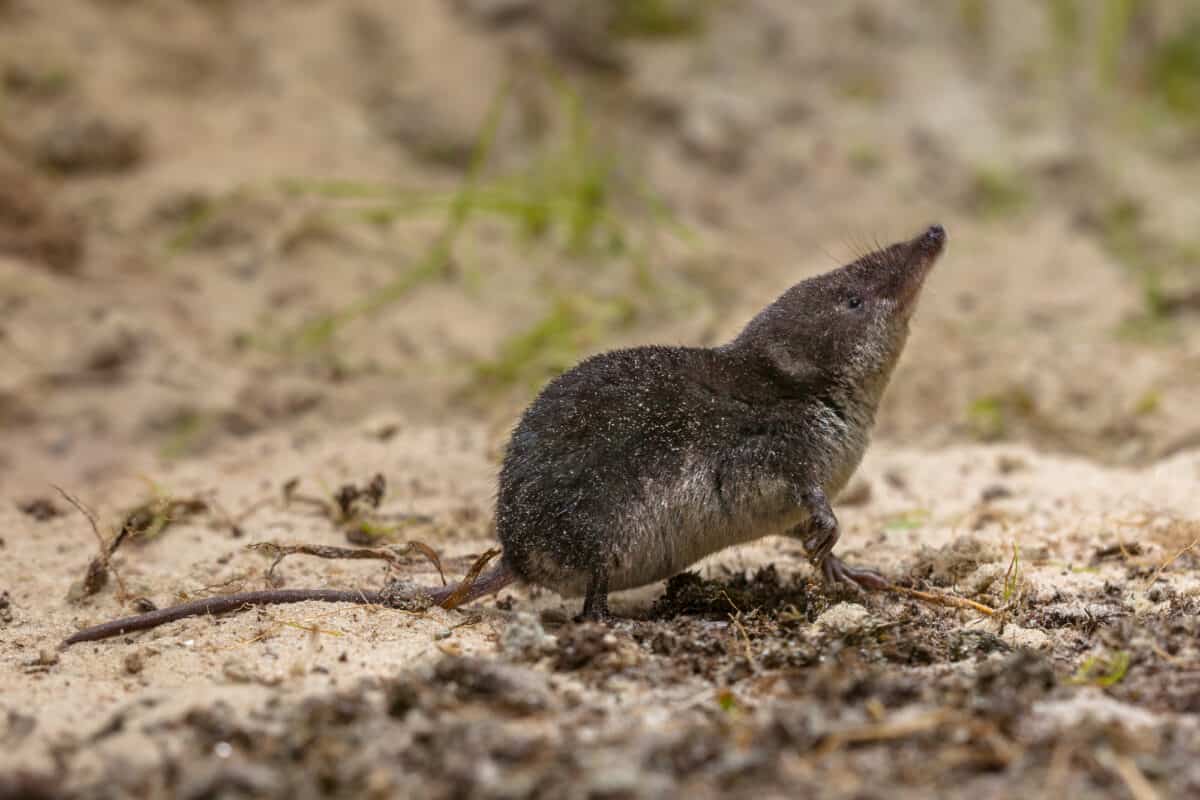
The American water shrew is a remarkable semi-aquatic mammal that inhabits the edges of cold, clear lakes and streams across northern and western United States. Despite weighing less than an ounce, these tiny predators are voracious hunters both on land and underwater. Their specialized adaptations for aquatic life include stiff hairs on their feet that trap air bubbles, creating buoyancy and allowing them to literally run across water surfaces for short distances. Their dense, water-repellent fur traps air for insulation in frigid waters. Water shrews have venomous saliva that can immobilize prey like aquatic insects, small fish, and amphibians. Their metabolism runs so high that they must consume more than their body weight in food daily and can starve to death after just a few hours without eating. Despite their abundance in suitable habitats, few people ever spot these elusive mammals due to their primarily nocturnal habits and lightning-fast movements.
8. Bryozoans (Pectinatella magnifica)

Often mistaken for alien eggs or fish spawn, bryozoan colonies are among the strangest sights in U.S. lakes. The species Pectinatella magnifica forms gelatinous, brain-like colonies that can grow to the size of basketballs attached to submerged branches, docks, and vegetation. Each colony consists of thousands of individual microscopic animals called zooids, arranged in a precise geometric pattern. The zooids work cooperatively, with each individual capturing food with a crown of tentacles called a lophophore. Though they appear plant-like, bryozoans are animals that have existed for over 500 million years. The jelly-like mass they secrete serves as both protection and structural support. These filter feeders actually improve water quality by removing algae and other particles. While harmless to humans, their appearance often triggers concern among lake users who encounter these unusual formations. Bryozoans thrive in warm, nutrient-rich waters and have become more common in northern lakes as climate change increases water temperatures.
7. Giant Hellgramite (Dobsonfly Larvae)
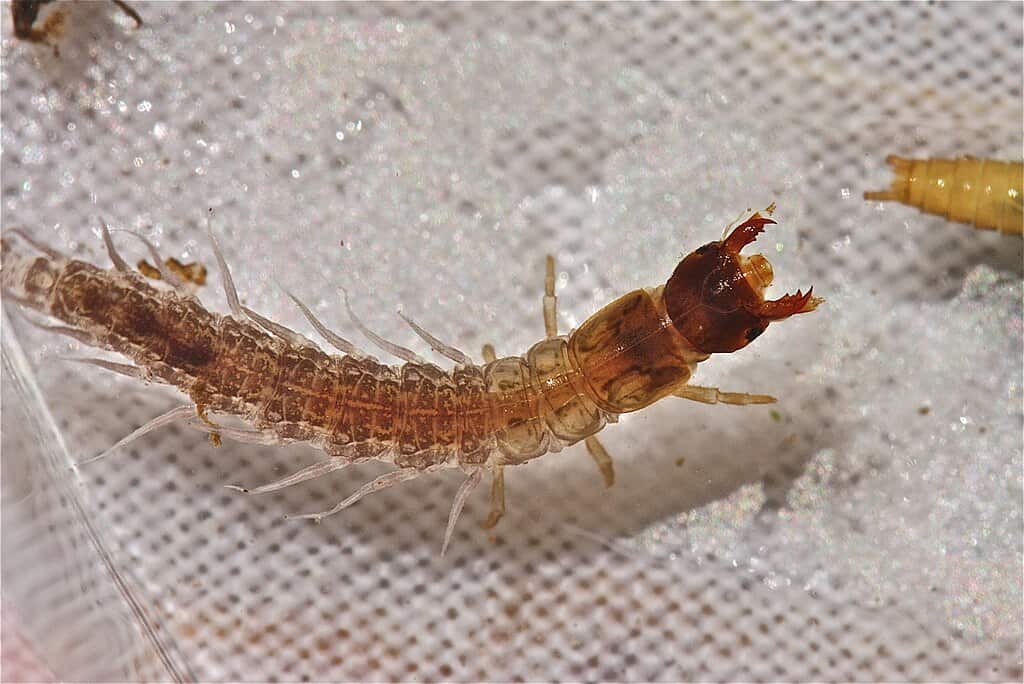
Among the most intimidating aquatic insects in North American lakes are the larvae of dobsonflies, commonly known as hellgramites. These formidable creatures can grow up to 5 inches long and possess fearsome-looking mandibles and multiple pairs of gill filaments along their abdomens that resemble legs. Hellgramites spend up to three years underwater as aquatic predators, hunting smaller invertebrates and even small fish before emerging as adult dobsonflies. They prefer oxygen-rich waters and are often found hiding under rocks in lake shallows and tributary streams. Anglers prize hellgramites as fishing bait for their effectiveness in catching bass and trout. While their appearance is intimidating, their bite is generally not dangerous to humans, though large specimens can deliver a painful pinch if mishandled. Their presence in a lake is actually a positive sign, as hellgramites are sensitive to pollution and serve as indicators of good water quality.
6. Lake Sturgeon (Acipenser fulvescens)

Lake sturgeon are living fossils that have remained virtually unchanged for over 150 million years. These armored giants can live up to 150 years, grow to over 7 feet long, and weigh more than 300 pounds. Rather than scales, they possess rows of bony plates called scutes that give them a prehistoric appearance. Their underslung mouth, preceded by four barbels (whisker-like sensory organs), allows them to vacuum up prey from lake bottoms. Though once abundant throughout the Great Lakes and Mississippi River basin, lake sturgeon populations have declined by over 99% due to historical overharvesting, pollution, and dam construction. These slow-growing fish don’t reach sexual maturity until 15-25 years of age and don’t spawn annually, making population recovery challenging. Conservation efforts have helped some populations begin to rebound, with strict fishing regulations and habitat restoration projects in place across multiple states. The lake sturgeon’s remarkable longevity means some individuals swimming in U.S. lakes today were born before the Civil War.
5. Mudpuppies (Necturus maculosus)
Mudpuppies are completely aquatic salamanders that never undergo metamorphosis, retaining their external, feathery red gills throughout their lives. Growing up to 16 inches long, these nocturnal amphibians inhabit lakes across eastern North America, particularly in the Great Lakes region. Their name comes from the squeaking sound they sometimes make when removed from water, which early settlers thought resembled a dog’s bark. Mudpuppies prefer cool waters and become most active during winter, even swimming under ice when many other lake creatures are dormant. They have four stubby legs, a flattened tail for swimming, and can live up to 30 years. As opportunistic predators, they feed on crayfish, insect larvae, small fish, and even other amphibians. Despite persistent myths, mudpuppies are completely harmless to humans and fish populations. In fact, their sensitivity to pollution and low oxygen levels makes them important bioindicators, with declining populations often signaling environmental problems in a lake ecosystem.
4. Freshwater Eels (Anguilla rostrata)
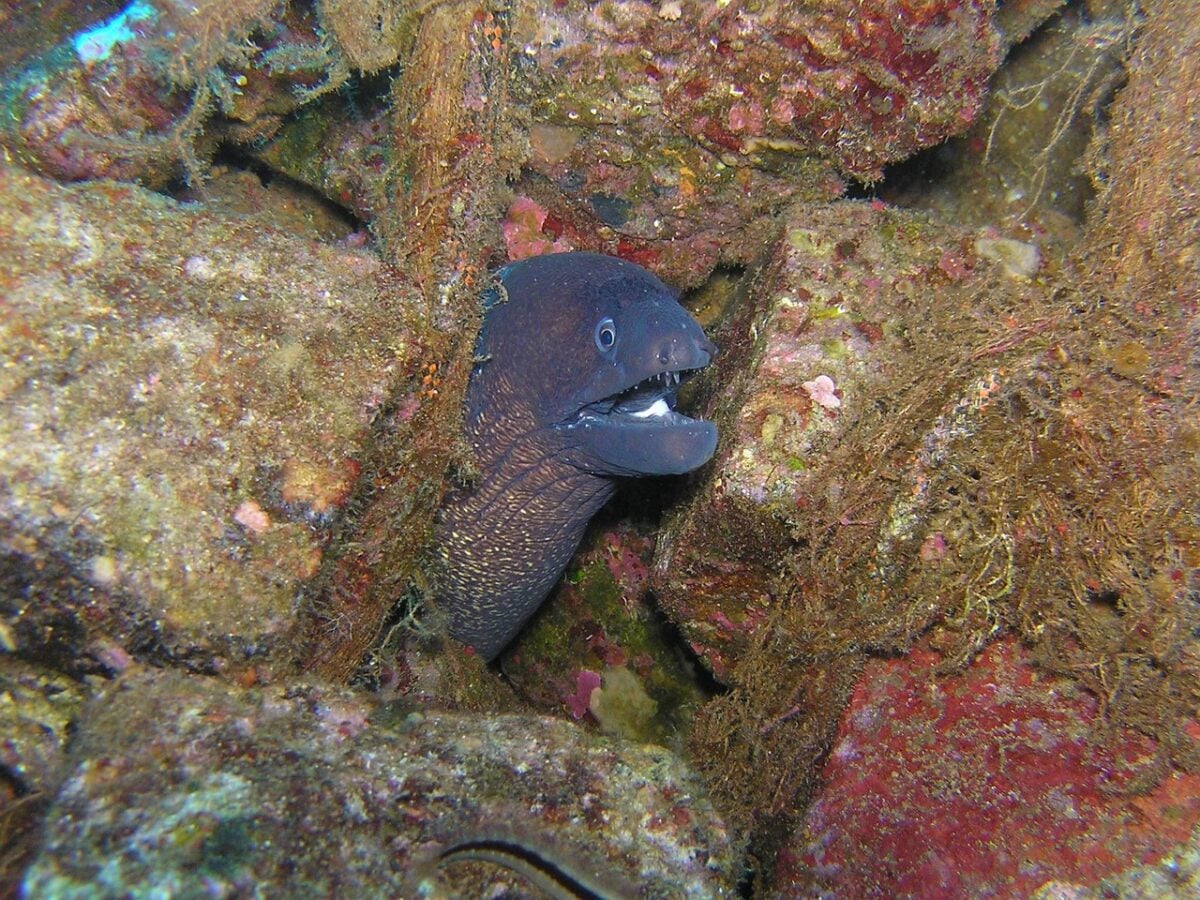
The American eel (Anguilla rostrata) has one of the most remarkable life cycles of any creature in U.S. lakes. Unlike salmon that are born in freshwater and migrate to the ocean, eels do the opposite. All American eels are born in the Sargasso Sea, a region of the North Atlantic. After hatching, the transparent leaf-shaped larvae drift with ocean currents for up to a year before transforming into “glass eels” as they approach North American shores. They then migrate upstream into lakes and rivers, where they spend 5-20 years maturing into yellow eels, and eventually silver eels. At maturity, they make the incredible journey back to the Sargasso Sea to spawn and die. These snake-like fish can absorb oxygen through their skin and can even travel short distances over land when damp. Capable of living in both fresh and salt water, eels can be found in lakes from Maine to Florida and throughout the Mississippi River basin. However, dam construction has significantly limited their range, and populations have declined by over 90% since the 1980s, leading to conservation concerns.
3. Bowfin (Amia calva)

Often mistaken for snakeheads (an invasive species), the bowfin is actually a native predatory fish that has remained virtually unchanged for 150 million years. These living fossils inhabit swampy, vegetated areas of lakes across eastern North America. Also known as dogfish, grinnel, or mudfish, bowfins possess several primitive characteristics, including a gular plate (bony plate) under their throat, a notochord (flexible rod-like structure) instead of a true backbone, and an air bladder that functions like a primitive lung, allowing them to gulp air at the surface and survive in oxygen-depleted waters. Male bowfins develop vibrant turquoise-blue coloration during breeding season and are notable for protecting their young. Perhaps their most distinctive feature is the eyespot near the tail, which confuses predators about which end is the head. Bowfins can grow to 43 inches and weigh up to 21.5 pounds. While historically despised by anglers as “trash fish” for their voracious appetite for game fish, ecologists now recognize their important role as native apex predators that help control populations of smaller fish.
2. Freshwater Drum (Aplodinotus grunniens)

The freshwater drum, also called sheepshead, is the only member of the drum family that lives exclusively in freshwater. These silver-gray fish are widely distributed across U.S. lakes from the Great Lakes to the Gulf Coast but remain relatively unknown to many people. Their most unusual feature is a pair of large, stone-like otoliths (ear bones) in their heads that are among the largest and hardest of any freshwater fish. Native Americans used these distinctive bones as jewelry and good luck charms. The drum gets its name from the deep drumming or grunting sound males produce by contracting muscles against their swim bladder during spawning season. These sounds can sometimes be heard above water. Freshwater drum possess unusual pharyngeal teeth (throat teeth) that allow them to crush mollusk shells, making them one of the few native predators of invasive zebra mussels. They can live up to 74 years and grow to over 30 pounds. Despite being excellent fighters when hooked and having firm, white flesh, they remain underappreciated as game and food fish in many regions.
1. Alligator Gar (Atractosteus spatula)

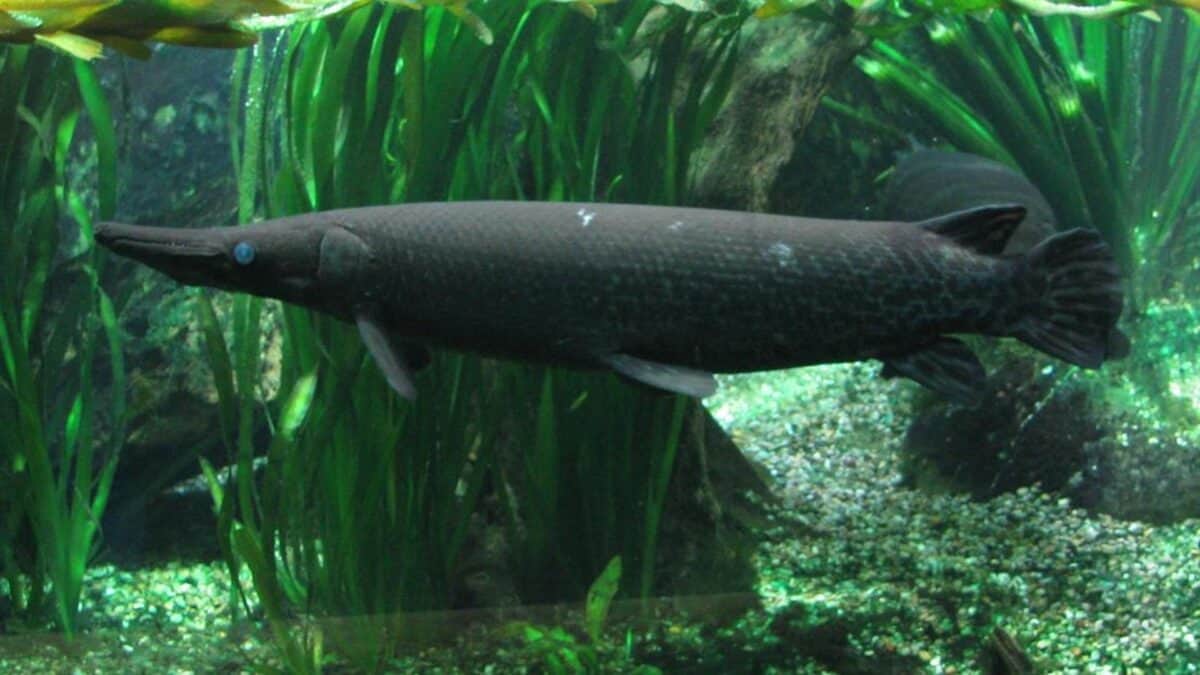
With their crocodilian appearance and impressive size, alligator gar are among the most intimidating freshwater fish in America. These prehistoric-looking creatures can grow over 10 feet long and weigh more than 300 pounds, with records suggesting some individuals may live up to 95 years. Their name comes from their alligator-like snout and dual rows of sharp teeth. Unlike most fish, alligator gar possess a highly vascularized swim bladder that functions as a lung, allowing them to gulp air at the surface and survive in low-oxygen environments. Their diamond-shaped, interlocking scales form an armor-like covering so tough that Native Americans used it for arrowheads and early settlers used dried scales as planting thimbles. Once reviled as “trash fish” and systematically eliminated, alligator gar are now recognized as important apex predators in southeastern lake ecosystems, where they help control populations of invasive species like Asian carp. Conservation efforts have been implemented in states like Texas, Louisiana, and Arkansas to protect these magnificent fish, which now attract eco-tourists and catch-and-release trophy anglers.
Conclusion
America’s lakes are far more than peaceful fishing spots or scenic vacation getaways—they’re vibrant ecosystems teeming with strange and spectacular life. From the nearly invisible tardigrades to the monstrous alligator gar, each of these 15 lesser-known creatures plays a unique role in maintaining ecological balance. Many of them are living fossils, evolutionary oddities, or biological marvels with abilities that rival science fiction. As threats like pollution, habitat loss, and invasive species continue to impact freshwater environments, understanding and appreciating these hidden lake dwellers becomes more important than ever. So next time you dip your toes into a quiet lakeshore, remember: there’s a whole world of mystery swimming just beneath the surface.

As a little kid, I fell in love with nature, wildlife, and animals. Living in the USA, South Africa, Italy, China and Germany gave me the opportunity to discover the world's Wildlife. My favorite animals are Mountain Gorillas, Siberian Tigers, and Great White Sharks.
I'm a certified PADI Open Water Diver, went to Everest Base Camp and Trekked Gorillas in Uganda. I hold a Master of Science in Economics and Finance.
Please send any feedback to feedback@animalsaroundtheglobe.com
- 15 Creatures You Did not Know Lived in U.S. Lakes - July 12, 2026
- 13 Mysterious Bird Migrations Scientists Still Can Not Explain - July 12, 2026
- 10 Lessons Wolves Learn Young And 3 That Come With Age - July 12, 2026
Leave a comment
You must be logged in to post a comment.