


Giant pandas are among the most beloved and recognizable animals on our planet, capturing hearts with their distinctive black and white coloration and seemingly cuddly appearance. Native to China’s bamboo forests, these unique bears have fascinated scientists and animal lovers alike for centuries. Despite their popularity, there’s much about pandas that remains unknown to the general public. From their unusual dietary adaptations to their complex conservation story, giant pandas offer a treasure trove of interesting biological and ecological insights. In this article, we’ll explore fifteen fascinating facts about these remarkable creatures that showcase why they continue to captivate our imagination and deserve our protection efforts.
15. Pandas Have a “Sixth Finger”

One of the most remarkable anatomical features of giant pandas is their unique “sixth finger,” which isn’t actually a finger at all. This specialized wrist bone, called a radial sesamoid, functions like an opposable thumb and allows pandas to grip bamboo stems with impressive dexterity. Unlike other bear species, the panda’s pseudo-thumb evolved specifically for bamboo manipulation. This adaptation developed approximately 6-8 million years ago when pandas transitioned to a bamboo-based diet. The elongated wrist bone is covered with muscle tissue and works in opposition to their five regular digits, creating a precise pincer-like grip that enables them to strip bamboo leaves and hold stalks while eating—a perfect example of nature’s ingenuity in solving specific evolutionary challenges.
14. Their Diet Is Remarkably Inefficient
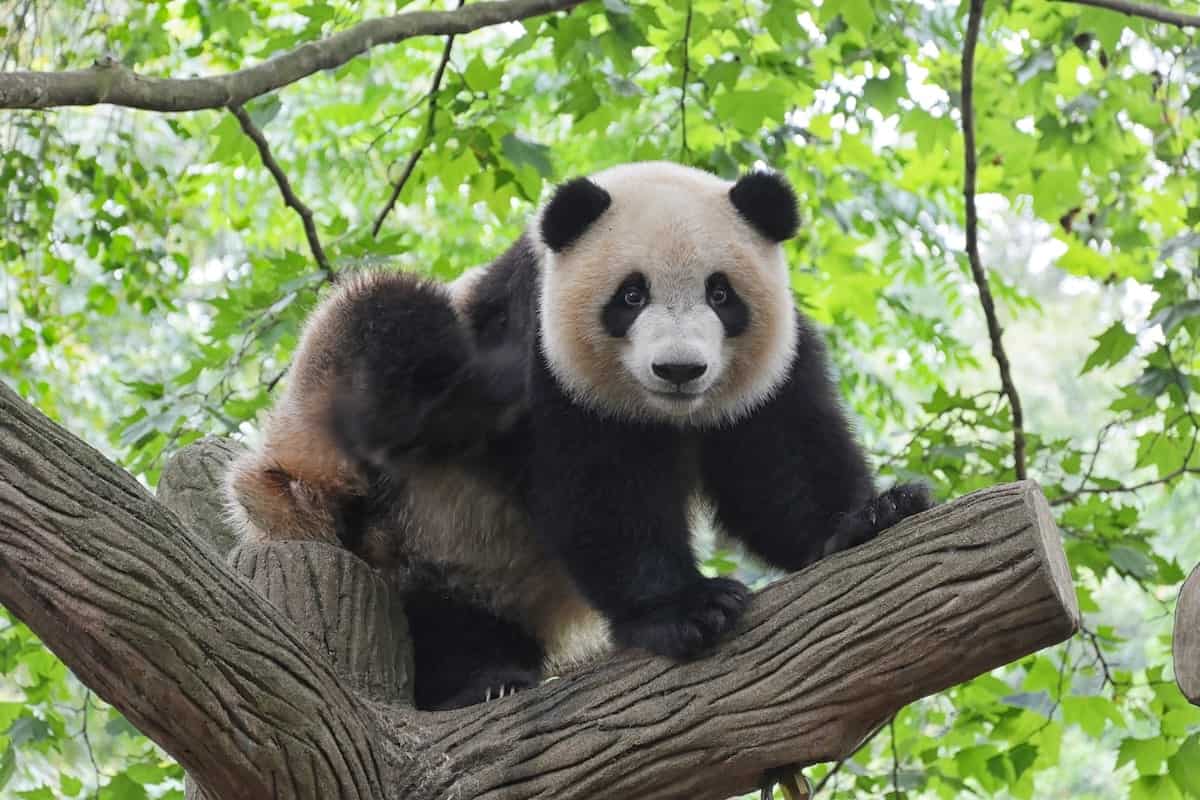
Despite being members of the carnivore order, giant pandas have evolved to become specialized bamboo eaters, with bamboo constituting 99% of their diet. This dietary specialization presents a significant biological paradox. A panda’s digestive system remains similar to that of other bears—designed for meat consumption rather than plant matter. They lack specialized bacteria needed to efficiently break down cellulose in bamboo, meaning they digest less than 20% of what they consume. This inefficiency forces pandas to eat enormous quantities—up to 40 pounds (18 kg) of bamboo daily—and spend 10-16 hours eating just to meet their nutritional needs. Even more fascinating, pandas lack the enlarged cecum found in other herbivores that helps with plant digestion. Their intestinal tract has barely adapted to their plant-based diet, which partly explains why they have so little energy despite consuming food almost constantly.
13. Baby Pandas Are Astonishingly Tiny at Birth

The size disparity between adult pandas and their newborns is one of the most extreme in the mammal world. Newborn pandas weigh just 90-130 grams (3-5 ounces)—about 1/900th of their mother’s weight. To put this in perspective, a human baby typically weighs about 1/20th of its mother’s weight. Pink, hairless, and blind at birth, panda cubs are roughly the size of a stick of butter and so underdeveloped they cannot regulate their own body temperature. This tiny birth size is thought to be an evolutionary adaptation related to the panda’s limited diet, which cannot easily support the energy demands of growing larger cubs in utero. The mother panda must hold her fragile newborn almost constantly for the first weeks of life, cradling it against her body for warmth and protection. It takes approximately two weeks for the distinctive black and white markings to begin appearing on the cub’s skin.
12. Pandas Have Remarkable Bite Force

Despite their vegetarian diet and seemingly gentle nature, giant pandas possess one of the most powerful bite forces in the carnivore family. Their jaw muscles and flat molars have evolved specifically to crush tough bamboo stalks, generating a bite force estimated at over 2,000 pounds per square inch (PSI). This impressive strength exceeds that of lions (around 650 PSI) and even approaches some crocodilian species. The panda’s skull has developed thick features and prominent sagittal crests—ridges of bone where powerful jaw muscles attach. Their massive jaw muscles make up a significant portion of their head structure, giving pandas their characteristic round-faced appearance. While rarely used for defense, this tremendous bite force serves as a reminder that despite their vegetarian lifestyle, pandas retain some formidable physical capabilities from their carnivorous ancestors.
11. Their Black and White Coloration Serves as Camouflage

The panda’s distinctive black and white coloration has puzzled scientists for decades, but recent research suggests it serves a sophisticated camouflage function. A 2017 study published in the journal Behavioral Ecology proposed that the contrasting colors help pandas blend into their environment in different ways. The white portions help them remain hidden in snowy habitats, while the black limbs, ears, and eye patches help them fade into shadowy forests and rocky terrain. Their dark ears may also serve as a communication signal to other pandas, indicating aggression when displayed prominently. Additionally, the black eye patches might reduce glare and help pandas see in bright, snowy environments, similar to how athletes use black grease under their eyes. This distinctive coloration pattern represents a unique evolutionary solution to visibility challenges across varied seasonal landscapes in their native mountain habitats.
10. Pandas Can Swim and Climb Trees

Despite their stocky build and seemingly slow movements when observed eating bamboo, giant pandas are surprisingly agile creatures. They are accomplished climbers, with cubs beginning to ascend trees as young as 6 months old. Their strong forelimbs, equipped with curved claws and the specialized “pseudo-thumb,” provide excellent gripping ability on tree trunks. Adult pandas can frequently be seen resting in trees 4-6 meters above ground. Perhaps more surprisingly, pandas are also competent swimmers. They don’t hesitate to cross rivers in their mountain habitats and have been observed deliberately swimming to cool off during hot summer months. Their dense fur provides good insulation in water, and unlike some bear species that primarily use their front limbs for swimming, pandas employ all four limbs in a dog-paddle style. These abilities highlight how pandas remain well-adapted to navigating their complex forest environments despite their specialized dietary evolution.
9. They Have Unique Bathroom Habits

Giant pandas exhibit fascinating bathroom behaviors that set them apart from most other animals. Rather than randomly depositing waste throughout their territory, pandas often designate specific “latrine sites” where they repeatedly return to defecate. Even more intriguingly, before leaving these sites, pandas will often perform a peculiar “handstand” position, backing up against a vertical surface like a tree or rock and lifting their hindquarters as high as possible while defecating. This behavior allows them to mark territory higher up on vertical surfaces, potentially spreading their scent markers more effectively through their habitat. Scientists believe this scent-marking behavior plays an important role in communication between these primarily solitary animals, with research suggesting pandas can identify individuals, gender, and reproductive status from these scent deposits. The frequency of defecation is also notable—pandas typically eliminate waste up to 40 times per day due to their high-volume, low-efficiency bamboo diet.
8. Pandas Make a Variety of Vocalizations

Despite their typically silent demeanor in zoo settings, giant pandas possess a rich vocabulary of vocalizations used in the wild. Researchers have identified over 11 distinct panda calls, each serving different social functions. The most recognized sound is a goat-like bleating noise used during mating season. Cubs produce high-pitched squeals when hungry or distressed, effectively summoning their mothers. When threatened, pandas can produce an alarming bark, and during confrontations with other pandas, they may emit a growl not unlike other bear species. Perhaps most endearing is the gentle “chirping” sound pandas make while eating bamboo they particularly enjoy—a sort of ursine expression of culinary satisfaction. Female pandas also produce a distinct “honk” to announce their location during breeding season. These vocalizations play vital roles in their communication system, especially important given their primarily solitary lifestyle and the dense bamboo forests that limit visibility between individuals.
7. Their Scientific Classification Has Been Debated

The taxonomic classification of giant pandas has been the subject of scientific debate for over a century. Initially, scientists were unsure whether pandas belonged with bears (Ursidae) or raccoons (Procyonidae) due to certain shared physical characteristics with both families. The confusion stemmed partly from the panda’s unusual diet and certain skeletal features that seemed to place it between these groups. This uncertainty persisted until the 1980s, when molecular studies definitively established pandas as true bears. DNA analysis confirmed that pandas diverged from other bears approximately 19-20 million years ago, making them an early and somewhat distinctive branch of the bear family tree. Interestingly, red pandas—despite sharing the “panda” name and bamboo diet—are not closely related to giant pandas at all. They belong to their own unique family (Ailuridae) and represent one of the most remarkable cases of convergent evolution, where two unrelated species independently evolved similar traits due to similar environmental pressures.
6. Pandas Have Unique Reproductive Challenges

Giant pandas face some of the most challenging reproductive circumstances in the mammal world, contributing significantly to their endangered status. Female pandas are fertile for only 24-72 hours per year, creating an extremely narrow window for successful mating. This brief estrus period typically occurs just once annually in the spring. Adding to this challenge, male pandas in the wild may need to compete for access to females across difficult mountain terrain during this short timeframe. Further complicating matters, pandas exhibit delayed implantation—after fertilization, the embryo floats freely in the uterus for varying periods before implanting and beginning development. This adaptation allows births to occur when bamboo is most abundant, but also means that determining pregnancy in pandas is notoriously difficult until late stages. Even when conception occurs successfully, panda fetuses remain tiny and underdeveloped at birth due to the mother’s nutrient-limited diet, contributing to naturally high infant mortality rates. These biological factors have made captive breeding programs particularly challenging and help explain why panda conservation has required such extensive human intervention.
5. Pandas Have Extremely Specialized Bamboo Preferences

While it’s widely known that giant pandas eat bamboo, their relationship with this plant is far more complex than generally understood. Rather than consuming bamboo indiscriminately, pandas are highly selective feeders with strong preferences for specific bamboo species, parts, and growth stages. Of the more than 1,000 bamboo species worldwide, pandas regularly feed on fewer than 60, with strong preferences for species like arrow bamboo, umbrella bamboo, and black bamboo. Throughout the year, pandas strategically switch which parts of the plant they consume—preferring protein-rich shoots in spring, leaves in summer, and stems in autumn and winter. This rotation maximizes nutritional intake and corresponds with seasonal changes in bamboo composition. Remarkably, pandas can also detect minute chemical differences between individual bamboo plants, avoiding those with higher levels of certain compounds. This selective feeding behavior requires pandas to maintain large home ranges—up to 5 square kilometers—and occasionally migrate altitudinally to follow optimal bamboo conditions, demonstrating sophisticated dietary adaptation despite their inefficient digestive system.
4. Pandas Have Contributed Significantly to Conservation Diplomacy

Giant pandas have played a unique role in international relations through what has become known as “panda diplomacy.” This practice dates back to the Tang Dynasty (618-907 CE) when pandas were sent as exotic gifts to Japan, but gained modern significance in 1972 when China gifted a pair of pandas to the United States following President Nixon’s historic visit. This gesture symbolized warming relations between the two nations and established a pattern that continues today. Modern panda diplomacy has evolved into a sophisticated conservation-focused loan program, with China retaining ownership of all giant pandas worldwide. These arrangements typically involve 10-year loans with fees around $1 million annually per panda pair, with funds directed toward conservation efforts. This system has created an unusual economic model where a country invests in protecting a single species because of its diplomatic and cultural significance. The panda has thus transcended its biological importance to become what conservation experts call a “charismatic megafauna”—a flagship species whose appeal helps protect entire ecosystems and facilitates international cooperation on broader environmental issues.
3. Their Population Recovery Is a Conservation Success Story

The recovery of wild giant panda populations represents one of conservation’s most notable success stories. In the 1980s, pandas faced imminent extinction with fewer than 1,000 individuals remaining in fragmented habitats. Through unprecedented cooperation between the Chinese government, international organizations, and local communities, this decline has been reversed. China established 67 panda reserves covering approximately 14,000 square kilometers (5,400 square miles), protecting nearly two-thirds of wild pandas and significant portions of their bamboo forest habitat. These efforts culminated in 2016 when the International Union for Conservation of Nature (IUCN) reclassified pandas from “endangered” to “vulnerable,” acknowledging a population increase to approximately 1,864 wild pandas according to China’s Fourth National Panda Survey. This recovery showcases the effectiveness of comprehensive conservation strategies that address habitat protection, connectivity between populations, research-informed breeding programs, and community engagement. While pandas remain at risk from climate change and continued development pressures, their comeback demonstrates that with sufficient resources and political will, even charismatic species with specialized requirements can be brought back from the brink of extinction.
2. Pandas Have a Unique Genetic History

Genetic research has revealed fascinating insights into the evolutionary history of giant pandas. Genome sequencing completed in 2009 showed that pandas diverged from other bears approximately 19-20 million years ago, making them one of the oldest and most distinctive bear lineages. Interestingly, their genome retains all the necessary genes for meat digestion, including umami taste receptors, despite their almost exclusively herbivorous lifestyle. One surprising discovery was that pandas lost the ability to taste sweetness due to a mutation in the T1R2 gene—a unique adaptation among bears that may have facilitated their dietary shift to bamboo by reducing their attraction to sweet fruits. Genetic studies have also revealed concerning low levels of genetic diversity in current panda populations, a consequence of their historical population bottlenecks and habitat fragmentation. The average heterozygosity (a measure of genetic variation) in pandas is approximately 0.166, significantly lower than most other bear species. This limited genetic diversity presents ongoing conservation challenges, potentially reducing pandas’ ability to adapt to changing environmental conditions and increasing susceptibility to disease—factors that conservation breeding programs actively work to address through careful genetic management.
1. Pandas’ Ecological Role Goes Beyond Their Cute Appearance

While giant pandas are often valued for their charismatic appearance and cultural significance, their ecological contributions are substantial and often overlooked. As “ecosystem engineers,” pandas shape their forest habitats in several important ways. Their selective bamboo feeding habits help maintain plant diversity by preventing any single bamboo species from dominating the understory. Research has shown that forests inhabited by pandas have greater plant biodiversity than similar forests without pandas. Additionally, pandas contribute to seed dispersal for various non-bamboo plants. A 2017 study published in “Conservation Biology” found that panda feces contained viable seeds from at least 17 different plant species, helping distribute vegetation throughout their range. Pandas also create microhabitats for other species through their movement patterns and feeding activities, which clear pathways through dense bamboo thickets. Perhaps most significantly, the umbrella protection afforded to panda habitats has preserved approximately 3,000 square kilometers of old-growth forest that harbor thousands of other species, including 70% of China’s forest bird species and 70% of its forest mammals, making pandas effective “umbrella species” whose conservation benefits entire ecosystems.
Conclusion

Puedes copiar, distribuir, publicar y modificar esta fotografia bajo las condiciones expresadas en http://mapamundi.info/licenciaCCbysa
Giant pandas represent one of nature’s most remarkable evolutionary journeys—a carnivore that adapted to a highly specialized herbivorous lifestyle while retaining many of its ancestral characteristics. From their pseudo-thumb to their powerful jaws, from their distinctive coloration to their complex reproductive biology, pandas showcase nature’s ingenuity in creating specialized solutions to environmental challenges. Their conservation story offers both inspiration and caution: while dedicated efforts have brought pandas back from the brink of extinction, their continued survival requires ongoing vigilance in the face of habitat fragmentation and climate change. Beyond their undeniable appeal as cultural icons, pandas serve as ambassadors for biodiversity conservation more broadly, helping to protect thousands of less charismatic species that share their forest habitats. As we continue to learn more about these fascinating creatures, their value only grows—not just as beloved symbols of conservation, but as unique biological wonders whose complex adaptations continue to yield scientific insights and inspire protection

As a little kid, I fell in love with nature, wildlife, and animals. Living in the USA, South Africa, Italy, China and Germany gave me the opportunity to discover the world's Wildlife. My favorite animals are Mountain Gorillas, Siberian Tigers, and Great White Sharks.
I'm a certified PADI Open Water Diver, went to Everest Base Camp and Trekked Gorillas in Uganda. I hold a Master of Science in Economics and Finance.
Please send any feedback to feedback@animalsaroundtheglobe.com
- 10 Surprising Roles Spiders Play in Human Medicine - July 28, 2026
- 10 Animals Scientists Did not Know Existed in the US - July 28, 2026
- 13 Sinkholes That Swallowed Entire Neighborhoods - July 28, 2026