


Nature never ceases to amaze us with the extraordinary capabilities of its creatures. While humans pride themselves on their intelligence and technological innovations, the animal kingdom quietly harbors abilities that seem to defy our understanding of physics, biology, and even logic itself. From navigation techniques that put our GPS systems to shame to survival adaptations that would make science fiction writers jealous, these remarkable talents demonstrate just how ingenious evolution can be. This article explores seventeen truly astounding animal abilities that challenge our perception of what’s possible in the natural world.
15. Mantis Shrimp’s Supersonic Punch

The peacock mantis shrimp possesses what might be the most powerful punch in the animal kingdom. These unassuming crustaceans can strike with their specialized appendages at speeds of up to 50 mph, generating a force equivalent to a .22 caliber bullet. The punch happens so quickly—in less than 800 microseconds—that it creates cavitation bubbles in the water, which collapse with such force that they momentarily produce temperatures nearly as hot as the sun’s surface and emit small bursts of light (sonoluminescence). This phenomenal ability allows the mantis shrimp to crack open hard-shelled prey with ease. What’s even more remarkable is that their appendages withstand these repeated impacts without damage, leading scientists to study their structure for applications in developing better body armor and sports equipment.
14. Tardigrades’ Virtual Immortality
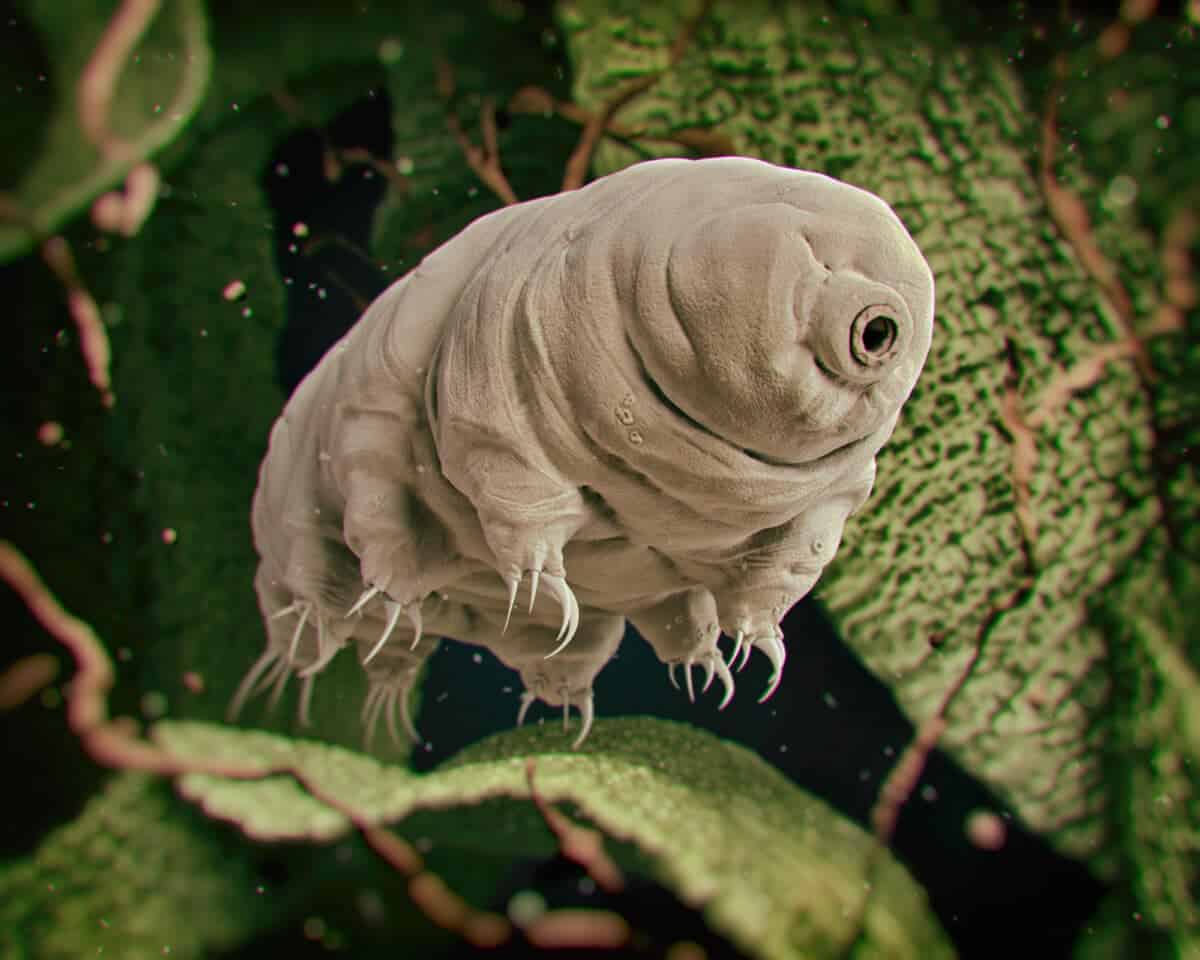
Tardigrades, often called water bears or moss piglets, are microscopic creatures with an almost supernatural ability to survive conditions that would be lethal to almost any other organism. These eight-legged extremophiles can enter a state called cryptobiosis, where they essentially shut down their metabolism and expel almost all water from their bodies. In this dehydrated state, tardigrades can survive temperature extremes from near absolute zero (-458°F) to 300°F, radiation levels thousands of times what would kill a human, the vacuum of space, crushing pressures six times greater than those in the deepest ocean trenches, and up to 30 years without food or water. When favorable conditions return, they simply rehydrate and continue living as if nothing happened. This remarkable resilience has made tardigrades the subject of intense scientific study, as understanding their survival mechanisms could potentially lead to breakthroughs in preservation technologies for medicines, organs, and even astronaut protection during space travel.
13. Migratory Birds’ Magnetic Navigation

Many migratory birds perform astonishing navigational feats, traveling thousands of miles with pinpoint accuracy to reach the same destinations year after year. What makes this ability truly remarkable is that birds like the Arctic tern can sense Earth’s magnetic field through specialized cells containing magnetite (a naturally magnetic mineral) in their beaks and eyes. This built-in compass is complemented by a complex internal clock that allows birds to compensate for the sun’s movement throughout the day, essentially giving them access to an internal GPS system. Recent research suggests that some birds may even “see” magnetic fields thanks to special proteins in their eyes called cryptochromes, which react to blue light and are sensitive to magnetic fields. This allows birds like the European robin to literally visualize magnetic field lines as patterns of light and shadow superimposed on their normal vision—a sensory experience humans can barely imagine.
12. Pistol Shrimp’s Sonic Weapon

The pistol shrimp, despite being only a few inches long, possesses one of the most powerful weapons in nature—a specialized claw that can create shockwaves louder than a gunshot. When this claw snaps shut at speeds of up to 60 mph, it creates a cavitation bubble that reaches temperatures of nearly 8,000°F—almost as hot as the surface of the sun—and produces a sound measuring 218 decibels, louder than a jet engine at takeoff. The resulting shockwave can stun or kill small fish and serves as both a hunting mechanism and a communication tool. What’s particularly fascinating is that the bubble collapses so quickly that it also produces a brief flash of light through sonoluminescence. The pistol shrimp’s colonies can be so noisy that they’ve been known to interfere with submarine sonar and underwater communications equipment, with colonies creating a constant crackling background noise that can dominate the soundscape of shallow tropical waters.
11. Axolotl’s Regenerative Superpowers
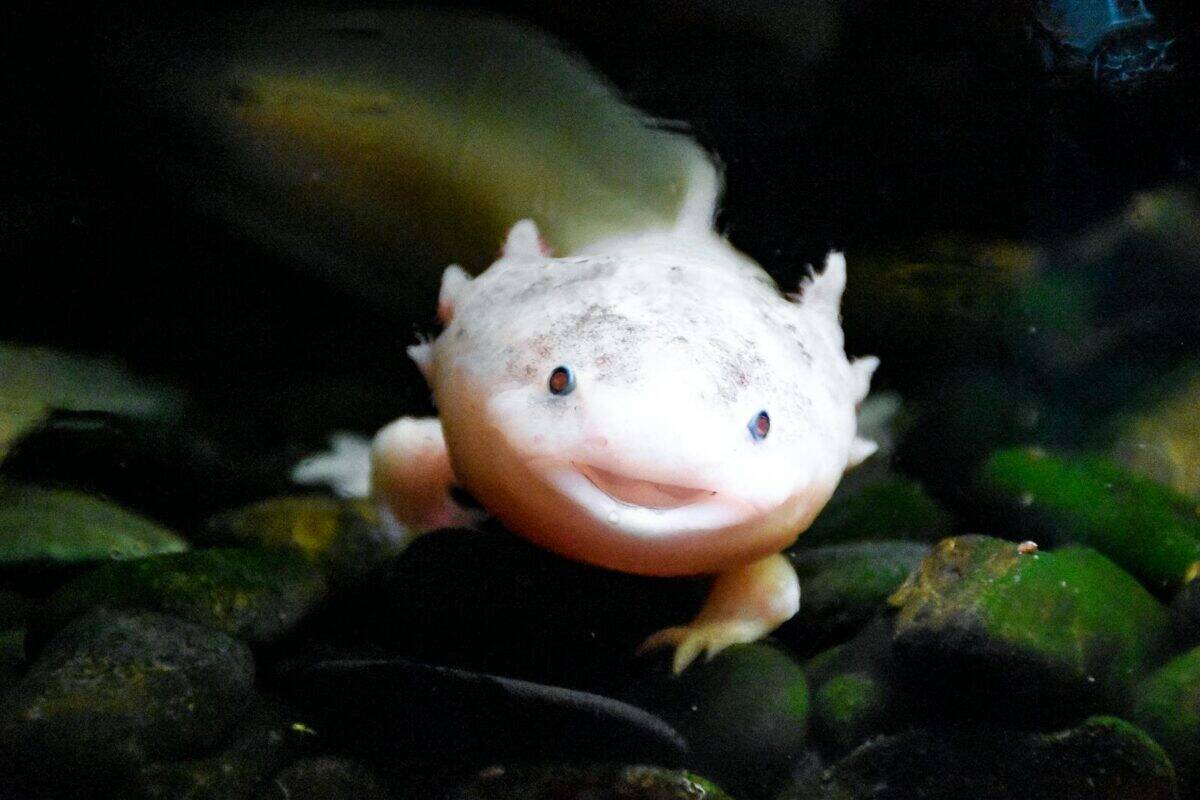
The axolotl, a salamander native to Mexico, possesses regenerative abilities that seem straight out of a superhero comic. Unlike most vertebrates, axolotls can regrow entire complex body parts with no scarring—including limbs, portions of vital organs like the heart and brain, spinal cord, and even parts of their eyes. What makes this even more extraordinary is that when an axolotl regenerates a limb, it doesn’t just produce a simplified version; it rebuilds the complete structure with all the intricate musculature, nerves, blood vessels, and bone architecture perfectly intact. Scientists have discovered that axolotls achieve this marvel through a process called dedifferentiation, where specialized cells at the injury site revert to a stem-cell-like state before transforming into whatever cell types are needed for regeneration. Additionally, axolotls can accept transplanted organs from other axolotls without rejection and can even receive transplanted cells from other species. These remarkable abilities have made them invaluable in medical research, potentially offering clues to enhancing human healing and regeneration capabilities.
10. Lyrebird’s Perfect Mimicry

The superb lyrebird of Australia possesses what might be the most sophisticated vocal mimicry ability in the animal kingdom. These ground-dwelling birds can perfectly replicate virtually any sound they hear—from the calls of other bird species (sometimes dozens of them in rapid succession) to environmental noises like camera shutters, car alarms, chainsaws, and even human speech. What makes this ability particularly remarkable is the precision of the mimicry; the lyrebird doesn’t just approximate these sounds but reproduces them with such accuracy that even audio experts have difficulty distinguishing the imitation from the original. This extraordinary talent stems from the lyrebird’s uniquely complex syrinx (the avian equivalent of a voice box), which contains specialized muscles that can be manipulated with incredible precision. Male lyrebirds incorporate these imitations into elaborate mating displays, with individuals developing personal “repertoires” that can include up to 25 different species’ calls. Perhaps most impressively, lyrebirds have been documented mimicking sounds they’ve heard only once, demonstrating not only vocal prowess but exceptional auditory memory.
9. Bombardier Beetle’s Chemical Explosion

The bombardier beetle has evolved one of the most sophisticated chemical defense mechanisms in nature—essentially, a controlled explosion chamber in its abdomen. When threatened, this beetle mixes two separately stored chemicals (hydrogen peroxide and hydroquinones) along with catalytic enzymes in a specialized reinforced chamber. This triggers a violent exothermic reaction that brings the mixture to near boiling point (around 212°F) and creates enough pressure to expel the resulting toxic spray with an audible pop, directed with remarkable precision at predators. What makes this ability particularly astonishing is that the beetle can fire multiple defensive bursts in rapid succession and rotate its abdominal tip to spray in virtually any direction—even over its head. The chemical reaction happens so quickly (in just milliseconds) that predators have little chance to react. Perhaps most impressively, the beetle’s internal chemistry lab manages this explosive reaction without harming the insect itself, thanks to a complex system of chambers lined with resilient protective layers. Engineers have studied this remarkable mechanism to develop applications ranging from automotive fuel-injection systems to medical spray technologies.
8. Platypus’ Electroreception
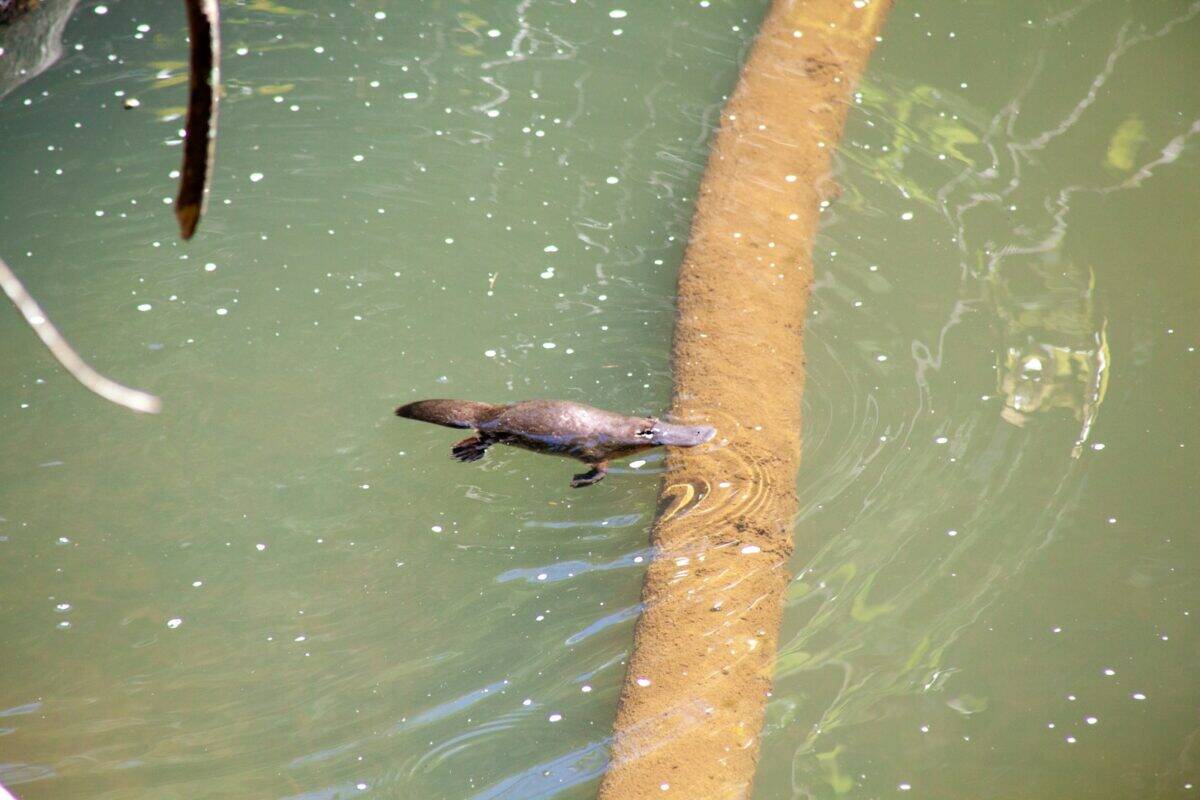
The duck-billed platypus, already famous for being one of the few mammals that lay eggs, possesses an even more extraordinary ability: electroreception. The platypus’s distinctive bill is covered with thousands of specialized receptors that can detect the minute electrical fields generated by the muscle contractions of prey animals. When hunting, platypuses close their eyes, ears, and nostrils completely underwater, relying entirely on this “sixth sense” to locate prey with remarkable precision in murky waters and total darkness. What makes this ability particularly fascinating is that the platypus’s electroreceptors are so sensitive they can detect electrical fields as weak as 50 nanovolts per centimeter—equivalent to detecting a 1.5-volt battery connected to electrodes placed nearly 2,000 miles apart. This exceptional sensitivity allows them to detect prey hiding under several centimeters of mud or gravel. Even more remarkably, the platypus’s brain has evolved to create a detailed mental map from these electrical signals, providing information about the size, distance, and movement of potential prey. This rare sensory ability is shared by only a handful of mammals, making the platypus one of nature’s most uniquely equipped hunters.
7. Hairy Frog’s Wolverine-Like Claws

The Trichobatrachus robustus, commonly known as the “hairy frog” or “horror frog,” possesses one of the most bizarre defense mechanisms in the animal kingdom. When threatened, this Central African amphibian deliberately breaks its own toe bones, pushing the sharp, broken bone fragments through its skin to create improvised claws—similar to the fictional character Wolverine from X-Men. What makes this ability particularly astonishing is that the frog has evolved a specialized connective tissue that connects the bone to a small nodule of collagen beneath the skin. When the frog flexes specific muscles, the bone breaks at a predetermined location, and the sharp point pierces through the skin, ready for defense. When the danger passes, the frog can retract these bone claws back into its toes, and the tissue heals naturally. Scientists remain puzzled about how the frog manages this transformation without permanent damage or infection, as the mechanism involves an open wound. This remarkable adaptation demonstrates nature’s incredible ingenuity in evolving unexpected solutions for survival—even ones that seem to defy conventional biological limitations.
6. Spiders’ Hydraulic Movement
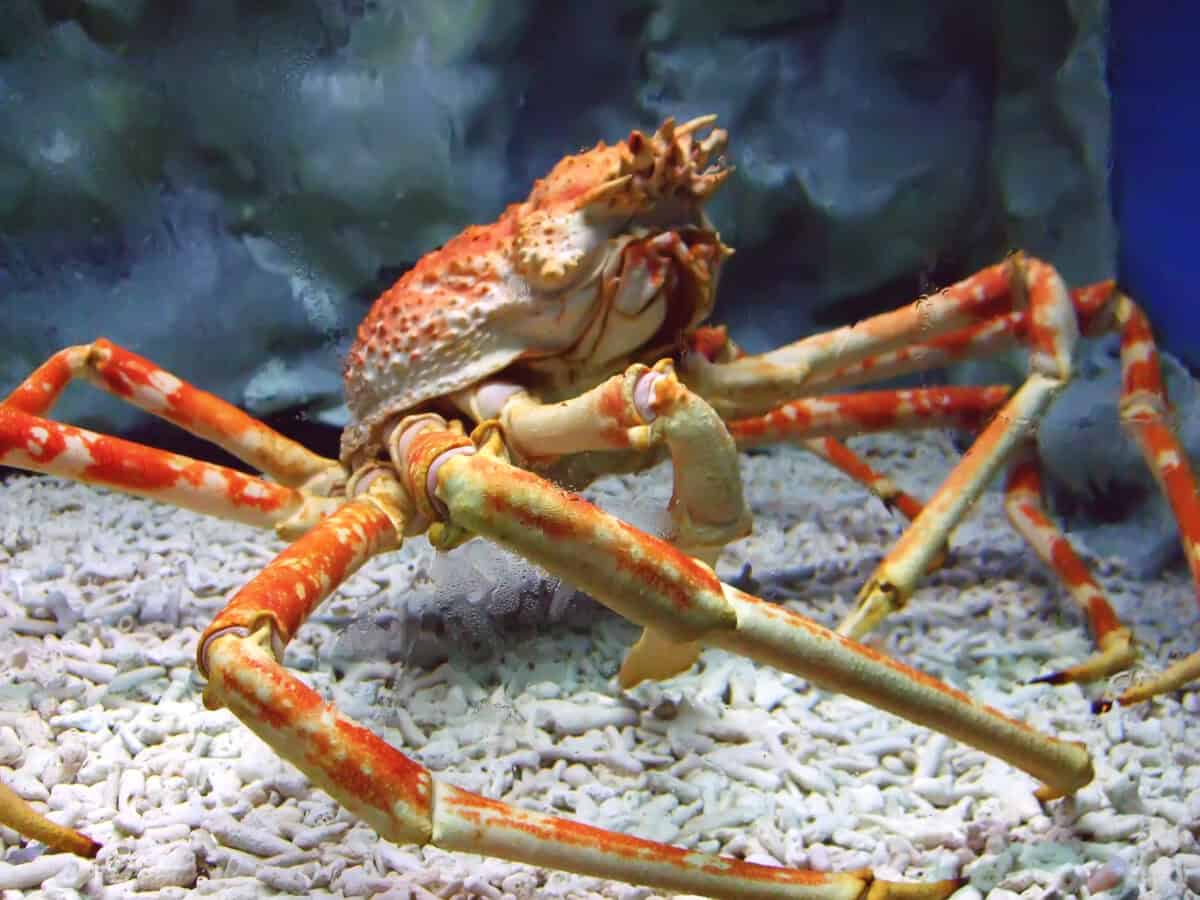
Spiders move in a way that’s fundamentally different from most animals, using a hydraulic system rather than antagonistic muscle pairs. While most creatures contract opposing muscles to extend and flex their limbs, spiders only have flexor muscles that bend their legs inward. To extend their legs, they pump hemolymph (spider blood) into the limb, using pressure to straighten it—essentially creating a hydraulic system similar to those used in heavy machinery. This unique mechanism explains why dead spiders curl up (as the pressure system fails) and why some tarantula owners report seeing “hydraulic fluid” leak from injured specimens. What makes this system particularly remarkable is its efficiency and precision; jumping spiders can leap distances over 50 times their body length with pinpoint accuracy using this hydraulic pressure system, generating forces that would tear conventional muscles. The spider’s central body acts as a pressure reservoir, allowing them to move multiple legs simultaneously with impressive coordination. This hydraulic movement system is so effective that it has inspired robotics engineers to develop fluid-powered microrobots that mimic the spider’s efficient locomotion mechanisms.
5. Cuttlefish’s Dynamic Camouflage

Cuttlefish possess what might be the most sophisticated camouflage system in nature, capable of instantaneously mimicking the colors, patterns, and even texture of their surroundings with astonishing precision. Their skin contains millions of specialized cells called chromatophores (for color changes), iridophores (for iridescence and brightness), and leucophores (for white reflections), all of which can be controlled independently to create dynamic patterns. What makes this ability truly remarkable is that cuttlefish are colorblind, yet can perfectly match the colors of their environment—a paradox that continues to puzzle scientists. They can also change their skin texture from smooth to rough by extending and retracting small muscular papillae, creating three-dimensional mimicry of objects like coral or rocks. Perhaps most impressively, cuttlefish can display different patterns on different sides of their body simultaneously, potentially allowing them to hide from predators on one side while displaying mating signals on the other. The neural control required for this hypnotic display is so complex that cuttlefish devote a significant portion of their large brain to managing their appearance, making them masters of an ability that seems more technological than biological.
4. Bats’ Echolocation Precision

Bats have evolved echolocation to a level of precision that defies our understanding of acoustic physics. By emitting high-frequency calls and listening to the returning echoes, these flying mammals can create detailed mental maps of their surroundings in complete darkness. What makes this ability truly extraordinary is the level of detail bats can perceive—they can detect objects as thin as a human hair, distinguish between different insect species based solely on wing-beat patterns, and navigate through fields of hundreds of obstacles without collision at speeds up to 30 mph. Some bat species can detect variations in surface texture of less than 0.3 millimeters and can even detect the ripples created by a small insect landing on water. Most remarkably, bats achieve this while processing echo information in real-time, making split-second flight adjustments with each ultrasonic pulse (which can be emitted up to 200 times per second). They can also adapt their calls on the fly, changing frequency, volume, and pattern to optimize for different hunting scenarios. This sophisticated biological sonar system operates with such precision that it continues to inspire technological advances in fields ranging from medical ultrasound to autonomous vehicle navigation.
3. Slime Mold’s Problem-Solving

Despite lacking a brain or nervous system, slime molds display problem-solving abilities that challenge our understanding of intelligence. These single-celled organisms, which exist as vast networks of interconnected nuclei sharing one cell membrane, can solve complex spatial problems with remarkable efficiency. In laboratory experiments, the slime mold Physarum polycephalum successfully recreated the Tokyo rail system’s optimal layout when food sources were placed at locations corresponding to major cities. When presented with maze puzzles, slime molds find the shortest path between food sources, effectively solving problems that would require complex algorithms in computer science. What makes this ability particularly extraordinary is that slime molds achieve these feats through simple biochemical reactions and protoplasmic flow, essentially creating a rudimentary form of memory by leaving behind chemical trails that inform future growth directions. They can also “learn” to ignore harmless obstacles after repeated exposures, displaying a primitive form of habituation. Perhaps most remarkably, when separated into multiple pieces, slime mold fragments retain a form of shared memory, suggesting a distributed intelligence that operates across the entire organism. This mysterious problem-solving ability in an organism without a brain raises profound questions about the nature of intelligence itself and demonstrates that cognitive-like processes can emerge from surprisingly simple systems.
2. Desert Ant’s Internal Pedometer

The Saharan desert ant (Cataglyphis bicolor) possesses one of the most precise natural navigation systems known to science—a biological pedometer that allows it to return in a straight line to its nest after foraging journeys that may involve twists and turns covering hundreds of meters in featureless desert terrain. Unlike other ants that follow chemical trails, these desert specialists count their steps to measure distance, while using the sun’s position as a compass reference. What makes this ability truly remarkable is the ant’s compensation mechanism; researchers discovered that if they attached tiny stilts to the ants’ legs (making their steps longer) or shortened their legs, the ants would overshoot or undershoot their return journey by precisely the factor by which their stride length had been altered—proving they were counting steps rather than measuring time or energy expenditure. Even more impressively, these ants integrate this pedometer with a continuous calculation of their position relative to the nest, performing vector math that would challenge many humans, all with a brain smaller than a pinhead. This sophisticated navigation is achieved with fewer than 100,000 neurons (compared to a human’s 86 billion), making it one of nature’s most efficient computational systems and inspiring new approaches to robot navigation in GPS-denied environments.
1. Octopus’s Distributed Intelligence
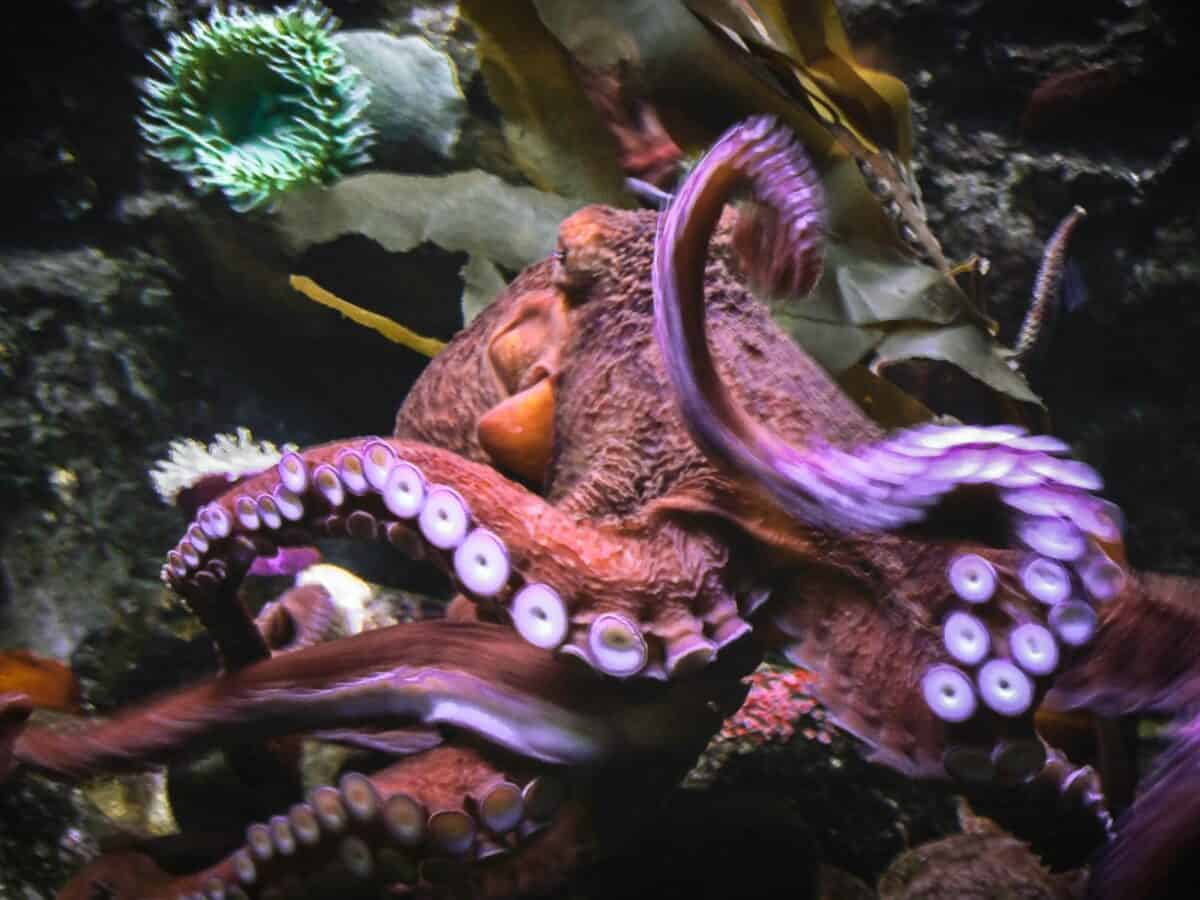
The octopus is often regarded as one of the most intelligent creatures on the planet, but what truly sets it apart is the distribution of that intelligence. Instead of housing all its neurons in a central brain like most animals, the octopus has a decentralized nervous system with around 500 million neurons—comparable to a dog—but nearly two-thirds are located in its arms. This means each arm can process information and perform complex tasks independently, often without direct input from the brain. In essence, an octopus’s limbs can “think” for themselves, exploring, manipulating objects, and even reacting to stimuli autonomously. Experiments have shown that even severed octopus arms can respond to touch and attempt to grasp objects. Meanwhile, the central brain coordinates higher-level problem-solving, such as navigating mazes, opening jars, or using tools. This distributed intelligence system defies our typical understanding of cognition and continues to fascinate neuroscientists, roboticists, and philosophers alike. With their combination of curiosity, adaptability, and otherworldly neural wiring, octopuses challenge our ideas of what intelligence looks like—and how it might evolve on entirely different worlds.
Conclusion:

The seventeen extraordinary animal abilities explored in this article reveal a natural world far more complex and astonishing than most of us ever imagined. These creatures don’t just survive—they thrive by leveraging evolutionary innovations that rival or even surpass human technology and logic. From the tardigrade’s space-defying resilience to the octopus’s decentralized intelligence, each example challenges our assumptions about biology, physics, and cognition. What unites them all is a profound reminder that intelligence, adaptation, and ingenuity are not uniquely human traits—they are embedded deeply in the fabric of life itself. As science continues to uncover the secrets behind these phenomena, we gain not only practical insights for innovation but also a deeper appreciation for the awe-inspiring creativity of evolution.

As a little kid, I fell in love with nature, wildlife, and animals. Living in the USA, South Africa, Italy, China and Germany gave me the opportunity to discover the world's Wildlife. My favorite animals are Mountain Gorillas, Siberian Tigers, and Great White Sharks.
I'm a certified PADI Open Water Diver, went to Everest Base Camp and Trekked Gorillas in Uganda. I hold a Master of Science in Economics and Finance.
Please send any feedback to feedback@animalsaroundtheglobe.com
- 14 Most Beautiful Bird Songs You Can Hear in America - July 15, 2026
- The Longest Snake Ever Found Slithering in the U.S. - July 15, 2026
- Why Humpback Whales Are Singing Louder Off U.S. Shores - July 15, 2026