

Imagine walking through a sunlit forest or desert and hearing the faintest rustle in the grass—your heart skips a beat. Is it just the wind or perhaps one of the United States’ most mysterious and misunderstood residents? Venomous snakes have slithered across American soil long before any of us, inspiring fear, fascination, and endless curiosity. For animal lovers and thrill-seekers alike, understanding these remarkable creatures is both a challenge and a privilege. Dive in as we unravel the secrets, legends, and surprising truths behind the 15 most venomous snakes found across the United States.
15. Western Diamondback Rattlesnake

The Western Diamondback Rattlesnake is a true icon of the American Southwest. With its bold, diamond-shaped patterns and unmistakable rattle, this snake commands attention and respect. It’s often spotted in Texas, Arizona, and New Mexico, blending into dusty paths and rocky outcrops. The Western Diamondback’s venom is potent, causing pain and swelling, but fatalities are rare thanks to quick medical care. Its defensive nature means it strikes only when threatened, usually after rattling a stern warning. Ranchers and hikers alike learn to heed its sound, a dry buzz that can stop you in your tracks. This diamondback is a reminder that beauty and danger can live side by side in the wild.
14. Eastern Diamondback Rattlesnake

As the largest venomous snake in North America, the Eastern Diamondback Rattlesnake is nothing short of impressive. Found mainly in the southeastern states, especially Florida and Georgia, it flaunts striking black diamond shapes outlined in cream down its back. Its venom is powerful, designed to quickly immobilize prey like rabbits and birds. While its size and reputation might sound intimidating, the Eastern Diamondback is actually shy, preferring to avoid human contact. It will usually rely on its camouflage to remain unseen, only rattling or striking if it feels cornered. For many, spotting one is a rare and unforgettable glimpse into the wild heart of the South.
13. Timber Rattlesnake

Deep forests and rugged hills from the Northeast to the Midwest are home to the Timber Rattlesnake. Cloaked in earthy browns and yellows, it becomes nearly invisible among fallen leaves and mossy logs. This snake’s venom can be especially dangerous due to its large size and relatively high yield, though bites are rare. The Timber Rattlesnake spends much of its life hidden, basking quietly or hunting small mammals. In folklore, it’s a symbol of American resilience, famously appearing on the “Don’t Tread on Me” flag. If you love hiking, keep your eyes peeled and your ears open for the gentle rattle that signals its presence.
12. Mojave Rattlesnake

The Mojave Rattlesnake slithers through arid landscapes in the Southwest, often near deserts and grasslands. What sets this snake apart is its uniquely potent venom—a cocktail that can be more neurotoxic than that of any other rattlesnake in the country. Its greenish hue helps it blend in with sagebrush and sand. Encounters can be startling, but the Mojave Rattlesnake is not aggressive unless provoked. For scientists, its venom is both a challenge and a puzzle, holding clues to new medicines and treatments. Its presence reminds us that even the harshest places are full of life and mystery.
11. Prairie Rattlesnake

Stretching from the Great Plains to the Rocky Mountains, the Prairie Rattlesnake thrives in open grasslands and rocky bluffs. Its coloration—muted browns with light bands—makes it nearly invisible against prairie grasses. The Prairie Rattlesnake’s venom is hemotoxic, breaking down blood cells and tissues, though bites are rarely fatal with proper care. Ranchers often encounter this snake while working the land, and many have stories of narrowly avoiding a hidden rattler. It’s a crucial predator, keeping rodent populations in check, and a symbol of the wild, untamed American heartland.
10. Cottonmouth

Also called the Water Moccasin, the Cottonmouth haunts slow-moving streams, swamps, and marshes in the Southeast. Its name comes from the bright white interior of its mouth, displayed as a warning before striking. This semi-aquatic snake is famous for its boldness and can sometimes stand its ground when threatened. Cottonmouth venom is cytotoxic, causing severe tissue damage, and bites require immediate medical attention. Despite its fearsome reputation, it plays a valuable role in wetland ecosystems, keeping fish and amphibian populations balanced. For many, seeing a Cottonmouth is a thrilling reminder of the power lurking just beneath the water’s surface.
9. Copperhead

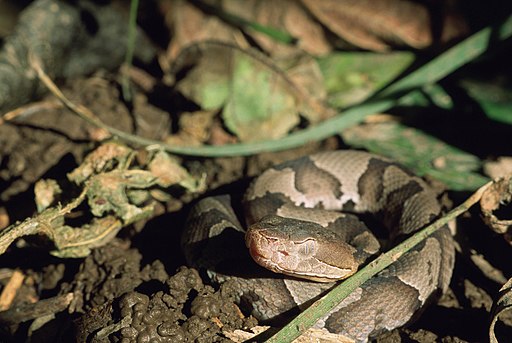
Easily recognizable by its coppery head and hourglass body bands, the Copperhead is widespread throughout the eastern and central United States. Thriving in forests, rocky hillsides, and even suburban woodpiles, it’s one of the most frequently encountered venomous snakes. Its venom is relatively mild compared to other pit vipers, but bites can still be quite painful. Copperheads often freeze when threatened, relying on their camouflage to avoid detection. Many bites occur when people accidentally step on them. For nature lovers, spotting a Copperhead is both a lesson in caution and an appreciation for nature’s camouflage artists.
8. Eastern Coral Snake

Draped in vivid bands of red, yellow, and black, the Eastern Coral Snake is as beautiful as it is dangerous. Found in the sandy pine forests and coastal plains of the Southeast, this snake’s neurotoxic venom can be life-threatening if untreated. The classic rhyme, “Red touch yellow, kill a fellow; red touch black, friend of Jack,” helps people distinguish it from harmless mimics. Coral snakes are secretive, often hiding under logs or leaf litter, and rarely bite unless handled. Their presence is a rare treat for herpetologists and a testament to the wild diversity of America’s forests.
7. Texas Coral Snake

The Texas Coral Snake, a close cousin to the eastern variety, slithers through Texas and parts of Louisiana and Arkansas. It sports the same dazzling color pattern, delivering a powerful neurotoxic bite. Luckily, actual encounters are rare, as this snake spends much of its time underground or hidden beneath debris. The Texas Coral Snake is shy and reclusive, preferring to escape rather than confront threats. For many, just knowing it’s out there adds a layer of excitement—and a touch of caution—to exploring the Lone Star State’s wild spaces.
6. Southern Pacific Rattlesnake

From the chaparral-covered hills of Southern California to the Sierra Nevada foothills, the Southern Pacific Rattlesnake makes its home. It’s highly adaptable, thriving in forests, grasslands, and even the edges of suburban neighborhoods. This snake’s venom can vary widely, with some populations carrying a mix of neurotoxic and hemotoxic effects. Southern Pacific Rattlesnakes are often seen basking on trails or rocky outcrops, warming themselves in the sun. They play a crucial role in their ecosystems, controlling rodents and other pests. Encounters can be startling, but this rattler usually prefers to avoid conflict.
5. Eastern Massasauga

The Eastern Massasauga is a small, secretive rattlesnake found in wet meadows, prairies, and marshes in the Midwest and parts of the Northeast. Its gray body, marked with dark brown blotches, helps it blend into grassy surroundings. The Massasauga’s venom is less potent than that of larger rattlesnakes, but bites still need prompt medical care. It’s a federally listed threatened species, suffering from habitat loss and fragmentation. For many conservationists, protecting the Eastern Massasauga is a race against time—a fight to preserve one of America’s rarest and most fascinating snakes.
4. Dusky Pygmy Rattlesnake

Small but mighty, the Dusky Pygmy Rattlesnake is found in the Southeast, especially around Florida’s marshes and pine forests. This little rattler rarely grows longer than two feet, but its bold personality more than makes up for its size. Its venom is potent for its size, causing pain and swelling, but is rarely fatal. The Dusky Pygmy is famous for its rapid tail vibration, though its rattle is so tiny it can be hard to hear. These snakes often hunt frogs and lizards, playing an important role in controlling insect and amphibian populations. Their feisty spirit and miniature size make them a favorite among snake enthusiasts.
3. Western Pygmy Rattlesnake

The Western Pygmy Rattlesnake is another pint-sized powerhouse, living in the central and southern states, from Texas to Missouri. This snake’s gray or brown body, speckled with darker spots, makes it nearly invisible among leaf litter and rocks. Despite its small stature, its venom packs a punch, causing severe pain but rarely leading to death. The Western Pygmy is shy and relies on camouflage to avoid larger predators. Encounters are infrequent, but when they happen, they’re a reminder that even the smallest creatures can have a big impact on their environment.
2. Arizona Black Rattlesnake

The Arizona Black Rattlesnake is a shadowy presence in the canyons and pine forests of Arizona and parts of New Mexico. Its dark, almost jet-black scales make it one of the most striking rattlesnakes in the country. This snake’s venom is hemotoxic, causing pain and tissue damage, but fatalities are exceedingly rare. The Arizona Black is a master of disguise, able to change its color slightly to better blend in with surroundings. It spends much of its life hidden among rocks and logs, emerging to hunt at dusk. For those lucky enough to spot one, it’s an unforgettable encounter with the wild.
1. Eastern Copperhead

The Eastern Copperhead holds a special place in the hearts—and sometimes nightmares—of many who live in the eastern United States. With its rich, coppery tones and beautiful hourglass markings, it’s one of the most photographed snakes in America. The Eastern Copperhead’s venom is relatively mild but still causes considerable pain and swelling. This snake is famous for its patience, often lying motionless for hours while waiting to ambush prey. Copperheads are exceptionally well-camouflaged, making them easy to overlook and occasionally leading to surprise encounters. For nature lovers, they’re a living reminder that even in our backyards, the wild is never far away.
Conclusion

Venomous snakes in the United States are more than just symbols of danger—they’re vital parts of our ecosystems, keeping nature in balance and inspiring awe with every encounter. Whether lurking in swamps, basking on sunlit rocks, or hiding in grassy prairies, these remarkable reptiles challenge us to look closer at the world around us. Each snake has its story, its mystery, and its role in the wild American landscape. Next time you walk through nature, will you see the beauty, or will you feel a shiver of excitement wondering what’s just beneath the surface?

As a little kid, I fell in love with nature, wildlife, and animals. Living in the USA, South Africa, Italy, China and Germany gave me the opportunity to discover the world's Wildlife. My favorite animals are Mountain Gorillas, Siberian Tigers, and Great White Sharks.
I'm a certified PADI Open Water Diver, went to Everest Base Camp and Trekked Gorillas in Uganda. I hold a Master of Science in Economics and Finance.
Please send any feedback to feedback@animalsaroundtheglobe.com
- The 10 Rarest Dog Breeds Making a Comeback in America - July 19, 2026
- 13 Creatures That Survived Mass Extinctions - July 19, 2026
- 12 Pets That Are Perfect for Seniors - July 19, 2026