
Most dog owners don’t see it coming. Not because they don’t care, but because dogs are heartbreakingly good at hiding pain. By the time your dog starts visibly limping or struggling to stand, the discomfort has often been building for months, sometimes more than a year. That quiet suffering happens in the background while you assume everything is fine.
What’s changing is what vets now know about the warning signs that come before the obvious ones. The tiny behavioral shifts, the hesitations, the preference changes, the small moments you probably noticed once and then forgot. Every single one on this list is something real owners missed until it was harder to fix. A few of the later signs are the ones that surprise people the most.
#1 – Reluctance to Jump on the Couch or Bed
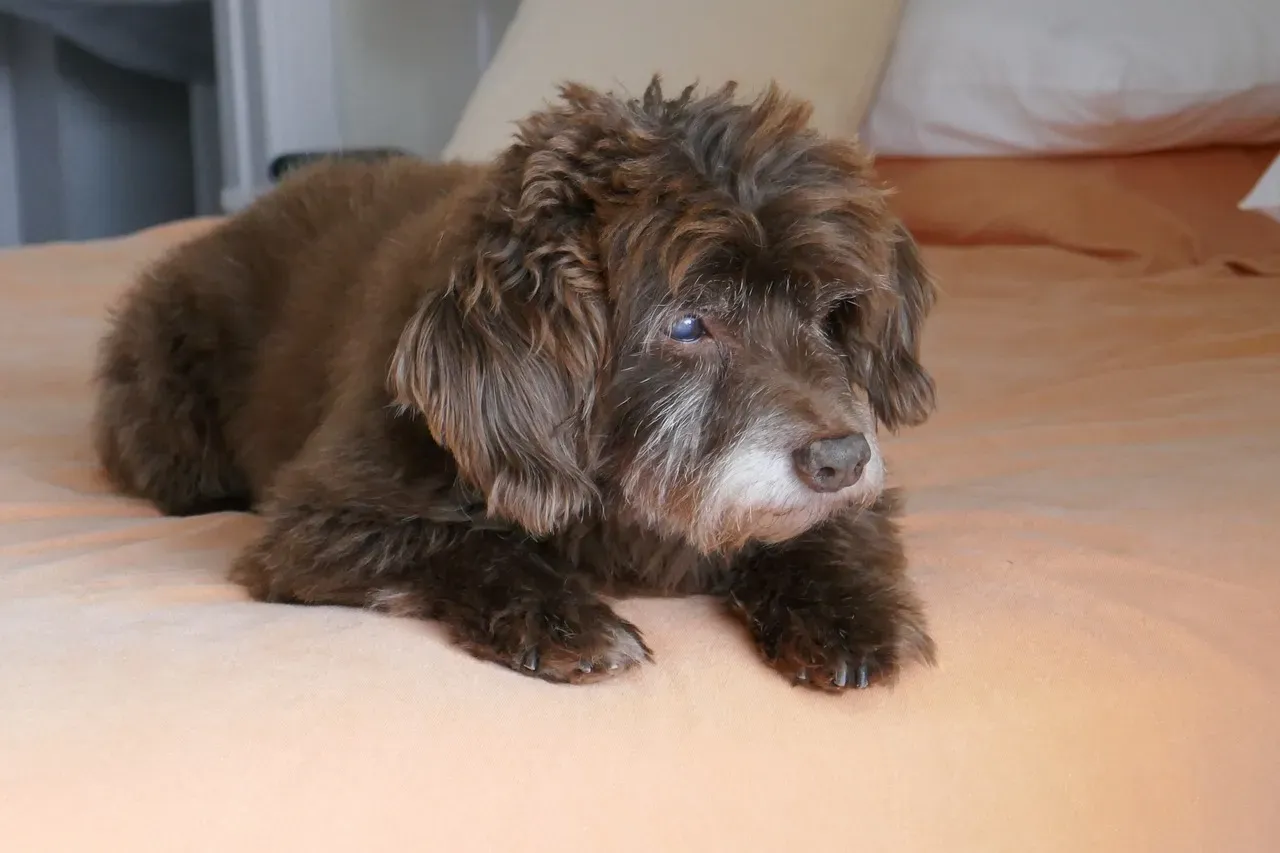
When your dog stops leaping onto their favorite spot on the sofa, it’s tempting to laugh it off as laziness or a new personality quirk. But vets consistently flag this as one of the very first visible signs of joint discomfort, and it shows up long before any limp does. Dogs are wired to hide weakness, so by the time they’re avoiding a jump they used to make without thinking, the threshold for pain has already been crossed.
The encouraging part is that catching it here, at the avoidance stage, gives you real options. Simple joint supplements, modest weight management, or even just adding a low step or ramp can make a dramatic difference. Many dogs return to their old furniture habits within weeks once the discomfort is addressed. The owners who wait for a limp are the ones who end up with a harder problem to reverse.
Fast Facts
- Arthritis affects an estimated 80% of dogs by age 8 – and signs can appear as early as age 1.
- Large breeds like Labs, German Shepherds, and Great Danes are at highest risk and may show symptoms years earlier than small breeds.
- Dogs instinctively mask pain – avoiding a jump is often the first signal their body gives before a limp ever develops.
- Joint supplements, ramps, and low steps are among the easiest early interventions – and the most frequently delayed.
#2 – Taking Longer to Settle After Walks
If your dog used to flop down the moment you got home and now circles, adjusts, gets up again, and stands staring at the floor for two or three minutes before finally lying down, that’s not pickiness. That circling and repositioning is a dog trying to find an angle that doesn’t hurt. Stiffness from low-grade inflammation builds up during activity and peaks in the hour after a walk, which is exactly when you’re watching them.
What makes this sign so easy to miss is that the dog still seems happy and engaged on the walk itself. The signal only shows up in that quiet transition at home. Vets note this pattern can appear months before joint changes appear on X-rays, which means there’s a real window to act. Switching from one long daily walk to two or three shorter ones often breaks the cycle and keeps muscles from quietly atrophying in the background.
#3 – Sleeping Through the Night for the First Time
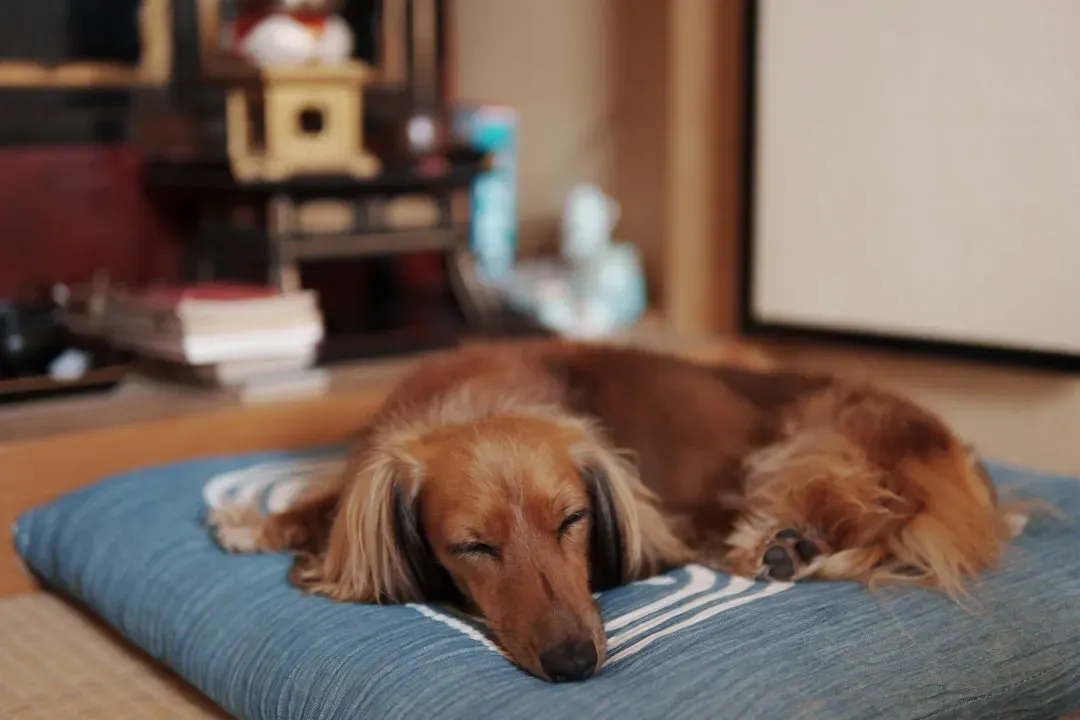
This one tricks almost everyone because it feels like a gift. The dog that used to wake you up for water or pace the hallway at 2 a.m. is suddenly sleeping straight through, and you’re finally getting rest too. What’s actually happening in many cases is that your dog’s activity level has dropped enough that they’re simply exhausted by bedtime, and the body is conserving energy to manage low-grade discomfort.
Dogs in mild pain rest more deeply and move less overall, which shows up as longer, heavier sleep. Vets flag sudden changes in sleep architecture, especially in dogs over seven, as a marker worth investigating. The fix isn’t always complicated. Supportive orthopedic bedding, a slightly earlier dinner, and a short post-dinner walk can restore more normal patterns. What matters is not filing this change under “finally” and moving on.
#4 – Slower Pace on Familiar Walks
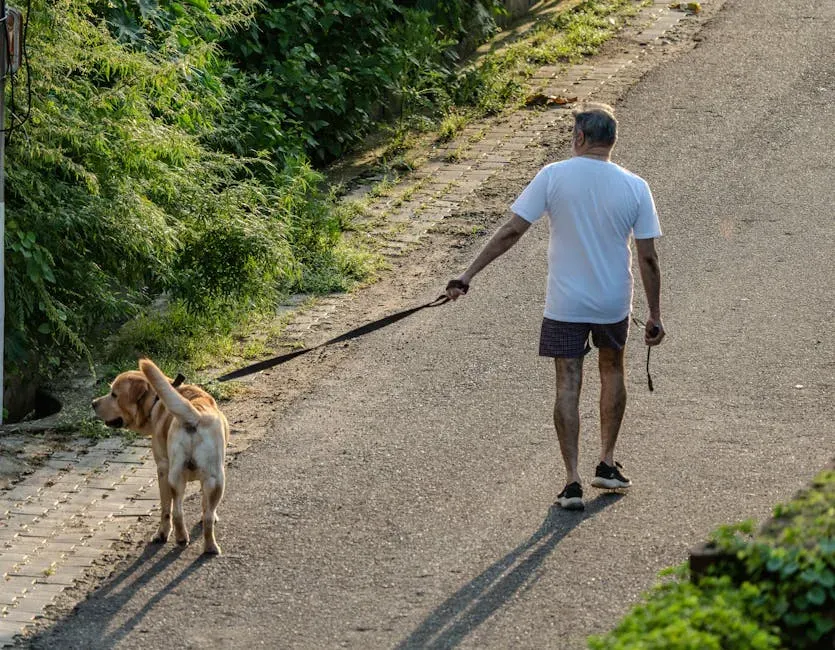
The same route, the same dog, but now it takes noticeably longer and your dog seems content to amble where they used to trot. Owners almost always attribute this to weather, or to their own distraction, or simply to the dog “taking it all in.” Veterinary consensus points somewhere less charming: a slower pace on a familiar route is a classic early arthritis signal, and it usually means the dog has recalibrated what feels manageable.
Here’s the piece that genuinely surprises people: dogs will subtly match a human’s slower speed to mask their own limitations. If you’ve been slowing down on walks yourself, you may have accidentally given your dog cover for a change that needed attention. Shorter, more frequent walks preserve muscle mass and mental stimulation without pounding worn joints. Pushing the old pace doesn’t build fitness at this stage. It accelerates damage.
#5 – Less Interest in Fetch or Tug
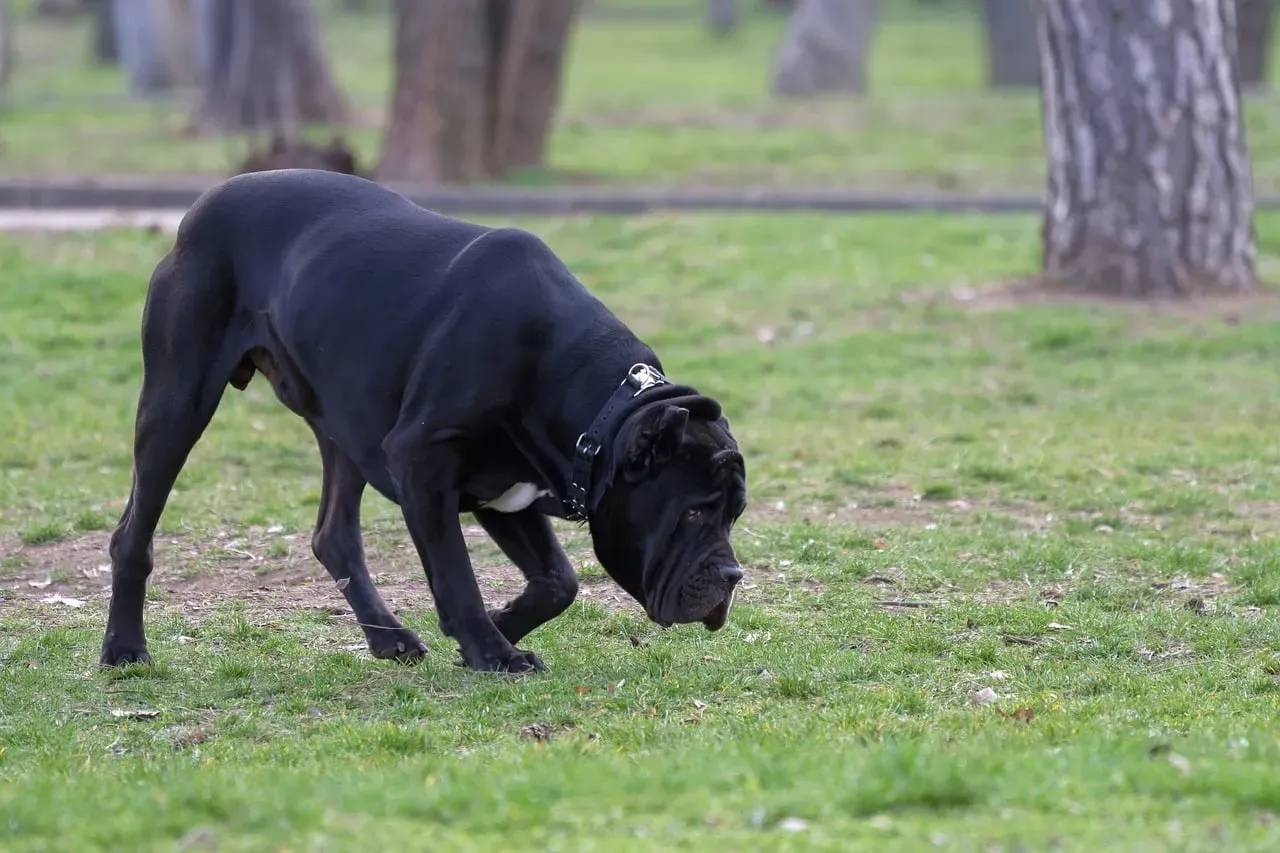
The tennis ball sits in the corner. The rope toy hasn’t moved in a week. You assume your dog has outgrown the phase or just isn’t feeling it today. Then a week becomes a month and the toy is still there. Reduced play drive in dogs who were once reliably enthusiastic is one of the most commonly missed early signs, partly because the dog still eats well, still wags, still seems basically fine in every other way.
What’s changed is the cost-benefit calculation happening in your dog’s body. Running, spinning, and leaping now carry a physical cost that wasn’t there before, and the dog has quietly decided it’s not worth it. The good news is that play doesn’t have to end. Scent work, slow sniff walks, and gentle puzzle games scratch the same engagement itch without the joint impact. Switching to lower-load activities keeps the bond strong and gives you a clear window into how your dog’s comfort level changes over time.
Quick Compare: High-Impact vs. Low-Impact Activities
- Skip (for now): Fetch, tug-of-war, frisbee, off-leash sprinting, agility jumps
- Keep doing: Slow leash walks on grass or dirt, sniff walks, swimming, gentle puzzle feeders
- Add in: Nose work games, scatter feeding in the yard, calm indoor training sessions with high-value treats
- Why it matters: Low-impact activity maintains muscle mass that protects joints – total rest actually speeds decline
#6 – Stiffness After Naps or Car Rides
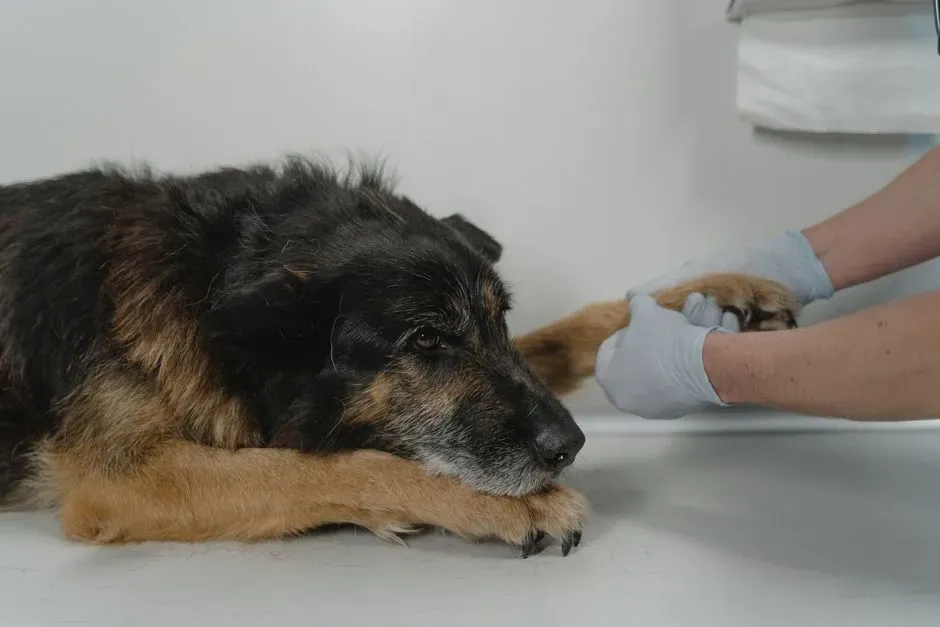
You’ve probably seen it: the long, theatrical morning stretch that seems to last forever before your dog can actually walk normally. For a while it’s endearing. After a point, it’s informative. Prolonged post-rest stiffness, especially when it takes five to ten minutes to ease, is a textbook early warning for hip and joint inflammation. The body cools and tightens during inactivity, and a dog with developing arthritis feels that change sharply.
Car rides are a particularly reliable trigger because dogs hold a braced posture for the duration, which loads the joints differently than walking. If your dog steps out of the car and moves stiffly or hesitantly for the first few minutes, that’s worth noting. A warm compress on the hips before activity, a slow five-minute warm-up walk before anything faster, or even a brief gentle massage can make a measurable difference. Most owners only act once the limp arrives. The stiffness window is earlier, and more treatable.
#7 – Panting More on Mild Days
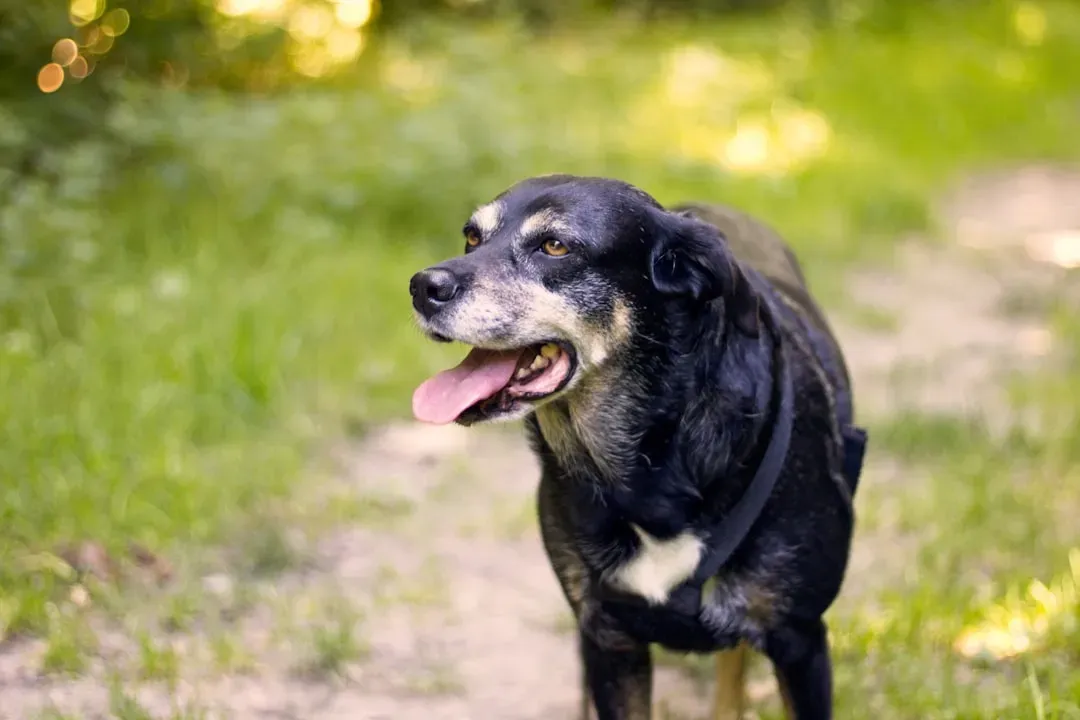
Panting after a run makes sense. Panting on a cool morning after a short walk, or while just standing in the kitchen, does not. In senior dogs, unexplained panting that isn’t connected to obvious heat or excitement often signals the body working significantly harder than it used to just to move. It’s the dog’s version of breathing heavily climbing stairs that used to feel effortless.
The tricky part is that owners almost always attribute this to anxiety, and sometimes that’s accurate. But when panting appears consistently during or after mild activity in a dog that didn’t used to do it, the pattern matters more than any single episode. Tracking when and where it happens, how long it lasts, and what preceded it gives your vet something concrete to work with. Catching cardiovascular or joint strain at this stage, before it becomes a crisis, is exactly the kind of difference that early attention makes.
#8 – Hesitation on Stairs or Curbs
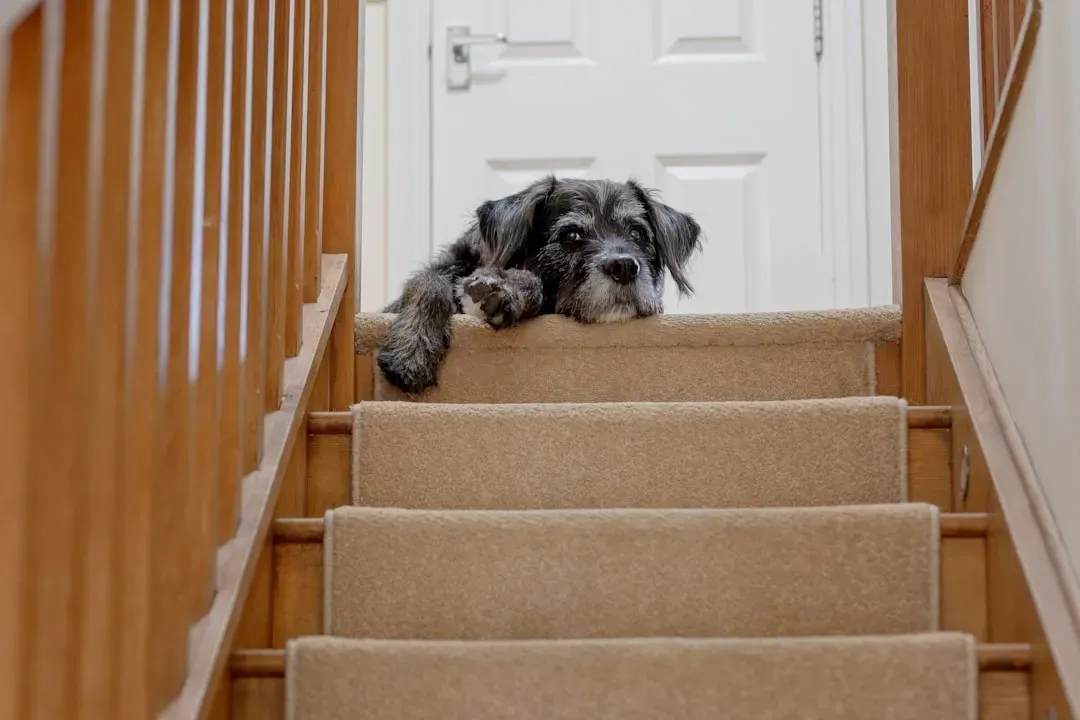
That pause at the bottom of the stairs, the slight hang-back before stepping off a curb, the moment where your dog looks at the obstacle and then looks at you – it’s easy to read as caution or even personality. What it usually represents is pain avoidance. Your dog has learned that the impact of stepping down or the effort of stepping up carries a cost, and they’re calculating whether they want to pay it.
Dogs are remarkably adaptive and will quietly alter their entire gait to spare one sore joint, sometimes for months before anything shows up in a vet exam. Installing a ramp for the car, adding grip tape to hardwood stairs, or simply practicing low step-ups with treats builds both confidence and the muscle support that protects damaged joints. Ignoring this stage doesn’t give the dog time to adjust. It accelerates muscle loss and makes the eventual decline steeper.
At a Glance: Home Modifications That Actually Help
- Carpet runners or non-slip rugs on hardwood and tile floors
- A car ramp or foldable steps – especially for trucks and SUVs
- Grip tape or rubber matting on wooden stair edges
- Orthopedic memory foam dog bed positioned at floor level (no need to step up)
- Baby gates to limit stair access during high-inflammation flare-ups
#9 – Subtle Weight Gain Around the Middle
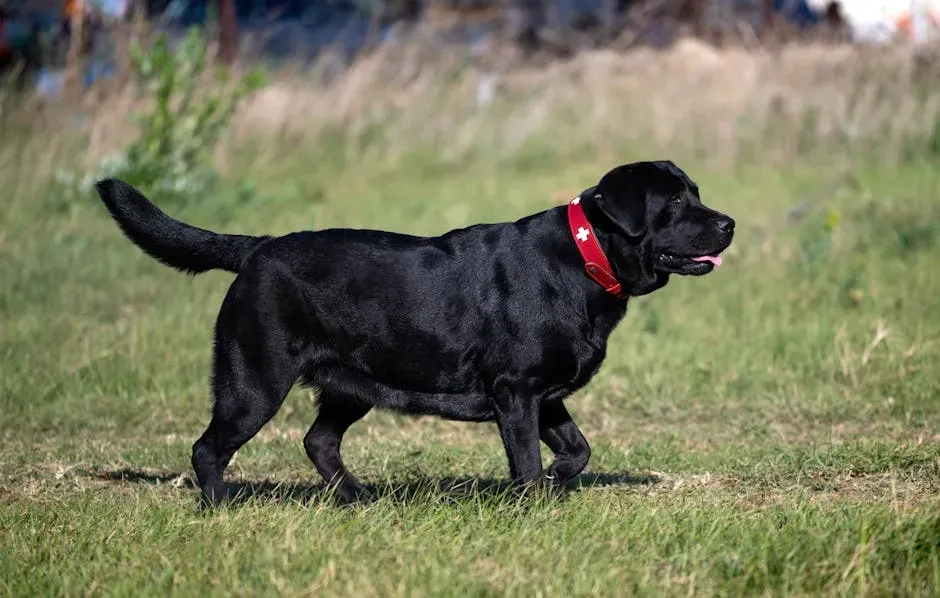
A few extra pounds on a dog look soft and harmless. The problem is that the weight and the reason for it form a loop that’s hard to break once it gets going. A dog that moves less because of discomfort burns fewer calories, gains weight, and then carries more load on already-stressed joints, which increases the discomfort, which reduces movement further. Most owners catch the weight but miss the underlying driver.
The numbers are sobering: every extra pound a dog carries puts roughly four times the stress on its joints, and even modest weight loss of 6% of body weight has been shown to produce measurable improvements in mobility within weeks. The solution isn’t just cutting food, because muscle matters as much as fat in joint health. Low-impact movement, swimming if accessible, slow leash walks on soft surfaces, and controlled portion sizes work together in a way that diet alone doesn’t. If your dog’s waist has quietly disappeared over the past year, it’s worth asking what changed first: the food or the movement.
#10 – Irritability When Touched on the Hips
A dog that used to melt into belly rubs and now tenses, moves away, or actually growls when you touch their lower back or hips is not being difficult. They’re telling you something hurts. This guarding behavior – protecting a painful area from contact – is one of the clearest communications a dog can offer, and it still gets dismissed far too often as a mood or a phase.
What makes it clinically significant is the timing: this guarding response typically precedes visible limping by weeks or months. The dog knows long before the X-ray does. A vet check at this stage, before the behavior escalates into snapping or full aggression, opens the door to pain management that can genuinely restore the dog’s comfort and temperament. Most owners wait until there’s a bite incident to investigate. The growl was the earlier, kinder warning.
“Dogs may be living with arthritis for years before they begin showing clear symptoms that they’re in pain.”
Healthline, Pet Health
#11 – Excessive Licking of One Joint
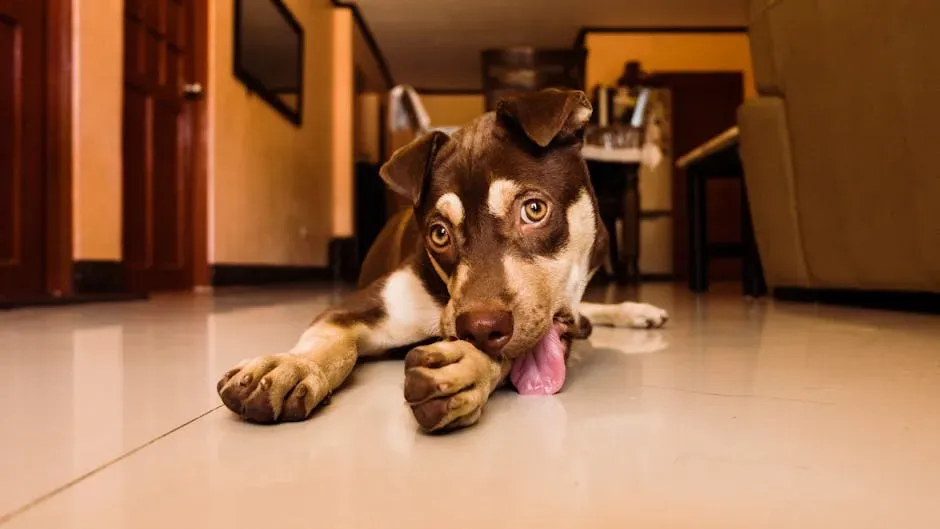
Obsessive licking focused on one specific spot – the same elbow, the same knee, the same wrist – gets filed under skin issues almost every time. The coat gets checked for a rash, the area gets wiped down, and if nothing obvious appears, the behavior gets ignored. What’s more often happening is that the dog is attempting to soothe internal discomfort the only way they know how: by applying warmth and pressure from the tongue to a joint that aches.
The compounding problem is that sustained licking creates secondary hot spots and skin damage that then become their own issue, effectively burying the original joint signal under a visible skin complaint. By the time you’re treating the hot spot, the joint inflammation that triggered everything has been quietly progressing for weeks. Redirecting with a puzzle toy buys time, but addressing the underlying inflammation is what actually stops the cycle. Location and persistence are the keys: one spot, repeatedly, is almost never just grooming.
#12 – Changes in Potty Posture or Frequency
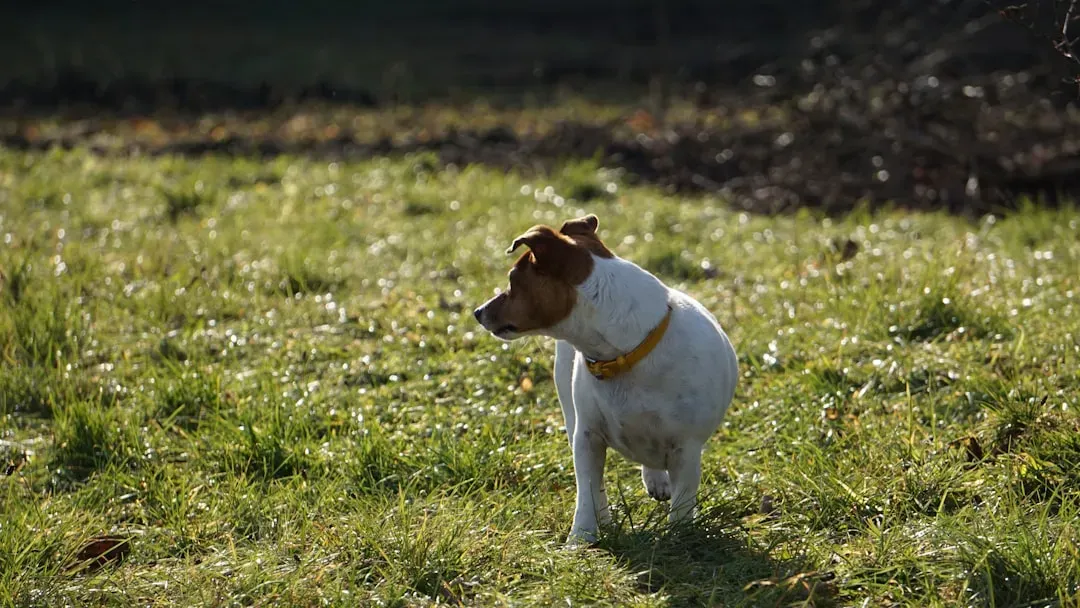
This one is uncomfortable to talk about, which is probably why it goes unaddressed so long. A dog that takes noticeably longer to squat, assumes an unusual posture to eliminate, or seems to rush and cut the process short isn’t necessarily having a bladder problem. Hip weakness and lower back pain change the mechanics of elimination in ways that are visible if you’re paying attention. The dog isn’t doing something wrong. They’re compensating for something that hurts.
Vets note that these compensatory habits often develop months before owners notice accidents indoors, which are usually the event that finally triggers a vet visit. More frequent short outings reduce the urgency that forces uncomfortable postures. Raised feeders reduce the spinal load at mealtimes. And treating the underlying hip or back issue directly restores more normal function than any schedule adjustment alone. Don’t wait for the accident to make the connection.
Worth Knowing: Signs You Might Be Misreading
- “Stubbornness” on walks – often pain avoidance, not attitude
- “Selective hearing” with commands – may be reluctance to move quickly, not disobedience
- Potty accidents indoors – frequently a posture or mobility problem, not a training regression
- “Calming down with age” – reduced energy and greeting behavior is a common pain signal in dogs over 8
- Coat changes – dullness at the base of the tail and lower back often means stiffness, not poor diet
#13 – Dull or Thinning Coat
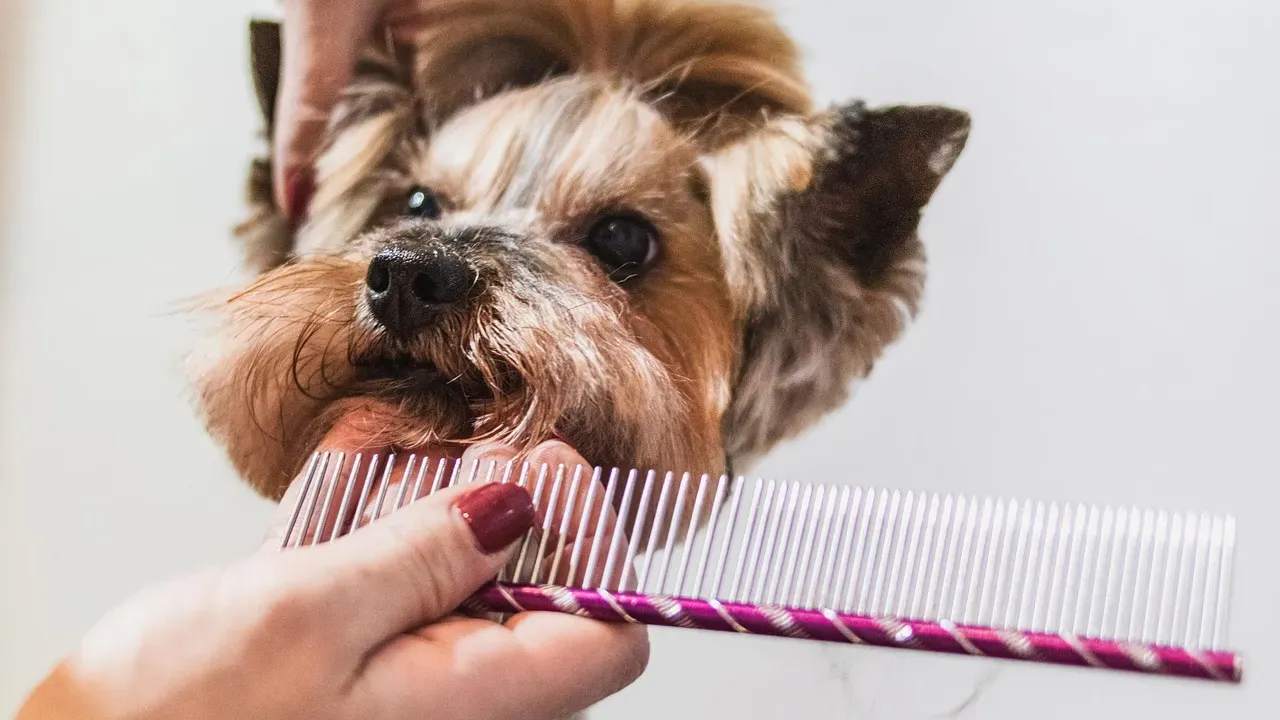
A coat that’s lost its shine gets blamed on food almost immediately, and the supplement aisle gets a workout. Diet can absolutely be a factor. But there’s a less obvious contributor that owners rarely consider: a stiff dog can no longer reach parts of their own body to groom. The back, the base of the tail, the lower sides – these are the first areas to show dullness and matting in a dog whose flexibility has quietly declined.
Regular brushing sessions do more than most owners realize at this stage. They distribute skin oils that self-grooming would have handled, they stimulate circulation, and they give you a full hands-on map of your dog’s body at least once a week. Changes in coat texture, unexpected flinching, or new lumps become harder to miss when you’re doing this consistently. The coat is a surface indicator with a story underneath it. Worth reading.
#14 – Quieter Around the House
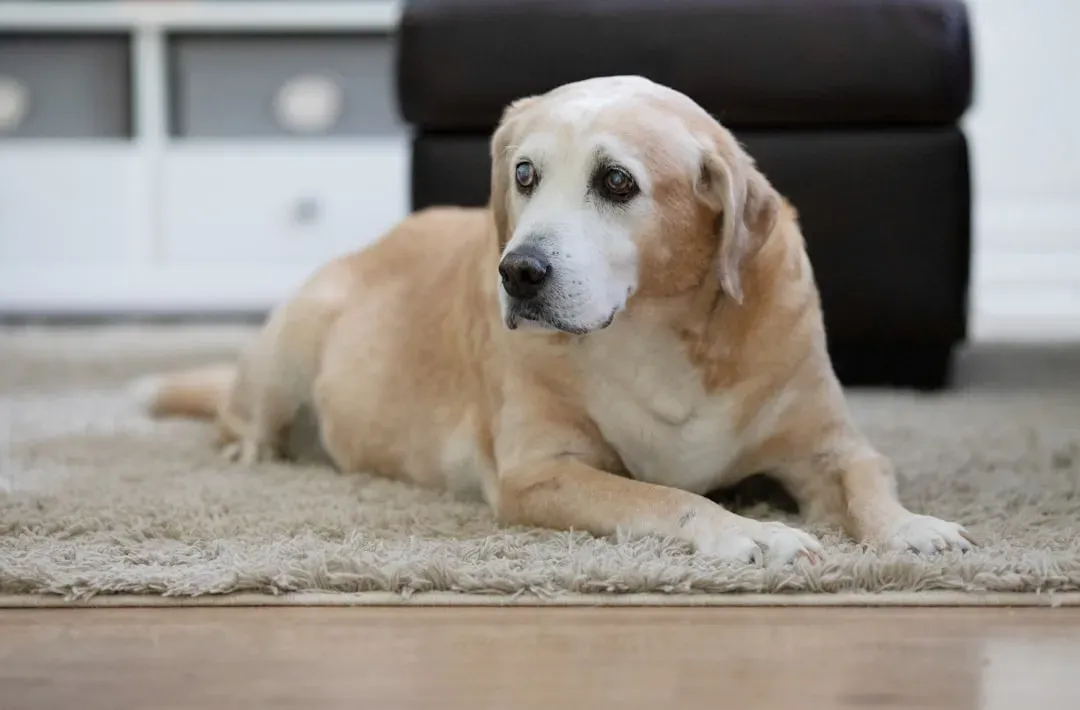
Less barking at the mail carrier. Fewer excited sprints to the door when someone arrives. A dog that used to greet you like you’d been gone for a month now lifts their head and wags from where they’re lying. It’s easy to read this as maturity, as your dog finally settling into themselves. Sometimes that’s true. More often in dogs over eight, reduced vocalization and greeting behavior correlates directly with lower energy driven by physical discomfort.
The personality doesn’t disappear. It gets suppressed by the baseline effort that pain requires. This is one of the signs that catches owners the hardest in retrospect, because so much personality returns once pain is managed. Dogs that seemed to have “calmed down” suddenly become engaged, vocal, and curious again after joint treatment or anti-inflammatory support. The quiet wasn’t wisdom. It was exhaustion. And it’s frequently reversible.
#15 – Seeking Cooler or Harder Surfaces
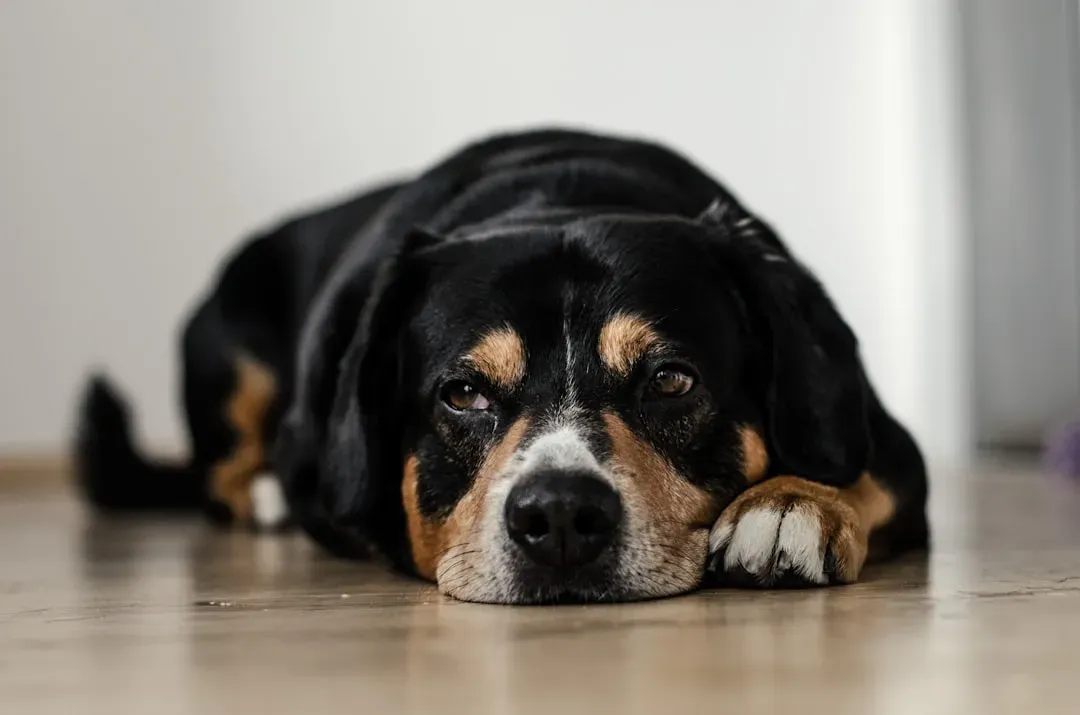
Your dog abandons their plush bed and starts sleeping on the bathroom tile. They press against the baseboard in the coolest corner of the house. You add a fan or crack a window, and they still prefer the hard floor. This preference shift almost never gets connected to joint health, but it’s one of the earliest owner-reported changes in dogs with developing arthritis. Inflamed joints run hot, and hard, cool surfaces provide the kind of relief that soft, warm bedding actually works against.
The counterintuitive fix is an orthopedic mattress with memory foam, positioned somewhere cool and accessible without steps. The firmness provides joint support that standard dog beds don’t, and the material doesn’t trap heat the way plush fiber does. Dogs almost always migrate back to a proper sleeping spot once the bed actually helps rather than hurts. If your dog has been choosing the floor for months, they’ve been trying to tell you something the whole time.
#16 – Slower Response to Name or Commands
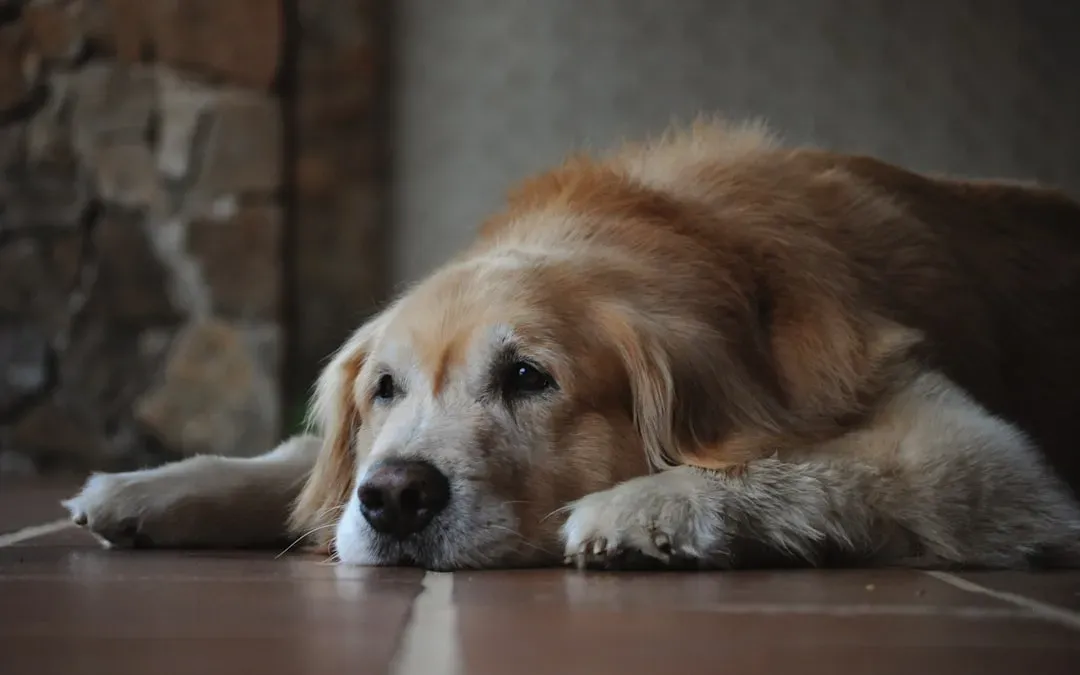
The dog that used to spin around at the sound of their name now takes a beat. Maybe two. You call them to dinner and they amble over instead of charging. You ask for a sit and there’s a pause before they do it. This gets written off as selective hearing, stubbornness, or the dog simply knowing they’ll eventually get what they want anyway. In reality, delayed response in a previously sharp dog often means that moving quickly has become unpleasant enough that the dog hesitates before committing to it.
There’s also a cognitive component that vets increasingly want assessed alongside the physical one. Cognitive decline and physical pain frequently appear together in aging dogs, and each one makes the other worse. Short training sessions with high-value rewards, done daily, keep both the mind and the body engaged in a low-stress way. But the key insight is this: physical pain is treated far less often than cognitive decline even when it’s the primary driver. If your dog seems mentally foggy, rule out the body before assuming the brain.
Why It Stands Out: What Early Action Actually Changes
- Dogs losing just 6% of body weight show measurable mobility improvements within two months
- Pain caught at the behavioral stage – before limping – gives vets the widest range of treatment options
- Anti-inflammatory support and joint supplements can restore personality traits owners assumed were permanently gone
- Short daily training sessions protect cognitive function and give you a reliable window into physical comfort changes
- Most mobility loss in senior dogs is slowed or partially reversed with early intervention – waiting makes the gap permanent
The Honest Takeaway
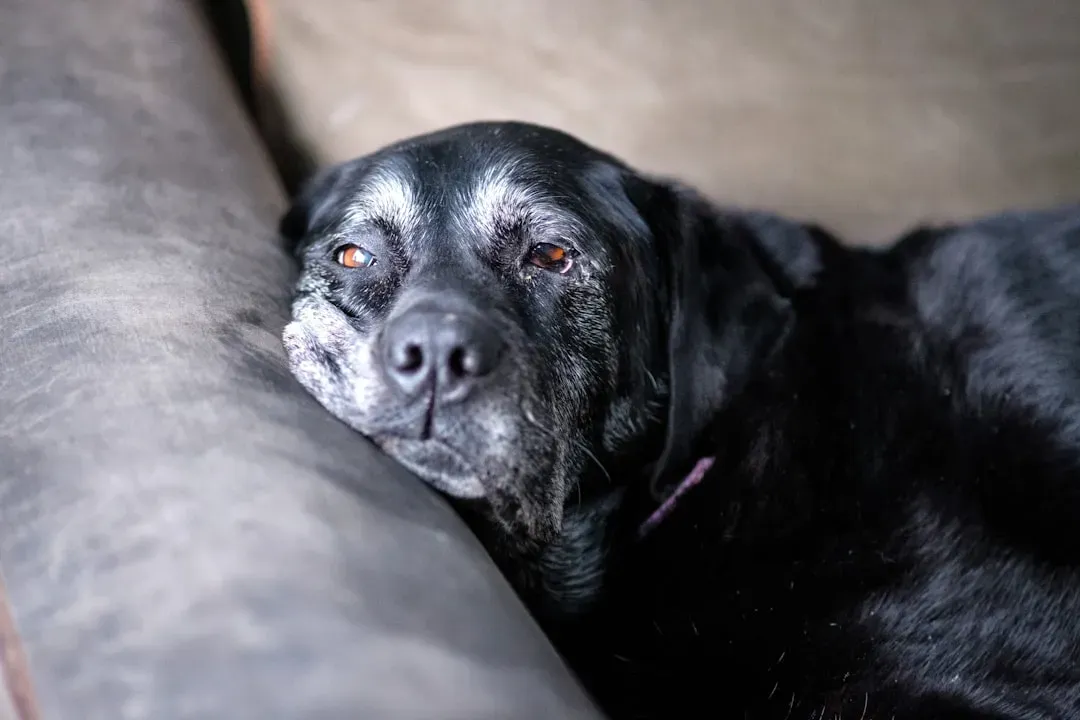
Here’s what’s frustrating about this list: almost every sign on it is reversible or at least manageable if caught early enough. The dogs that end up with permanent mobility loss, the ones who stop being able to go on walks or climb into bed or play at all, usually had months of warning signs that nobody connected into a picture. Not because their owners didn’t love them. Because the signs were quiet, gradual, and easy to explain away one at a time.
The shift from “my dog is getting older” to “my dog is in pain and I can help” is not a small one. It changes what you do every morning, what you ask your vet about, and ultimately how many good years you get together. Every dog slows down eventually. But a lot of dogs slow down years earlier than they have to, and they do it silently, waiting for someone to notice. These 16 signs are them noticing for you.

- 7 Reasons Sea Otters Matter to California's Kelp Forests - August 6, 2026
- 8 Backyard Birds That Remember Safe Gardens After Migration - August 6, 2026
- 7 Reasons Hamsters Rearrange Their Bedding Every Night - August 6, 2026