

The 1980s dinner party operated under a specific set of culinary beliefs that now feel like dispatches from another planet. Some of these dishes were genuinely ambitious. Most were aggressively beige. All of them showed up on a table set with cloth napkins and complete confidence.
35. Tomato Aspic Molded Into a Shimmering Ring
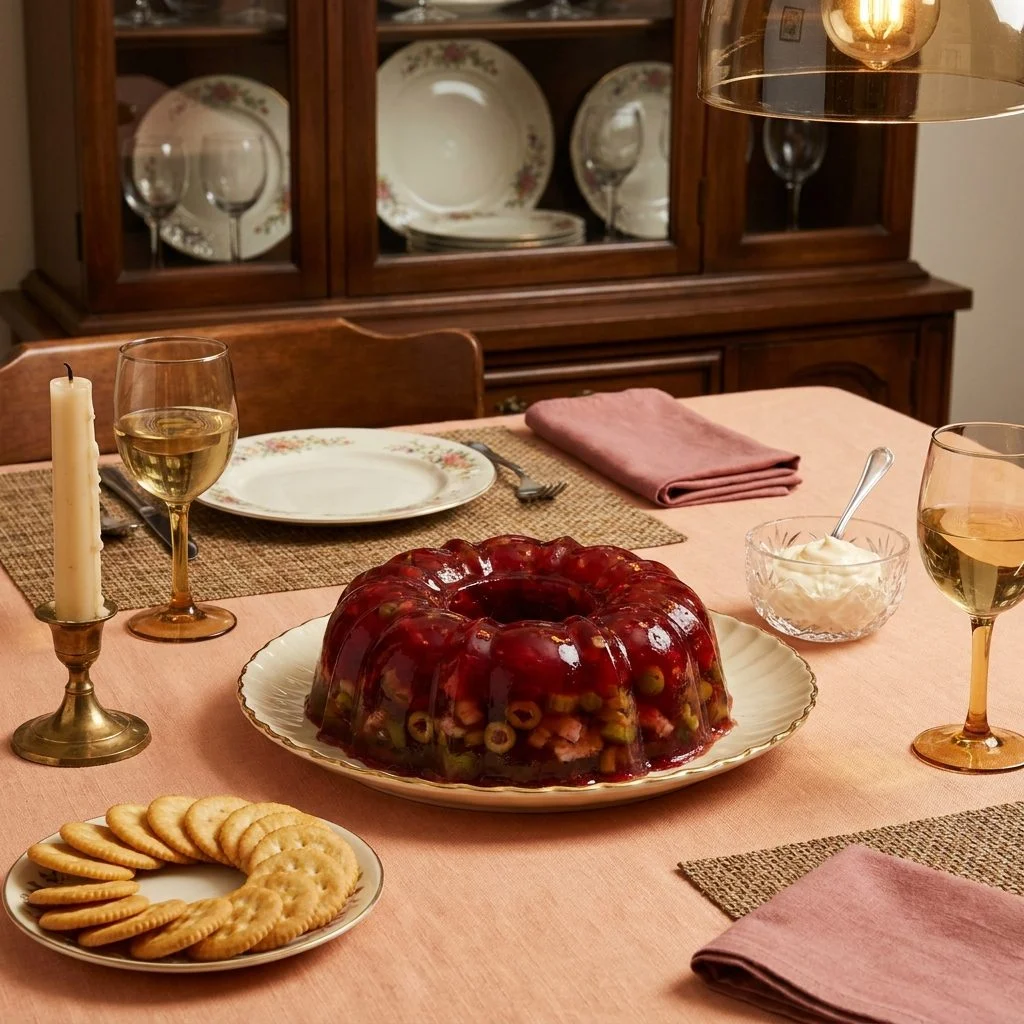
Someone’s mother would unmold this trembling scarlet ring onto a platter, and the whole table would hold its breath waiting to see if it kept its shape. The real power move was filling the center hole with cottage cheese or shrimp salad. Guests were expected to slice into it with a serving spoon and eat it on a lettuce leaf, straight-faced, like this was a reasonable thing to consume at a dinner party.
The recipe itself was deceptively simple — tomato juice, unflavored gelatin, a splash of Worcestershire, and enough time in the refrigerator to set into something that quivered when you looked at it wrong. The real skill was in the unmolding: running a warm knife around the edges, inverting it over the serving plate, and praying it released cleanly. When it did, the hostess accepted the polite applause as her due. When it didn’t, nobody mentioned it again.
34. Salmon Mousse Shaped Like an Actual Fish
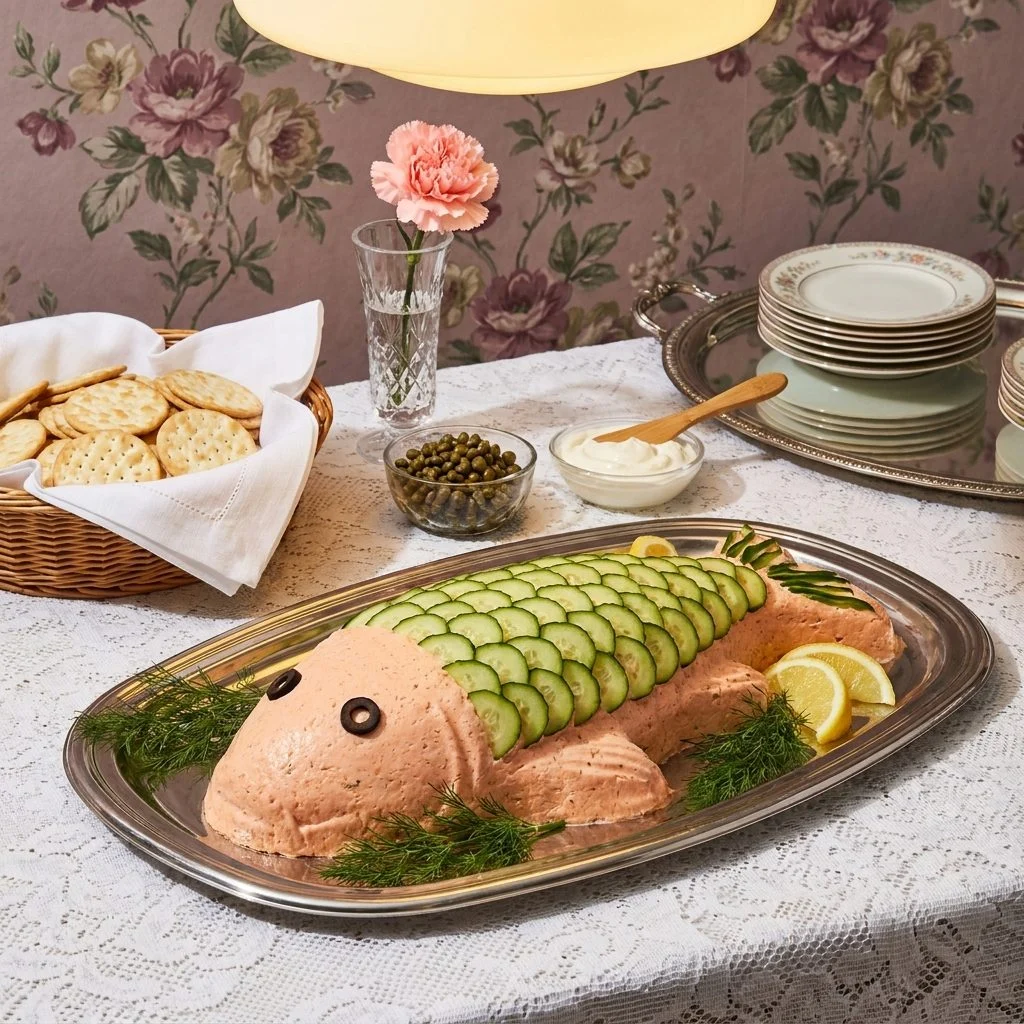
Canned salmon, cream cheese, gelatin, and a squeeze of lemon packed into a fish-shaped copper mold and presented on a bed of leafy lettuce. The cucumber-scale decoration took an hour. The olive eyes were non-negotiable. The whole thing tasted vaguely like a cold, dense spread that no one could identify but everyone politely ate on a Triscuit.
The copper fish mold itself was a prized possession, passed between neighbors and mentioned in wills. Some households had two. The cucumber scales required a melon baller and the patience of someone with nowhere else to be on a Saturday afternoon. Guests who recognized the effort involved would make a point of complimenting the presentation before eating around the olive eyes, which had a habit of sliding off at inopportune moments.
33. Lime Jell-O Ring With Cottage Cheese and Shredded Carrots
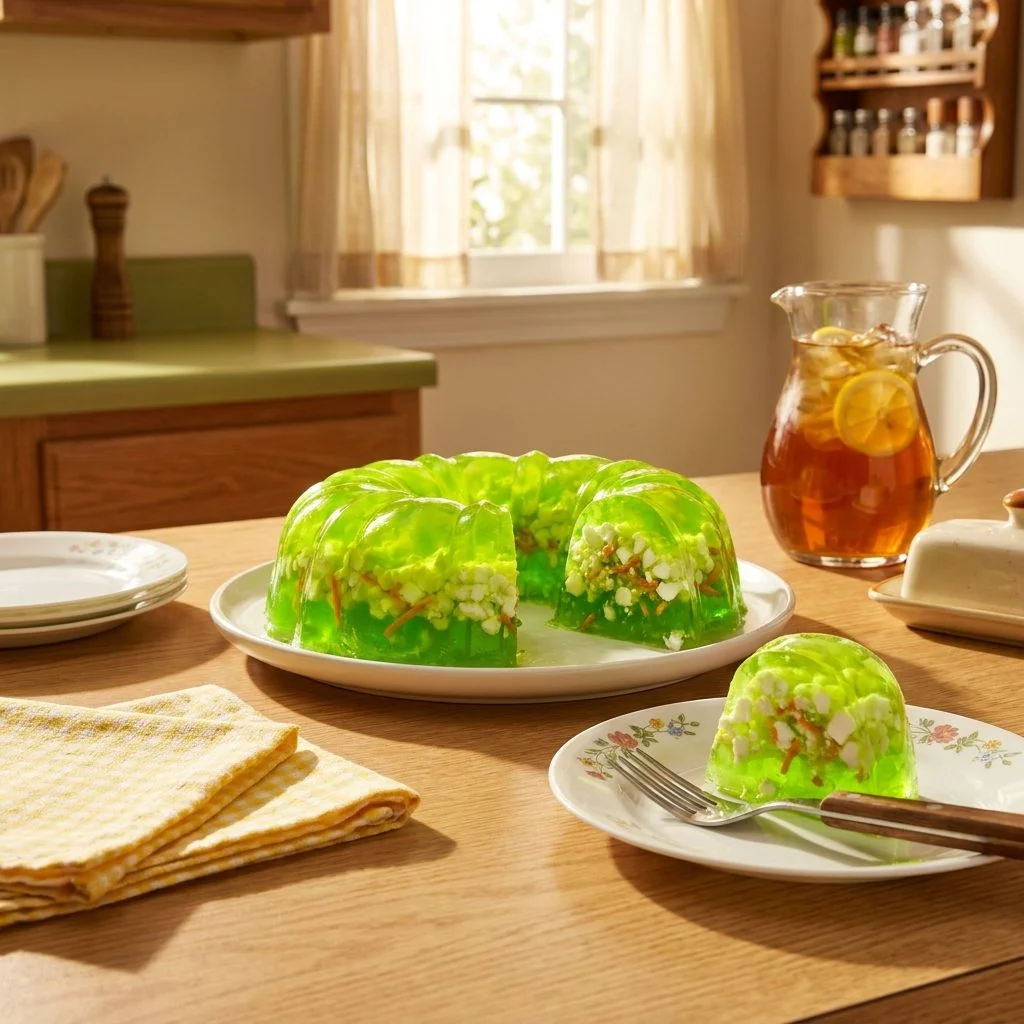
Neon green with visible chunks of cottage cheese and shreds of carrot floating inside like a suspended vegetable terrarium. This was served as a “salad” at potlucks and dinner parties across America. The recipe lived on the back of the Jell-O box, which gave it corporate-endorsed legitimacy.
What made it genuinely confusing was the serving temperature. It arrived cold, sat next to the hot rolls, and nobody questioned the logic. The cottage cheese gave it a lumpy texture that clashed with the smooth sweetness of the gelatin, and the carrots added a faint earthiness that belonged in an entirely different dish. And yet it disappeared from the table every single time, because the alternative was admitting that the thing nobody wanted to eat was the thing nobody was eating.
32. Watergate Salad
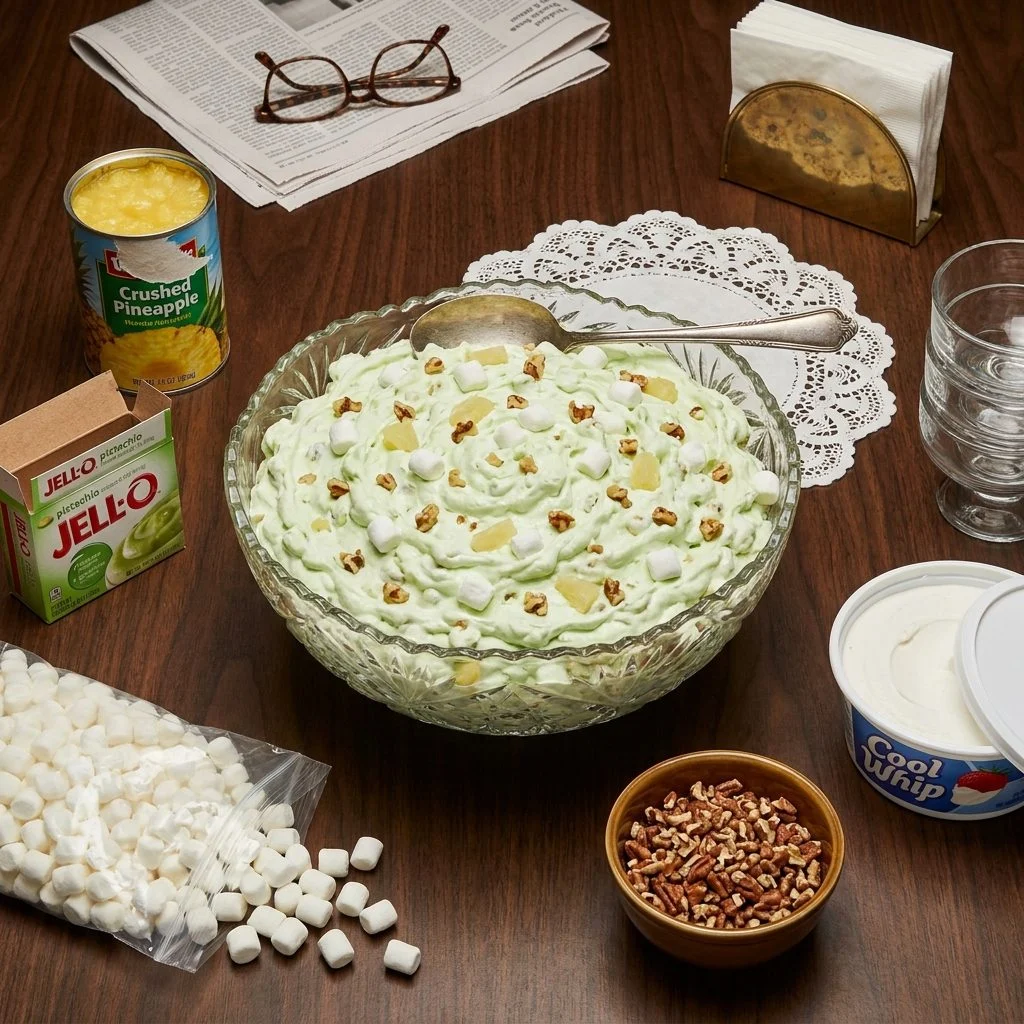
Pistachio pudding mix, Cool Whip, canned pineapple, mini marshmallows, and chopped nuts folded together into a pastel green cloud. It was called a salad. The name supposedly had nothing to do with Nixon. The wild part is that it tasted good—aggressively sweet, sure, but good.
The origins of the name remain genuinely disputed, which feels appropriate for something named after a political scandal. Some food historians trace it to a Kraft recipe from the mid-1970s. Others insist it was a Chicago invention. What everyone agrees on is that it required almost no skill, produced something that looked vaguely festive, and disappeared faster than any dish containing actual vegetables. It was the dessert that refused to admit it was a dessert, and everyone played along.
31. Cocktail Weenies in Grape Jelly and Chili Sauce
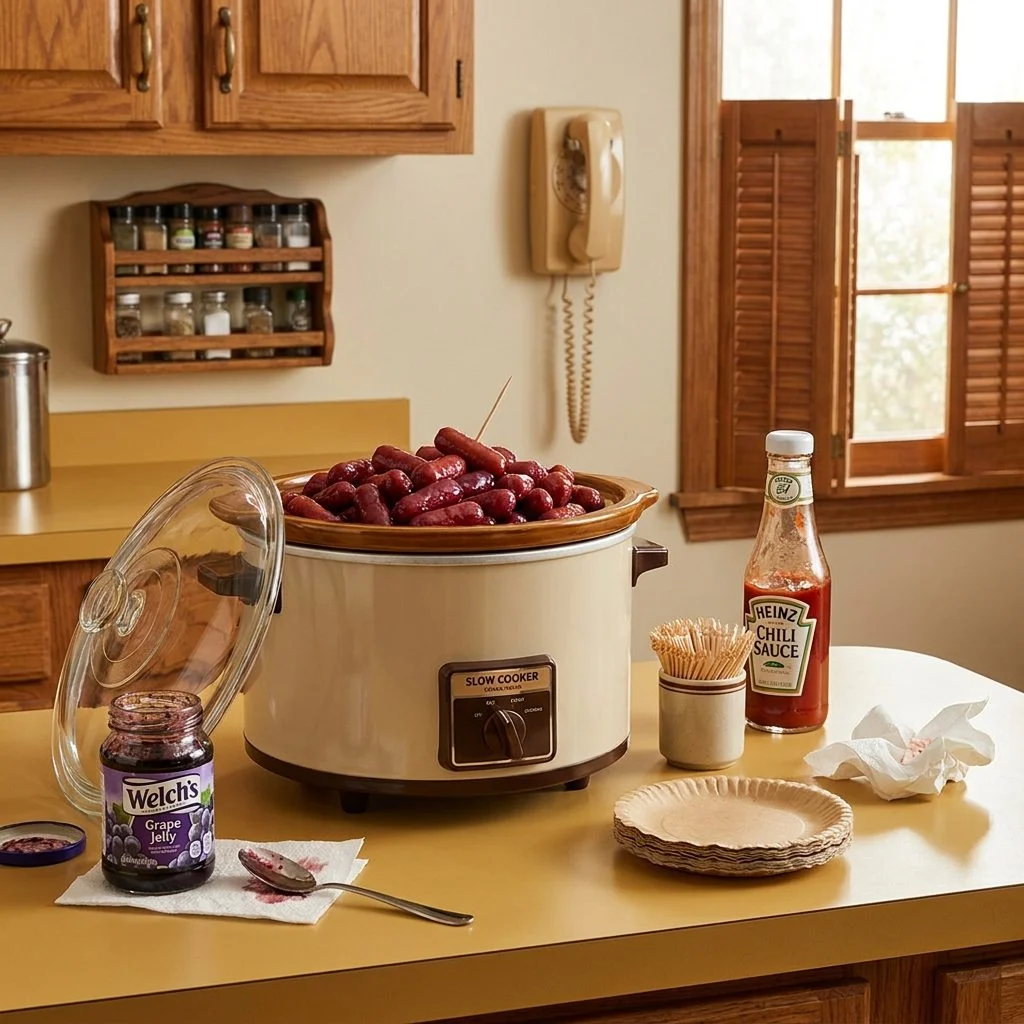
Two ingredients: a jar of grape jelly and a bottle of chili sauce, dumped over a package of Lil’ Smokies in a slow cooker set to low. The sauce reduced into something glossy and sweet-tangy that genuinely worked. You’d swear it couldn’t possibly taste right, then you’d eat nine of them standing next to the crockpot.
The slow cooker was left on the kitchen counter or a side table with a set of toothpicks nearby, and guests would drift back to it throughout the evening without making eye contact with anyone. There was something slightly shameful about how good they were, given that the entire preparation involved opening two jars and plugging in an appliance. Hosts who served them at upscale gatherings had the good sense to call them something French. Nobody investigated further.
30. Rumaki
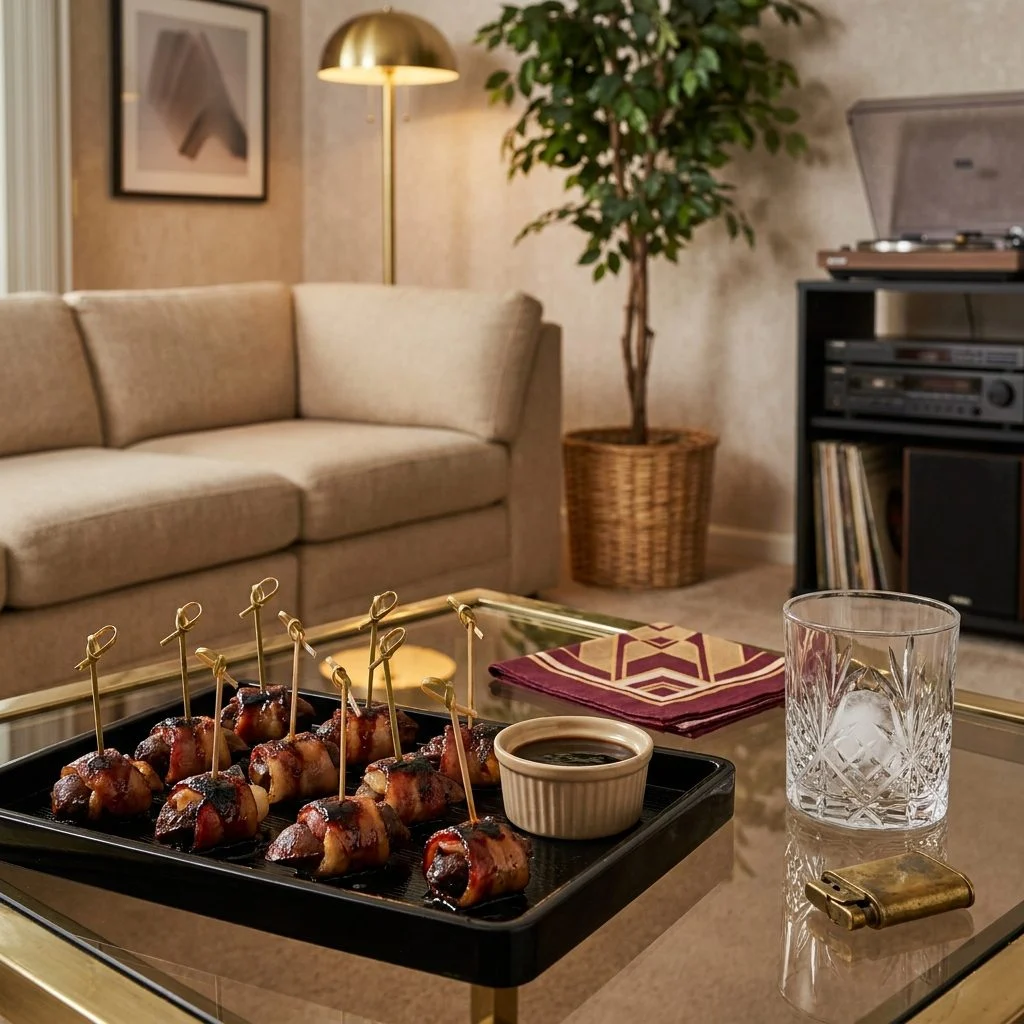
Chicken livers wrapped in bacon with a water chestnut tucked inside, marinated in soy sauce and brown sugar, then broiled. This was considered a sophisticated appetizer from tiki bar culture. The texture was the problem: creamy organ meat, crunchy water chestnut, chewy bacon, all in one bite.
Rumaki arrived in American living rooms via Trader Vic’s, the tiki bar chain that convinced a generation of suburban hosts that Polynesian-inflected food was the height of continental sophistication. The soy-brown sugar marinade did real work — it caramelized under the broiler into something dark and sticky that almost distracted from the liver lurking inside. Almost. The guests who’d been to a Trader Vic’s ate them without hesitation. Everyone else ate one, then quietly switched to the cheese ball.
29. Beef Tartare With Raw Egg Yolk
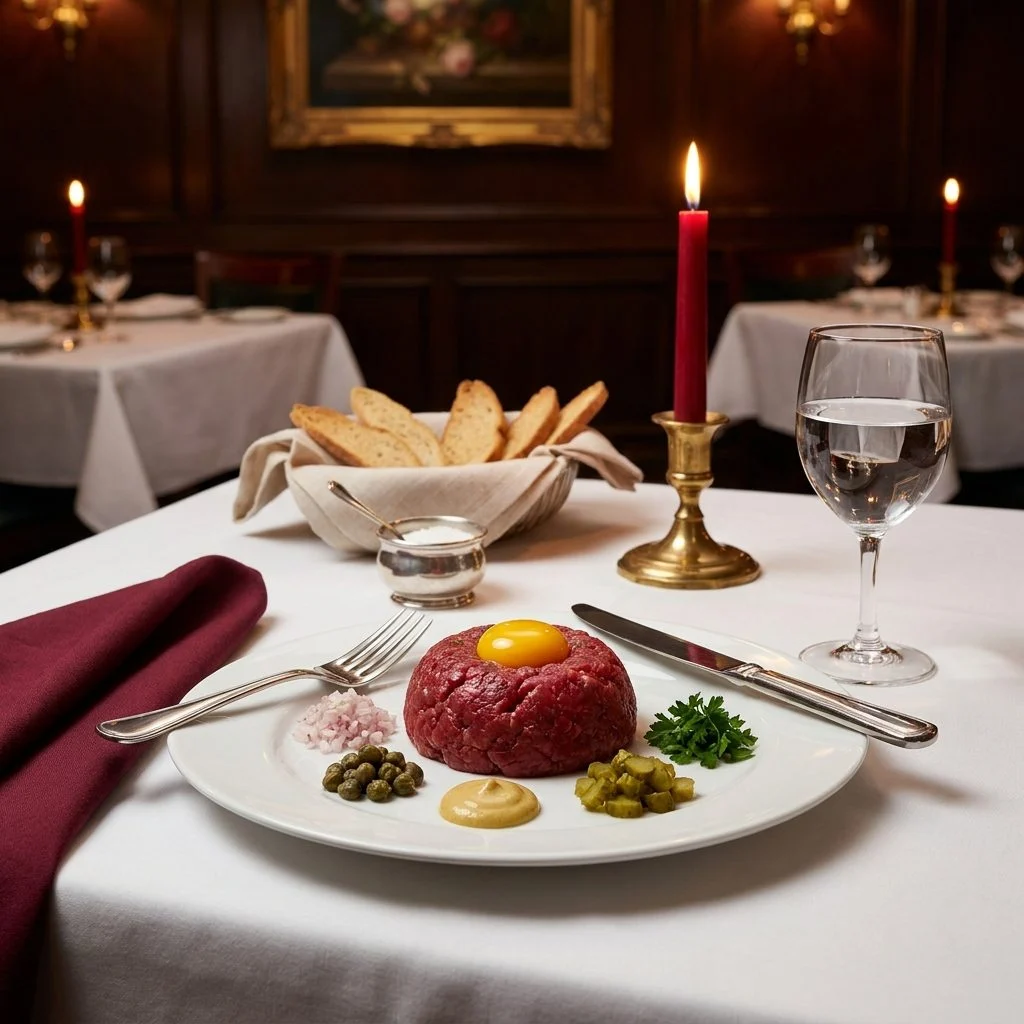
Raw ground beef, raw egg yolk, capers, minced onion, and a dash of Worcestershire, mixed together right there at the table in front of guests expected to look impressed rather than alarmed. The raw egg yolk sat in a crater on top of the meat like a sunset over a very questionable landscape.
The tableside preparation was the whole performance. The host would arrive with a wooden bowl, the carefully portioned ingredients in small dishes arranged on a tray, and the casual confidence of someone who had done this many times. Which they may or may not have. The mixing happened with two forks and a lot of commentary about the importance of freshly ground meat, sourced from a proper butcher. Guests ate it on toast points and nodded, because the alternative was admitting they were frightened of their host’s appetizer.
28. Steak Diane Set on Fire Tableside
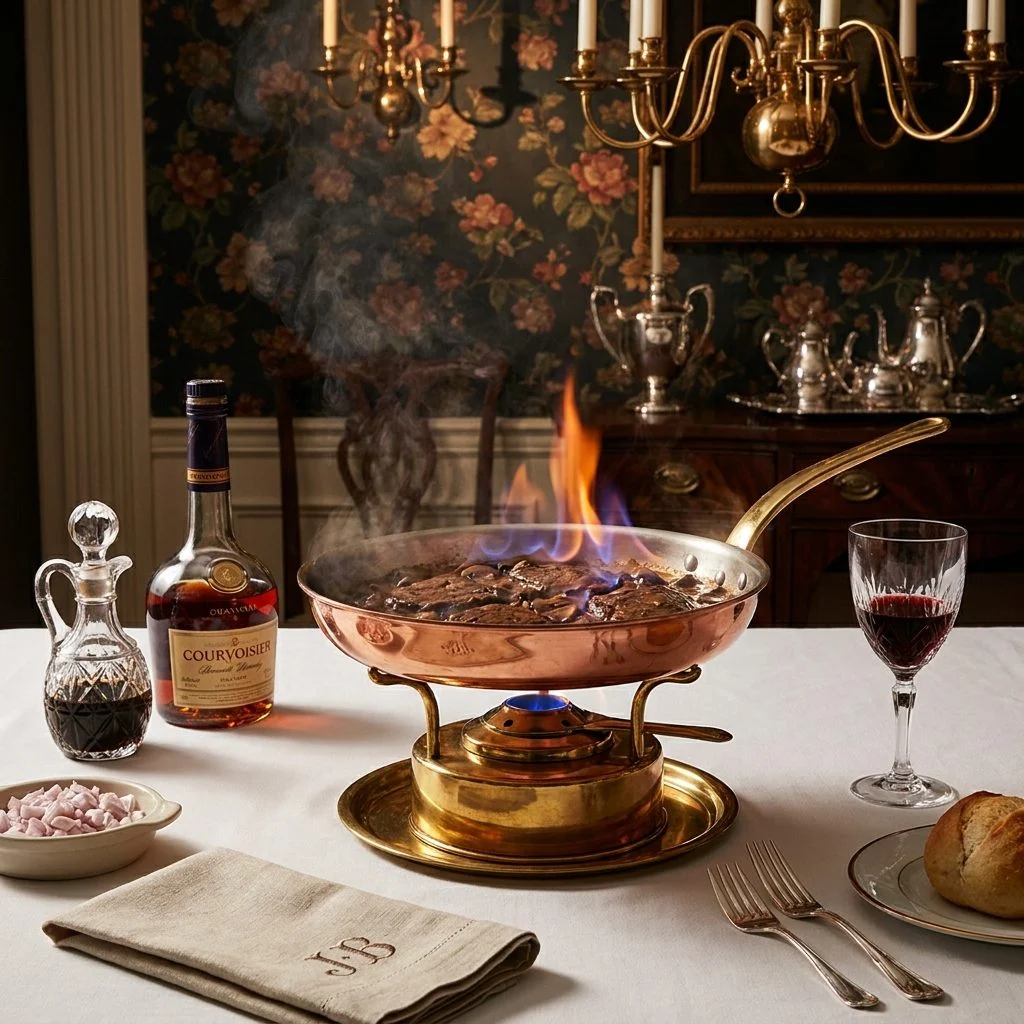
Someone’s dad with a copper chafing dish and a bottle of brandy, standing over the table like a man possessed. Pounded beef medallions, seared fast, hit with cognac, and lit on fire while everyone leaned back in their chairs. The sauce was the real event: shallots, mushrooms, Dijon, heavy cream, and fond from the pan.
The flambé was never strictly necessary — the alcohol cooks off either way — but it transformed a dinner party into a spectacle. Eyebrows were singed. Tablecloths were scorched at the edges. Curtains near the chafing dish were relocated before the meal began. The host would wave away any concern with the practiced ease of someone who had definitely set something on fire before, and the guests would applaud the blue flame like it was the finale of a magic show, which in some ways it was.
27. Lobster Newburg
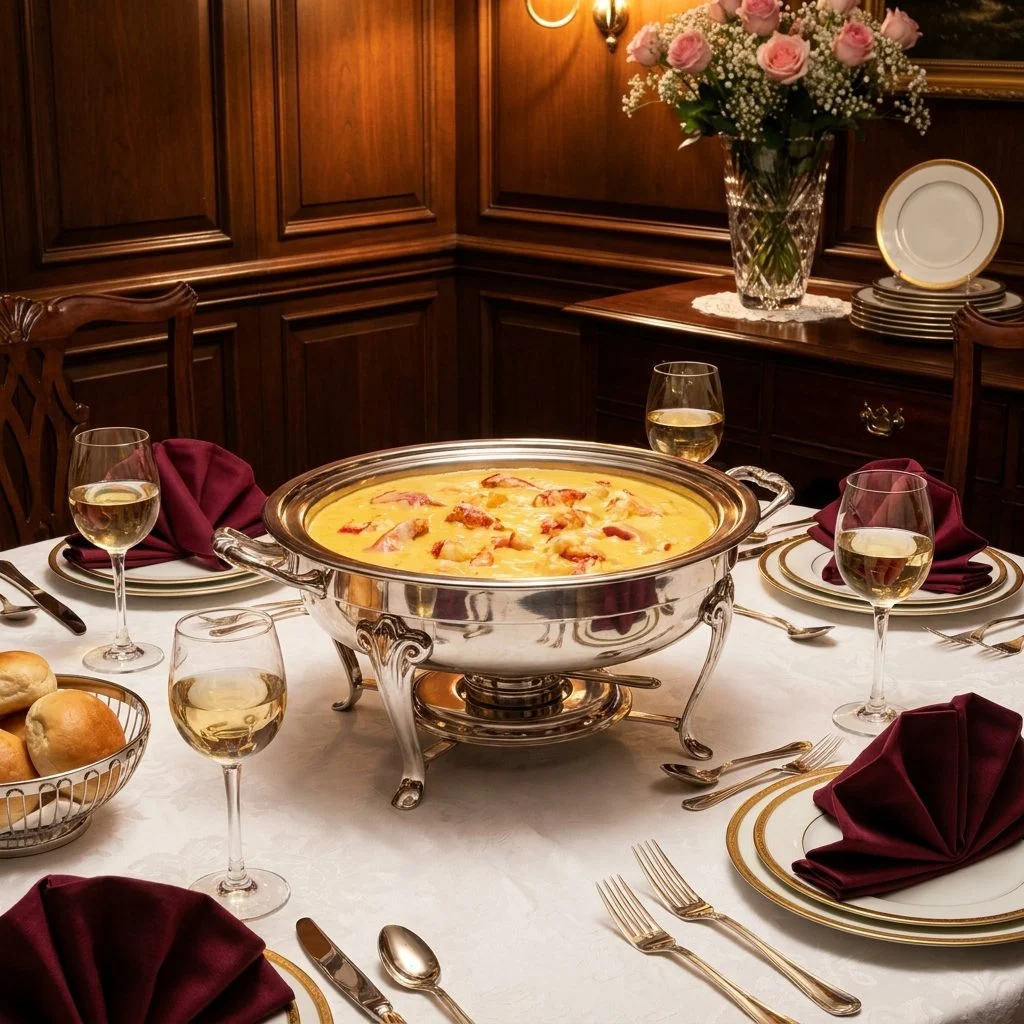
The sauce alone could have funded a small dairy farm. Heavy cream, egg yolks, butter, sherry, and enormous chunks of lobster meat, all spooned over toast points or into puff pastry shells. Nobody asked about saturated fat content. The whole point was the excess.
Lobster Newburg had its origins at Delmonico’s in New York, and the 1980s dinner party host who served it was always dimly aware of this heritage and used it accordingly. The dish announced a kind of spending that went beyond the merely comfortable. Lobster tails came from the good seafood counter, not the freezer section, and the sherry had to be dry. The toast points were trimmed of their crusts. This was a dish that communicated something about the host, and the host knew it, and the guests knew it, and everyone ate in respectful silence.
26. Veal Oscar
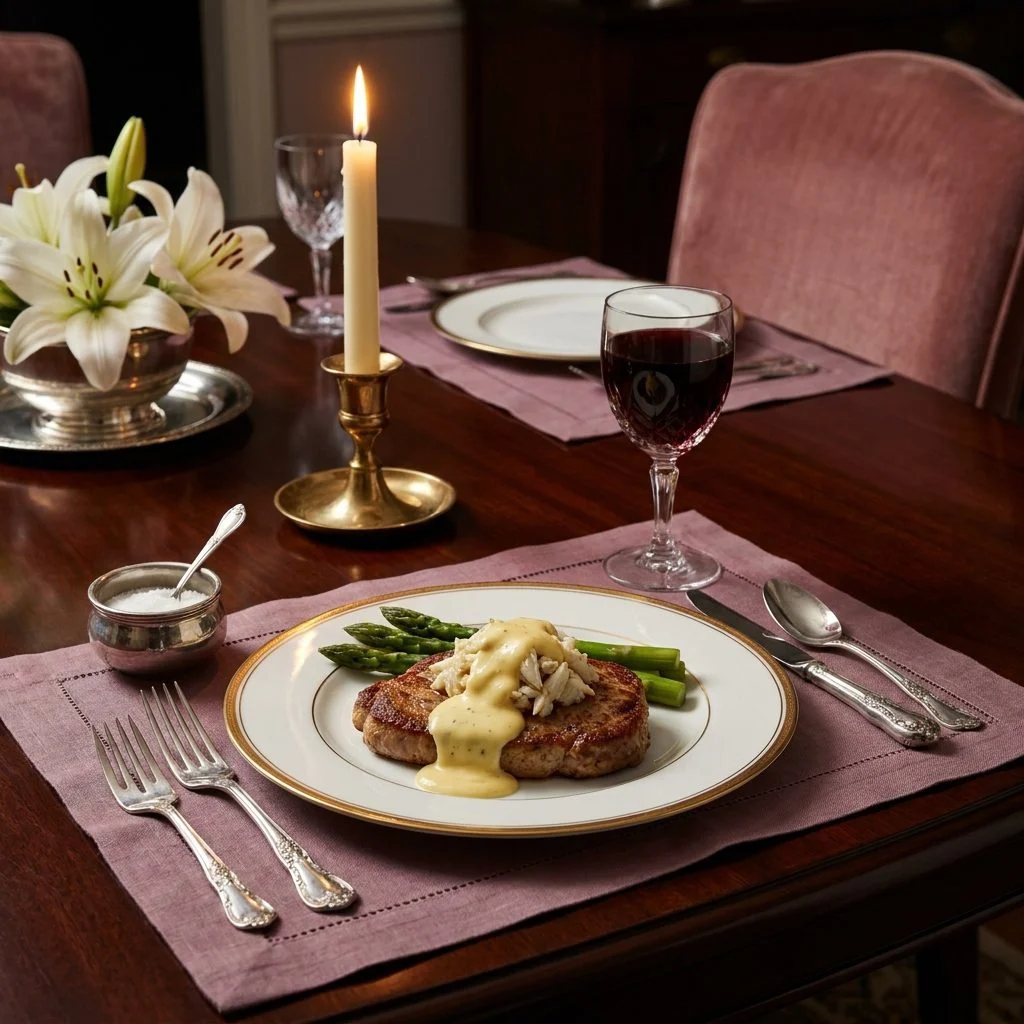
Veal, crab, béarnaise, and asparagus on one plate at the same time. The logic was simple: if one expensive ingredient was impressive, stacking three was devastating. Try serving veal at a dinner party now and watch the room temperature drop.
The béarnaise sauce was the variable that separated the confident cook from the ambitious one. A proper béarnaise required a double boiler, constant whisking, clarified butter added in a slow stream, and the nerve to keep going when the sauce looked like it was about to break. It broke anyway, sometimes, and had to be rescued with an ice cube and more whisking. The veal beneath it was almost beside the point. The sauce was the statement. The crab was the exclamation mark.
25. Beef Wellington With Foie Gras
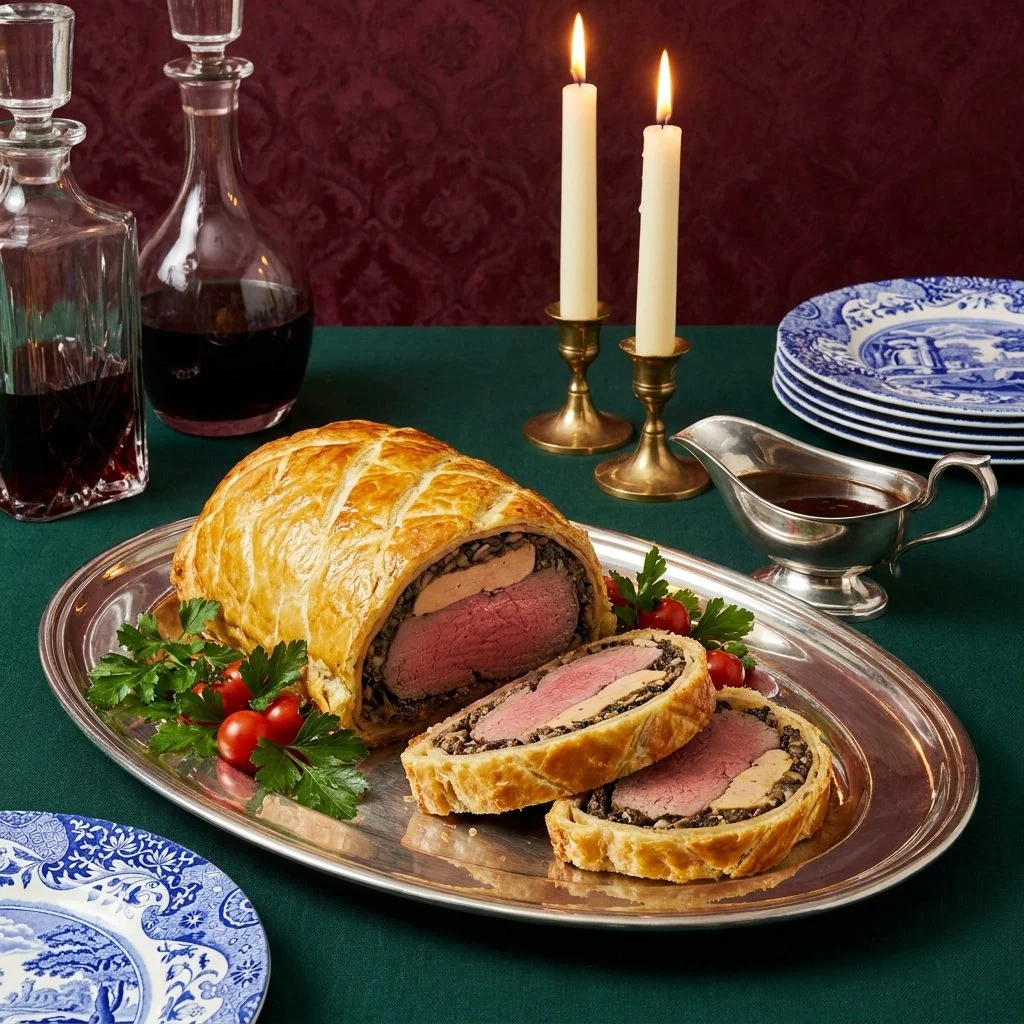
Hours of work—a tenderloin wrapped in mushroom duxelles and foie gras, then sealed inside puff pastry and baked until golden. The margin for error was roughly the width of a dime. Foie gras was the stealth ingredient that pushed it from ambitious to absurd.
The duxelles alone took forty-five minutes — mushrooms chopped fine and cooked down until every drop of moisture had evaporated and what remained was a dark, almost paste-like concentrate of fungal intensity. Getting the internal temperature right on the beef while the pastry browned properly required either a meat thermometer, good instincts, or both. Hosts who pulled it off never let anyone forget it. Hosts who overcooked it served it anyway, in thick slices, on warmed plates, daring anyone to comment on the gray ring around the edge.
24. Crown Roast of Pork With Paper Frills
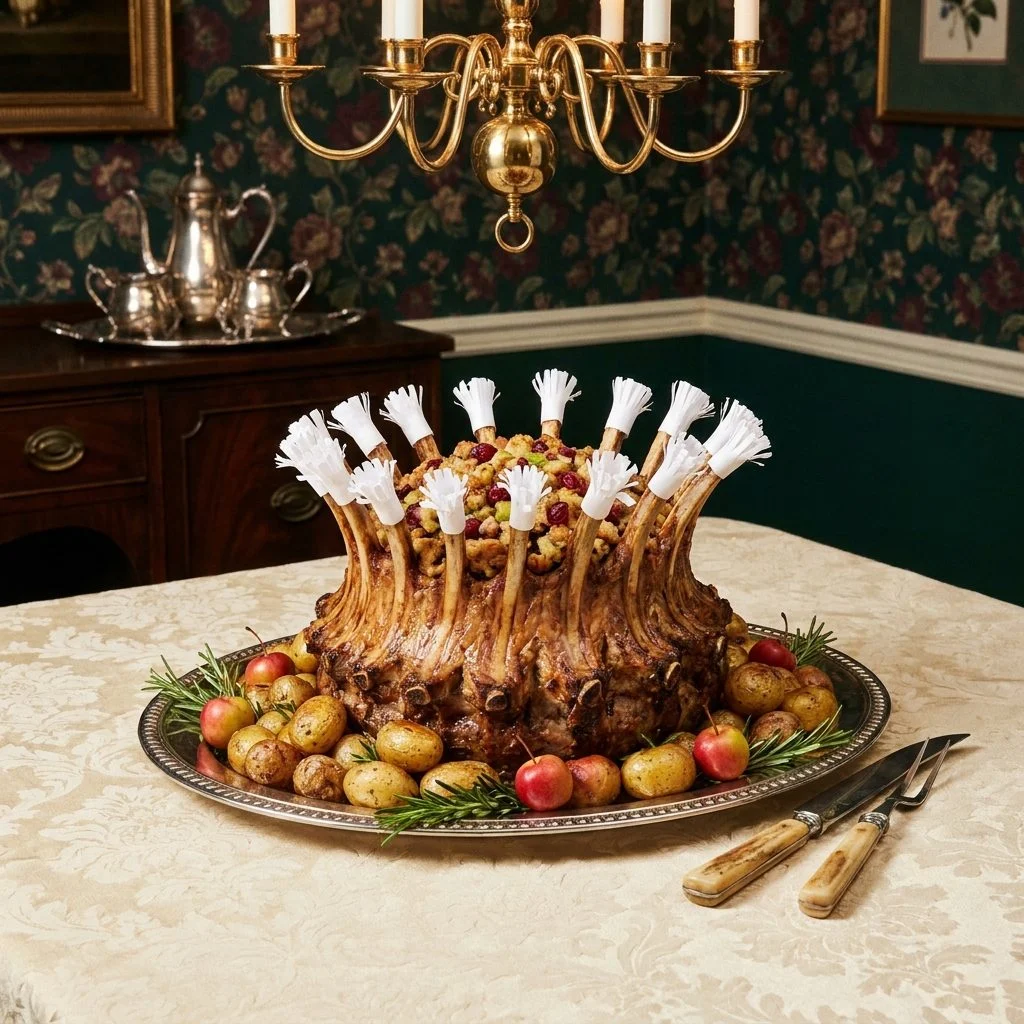
Those paper frills perched on each bone like the roast was about to perform in a burlesque show. The crown roast was pure theater—a circle of rib chops tied into a ring with bones pointing skyward, the hollow center packed with bread stuffing. You carried it out and everyone gasped, or at least nodded appreciatively.
The butcher did the architectural work — tying the rack into a circle, frenching the bones, making it structurally sound enough to survive an oven. The host’s job was to fill the center with stuffing, roast it to the correct internal temperature, and then apply the paper frills at the last moment, right before it went to the table. The frills came in a package from a kitchen supply store and were reused until they turned gray. The presentation was the dish. The pork was almost secondary.
23. Chicken Kiev
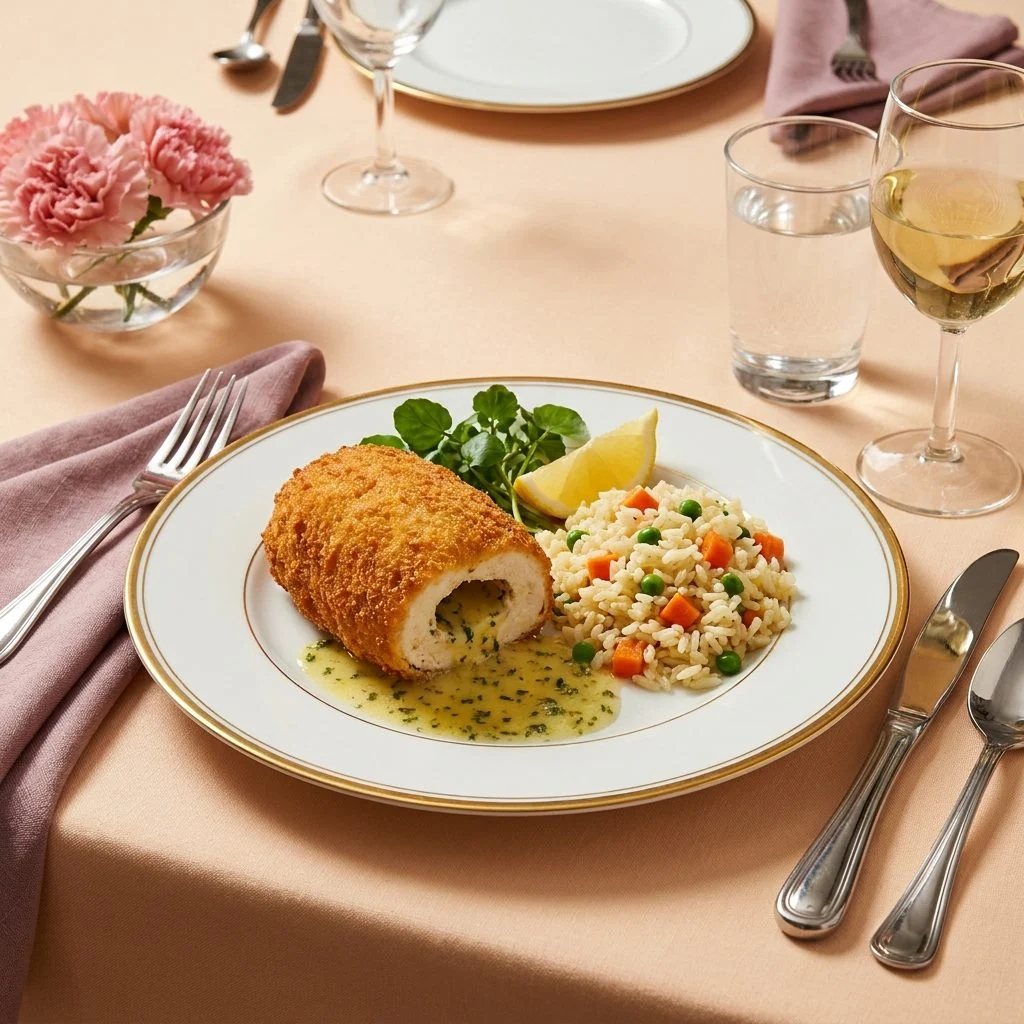
Cutting into a proper Chicken Kiev was a contact sport. That first puncture of the breaded shell released a pressurized stream of hot garlic butter that shot across the plate, tablecloth, and occasionally across the sleeve of whoever was sitting too close. It was violent and delicious.
The preparation required pounding a chicken breast thin, placing a frozen log of compound butter in the center, wrapping the meat around it with no gaps whatsoever, breading it twice, and refrigerating it long enough for the butter to refreeze completely. Any gap in the seal meant the butter escaped during frying instead of staying put for the tableside explosion. Experienced Chicken Kiev eaters knew to angle their knife, lean back slightly, and accept that their dinner would arrive with a small crater where the butter had been.
22. Tuna Noodle Casserole
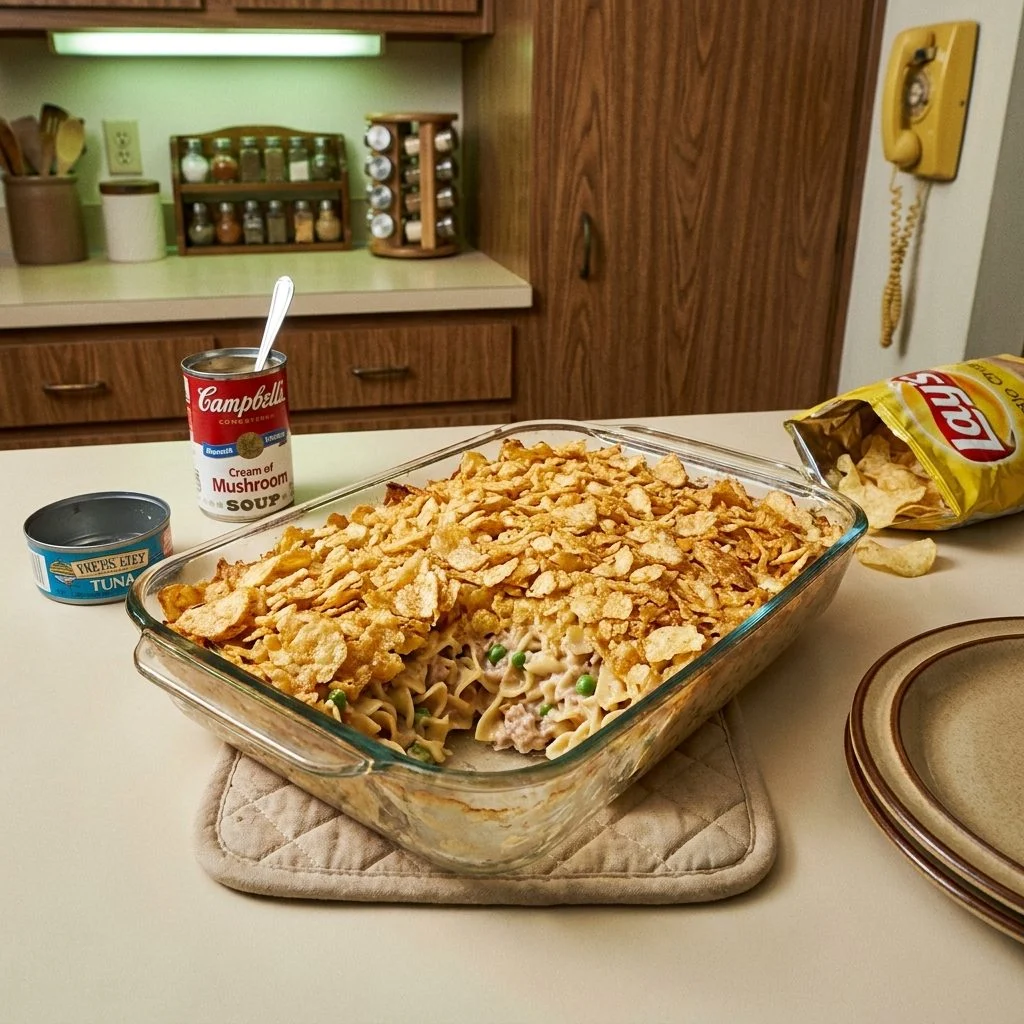
Not a single fresh ingredient: canned tuna, canned cream of mushroom soup, canned peas, dried egg noodles, and a bag of potato chips crushed by hand for the topping. This was the entire recipe. It came out of the oven bubbling and golden, smelling like every suburb in America.
The potato chip topping was the detail that separated a good tuna noodle casserole from a great one. They had to be crushed coarse — not powdered, not whole, but somewhere in between, so they toasted into uneven golden shards that gave way to the creamy interior underneath. Some households used Ritz crackers instead and considered themselves progressive. The dish was always made in a 9×13 Pyrex dish, always served directly from the dish, and always produced a second serving for anyone within reach of the spoon.
21. Sliced Beef Tongue
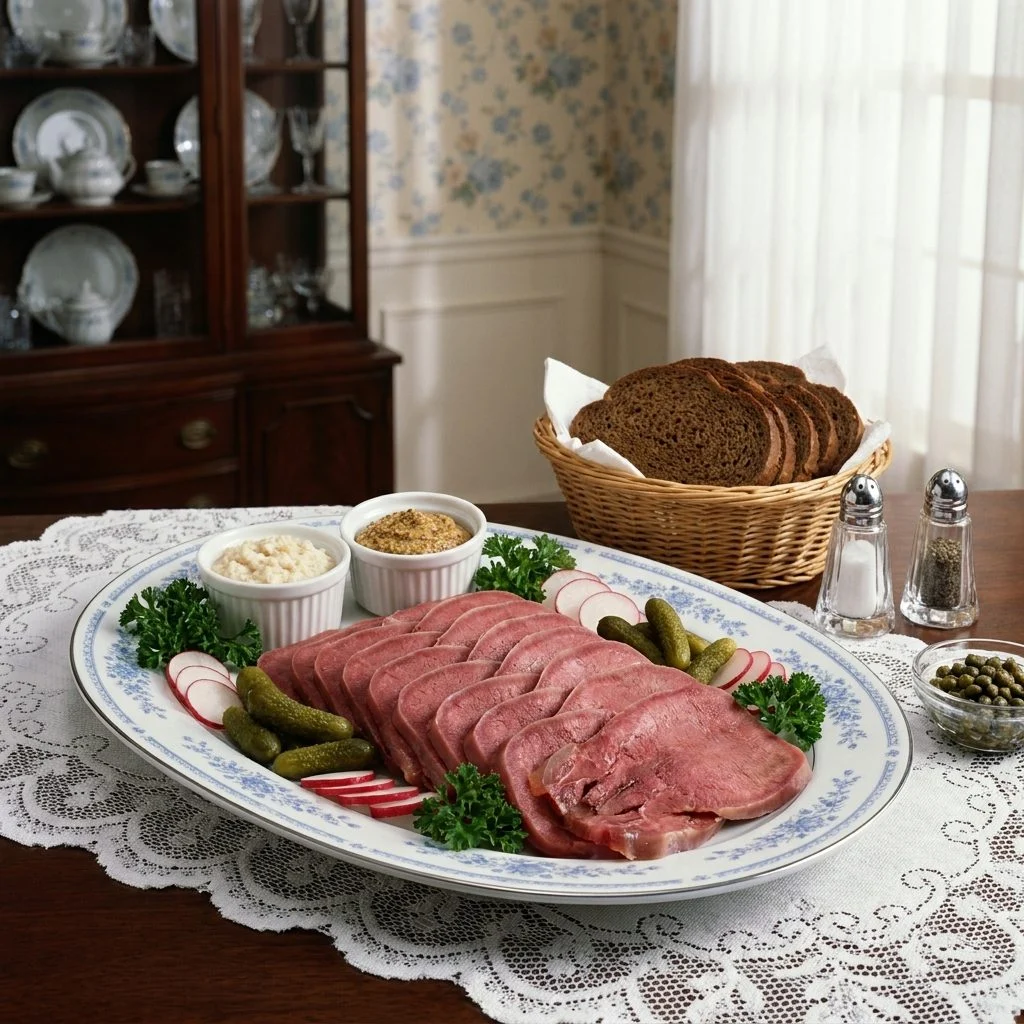
It was just sitting there on the platter, sliced thin, fanned out, looking exactly like what it was. Nobody flinched. Tongue was a holdover from an older generation’s approach to cooking, where using the whole animal wasn’t a trendy philosophy but just what you did.
Braised for hours until tender, then peeled while still hot — a process that required both asbestos hands and a certain psychological commitment — beef tongue emerged as something surprisingly mild and silky, nothing like the texture you’d expect. It was sliced cold and served with horseradish or a sharp mustard, sometimes on dark rye bread. The hosts who served it at dinner parties in the 1980s were usually the ones with European grandmothers. Everyone else had quietly stopped making it years before.
20. Fried Sweetbreads
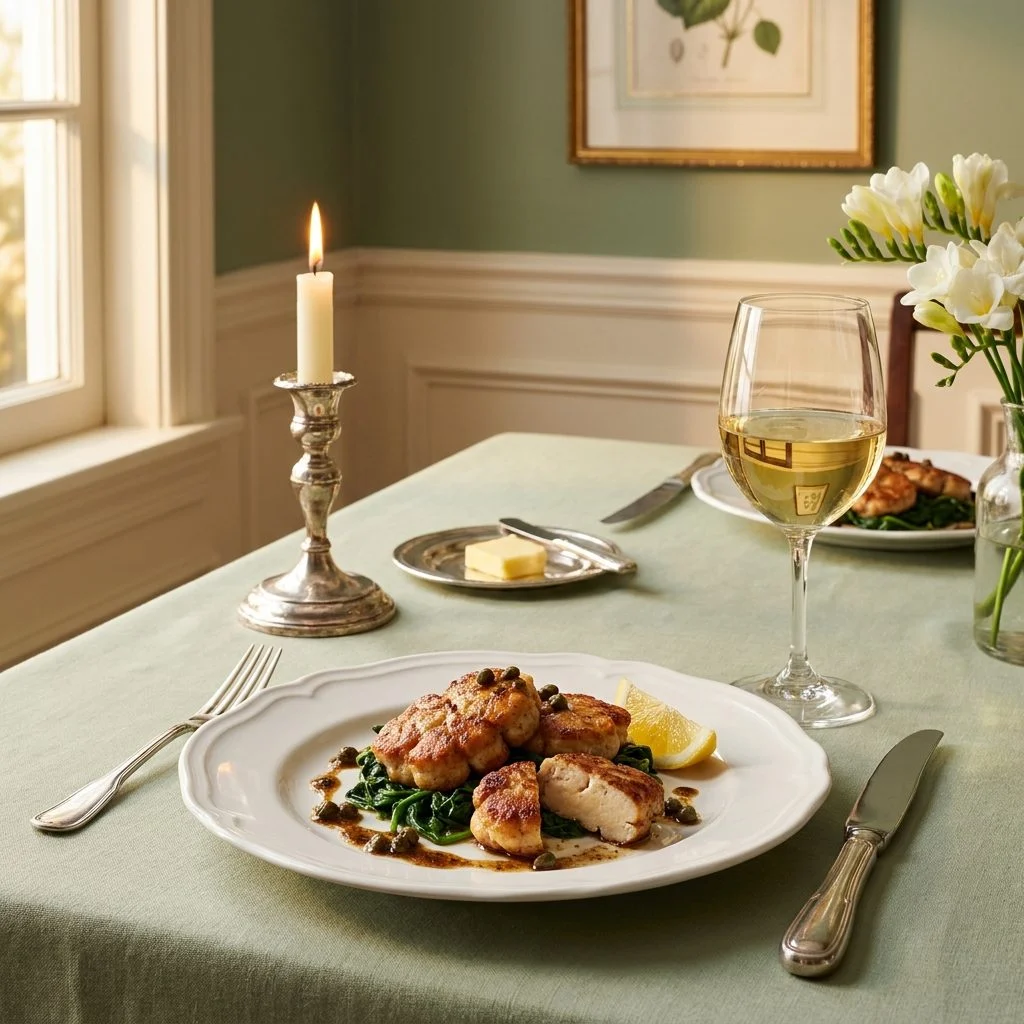
“What is this? It’s delicious.” That was the sequence. Always in that order. Pan-fried in butter until golden, sometimes with a squeeze of lemon and capers, sweetbreads were the dinner party flex for hosts who fancied themselves a little more European than their neighbors.
The preparation involved soaking, blanching, pressing under a weighted board, and then finally pan-frying — a multi-step process that took the better part of a day. Sweetbreads, for the uninitiated, are the thymus or pancreas gland of a calf, with a creamy interior and a delicate crust when properly cooked. Hosts who served them almost never led with that explanation. The reveal came after the second bite, when the guest was already committed to enjoying them. This was not considered deceptive. It was considered good hosting.
19. Jellied Consommé in Coupe Glasses
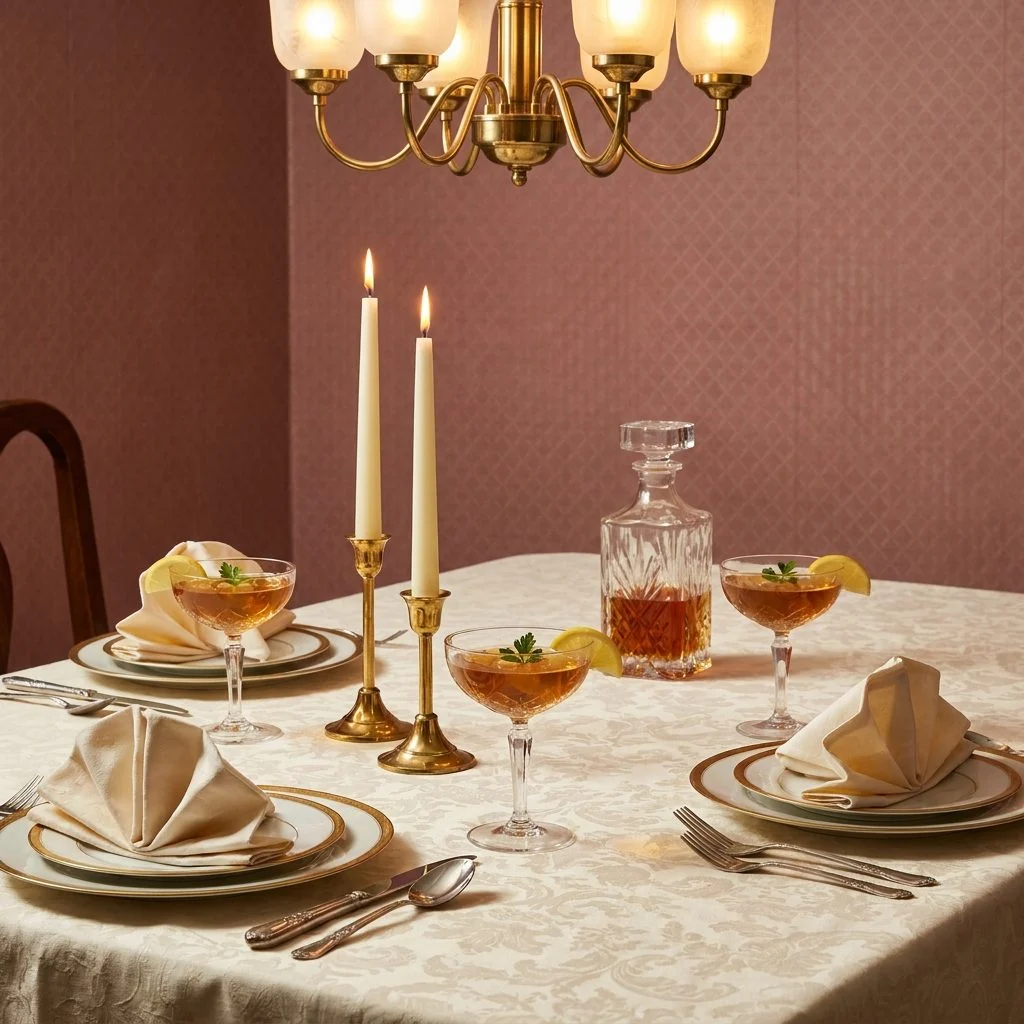
It wobbled. That was the whole point, apparently. Someone’s mother would carry these out on a silver tray, and every guest would smile like they’d been handed liquid gold instead of cold meat broth suspended in gelatin. A squeeze of lemon on top, maybe a single chive with surgical precision.
A proper consommé required a raft — a mixture of ground meat, egg whites, and aromatics stirred into cold stock and then left alone while it rose to the surface and clarified the liquid beneath it. The result, when done correctly, was so clear you could read through it. Adding gelatin to this and chilling it into a first course that wobbled when you set it down was the kind of thing that required confidence bordering on audacity. Served in those shallow coupe glasses, it looked elegant. It tasted like an extremely well-made cold soup. Guests complimented it and moved quickly to the next course.
18. The Cheese Ball
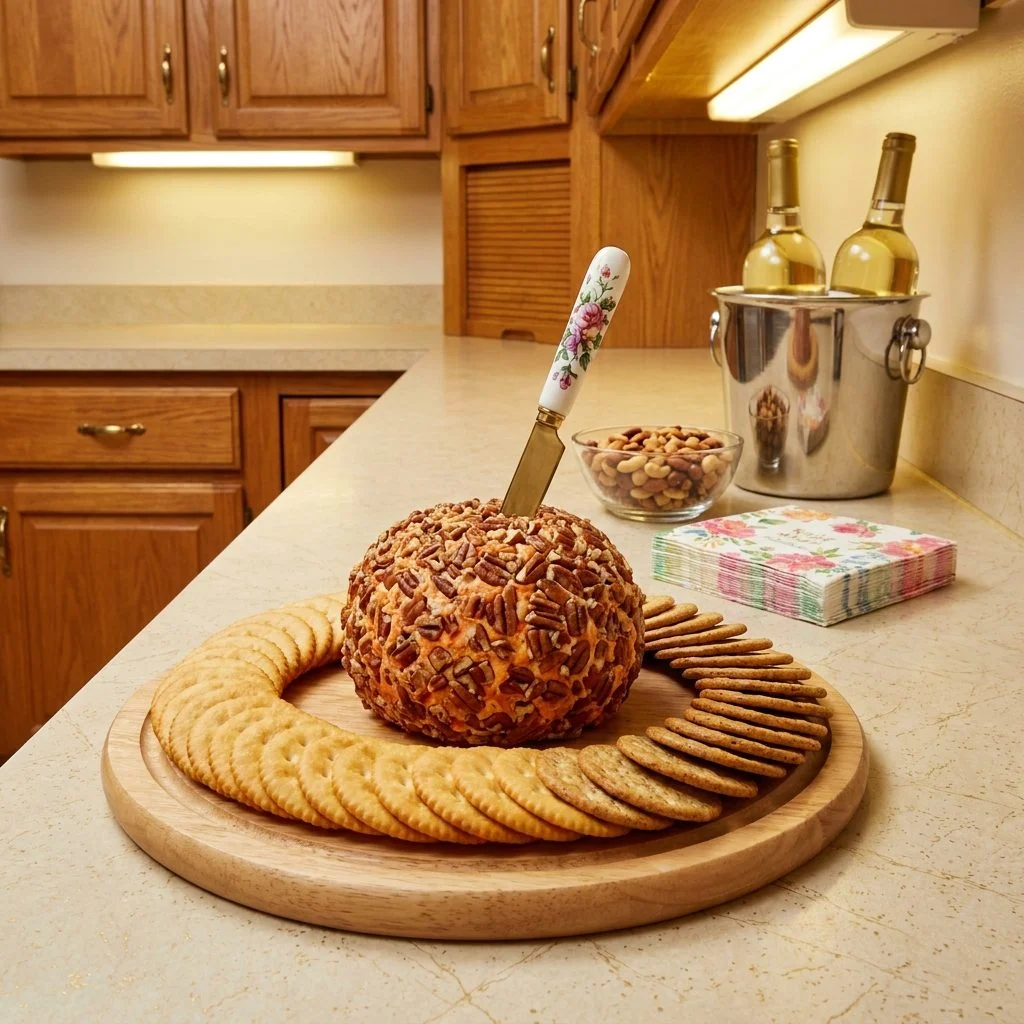
Every single one tasted exactly the same: cream cheese, shredded cheddar, Worcestershire, maybe onion powder, then rolled in pecans like a snowball through gravel. The cracker fan was non-negotiable—Ritz crackers arranged in concentric circles, sometimes alternating with Triscuits.
The cheese ball was made the night before and left in the refrigerator wrapped in plastic wrap, then brought out an hour before guests arrived to soften slightly. Some hosts added blue cheese for complexity. Others stirred in a packet of ranch seasoning and called it creative. The pecan coating could be replaced with dried parsley, crushed pretzels, or everything bagel seasoning in more adventurous households. None of this changed anything fundamental. The cheese ball was the cheese ball, and it was always finished before anyone had their second drink.
17. Spinach Dip from a Soup Packet in a Bread Bowl
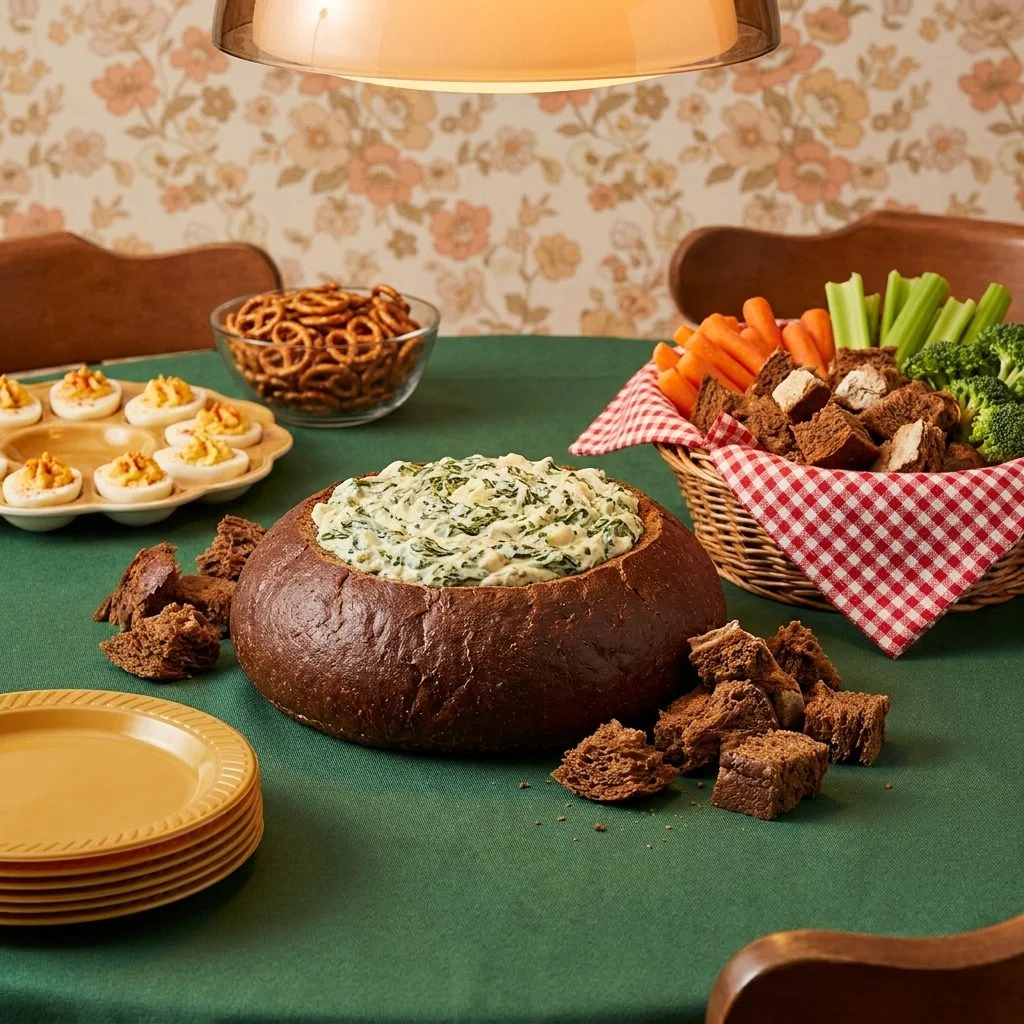
One packet of Knorr vegetable soup mix, one cup of sour cream, one cup of mayonnaise, a box of frozen chopped spinach thawed and squeezed—that was the entire recipe. The bread bowl was the real flex. The dip itself had the consistency of spackling paste and tasted aggressively of dried onion.
The bread bowl required a round sourdough loaf, the top cut off, the interior hollowed out and reserved for tearing into chunks for dipping. As the evening wore on and the dip level dropped, guests would begin pulling pieces from the interior walls of the bowl itself, until by the end of the night the whole structure had been consumed and only a dip-stained circle of parchment paper remained. The host always looked mildly surprised that it had gone so fast, as if this hadn’t happened the last seven times they’d made it.
16. Ambrosia Salad
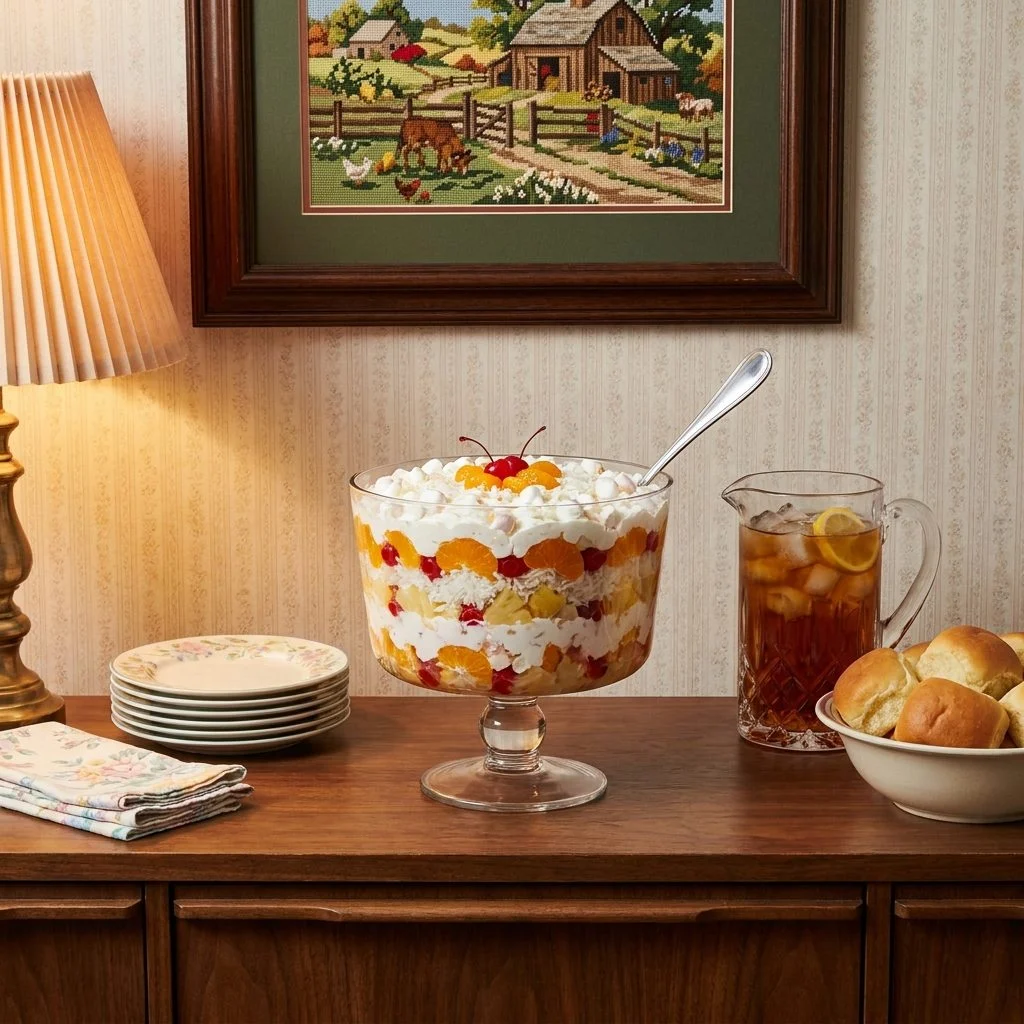
Was it a salad? A dessert? A cry for help? Canned fruit cocktail, coconut flakes, mini marshmallows, and Cool Whip held it all together. It appeared at the table right alongside the green beans and rolls, occupying a deeply confusing middle ground.
Regional variations were fierce and non-negotiable. Some households added mandarin oranges. Others insisted on maraschino cherries. A minority faction stirred in cream cheese for density. In certain parts of the South, ambrosia was a serious affair made with fresh fruit, freshly grated coconut, and real whipped cream, and those people looked at the Cool Whip version with quiet pity. The Cool Whip contingent didn’t notice, because they were already on their second serving.
15. Whole Glazed Ham With Pineapple Rings
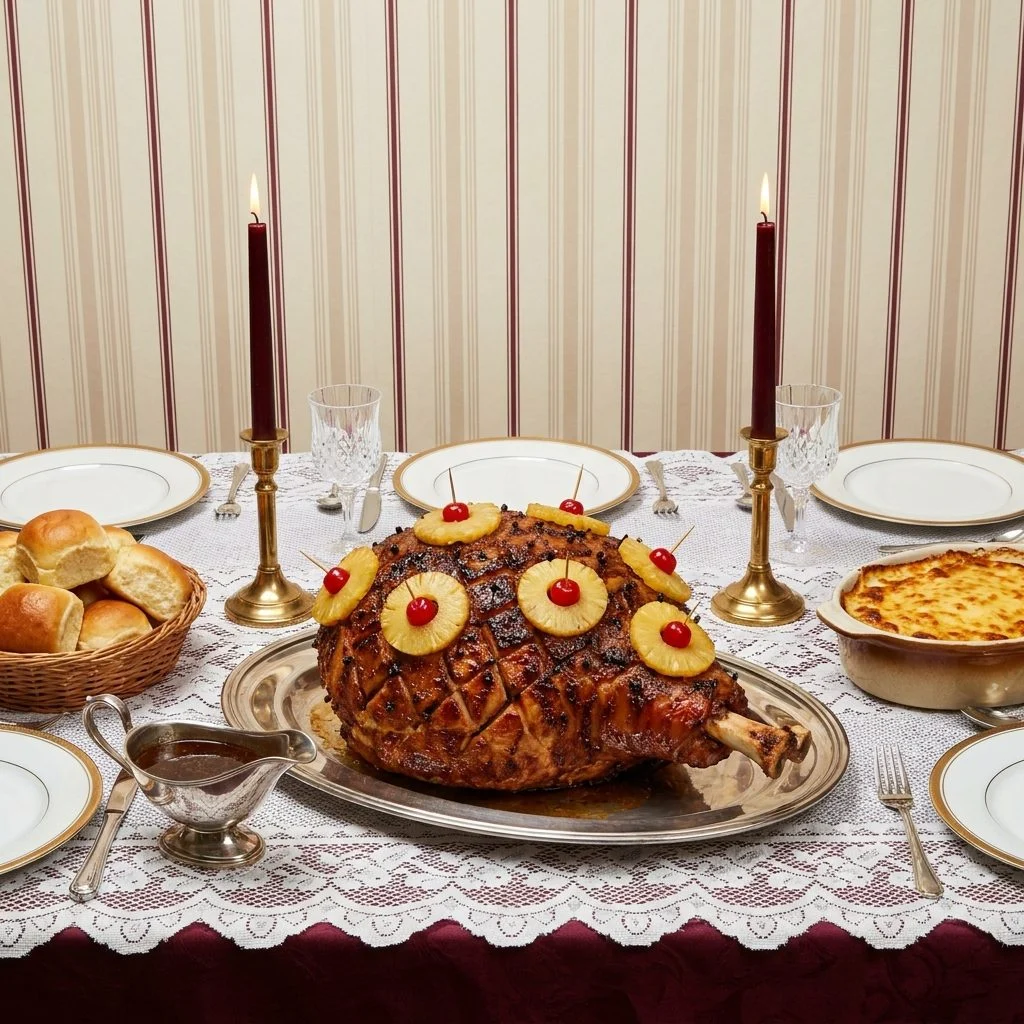
That ham looked like it had been decorated by a committee: whole cloves at every intersection of a diamond-scored surface, pineapple rings pinned with toothpicks, and those impossibly red maraschino cherries nestled in the center like little radioactive jewels. Carving meant pulling out approximately forty toothpicks first.
The glaze was usually a mixture of brown sugar, Dijon mustard, and the pineapple juice from the can, brushed on in multiple layers during the last hour of roasting until it caramelized into a shellacked crust. The ham itself was always pre-cooked — this was mostly a reheating and decoration exercise — but nobody said that out loud. It went to the table on the good serving platter with a bouquet of parsley around the base, and the host stood behind it with a carving knife and the posture of someone who had earned this moment.
14. Communal Fondue Pot
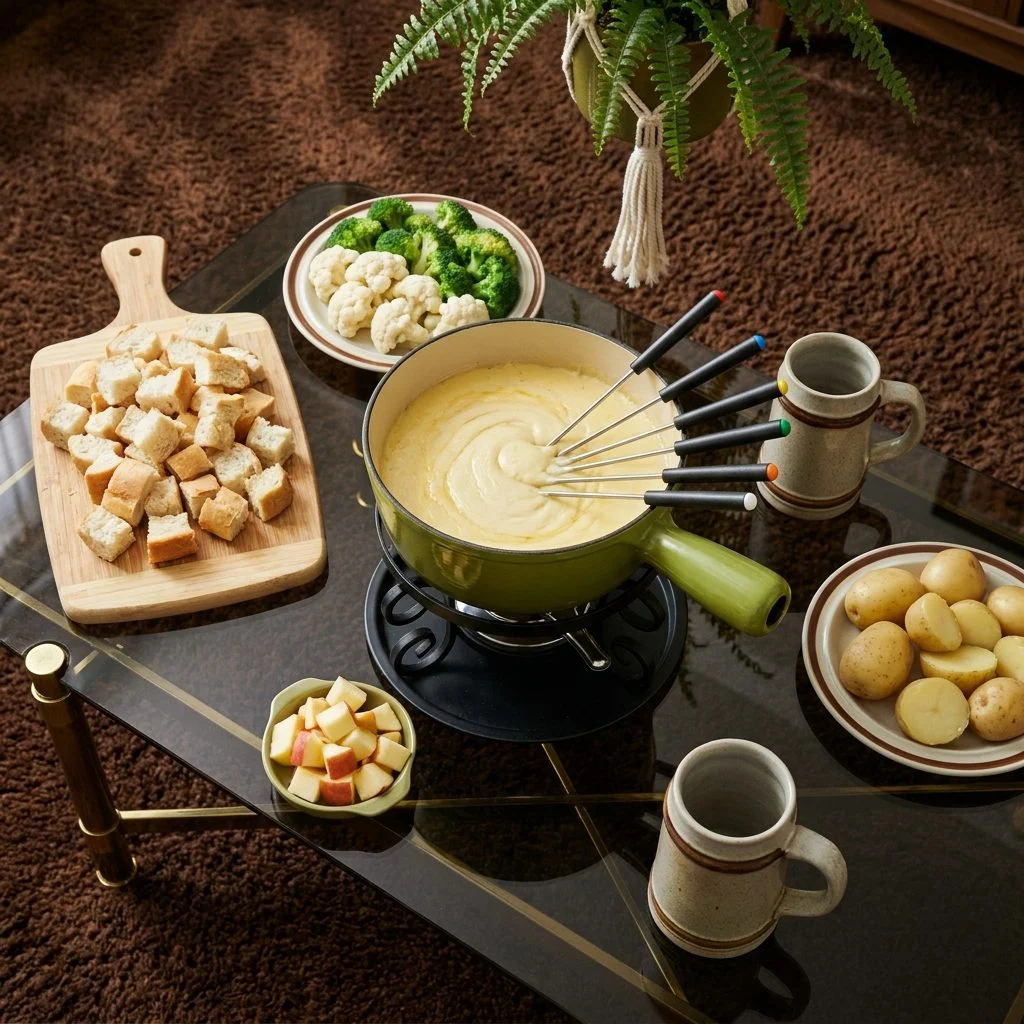
Six forks, six different colored handles, one pot of melted cheese. The colored tips were supposed to prevent mix-ups, but three drinks in, nobody cared whose fork was whose. The bread cubes always fell off into the cheese. There was an unspoken rule that if your bread dropped, you owed something.
The fondue set itself was a wedding gift in approximately 60 percent of American households, and it spent most of its life in a cabinet until someone decided the time had come to use it. The fuel canister had to be tracked down. The correct cheese ratio — usually Gruyère, Emmental, a splash of kirsch, and a rub of garlic on the pot — was debated before anyone had tasted anything. By the end of the evening, the cheese had reduced into a golden, slightly rubbery crust at the bottom of the pot that the host scraped out and ate standing in the kitchen, alone, and considered the best part.
13. Quiche Lorraine as Main Course
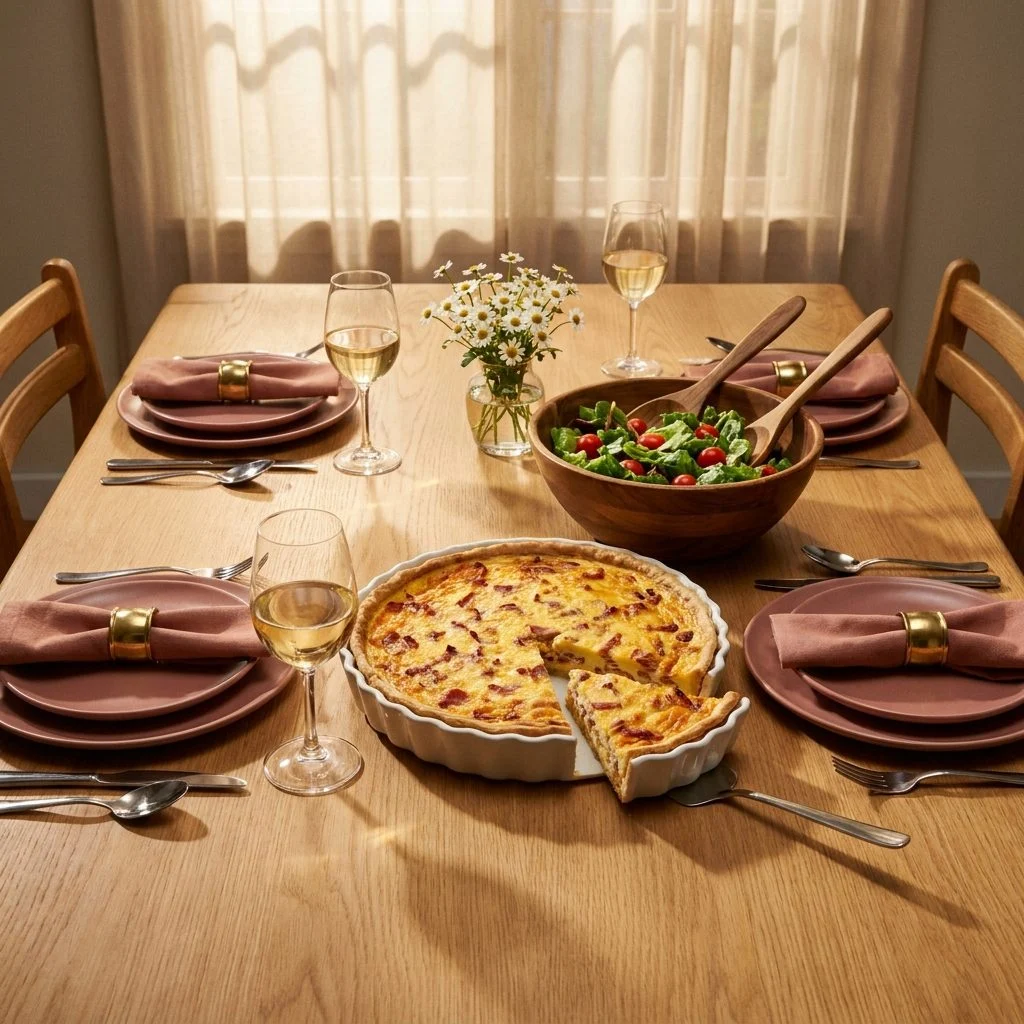
Real Men Don’t Eat Quiche came out in 1982, and quiche took a reputational hit it never fully recovered from. Eggs, cream, Swiss cheese, bacon, a pie crust from the freezer section—that was it. The audacity of serving what is essentially a savory custard pie as the centerpiece of an adult dinner and calling it French deserves respect.
Before the book arrived to complicate things, quiche was considered the height of casual sophistication — something you could make ahead, serve at room temperature, and pair with a green salad to signal that you were the kind of person who knew what a quiche was. It was the centerpiece of the ladies’ lunch, the Sunday brunch, the dinner party where the host wanted to seem effortless. After 1982, male guests started making jokes before their first bite. The quiche tasted exactly the same. The jokes continued anyway.
12. Pâté en Croûte
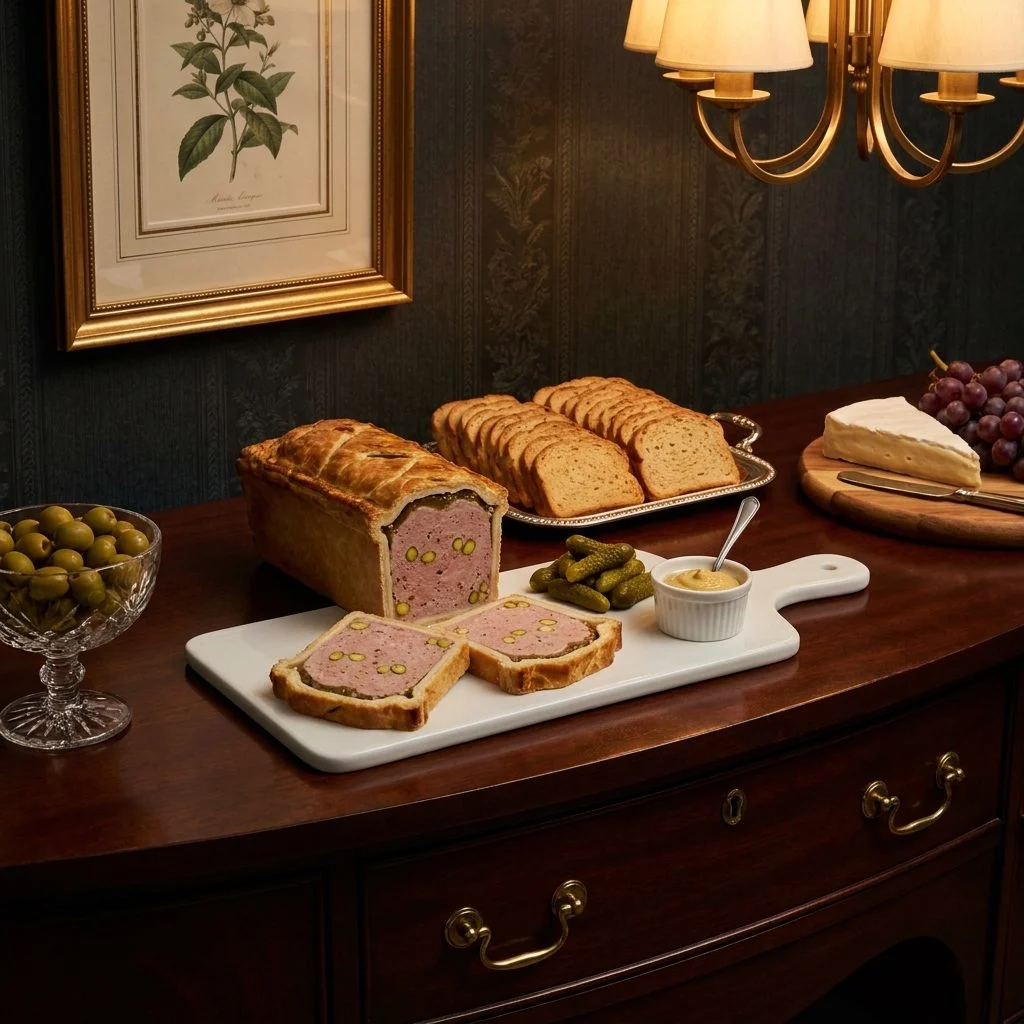
Cold, sliced thick, with golden pastry crust around a dense core of seasoned meat studded with pistachios, sometimes with that thin line of aspic shimmering like a little gelatin moat. Cornichons on the side. This was the nuclear option of dinner party hosting.
Making pâté en croûte properly required a hinged terrine mold, a farce made from multiple types of ground meat seasoned with enough salt and brandy to preserve a small village, and the ability to pour liquid aspic through a small funnel into the gap between the meat and the pastry after it had baked and cooled. The aspic had to be warm enough to pour but cool enough not to melt the fat. The whole enterprise took two days. Hosts who pulled it off mentioned it once, quietly, and then watched their guests understand the implication.
11. Stuffed Celery With Pimento Cream Cheese
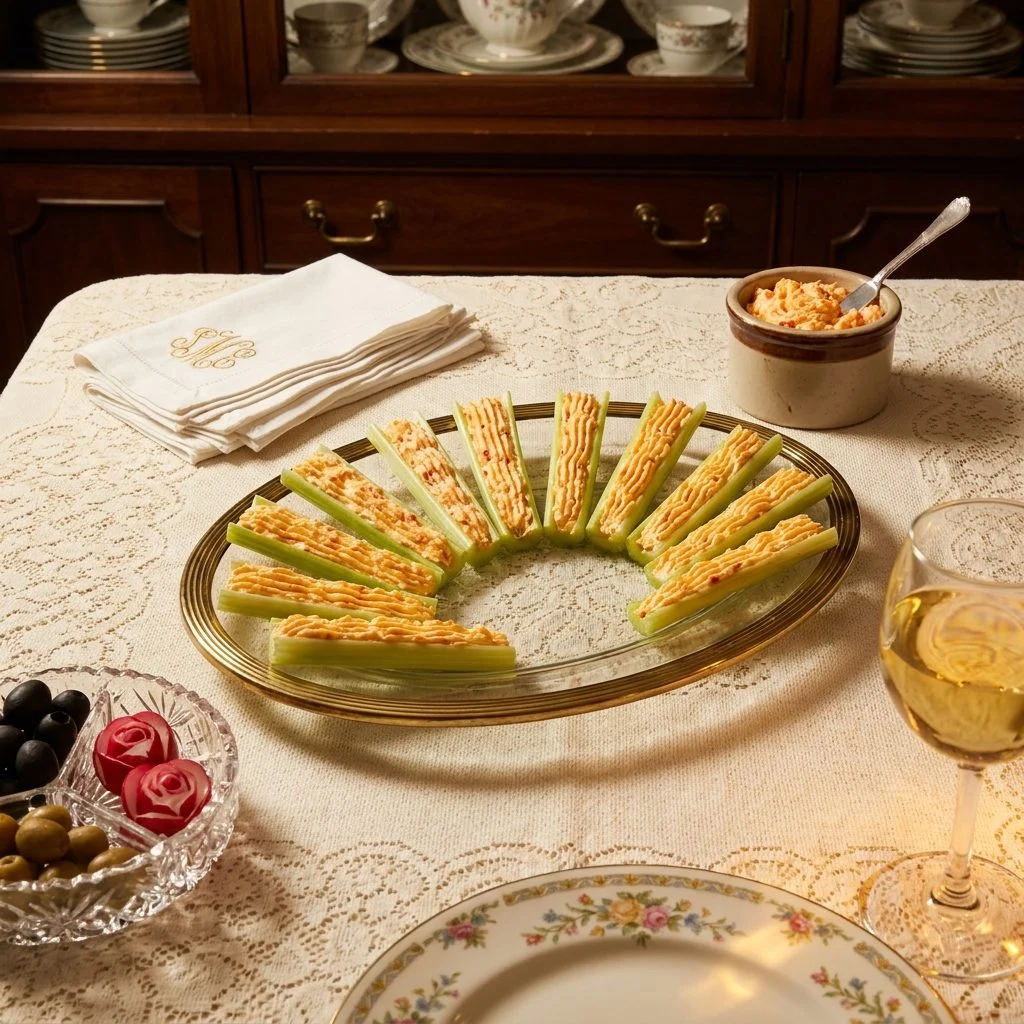
A dozen celery sticks stuffed so aggressively with pimento cream cheese that the filling formed tiny ridged mountains. Every hostess had her own technique. Nobody questioned why we were eating raw celery filled with cheese spread as a formal appetizer. It cost about forty cents to make.
The pimento cheese itself could be store-bought — Kraft made one in a small glass jar with a red lid — or homemade, which meant cream cheese, diced pimentos, a pinch of cayenne, and enough mayonnaise to bring it to a spreadable consistency. The celery had to be the inner stalks, pale and tender, not the dark green outer ones that were too bitter and too curved to fill properly. Arranged on a relish tray alongside olives and carrot sticks, the stuffed celery looked purposeful and decorative. It was eaten without much comment. That was exactly right.
10. Frog Legs Sautéed in Garlic Butter
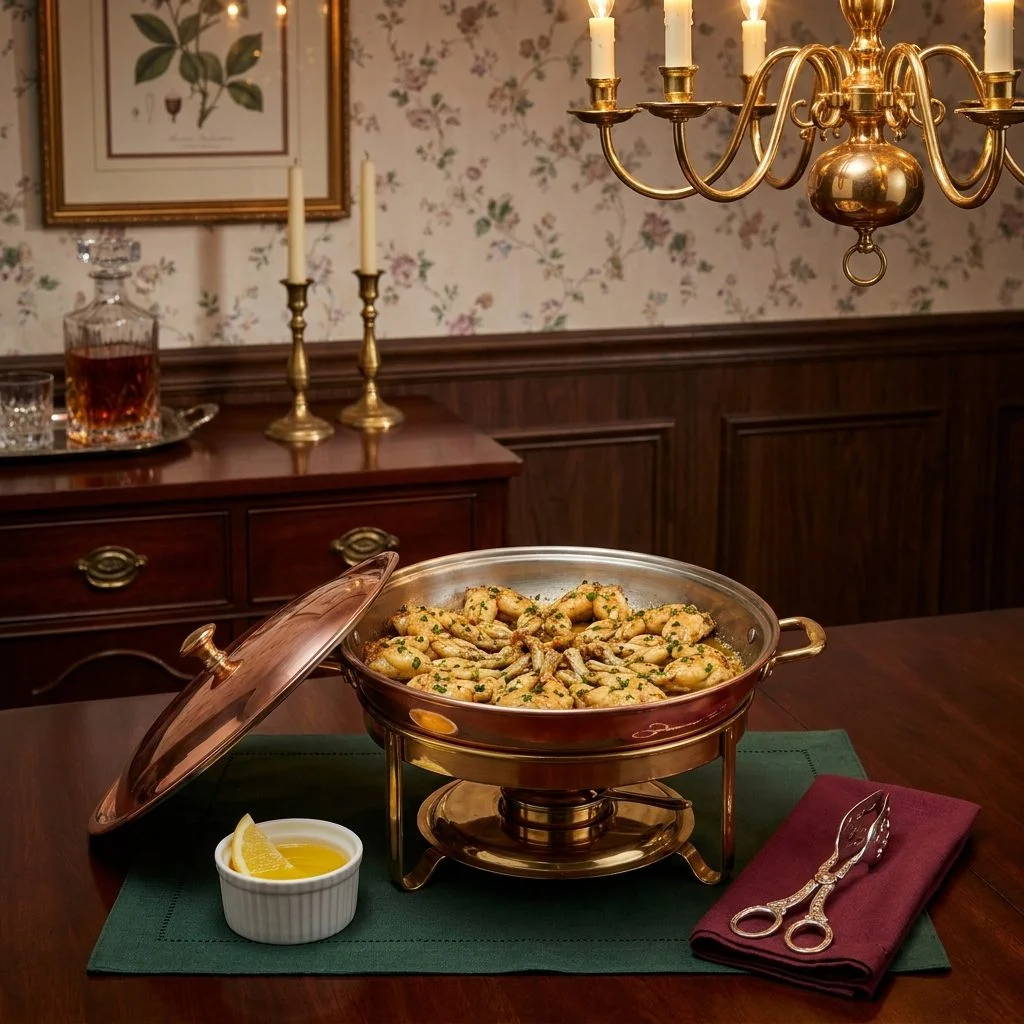
Someone’s dad always made these. He’d been to New Orleans once in 1978 and never recovered. Every dinner party featured a copper pan of tiny sautéed frog legs swimming in garlic butter, presented with the confidence of a man introducing culture to the suburbs.
The frog legs came from the freezer section of a specialty grocery store, packed in pairs and thawed overnight. Cooked properly — sautéed quickly in clarified butter until golden, finished with minced garlic, parsley, and a squeeze of lemon — they had the texture of very small chicken wings and tasted like whatever the butter tasted like. Guests who tried them found they had no real objection beyond the conceptual one. Guests who didn’t tried them cited food allergies they did not have. The host accepted both responses with equal grace.
9. Escargot in the Shells With Special Tongs
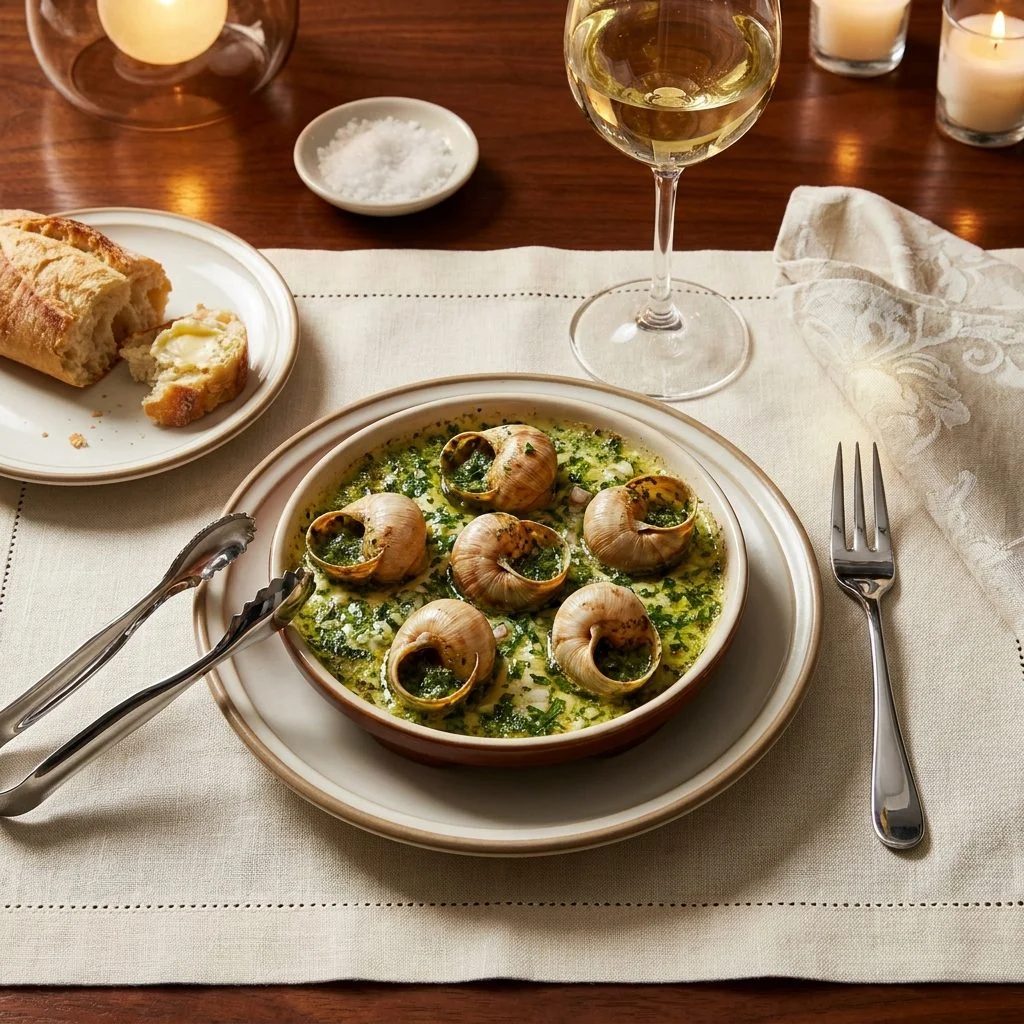
The tongs were the real show. The entire performance was watching seven adults try to operate a spring-loaded metal clamp they’d never touched before, while hot garlic butter pooled dangerously on the tablecloth. The canned snails came from a gourmet shop downtown.
The escargot dish itself — a dimpled ceramic plate designed to hold six shells steady — was another item that lived in a cabinet for most of the year and emerged for exactly this purpose. The shells were loaded with a canned snail each, packed with compound butter made from garlic, shallots, and flat-leaf parsley, then baked until the butter melted and bubbled at the edges. The smell was extraordinary. The extraction of the snail from the shell, using a tiny two-tined fork while simultaneously operating the tongs, was a coordination problem that nobody solved cleanly. The bread served alongside sopped up the butter. That was the actual point.
8. Baked Alaska Torched Tableside
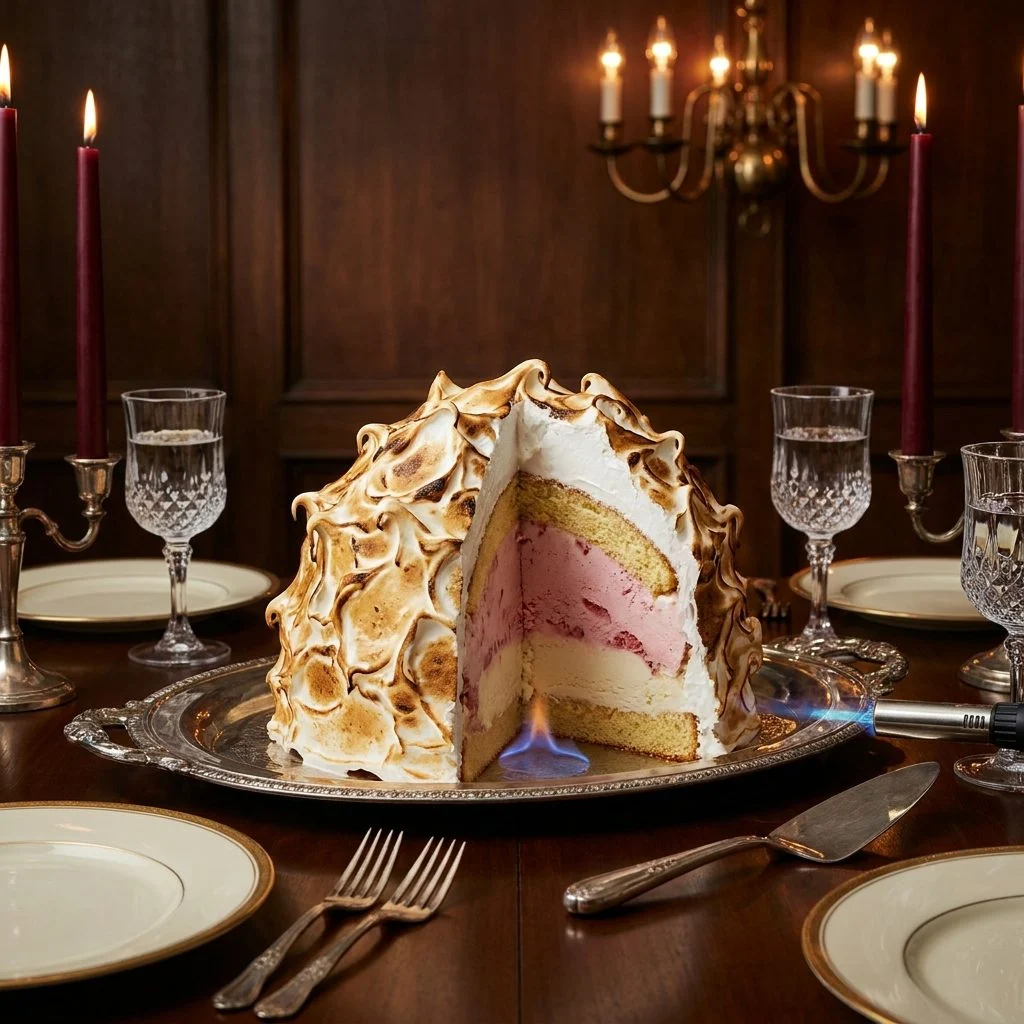
The lights dimmed. The host emerged carrying what looked like a meringue volcano on a silver tray. Someone had a lighter, or worse, one of those little blowtorches from a hardware store. Then the whole thing got torched right there while guests made sounds usually reserved for fireworks displays.
The engineering of a Baked Alaska was genuinely clever: ice cream packed into a bowl and frozen solid, placed on a layer of sponge cake, then covered entirely in meringue that insulated the ice cream from the oven’s heat. It could be assembled hours in advance and finished at the last moment. The torching added caramelized peaks and the theatrical browning that made it look alive. When it was cut, the ice cream inside was still frozen, the meringue was warm, and the cake was somewhere between the two. It was a physics demonstration that you could eat, and everyone ate it.
7. Cherries Jubilee
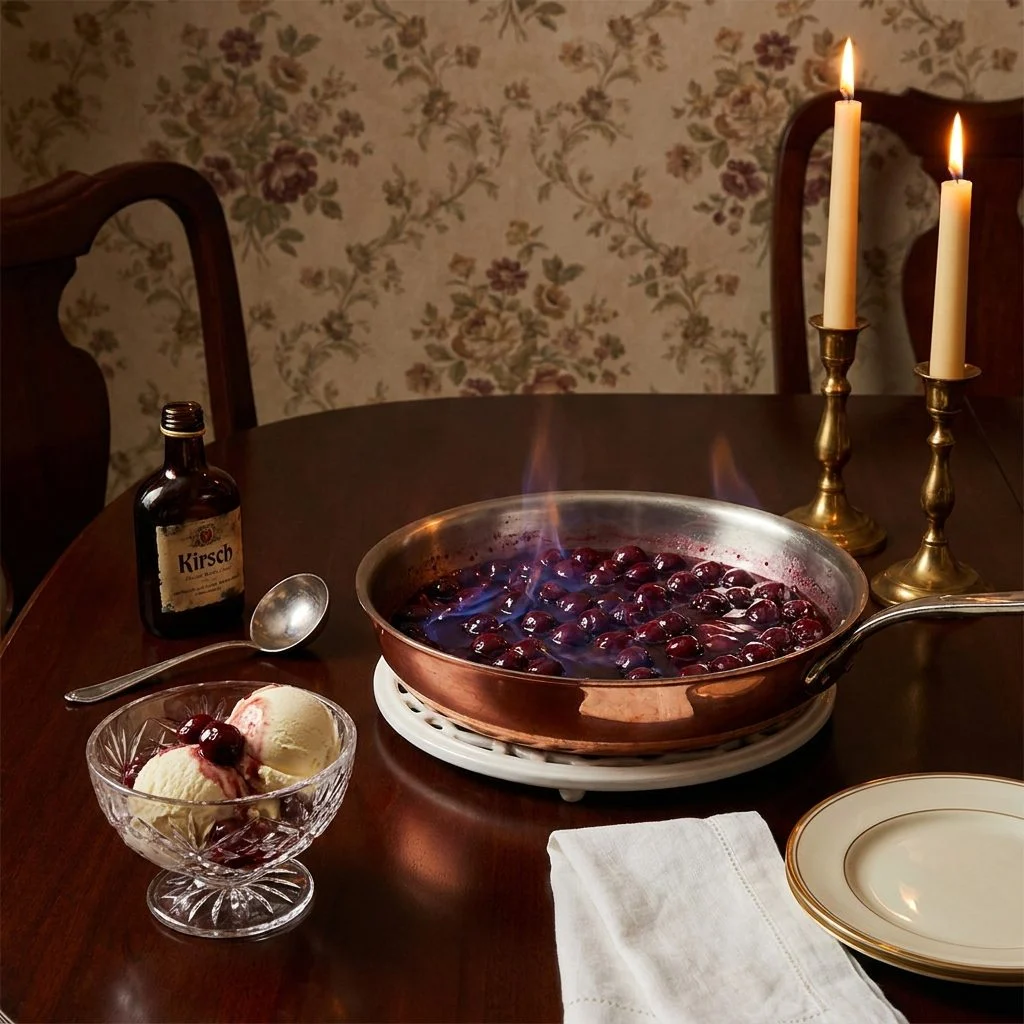
Cherries Jubilee required exactly two things: a bottle of kirsch sitting in the liquor cabinet since 1974 and the nerve to light it on fire in front of company. The cherries—usually canned—got warmed in a pan with sugar and butter, then brandy went in, then a match.
The flame from a Cherries Jubilee was shorter and less dramatic than a Bananas Foster, and it died out faster, which gave the host a smaller window to accept admiration before plating. Spooned over vanilla ice cream, the warm cherry sauce hit the cold ice cream and produced a small cloud of steam that smelled like something between a cocktail and a pie. Guests who’d seen it before watched the fire with fond recognition. Guests who hadn’t watched with their hands slightly raised, unsure if intervention was expected.
6. Bananas Foster Flambéed at the Table
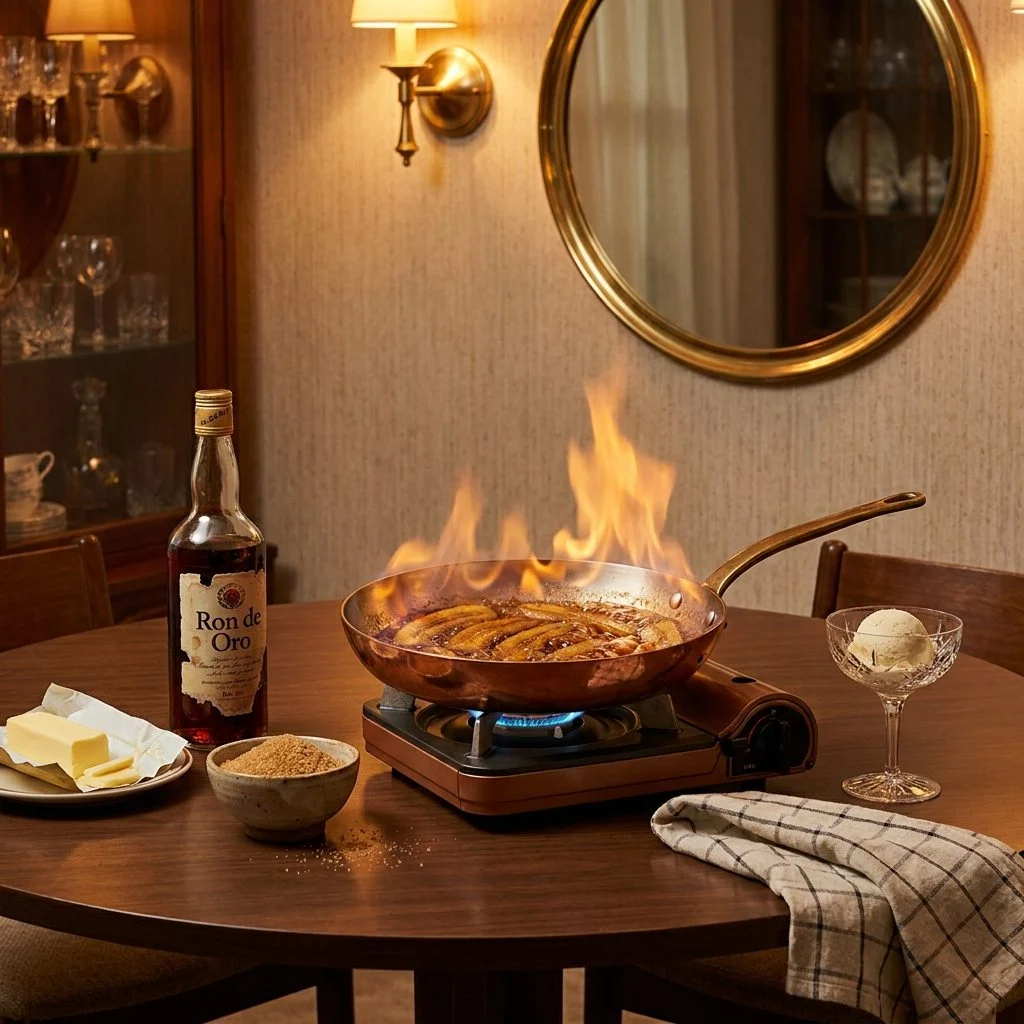
If the Cherries Jubilee went well, someone inevitably said, “You know what, let’s do Bananas Foster too.” The brown sugar spatters. It was thrilling and genuinely dangerous. Those caramelized bananas collapsed into warm butterscotch over cold ice cream.
Bananas Foster came from Brennan’s in New Orleans, invented in 1951 for a customer named Richard Foster, and the 1980s dinner party host who made it at home was always aware of this lineage and mentioned it at least once. The butter and brown sugar had to reach a proper caramel before the bananas went in, or the whole thing was just sweet soup. The rum went in last, and the pan was tilted toward the flame — or a match was held at the edge — and the whole surface caught for a moment before dying down. Nobody got hurt. Usually.
5. Seven-Layer Salad in a Glass Bowl
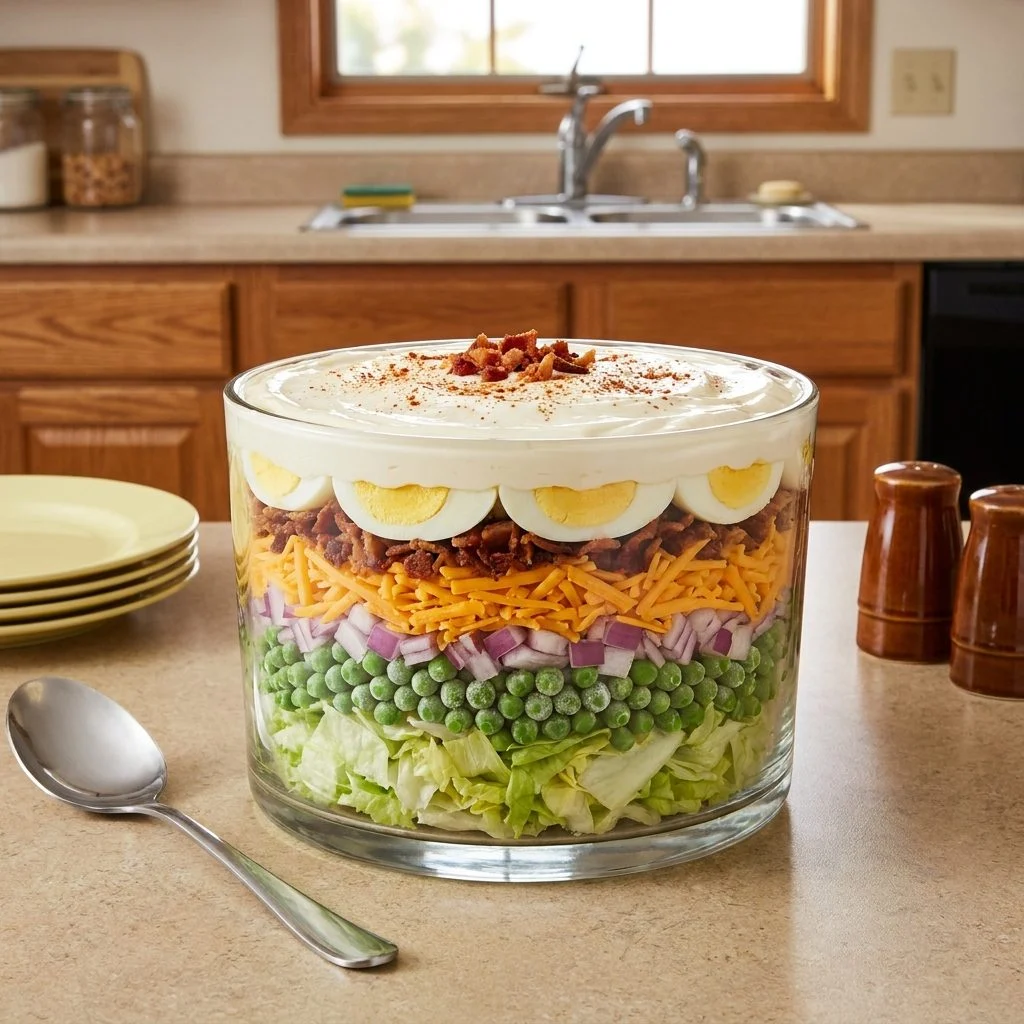
The glass bowl was mandatory. You were supposed to see the architecture: lettuce, frozen peas, onion, cheddar, bacon, eggs, and then the finale—a solid half-inch of mayonnaise spread across the top like spackling compound. This salad sat overnight, meaning mayo slowly seeped downward while peas thawed.
The overnight refrigeration was presented as a feature rather than a limitation. “It’s better the next day,” the recipe cards always said, which was technically true in the sense that the layers had merged into something more unified, even if that something was mayonnaise-saturated lettuce with cold egg. The serving moment required a large spoon that could reach through all seven layers at once to produce a cross-section showing every stratum. Guests who received a serving that captured all seven layers considered themselves lucky. This happened approximately never.
4. Chicken à la King Over Toast Points
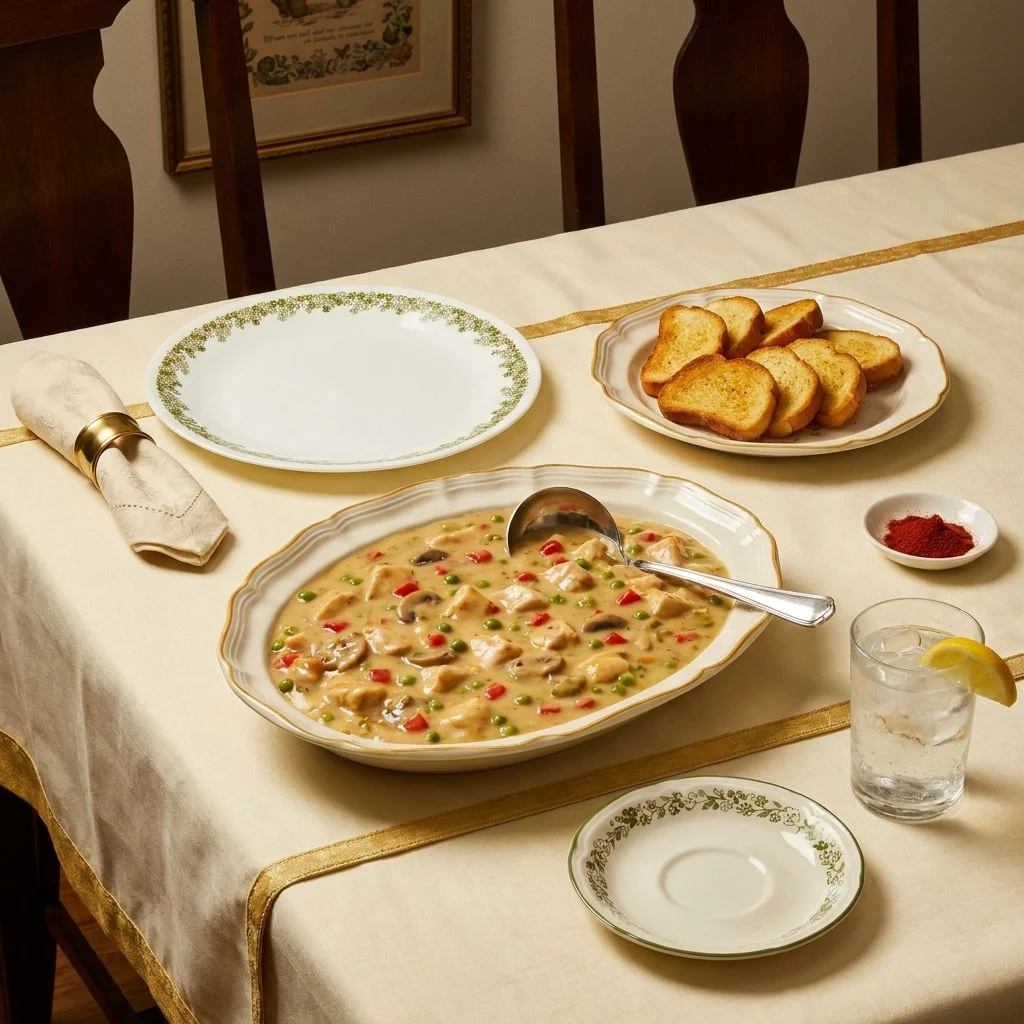
Beige. The whole plate was beige: beige sauce, beige chicken, beige toast, with exactly three pimento squares and two peas providing evidence that color existed. The sauce was a béchamel base, usually made with canned cream of mushroom soup. It tasted like your mom’s kitchen and a hotel banquet hall simultaneously.
The toast points — white sandwich bread, toasted, crusts removed, cut diagonally into triangles — existed solely as a vehicle for the sauce and to add a faint structural dignity to the plate. Served in a chafing dish at buffets, Chicken à la King had a way of becoming more liquid as the evening progressed, the sauce thinning from the heat into something closer to a soup. This was not considered a problem. You simply made sure your toast points were thick enough to hold together and ate quickly.
3. Beef Stroganoff With Campbell’s Soup Base
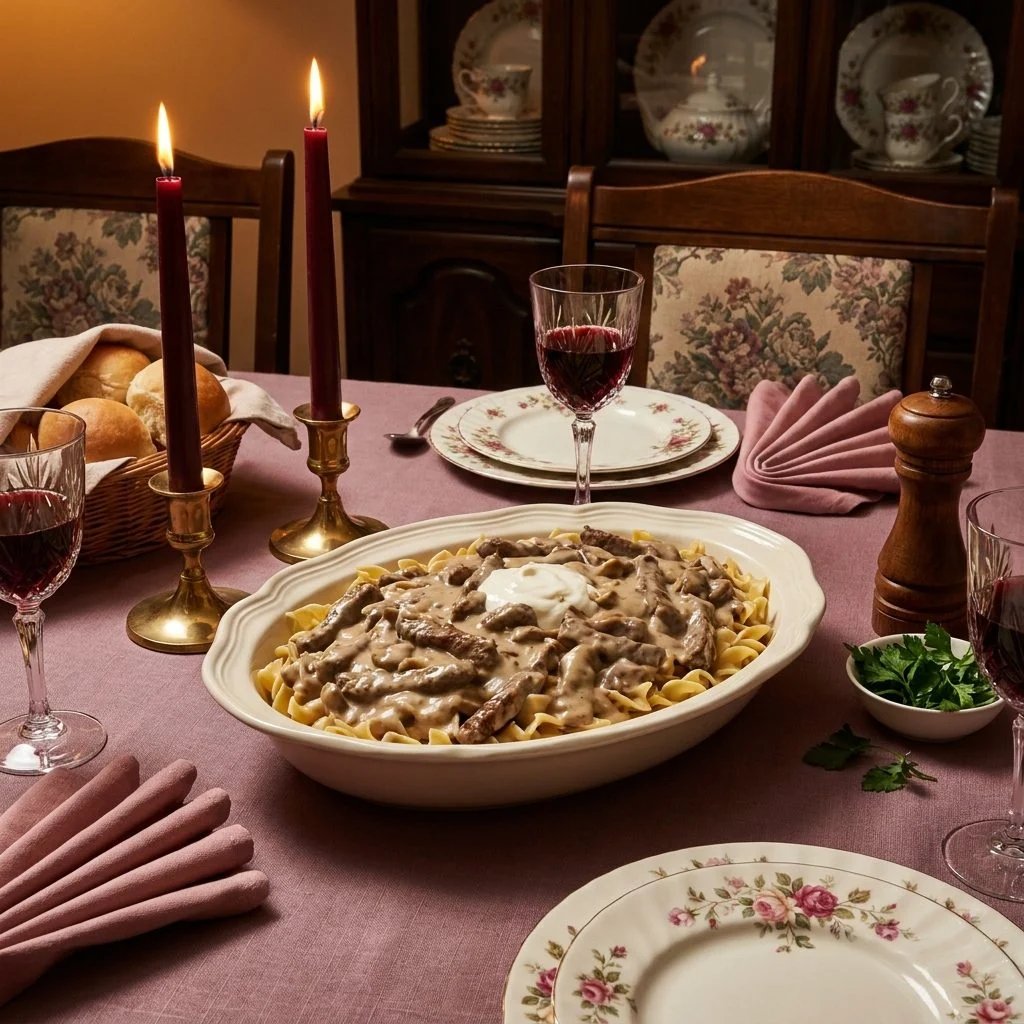
The can opener was doing more work than the chef. Every recipe called for one can of condensed cream of mushroom soup, a container of Daisy sour cream, and strips of round steak pan-fried to the texture of shoe leather, all over egg noodles. The soup gave it a salty, vaguely fungal richness that passed for sophistication.
The sour cream went in at the very end, off the heat, stirred in quickly to prevent curdling. If it curdled anyway — which it often did — you served it fast and stood close to the dish so nobody could examine it too carefully. Egg noodles, wide and flat, were the only acceptable accompaniment. Rice was for people who didn’t understand Stroganoff. The dish was named after a nineteenth-century Russian diplomat, which the 1980s dinner party host mentioned once, and which everyone forgot by the time the soup cans were in the recycling bin.
2. Deviled Ham Cheese Ball Rolled in Walnuts
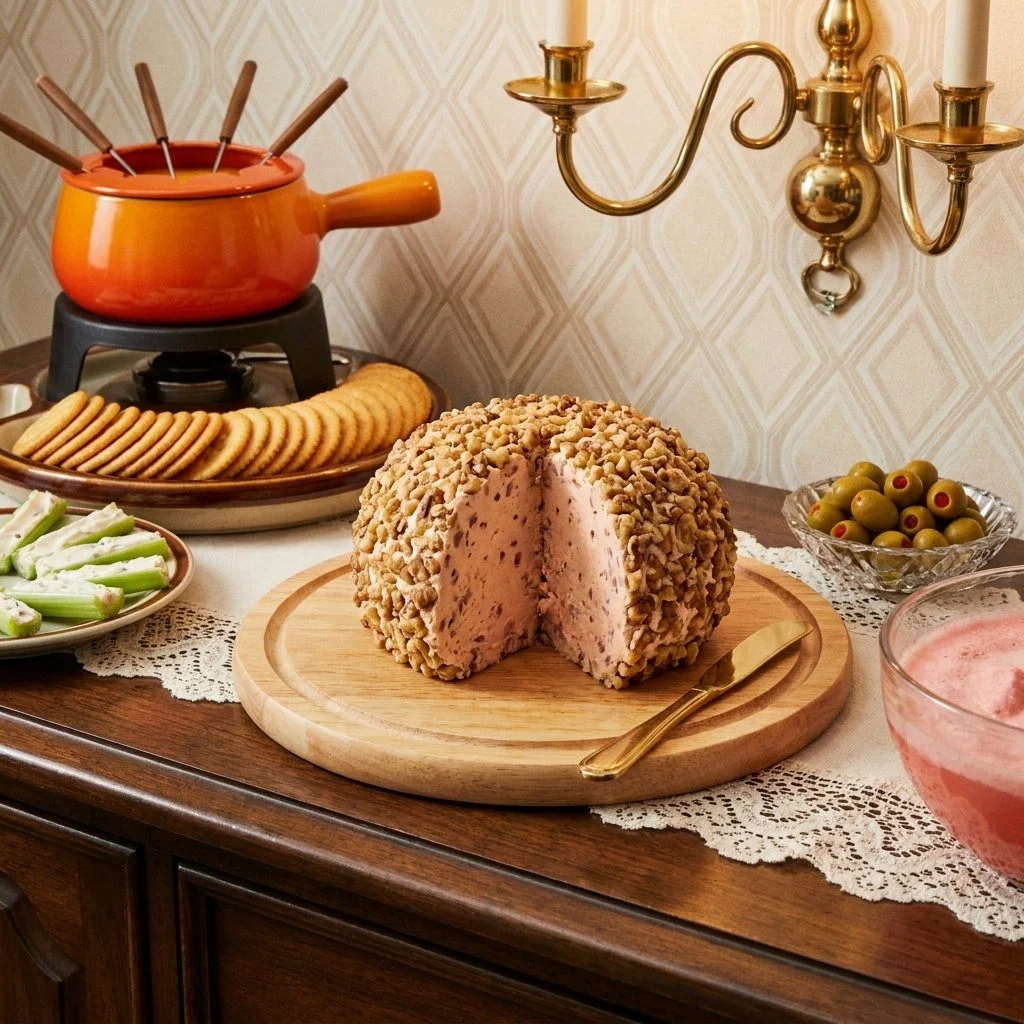
Every party had one. It sat in the middle of the coffee table on a wooden board, surrounded by a perfect sunburst of Ritz crackers. The recipe was some version of: two blocks of cream cheese, one can of Underwood Deviled Ham, a packet of ranch seasoning, mixed together, rolled into a ball, coated in nuts.
The Underwood Deviled Ham came in a small can with a red devil on the label, which had been there since 1867 and added a faint air of heritage to what was essentially a spreadable meat product. The ranch seasoning packet was the modern addition, the one that made the 1980s version distinct from its predecessors. Walnut coating was standard, pecan was aspirational, and dried parsley was for people who’d run out of nuts. The cheese ball was always slightly too cold when it came out of the refrigerator and needed ten minutes to soften. This window was never allowed. Guests spread it anyway and pretended the crackers weren’t bending.
1. Iceberg Wedge Salads Drowning in Kraft Blue Cheese
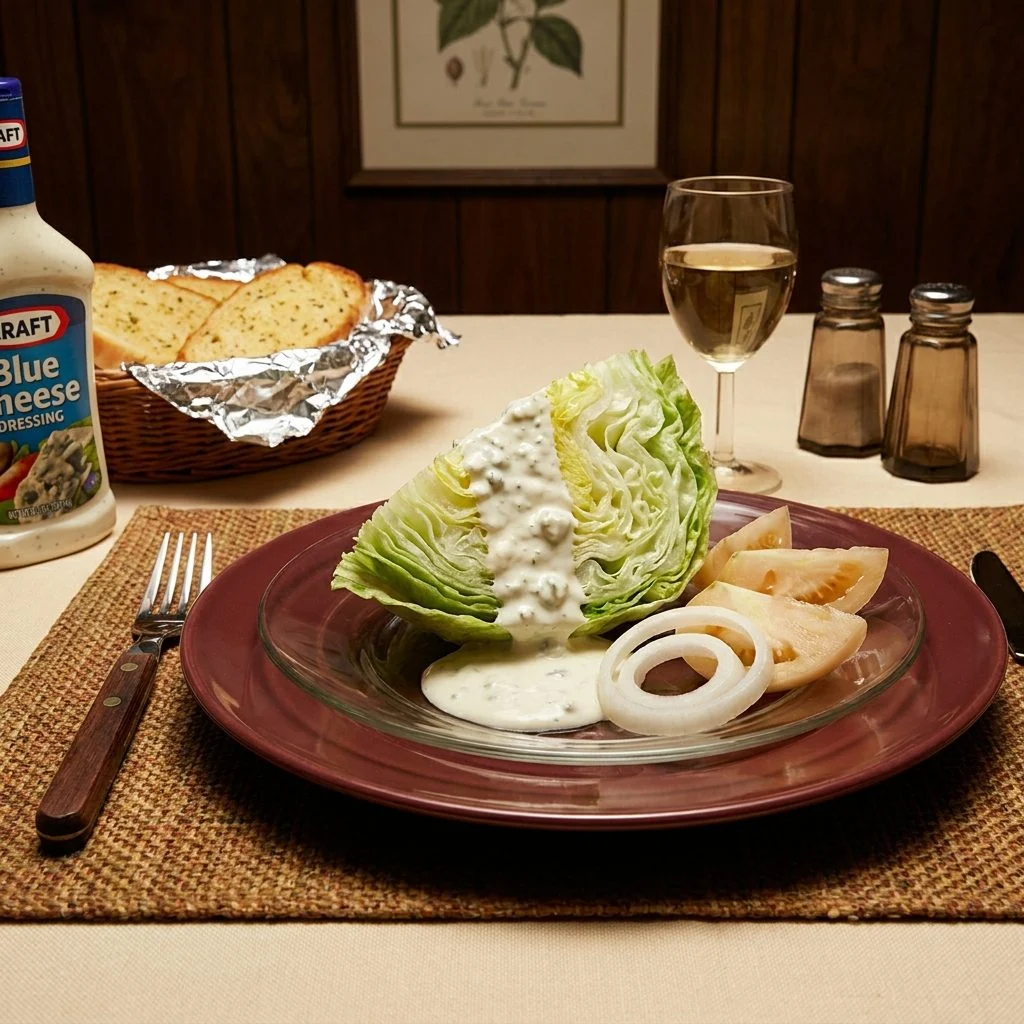
Iceberg lettuce had one job in the 1980s: provide a vehicle for blue cheese dressing. The wedge arrived looking like a pale green doorstop someone had thrown a snowball at. The dressing pooled in the plate, ran off the sides. There was always more dressing than lettuce, and nobody considered that a problem.
The wedge salad required almost no preparation — a head of iceberg, quartered, placed cut-side up on a salad plate, dressing poured over from a bottle or a ladle, maybe a few halved cherry tomatoes arranged alongside for color and the appearance of effort. It was the salad that made no apologies for being a salad. No massaged kale, no microgreens, no vinaigrette emulsified for twelve minutes. Just cold, crunchy lettuce and enough blue cheese dressing to constitute a meal on its own. Served at a steakhouse or a dinner party, it tasted exactly the same, and that was the point.

From exploring the marine wonders in the Azores and witnessing the vast savannas of Kenya, to delving deep into the rich biodiversity of South Africa and traversing iconic landscapes in Australia and the US like Yellowstone, Chris's experiences are vast.
With a penchant for diving alongside sharks, the ocean holds a special place in his heart.
Through his academic insights, he champions wildlife conservation, striving with 'Animals Around The Globe' to cultivate a profound connection between humans and animals, enhancing our mutual appreciation.
Connect with him at Feedback@animalsaroundtheglobe.com.
- What Scientists Found in a 10,000-Year-Old Beehive - July 20, 2026
- This Spider Builds Fake Decoys of Itself - July 20, 2026
- What Happens If a Crocodile Fights a Hippo? - July 20, 2026