
Have you ever stood before something that defies simple explanation? Places that make you scratch your head and wonder if everything you learned in science class was accurate?
The United States is home to landmarks that continue to puzzle geologists, scientists, and visitors alike. These aren’t your typical tourist spots with neat explanations on plaques. These are places where rocks seem to move on their own, where gravity appears to malfunction, and where lights dance across desert horizons with no clear source.
From coastal plains to desert valleys, these sites challenge our understanding of natural forces. Some have been studied for over a century. Yet even with modern technology and scientific methods, mysteries remain.
Racetrack Playa and the Sailing Stones of Death Valley
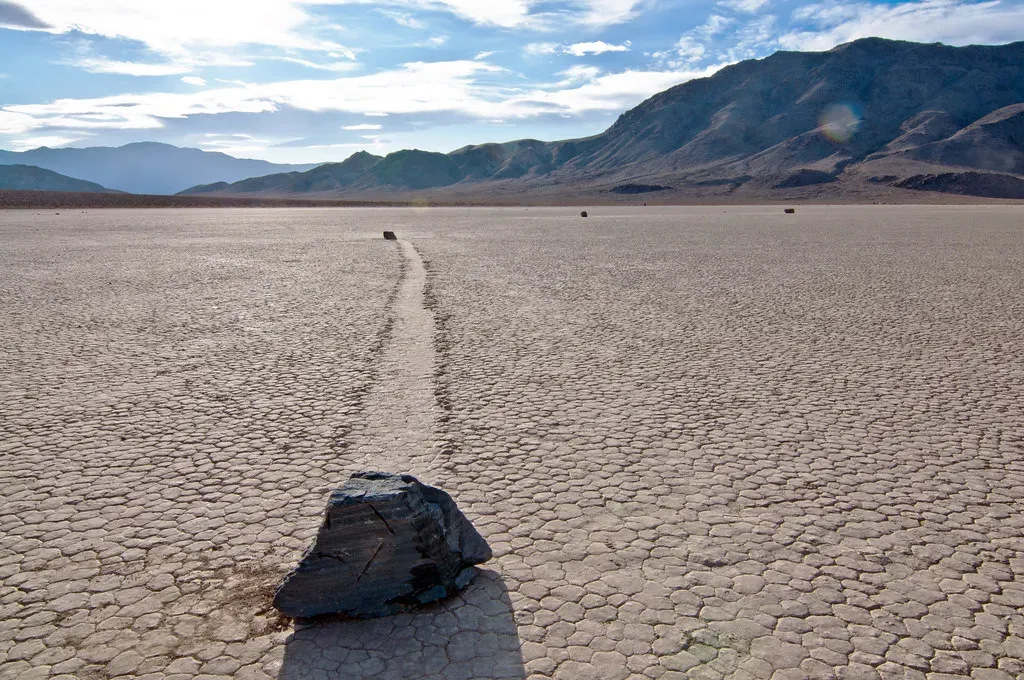
Picture rocks weighing hundreds of pounds gliding across a dry lakebed, leaving perfect trails behind them. Nobody seeing them actually move. That was the reality at Racetrack Playa for decades.
Death Valley National Park is home to one of the world’s strangest phenomena: rocks that move along the desert ground with no gravitational cause, known as “sailing stones,” varying in size from a few ounces to hundreds of pounds. Many of the largest rocks have left behind trails as long as 1,500 feet.
For over a century, researchers proposed theories ranging from magnetic fields to hurricane force winds. Researchers have investigated this question since the 1940s, but no one had seen the process in action until recently. The breakthrough came in 2014 when scientists finally captured the phenomenon on camera.
The results strongly suggest that the sailing stones are the result of a perfect balance of ice, water, and wind, with rain forming a small pond that freezes overnight and thaws the next day, creating a vast sheet of ice reduced by midday to only a few millimeters thick, which breaks up and accumulates behind the stones. Rocks moved under light winds of about 3 to 5 meters per second and were driven by ice less than 3 to 5 millimeters thick.
The movement is so slow you could watch without realizing anything is happening. It’s hard to say for sure, but this rare combination of conditions might become even rarer due to climate change.
The Oregon Vortex: Where Perspective Goes Haywire
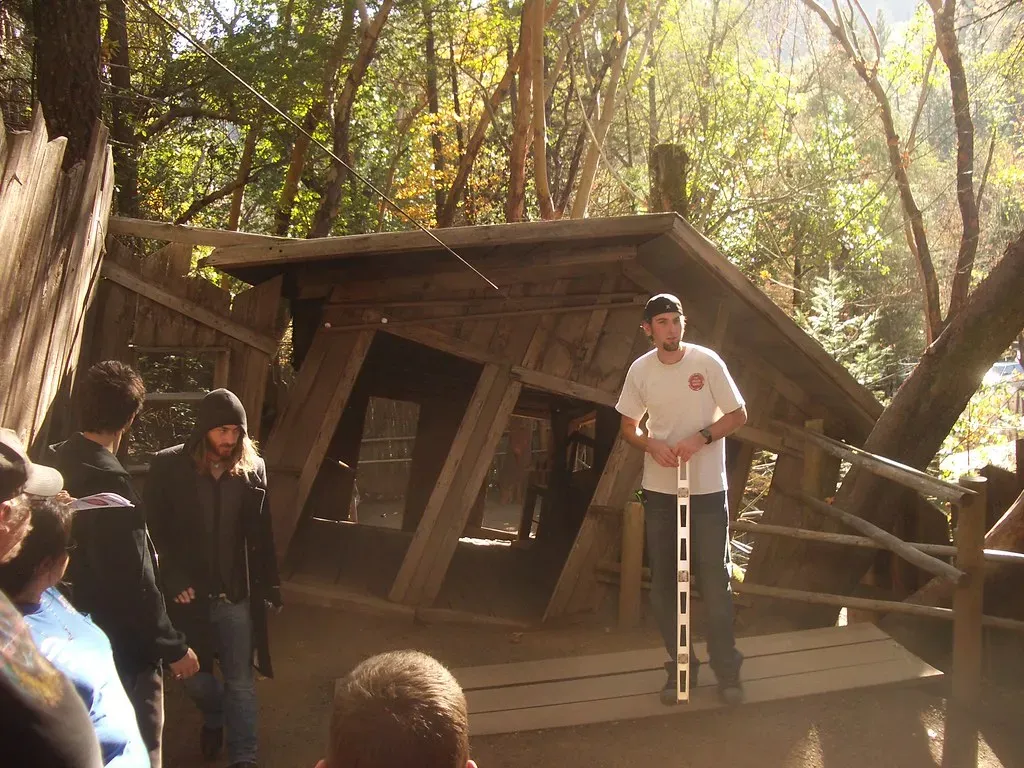
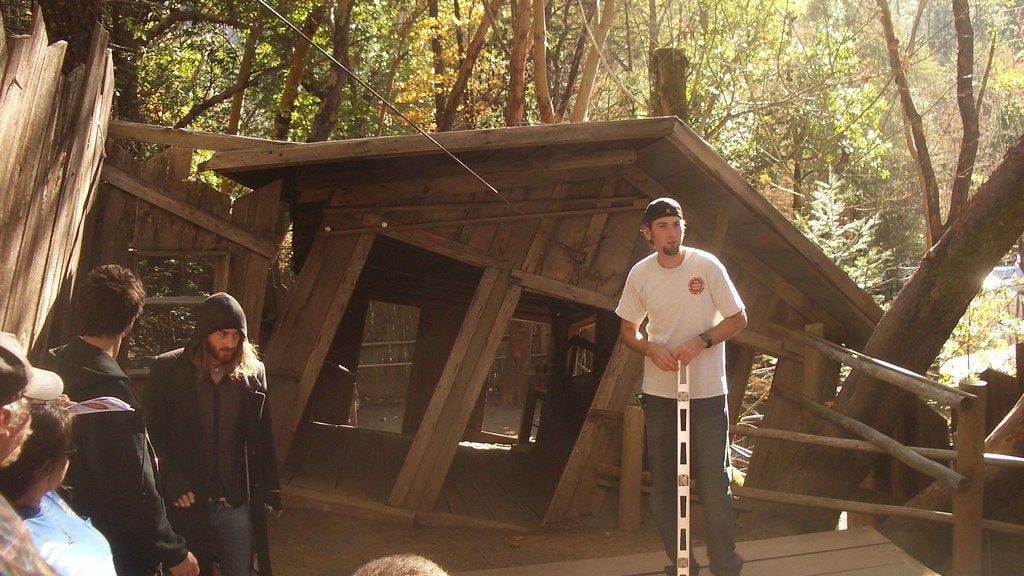
Nestled in the woods near Gold Hill sits a place where people appear to change height depending on where they stand. Brooms balance on their bristles. Balls roll uphill. Welcome to the Oregon Vortex.
The Oregon Vortex and House of Mystery is one of Oregon’s oldest and most original examples of Roadside Americana, opened to tourists in 1930 as the earliest documented mystery spot or gravitational hill in the United States. Legend has it Native Americans once avoided the land, calling it forbidden ground, and in the 1920s, physicist John Litster purchased the property to study its anomalies.
Here’s the thing, though. The explanation of the strange phenomena is that they are caused by optical illusions, distorted backgrounds that induce a forced perspective, as with an Ames room. Two UC Berkeley researchers studied the Santa Cruz Mystery Spot and published their conclusions in 1999, proposing a framework called “orientation framing” which describes how the brain’s visual processing uses spatial frames of reference.
Still, the owner insists something else happens outside the tilted house. Owner Maria Cooper agreed that what people are seeing inside the House of Mystery is an optical illusion but insisted something else was happening outside the house that makes people’s height appear to grow and shrink depending on their location. Litster’s findings remain a mystery as around the time of his death in 1957, a barn storing all of his scientific notes burned to the ground, with some believing he burned it just before he died because the world wasn’t ready.
Whether it’s all illusion or something more remains up for debate.
Devils Tower: The Enigmatic Monolith
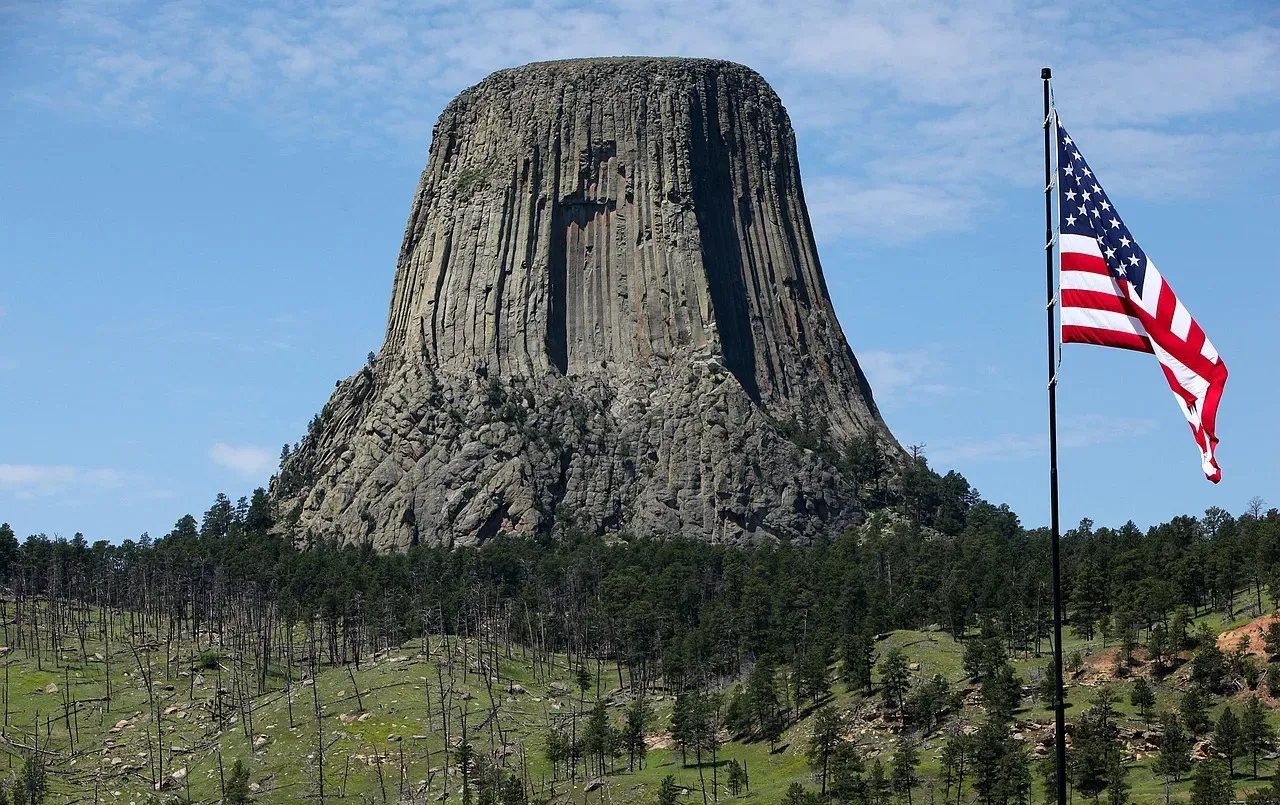
Rising dramatically from the Wyoming plains stands a geological puzzle that has captivated human imagination for millennia. Devils Tower is more than just an impressive rock formation. It’s a testament to forces we’re still trying to fully understand.
The igneous material that forms the Tower is a phonolite porphyry intruded about 40.5 million years ago, and as the magma cooled, hexagonal columns formed, up to 20 feet wide and 600 feet tall. Mateo Tepe is an iconic geological feature and an example of what is called a self-voiced proturberance, and as an iconic and prominent igneous rock feature, it is the World’s largest example of columnar jointing.
But how exactly did it form? Geologists agree that Devil’s Tower formed from molten rock forced upwards from deep within the earth, though debate continues as to whether the rock cooled underground or whether Devil’s Tower magma reached the surface.
The theories keep evolving. Early geologists thought it was a volcanic core. Later experts suggested it might be a laccolith. Recently, researchers plausibly suggest an origin as a lava coulée emplaced into a maar-diatreme volcano. This would mean groundwater interacted explosively with rising magma, creating a crater that later filled with lava.
Devils Tower inspired many geomyths, including traditional beliefs of Native American peoples that girls climbed atop a rock while fleeing bears, prayed to the Great Spirit who made the rock rise toward the heavens, and the bears left deep claw marks trying to climb it. Perhaps some mysteries are better understood through story than science alone.
The Marfa Lights: Desert Phantoms of West Texas
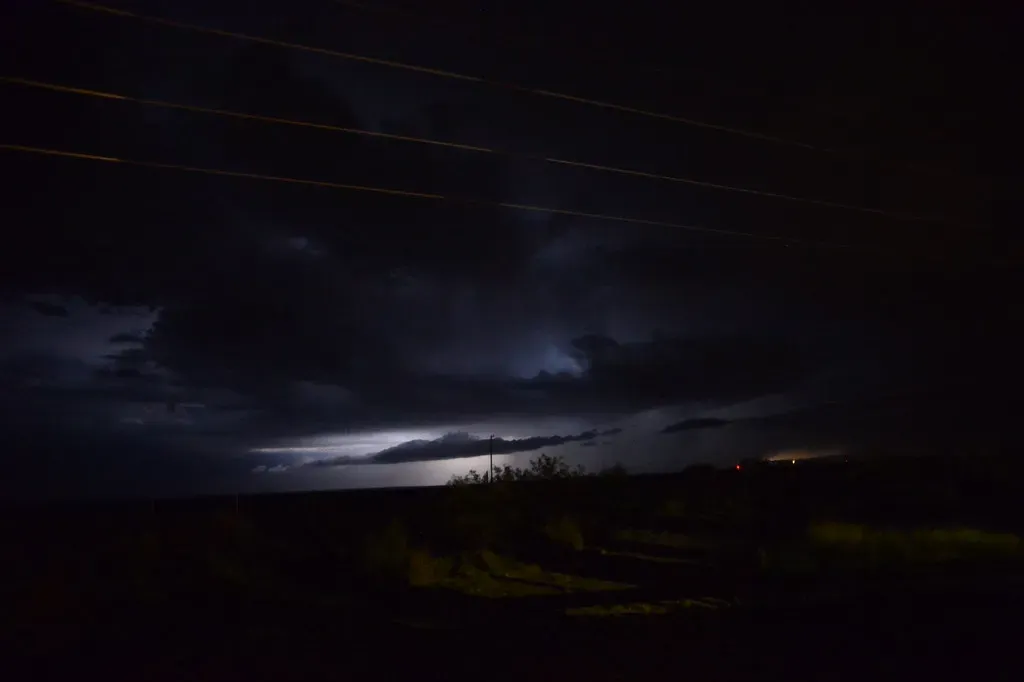
Out in the vast emptiness of West Texas, something strange happens on clear nights. Mysterious orbs of light appear, dance, split apart, merge back together, and vanish without warning.
The Marfa lights are an optical phenomenon regularly observed near Marfa, Texas, most often seen from a viewing area nearby which the community has publicized to encourage tourism. The Marfa lights are often visible on clear nights between Marfa and Paisano Pass as one faces the Chinati Mountains, appearing colored as they twinkle in the distance, moving about, splitting apart, melting together, disappearing, and reappearing.
The first historical record recalls that in 1883 a young cowhand, Robert Reed Ellison, saw a flickering light while driving cattle through Paisano Pass and wondered if it was an Apache campfire, but other settlers told him they often saw the lights though found no ashes or evidence of a campsite. This happened sixteen years before cars arrived in Texas.
In May 2004, a group from the Society of Physics Students at the University of Texas at Dallas investigated and concluded that all the lights observed over a four-night period southwest of the view park could be reliably attributed to automobile headlights traveling along U.S. 67. The likeliest explanation is that the lights are a sort of mirage caused by sharp temperature gradients between cold and warm layers of air, with Marfa at an elevation of 4,688 feet and differences of 40 to 50 degrees Fahrenheit between daily high and low temperatures being quite common.
Yet mysteries persist. Scientists concluded that due to the rarity of observation of “genuine” Marfa lights with odd behavior not explainable as car lights, more research was necessary to determine their nature. Not every light behaves the way headlights should.
Carolina Bays: The Half-Million Symmetrical Lakes
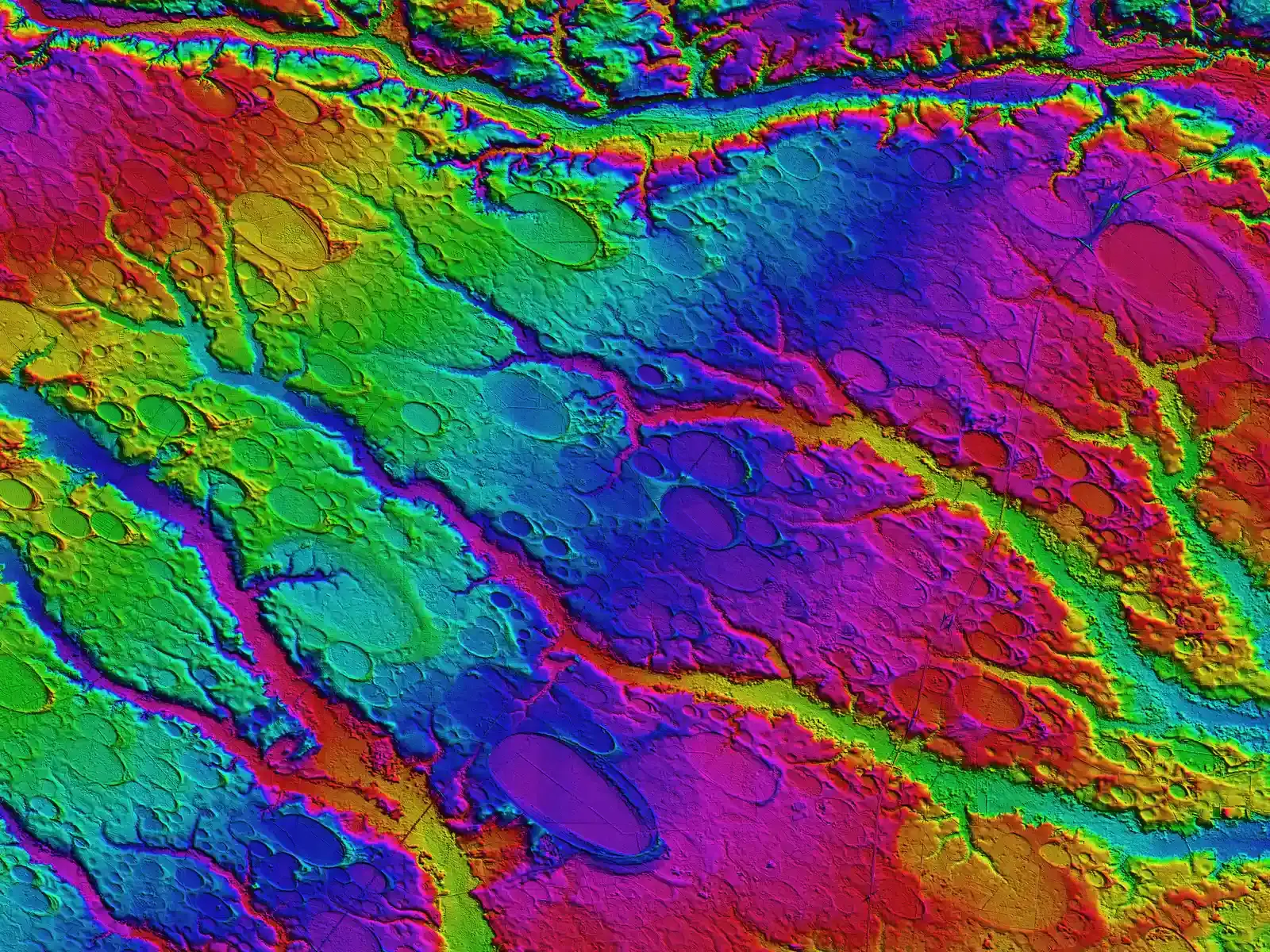
Scattered across the Atlantic coastal plain from New Jersey to Florida lies one of North America’s most perplexing geological features. Roughly half a million elliptical depressions, all eerily similar in shape and orientation.
The origin of the Carolina bays remains a geologic mystery. These oval shaped wetlands and lakes align in the same northwest to southeast direction, as if something swept across the landscape leaving identical scars.
The prevailing theory is that during prehistoric ice ages, changes in sea level and fierce winds created large sand dunes, and gradually the elliptical lakes formed from prevailing winds and currents within the flattening dunes. It’s a reasonable explanation based on what we know about wind patterns and sediment formation.
An exciting alternative posits that the bays formed from a comet or meteor impact, but that scenario seems less likely, especially since other wind-oriented lakes have been found around the globe. The impact theory had its moment in the spotlight, sparking imaginations with visions of ancient cosmic collisions.
Some of the most intact Carolina bays are in Bladen County, North Carolina, including at Jones Lake State Park, and as a result of racist underfunding and limited development during the Jim Crow era, two mysterious bays were ironically preserved so that today you can hike or paddle through this semi-wilderness. Sometimes preservation comes from unexpected places.
The Great Unconformity at the Grand Canyon
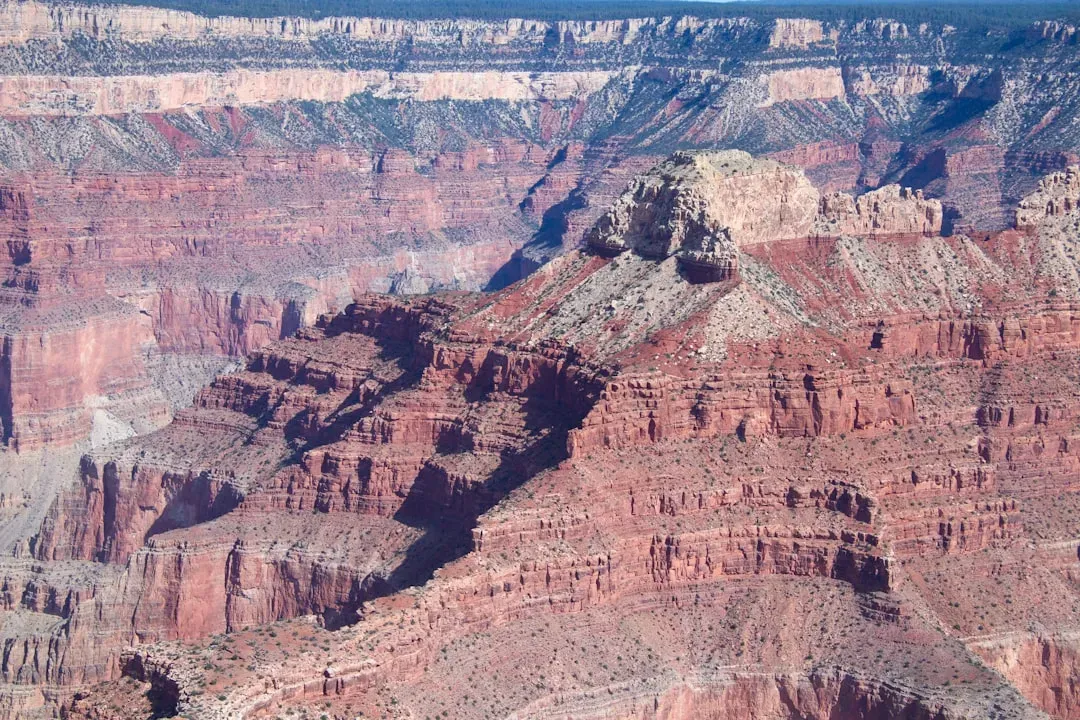
Looking at the rock layers of the Grand Canyon, you’re staring at a history book written in stone. Except there are pages missing. Lots of them.
The Great Unconformity is a huge gap in the geological record where layers of rock dating from about 1.2 billion to 250 million years ago are completely missing from certain areas around the globe. The anomaly can be seen clearly in the stratigraphy of the Grand Canyon in Arizona, where there is plenty of rock full of fossils from the Cambrian period but the layer beneath it is basement rock formed roughly 1 billion years ago and empty of fossils.
Where did nearly a billion years of geological history go? An emerging theory called “Snowball Earth” may explain where the rock disappeared to, as around 700 million years ago Earth was encased in snow and ice, with moving glaciers peeling off the planet’s crust with the help of lubricating sediments and pushing it into oceans where it was reabsorbed by subducting tectonic plates.
It’s a theory that suggests our planet once froze almost completely solid. The evidence for this global ice age helps explain the missing rock, though not everyone agrees on the details. The Grand Canyon holds countless secrets, and this particular mystery connects to fundamental questions about Earth’s climate history and the evolution of life itself.
Honestly, standing at the rim looking down at those layers, you’re witnessing one of geology’s greatest unsolved puzzles.
Conclusion
These six landmarks remind us that the Earth still guards its secrets closely. Despite decades of study, sophisticated equipment, and brilliant minds dedicated to understanding them, mysteries remain.
Some phenomena, like the sailing stones, eventually yield their secrets when scientists get lucky with timing and technology. Others, like the Marfa Lights or the Oregon Vortex, continue to dance between scientific explanation and enduring mystery. The Great Unconformity challenges our understanding of deep time itself.
What makes these places truly special isn’t just their geological oddities. It’s how they spark our curiosity and remind us that not everything fits neatly into textbooks. They keep us wondering, questioning, and exploring.
Next time you’re planning a road trip, consider visiting one of these enigmatic locations. Stand where countless others have stood, puzzled by what they witnessed. Whether you walk away with answers or more questions, you’ll have experienced something genuinely remarkable.
What would you guess causes these strange phenomena? Sometimes the journey toward understanding is more fascinating than the answer itself.
