

The American West is basically the Earth’s way of showing off. Across millions of square miles of desert, canyon, and volcanic plain, the land has been twisted, carved, and sculpted into shapes so strange they barely seem real. Geologists have spent entire careers trying to decode what happened here, and honestly, they’re still figuring it out.
Some of these formations are well known. Others hide in corners so remote that only the most determined travelers ever lay eyes on them. What they all share is an almost eerie quality, a sense that the ground beneath your feet has a secret it’s been keeping for millions of years. Curious? Let’s dive in.
Devils Tower, Wyoming: The Monolith That Defies Simple Explanation
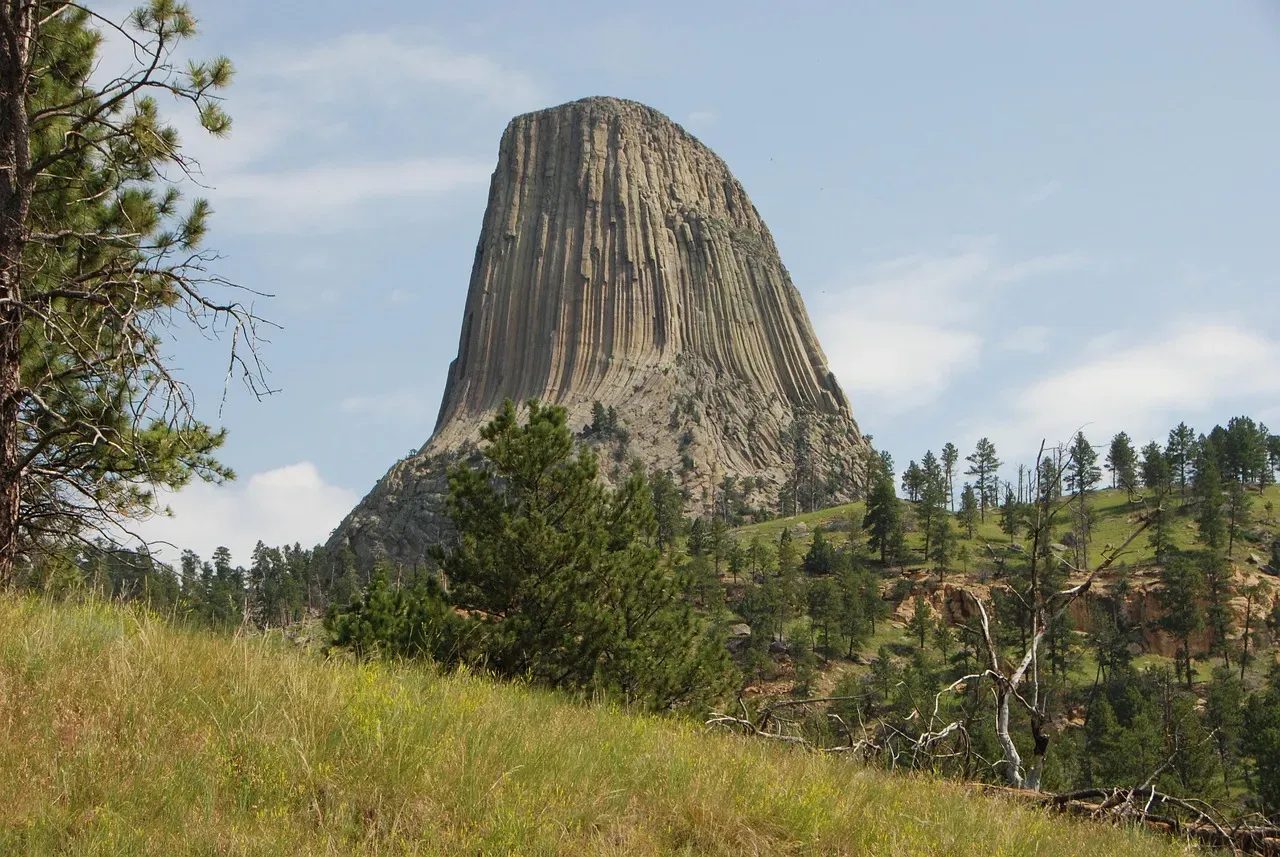
Here’s something that stops people dead in their tracks: rising more than 867 feet from a grassy, tree-dotted hillside in northeast Wyoming, Devils Tower is more imposing than any skyscraper as it comes into view. Most first-time visitors assume it must be the remains of an ancient volcano. They’re wrong.
Devils Tower is not the remnant of an erupted volcano, but instead a place where magma welled up inside the surrounding rock and then cooled. When the rock eroded away, this cylindrical tower with a texture that resembles bear claw marks remained. Think of it like pulling a mold away from a candle – the wax hardened inside, and everything else just disappeared around it.
Its sheer walls are marked by hundreds of vertical cracks, while the columns that make up Devils Tower are so perfectly hexagonal, they seem almost artificial, adding to the site’s mystery. Many Native American tribes consider it sacred. I think that spiritual reverence makes complete sense – standing at its base, it feels less like geology and more like something placed there deliberately.
Antelope Canyon, Arizona: Where Water Wrote in Stone
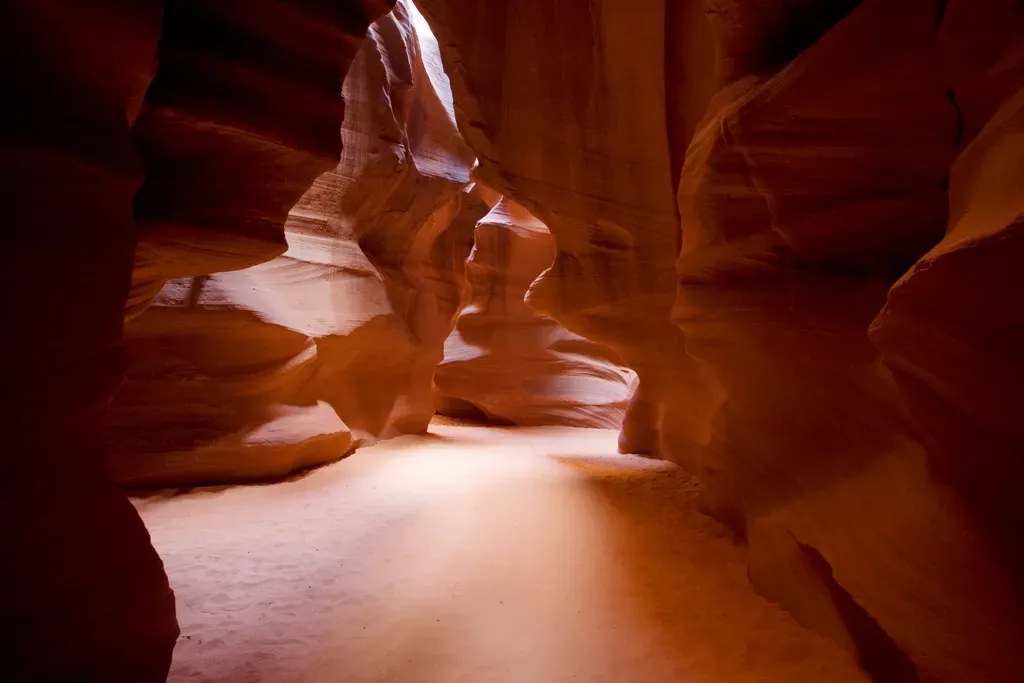
At the heart of Antelope Canyon’s story is the Navajo Sandstone. Formed from the compacted sands of ancient deserts, this sandstone dates back to the Jurassic Period, around 190 million years ago. Over millennia, these dunes solidified into the rock, setting the stage for the canyon’s formation. That’s right – what looks like a liquid sculpture was once a desert dune.
The primary architect of Antelope Canyon is water. Despite its arid climate, this region is prone to sudden and violent flash floods. When rain falls over the canyon, it rushes into the narrow passageways, carrying with it sand and debris. This natural sandblasting process erodes the sandstone walls, gradually carving out the canyon’s sinuous shapes and smooth, flowing contours.
The interplay of light and shadows in the canyon creates a surreal and magical atmosphere. Light beams often filter through the narrow openings above, illuminating the canyon floor with a vibrant array of colors. For the Navajo people, the canyon holds spiritual importance and is intertwined with their history and folklore. It’s one of those rare places that hits differently in person than in any photograph.
The Wave, Arizona: A Frozen Tsunami in the Desert
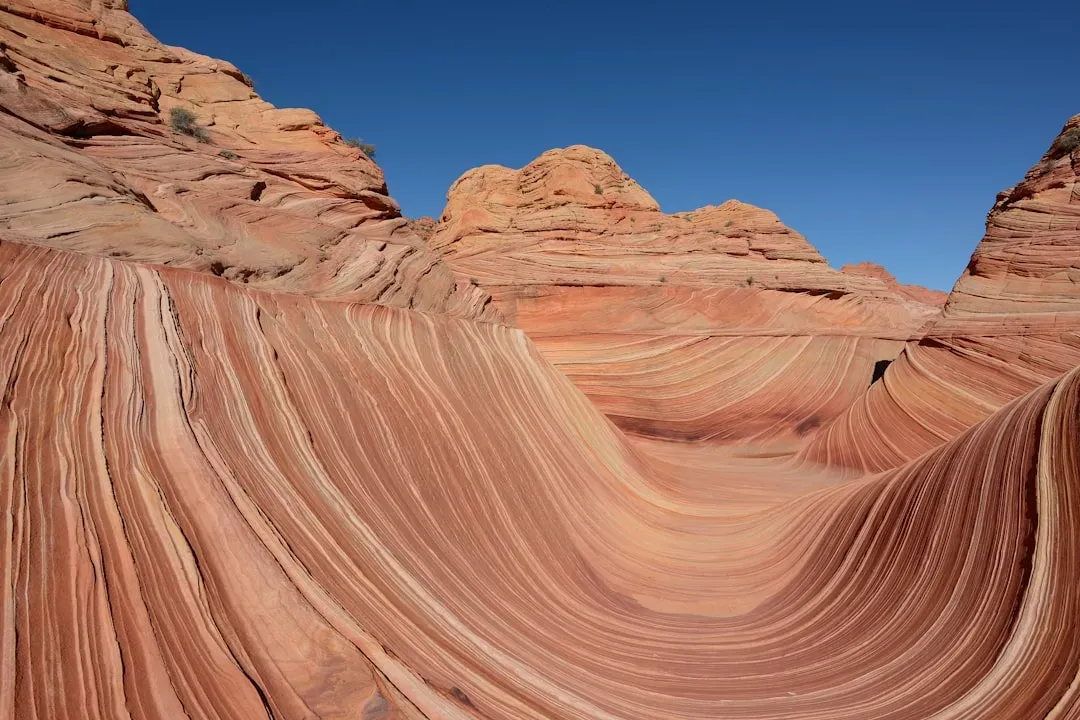
Located in the Coyote Buttes North area of the Vermilion Cliffs National Monument, The Wave is an open-air sandstone formation that resembles a frozen tsunami. The Wave’s unique appearance is the result of Jurassic-age sandstone deposits that have been eroded by wind and rain over millions of years. Honestly, calling it “The Wave” is almost an understatement. It looks more like the Earth sneezed and the rock rippled outward forever.
The rock layers here were formed by ancient sand dunes, and the erosion caused by wind and water has created a stunning landscape of narrow slot-like corridors and smooth, flowing rock formations. The Bureau of Land Management limits access to 64 people per day to protect the fragile sandstone formation. Permits are distributed through a lottery system, with applications accepted four months in advance. Good luck getting in – but that exclusivity makes it feel even more like a hidden treasure.
Devils Postpile, California: Geometry You Won’t Believe Is Natural
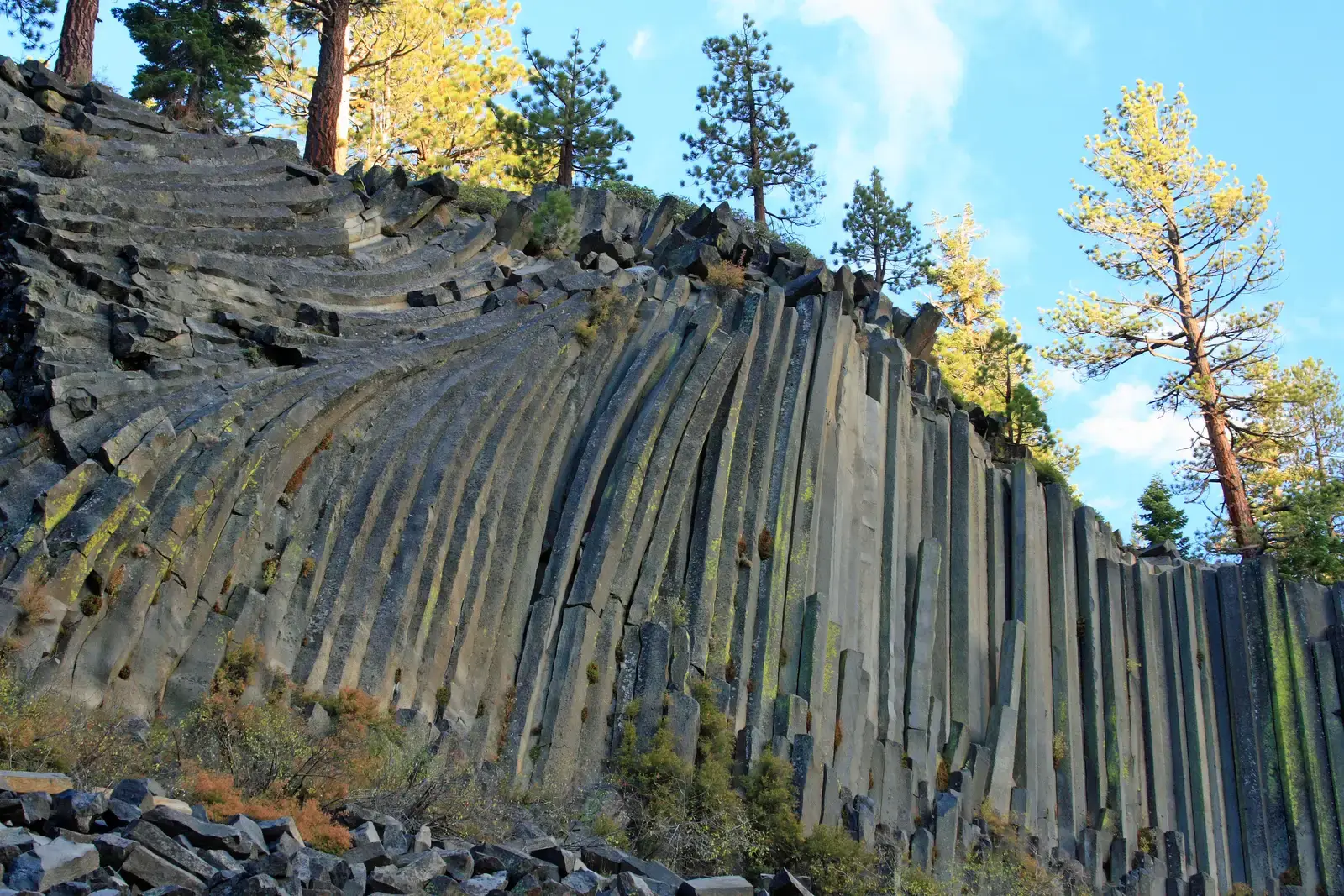
Uploaded by Gary Dee, CC BY 2.0)
Devils Postpile National Monument, in eastern California, is made up of hexagonal columns of basalt. When you first see it, your brain insists someone built this. The columns are too regular, too orderly. The saga behind Devils Postpile National Monument has a simple plotline: given the chance, nature creates order out of chaos.
The lava shrank as it cooled, and pressure cracked the young rock into hexagons, the shape that offers the greatest stress relief with the fewest cracks. Ice age glaciers then sheared off the column tops and polished the remaining rock to a high gloss. From above, the ground looks like interlocking tiles on a beautifully designed, yet all-natural, walkway. It’s one of those geological moments that makes you wonder how something this precise could happen without any planning at all.
Goblin Valley, Utah: The Alien Landscape That Almost Got Demolished
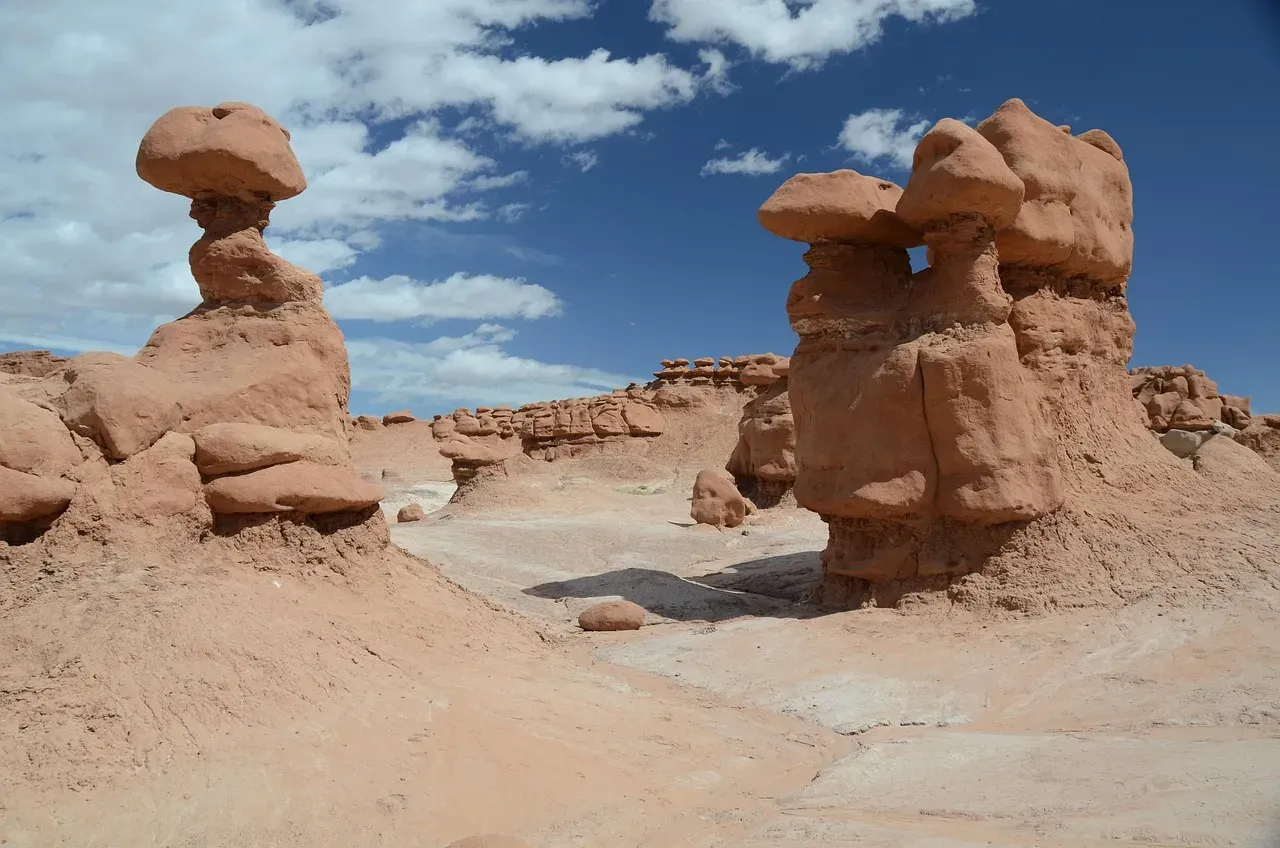
Goblin Valley is home to quirky, mushroom-shaped rock formations known as “goblins,” creating a landscape that looks almost alien. Step inside Goblin Valley State Park and you’ll feel like you’ve stumbled onto the set of a sci-fi film. The silence out there is loud. Every eroded little figure seems to be watching you.
These geological wonders are the result of volcanic eruptions millions of years ago, and erosion has sculpted them into their current forms. The softer rock beneath each “goblin” erodes faster than the harder cap on top, creating the classic mushroom shape over vast spans of time. It’s like the landscape is slowly melting in slow motion, and somehow the result is spooky and beautiful in equal measure.
Mono Lake Tufa Towers, California: The Ghostly Spires That Almost Vanished
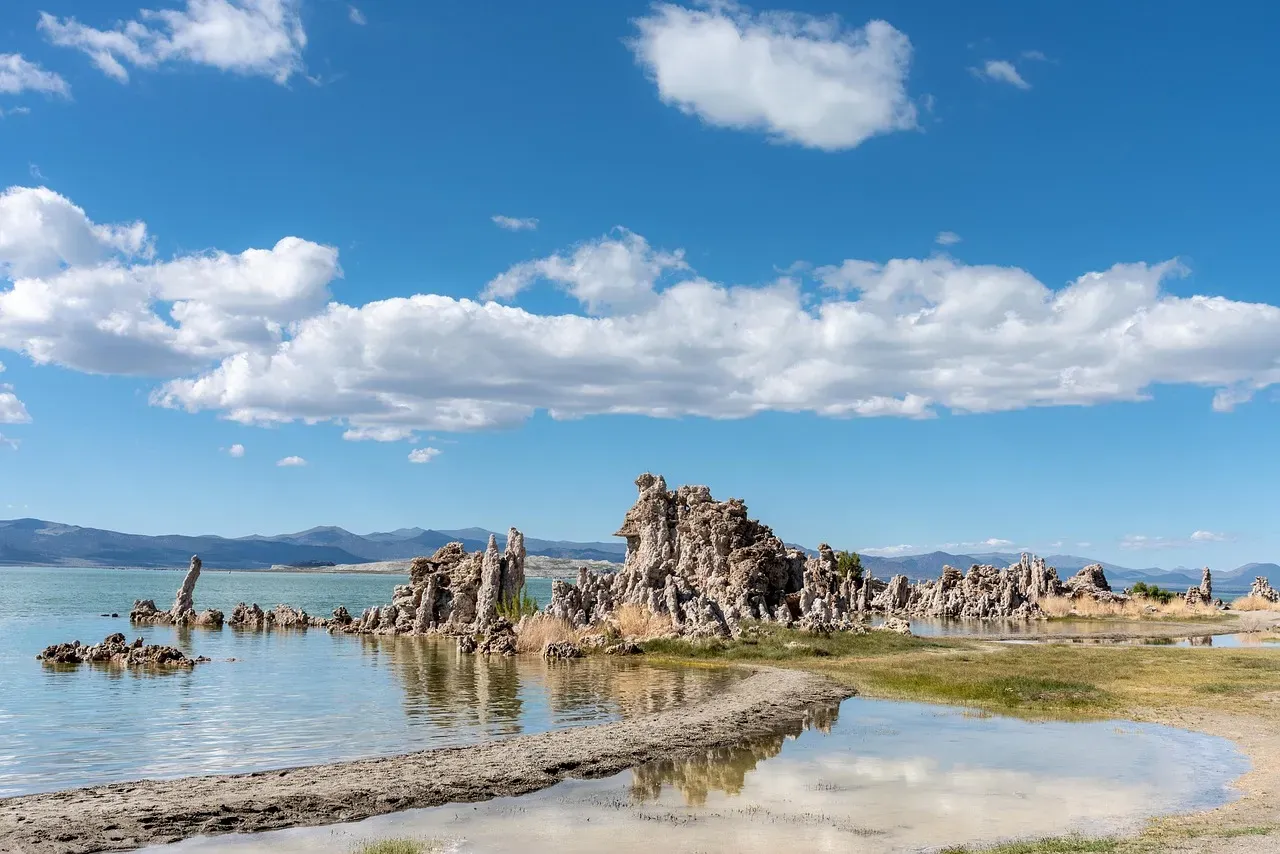
Tufa towers formed when freshwater springs bubbled up into the highly alkaline lake water. In a simple chemical reaction, calcium from the springs combined with carbonate in the lake to form limestone. The resulting spires were as porous as sponges, so more fresh water continually seeped through the sides and up to the tops, adding perhaps one inch of height every year. A geological process this slow is almost impossible to comprehend – an inch per year, building for centuries.
Unlike most geologic wonders, the scene near Mono’s south shore was at least partly caused by human activity. In their natural state, the limestone formations would be completely underwater, where only the brine shrimp could appreciate them. The tufa pillars became exposed, and 900 years of growth came to a halt, when Los Angeles started diverting water from four of the lake’s five feeder streams in 1941. Over just a few decades, the lake lost half its volume. It’s hard to know whether to marvel at the towers or mourn what it took to reveal them.
Bryce Canyon Hoodoos, Utah: More of These Than Anywhere on Earth
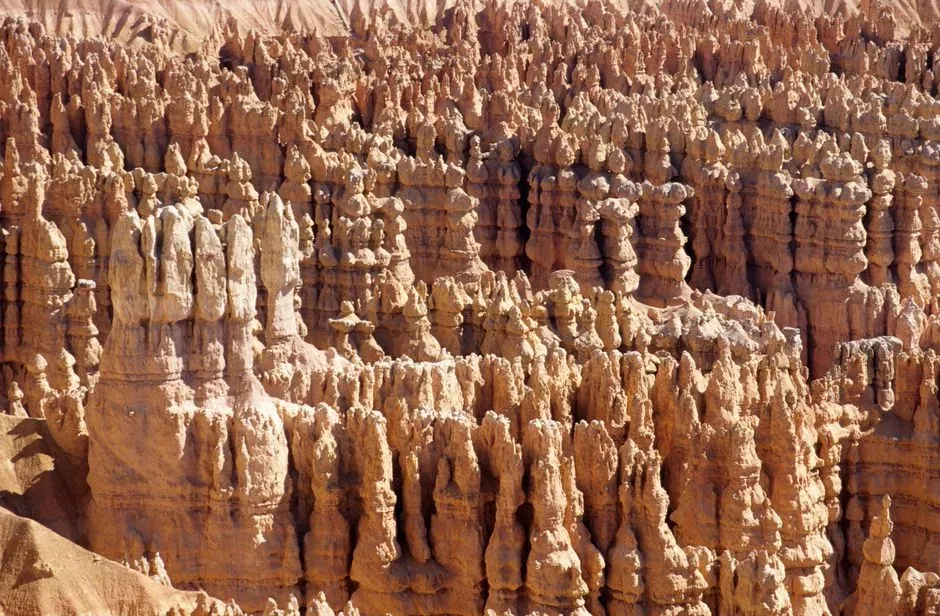
There are more hoodoos in Bryce Canyon than anywhere else in the world, which is a must-see for anyone who wants to examine how frost wedging creates such otherworldly geological formations. The word “hoodoo” sounds like folklore, and honestly, when you see thousands of them stretching across the canyon floor, folklore starts to feel reasonable.
Present-day scientists believe that the forces of water, ice, and gravity are responsible for the unique shapes in Bryce Canyon. These three forces, coupled with the differential erosion of the Claron Formation, produce a different morphology than that of any other area in the world. The formation of Bryce Canyon and its hoodoos required three steps: deposition of rocks, uplift of the land, and weathering and erosion. Three simple steps. Roughly sixty million years. The result is something that looks like a whole civilization of stone figures frozen mid-gesture, staring upward.
Conclusion: The West Is Still Keeping Secrets
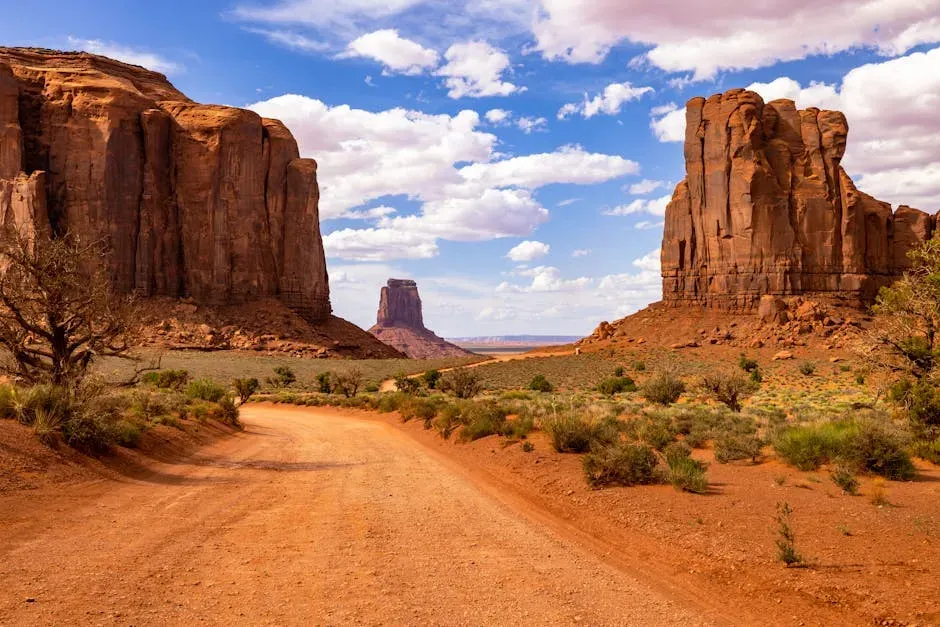
At this point in the Earth’s history, the most spectacular wonders of geology in the United States are found in the West. For the last 500 million years, dynamic forces have been staging geologic dramas from Sedona to Seattle. That’s not hyperbole. It’s just fact delivered in the most understated way possible.
What strikes me most about all these formations is how temporary they actually are. Hoodoos are still eroding. Antelope Canyon is still being carved by every flash flood that races through it. The tufa towers stopped growing within living memory. The American West is decorated with an array of geological formations that have resulted in a world of spectacular views and awe-inspiring landscapes. The forces of erosion combined with the passing of time have carved and created a wonderland in the common sedimentary, metamorphic and igneous rocks found across the vastness of this magical land.
Each of these seven formations is a story still being written. The land out there isn’t finished yet. So maybe the real question isn’t just where these formations came from – it’s what they’ll look like in another million years. What do you think the American West is still hiding? Tell us in the comments.

- Why Do Geese Fly in a ‘V’ Formation? The Scientific Reason Explained - August 10, 2026
- 10 Amazing Facts About The Pyramids of Giza - August 10, 2026
- 15 Little-Known Facts About DNA That Control More Than You Think - August 10, 2026