

Most people hear birds every single day without giving it a second thought. A burst of song from a tree, a sharp chip note from somewhere in the bushes, a low drumming from the woods. It registers as background, pleasant or otherwise, and then fades. Yet what’s actually happening out there is more layered than it sounds.
Birds are communicating constantly, and with real precision. Beyond the pleasant background music lies a complex communication system that allows birds to navigate their world, warn of danger, stay connected, and ultimately, find a mate. Each sound serves a purpose, and many of those purposes are surprisingly specific.
In ornithology, songs and calls are distinguished by function. The distinction is based on complexity, length, and context. Songs are longer and more complex and are associated with territory, courtship, and mating, while calls tend to serve functions like alarms or keeping flock members in contact. Understanding this difference is the first step toward reading the language birds speak every morning right outside your window.
The Black-Capped Chickadee’s “Dee” Alarm System
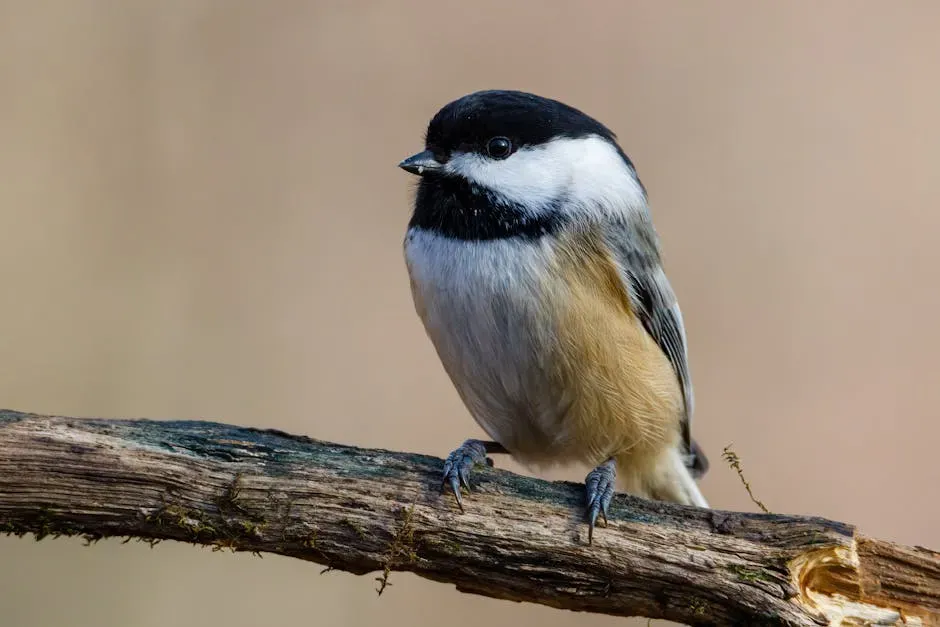
Few alarm signals in the animal world are as cleverly encoded as the one belonging to the Black-capped Chickadee. They actually get their name from their alarm call, an onomatopoeia, “chick-a-dee-dee-dee.” The number of “dees” that follow indicate to the rest of the flock the intensity and proximity of danger.
When they see flying raptors, they produce a soft, high-pitched “seet” call. When they see a stationary or perched predator, the birds use a loud, wide-spectrum chick-a-dee-dee-dee alarm to recruit other chickadees, as well as other bird species, to harass or mob the predator.
A 2005 study by researchers from the University of Montana shed light on how the number of “dees” in a chickadee’s alarm call correlates with the size and threat level of the predator. The study looked at vocalizations among black-capped chickadees. Smaller, more dangerous predators elicited more calls with more “dee” notes, whereas larger predators prompted fewer. Playback experiments confirmed that chickadees respond more intensely to calls associated with small predators.
The chick-a-dee-dee-dee call is a classic bird alarm call, used to summon fellow chickadees as well as nuthatches and other songbirds for mobbing a predator. Sometimes it means something else, like communicating the discovery of a new food source, such as a newly filled bird feeder. This single call, it turns out, is doing many different jobs depending on context.
The Northern Mockingbird’s Mimicry Medley
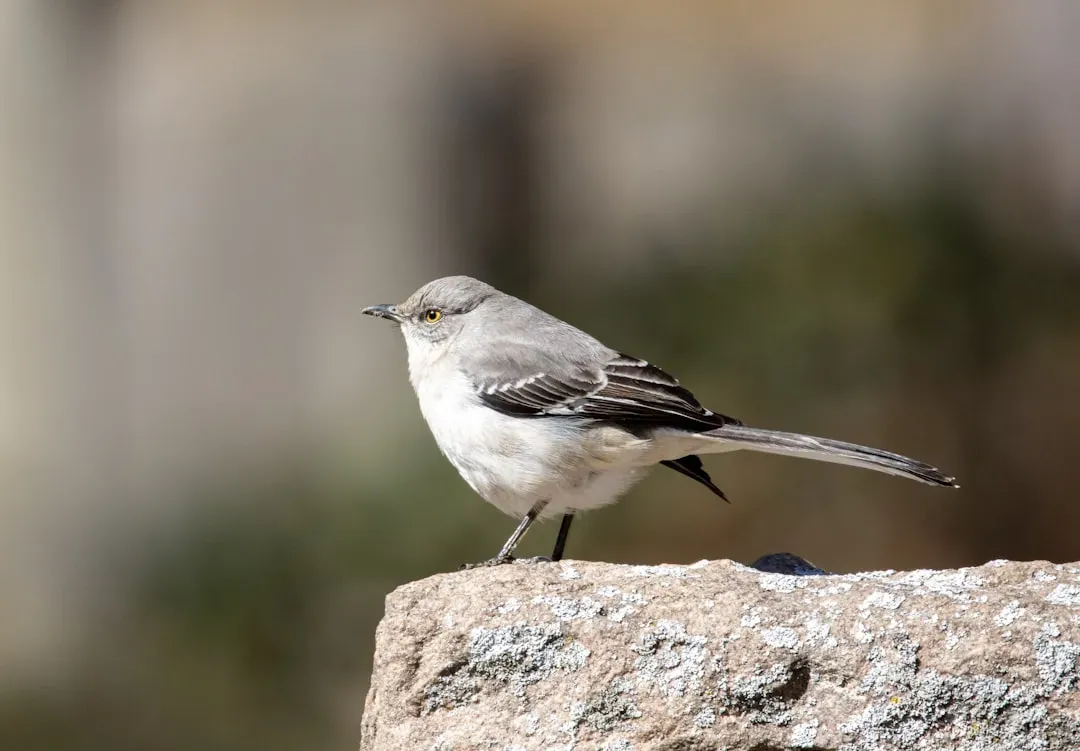
The Northern Mockingbird has one of the most disorienting sounds in North America. Although some birds learn their species’ song during their first year of life, others, including mockingbirds, continue adding to their repertoire as they grow older. Northern Mockingbirds can learn as many as 200 songs, and often mimic sounds in their environment including other birds, car alarms, and squeaky gates.
Northern Mockingbirds are not typical songbirds, as half of their repertoire is comprised of songs that are mimetic, meaning they are learned from other species, rather than just learned from adults of their own species. Mimetic song is often used more in the breeding season, however mockingbirds will learn new sounds throughout their whole life.
Mockingbirds learn new sounds throughout their lives, expanding their repertoire over time. Males, in particular, use their elaborate songs to attract mates. They are territorial birds, often singing from prominent perches to establish their domain.
One theory is that if a female prefers males who sing more songs, a male can top his rivals by quickly adding to his repertoire some of the sounds around him. Possessing a diverse assortment of songs may indicate he is an older male with proven longevity and survival skills, good traits to pass on to offspring. In short, the mockingbird’s imitation isn’t random showing off. It’s a calculated display of fitness.
The Woodpecker’s Territorial Drum
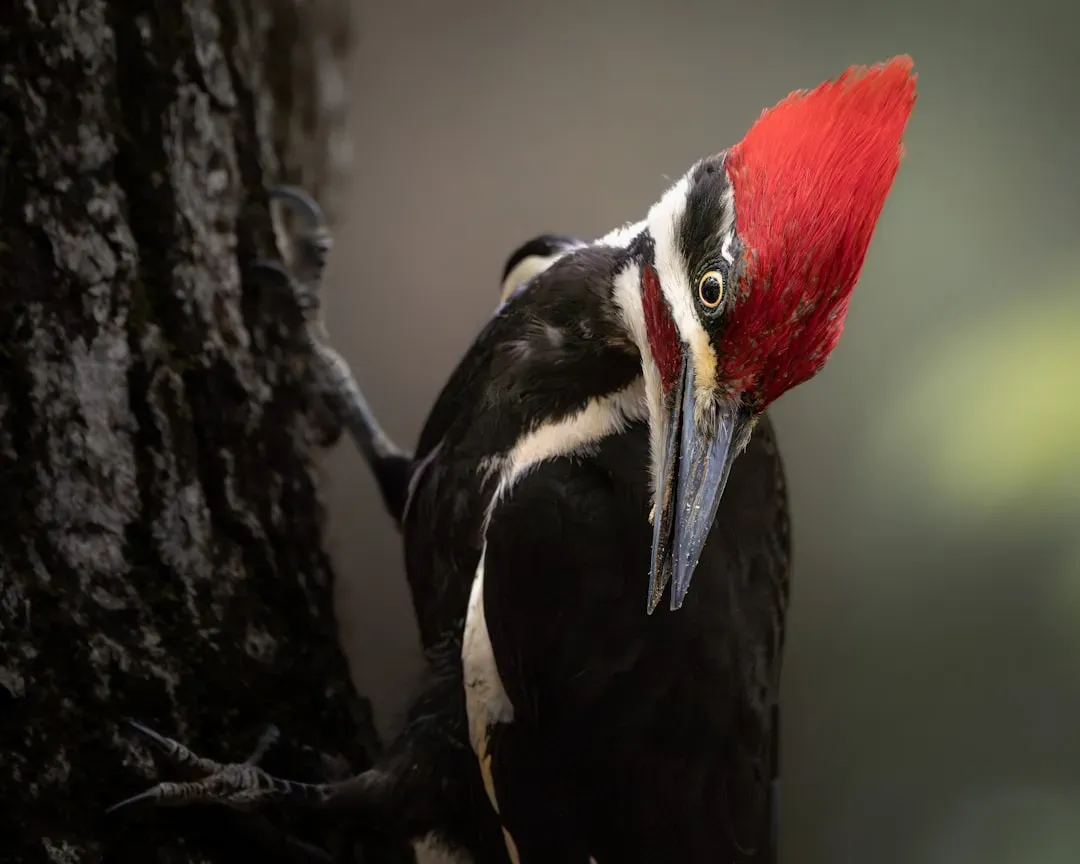
The woodpecker does something relatively rare in the bird world: it communicates largely without singing. Woodpeckers are nature’s percussionists, using their beaks to drum on trees and other surfaces. This drumming serves as a communication tool, signaling territory and finding mates. Unlike other birds, woodpeckers don’t rely on vocal sounds; their drumming is their voice.
Downy Woodpeckers advertise their presence by drumming rapidly on a tree, and sometimes on the side of your house. In fact, you can identify certain woodpecker species by measuring the pace of their knocks. The rhythm and rate matter, not just the sound itself.
Beak snapping in barn owls forms graded threat displays, while woodpeckers drum on hollow branches for territorial defense and mate attraction over hundreds of meters. When you hear that rapid hammering echoing through a quiet forest, the bird isn’t just foraging. It’s making a very public announcement about who owns that patch of trees.
The Lyrebird’s Environmental Sound Mirror

Australia’s Superb Lyrebird sits in a category almost entirely its own. The lyrebird is an avian wonder. Native to Australia, this talented bird can replicate chainsaws, camera shutters, and even human voices. Its mimicry skills are so advanced that it can confuse even the most experienced birdwatchers. Not just a trickster, the lyrebird uses these sounds to attract mates and ward off rivals.
Lyrebirds can imitate a wide range of sounds they hear in their environment, including the calls of other birds, animal sounds, and even human-made noises. They can mimic with remarkable accuracy, sometimes fooling even the original sound source. Their vocal organ, the syrinx, is highly developed, allowing for this incredible range of sounds.
A single superb lyrebird can imitate more than one bird calling at the same time. The 7-gram brown thornbill can imitate the song of the predatory pied currawong, a bird more than 40 times its size. Male lyrebirds use their mimicry skills during elaborate courtship displays. They combine their imitated sounds with a visual display, spreading their magnificent tail feathers. It’s a full performance, with sound as the centerpiece.
The Contact Call: How Flocking Birds Stay Together

Not all bird communication is dramatic. Some of the most important sounds are the quiet, easy-to-miss chirps that hold social groups together throughout the day. Birds make contact calls to keep in touch with each other, often while they’re foraging for food. These sounds are usually short, quick, and quiet, though if birds get separated, they may make louder, more urgent “separation calls.”
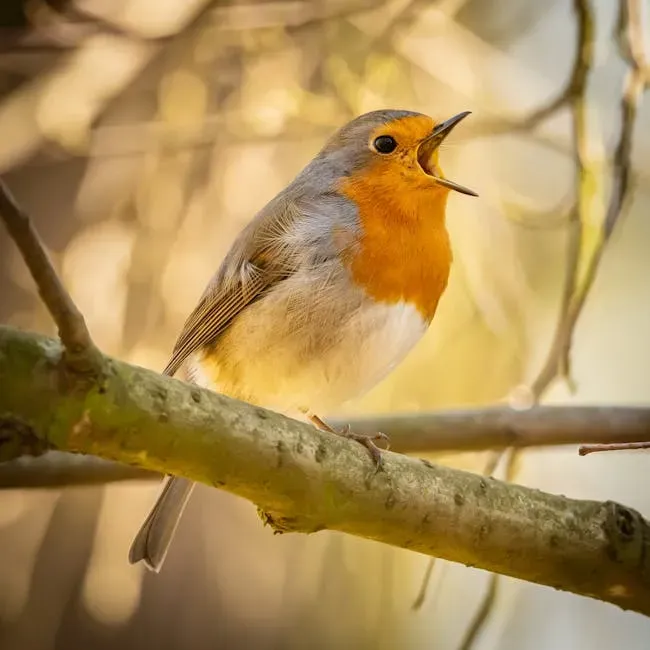
A robin’s “tut, tut” means “danger is near,” and a Canada goose’s honk while migrating means “follow me!” Many mother birds will use short chirps to keep tabs on their young while foraging together. They keep a constant chorus of “where are you?” and “here I am!” so they don’t get separated.
Species that flock often call back and forth while in flight; this is a good way to detect clouds of blackbirds, waxwings, siskins, or bluebirds passing overhead. Flocks of shorebirds may also be vocal in the air. These contact calls are the social glue of bird life, the everyday conversation beneath the more theatrical performances.
The Dawn Song: Territory and Mate Attraction at Sunrise
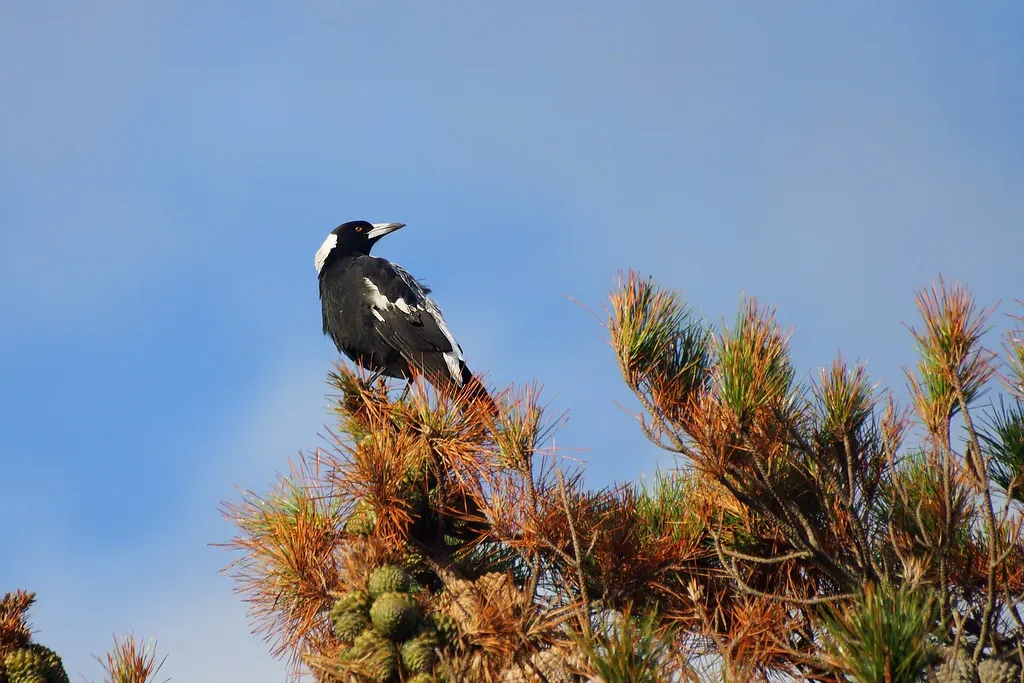
Step outside before sunrise in spring and the effect is immediate. Springtime brings a sound familiar to many light sleepers and early risers: the dawn chorus. This intense period of birdsong, which starts about an hour before sunrise, begins around March and continues to July, corresponding with the mating season.
Songs are more often, but not always, sung by male birds marking out territory to deter rivals and attract the attention of nearby females. Songs are also thought to advertise a male bird’s suitability to potential mates. There’s competition embedded in every note, even when it sounds purely musical to human ears.
Mating songs are primarily used by males to attract females and establish territory during the breeding season. They are often complex and musical, perhaps a series of notes, trills, whistles, and warbles that can be quite elaborate and distinctive for each species.
The sight of a starling feeding its chicks suggests a male successfully won a female’s attention with its tunes earlier in the breeding season. Female starlings apparently favour more complex songs, which possibly indicate the male is older and more experienced. Complexity isn’t just beautiful. It’s a form of proof.
The Mobbing Call: When Small Birds Gang Up on Predators

One of the most striking sounds you can encounter outdoors is the sudden, coordinated racket of multiple small birds converging on a single spot. Mobbing calls are used to recruit individuals in an area where an owl or other predator may be present. These calls are characterized by wide frequency spectra, sharp onset and termination, and repetitiveness common across species, believed to be helpful to other potential “mobbers” by being easy to locate.
When birds mob a perched hawk or cat, you’re witnessing one of nature’s boldest anti-predator strategies. Scolding calls, which are harsh, broadband alarm calls, serve dual functions: they harass stationary predators while recruiting backup from nearby birds. Species like jays, chickadees, and wrens use this threat signaling to coordinate mobbing behavior across mixed flocks.
The alarm calls of most species, on the other hand, are characteristically high-pitched, making the caller difficult to locate. This is no accident. A call that’s easy for other birds to follow but hard for a predator to pinpoint is a remarkable acoustic solution to a very real survival problem.
Birds communicate alarm through vocalizations and movements that are specific to the threat, and bird alarms can be understood by other animal species, including other birds, in order to identify and protect against the specific threat. The mobbing call, in particular, crosses species lines. When one bird sounds the alarm, many others listen.
Conclusion
There is something quietly humbling about realizing that the sounds outside your window form a working language, one that encodes predator size, group location, territory ownership, and the search for a mate. We walk through it every day without fully registering what’s being said.
Most calls are innate rather than learned, ensuring reliable bird communication across populations. Species variation means call presence and call function differ among birds. Some of these systems have been refined over millions of years of evolutionary pressure. Others, like the mockingbird’s ever-growing repertoire, are still being actively updated with new material.
The more you listen, the more you notice. A sharp sudden trill near the hedge probably means something has spooked someone. A soft, rhythmic back-and-forth between two birds in the same tree is almost certainly a social check-in. Once you start tuning in, the background noise stops being background at all.
