

If you tried to sketch the saiga antelope from memory after hearing it described, you’d probably think you’d misheard. This is an animal that looks like it wandered out of a sci‑fi storyboard: slender legs, gentle eyes, and then that oversized, drooping, inflatable-looking nose that seems almost too weird to be real. Yet that bizarre snout is not a design mistake; it is one of the most finely tuned pieces of biological engineering on the planet.
I still remember the first time I saw a photo of a saiga as a kid and assumed it had been edited for a joke. Years later, learning what that nose actually does felt like unlocking a secret level of evolution. Once you understand how this animal survives scorching summers, brutal winters, choking dust, and stampeding herds all thanks to that nose, the whole creature goes from “funny-looking” to “almost miraculous.”
1. The Saiga’s Nose Is Basically a Built‑In Air Conditioner and Heater
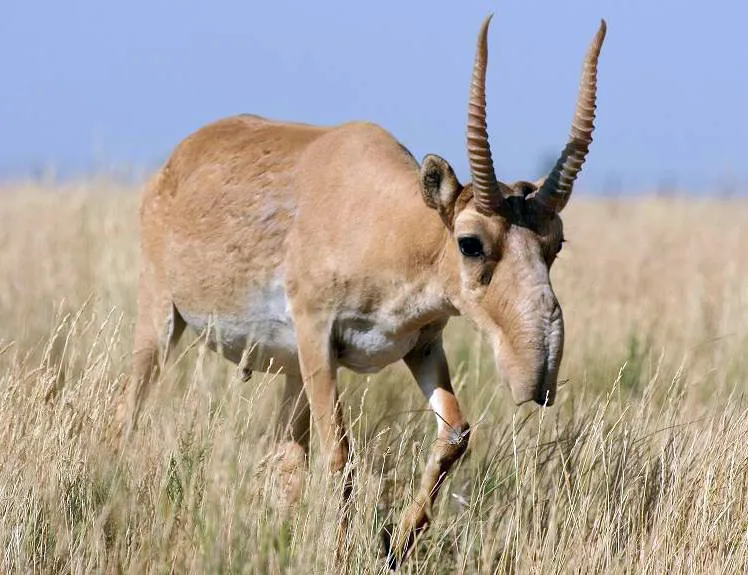
Here’s the wild part: that drooping, trunk‑like nose is not just for show; it works like a fully integrated climate-control system. Inside the saiga’s snout is a maze of soft tissue and convoluted nasal passages that force every breath to twist, turn, and slow down before it reaches the lungs. In the baking Central Asian summers, this labyrinth cools down the hot, dry air and adds moisture, protecting the animal from dehydration and heat stress as it trots across open steppe.
Flip the season, and the same structure becomes a heater. In winter, when temperatures on the steppe plunge far below freezing, the long nose warms the icy air before it hits the lungs, sparing delicate tissues from damage. It’s a bit like having a high‑end HVAC system installed directly in your face, and it quietly keeps the saiga alive in places where weather swings from oven to freezer in a matter of months.
2. It Filters Dust Like a Living Air Purifier
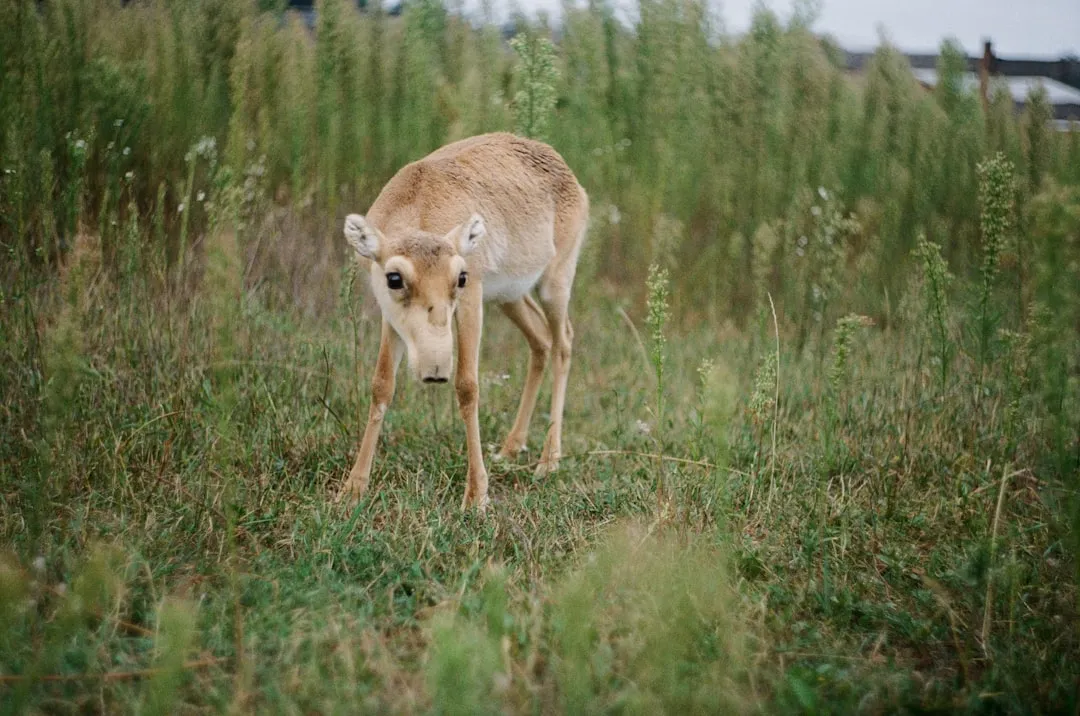
Now imagine trying to breathe during a dust storm with no mask, no goggles, nothing. For saiga herds, that’s just Tuesday. They migrate across some of the dustiest grasslands on Earth, where winds whip soil into the air and hundreds or thousands of hooves churn up powdery dirt with every step. The saiga’s swollen nose works as a natural filtration system, trapping dust particles and debris before they reach the lungs, thanks to moist surfaces and fine hairs lining the nasal cavity.
This filtration job is not a luxury; it is survival-critical. Without that nasal filter, a saiga’s lungs would likely clog and inflame under the constant assault of dust and grit. When you see old footage of these herds moving through hazy, brown clouds and realize every breath is passing through a living dust mask, the nose suddenly stops looking ridiculous and starts looking like a quiet act of evolutionary genius.
3. The Nose Helps Them Run Fast Without Overheating

Saigas are not slow, awkward creatures, even if their faces might fool you at first glance. They are built for speed in open landscapes, capable of sprinting fast enough to outrun many predators over short distances and keeping up a steady, ground‑eating trot over long ones. That strange nose helps manage the intense airflow and heat buildup that come with running, cooling blood in the nasal passages and helping regulate overall body temperature.
Think of a high‑performance car that needs a sophisticated cooling system to keep the engine from frying at top speed. The saiga’s body is that engine, and its oversized nose is part of the cooling architecture. By conditioning massive gulps of air during a chase or a long migration, the nose lets the animal stay functional instead of overheating and collapsing when it most needs to move.
4. Its Nasal Design Is Perfect for Life on the Treeless Steppe
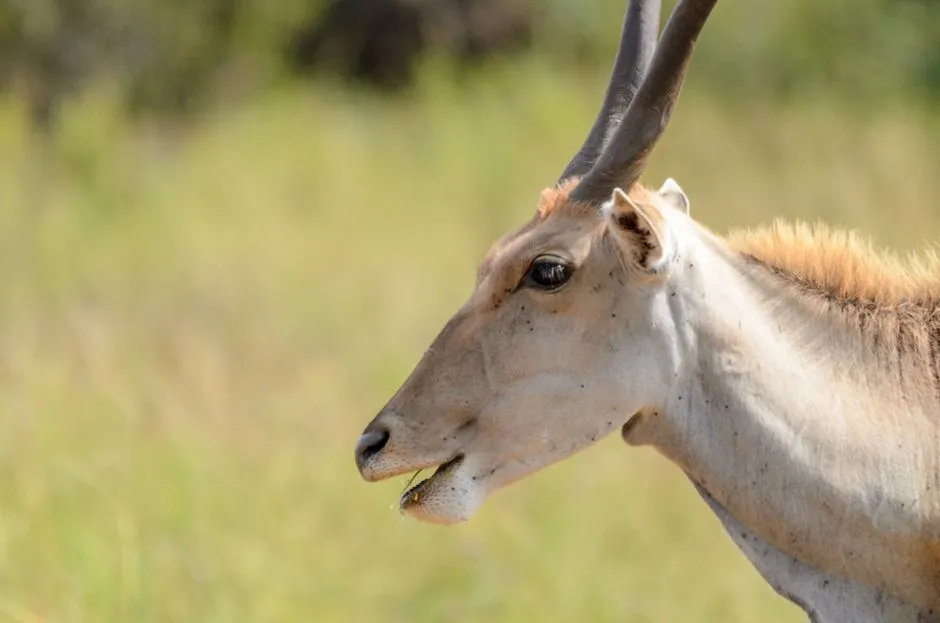
Most animals can duck into a forest, hide in scrub, or find shade under trees when weather or dust becomes unbearable. Saigas do not have that option. They live mostly in treeless, rolling grasslands and semi‑desert where shelter is basically an illusion. Their adaptation strategy is not to avoid harsh conditions but to endure them in the open, and that nose is one of the main tools that makes this possible.
By turning each breath into a controlled micro‑environment – filtered, warmed or cooled, and moistened – the saiga can keep going where less-adapted animals would give up or move elsewhere. It’s evolution’s way of saying: if you can’t change the landscape, change the hardware. The nose is that hardware upgrade, matched almost perfectly to a flat, exposed, unforgiving world.
5. Males’ Noses May Play a Role in Mating Battles and Displays

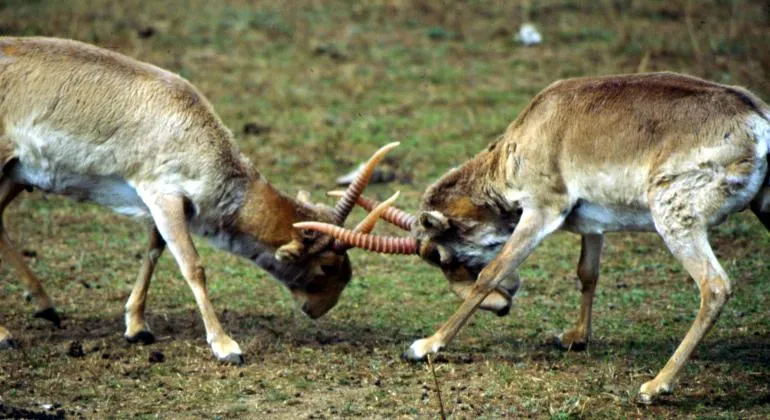
We often talk about the saiga’s nose as a purely practical survival feature, but biology rarely wastes an opportunity to turn a weird structure into a social signal. During the breeding season, male saigas gather harems and defend them aggressively, bellowing, chasing rivals, and showing off their strength. Their large, inflated-looking noses deepen and muffle their calls, turning them into resonant sounds that can carry across the steppe and signal status and fitness to both females and rival males.
In a way, the nose becomes part speaker system, part badge of dominance. A male that sounds strong, steady, and imposing can deter challengers before things escalate into damaging fights, saving precious energy and reducing injury. It’s not as flashy as a peacock’s tail or as obvious as a stag’s antlers, but in the world of saigas, that swollen snout quietly doubles as a social weapon.
6. The Saiga Face Looks “Alien,” and That Has Been a Curse and a Blessing
Let’s be honest: if you scroll past a saiga photo online, your first reaction might be laughter, then confusion. The long, hanging nose with its rubbery texture looks like something borrowed from a cartoon alien. That strange charm has helped the saiga gain viral attention in recent years and has drawn people into learning about a species they’d never heard of before. For conservation campaigns, unusual looks can be a surprising asset, turning a little-known antelope into a minor social‑media star.
But that same odd appearance has historically worked against the saiga. For centuries, it was just another animal roaming remote steppes, easy to dismiss as strange and expendable. People hunted it for meat and horns, and its weird face did not earn it any special sympathy. Only recently have more people started to see that alien face as heartbreakingly unique, the kind of irreplaceable evolutionary experiment that we should be fighting hard to protect rather than casually losing.
7. Disease Turned the Nose Into a Tragic Symbol of Vulnerability
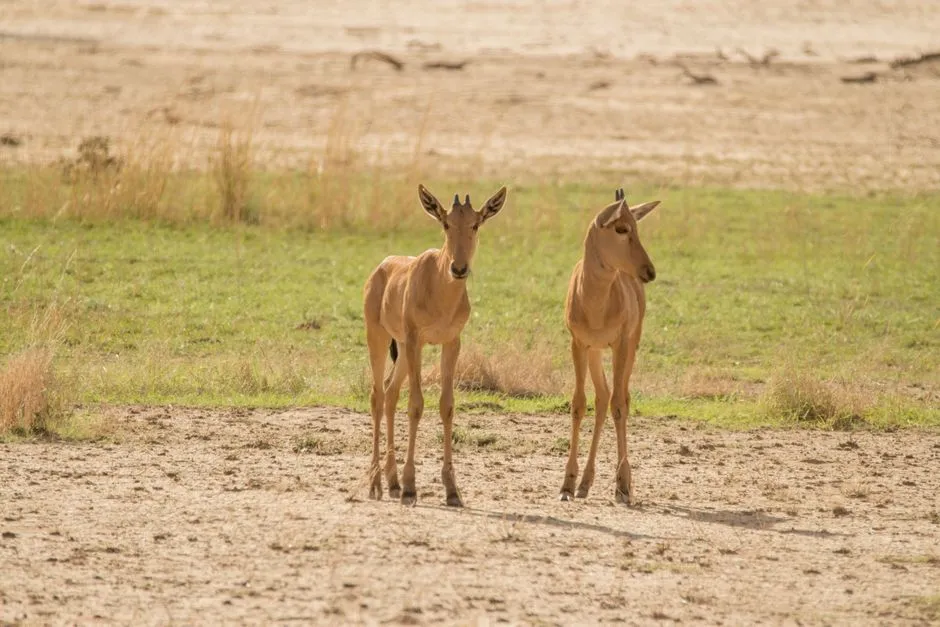
As unforgettable as the saiga’s nose is, it has also been at the center of some of the species’ darkest moments. In several sudden disease outbreaks, entire herds crashed in just days, with animals showing swelling and fluid around their faces and necks as they succumbed. Images of saigas lying across the steppe, their distinctive noses still and useless, shocked the world and became a brutal reminder of how fragile even the best-adapted creatures can be when conditions suddenly shift.
For many people, seeing that iconic snout on a lifeless body hit harder than any statistic. The nose, once a symbol of survival ingenuity, began to feel like a symbol of how a species can be perfectly tuned to its environment yet still undone by cascading changes in climate, disease dynamics, and human pressure. It made the saiga’s story not just about adaptation, but about the limits of what adaptation alone can handle.
8. The Nose Makes the Saiga a Poster Child for Evolutionary Creativity

If you ever catch yourself thinking evolution always moves toward sleek, familiar shapes, the saiga’s face is there to prove you wrong. Nothing about that drooping, inflatable nose looks streamlined in the usual sense, yet it is perfectly streamlined for the problems this antelope needed to solve: brutal temperature swings, endless dust, long migrations, and high‑energy life on exposed plains. The result is not pretty in a storybook way, but it is breathtakingly functional.
To me, that is the real beauty of the saiga’s nose: it refuses to fit our idea of what “elegant” adaptation should look like and instead shows us what actually works. It is a reminder that nature is less like a minimalist designer and more like an experimental engineer, trying strange solutions until something sticks. The saiga’s strange snout stuck – and as long as we give this species a real chance to survive, that odd little masterpiece of a nose will keep quietly doing its job on the windswept steppe.
Conclusion: A Ridiculous Nose, a Serious Warning
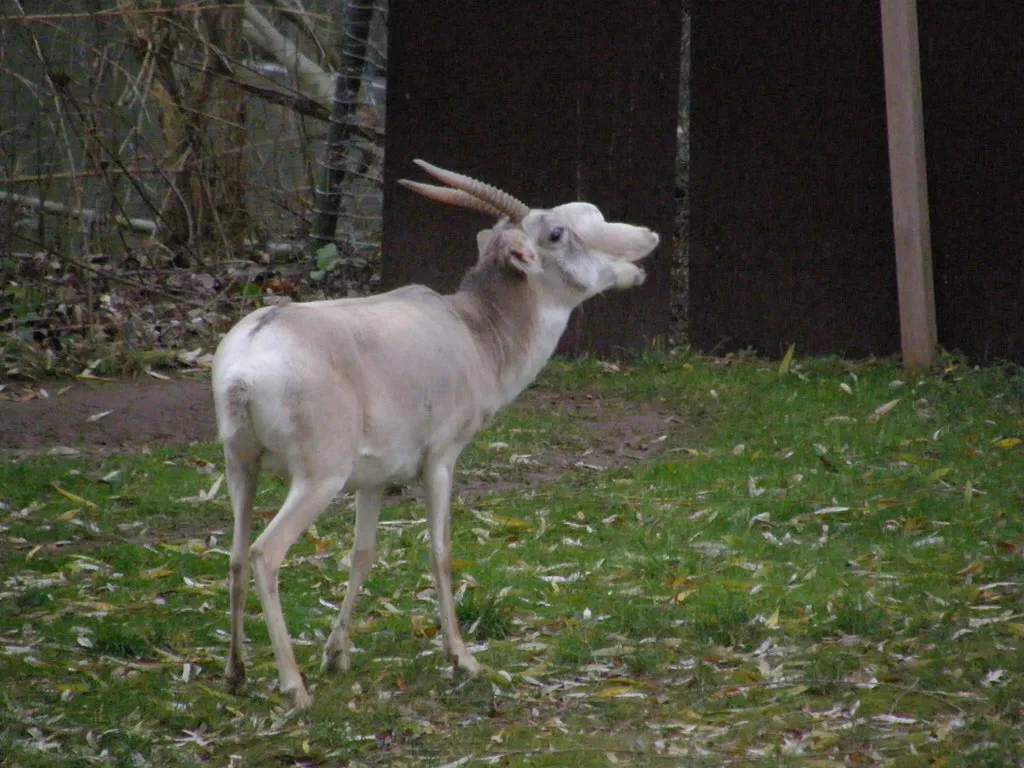
The more you learn about the saiga, the harder it is to call its nose ridiculous with a straight face. That dangling snout cools, heats, filters, humidifies, amplifies, and protects, all in one endlessly surprising package. In a world that swings between blazing summers and knife‑edge winters, it turns what looks like a joke into an edge for survival, and I honestly think it’s one of the most underrated natural innovations on Earth.
At the same time, the saiga’s story makes me uncomfortably aware of how little our admiration matters if we do not back it with action. Evolution gave this antelope a nose that can handle dust storms and deep freezes, but it did not equip it for poaching, habitat loss, and rapid environmental upheaval. Maybe the real question is not whether its nose is strange, but whether we are strange enough as a species to let such a marvel vanish on our watch. When you look at that face now, do you still see something to laugh at – or something we cannot afford to lose?
