
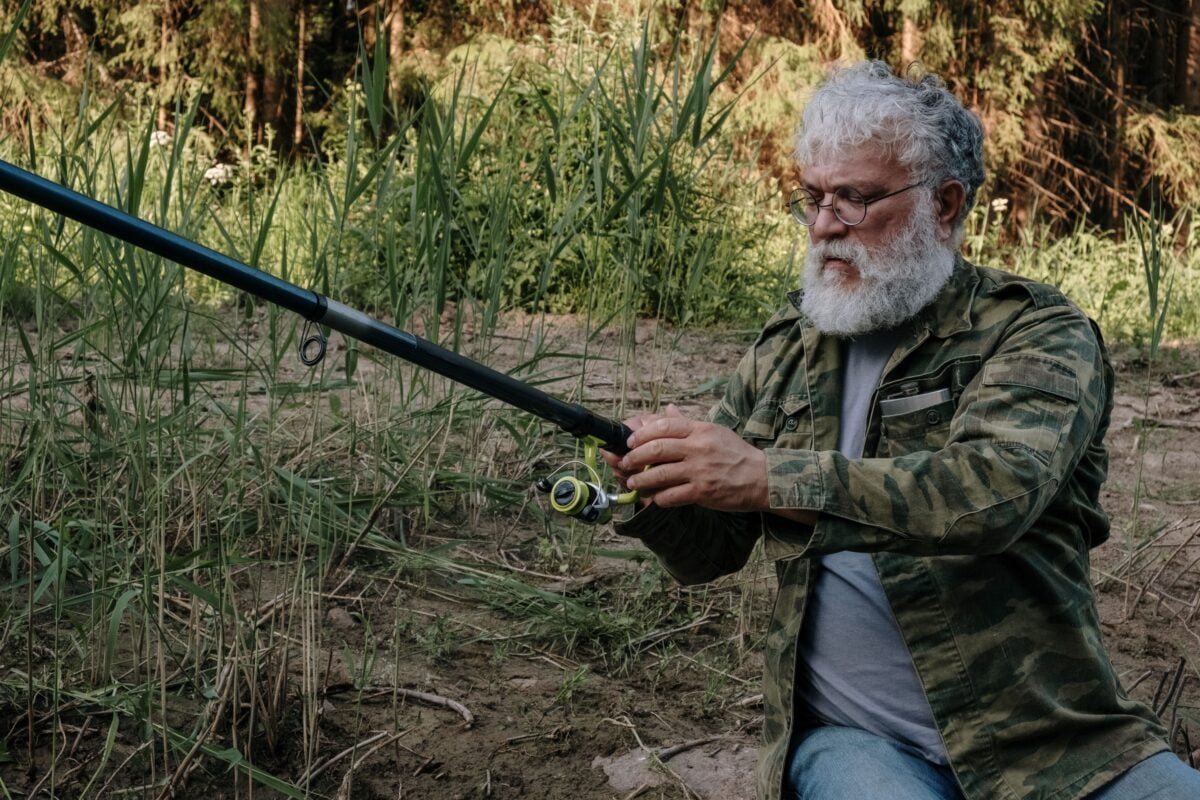
Picture two retirees at the same kind of lake at sunrise, same rod, same thermos of coffee. One paid nothing for the right to be there. The other handed over a license fee, and maybe bought a stamp or two on top. Same age, same hobby, different state line. That gap is exactly why this list is worth your time.
Some states wave seniors through at 65. One starts at 60 and hands out a card that lasts for life. One sells a lifetime license for about the price of a fast-food lunch, and another makes you wait until 75 for its best deal. The fine print behind each program is where the real money hides, and the state at #1 may not be the one you’d guess.
#9 – Florida’s Full Exemption Lets Residents 65+ Skip the License Counter

🔥 Would you like to save this?
We'll email this post to you, so you can come back to it later!
Florida residents age 65 and older don’t need a recreational hunting or fishing license at all, as long as they carry proof of age and residency. That means no base fee. In most cases it also means no separate deer, turkey, or similar permit charges, the add-ons that quietly inflate the bill in other states.
The savings are biggest for people who fish a lot. Freshwater and saltwater are both covered, so a retiree who splits time between a bass lake and a coastal pier isn’t buying two licenses. Residents verify eligibility through the Florida Fish and Wildlife Conservation Commission, and non-residents get no break.
The best part is the lack of friction. There’s no renewal date to forget and no checkout page to fight with. A Florida driver’s license or ID that shows your age and residency usually does the job, which makes a spontaneous Tuesday-morning fishing trip about as simple as it gets.
- What you carry: Proof of age and Florida residency.
- What still applies: The federal duck stamp for waterfowl and any species-specific tags.
That’s a generous opener, but the next state bundles even more into a single exemption.
#8 – Alabama’s Broad Waiver Wipes Out Five Separate Licenses at Once
🔥 Would you like to save this?
We'll email this post to you, so you can come back to it later!
Alabama residents 65 and older are exempt from the hunting license, freshwater fishing license, saltwater fishing license, state duck stamp, and WMA license. That’s five line items that most states keep separate and charge for one by one. Proof of age and residency is required in the field, but nothing has to be bought each year for those base privileges.
The waiver is for residents only. It doesn’t cover federal stamps or certain big-game tags that remain annual requirements. Seniors still follow every bag limit, season date, and safety rule, so the benefit is about cost rather than a looser rulebook.
Some people argue that a waiver like this favors long-term residents. Still, it’s easy to see the appeal for seniors on fixed incomes. Nobody has to track renewal deadlines, and the agency doesn’t have to process thousands of tiny transactions. Many Alabama outdoorsmen also pair it with landowner permission on private ground, which keeps the cost of a season close to zero.
- Key requirement: A valid Alabama driver’s license or ID showing age and residency.
- What remains: The federal duck stamp for migratory birds and any quota permits.
Next comes a state where the clock starts even earlier.
#7 – Alaska’s Free Permanent ID Card Starts at Age 60

🔥 Would you like to save this?
We'll email this post to you, so you can come back to it later!
Alaska doesn’t wait until 65. Residents age 60 and older can get a free Permanent Identification Card that covers hunting, sport fishing, and trapping, once they’ve met a 12-month residency requirement. The card also removes the need for the king salmon stamp and the state conservation stamp.
Once issued, it works as a lifetime pass, so there are no yearly renewals. That makes Alaska’s entry point one of the most generous in the country, five years ahead of most states on this list.
Fast Facts
- Starting age: 60, not 65.
- Cost: Free, and it works as a lifetime pass.
- Residency: 12 months required before you qualify.
- Stamps removed: King salmon and state conservation.
The catch is the residency rule. You have to prove you live there with standard documentation, and non-residents pay full rates no matter how old they are. Seniors who move north later in life often point to this card as one more reason to settle into a place where the next fishing hole may be a bush-plane ride away. Special permits for certain hunts can still apply, so it pays to read the specifics before you head out.
The payoff is that one free card replaces a stack of stamps that add up quickly in other northern states.
#6 – Texas Senior Rates Cut the Hunting License Price by Roughly 70%

🔥 Would you like to save this?
We'll email this post to you, so you can come back to it later!
Texas takes the discount route instead of the free route. Residents 65 and older can buy a Senior Super Combo or separate senior hunting and fishing licenses at reduced rates. The senior hunting license has been listed around $7, compared with the standard $25 resident rate. Fishing options run about $12 versus higher regular prices.
Do the math and the hunting license alone saves about $18 a year, which is roughly 70% off. Over a decade of seasons, that’s around $180 back in your pocket for one license type.
These licenses still require proof of residency and age. The combo covers many endorsements but leaves out some federal stamps and certain tags. The appeal is the bundling, since you avoid buying two full-price licenses to do the two things you love. Senior rates have also tended to hold steady even as regular fees have risen, though prices change, so check the current list before you buy.
- Savings example: Roughly 70% off the standard resident hunting license.
- Limitation: Non-residents and anyone under 65 pay full price.
The next state turns the whole thing into a question of your exact birthday.
#5 – Georgia’s Birth-Date Cutoff Splits Seniors Into a Free Tier and a Discount Tier

🔥 Would you like to save this?
We'll email this post to you, so you can come back to it later!
In Georgia, your birthday matters as much as your age. Residents born before July 1, 1952, qualify for free lifetime sportsman licenses covering hunting and fishing. Those born later pay a reduced senior lifetime rate of around $70 for the combo.
Two neighbors who both fish the same river every weekend can end up with very different bills because of a single date on a driver’s license. Proof of age and residency is required at purchase or in the field.

Dog Stairs for Bed 18" H, 4-Step Dog Steps for High Bed
Check Price on AmazonAs an Amazon Associate, we earn from qualifying purchases.
10/9/2026 2:42 pm GMTi

Halloween Cat Costume Cloak Witch Hat Pet Accessories
Check Price on AmazonAs an Amazon Associate, we earn from qualifying purchases.
10/9/2026 2:44 pm GMTi

Professional 7 in 1 Dog Paw Cleaner for Dogs & Cats - Includes 1 Portable Paw Washer, 1 Bath Brush
Check Price on AmazonAs an Amazon Associate, we earn from qualifying purchases.
10/7/2026 1:26 pm GMTi

Orthopedic Extra Large Dog Bed, Waterproof Washable XL Pet Bed 44"
Check Price on AmazonAs an Amazon Associate, we earn from qualifying purchases.
10/7/2026 1:32 pm GMTi

PetSafe Oasys Pet Fountain, 1/2 Gallon (64 oz), Small Dogs & Cats
Check Price on AmazonAs an Amazon Associate, we earn from qualifying purchases.
10/8/2026 8:14 am GMTi
Quick Compare
- Born before July 1, 1952: Free lifetime sportsman license for hunting and fishing.
- Born later: Reduced senior lifetime combo, around $70.
- Both groups: Proof of age and residency required.
The cutoff is a fixed point on the calendar, so nobody new joins the free group as time passes. Anyone born before that date never pays another cent for base privileges, while the next group still gets a lifetime license at a steep discount. The odd part is that the benefit is tied to when you were born rather than simply how old you are.
Because rules like this get revised, confirm the current cutoff with the state before you assume which side of the line you’re on.
#4 – Wisconsin’s $7 Annual Fishing License Stretches a Fixed Income
🔥 Would you like to save this?
We'll email this post to you, so you can come back to it later!
Wisconsin residents 65 and older pay about $7 for an annual fishing license, compared with the standard $20 rate. Similar percentage reductions are available on hunting options. That’s about $13 saved every year, and over ten seasons it adds up to roughly $130.
The discount renews every year without any lifetime purchase. You show proof of age and residency when you buy, and the reduced rate carries across license years. For an occasional angler, this beats a big upfront lifetime fee, because there’s nothing to commit to and nothing to lose if your plans change.
Think of it as the “pay as you go” model of senior permits. It works best for people who fish or hunt a handful of times a year and don’t want to prepay for decades of seasons. Required stamps or tags still stay at regular prices, so the savings apply only to the base license.
- Benefits: A low barrier for occasional participants and an easy yearly renewal.
- Who qualifies: Wisconsin residents only.
- Remaining costs: Any required stamps or tags at regular prices.
The next state flips the model and asks for one payment that lasts a lifetime.
#3 – South Carolina’s Lifetime License Costs Around $9
🔥 Would you like to save this?
We'll email this post to you, so you can come back to it later!
South Carolina starts a year early. Residents age 64 and older can buy a lifetime license for around $9 that covers core hunting and fishing privileges. It’s a one-time payment with no annual renewals, and the price stays under $10.
That’s a remarkably low number for coverage that can last decades. Compare it with Wisconsin’s $7 annual fishing license and the lifetime route pays for itself in about two years. For anyone planning to stay active outdoors, it’s one of the strongest one-time deals on this list.
Worth Knowing
- Starting age: 64, a year ahead of most states.
- Price: Around $9, paid once.
- Break-even: About two years versus Wisconsin’s annual fishing license.
- Still separate: Federal stamps and certain tags.
Eligibility requires residency verification, and federal stamps plus certain tags are still separate purchases. Seniors who plan to keep hunting or fishing for years often find the lifetime license breaks even almost immediately. After that, every season is simply free.
One ten-dollar bill could cover the rest of your fishing life in this state, though it’s not the only deal that works that way.

Hand Blown Glass Hummingbird Feeders for Outdoors Hanging, 24oz Wild Bird Nectar Feeder
Check Price on AmazonAs an Amazon Associate, we earn from qualifying purchases.
10/7/2026 1:23 pm GMTi

Glass Hummingbird Feeder for Outdoors Hanging, 16 oz Leak-Proof Nectar Feeder with Bee Guards & Ant Moat
Check Price on AmazonAs an Amazon Associate, we earn from qualifying purchases.
10/7/2026 1:22 pm GMTi

Earth Rated XL Dog & Puppy Pee Pads, Discreet Top, Max Absorbency
Check Price on AmazonAs an Amazon Associate, we earn from qualifying purchases.
10/7/2026 1:28 pm GMTi

Glass Hummingbird Feeder for Outdoors Hanging
Check Price on AmazonAs an Amazon Associate, we earn from qualifying purchases.
10/7/2026 1:21 pm GMTi

Air Purifiers for Home Pets Large Room Up to 3000 Ft²,HEPA Air Cleaner with Washable Double-Side Filter, PM2.5 Air Quality Monitor,15dB Sleep Mode for Bedroom Odor Dust Pollen,White
Check Price on AmazonAs an Amazon Associate, we earn from qualifying purchases.
10/8/2026 8:23 am GMTi
#2 – Kansas Rewards Patience: Discounts at 65, a Full Exemption at 75
🔥 Would you like to save this?
We'll email this post to you, so you can come back to it later!
Kansas uses a two-stage system. Residents ages 65 to 74 buy senior annual hunting or fishing licenses at reduced rates, around $15 each or $25 for a combo. At 75, no license is required, and a simple ID is all you need.
The first stage gives immediate relief. The second makes the whole thing free. If you bought the combo at the quoted price for all ten of those discounted seasons, you’d spend roughly $250 before the exemption kicks in. That’s a modest cost for a decade of access, followed by free access for as long as you want it.
Residents must still follow all other regulations and purchase any needed stamps or tags. Recent changes ended some multi-year senior passes, but the annual discounts and the eventual exemption remain. It’s a structure that quietly rewards anyone who sticks around the state.
- Ages 65-74: Reduced annual licenses (around $15 each, or $25 for a combo).
- Age 75 and up: No license required with ID proof.
And at the top of the list is the simplest deal of all.
#1 – Connecticut Gives Residents 65+ Free Hunting and Fishing Licenses

🔥 Would you like to save this?
We'll email this post to you, so you can come back to it later!
Connecticut residents age 65 and older receive free hunting and fishing licenses with proof of age and residency. There are no annual fees and no lifetime purchase to calculate. You qualify, you show your ID, and the license cost disappears.
Seniors still need federal stamps for waterfowl and any species-specific permits, so the benefit covers the base license rather than every possible charge. It applies only to residents. Even so, it’s among the simplest and most complete senior benefits in the country.

Halloween Dog Collar with Bow, Orange Cute Ghost Collar,
Check Price on AmazonAs an Amazon Associate, we earn from qualifying purchases.
10/9/2026 2:43 pm GMTi

2 Pcs Halloween Pet Hat Bandana Set, Witch Pumpkin Costumes for Dogs
Check Price on AmazonAs an Amazon Associate, we earn from qualifying purchases.
10/9/2026 2:45 pm GMTi

Portable Dog Water Bottle Foldable Dog Travel Water Bottle
Check Price on AmazonAs an Amazon Associate, we earn from qualifying purchases.
10/7/2026 1:29 pm GMTi

Smart Bird Feeder with Camera Solar Powered, 2K HD Live Video, 10,000+ Bird Species AI Identification
Check Price on AmazonAs an Amazon Associate, we earn from qualifying purchases.
10/7/2026 1:22 pm GMTi
Why It Stands Out
- No birth-year cutoffs: Turn 65 and you’re in.
- No tiered age brackets: One rule for every senior resident.
- No fees to track: Nothing to renew and no lifetime price to weigh.
Compared with states that layer on extra requirements, it’s the cleanest example of a state saying, “Go enjoy the outdoors.” It earns the top spot not because it’s the flashiest, but because it’s the easiest to use.
Zoom out and the pattern is clear: senior hunting and fishing permits in America are a patchwork. Free access in Florida, Alabama, and Connecticut contrasts sharply with modest annual discounts in Wisconsin or Texas, and with birth-date lines in Georgia. The biggest savings come from knowing your residency status, carrying the right ID, and checking which stamps or tags stay mandatory.
Here’s my take: simple beats clever. A free license for anyone 65 and older, with no birthday gymnastics, is the model other states should copy. Seniors have usually spent decades supporting wildlife conservation through licenses, gear purchases, and excise taxes, so the least a state can do is make the next chapter easy. Fixed birth-date cutoffs feel arbitrary, and I’d like to see more states offer a plain lifetime option at a price that doesn’t need a calculator.
Fees, ages, and cutoffs change, so check with your state wildlife agency before you buy or head out. Did we miss a standout state program worth highlighting? Drop it in the comments.

- 9 Hunting and Fishing Permit Reductions for Over 65s That Vary by State - November 9, 2026
- 9 Animals That Truly Hibernate – and Why Bears Are a Special Case - November 9, 2026
- The Astonishing Creatures That Thrive In The World’s Hottest Deserts - November 9, 2026