
Most people think a dog’s routine is something we hand them, like a leash or a bowl, and that they’ll adapt the moment we take it away. It’s closer to the opposite. Your dog built a detailed internal schedule around your household, and it keeps running long after the humans have stopped following it.
That’s why the 6 a.m. stare, the window vigil and the phantom walk time you’ve puzzled over aren’t random. They come from learning, biology and stress, and they explain a lot of the “bad” behavior we blame on spite. Below are nine routines dogs cling to, counting down from the most common to the one that tugs hardest at the heart. One of them may change how you see your dog sitting at the window.
#9 – The Breakfast Alarm That Never Resets
🔥 Would you like to save this?
We'll email this post to you, so you can come back to it later!
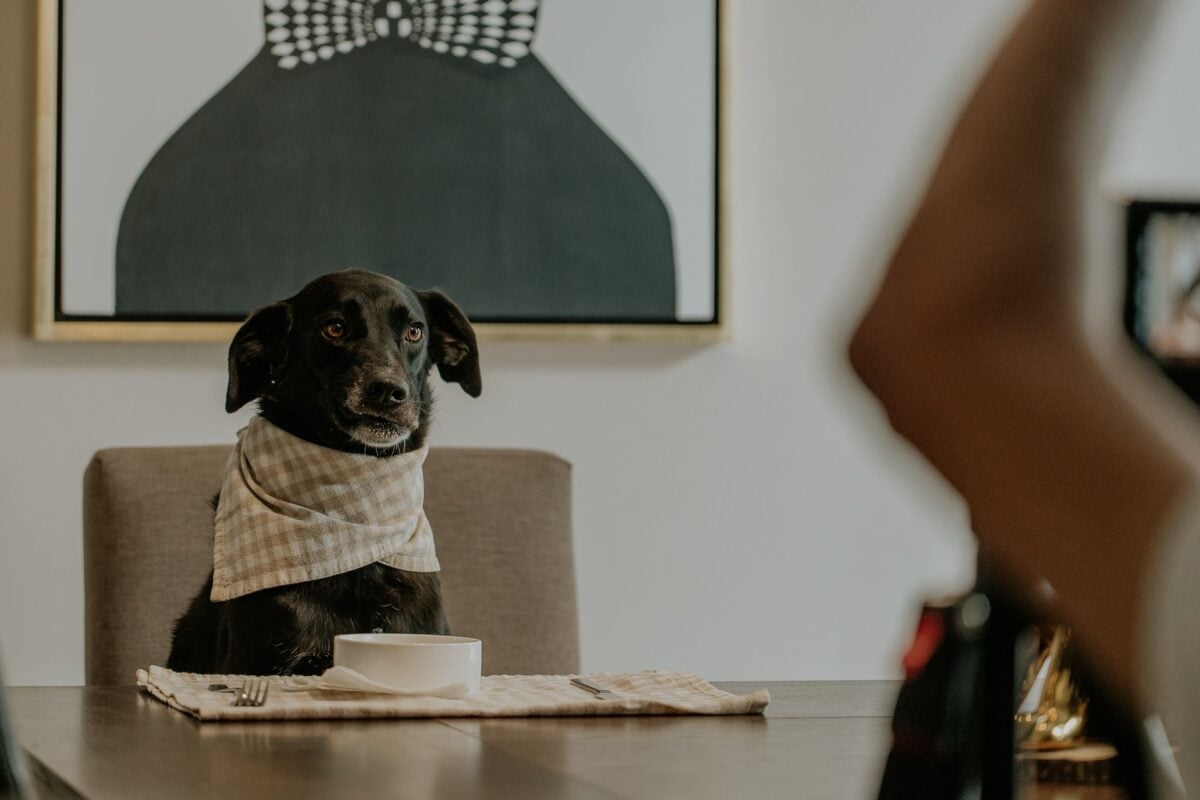
Your dog’s alarm clock is still set to a schedule you abandoned months ago.
Maybe breakfast used to land at 6:30 a.m. Then your job went remote, and the bowl drifted to 8:30, then 9. Your dog never got the memo. Like nearly all mammals, dogs run on circadian rhythms, internal clocks of about 24 hours that coordinate sleep, alertness and digestion.
When meals arrive at the same time every day, the body starts preparing ahead. Saliva and digestive secretions can begin before any food appears. Pavlov’s famous work with dogs, which grew out of his research on digestion more than a century ago, documented the basic principle. A late breakfast isn’t just annoying to your dog. It feels physically off, a bit like sitting down for dinner at six and watching the food show up at nine.
Fast Facts
- Circadian rhythms run on a cycle of roughly 24 hours.
- Pavlov received the 1904 Nobel Prize in Physiology or Medicine for his research on digestion.
- Dogs can link everyday sounds, like a can opener or a cabinet door, with food after repeated pairings.
Even the clock change in spring and fall can throw dogs off. Your dog doesn’t know the household hour moved. Its body just knows breakfast is suddenly “late.”
The household cues matter too. The coffee maker, the bathroom light and the sound of your feet on the stairs all become predictors of food. Your dog is reading a pattern, not begging at random.
- Body clock: the time of day itself
- Household cues: lights, sounds, footsteps, kitchen noises
Some owners call an early-waking dog “spoiled.” Behavior experts see something else. They see a dog that learned the schedule perfectly.
But the next routine is the one dogs seem to track even more closely.
#8 – The Walk Hour Your Dog Never Forgot
🔥 Would you like to save this?
We'll email this post to you, so you can come back to it later!
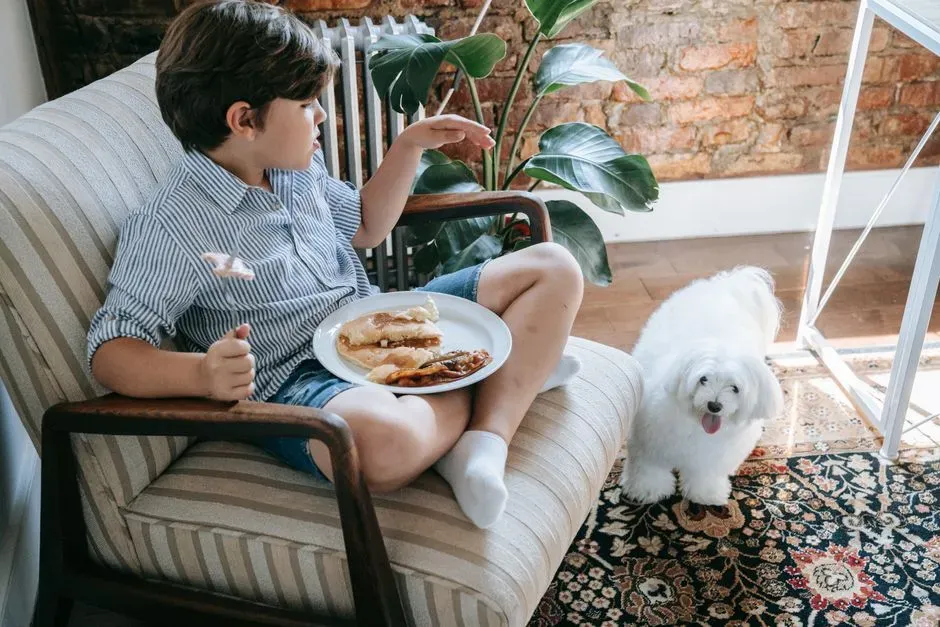
Skip the walk for a week and your dog will still be at the door at the usual minute.
Walks are the richest part of a dog’s day. They combine movement, social contact and, above all, smell. Dogs have hundreds of millions of scent receptors, compared with roughly six million in people. A single lamppost can carry a surprising amount of news about who passed by, and your dog reads it like a morning paper.
When a household drops the daily walk, the dog doesn’t drop the expectation. Instead it often shows restlessness, pacing, mouthing and attention-seeking. Behaviorists often trace “destructive” behavior back to unspent mental energy, not bad character. The shredded pillow may be a dog doing the only job available.
Many owners say a backyard can replace walks. Plenty of behaviorists disagree. A yard is a place your dog already knows by heart. The smells are old and nothing new is happening.
Watch for these signs that the walk clock is still running:
- Pacing or staring at the door near the usual hour
- Grabbing the leash or following you to the shoe rack
The fix doesn’t have to be a marathon. Even short, sniff-heavy outings serve a dog’s need for novelty better than a quick lap on familiar grass.
And what happens when you come home is even more revealing.
#7 – The Door Greeting You Stopped Noticing
🔥 Would you like to save this?
We'll email this post to you, so you can come back to it later!
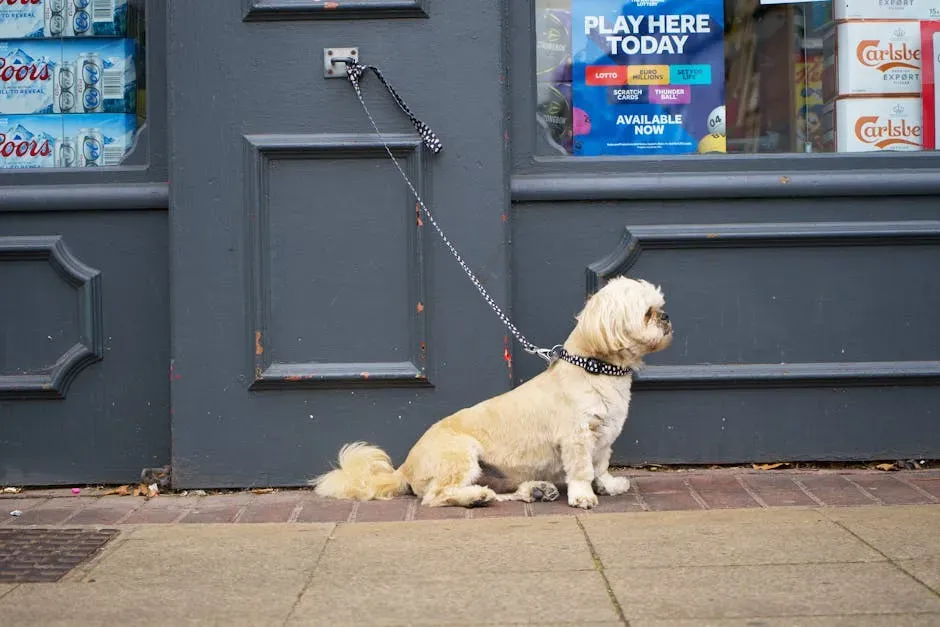
That frantic hello at the door is a measured response, not just excitement.
In a well-known 2011 study by Rehn and Keeling, dogs greeted owners more intensely after longer absences than after short ones. That suggests dogs have some sense of how long you’ve been gone. It probably isn’t a clock. It more likely draws on cues like fading scent and shifts in the household’s rhythm.
Worth Knowing
- The researchers compared reunions after roughly 30 minutes apart with reunions after about two hours.
- The longer separation brought the stronger greeting.
- Nobody has pinned down the exact cue dogs use to judge time.
Greetings also run on reward. When you reply with a voice, a pat or eye contact, the dog learns the ritual works. Stop responding, and many dogs don’t fade out quietly. They get louder. Trainers call this an extinction burst: a brief spike in a behavior right after it stops paying off.
Many owners make a mistake here. They rush in on a call, ignore the dog for a day, then give a huge greeting the next. That patchy pattern keeps the behavior alive, because the dog never learns which version of you is coming through the door.
- Dogs often read: your car, your footsteps, your scent
- Dogs often expect: a response within seconds
But the ritual that happens just before you leave may be the most misunderstood of all.
#6 – The Leaving Ritual Your Dog Decoded
🔥 Would you like to save this?
We'll email this post to you, so you can come back to it later!
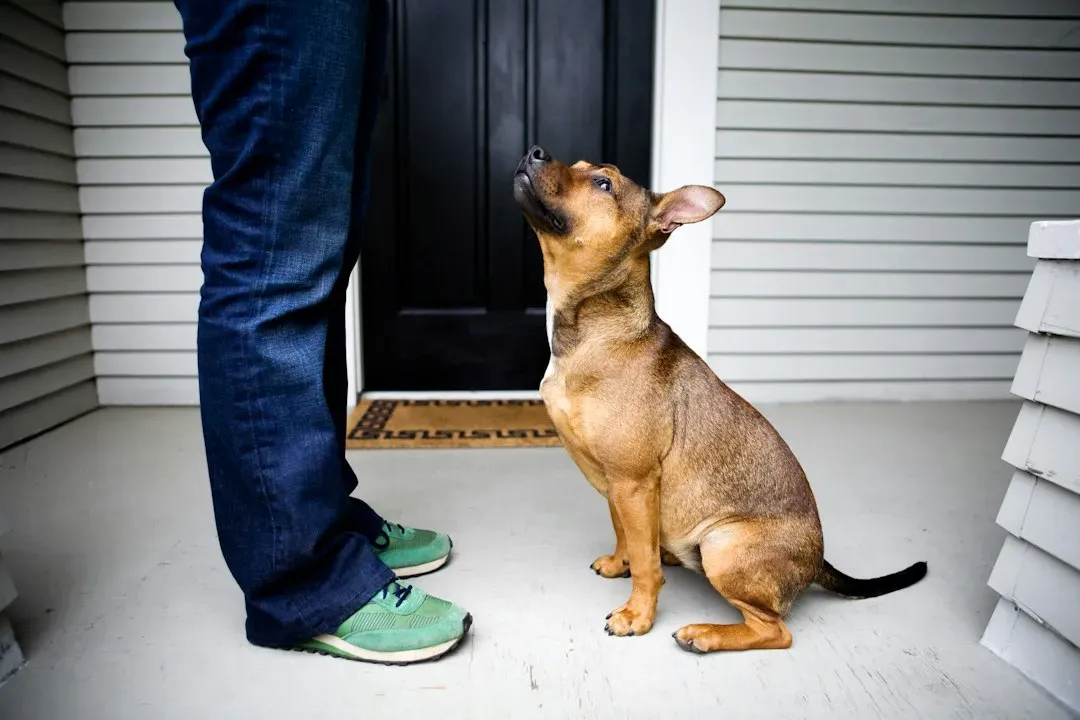
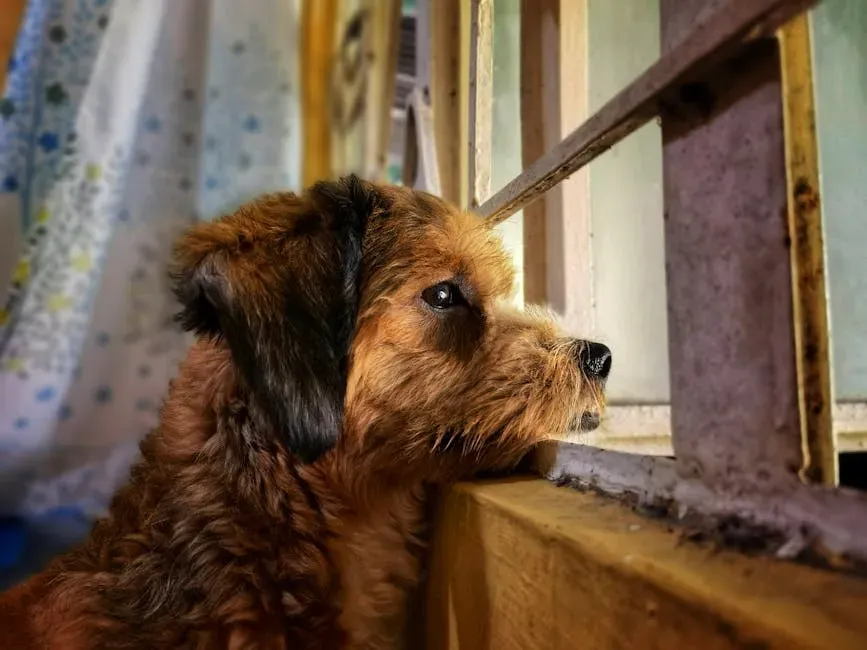
Your dog knew you were leaving before you did.
Keys, shoes, a jacket, a bag, the particular sound of the front closet. Dogs are pattern detectors, and they link these cues to what follows: you disappear. For some dogs, that sequence triggers panting, pacing or whining before you’ve even opened the door.
Households often drop the old goodbye. Maybe it was a treat, a phrase or a short pat. When it vanishes, the dog doesn’t forget. Dogs notice what’s missing as quickly as what’s present. A ritual that predicted something good has been replaced with silence, and some dogs find that harder.
Popular advice says to ignore your dog before leaving. Whether that always helps is debated. A flat, silent exit isn’t neutral. It’s just a different ritual.
- Common cues: keys, shoes, bags, alarms
- Possible signs: pacing, drooling, whining, or following you from room to room
Genuine separation-related problems need a trainer or vet, not just a new routine. Dogs that panic in your absence are not being stubborn. They’re in distress.
The next one will make you rethink your furniture.

2 Pcs Halloween Pet Hat Bandana Set, Witch Pumpkin Costumes for Dogs
Check Price on AmazonAs an Amazon Associate, we earn from qualifying purchases.
10/9/2026 2:45 pm GMTi

Glass Hummingbird Feeder for Outdoors Hanging
Check Price on AmazonAs an Amazon Associate, we earn from qualifying purchases.
10/7/2026 1:21 pm GMTi

Air Purifiers for Home Pets Large Room Up to 3000 Ft²,HEPA Air Cleaner with Washable Double-Side Filter, PM2.5 Air Quality Monitor,15dB Sleep Mode for Bedroom Odor Dust Pollen,White
Check Price on AmazonAs an Amazon Associate, we earn from qualifying purchases.
10/8/2026 8:23 am GMTi

Professional 7 in 1 Dog Paw Cleaner for Dogs & Cats - Includes 1 Portable Paw Washer, 1 Bath Brush
Check Price on AmazonAs an Amazon Associate, we earn from qualifying purchases.
10/7/2026 1:26 pm GMTi

Orthopedic Extra Large Dog Bed, Waterproof Washable XL Pet Bed 44"
Check Price on AmazonAs an Amazon Associate, we earn from qualifying purchases.
10/7/2026 1:32 pm GMTi
#5 – The Spot on the Couch That No Longer Exists
🔥 Would you like to save this?
We'll email this post to you, so you can come back to it later!
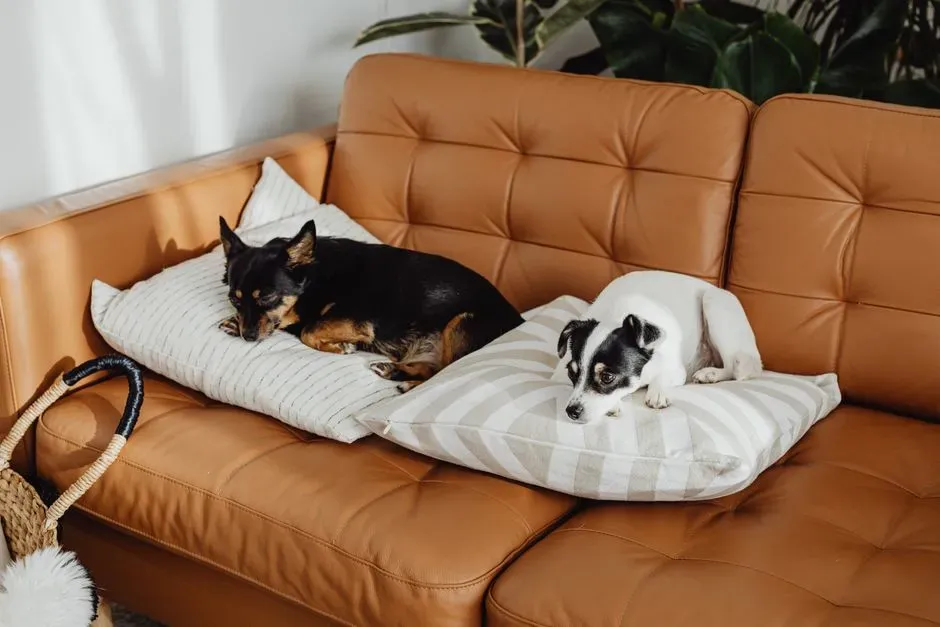
Move the sofa, and your dog may still lie down in the empty space where it used to be.
Dogs have strong spatial memory. A particular patch of floor or cushion becomes tied to warmth, safety and, most of all, your company. When you rearrange the room, the dog’s map doesn’t update at the same speed. To your dog, that bare patch of rug is still the good seat.
Why they defend a spot:
- Scent: the spot smells like them and like you
- Vantage: it gives a view of the door or the kitchen
- Warmth: it may catch the sun or sit near a vent
Dogs may go back to a spot for years after the original furniture is gone. The reason isn’t territorial. Mostly it’s about comfort, and about being close to the people they like.
Some people still insist that a dog on the couch is “claiming dominance.” Modern behavior science has largely moved away from that idea. A dog on your sofa is usually asking for comfort and closeness, not rank.
When the household bans the couch, expect your dog to test it for a while. The behavior used to pay off, so it isn’t gone yet. If you want it to stop, give the dog a bed of its own that is just as comfortable and in a good location, ideally with a view of the action.
Still, a quieter ritual happens at night.
#4 – The Bedtime Routine Dogs Won’t Give Up
🔥 Would you like to save this?
We'll email this post to you, so you can come back to it later!
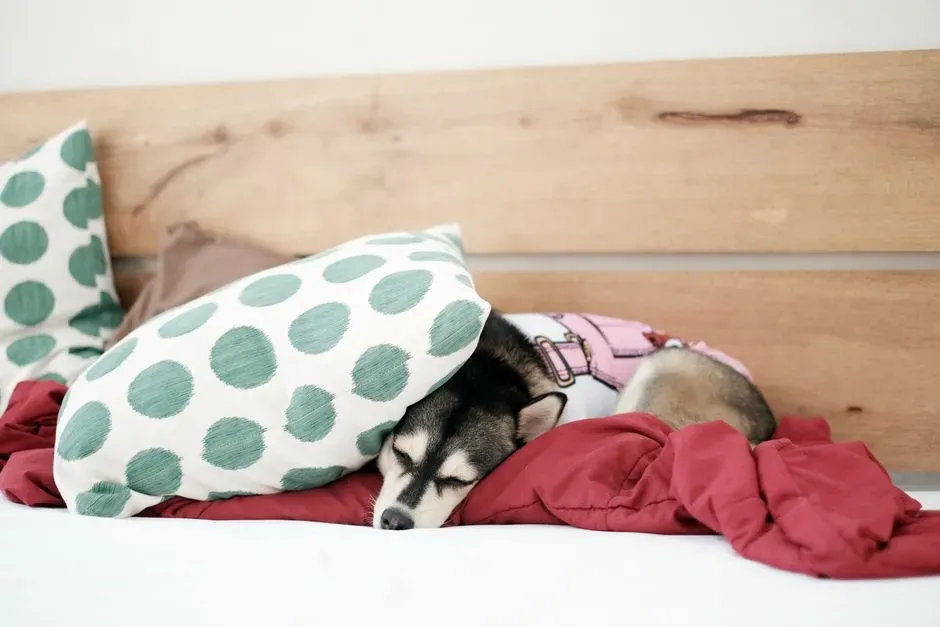
A dog’s bedtime starts long before the lights go off.
Adult dogs often sleep 12 to 14 hours a day, and that sleep isn’t idle time. Hungarian researchers found in a 2017 study that dogs’ sleep patterns changed after they learned new commands, which points to a link between rest and memory.
At a Glance
- Adult dogs: commonly 12 to 14 hours of sleep a day
- Puppies: often need considerably more, with 18 to 20 hours commonly cited
- Sleep style: dogs nap in several chunks across the day and night rather than one long block
That makes evening routines more important than they look. The last potty trip, the dimmed lights, the same walk down the hall. Your dog may treat that sequence as a signal that the day is truly over.
When the household stops doing it, some dogs wander, whine or patrol. They’re not being difficult. A cue that told them to settle has disappeared.
Where a dog sleeps is a debate in its own right. Some trainers say dogs should never sleep in your bed. The evidence for that rule is thin. What matters is that the arrangement is consistent and works for both of you.
- Same final potty trip
- Same bedtime spot
- Similar timing most nights
Next comes the habit that owners most often start and then regret.
#3 – The Snack Handout That Keeps Coming Back
🔥 Would you like to save this?
We'll email this post to you, so you can come back to it later!
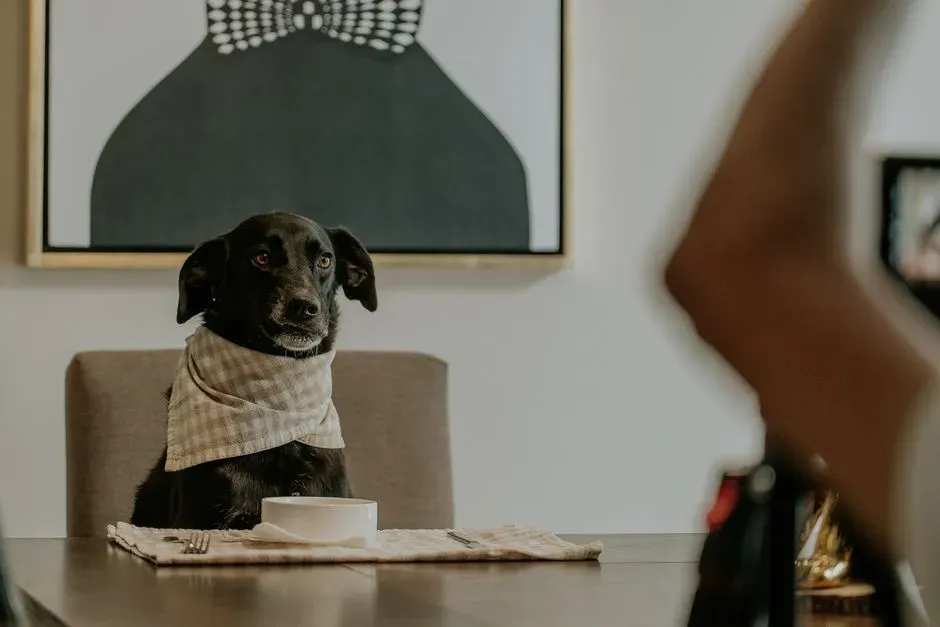
The more you ignore the begging, the harder your dog may try.
Say the household decides to end table scraps. For a few days, the dog pushes harder with louder whining, pawing and staring. That’s an extinction burst, a short-lived surge that often appears when a rewarded behavior stops paying off.
The real problem is inconsistency. A behavior that is rewarded only now and then can be harder to extinguish than one that is rewarded every time. The dog keeps hoping the next attempt will pay off. It’s the same logic that keeps people pulling a slot-machine lever.

Halloween Cat Costume Cloak Witch Hat Pet Accessories
Check Price on AmazonAs an Amazon Associate, we earn from qualifying purchases.
10/9/2026 2:44 pm GMTi

Hand Blown Glass Hummingbird Feeders for Outdoors Hanging, 24oz Wild Bird Nectar Feeder
Check Price on AmazonAs an Amazon Associate, we earn from qualifying purchases.
10/7/2026 1:23 pm GMTi

Dog Stairs for Bed 18" H, 4-Step Dog Steps for High Bed
Check Price on AmazonAs an Amazon Associate, we earn from qualifying purchases.
10/9/2026 2:42 pm GMTi

Earth Rated XL Dog & Puppy Pee Pads, Discreet Top, Max Absorbency
Check Price on AmazonAs an Amazon Associate, we earn from qualifying purchases.
10/7/2026 1:28 pm GMTi

Glass Hummingbird Feeder for Outdoors Hanging, 16 oz Leak-Proof Nectar Feeder with Bee Guards & Ant Moat
Check Price on AmazonAs an Amazon Associate, we earn from qualifying purchases.
10/7/2026 1:22 pm GMTi
Quick Compare
- Rewarded every time: the dog learns fast, and usually gives up fast once the payoff stops.
- Rewarded now and then: the dog keeps gambling, and the habit can be the hardest to break.
- Never rewarded: the behavior fades over time, often after a short burst of extra effort.
So if one family member sneaks a bite, they’ve reset the clock for everyone. The dog doesn’t learn “scraps are over.” It learns “scraps are unpredictable, so keep trying.”
Many people believe a firm “no” fixes begging. Behavior experts often argue it works better to give the dog something better to do, like settling on a mat with a chew.
- Everyone in the household has to follow the same rule
- Reward the calm behavior you want instead
But the next routine is the one people most often misread.
#2 – The Potty Schedule Dogs Remember Perfectly
🔥 Would you like to save this?
We'll email this post to you, so you can come back to it later!
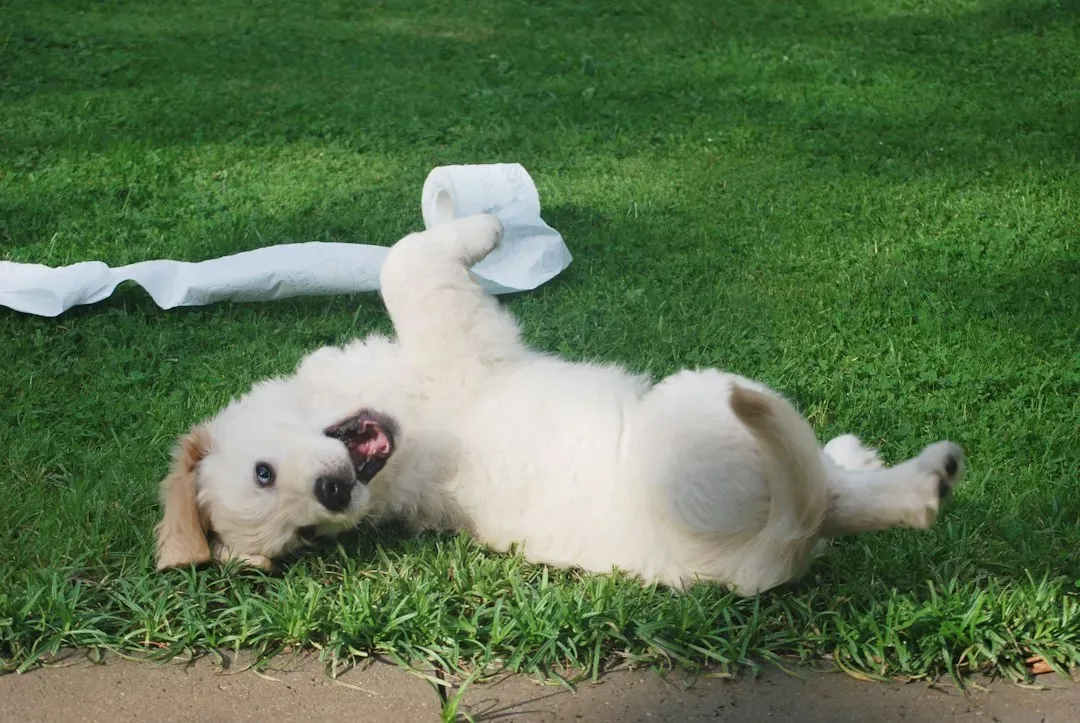
An accident on the carpet is often a schedule problem, not a revenge plot.
Most dogs learn to go out at predictable times: after waking, after meals, after play and before bed. Many dogs need to go soon after eating, which is why trainers build house-training around meals. That’s why the potty clock and the breakfast clock tend to run together.
When a household changes the timing, the dog’s body doesn’t change with it. A house-trained adult can still be waiting on a schedule you stopped following. Standing at the door, circling, sniffing the floor and ringing a bell are all ways of asking.
Then comes an accident, and many owners assume the dog did it on purpose. Experts generally see no evidence for that kind of spite. In a well-known 2009 study by Alexandra Horowitz, the “guilty look” showed up when owners scolded, whether or not the dog had actually done anything. It looks like a reaction to your tone and body language, not proof your dog understands what it did.
- Signs: standing at the door, circling, or sudden restlessness
- Older dogs and puppies need more frequent trips
And the last routine has nothing to do with food or walks.

Halloween Dog Collar with Bow, Orange Cute Ghost Collar,
Check Price on AmazonAs an Amazon Associate, we earn from qualifying purchases.
10/9/2026 2:43 pm GMTi

Portable Dog Water Bottle Foldable Dog Travel Water Bottle
Check Price on AmazonAs an Amazon Associate, we earn from qualifying purchases.
10/7/2026 1:29 pm GMTi

PetSafe Oasys Pet Fountain, 1/2 Gallon (64 oz), Small Dogs & Cats
Check Price on AmazonAs an Amazon Associate, we earn from qualifying purchases.
10/8/2026 8:14 am GMTi

Smart Bird Feeder with Camera Solar Powered, 2K HD Live Video, 10,000+ Bird Species AI Identification
Check Price on AmazonAs an Amazon Associate, we earn from qualifying purchases.
10/7/2026 1:22 pm GMTi
#1 – The Wait for the Person Who No Longer Comes
🔥 Would you like to save this?
We'll email this post to you, so you can come back to it later!
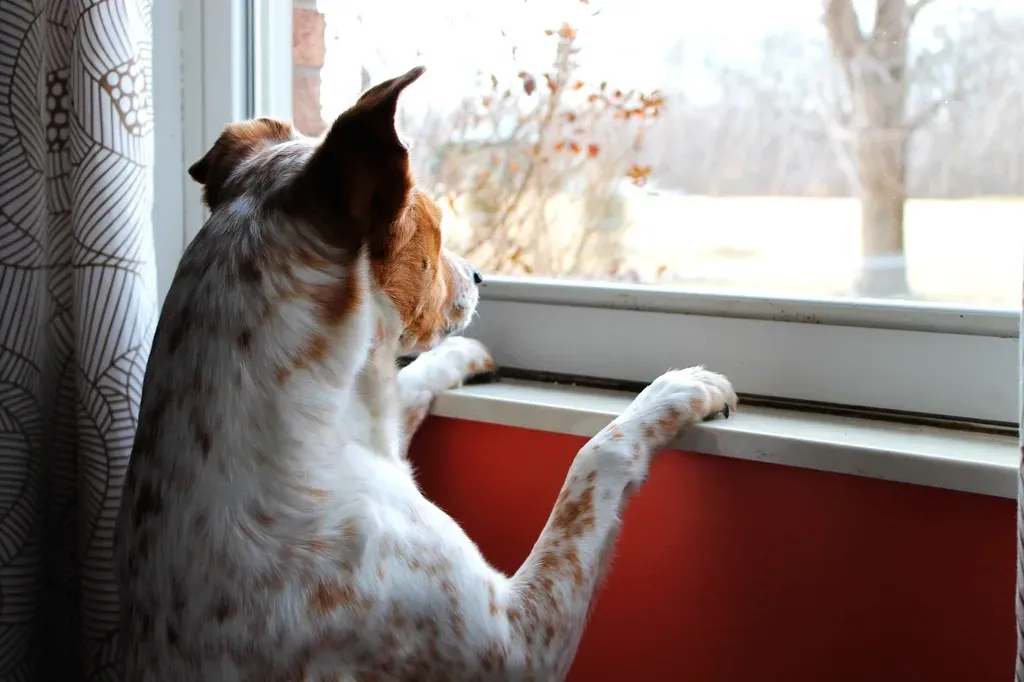
Some dogs keep watching the window for someone whose schedule has changed.
Maybe it’s the teenager who moved out or the partner who now works nights. At the usual hour, the dog heads to the same window or door. Owners often describe this as a vigil. It reflects how closely dogs track the people in their lives.
The science supports the bond. In a 2015 imaging study by Gregory Berns and colleagues, dogs’ brains showed a reward-related response to the scent of familiar humans. That suggests the smell of a favorite person means something real to a dog.
Owner surveys also describe changes in appetite, sleep and attention-seeking after a companion is lost. No one can say whether a dog grieves like a person. Some critics call it anthropomorphism. Others argue the behavioral changes are consistent enough to take seriously, and I’d side with that view.
- Keep daily routines steady
- Offer extra company, not forced cheerfulness
- Talk to a vet if the changes last or appetite drops sharply
Patterns like these tell you something. Your dog isn’t just keeping a schedule. It’s keeping a relationship.
Which brings us to what all nine of these have in common.
Dogs don’t defend routines out of stubbornness. They defend them because routines make a confusing human world predictable. Every habit on this list is a prediction your dog made, and it will keep betting on it until the evidence changes.
My opinion: most “problem behavior” is a dog politely asking why the rules changed. We call it bad manners because it’s inconvenient. Change the routine if you need to, but do it consistently and give your dog a replacement, not just a “no.”
Which routine did your dog refuse to give up, and how long did it last?
