

Worried about unexpected vet bills?
Pet insurance can cover thousands in unexpected vet costs. Get a free quote from Lemonade in under 2 minutes.
Get My Free Quote →Sponsored · Opens Lemonade.com
The underwater world offers a dazzling array of marine environments, each hosting specialized fish species that have evolved to thrive in specific habitats. Among the most captivating of these environments are coral reefs, teeming with colorful and diverse marine life, and the mysterious deeper ocean waters, where remarkable adaptations allow fish to survive in challenging conditions. Understanding where different species flourish not only enhances our appreciation of marine biodiversity but also informs conservation efforts and aquarium keeping practices. This exploration of nine reef-loving fish and four deep-water specialists reveals how these magnificent creatures have adapted to their preferred habitats, showcasing nature’s ingenuity in filling every ecological niche in our vast oceans.
The Allure of Coral Reefs
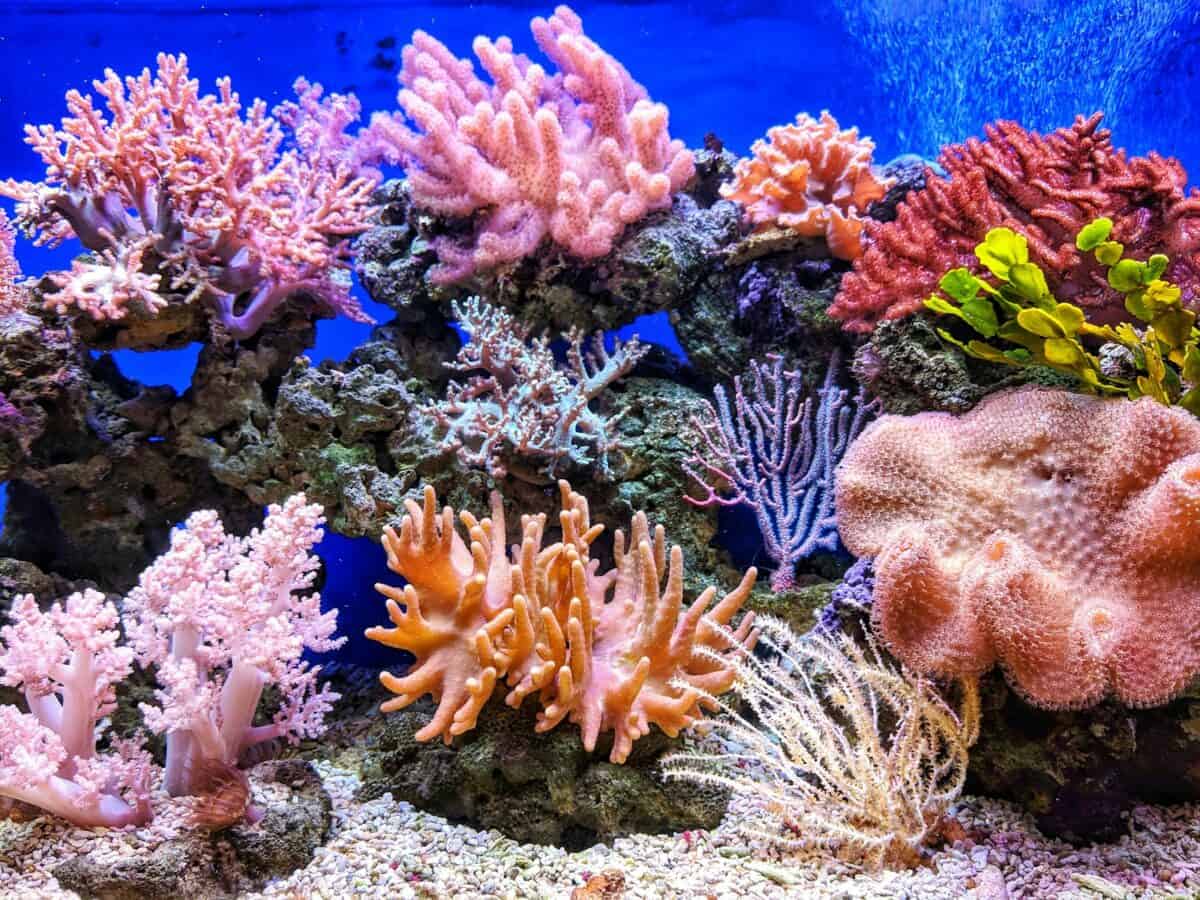
Coral reefs represent one of Earth’s most diverse ecosystems, often called the “rainforests of the sea.” These living structures cover less than 1% of the ocean floor yet harbor approximately 25% of all marine species. The complex architecture of reefs provides countless microhabitats, offering shelter, feeding grounds, and breeding sites for thousands of fish species. The shallow, sunlit waters of reef environments allow for the proliferation of photosynthetic organisms that form the base of a rich food web.
Reef-dwelling fish have evolved specific adaptations to navigate this intricate environment. Many display vibrant coloration for communication, camouflage, or warning signals. Their body shapes often reflect specialized feeding strategies—from the elongated snouts of butterflyfish designed to reach into coral crevices to the powerful jaws of parrotfish that crush coral to extract algae. Temperature stability, abundant food sources, and protective hiding places make reefs ideal habitats for these specialized fish, allowing for the evolution of the extraordinary diversity we observe today.
9. Clownfish (Amphiprioninae) – Reef Enthusiasts
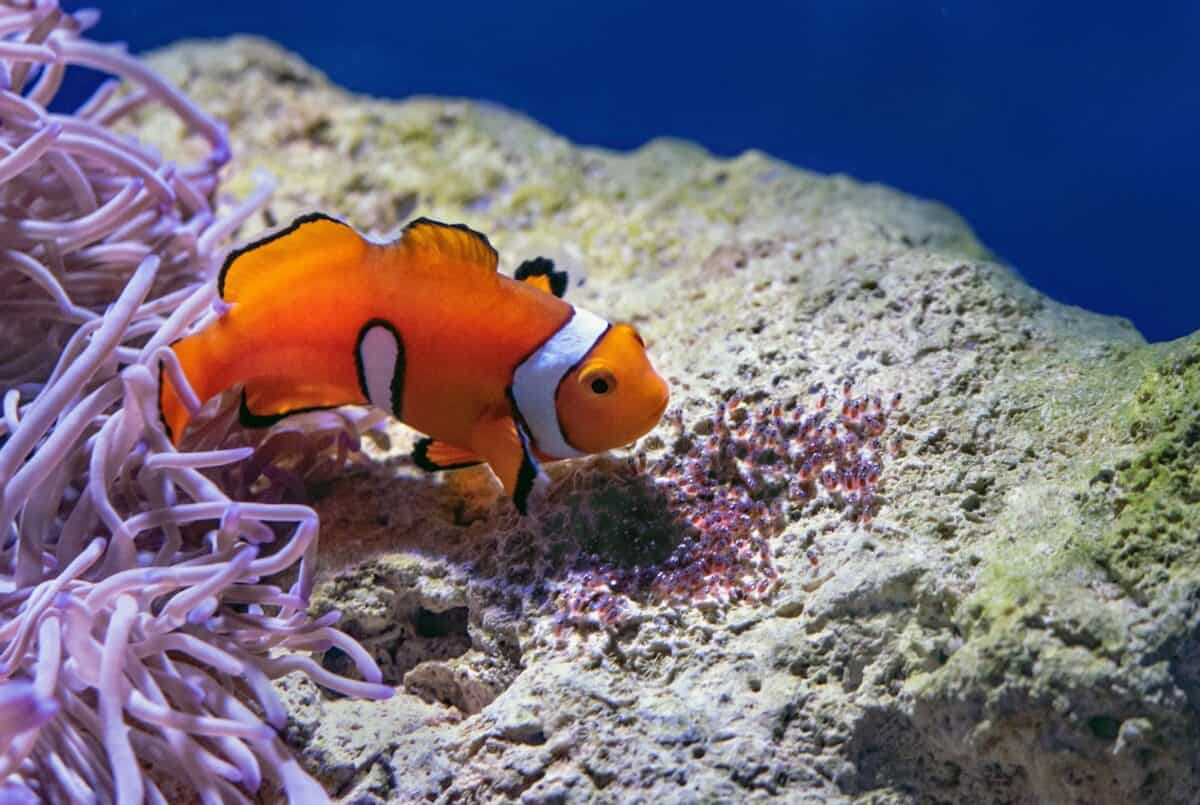
Made famous by animated films, clownfish are among the most recognizable reef inhabitants. These small, vibrant fish form one of nature’s most fascinating symbiotic relationships with sea anemones. Protected by a mucus coating that prevents the anemone’s stinging cells from firing, clownfish make their homes within these venomous tentacles, gaining protection from predators while providing the anemone with cleaning services and defensive behaviors. This remarkable partnership exemplifies the complex ecological relationships that develop in reef environments.
Clownfish display striking orange, white, and black patterns, though coloration varies among the 30 recognized species. They live in small groups with a strict hierarchy—a dominant female, a breeding male, and several non-breeding males. If the female dies, the breeding male changes sex to become female, and the largest non-breeding male matures to become the new breeding male. This biological flexibility, combined with their symbiotic lifestyle, has allowed clownfish to become highly successful reef specialists, perfectly adapted to life among the corals and anemones of tropical shallows.
8. Butterflyfish (Chaetodontidae) – Coral Specialists
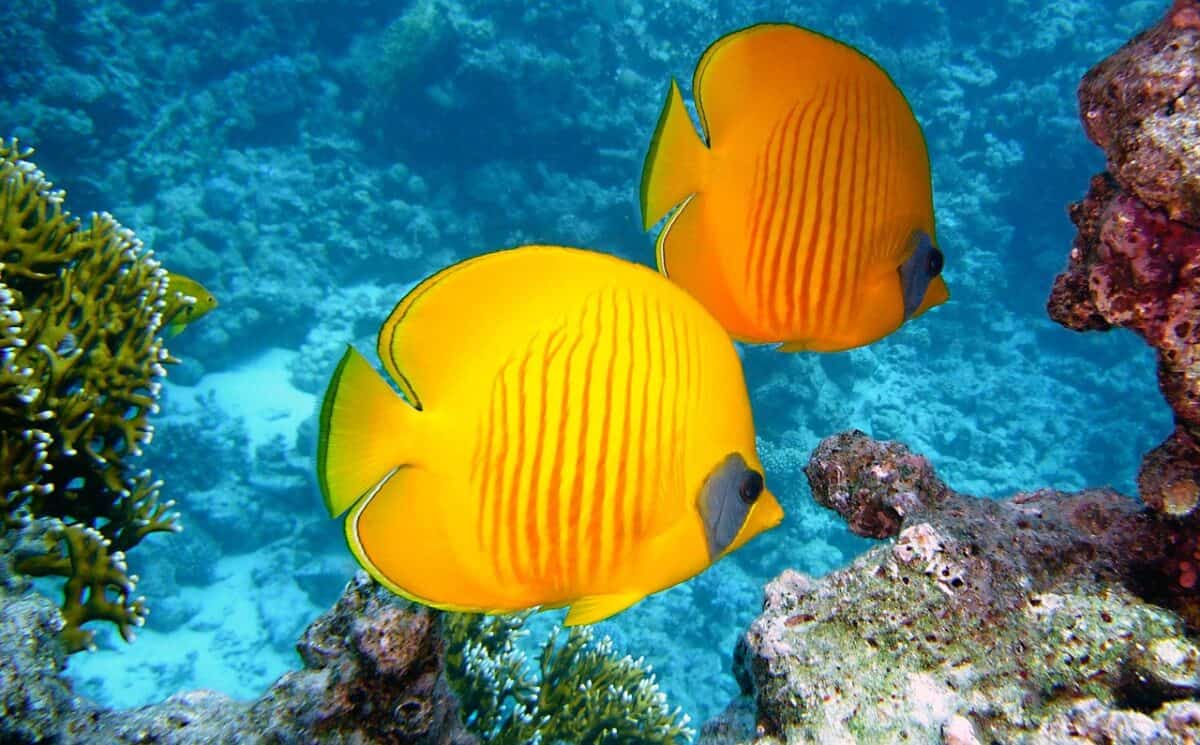
Butterflyfish are the quintessential reef fish, with approximately 130 species distinguished by their compressed, disc-shaped bodies and vivid patterns. Most species feature dark bands across the eyes, which may serve to confuse predators by disguising the location of this vulnerable body part. Their most distinctive feature is their elongated snout, perfectly evolved for picking coral polyps and small invertebrates from reef crevices. This specialized feeding apparatus has made them highly dependent on healthy coral reefs, with many species being obligate corallivores—feeding exclusively on coral tissue.
Scientists often use butterflyfish as indicator species to assess reef health, as their abundance and diversity typically correlate with coral coverage and ecosystem integrity. Many species form monogamous pairs that defend territories together, patrolling the same reef area daily. This territorial behavior, combined with their dietary specialization, makes butterflyfish particularly vulnerable to coral reef degradation. As climate change and ocean acidification threaten coral ecosystems worldwide, the fate of these beautiful fish has become increasingly tied to global conservation efforts targeting reef preservation.
7. Angelfish (Pomacanthidae) – Reef Royalty
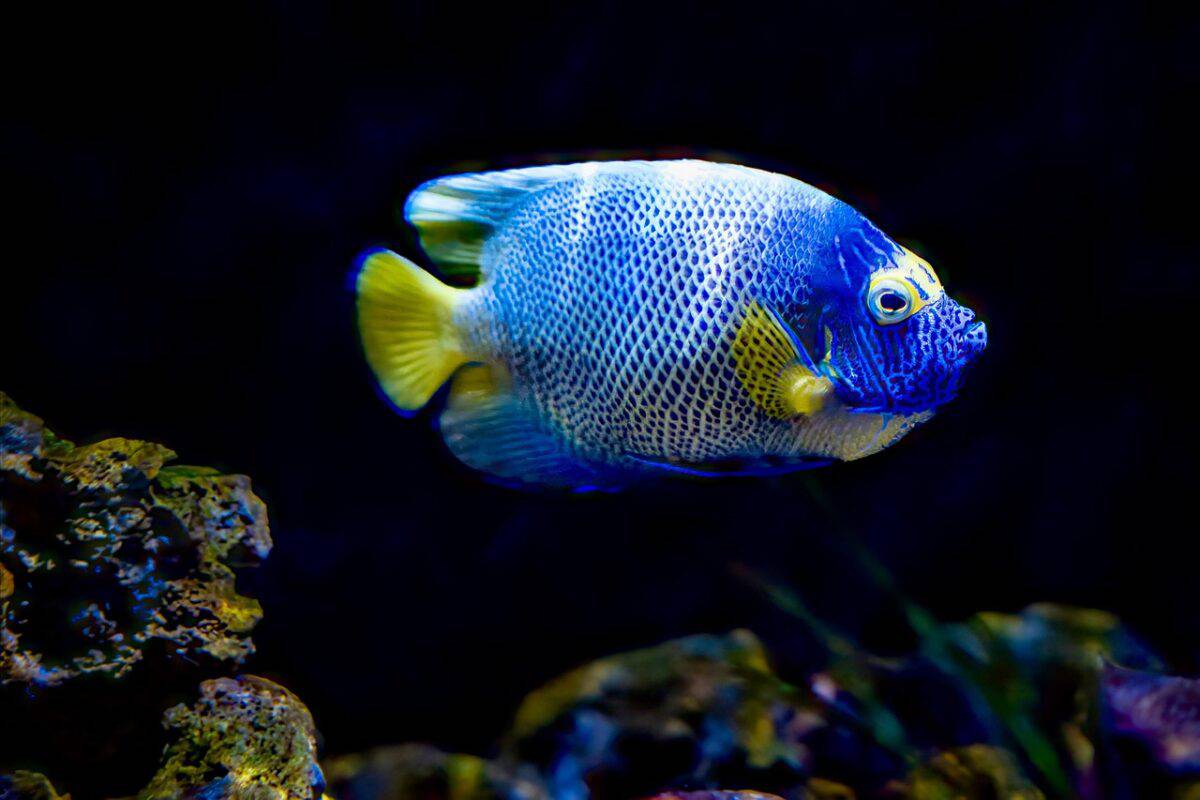
Marine angelfish represent some of the most spectacular fish on coral reefs, renowned for their vibrant colors and graceful movements. These laterally compressed fish feature small mouths with brush-like teeth adapted for scraping sponges, tunicates, and algae from reef surfaces. Unlike their freshwater namesakes, marine angelfish undergo dramatic color transformations as they mature, with juveniles often bearing completely different patterns from adults—an adaptation believed to reduce aggression from territorial adults and provide specialized camouflage appropriate for different life stages.
The family includes approximately 86 species, ranging from the relatively small Centropyge genus (dwarf angelfish) to the magnificent Emperor Angelfish (Pomacanthus imperator), which can reach 15 inches in length. Many species feature a distinctive spine at the corner of their gill covers, used for defense and territorial disputes. Angelfish are particularly valued in the aquarium trade, though their specialized diets and large adult sizes make them challenging to maintain in captivity. In the wild, they play important ecological roles by controlling sponge and algae populations on reefs, contributing to the delicate balance of these complex ecosystems.
6. Parrotfish (Scaridae) – Reef Architects

Parrotfish are remarkable reef inhabitants that literally shape their environment through their feeding habits. Named for their fused teeth that form beak-like structures, these colorful fish use their powerful jaws to scrape algae from coral surfaces and bite off chunks of coral to extract the algae living within. This feeding strategy makes them crucial ecosystem engineers—after digesting the organic material, they excrete the inorganic coral skeleton as sand. A single large parrotfish can produce up to 320 kg (700 pounds) of sand annually, contributing significantly to beach formation on tropical islands.
Like many reef fish, parrotfish exhibit complex social structures and reproductive strategies. Most species are sequential hermaphrodites, beginning life as females and later transforming into males—a change accompanied by dramatic shifts in coloration. At night, many parrotfish species secrete a mucous cocoon that envelops their bodies, potentially masking their scent from predators. Their ecological importance has gained increasing recognition in recent years, with some Caribbean nations implementing protection measures to ensure parrotfish populations remain robust enough to perform their vital role in maintaining reef health by controlling algae growth that might otherwise smother corals.
5. Mandarin Fish (Synchiropus splendidus) – Reef Jewels

The mandarin fish stands among the most visually stunning reef dwellers, adorned with intricate patterns of blue, orange, and green that rival the most elaborate human artwork. These small fish belong to the dragonet family and inhabit protected lagoons and inshore reefs throughout the Pacific Ocean. Unlike many reef fish that dash about in the open water, mandarin fish prefer to hop along the reef bottom using their modified pectoral fins, grazing on small crustaceans and other invertebrates hidden among the coral rubble. Their brilliant coloration serves as aposematic warning—their skin contains a toxic mucus that makes them unpalatable to predators.
Mandarin fish are renowned for their elaborate courtship rituals, performed daily at dusk. Males establish territories and perform dazzling displays to attract females, rising together in the water column to release eggs and sperm in a synchronized mating dance before quickly returning to the safety of the reef. These secretive fish face threats from habitat degradation and collection for the aquarium trade, where their specialized diet of live copepods makes them challenging to maintain. Their specific habitat requirements and feeding preferences underscore the importance of preserving complex, healthy reef ecosystems with abundant microfauna to support such specialized species.
4. Royal Gramma (Gramma loreto) – Reef Dwellers

The royal gramma, with its striking purple front half and yellow rear, represents one of the most popular reef fish in the marine aquarium hobby. Native to Caribbean coral reefs, these small fish (reaching only about 3 inches) occupy a specialized niche, preferring to hover upside-down under reef overhangs and within caves. This behavior allows them to quickly retreat into protective crevices when threatened while maintaining vigilance for small prey items drifting by in the water column. Their vivid bicolor pattern may serve as disruptive coloration, making it difficult for predators to gauge their size and direction of movement.
In their natural habitat, royal grammas establish small territories which they defend vigorously against conspecifics, though they generally ignore other fish species. They are planktivores that supplement their diet with small benthic invertebrates picked from the reef substrate. Unlike many reef fish, royal grammas are relatively hardy and adaptable, tolerating a range of water conditions—qualities that have contributed to their popularity among aquarists. Their manageable size, peaceful nature (except toward other grammas), and striking appearance make them excellent ambassadors for coral reef conservation, drawing attention to the beauty and complexity of these threatened ecosystems.
3. Coral Hawkfish (Cirrhitichthys falco) – Perched Predators
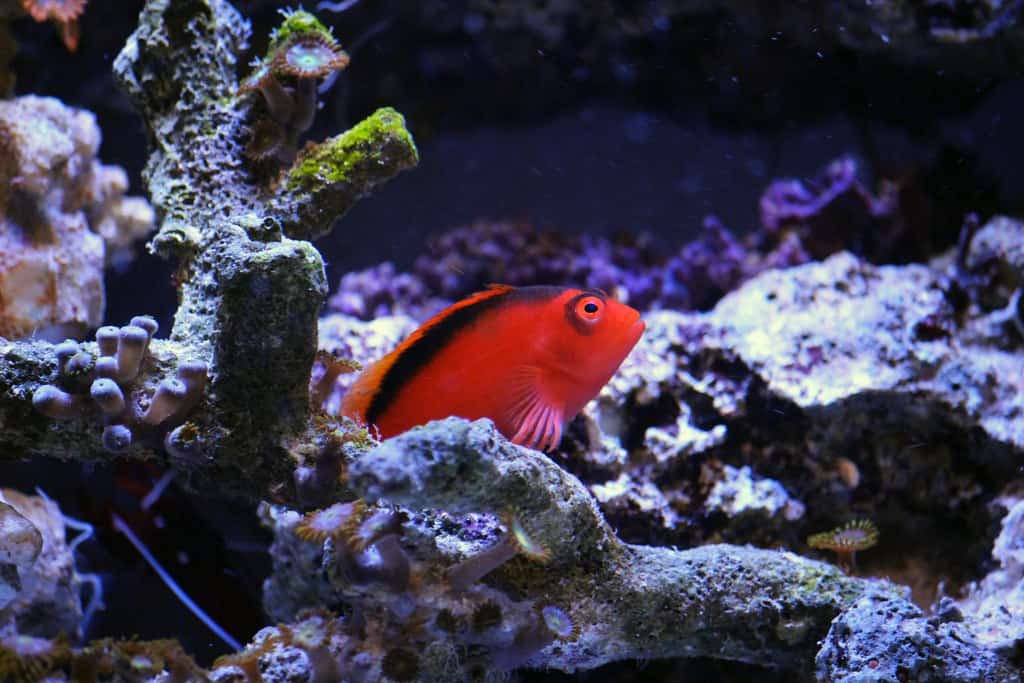
Coral hawkfish exemplify specialized adaptation to reef environments through their distinctive perching behavior. These small, colorful predators use modified, thickened lower pectoral fin rays to perch atop coral branches, where they remain motionless for extended periods, surveying their surroundings for prey. When suitable prey—typically small crustaceans or fish—ventures too close, the hawkfish launches with remarkable speed to capture its meal before returning to its perch. This hunting strategy allows them to conserve energy while maintaining optimal vantage points for hunting.
The family includes numerous species displaying varied coloration, from the vibrant red of the flame hawkfish to the more subdued patterns of the arc-eye hawkfish. Most species exhibit territorial behavior, with individuals claiming specific coral heads as their domain. Many hawkfish are protogynous hermaphrodites, beginning life as females with some later transforming into males based on social cues within their population. Their intimate association with branching corals makes them particularly vulnerable to coral bleaching events and reef degradation, as the loss of complex coral structures eliminates both their perching sites and the microhabitats that support their prey species.
2. Yellow Tang (Zebrasoma flavescens) – Reef Herbivores
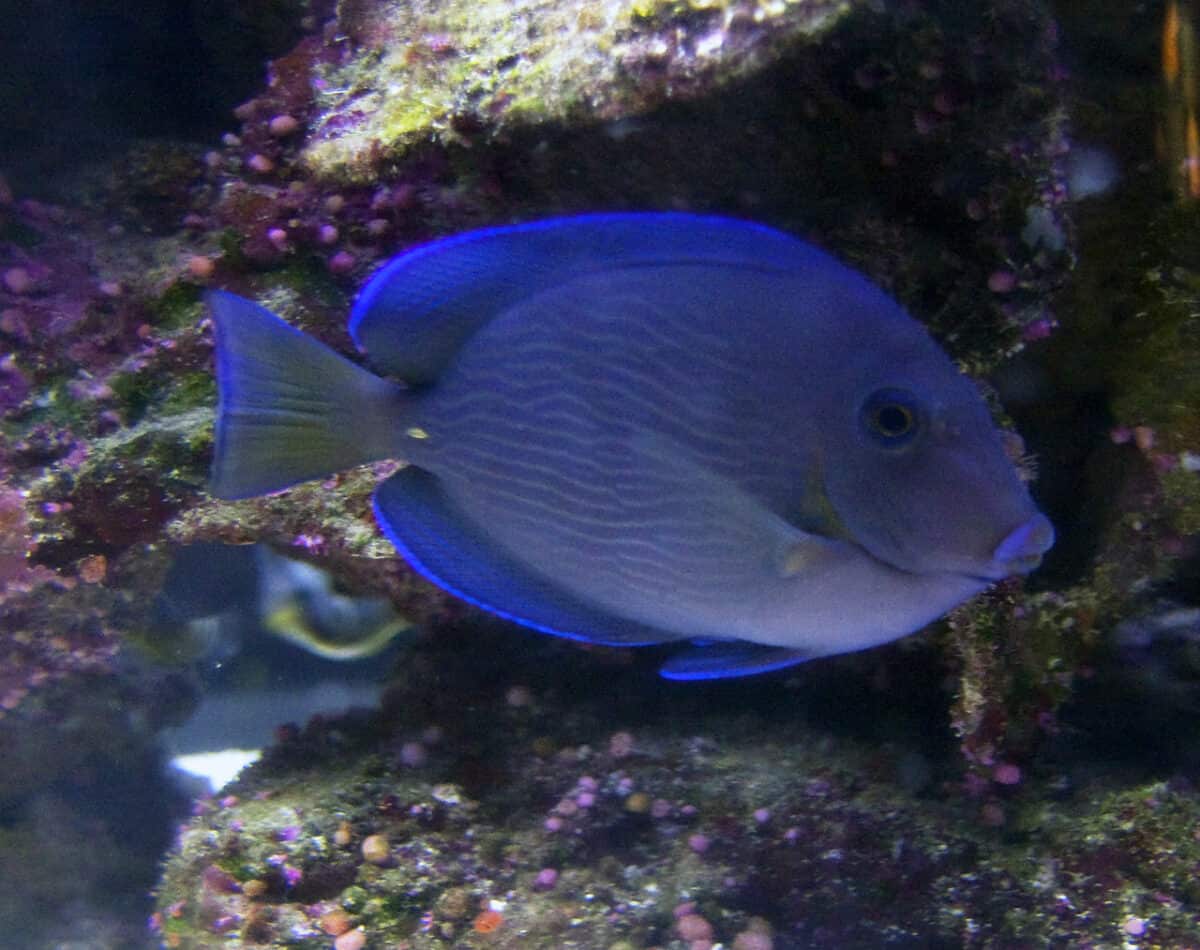
The brilliant yellow tang represents one of the most iconic reef fish, instantly recognizable for its vibrant lemon-yellow coloration and laterally compressed, disc-shaped body. Native to the reefs of Hawaii and surrounding Pacific areas, these fish perform a crucial ecological function as herbivores, spending their days grazing on algae that would otherwise overgrow and smother coral colonies. Their specialized digestive systems contain symbiotic microorganisms that help break down tough algal cell walls, allowing them to extract maximum nutrition from this plant material. A characteristic white spine at the base of the tail serves as a defensive weapon that can be extended when threatened.
Yellow tangs form loose schools as juveniles but become increasingly territorial as they mature, with adults defending algae-rich feeding areas against competitors. At night, their bright coloration fades slightly as they seek shelter within the reef structure. The species has faced significant collection pressure for the aquarium trade, leading Hawaii to implement restrictions on their capture to ensure sustainable populations. Their dependence on algae-covered reef substrates highlights the importance of maintaining water quality and reef health, as deteriorating conditions often lead to shifts in algae composition that may not support these specialized herbivores. Conservation efforts focusing on reef protection directly benefit these charismatic fish and the many other species that depend on healthy coral ecosystems.
1. Six-Line Wrasse (Pseudocheilinus hexataenia) – Reef Cleaners

The six-line wrasse earns its name from the six horizontal blue lines that run the length of its reddish-purple body, creating a striking pattern that makes it popular among reef aquarium enthusiasts. These small fish (typically reaching only 3 inches) are active reef residents, constantly on the move as they search for small invertebrates among coral branches and rock crevices. Their elongated bodies and pointed snouts allow them to access tight spaces within the reef structure, where they hunt for copepods, amphipods, and small crustaceans. Six-line wrasses are particularly valued for their habit of consuming coral-eating flatworms and other pest species that can damage reef organisms.
Like many wrasses, this species demonstrates complex reproductive behaviors. They are protogynous hermaphrodites, with females capable of transforming into males when social conditions warrant. In the wild, they often form harems consisting of a dominant male and several females. Six-line wrasses are remarkably agile swimmers, capable of quick darting movements that help them evade predators and pursue prey. Their reliance on the intricate three-dimensional structure of healthy reefs for both shelter and feeding makes them sensitive indicators of reef health. When reef complexity diminishes due to coral death or degradation, populations of specialized microfauna hunters like the six-line wrasse often decline in parallel, highlighting their close evolutionary connection to thriving coral ecosystems.
The Mystery of Deep Ocean Waters
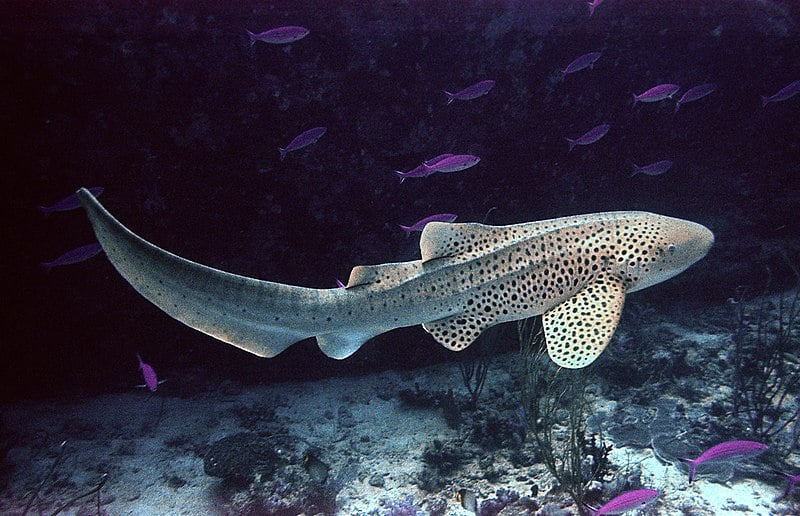
Beyond the sunlit realms of coral reefs lies the vastness of the open ocean and its depths, where entirely different selective pressures have shaped fish evolution. These environments—characterized by high pressure, cold temperatures, and scarce food resources—have produced some of the most extraordinary adaptations in the animal kingdom. Deep-water fish must contend with near or complete darkness, necessitating specialized sensory systems for locating prey and mates. Many species have developed bioluminescence, producing their own light through chemical reactions or hosting symbiotic bacteria that glow, serving functions from attracting prey to communication.
The deep ocean’s relative isolation has allowed for the evolution of species with bizarre morphologies that would be maladaptive in shallower environments. Many deep-sea fish feature expandable stomachs and jaws that enable them to consume prey larger than themselves—a valuable adaptation in an environment where feeding opportunities are unpredictable and scarce. While reef environments reward colorful displays and specialized feeding strategies, the deep ocean favors energy efficiency, pressure resistance, and adaptations for finding food in the darkness. These contrasting evolutionary paths have produced two distinctly different assemblages of fish species, each remarkable in their own way and perfectly suited to the challenges of their respective habitats.
4. Swordfish (Xiphias gladius) – Open Ocean Predator

The swordfish stands as one of the ocean’s most distinctive large predators, immediately recognizable by the elongated, sword-like bill that constitutes up to one-third of its total body length. Unlike reef-dwelling species that depend on coral structures, swordfish are pelagic hunters adapted for life in the open ocean, where they undertake extensive migrations through temperate and tropical waters worldwide. They typically inhabit the water column between the surface and depths of 1,800 feet (550 meters), making dramatic vertical migrations between deep water during daylight hours and surface waters at night as they follow the daily movements of their prey.
Swordfish possess several remarkable adaptations for their open-ocean lifestyle. They are among the fastest fish in the sea, capable of swimming at speeds up to 60 mph (97 km/h), powered by a crescent-shaped tail and streamlined body. A specialized heating system maintains their brain and eyes at temperatures up to 50°F (10-15°C) above the surrounding water, enhancing neural function and visual acuity—crucial advantages for hunting in cold, deep waters. Rather than using their bill to spear prey as once believed, research indicates swordfish employ it to slash through schools of fish, stunning or injuring potential meals before consuming them. Their independence from reef structures and preference for open water makes them well-suited to oceanic environments where they play an important role as apex predators, helping maintain balance in pelagic food webs.
3. Tuna (Thunnini) – Built for the Blue

Tuna represent the epitome of adaptation to life in the open ocean, with streamlined bodies built for continuous swimming through vast expanses of deep blue water. Unlike reef fish that dart between coral heads, tuna are obligate ram ventilators—they must swim constantly to force oxygen-rich water over their gills, never truly resting. This perpetual motion lifestyle is supported by unique physiological adaptations, including a counter-current heat exchange system known as regional endothermy, which allows them to maintain body temperatures higher than the surrounding seawater. This gives tuna enhanced muscle performance and faster neural response, enabling them to pursue fast-moving prey such as mackerel, squid, and flying fish over vast distances.
Tuna species—such as the bluefin, yellowfin, and skipjack—are among the fastest and most wide-ranging fish in the ocean. Bluefin tuna, for example, can migrate thousands of miles across the Atlantic, diving to depths exceeding 1,600 feet (500 meters) in search of food. Their highly developed vision, powerful swimming muscles, and hydrodynamic body shape make them formidable hunters in the mid and deep pelagic zones.
Because of their high commercial value and relatively slow reproductive rates, tuna are under intense pressure from overfishing, particularly in international waters where regulation is difficult. Conservation initiatives, including marine protected areas and stricter fishing quotas, aim to preserve tuna populations, not only for ecological reasons but also for food security and economic sustainability. These iconic ocean dwellers epitomize the energy, endurance, and specialization required to survive in the planet’s most expansive—and challenging—habitat.
2. Fangtooth Fish (Anoplogaster cornuta) – Deep Sea Bruiser

Despite its small size—typically no more than 6 inches—the fangtooth fish looks like a creature from a nightmare. Inhabiting depths between 500 and 5,000 meters (1,600 to 16,400 feet), this deep-sea predator is adapted to a world of near-total darkness. Its most noticeable feature is its oversized teeth, which are proportionally the largest of any fish in the ocean. These fangs are so long that the fish has evolved a special socket on its upper jaw to accommodate them when its mouth is closed.
Fangtooth fish use a combination of tactile and olfactory senses to detect prey in the pitch-black depths, where vision is limited or useless. Juveniles inhabit shallower depths and feed on plankton before migrating deeper as they mature. Unlike many deep-sea fish that rely on bioluminescence, the fangtooth does not produce its own light, instead relying on stealth and its powerful jaws to capture squid, fish, and crustaceans that venture too close.
Though rarely seen by humans, the fangtooth plays a role in the deep-sea food web as both predator and prey—larger fish, including tuna and marlin, are known to feed on them when they rise to shallower depths during vertical migrations. The fangtooth’s success in one of the most extreme habitats on Earth is a testament to the power of evolutionary adaptation in the deep ocean.
1. Barreleye Fish (Macropinna microstoma) – Deep Ocean Marvel
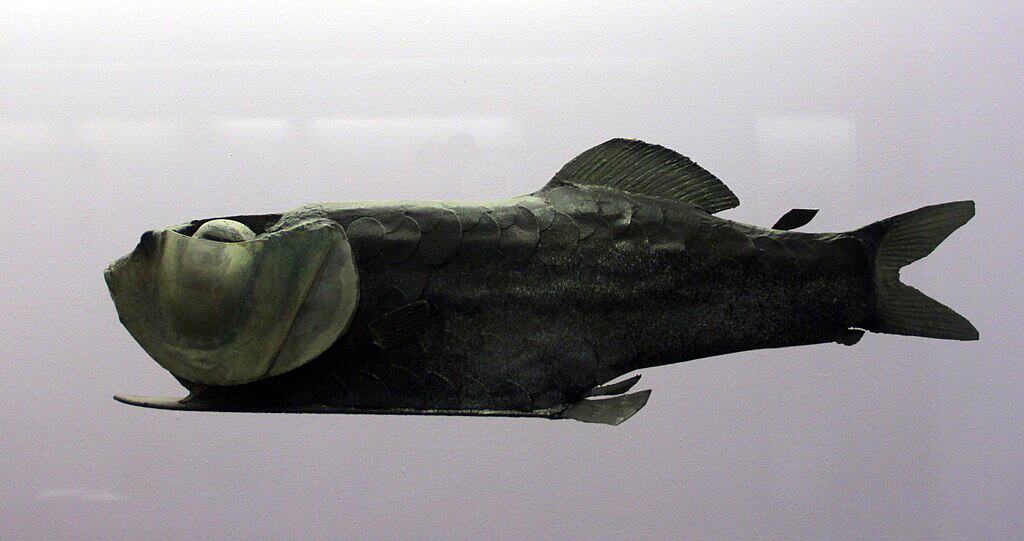
Few fish are as bizarre—or fascinating—as the barreleye fish. Found at depths between 600 and 800 meters (2,000–2,600 feet), this small, translucent-headed fish features upward-facing tubular eyes encased within a fluid-filled dome. This extraordinary visual system allows it to detect the faintest glimmers of light from above while scanning for the silhouettes of prey, such as jellyfish and zooplankton, drifting in the dark water column.
Originally believed to have fixed eyes that only faced upward, researchers later discovered that barreleye fish can rotate their tubular eyes forward, allowing them to track prey while maintaining their characteristic head-down posture. The fish’s transparent dome protects its sensitive retinas and helps filter light in the darkness of the deep sea.
The barreleye’s slow, deliberate swimming style and unique adaptations reflect the extreme energy constraints of the deep ocean. In this harsh environment, efficiency is everything—and the barreleye’s visual system, body shape, and feeding habits represent a delicate evolutionary balance between energy conservation and predator efficiency.
Conclusion: A Tale of Two Oceans

From the bustling biodiversity of coral reefs to the silent vastness of the deep sea, the marine world is shaped by extremes—and fish have evolved extraordinary adaptations to survive in each niche. Reef-dwelling fish dazzle us with their colors, complex behaviors, and intimate relationships with their surroundings, depending on light, structure, and community. In stark contrast, deep-ocean species embrace darkness, isolation, and scarcity, developing unique features such as bioluminescence, extreme pressure tolerance, and unconventional feeding strategies.
Understanding these ecological divides not only enhances our appreciation for marine life but also highlights the urgency of protecting both shallow and deep-water habitats from threats like climate change, pollution, and overfishing. Whether nestled among coral polyps or patrolling the midnight depths, each of these fish plays a role in the grand tapestry of ocean life—a testament to evolution’s power and the planet’s enduring aquatic wonder.
Worried about unexpected vet bills?
Pet insurance can cover thousands in unexpected vet costs. Get a free quote from Lemonade in under 2 minutes.
Get My Free Quote →Sponsored · Opens Lemonade.com

As a little kid, I fell in love with nature, wildlife, and animals. Living in the USA, South Africa, Italy, China and Germany gave me the opportunity to discover the world's Wildlife. My favorite animals are Mountain Gorillas, Siberian Tigers, and Great White Sharks.
I'm a certified PADI Open Water Diver, went to Everest Base Camp and Trekked Gorillas in Uganda. I hold a Master of Science in Economics and Finance.
Please send any feedback to feedback@animalsaroundtheglobe.com
- Top 10 Animals and Wildlife in the Arctic - June 9, 2026
- 12 Monkeys That Use Tools Just Like Humans - June 9, 2026
- 10 Most Alligator-Infested Swamps in the United States - June 9, 2026