
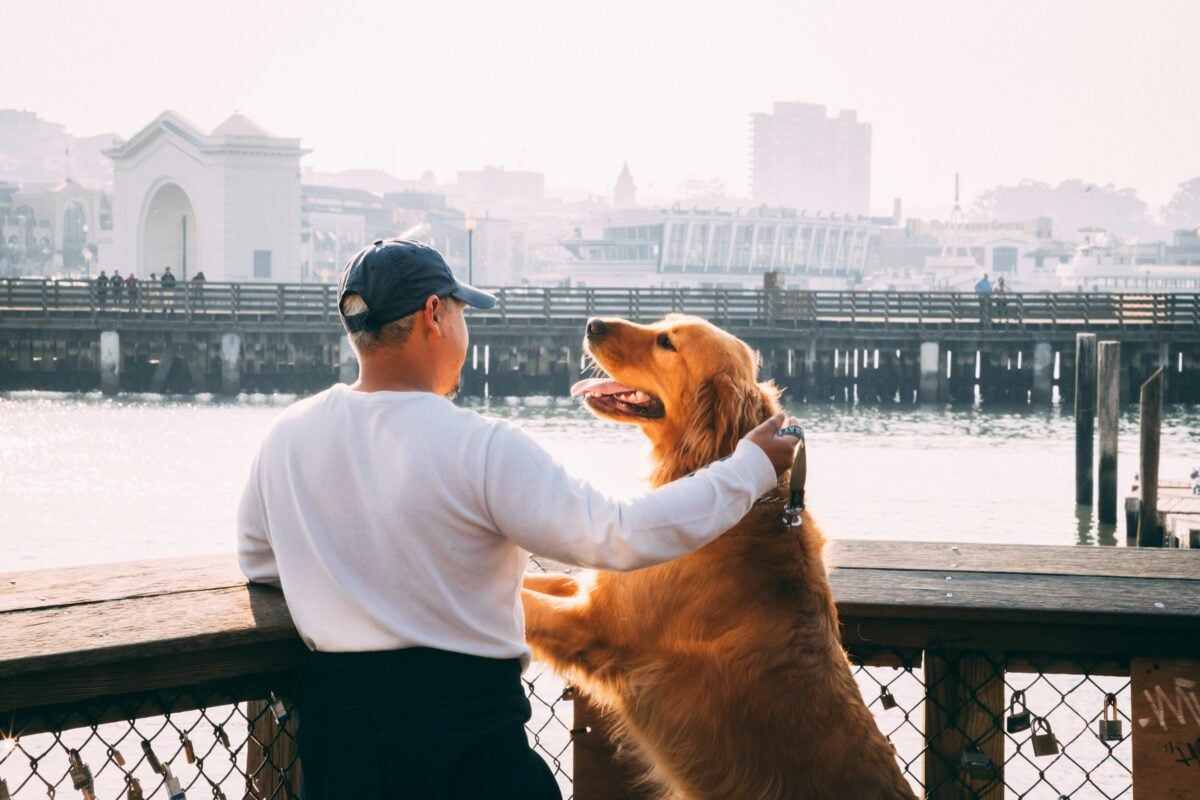
Picture the “perfect” dog in a vet’s lobby: flat on the floor, silent, not moving a muscle. Owners brag about that dog. Vet staff often glance twice, because a motionless dog can be a stressed dog, not a calm one.
If you clicked to find out what a truly well-cared-for dog does out there, the answer is subtler than stillness, and a lot more fun to spot. It shows up in a sigh, a shake-off, a quick glance up at you. Most owners walk right past these signs, and one of them has nothing to do with obedience at all.
#9 – They Walk In Without Hauling You Through the Door
🔥 Would you like to save this?
We'll email this post to you, so you can come back to it later!
The first ten seconds in a lobby tell staff more than most owners realize. Before anyone says hello, the front desk has already noticed how your dog came through the door.
A well-cared-for dog crosses the threshold on a loose leash. There’s no lunging at the receptionist and no frantic tugging toward the nearest unfamiliar smell. Staff tend to read that as a dog whose daily life includes predictable walks and calm handling.
Pulling isn’t always bad manners, though. It can come from fear, overexcitement, or simply never being taught another option. The giveaway is recovery: a dog with good habits can be excited and still slow down when you say its name.
Clinics are tricky places. The floors are slick, the doors open on their own, and there are other animals everywhere. A dog that copes well usually has plenty of practice with new surfaces and sounds, so the lobby feels like a slightly louder version of the sidewalk.
Here’s what that first impression often looks like:
- Slack in the leash, even if it’s brief
- A pause at the door to sniff the floor
- A quick ear flick when you speak to it
Many owners think a long retractable leash gives a dog “freedom,” but many trainers argue it’s the worst tool for a waiting room. It lets your dog cover a lot of ground toward a stranger’s nervous pet before you can react.
That’s only the doorway, though. What a calm dog does in the next ten minutes is where it gets interesting.
#8 – They Pick a Spot and Actually Settle

🔥 Would you like to save this?
We'll email this post to you, so you can come back to it later!
Settling is a skill, and a lot of dogs never get taught it. Staying put in a room full of strange smells takes real practice.
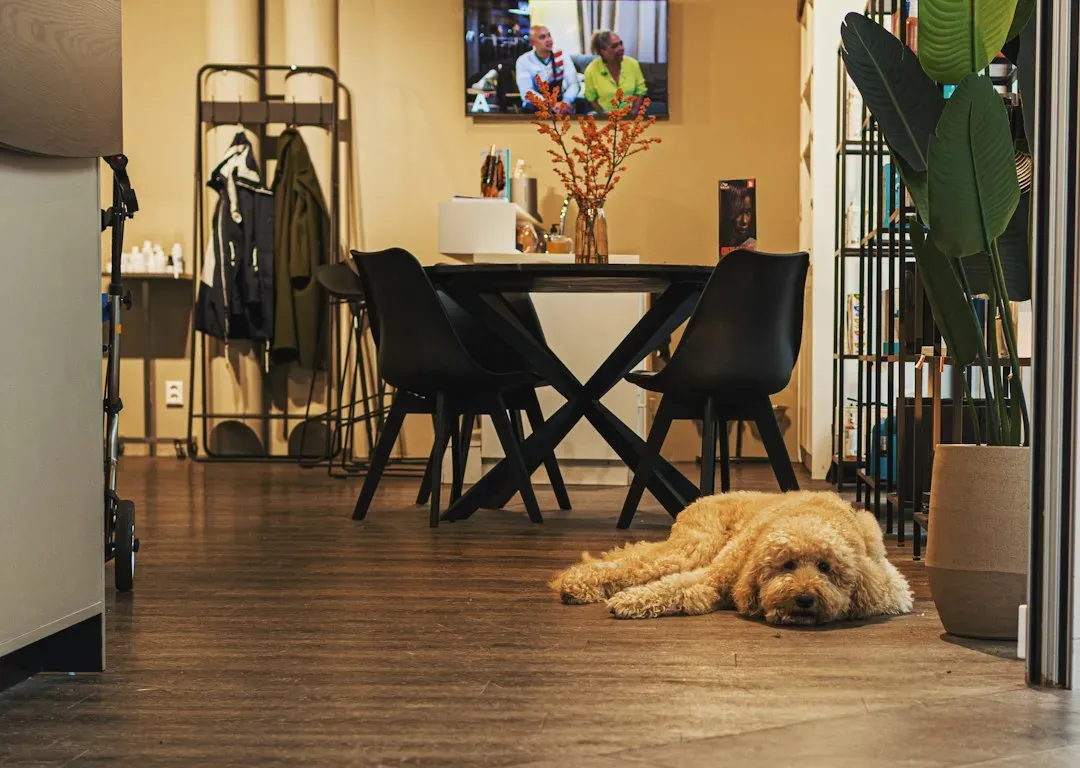
After check-in, a confident dog looks for a place to park. It might be under your chair, beside your feet, or on a mat you brought from home. Then it lies down and stays there without being reminded every thirty seconds.
That behavior doesn’t happen by accident. Settling usually reflects repeated practice in lower-pressure places, like cafés, patios, and friends’ living rooms. The dog has learned that waiting is a normal part of life and nothing bad is coming.
Some behavior professionals teach settling as its own trained behavior, separate from “sit” or “stay.” A sit is a position. Settling is a state of mind.
Watch for the difference between relaxed and shut down. A relaxed dog may shift positions, sigh, or rest its chin on the floor. A shut-down dog can look just as still, but its body is rigid and its eyes stay fixed.
Quick Compare: Relaxed vs. Shut Down
- Movement: A relaxed dog shifts, stretches, or rolls to one hip. A shut-down dog barely changes position at all.
- Muscles: Relaxed means soft shoulders and a loose jaw. Shut down means a braced, tight body.
- Eyes: A relaxed dog glances around and blinks. A shut-down dog stares at one spot.
Many owners love to say their dog is “so good, it didn’t move at all.” That’s the comment that makes vet staff look twice. They want to see a dog that can change positions and look around, because a dog frozen in place may be too anxious to do either.
Still, position is only part of the story. The clearest sign of all is written across the dog’s whole body.
#7 – Their Bodies Look Loose, Wiggly, and Soft

🔥 Would you like to save this?
We'll email this post to you, so you can come back to it later!
Body language is where a dog’s real feelings leak out. Dogs can’t tell you they’re nervous, so their bodies do the talking, and the message is usually loud and clear if you know where to look.
A comfortable dog looks soft. The ears sit in a neutral position, the mouth is slightly open or closed without tension, and the eyes are round and relaxed. The tail hangs or sways at an easy height.
Fear and stress show up in different ways. Behavior and veterinary groups commonly list these as signs of stress:
- Repeated lip licking when no food is around
- Yawning that seems out of context
- “Whale eye,” where the whites of the eyes show
- Panting in a cool room
- A tucked tail or lowered body
A wagging tail does not automatically mean a happy dog. The speed, height, and stiffness of the wag matter. A high, stiff wag can signal arousal or tension, not friendliness.
Well-cared-for dogs also tend to have a wider range of expressions. They may stretch, shake off like they just left a bath, or flop onto one hip. A good shake-off is often how a dog releases tension after something startling.
Reading this takes practice, but it’s worth it. If you only look at the tail, you’ll miss most of the conversation.
And when a treat shows up, staff learn even more.
#6 – They Take Treats Politely and Don’t Lose Their Appetite
🔥 Would you like to save this?
We'll email this post to you, so you can come back to it later!
Food is one of the simplest stress tests there is. Offer a snack and watch what happens, because the answer says a lot about how safe your dog feels.
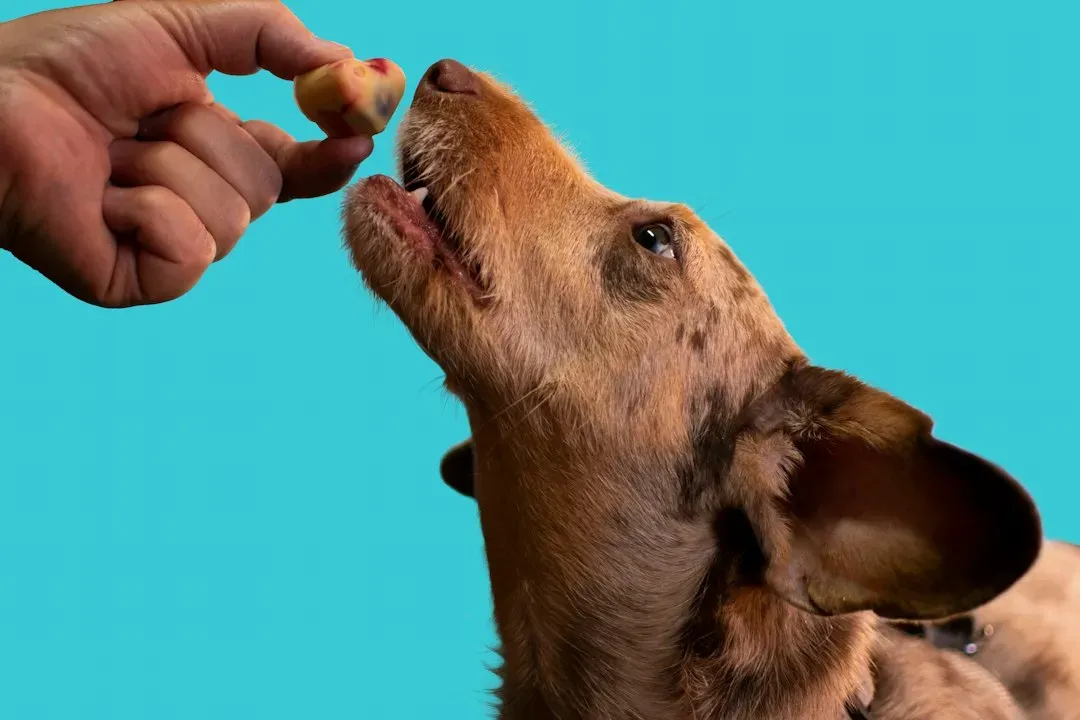
A dog that is coping well will usually take a treat from a staff member with a soft mouth. It doesn’t snatch, and it doesn’t ignore the food entirely. It treats the snack as a pleasant bonus.
Veterinary behavior programs such as Fear Free commonly note that a dog refusing a favorite food can be a sign of stress. When a dog feels threatened, appetite takes a back seat to staying alert. A dog that turns down chicken in a clinic may be telling you it’s very uncomfortable.
That doesn’t mean every food-refusing dog is neglected. Some dogs are nauseated, ill, or fasting before a procedure. Always check with the clinic before offering food.
Take-home points for owners:
- Bring a few high-value treats your dog loves
- Ask staff before feeding if there’s a procedure planned
- Use food as a barometer, not as a bribe
Plenty of owners think using treats at the vet is “spoiling” a dog. Many behaviorists argue the opposite, since pairing the clinic with food is one of the most reliable ways to build a better association.
But even a dog that eats well can get rattled. What matters is how fast it bounces back.

Orthopedic Extra Large Dog Bed, Waterproof Washable XL Pet Bed 44"
Check Price on AmazonAs an Amazon Associate, we earn from qualifying purchases.
10/7/2026 1:32 pm GMTi

Air Purifiers for Home Pets Large Room Up to 3000 Ft²,HEPA Air Cleaner with Washable Double-Side Filter, PM2.5 Air Quality Monitor,15dB Sleep Mode for Bedroom Odor Dust Pollen,White
Check Price on AmazonAs an Amazon Associate, we earn from qualifying purchases.
10/8/2026 8:23 am GMTi

Portable Dog Water Bottle Foldable Dog Travel Water Bottle
Check Price on AmazonAs an Amazon Associate, we earn from qualifying purchases.
10/7/2026 1:29 pm GMTi

Hand Blown Glass Hummingbird Feeders for Outdoors Hanging, 24oz Wild Bird Nectar Feeder
Check Price on AmazonAs an Amazon Associate, we earn from qualifying purchases.
10/7/2026 1:23 pm GMTi

PetSafe Oasys Pet Fountain, 1/2 Gallon (64 oz), Small Dogs & Cats
Check Price on AmazonAs an Amazon Associate, we earn from qualifying purchases.
10/8/2026 8:14 am GMTi
#5 – They Recover Fast When Something Startles Them

🔥 Would you like to save this?
We'll email this post to you, so you can come back to it later!
Confidence isn’t about never getting scared. It’s about how fast you come back.
Waiting rooms are full of surprises. A cat carrier rattles, a door slams, or a baby shrieks. Even the calmest dog may flinch.
What separates a resilient dog is what it does next. It may startle, look at the source, and settle again within seconds. A less resilient dog may stay fixed on the noise, pant, or try to leave.
Early experiences matter here. The American Veterinary Society of Animal Behavior says the early weeks of a puppy’s life, roughly up to 12 to 14 weeks, are a key window for positive social exposure. Dogs that miss that window aren’t doomed, but they may need more patient, gradual work later.
Genetics, health, and temperament also play a role. A well-cared-for dog that is naturally sensitive may still be easily rattled, and that’s okay.
Look for these recovery clues:
- The dog shakes off and relaxes its shoulders
- It returns to sniffing or resting
- It accepts a treat after the noise
Recovery often ends with the most telling moment of all: your dog looking up at you.
#4 – They Check In With You Instead of Going It Alone
🔥 Would you like to save this?
We'll email this post to you, so you can come back to it later!
A well-bonded dog treats you like home base. In a room full of unknowns, you’re the one familiar thing.
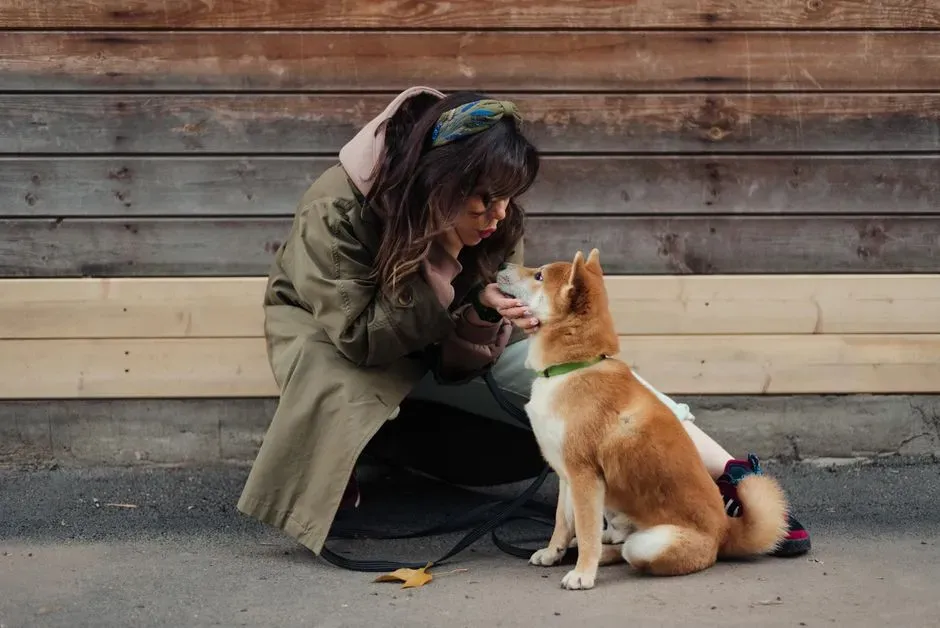
In a busy lobby, a confident dog will glance at you often. It may make eye contact, lean on your leg, or step closer when something unfamiliar happens. That isn’t clinginess. It’s a dog using its person to gauge whether things are okay.
Researchers have studied this kind of attachment behavior. Studies in the “secure base” tradition suggest that dogs can use a trusted person as a source of reassurance when exploring new settings. How a dog looks to its owner in a new place can say a lot about the bond.
Your own behavior feeds into this. Dogs are sensitive to human cues, so if you’re tense and tugging the leash, your dog may notice and mirror that tension.
Worth Knowing
- A 2015 study in the journal Science, led by Japanese researchers, linked mutual gazing between dogs and owners to rising oxytocin levels in both.
- Dogs readily pick up on human pointing, gaze direction, and tone of voice.
- A glance up at you is information gathering, not neediness.
Some owners worry that comforting a scared dog will “reward the fear.” Many modern behaviorists disagree. Fear is an emotion, not a behavior you can reinforce with a calm voice and a gentle presence.
Useful ways to be a good home base:
- Keep your voice low and your leash relaxed
- Reward your dog for looking at you
- Give it space to retreat under a chair
A dog that trusts you will often return to you after exploring. That return is the sign to watch.
Good manners with you are only half the story, though. The other half is how your dog treats everyone else in the room.
#3 – They Handle Other Dogs With Polite Indifference
🔥 Would you like to save this?
We'll email this post to you, so you can come back to it later!
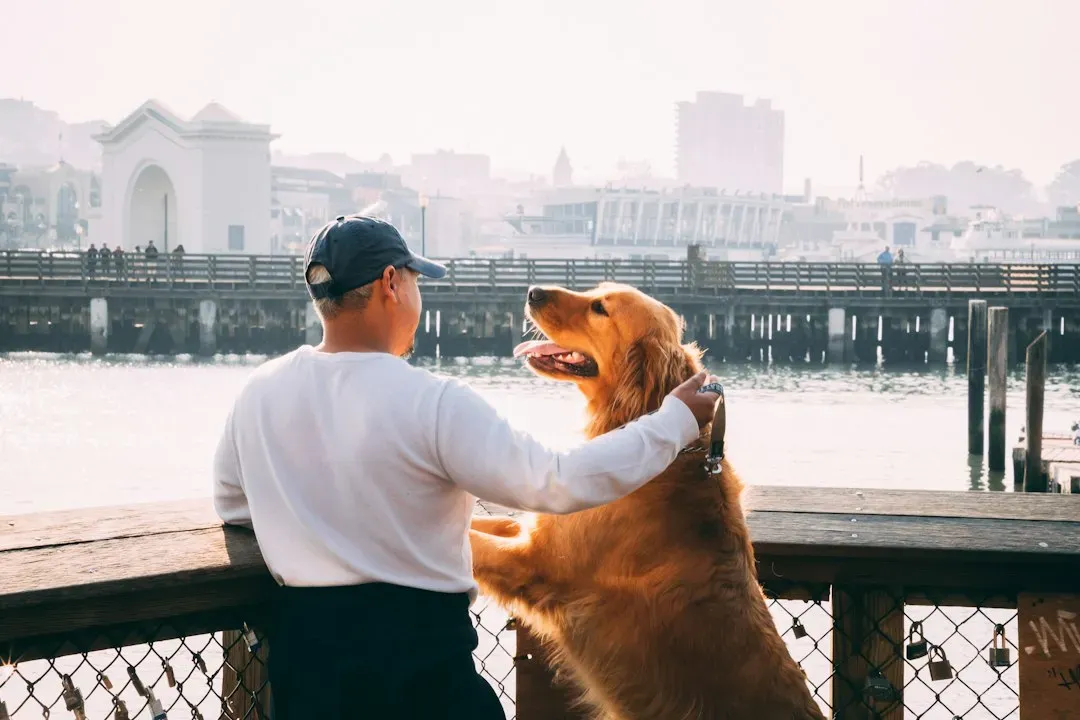
The best-behaved dog in the room often ignores everyone. That can feel almost rude to us, but in dog language it’s very good manners.
Owners often assume a good lobby dog should greet every animal. Many trainers say the opposite. A truly well-adjusted dog doesn’t need to meet every dog it sees.
Waiting rooms are tight, and the dogs there may be sick, in pain, or frightened. A pushy greeting can go badly fast. Calm dogs tend to glance, look away, and let other dogs have space.
Polite dog etiquette includes:
- Curved approaches rather than head-on rushes
- Soft sniffing, then moving on
- Looking away to defuse tension
If your dog is the friendly type, there’s still a better move. Ask the other owner first, or skip the greeting entirely. A vet lobby isn’t a dog park, and many clinics ask that pets stay with their owners.
Plenty of people see an enthusiastic “hello” to every dog as the mark of a social butterfly, but many professionals call it a missed training goal. A dog that has to greet everything may be struggling with impulse control.
Other dogs are one thing. What happens when the staff actually touch your dog might surprise you.

Professional 7 in 1 Dog Paw Cleaner for Dogs & Cats - Includes 1 Portable Paw Washer, 1 Bath Brush
Check Price on AmazonAs an Amazon Associate, we earn from qualifying purchases.
10/7/2026 1:26 pm GMTi

Glass Hummingbird Feeder for Outdoors Hanging, 16 oz Leak-Proof Nectar Feeder with Bee Guards & Ant Moat
Check Price on AmazonAs an Amazon Associate, we earn from qualifying purchases.
10/7/2026 1:22 pm GMTi

Earth Rated XL Dog & Puppy Pee Pads, Discreet Top, Max Absorbency
Check Price on AmazonAs an Amazon Associate, we earn from qualifying purchases.
10/7/2026 1:28 pm GMTi

Smart Bird Feeder with Camera Solar Powered, 2K HD Live Video, 10,000+ Bird Species AI Identification
Check Price on AmazonAs an Amazon Associate, we earn from qualifying purchases.
10/7/2026 1:22 pm GMTi

Halloween Cat Costume Cloak Witch Hat Pet Accessories
Check Price on AmazonAs an Amazon Associate, we earn from qualifying purchases.
10/9/2026 2:44 pm GMTi
#2 – They Tolerate Being Handled by Strangers
🔥 Would you like to save this?
We'll email this post to you, so you can come back to it later!
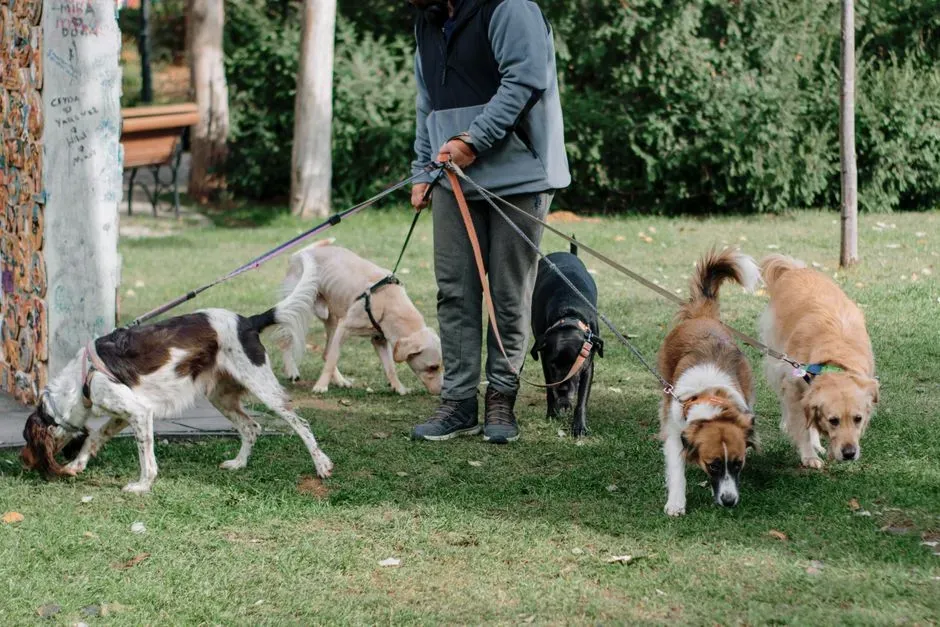
Cooperation is a skill that’s built long before the appointment. The calm dog on the exam table was usually prepared at home, one tiny practice session at a time.
A dog that is used to being touched will accept a hand on the back, a lift of the lip, or a look at the paws. It may even lean into the contact. This is why lots of trainers encourage “husbandry” practice at home.
Here’s what that practice can look like:
- Gently touching ears, paws, and tail, then rewarding
- Lifting a lip briefly and treating
- Standing calmly on a mat or scale
Some clinics now use “cooperative care” methods, where dogs learn to opt in to handling. Techniques like chin rests give the dog a way to say “I’m ready” or “I need a break.”
That consent-based approach is catching on because it often leads to less stress for everyone. A dog that has a choice may cope better than one that is simply held.
Why It Stands Out
- The dog gets a clear “start” signal, so handling never comes as a surprise.
- A pause is always available, which can make the whole exam feel safer.
- Staff get honest feedback from the dog instead of guessing.
- It builds trust that carries into the next visit.
Groomers, vets, and trainers have all noticed the same thing. Dogs that were handled gently as puppies tend to take it in stride as adults. Nothing about this requires special equipment, just patience and a few minutes a day.
If your dog has a history of nipping or fear, tell staff upfront. A muzzle training plan, done positively, can be a kind option and not a punishment.
Which brings us to the final sign, the one that says the most.

Halloween Dog Collar with Bow, Orange Cute Ghost Collar,
Check Price on AmazonAs an Amazon Associate, we earn from qualifying purchases.
10/9/2026 2:43 pm GMTi

2 Pcs Halloween Pet Hat Bandana Set, Witch Pumpkin Costumes for Dogs
Check Price on AmazonAs an Amazon Associate, we earn from qualifying purchases.
10/9/2026 2:45 pm GMTi

Dog Stairs for Bed 18" H, 4-Step Dog Steps for High Bed
Check Price on AmazonAs an Amazon Associate, we earn from qualifying purchases.
10/9/2026 2:42 pm GMTi

Glass Hummingbird Feeder for Outdoors Hanging
Check Price on AmazonAs an Amazon Associate, we earn from qualifying purchases.
10/7/2026 1:21 pm GMTi
#1 – They Treat the Clinic Like a Place Where Good Things Happen
🔥 Would you like to save this?
We'll email this post to you, so you can come back to it later!
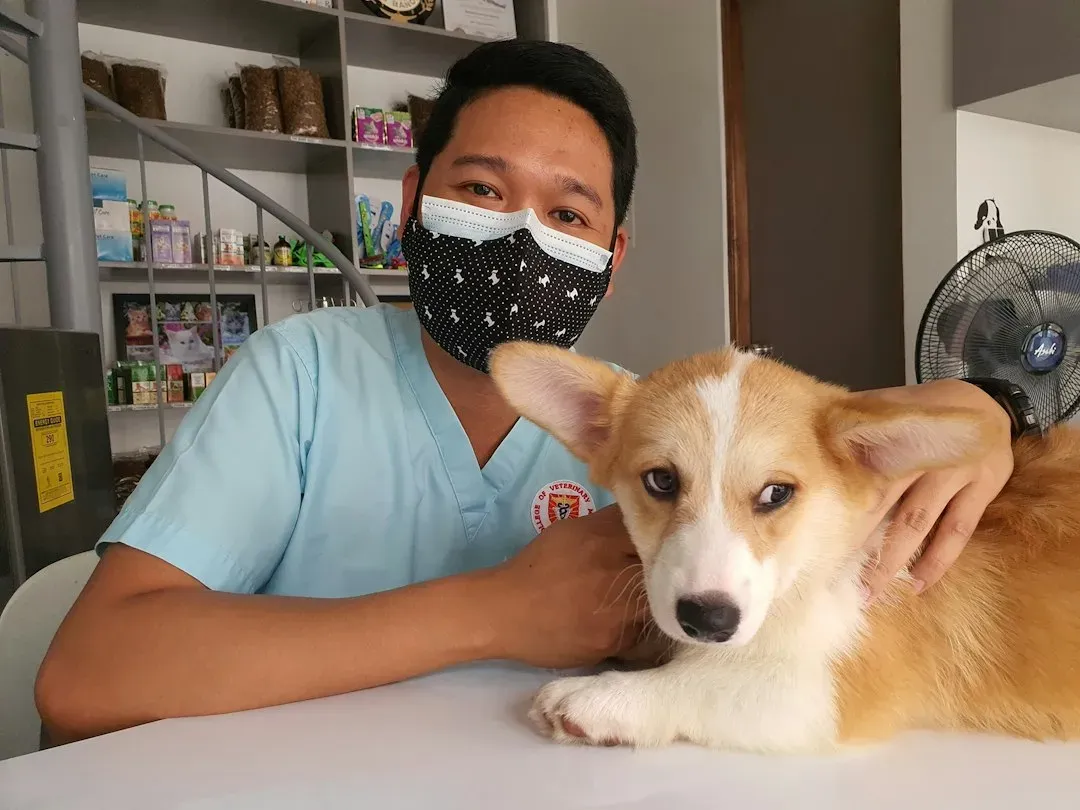
The happiest sign of all is a dog that wants to be there. It sounds almost impossible if your own dog drags its paws at the parking lot, but it’s real.
Some dogs trot in with a loose, wiggly body. They greet the receptionist, check the treat jar, and walk toward the exam room on their own. That kind of eager walk-in is something many vet staff say they treasure, and it’s built, not born.
It comes from “happy visits,” where a dog stops by just for a treat, a pat, and a hop on the scale, with no needles. Over time, the building starts to predict nice things. Many clinics and behavior programs encourage this practice for exactly that reason.
It also reflects everything above. A dog that settles, eats, recovers from startles, trusts its person, minds its manners, and accepts handling has probably had a lot of consistent care.
Still, nuance matters. Some wonderful, well-loved dogs are shy or anxious in the clinic because of genetics, past experience, or simple temperament. Fear isn’t proof of neglect, and anyone who says it is probably hasn’t worked with a sensitive dog.
So what do all nine signs add up to? A well-cared-for dog in a waiting room isn’t a silent, frozen robot. It walks in loosely, settles, shows soft body language, eats, bounces back, checks in with you, ignores strangers politely, accepts handling, and sometimes even enjoys the visit.
Our opinion? Obedience is overrated, and comfort is underrated. A dog that sits perfectly but trembles is not doing better than a wiggly one that feels safe.
If your dog struggles, don’t take it as a failing. Start with happy visits, bring good treats, and ask your clinic for a calmer setup. Which of these signs have you seen in your own dog, and which one surprised you most?

- 9 Things a Well Cared For Dog Does in a Waiting Room - November 8, 2026
- 8 Shuttle and Ferry Concessions for Over 62s at Coastal Parks - November 8, 2026
- 9 Signs Animals Read That a Hard Winter Is Coming - November 8, 2026