

In the lush canopies of Central and South American forests, an unmistakable sound reverberates through the dense foliage and across great distances. This distinctive cacophony belongs to none other than the howler monkey, known for their extraordinary vocal prowess. Earning the title of the loudest land mammal, howler monkeys have intrigued scientists and nature enthusiasts alike. But what makes these primates so uniquely noisy? In this article, we’ll explore the anatomy and behavioral adaptations that give howler monkeys their impressive acoustic abilities.
The Anatomy of a Howler Monkey’s Voice
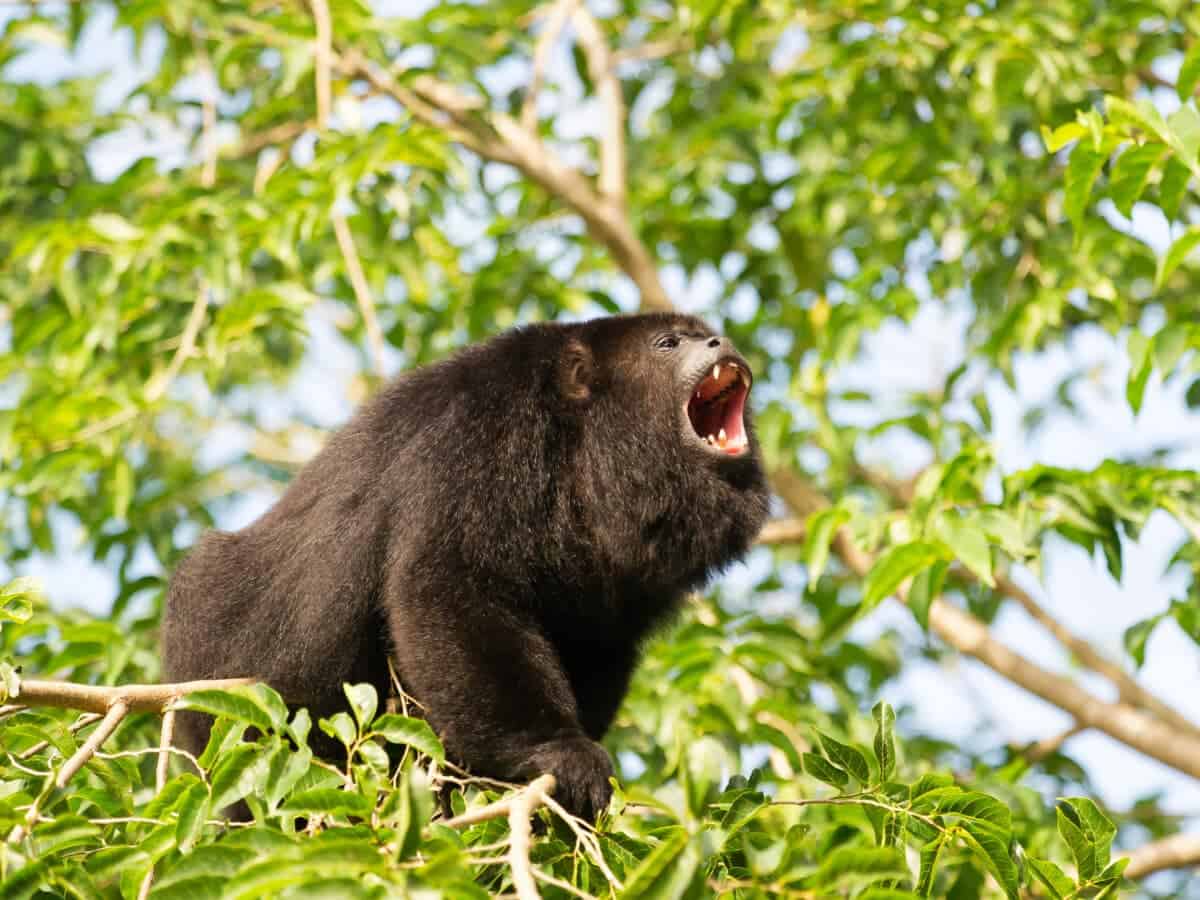
The hallmark of the howler monkey’s vocal talent lies in its specialized anatomical features. At the core of this is an enlarged hyoid bone located near the larynx, which plays a critical role in sound production. This bone, akin to a resonating chamber, amplifies the monkey’s calls and allows for acoustically powerful outputs without requiring excessive energy. Additionally, the monkey’s throat and vocal cords are uniquely adapted to enhance vocal projection, resulting in the long-distance transmission of their calls, which can be heard up to three miles away!
Functionality of the Deafening Calls

The impressive calls of the howler monkey serve multiple purposes crucial to their survival and social structure. Primarily, the loud vocalizations are used to mark territory. By advertising their presence, these calls deter rival troops from encroaching on their resources. Moreover, vocal communication aids in maintaining group cohesion, especially in the dense, often visually obstructive rainforest environment. Howler monkeys also use variations in call intensity and frequency to convey different messages, ranging from mating calls to alarm signals when predators are near.
Behavioral Dynamics within Howler Troops

Howler monkeys are exceedingly social animals, living in troops that can consist of 10 to 15 individuals. The vocal hierarchy within these groups is important; typically, the dominant males emit the deepest and most resonant howls. These vocalizations not only affirm their status but also play a crucial role in reproductive success. More dominant males with powerful calls are often more successful during mating season, as they can attract females and assert their dominance over potential rivals.
Acoustic Adaptations and Evolution

Over millions of years, howler monkeys have evolved their vocal adaptations as a response to environmental pressures. Living in dense tropical forests requires being heard over large areas, especially as howler monkey troops are often spread across expansive territories. The evolution of their vocal abilities is a testament to natural selection favoring individuals capable of effective long-range communication. These adaptations have been vital to their survival, enabling them to efficiently establish territories, locate lost troop members, and communicate threats, thus reducing the likelihood of conflict.
Conservation Concerns

Despite their remarkable adaptations, howler monkeys face significant threats from habitat destruction due to logging, agriculture, and urban development. Understanding the ecological roles that these vocal mammals play is crucial for their conservation. Their calls not only contribute to the symphony of the rainforest but are also integral to maintaining the delicate balance within their ecosystems. Conservation efforts must focus on habitat preservation and restoring forest corridors to ensure that the loud choruses of howler monkeys continue to resonate through the forests.
Conclusion

The howler monkey is more than just a noisy inhabitant of the American tropics; it is a fascinating example of evolutionary ingenuity in response to environmental challenges. Their spectacularly loud calls not only herald their presence but underscore essential aspects of their social structure and survival strategies. By studying and preserving these incredible animals, we gain insights into the complex dynamics of rainforest ecosystems and the importance of each species within it. These guardians of the canopy remind us of the diverse symphony of life present beneath the forest shroud, echoing the need for vigilant conservation efforts.

As a little kid, I fell in love with nature, wildlife, and animals. Living in the USA, South Africa, Italy, China and Germany gave me the opportunity to discover the world's Wildlife. My favorite animals are Mountain Gorillas, Siberian Tigers, and Great White Sharks.
I'm a certified PADI Open Water Diver, went to Everest Base Camp and Trekked Gorillas in Uganda. I hold a Master of Science in Economics and Finance.
Please send any feedback to feedback@animalsaroundtheglobe.com
- 13 Cat Breeds That Get Along with Dogs - July 20, 2026
- The 12 Largest Dog Breeds That Still Love to Cuddle - July 20, 2026
- 12 Pet Habits That Secretly Mean They Love You - July 20, 2026