

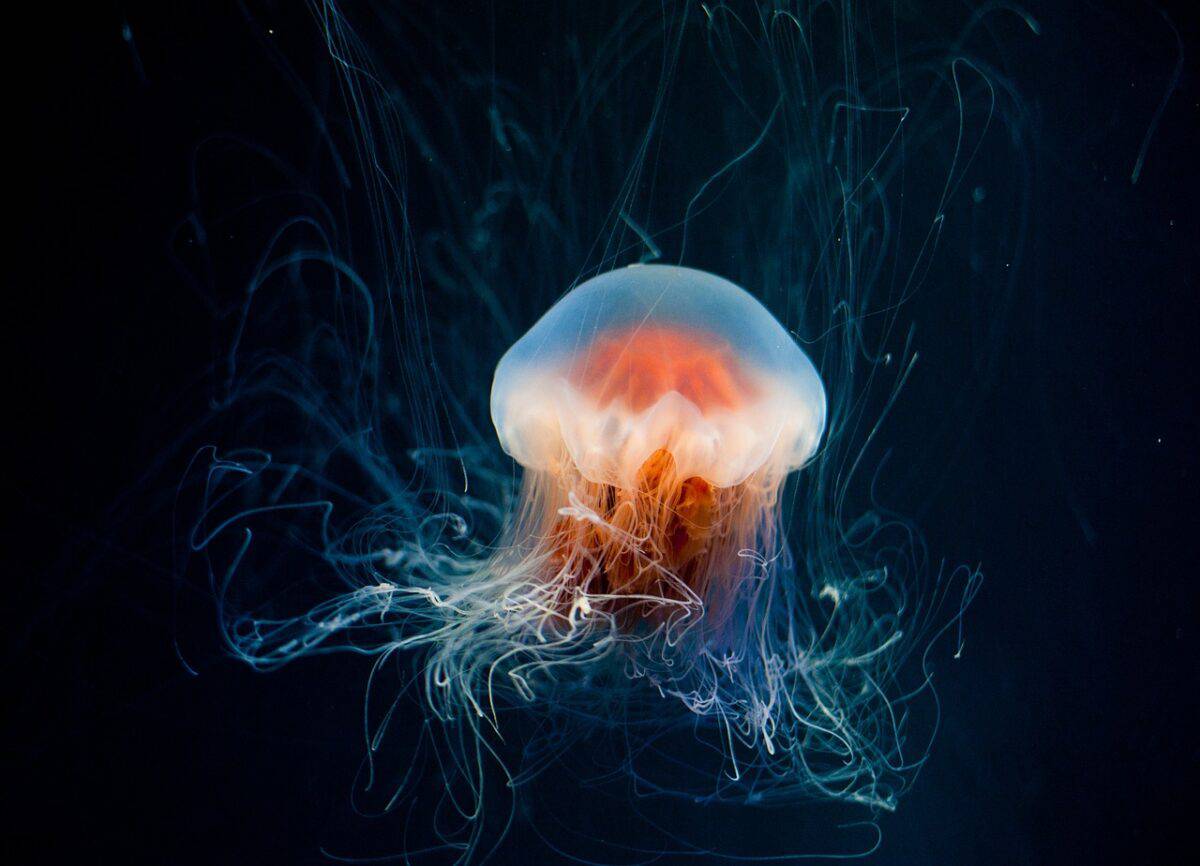
Nature is an astonishing force, filled with wonders that often defy our understanding and expectations. Just when we think we have it all figured out, nature throws a curveball, leaving scientists and enthusiasts alike in awe. These instances are not just anomalies but reminders of the complexity and unpredictability of the natural world. Here, we explore eleven fascinating times when nature decided to break its own rules, offering us a glimpse into its mysterious ways.
1. The Immortal Jellyfish A Cycle of Rebirth

Imagine a creature that can essentially live forever. The Turritopsis dohrnii, often referred to as the “immortal jellyfish,” possesses this extraordinary capability. Unlike most organisms that age and eventually die, this jellyfish can revert its cells to their juvenile state after reaching maturity. This process, known as transdifferentiation, allows it to escape death and start its life cycle anew. While this might sound like science fiction, it’s a real-life phenomenon that continues to baffle researchers. The immortal jellyfish serves as a reminder that in the world of nature, time is not always linear.
2. Venus Flytrap A Plant with a Taste for Meat

The Venus flytrap is a plant that completely defies the traditional understanding of vegetation. Unlike its plant counterparts that subsist on sunlight and nutrients from the soil, the Venus flytrap supplements its diet with insects. Its leaves are modified into a trap that snaps shut when trigger hairs are touched twice in quick succession by an unsuspecting prey. This carnivorous behavior is a survival adaptation to nutrient-poor soil environments, showcasing nature’s innovative solutions to life’s challenges. It’s a fascinating example of how plants, often perceived as passive, can actively hunt and digest their prey.
3. Parasitic Plants Masters of Deception

Parasitic plants, such as the infamous dodder vine, have evolved to break the fundamental plant rule of photosynthesis. Instead of producing their food, these cunning plants attach themselves to host plants, siphoning off their nutrients. With no roots of their own, they rely entirely on their hosts for survival. Some, like the Rafflesia, even mimic the appearance and smell of rotting flesh to attract pollinators. These plants highlight the lengths to which nature will go to ensure survival, even if it means breaking the rules of independence.
4. The Male Seahorse Nature’s Role Reversal

In the animal kingdom, it is common for females to carry and nurture their young. However, seahorses flip this script entirely. In a fascinating role reversal, male seahorses are equipped with a brood pouch where females deposit their eggs. The male then fertilizes and carries the eggs until they hatch. This unique reproductive strategy showcases the diversity and adaptability of nature’s designs. It challenges our preconceived notions about gender roles in the animal world, proving that nature is full of surprises.
5. The Platypus A Mammal Like No Other

The platypus is a creature that seems to have been assembled from leftover parts of other animals. It lays eggs like a reptile, has a bill like a duck, and venomous spurs similar to some snakes. Despite being a mammal, it exhibits features that are typically not found in mammals. This peculiar mix of characteristics makes the platypus one of the most enigmatic creatures on Earth. Its existence is a testament to nature’s creativity and the complex evolutionary paths that can lead to such unique adaptations.
6. Naked Mole Rats The Ageless Underground Dwellers

Naked mole rats are small, subterranean rodents that challenge our understanding of aging and pain. Remarkably, they exhibit negligible senescence, meaning they show very few signs of aging, and can live for up to 30 years. Furthermore, they are highly resistant to cancer and do not feel certain types of pain. Their unique lifestyle, living in large colonies underground, has led to these extraordinary adaptations. Naked mole rats are a fascinating example of how extreme environments can drive the evolution of remarkable traits.
7. The Axolotl A Master of Regeneration

The axolotl, a type of salamander, possesses an almost magical ability to regenerate lost body parts, including limbs, the spinal cord, the heart, and even parts of its brain. Unlike most animals that heal injuries with scar tissue, axolotls can perfectly regrow complex structures. This regenerative power has made them a subject of scientific research, as understanding their mechanisms could have profound implications for regenerative medicine. The axolotl is a living example of nature’s remarkable ability to repair and renew itself in ways that seem almost miraculous.
8. Brinicles Nature’s Icy Fingers

Brinicles, also known as ice stalactites, form in the polar oceans and are a striking example of nature’s ability to create beauty in harsh environments. These underwater icicles form when cold, dense brine sinks from sea ice, freezing the seawater it contacts. As they grow, they can trap and freeze marine life on the ocean floor. Brinicles demonstrate how nature can craft intricate and deadly structures even in the most extreme conditions, adding to the mystery and wonder of our planet’s oceans.
9. The Mimic Octopus Master of Disguise

The mimic octopus is a true shapeshifter of the sea, capable of imitating the appearance and behaviors of other marine animals. From flounders to lionfish and even sea snakes, this octopus can change its color, texture, and body shape to resemble more dangerous creatures, deterring predators. This remarkable ability showcases the intelligence and adaptability of cephalopods. The mimic octopus serves as a reminder of the intricate and sophisticated survival strategies that nature can devise.
10. The Antarctic Icefish Blood Without Red

The Antarctic icefish has evolved to survive in the frigid waters of the Southern Ocean without the red blood cells that most vertebrates rely on. Instead, their blood contains a unique antifreeze protein that prevents ice crystals from forming in their bodies. This adaptation allows them to thrive in temperatures that would be lethal to most other fish. The icefish is a testament to the extreme adaptations that can arise in response to environmental pressures, highlighting nature’s resilience and ingenuity.
11. The Electric Eel Nature’s Living Battery

The electric eel is a powerful reminder that nature can generate its own electricity. This fascinating fish uses specialized cells called electrocytes to produce strong electric shocks, which it uses for hunting and self-defense. Capable of delivering a shock of up to 600 volts, the electric eel is a marvel of biological engineering. Its ability to harness and utilize electricity is a striking example of the diverse and often surprising ways nature equips its creatures to survive and thrive.
Conclusion

In conclusion, these remarkable instances of nature breaking its own rules serve as a testament to the complexity and wonder of the natural world. They remind us that despite our growing understanding of the planet, there are still mysteries waiting to be unraveled, and surprises waiting to be discovered.

As a little kid, I fell in love with nature, wildlife, and animals. Living in the USA, South Africa, Italy, China and Germany gave me the opportunity to discover the world's Wildlife. My favorite animals are Mountain Gorillas, Siberian Tigers, and Great White Sharks.
I'm a certified PADI Open Water Diver, went to Everest Base Camp and Trekked Gorillas in Uganda. I hold a Master of Science in Economics and Finance.
Please send any feedback to feedback@animalsaroundtheglobe.com
- 11 Creatures That Can Survive a Nuclear Blast - July 21, 2026
- 10 Animals That Embody the Zodiac Sign of Capricorn - July 21, 2026
- 25 Dangerous U.S. Lakes & Rivers Where Swimming Could Be Risky – Don’t Ignore #1 - July 21, 2026