


Cats have been human companions for thousands of years, yet our feline friends continue to mystify us with their peculiar antics. Despite their domesticated façade, house cats retain many instinctual behaviors reminiscent of their wild ancestors. This blend of mystery and history makes them endlessly fascinating to observe. This article delves into 11 wild behaviors exhibited by house cats, offering insights into why they behave as they do.
Chasing Invisible Prey

Ever notice your cat sprinting across the room as if chasing something unseen? This behavior is deeply rooted in their predatory instincts. Even when living comfortably with humans, cats retain a strong hunting drive that manifests as dramatic dashes and playful pounces. These bursts of energy help them exercise their agile reflexes and mimic the hunt, keeping them fit and mentally stimulated.
Nighttime Restlessness
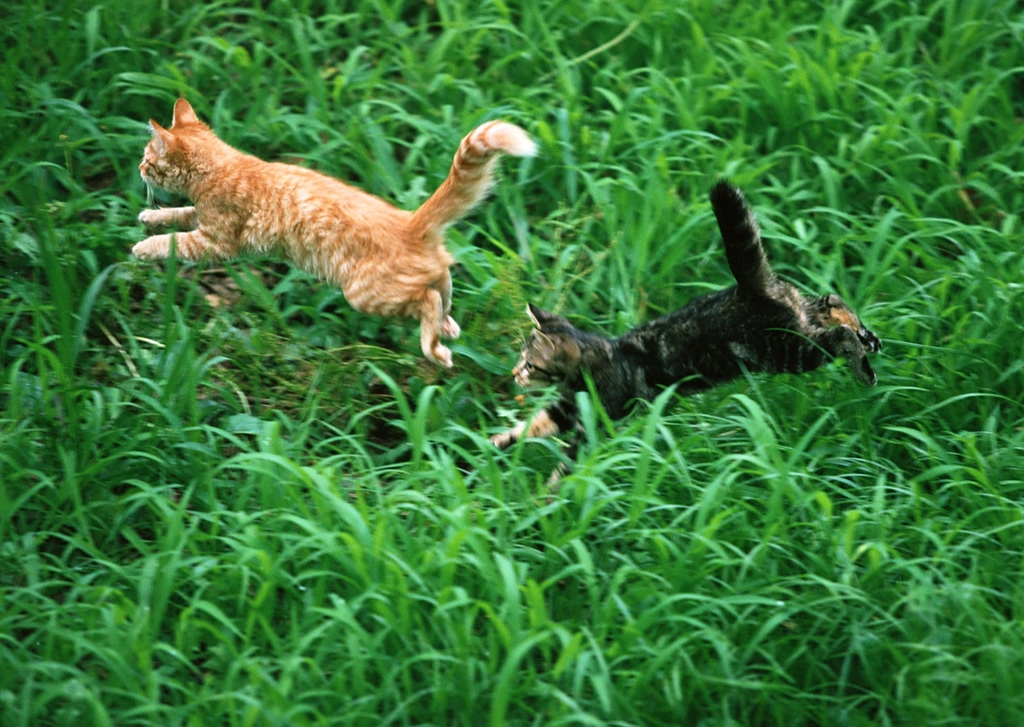
Cats are crepuscular creatures, meaning they are most active during dawn and dusk. This behavior stems from their natural rhythm in the wild, where the dim light offers optimal hunting conditions. For domestic cats, this often translates into nighttime restlessness. If your cat is keeping odd hours, it’s a nod to their wild ancestry.
Kneading with their Paws
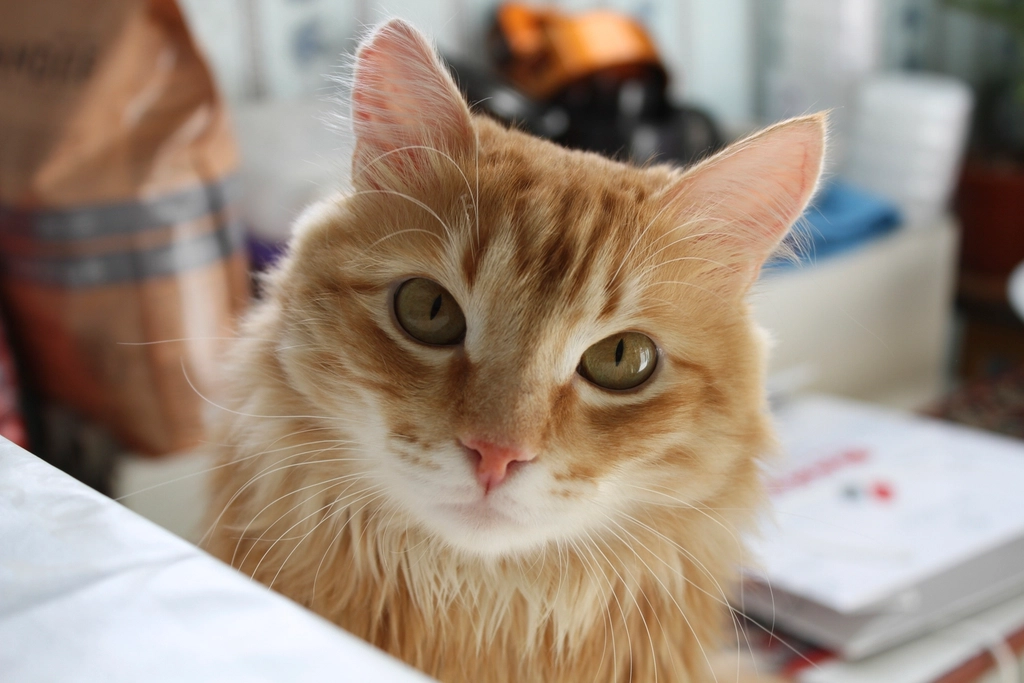
Commonly known as “making biscuits,” kneading is a behavior that dates back to kittenhood. Kittens knead their mother’s belly to stimulate milk flow, and adult cats continue this comforting habit into adulthood. For adult cats, kneading is often an expression of affection and contentment, serving as a soothing ritual reminiscent of their bond with their mother.
The Surprise Box Obsession

Cats have an inexplicable love for boxes, no matter the size. In the wild, enclosed spaces provide shelter and a strategic hiding spot from which to stalk prey. In the home, boxes offer a sense of security and a chance to engage in playful ambushes, satisfying their instinctual need for both safety and stimulation.
Communicating with “Gift” Offerings

One of the less charming behaviors is the cat’s tendency to bring home “gifts,” which often include small prey. Although they are well-fed at home, this behavior shows off their hunting skills and mimics how they would contribute to a group in the wild. While not welcomed indoors, these offerings are a sincere form of feline generosity.
Sudden ‘Zoomies’
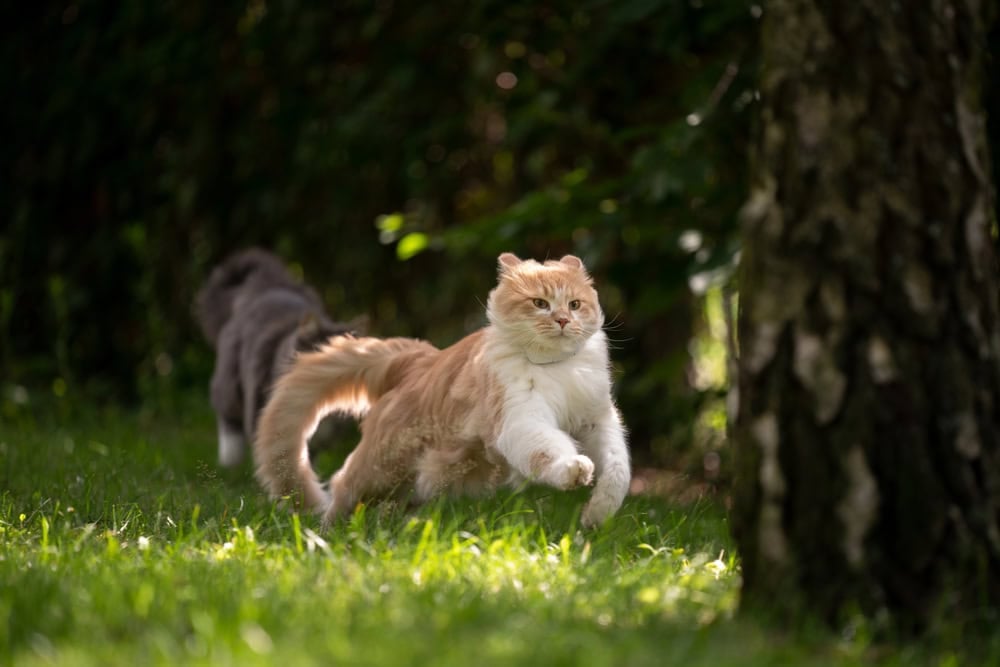
Sprinting from room to room, also known as the ‘zoomies,’ usually happens when cats have excess energy. In nature, such energy bursts are used for climbing, hunting, and sprinting away from predators. For domestic cats, zoomies are a fun and fast way to release pent-up energy, ensuring they maintain agility.
Chatty Conversations

While cats are typically quiet hunters, domesticated cats often develop a range of vocalizations to communicate with humans. In the wild, meows are primarily used between mother cats and their kittens. However, house cats adapt this form of communication to express needs such as hunger, affection, or even greetings to their humans.
The Joy of High Perches

Cats are natural climbers, with a genetic predisposition to seek high places for monitoring their environment. In the wild, higher vantage points offer safety from predators and a better view of prey. Indoor cats feel an instinctual drive to climb, making cat trees and elevated spaces a necessary aspect of their environment.
Rolling Over and Showing Belly
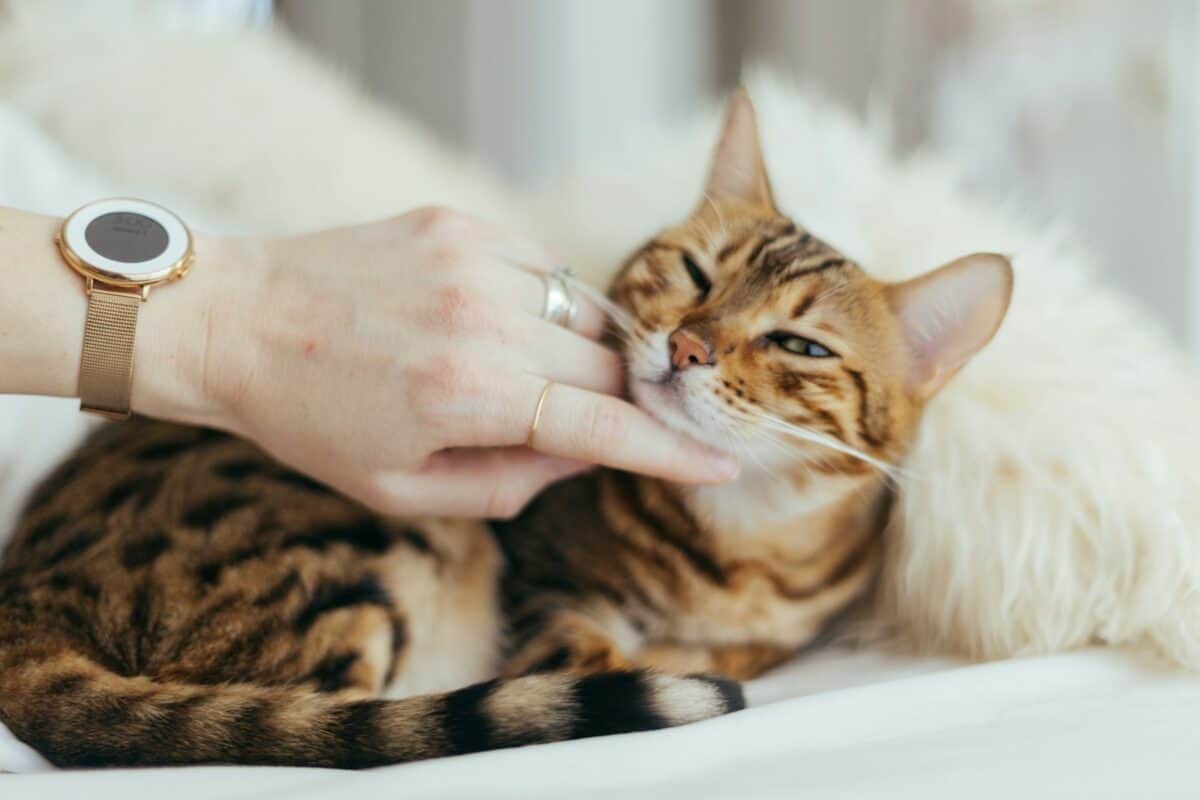
Rolling over to expose their belly is a behavior of dual symbolism. While it can be an act of trust, signaling comfort and security, it can also be a trap for the unwary human. In the wild, lying on their back allows cats to defend themselves with all four sets of claws, preparing to counter any threats.
Scratching as Territory Marking
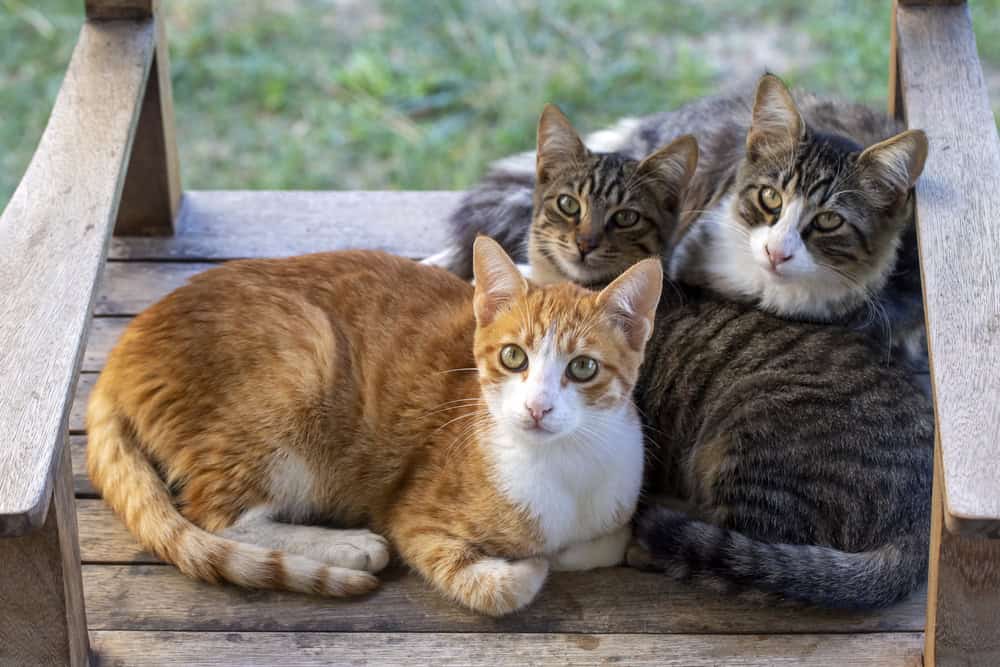
Scratching serves multiple functions: it helps cats shed the outer layers of their claws and mark their territory visually and scent-wise through glands in their paws. This behavior is rooted in their wild past and remains a necessity for maintaining healthy claws and establishing boundaries.
Tail Twitching Signals

A cat’s tail is a critical communication tool. Specific twitches and positions indicate various moods, from curiosity to agitation. In the wild, subtle tail movements enhance their stealth while voicing silent communication among other animals. Understanding these signals can strengthen bonds between humans and their feline companions.
Conclusion:

Cats are remarkable creatures whose behaviors blend ancient instincts with modern adaptations. By delving into the wild behaviors seen in house cats, we not only uncover the mystery of these independent companions but also appreciate the deep evolutionary traits they carry within. Celebrating these behaviors enriches the bond between cats and their human counterparts, transforming everyday interactions into opportunities for curiosity and connection.

As a little kid, I fell in love with nature, wildlife, and animals. Living in the USA, South Africa, Italy, China and Germany gave me the opportunity to discover the world's Wildlife. My favorite animals are Mountain Gorillas, Siberian Tigers, and Great White Sharks.
I'm a certified PADI Open Water Diver, went to Everest Base Camp and Trekked Gorillas in Uganda. I hold a Master of Science in Economics and Finance.
Please send any feedback to feedback@animalsaroundtheglobe.com
- 13 Cat Breeds That Get Along with Dogs - July 20, 2026
- The 12 Largest Dog Breeds That Still Love to Cuddle - July 20, 2026
- 12 Pet Habits That Secretly Mean They Love You - July 20, 2026