


In the fascinating world of regenerative biology, few creatures captivate scientists and nature enthusiasts alike as much as the axolotl, a remarkable salamander with extraordinary regenerative abilities. While many animals can heal wounds or regrow limited tissues, the axolotl stands in a league of its own with the astonishing ability to regenerate entire complex organs, including its heart and even portions of its brain. This remarkable capability not only ensures the axolotl’s survival in challenging environments but also offers valuable insights for human medical research. Join us as we delve into the extraordinary world of this regenerative marvel, exploring the mechanisms, evolutionary advantages, and potential applications of its unique abilities in modern science and medicine.
Meet the Axolotl: Nature’s Regeneration Champion

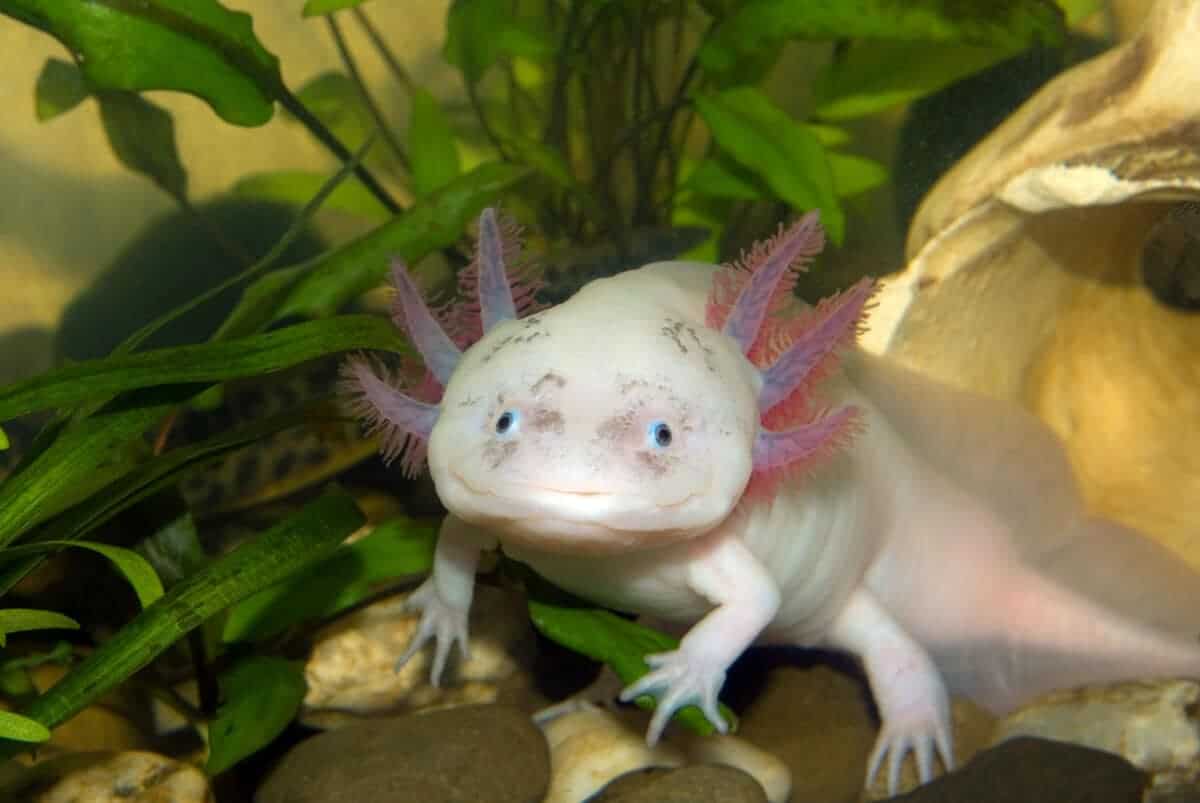
The axolotl (Ambystoma mexicanum) is a neotenic salamander native to Lake Xochimilco in Mexico City, Mexico. Unlike most amphibians, axolotls exhibit neoteny, meaning they retain juvenile features throughout their lives, including their external gills and aquatic lifestyle. These critically endangered creatures grow to about 9-12 inches long and can live 10-15 years in captivity. Their most remarkable feature, however, isn’t their adorable appearance with feathery gill structures and perpetual “smile,” but rather their unparalleled regenerative capabilities. Axolotls can regrow entire limbs, parts of organs, and even portions of their brain and heart with perfect structural and functional restoration—a feat that has made them a valuable model organism in regenerative medicine research.
The Extraordinary Scope of Axolotl Regeneration
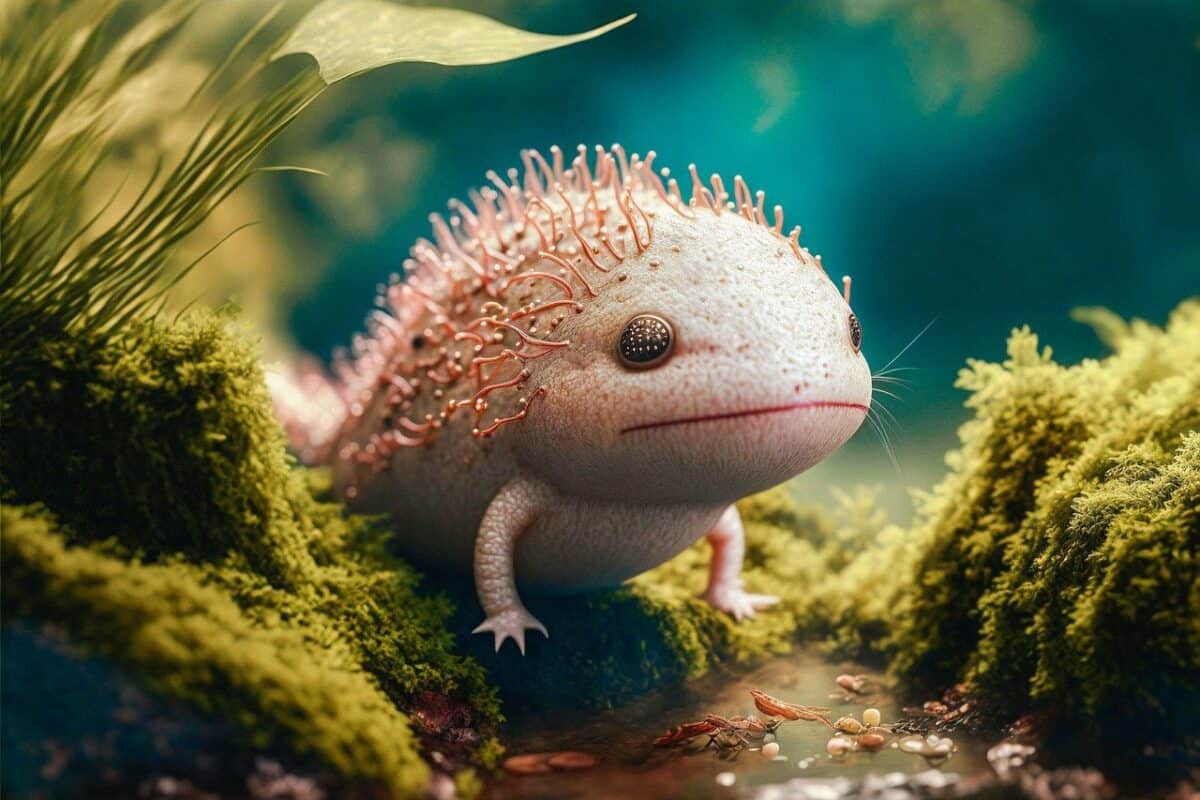
The regenerative abilities of axolotls extend far beyond what most animals can achieve. While many reptiles can regrow tails and some amphibians can regenerate limbs, axolotls take regeneration to an entirely different level. They can regrow entire limbs complete with bones, muscles, nerves, and blood vessels within weeks. More impressively, they can regenerate portions of vital organs including their heart, lungs, and spinal cord. Perhaps most astonishing is their ability to repair damaged brain tissue and even regenerate portions of their central nervous system without loss of memory or function. These salamanders can also regenerate their jaw, tail, skin, and even parts of their eyes. What makes this even more remarkable is that the regenerated parts are perfect copies of the original, with no scarring or loss of function.
Cardiac Regeneration: Mending a Broken Heart

The axolotl’s ability to regenerate cardiac tissue is particularly fascinating to scientists. Unlike humans, who form scar tissue after heart damage, axolotls can repair significant cardiac injuries with functional tissue. When portions of an axolotl’s heart are removed or damaged, the remaining cardiac muscle cells dedifferentiate—essentially reverting to a stem cell-like state—and then proliferate to rebuild the missing sections. Studies have shown that axolotls can regenerate up to 20% of their heart tissue without impairment. The process takes approximately 30-60 days and results in a fully functional heart that’s indistinguishable from the original. This remarkable ability has profound implications for treating human heart conditions, as researchers hope to unlock the genetic switches that enable this regeneration and potentially apply similar mechanisms to human cardiac patients.
Brain Regeneration: Rewiring the Central Control System

Perhaps even more impressive than cardiac regeneration is the axolotl’s ability to repair brain damage. When portions of an axolotl’s brain are removed or injured, the animal can regenerate the lost neural tissue and restore functionality. Studies have demonstrated that axolotls can regenerate parts of their telencephalon—a brain region comparable to the human cerebral cortex, which controls higher cognitive functions. During this process, neural stem cells near the injury site proliferate and differentiate into appropriate neuron types, eventually integrating into existing neural networks. Most remarkably, axolotls appear to retain memories and learned behaviors even after significant brain regeneration, suggesting that either the neural networks are precisely reconstructed or that memory storage is distributed throughout the brain. This ability stands in stark contrast to mammals, where brain injuries typically result in permanent damage and loss of function.
The Cellular Machinery Behind the Magic

The axolotl’s regenerative capabilities rely on sophisticated cellular mechanisms. At the site of injury, a process called dedifferentiation occurs, where mature specialized cells revert to a stem cell-like state, forming what’s known as a blastema. This collection of cells then proliferates and redifferentiates into the various cell types needed to rebuild the damaged structure. Unlike mammals, which primarily heal through inflammation and scarring, axolotls utilize a process more similar to embryonic development. Their immune system responds differently to injuries, promoting regeneration rather than scarring. Additionally, axolotls possess unique gene expression patterns that regulate this process, including sustained activation of developmental genes that are typically silenced in adult mammals. The axolotl genome, which was fully sequenced in 2018 and is ten times larger than the human genome, contains many duplicated genes and novel regulatory elements that contribute to these extraordinary regenerative abilities.
Evolutionary Advantages of Regeneration
From an evolutionary perspective, the axolotl’s regenerative capabilities provide significant survival advantages. Living in aquatic environments with numerous predators, the ability to regrow limbs or repair vital organs after injury greatly increases survival chances. This adaptation may have evolved as a response to their specific ecological niche, where the benefits of regeneration outweighed the considerable energy costs. Interestingly, the axolotl’s neoteny—retention of juvenile traits into adulthood—may play a crucial role in their regenerative abilities. By maintaining certain embryonic characteristics throughout life, they preserve the developmental flexibility needed for complex regeneration. Some scientists theorize that mammals may have sacrificed regenerative abilities during evolution in favor of faster wound healing through scarring, which provides quicker protection against infection but limits functional recovery. Understanding why axolotls retained these regenerative pathways while mammals lost them could provide key insights into potentially reactivating similar pathways in humans.
Comparing Axolotls to Other Regenerative Animals

While axolotls stand out for their extensive regenerative abilities, they’re not alone in the animal kingdom. Planarian flatworms can regenerate their entire bodies from tiny fragments. Zebrafish can regrow fins, heart tissue, and portions of other organs. Certain lizards can autotomize (self-amputate) and regrow their tails as a defense mechanism. However, the axolotl’s regenerative capabilities surpass most in terms of complexity and completeness. Unlike these other animals, axolotls can regenerate almost any body part with perfect fidelity, including complex structures like limbs with joints and digits, and vital organs like the heart and brain. They also regenerate without scarring and with full functionality. Additionally, while some animals show age-related decline in regenerative abilities, axolotls maintain their remarkable regenerative capabilities throughout their lifespan, making them particularly valuable research subjects for understanding how regeneration can be sustained over time.
The Genetic Blueprint of Regeneration

The sequencing of the axolotl genome in 2018 marked a significant milestone in understanding the genetic underpinnings of their regenerative abilities. At approximately 32 billion base pairs, the axolotl genome is about ten times larger than the human genome, containing numerous gene duplications and regulatory elements that may contribute to regeneration. Research has identified several key genes and signaling pathways involved in the regenerative process. For example, the Wnt/β-catenin pathway, which guides embryonic development, is reactivated during limb regeneration. The axolotl also expresses unique patterns of microRNAs that regulate gene expression during regeneration. Particularly interesting is how axolotls regulate inflammation and immune responses after injury, as they produce pro-regenerative macrophages that promote healing rather than scarring. Additionally, axolotls possess multiple copies of genes involved in repair processes, potentially providing redundant systems that enhance regenerative capabilities. By comparing the axolotl genome with that of non-regenerative species, scientists are identifying the genetic differences that enable such extraordinary regeneration.
From Salamanders to Human Medicine
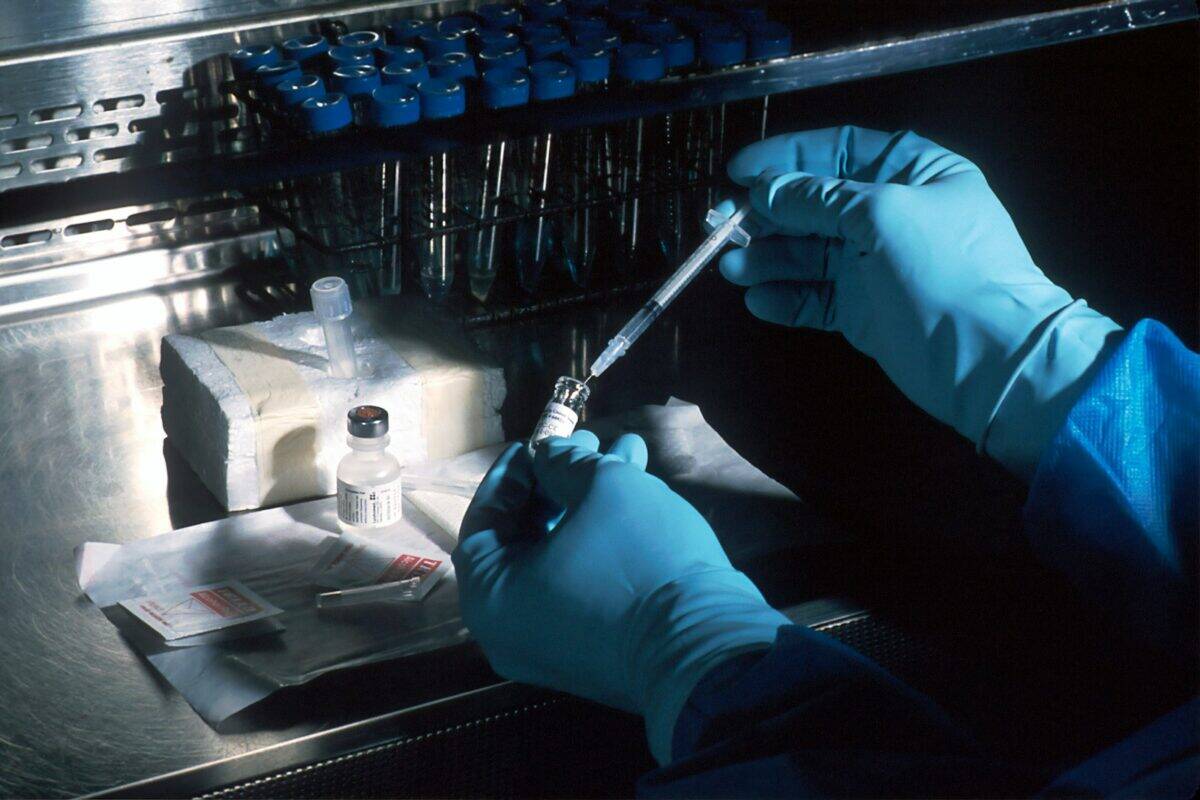
The axolotl’s regenerative abilities have profound implications for human medicine. Researchers are studying these salamanders to develop potential treatments for heart disease, spinal cord injuries, and neurodegenerative disorders. By understanding how axolotls naturally regenerate complex tissues, scientists hope to replicate these processes in humans. Several promising applications are emerging from this research. For instance, studies of cardiac regeneration in axolotls have identified signaling molecules that could potentially be used to stimulate heart muscle regeneration in human patients after heart attacks. Similarly, understanding how axolotls repair spinal cord injuries might lead to treatments for paralysis in humans. The field of regenerative medicine is actively exploring how to translate these natural regenerative mechanisms into clinical therapies, which might include gene therapies that activate dormant regenerative pathways in human cells, biomaterials that mimic the axolotl’s regenerative environment, or even transplantation of engineered cells programmed with axolotl-like regenerative properties.
Conservation Status: Protecting a Scientific Treasure

Despite their scientific importance, wild axolotls face a grim reality. They are critically endangered in their native habitat, with population declines exceeding 99% since the 1980s. Once abundant in Lake Xochimilco and Lake Chalco near Mexico City, wild axolotls now number fewer than 1,000 individuals. Their decline stems from multiple factors: urban expansion, water pollution, introduced predatory fish species, and habitat degradation. The irony isn’t lost on scientists that these masters of regeneration cannot regenerate their way out of extinction. Conservation efforts are underway, including habitat restoration projects in Xochimilco, captive breeding programs, and educational initiatives to raise awareness. While axolotls are common in laboratories and the pet trade, these captive populations often lack the genetic diversity of wild specimens and may not preserve all the genetic traits relevant to regeneration research. The preservation of wild axolotl populations and their genetic diversity remains crucial not only for biodiversity conservation but also for maintaining access to their full regenerative potential for future medical research.
Current Research Frontiers

The field of axolotl regeneration research continues to advance rapidly, with several exciting frontiers currently being explored. Single-cell RNA sequencing technology is allowing scientists to track gene expression changes in individual cells throughout the regeneration process, providing unprecedented insight into the molecular mechanisms involved. Researchers are also using CRISPR gene editing technology to manipulate specific genes in axolotls and observe the effects on regeneration, helping to identify which genes are essential to the process. Another promising area involves comparative studies examining why some closely related salamander species have different regenerative capabilities, potentially revealing evolutionary switches that control regeneration. Technological advances in imaging now allow scientists to observe the regeneration process in living animals in real-time, tracking cell movements and interactions during tissue rebuilding. Additionally, bioengineering approaches are attempting to create laboratory environments that mimic the axolotl’s regenerative niche, potentially enabling human cells to regenerate in similar ways. These diverse research approaches are converging to build a comprehensive understanding of axolotl regeneration that may ultimately translate to human therapies.
Ethical Considerations in Regeneration Research

Research on axolotl regeneration, while promising, raises important ethical considerations. Animal welfare in laboratory settings remains a primary concern, with ongoing efforts to develop protocols that minimize stress and suffering while maintaining scientific validity. The use of alternatives like cell culture systems and computational models is increasing, though complete animals remain necessary for studying complex organ regeneration. Beyond laboratory ethics, broader questions emerge about the potential applications of regenerative technologies in humans. If techniques derived from axolotl research eventually allow human regeneration, how would we address the social, economic, and ethical implications of such capabilities? Would regenerative therapies be equitably available, or create new disparities in healthcare access? Additionally, conservation ethics intersect with research needs—balancing scientific use of axolotls against the imperative to protect wild populations requires careful consideration. These multifaceted ethical questions require ongoing dialogue between scientists, ethicists, policymakers, and the public to ensure that advances in regenerative medicine proceed responsibly and equitably.
The axolotl’s remarkable ability to regenerate complex organs like the heart and brain represents one of nature’s most extraordinary adaptations and offers powerful lessons for human medicine. As we continue to unravel the genetic, cellular, and developmental mechanisms behind these abilities, we move closer to potentially revolutionary medical applications that could transform how we treat injuries and diseases. The journey from understanding salamander regeneration to developing human therapies remains challenging, but progress continues at an exciting pace. Perhaps equally important, the axolotl reminds us of the incredible biological diversity our planet harbors and the scientific treasures that may be lost without conservation efforts. In these smiling salamanders, we find not only a biological curiosity but also a potential blueprint for healing that has evolved over millions of years—a blueprint that may someday help humans recover from injuries and conditions currently considered permanent.

- How Crickets Chirp Using Their Wings - July 20, 2026
- The Largest Sea Turtle Ever Rescued Off North Carolina - July 20, 2026
- The Ocean’s Escape Artist: Why Octopuses Outsmart Us All - July 20, 2026