


In a groundbreaking development that sheds new light on avian cognition, recent scientific research has revealed that parrots possess a sophisticated understanding of turn-taking in social interactions. This discovery adds to the growing body of evidence suggesting that these colorful birds have cognitive abilities far more advanced than previously thought. The research, conducted across multiple species of parrots, demonstrates that these birds can recognize conversational patterns, respect social cues, and engage in orderly exchanges with both humans and fellow parrots. This article explores this fascinating discovery and its implications for our understanding of animal intelligence, communication, and the evolutionary development of social skills across species.
The Revolutionary Research Findings

The latest research, published in journals including “Animal Cognition” and “Proceedings of the Royal Society B,” reveals that parrots demonstrate clear understanding of conversational turn-taking, a skill previously believed to be predominantly human. Scientists from universities across Europe, North America, and Australia collaborated on multiple studies that examined how different parrot species navigate social exchanges. Using controlled experimental settings, researchers documented that parrots not only wait for their conversational partners to finish speaking before responding but also show signs of anticipating when their turn is approaching. This sophisticated level of social awareness suggests cognitive processes more complex than simple mimicry, which has traditionally been how we’ve understood parrot vocalizations.
Understanding Turn-Taking in Communication

Turn-taking forms the foundation of effective communication across human cultures. It involves a complex set of skills: recognizing when another individual has finished speaking, understanding the appropriate timing for a response, and acknowledging the back-and-forth rhythm of conversation. For humans, these skills develop early in childhood and become increasingly refined with age. The discovery that parrots possess this ability challenges our understanding of what has long been considered a uniquely human trait. The research shows that parrots can maintain conversations with minimal overlap or interruption, demonstrating a level of social etiquette that requires both cognitive and emotional intelligence.
Methodology Behind the Discoveries
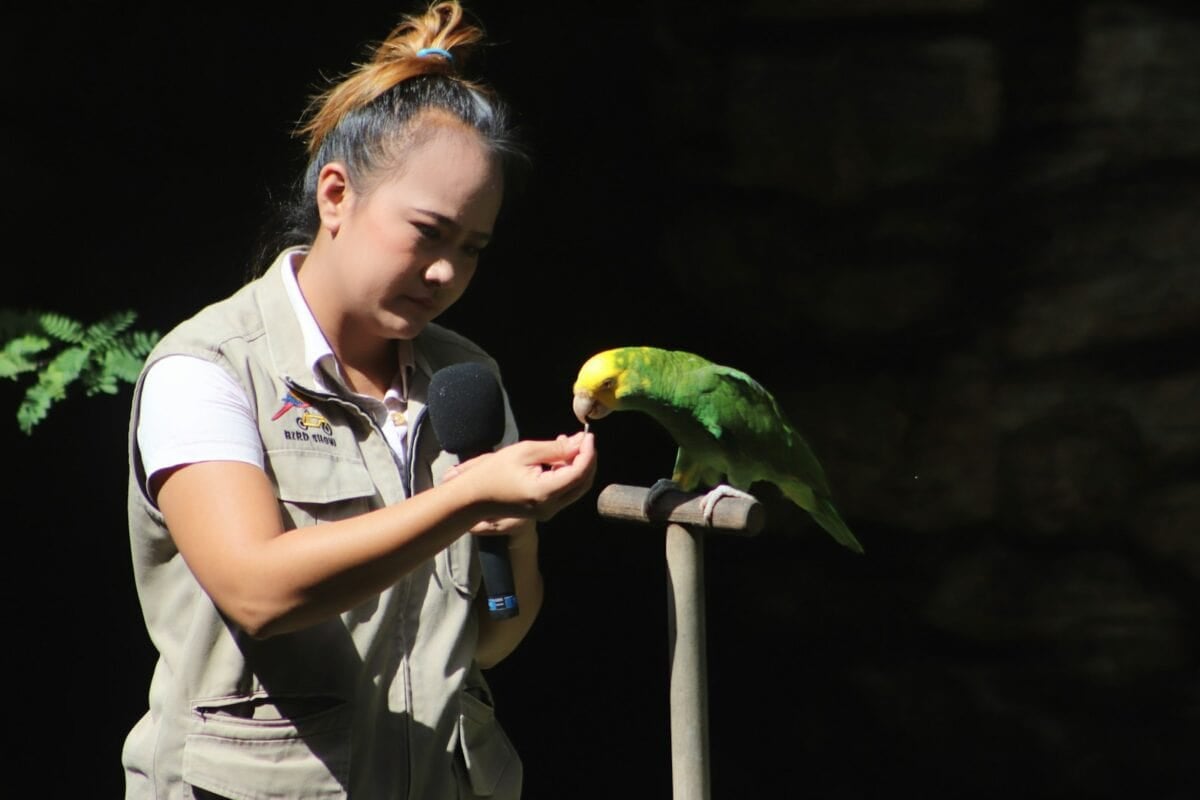
Researchers employed a variety of innovative methods to study turn-taking behaviors in parrots. In controlled laboratory settings, they recorded interactions between pairs of parrots and analyzed the timing and patterns of their vocalizations. Additional studies examined parrot-human interactions, with particular attention to how parrots adjusted their responses based on human conversational patterns. The research utilized advanced audio recording equipment to capture precise timing measurements, allowing for detailed analysis of conversational gaps and overlaps. Some studies incorporated video recordings to correlate vocalizations with body language and other visual cues. This multi-modal approach provided a comprehensive picture of how parrots navigate social interactions, revealing patterns consistent with intentional communication rather than random mimicry.
Species Differences in Turn-Taking Abilities

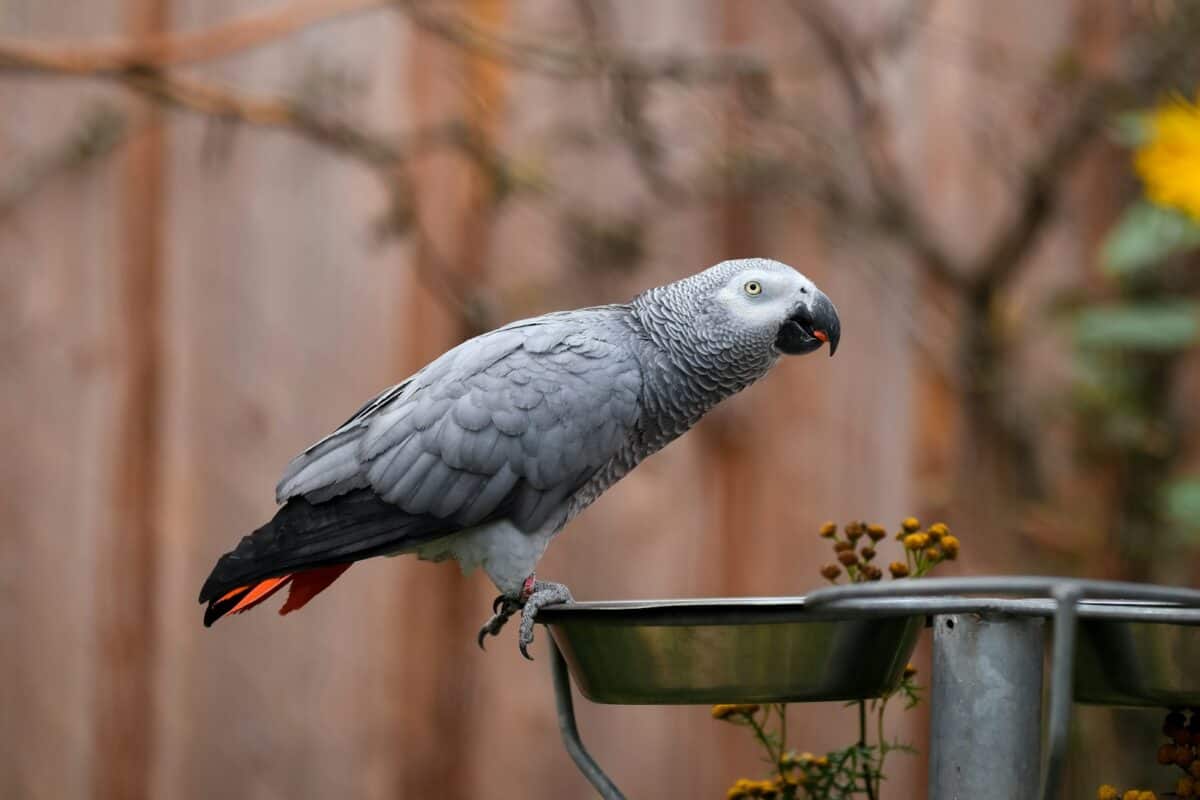
The research identified fascinating variations in turn-taking abilities across different parrot species. African Grey parrots, long recognized for their exceptional cognitive abilities, demonstrated the most sophisticated understanding of conversational timing, with response patterns closely resembling human conversational norms. Amazons, macaws, and cockatoos also showed strong turn-taking skills, though with subtle differences in timing and style. Smaller species like budgerigars exhibited simpler but still distinct turn-taking behaviors. These differences appear to correlate with both brain size and the social complexity of each species in the wild. Species that live in more complex social groups generally demonstrated more sophisticated turn-taking abilities, suggesting that these skills evolved as adaptations to social living rather than as a byproduct of general intelligence.
The Neural Basis of Conversational Skills

Complementary neurological studies have begun to uncover the brain mechanisms that enable parrots to engage in turn-taking behaviors. Using non-invasive brain imaging techniques, researchers have identified activity in the avian equivalent of the human prefrontal cortex during conversational exchanges. This brain region is associated with executive functions such as impulse control, attention, and social cognition in humans. The research suggests that despite the significant evolutionary distance between birds and mammals, similar neural circuits may have evolved to support social communication in both groups. These findings contribute to our understanding of convergent evolution, where similar traits evolve independently in different lineages in response to similar selective pressures.
Implications for Parrot Intelligence

The discovery that parrots understand turn-taking has profound implications for how we assess avian intelligence. This ability requires several sophisticated cognitive processes: attention to others, self-regulation, timing prediction, and social awareness. These findings add to a growing list of impressive cognitive feats documented in parrots, including tool use, numerical understanding, and linguistic capabilities. Together, this body of research challenges traditional hierarchical views of intelligence that place mammals, particularly primates, at the top. Instead, it suggests that advanced cognition has evolved independently in different lineages, with parrots representing a remarkable example of convergent evolution in intelligence. This perspective encourages a more nuanced understanding of animal cognition that recognizes diverse paths to complex thought processes.
Evolution of Social Communication

The turn-taking abilities observed in parrots offer valuable insights into the evolution of social communication. Researchers believe these skills evolved as adaptations to life in complex social groups, where coordinated communication provides significant advantages. By studying how these abilities developed in a lineage that diverged from mammals more than 300 million years ago, scientists can better understand which aspects of communication are fundamental across species and which are specific adaptations. The research suggests that the basic structure of conversational turn-taking may be an inevitable solution to the problem of coordinating group communication, explaining why similar patterns have emerged in species as diverse as humans and parrots despite their distant evolutionary relationship.
Practical Applications for Pet Parrot Owners

For the millions of households with pet parrots, this research has immediate practical applications. Understanding that parrots naturally engage in turn-taking can help owners establish more meaningful communication with their avian companions. Experts now recommend that parrot owners respect conversational pauses, allow their birds time to respond, and maintain consistent patterns of interaction. This approach not only enhances the human-parrot relationship but may also reduce behavioral problems stemming from communication frustration. Many parrot behavior specialists are already incorporating these findings into their training methodologies, encouraging owners to engage with their birds through structured conversational exchanges rather than expecting one-way mimicry.
Comparison with Other Animals’ Communication Skills

While the turn-taking abilities of parrots are remarkable, they’re not entirely unique in the animal kingdom. Research has documented similar behaviors in various primate species, dolphins, and some songbirds. However, parrots appear to be exceptional in their ability to adapt these skills to interactions with humans and in the flexibility they show across different social contexts. By comparing turn-taking across species, researchers gain insights into both the evolutionary origins of communication and the specific ecological pressures that might drive its development. This comparative approach helps identify which aspects of turn-taking are widespread adaptations and which represent specialized cognitive achievements.
Ethical Considerations and Parrot Welfare
The recognition of sophisticated communication abilities in parrots raises important ethical questions about their care and conservation. If these birds possess advanced social cognition comparable in some ways to primates, should our ethical framework for their treatment change accordingly? Many researchers and advocacy groups argue that the evidence of advanced cognition strengthens the case for enhanced welfare standards for captive parrots and stronger conservation efforts for wild populations. Several countries have already begun updating their animal welfare guidelines to reflect the growing scientific consensus about avian intelligence. These changes include requirements for more spacious enclosures, enrichment opportunities that challenge their cognitive abilities, and social housing that allows for species-appropriate communication.
Future Research Directions

The discovery of turn-taking abilities in parrots has opened numerous avenues for future research. Scientists are now investigating whether parrots can adjust their turn-taking strategies based on the social context or the identity of their communication partner. Other studies are exploring whether young parrots learn these skills through observation or whether they’re innate. Researchers are also developing more sophisticated techniques to analyze the content of parrot vocalizations in relation to their timing, potentially uncovering deeper patterns in their communication system. Cross-disciplinary collaborations between ornithologists, neuroscientists, linguists, and computer scientists promise to yield even more insights in the coming years, potentially revolutionizing our understanding of animal communication.
Historical Context of Parrot Communication Studies

The recent findings on parrot turn-taking build upon decades of pioneering research into avian communication. Early studies by Dr. Irene Pepperberg with Alex the African Grey parrot demonstrated vocabulary acquisition and conceptual understanding previously thought impossible in non-primates. Throughout the 1990s and early 2000s, researchers documented increasingly complex cognitive abilities in various parrot species, gradually shifting scientific perspectives on avian intelligence. The current research represents the culmination of this evolving understanding, moving beyond vocabulary to examine the structural elements of communication itself. This historical progression reflects broader shifts in cognitive science away from human-centric models toward recognition of diverse forms of intelligence across the animal kingdom.
The discovery that parrots understand and implement turn-taking in their communications represents a significant milestone in our understanding of animal cognition. This research challenges traditional boundaries between human and animal communication, suggesting that the fundamental structures of conversation may be more widespread in the animal kingdom than previously recognized. For parrot owners and enthusiasts, these findings confirm what many have long suspected: their avian companions are engaging in genuine communication, not merely mimicking human speech. As we continue to explore the cognitive abilities of parrots and other animals, we are repeatedly reminded that intelligence has evolved in diverse and fascinating ways across species. The humble parrot, with its colorful plumage and charismatic personality, now takes its place among the most cognitively sophisticated animals on our planet, offering us a window into the evolution of communication itself.

- How Crickets Chirp Using Their Wings - July 20, 2026
- The Largest Sea Turtle Ever Rescued Off North Carolina - July 20, 2026
- The Ocean’s Escape Artist: Why Octopuses Outsmart Us All - July 20, 2026