


In the abyssal depths of our oceans, where sunlight fails to penetrate and pressures would crush most terrestrial life, a remarkable form of communication unfolds among some of the most enigmatic creatures on Earth. Deep-sea squid, masters of their lightless domain, have evolved sophisticated methods of interaction that scientists are only beginning to decode. Their “secret language” comprises an intricate system of bioluminescent displays, color changes, posture adjustments, and chemical signals that allow these intelligent cephalopods to navigate their social and predatory relationships in the darkness. This hidden language, developed over millions of years of evolution, represents one of the most complex communication systems in the marine world, adapted perfectly to the unique challenges of deep-ocean living.
The Bioluminescent Alphabet

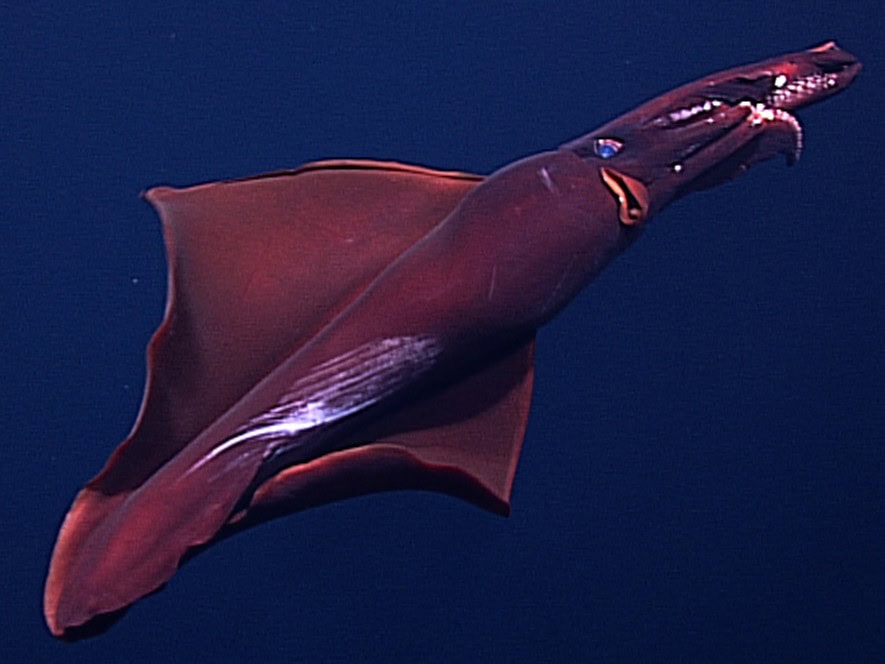
At the core of deep-sea squid communication lies bioluminescence, the biological production of light. Unlike the simple light displays of many marine organisms, squid have developed what amounts to a visual alphabet using light-producing organs called photophores. These specialized structures are arranged in species-specific patterns across their bodies, tentacles, and even inside their mouths. The vampire squid (Vampyroteuthis infernalis), despite its fearsome name, uses bioluminescent arm tips that it can wave like glowing batons to confuse predators. Meanwhile, the Humboldt squid (Dosidicus gigas) can flash red and white patterns across its body at varying speeds, creating what researchers describe as a “living Morse code” that communicates different messages to conspecifics during hunting or mating.
Chromatic Conversations
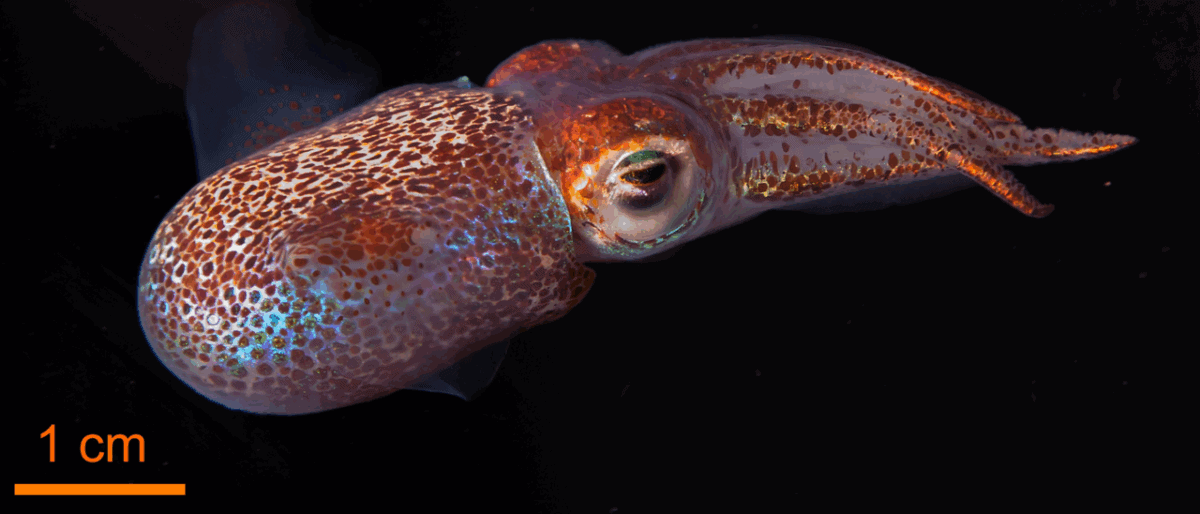
Beyond bioluminescence, many deep-sea squid possess remarkable chromatophore organs—essentially tiny sacs of pigment controlled by muscles—that allow them to change color with astonishing speed and precision. The Hawaiian bobtail squid (Euprymna scolopes), while not strictly deep-sea, demonstrates the sophistication of this system, changing colors within milliseconds to communicate with potential mates or warn competitors. In deeper waters, the giant squid (Architeuthis dux) can produce subtle color waves across its massive body despite living at depths where these colors would seemingly be invisible. Scientists now believe these chromatic shifts may be visible to the highly sensitive eyes of other deep-sea dwellers or may be accompanied by subtle light production that enhances their visibility in the darkness.
Posture and Positioning as Syntax
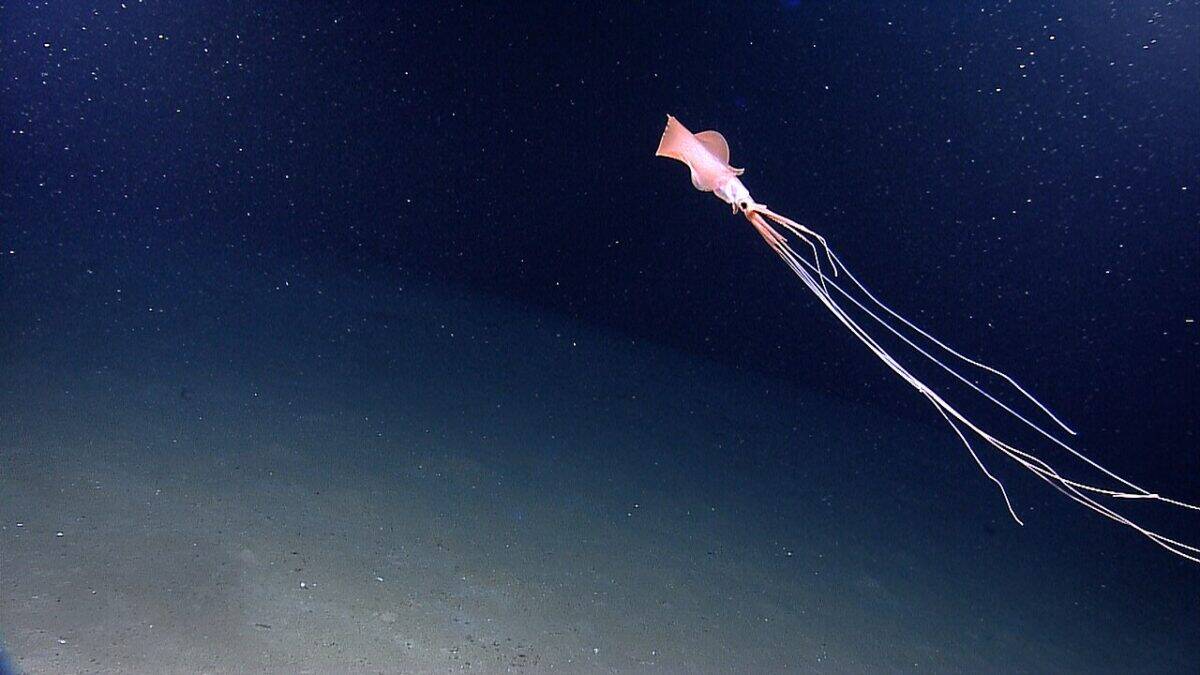
The physical positioning of a squid’s body, arms, and tentacles serves as the syntax in their communication system. The deep-dwelling Magnapinna squid, also known as “bigfin squids,” have been observed adopting a distinctive posture with their extremely long appendages held perpendicular to their bodies at right angles, creating an eerie “elbow” appearance. This unusual stance may serve as a specific signal to others of their kind or as an efficient feeding position. Similarly, the cock-eyed squid (Histioteuthis heteropsis) with its differently sized eyes consistently orients its body in the water column to optimize both downward and upward visibility, a positioning behavior that communicates its attentiveness to potential mates, predators, or prey approaching from any direction.
Chemical Signals in the Deep

In the vast darkness of the deep sea, chemical communication extends the reach of squid language beyond visual range. Deep-sea squid release pheromones and other chemical compounds that can travel significant distances through the water, carrying information about reproductive readiness, territorial boundaries, or even recent feeding success. The colossal squid (Mesonychoteuthis hamiltoni) of Antarctic waters possesses specialized glands that release complex chemical cocktails into the water column. These molecular messages can persist for hours or even days, creating invisible but detectable “signposts” in the otherwise featureless deep. Recent research suggests that some species may even tailor their chemical outputs based on the intended recipient, effectively creating targeted “chemical conversations” with specific individuals.
Tactical Skin Textures

Perhaps one of the most overlooked aspects of deep-sea squid communication is their ability to rapidly change the texture of their skin. The aptly named warty squid (Moroteuthis ingens) can transform from smooth to bumpy in seconds by manipulating small muscles under its skin, creating raised structures called papillae. In the darkness of the deep, these textural changes may be detected through physical contact during mating or through disruptions in water flow that can be sensed by the highly sensitive lateral lines of nearby squid. The glass squid (Cranchiidae family), with their transparent bodies, can create specific patterns of opacity and texture that may serve as another layer of their communicative repertoire, especially during close encounters with others of their kind.
Ink as Punctuation
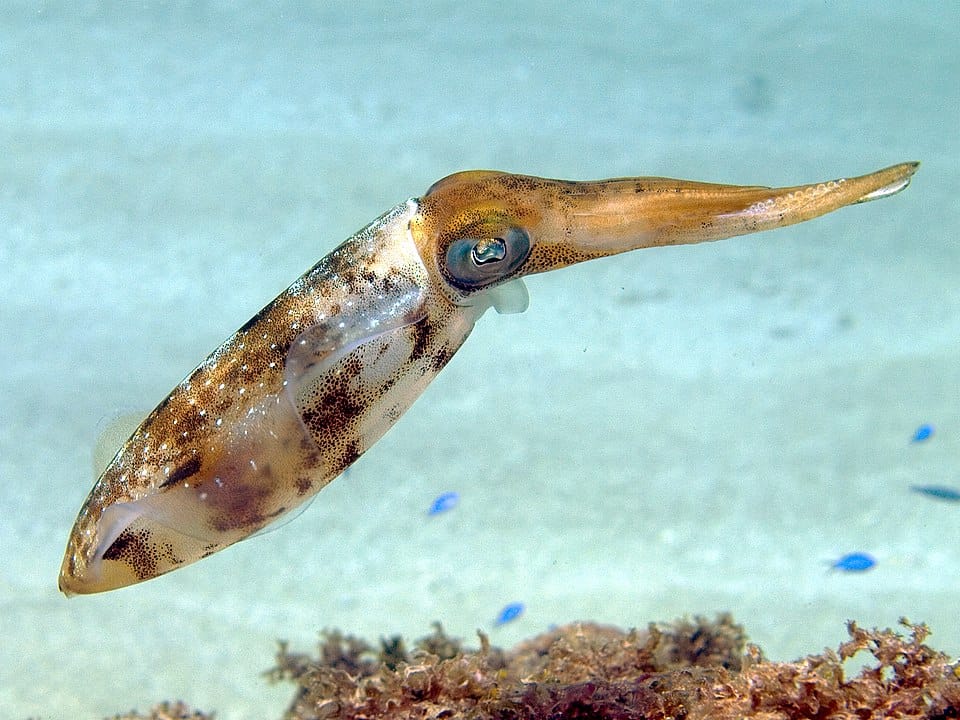
While most people are familiar with squid ink as a defense mechanism or culinary ingredient, deep-sea squid use ink in sophisticated ways that go beyond simple predator avoidance. Species like the vampire squid don’t eject ink in the traditional manner; instead, they produce a bioluminescent mucus that can hang in the water like glowing clouds. This luminous “ink” serves multiple communicative functions: it can act as a distraction, a warning to others, or even as a kind of punctuation mark in their visual language, emphasizing other signals or creating spatial reference points in the darkness. The deep-sea Gonatus squid releases ink in precise patterns that researchers believe may contain specific information for other members of its species, somewhat like exclamation points in their abyssal conversations.
Sonic Elements of Squid Discourse
Recent discoveries have revealed that some deep-sea squid incorporate sound into their communication repertoire. While they lack vocal cords, certain species can force water through specialized structures to create low-frequency vibrations that travel efficiently through the dense deep-sea environment. The Dana octopus squid (Taningia danae) combines bright photophore flashes with sudden jet propulsions that generate detectable pressure waves—essentially creating audiovisual signals. Even more fascinating, the Japanese flying squid (Todarodes pacificus) produces sounds by rapidly expelling water through its siphon at different velocities, creating what researchers describe as a kind of “deep-sea whistle” that may convey alarm, attraction, or territorial claims to distant conspecifics without revealing their position to visual predators.
Ritualized Interactions
Deep-sea squid engage in complex ritualized interactions that combine multiple communication modalities into sophisticated exchanges. During courtship, the deep-dwelling Taningia danae performs an elaborate “light show” where males approach females while producing sequential patterns of bioluminescent flashes, body color changes, and specific postures. These courtship displays follow predictable sequences that researchers have begun to catalog, suggesting a grammar-like structure to these interactions. Similarly, when Humboldt squid hunt in groups, they engage in coordinated signaling that allocates different roles to individuals, with rapid color changes indicating shifts from “search” to “attack” modes, allowing these social predators to communicate hunting strategies without alerting their prey.
Deceptive Dialects

Some of the most intriguing aspects of deep-sea squid communication involve deliberate deception. The stoplight loosejaw (Malacosteus niger), while technically a fish, demonstrates a principle that certain squid species have also adopted: it produces red bioluminescence that most deep-sea creatures cannot see, effectively using a “private channel” for communication. Similarly, several deep-sea squid species have evolved what scientists call “deceptive dialects”—communication signals that mimic those of other species. The Pacific bobbit squid can produce light patterns that resemble those of common deep-sea jellyfish, potentially confusing predators or luring prey that would normally avoid squid. This sophisticated mimicry suggests that deep-sea communication has evolved not just for information exchange but also for strategic advantage in the eternal evolutionary arms race.
The Social Dimension

Unlike their shallow-water relatives that often lead solitary lives, many deep-sea squid show surprising levels of social interaction, necessitating their complex communication systems. The Dana octopus squid has been observed in small groups where individuals maintain specific positions relative to each other, coordinated through continuous light signaling. The vampire squid, despite its sinister name, engages in non-aggressive group interactions where individuals use their glowing arm tips to establish position awareness in the darkness. Most remarkably, recent deep-sea footage has captured what appears to be coordinated hunting behaviors among certain squid species, with individuals using precise bioluminescent signals to orchestrate surrounding and capturing prey—suggesting a level of cooperative communication previously thought impossible in these ancient invertebrates.
Technological Challenges in Decoding Squid Language

Scientists face enormous challenges in studying deep-sea squid communication. The extreme depths at which these animals live require specialized equipment that can withstand crushing pressure while providing sufficient illumination for observation without disturbing natural behaviors. Recent innovations include pressure-resistant autonomous cameras equipped with far-red lighting (invisible to most deep-sea creatures) and environmental DNA sampling that can detect chemical signals without requiring visual confirmation of the animals. Perhaps most promising are new acoustic imaging technologies that can “see” squid interactions in complete darkness by detecting tiny disturbances in water pressure caused by their movements and ink releases. As these technologies improve, researchers hope to compile a comprehensive “dictionary” of deep-sea squid signals and their meanings, potentially revealing communication complexity that rivals that of terrestrial mammals.
Evolutionary Origins of Squid Communication
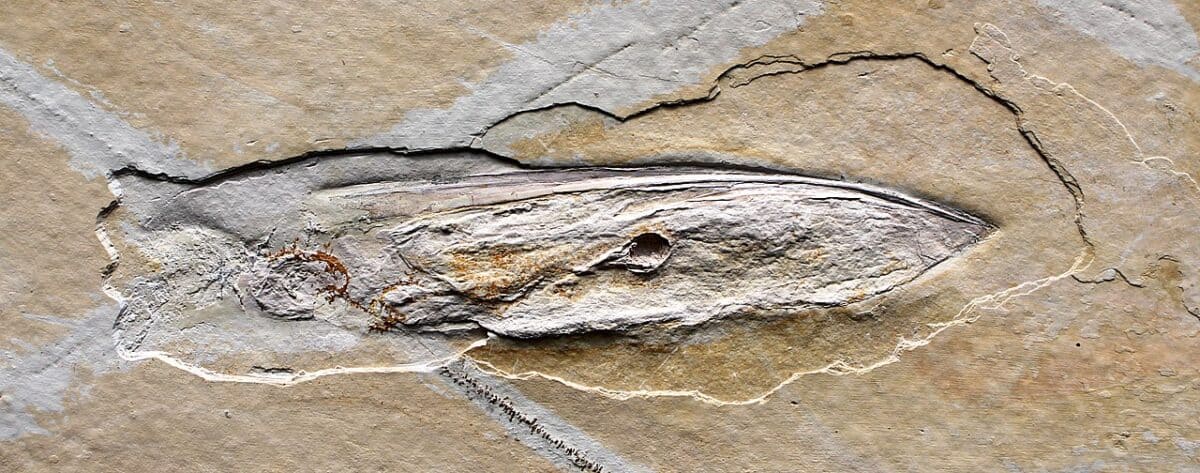
The sophisticated communication systems of deep-sea squid have roots dating back over 500 million years, when cephalopods first diverged from other mollusks. The ancestral squid likely possessed simple chromatophores and light-producing capabilities that have since evolved into the complex arrays seen today. Fossil evidence suggests that ancient squid relatives already had well-developed eyes and neural systems capable of processing visual signals, providing the foundation for their elaborate modern communication. Interestingly, the deep-sea environment, with its lack of light and sound distortion, may have created perfect conditions for the evolution of sophisticated communication—without the visual noise of shallow waters, subtle signals could be detected over greater distances, driving selection for increasingly nuanced messaging capabilities. This evolutionary trajectory has created communication systems that developed independently from those of vertebrates but show remarkable convergent features with human language, including syntax, context-dependence, and even regional “dialects” among different populations of the same species.
The secret language of deep-sea squid represents one of nature’s most remarkable communication systems, adapted to the unique challenges of life in Earth’s last great frontier. As we continue to develop technologies that allow us to peer into the abyss, we’re discovering that these ancient invertebrates possess linguistic capabilities far more sophisticated than previously imagined, challenging our understanding of animal communication. Their multimodal language—combining light, color, texture, chemicals, and even sound—demonstrates how communication can evolve to extraordinary complexity even in environments we once considered too hostile for advanced behavioral adaptations. Perhaps most profoundly, these findings suggest that wherever life exists, even in the most extreme environments, the drive to communicate creates systems of meaning-making that connect individuals across the darkness—a reminder that language, in its broadest sense, may be as fundamental to life as metabolism itself.

- How Salamanders Regrow Tails—and More - July 28, 2026
- Why Some Pets Prefer Kids Over Adults - July 28, 2026
- Why the American Horseshoe Crab Needs Federal Protection - July 28, 2026