


Worried about unexpected vet bills?
Pet insurance can cover thousands in unexpected vet costs. Get a free quote from Lemonade in under 2 minutes.
Get My Free Quote →Sponsored · Opens Lemonade.com
Nature never ceases to amaze us with its innovative adaptations, and perhaps one of the most fascinating is bioelectricity. While humans harness electricity through technology, several animals have evolved the ability to generate and utilize electrical currents naturally. These remarkable creatures use their electric powers for navigation, communication, defense, hunting, and more. From the well-known electric eel to lesser-known species like the stargazer fish, these animals demonstrate evolution’s incredible diversity. This article explores 13 creatures with natural electric powers, examining how they generate electricity, what voltages they produce, and how they use these unique abilities in their daily lives.
Electric Eels Nature’s Living Batteries

Perhaps the most famous electric creature, the electric eel (Electrophorus electricus) isn’t actually an eel but a type of knifefish. Native to the Amazon and Orinoco river basins in South America, these remarkable creatures can grow up to 8 feet long and weigh around 44 pounds. Electric eels possess specialized electric organs that occupy roughly 80% of their bodies, containing thousands of electroplaques—modified muscle cells that function like tiny batteries connected in series. When activated, these cells can generate stunning discharges of up to 860 volts with a current of 1 ampere—enough to power dozens of light bulbs simultaneously.
Electric eels use their electric powers in three distinct ways. Low-voltage pulses (around 10 volts) help them navigate murky waters and locate prey through electrolocation. Medium-voltage discharges serve as communication signals to other eels. The high-voltage shocks are used to stun prey and deter predators. Recent research has revealed that electric eels can even double their voltage output by curling their bodies around larger prey, creating a circuit that concentrates the electric field. Despite their formidable electric capabilities, these animals remain vulnerable to habitat destruction and are classified as a species of least concern on the IUCN Red List.
Electric Rays The Ocean’s Stunning Predators

Electric rays comprise several species within the Torpediniformes order, with the Atlantic torpedo ray (Tetronarce nobiliana) being among the most powerful. These flat, disc-shaped creatures inhabit coastal waters worldwide and possess kidney-shaped electric organs on either side of their heads. Unlike electric eels, whose electrical organs are modified muscle cells, electric rays have evolved specialized electroplaques derived from branchial muscle tissue. These organs can deliver powerful shocks of 220 volts with currents reaching 8 amperes—more than enough to incapacitate an adult human.
These rays use their electric abilities primarily for hunting and self-defense. When a prey item swims overhead, the ray quickly rises from its hiding spot in the sand and delivers a stunning electric discharge, immobilizing fish, crustaceans, and mollusks. Ancient Greeks and Romans documented the use of electric rays for medical treatments, including pain relief during childbirth and managing headaches—perhaps the first documented therapeutic use of electricity. Electric rays typically range from 1 to 6 feet in diameter, with the largest species weighing up to 200 pounds. Unlike many electric creatures, these rays can sustain their electric discharges for extended periods, delivering multiple shocks in rapid succession without significant power reduction.
Elephantnose Fish Precision Electric Navigators
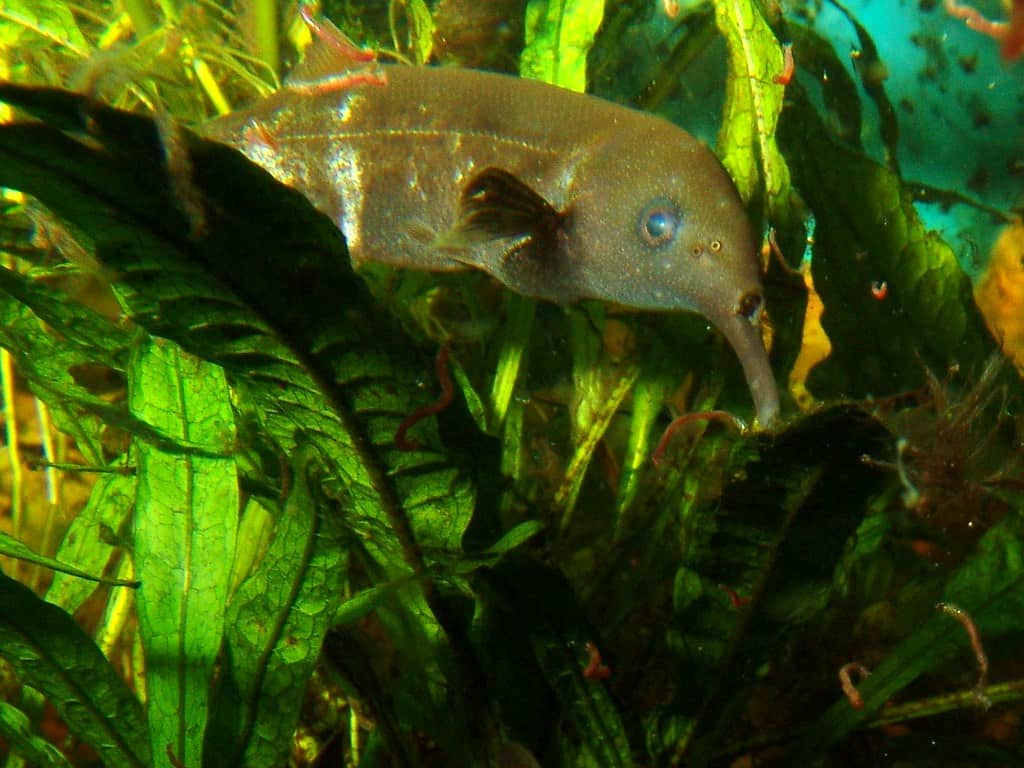
The Peters’ elephantnose fish (Gnathonemus petersii) is a remarkable freshwater species native to West and Central African rivers. Despite its small size (rarely exceeding 9 inches), this fish possesses sophisticated electric capabilities. The elephantnose fish has a specialized organ called the Schnauzenorgan—an elongated, trunk-like appendage that gives the species its name—which contains numerous electroreceptors. Unlike the powerful shockers like electric eels, the elephantnose fish produces weak electric discharges of less than 1 volt, creating an electric field around its body.
This electric field serves as a biological radar system, allowing the fish to navigate murky waters with extraordinary precision. When objects enter the fish’s electric field, they distort the electrical patterns. The fish’s specialized electroreceptors detect these distortions, creating a detailed “electrical image” of their surroundings. This enables them to locate food, avoid obstacles, and identify potential mates in water with near-zero visibility. Research has shown that elephantnose fish can detect objects as small as 1mm and distinguish between different materials based on their electrical conductivity. These fish also use electrical discharges for communication, with males and females producing distinctly different electrical signatures, particularly during mating season. Due to their fascinating biology and peaceful nature, elephantnose fish have become popular in the aquarium trade.
Electric Catfish Africa’s Shocking Predators
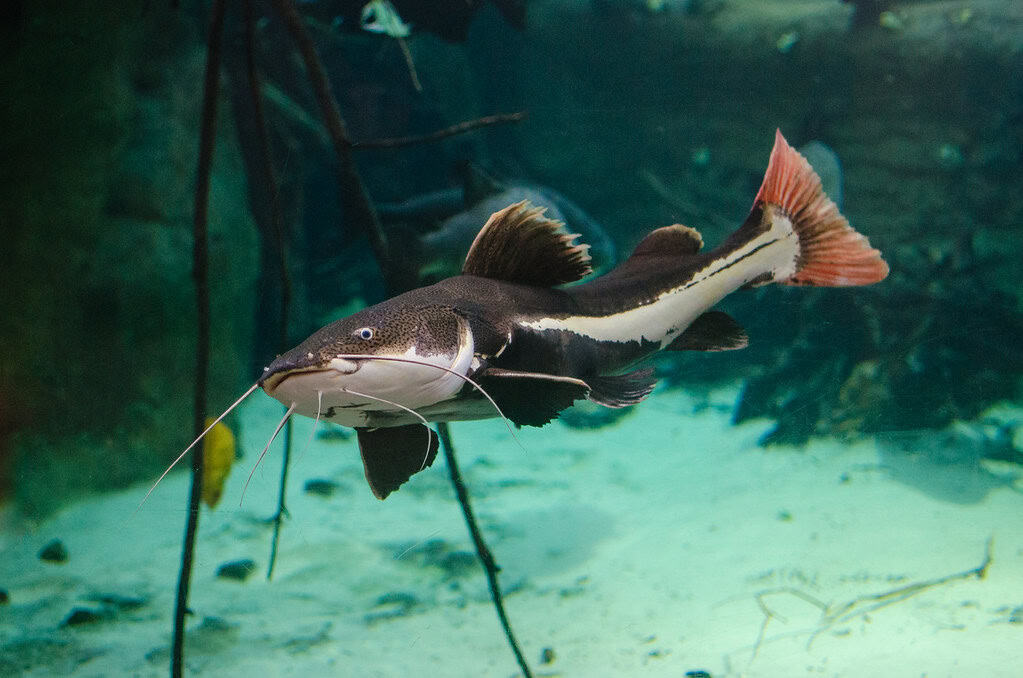
The electric catfish (Malapterurus electricus) is a formidable predator found in the Nile River and other freshwater systems across Africa. Unlike many electric fish that use modified muscle cells for electricity generation, electric catfish possess a unique electric organ derived from modified skin cells that forms a layer encasing almost their entire body. This organ enables them to produce impressive electric discharges of up to 350 volts, making them one of the most powerful electric fish in Africa. These catfish can grow to about 3 feet in length and weigh up to 45 pounds.
Electric catfish use their electrical abilities primarily for hunting and defense. They are nocturnal ambush predators that lurk in caves and crevices during the day. At night, they emerge to hunt, using their electric discharges to stun smaller fish, frogs, and invertebrates before swallowing them whole. Interestingly, electric catfish can control the strength of their electric discharge, using lower voltages for hunting smaller prey and maximum voltage when threatened by predators. Ancient Egyptians were well aware of these catfish and their shocking abilities, with depictions found in hieroglyphics dating back to 3000 BCE. Some researchers suggest they may have been the first fish species to be recognized for its electrical properties by humans. Today, electric catfish are occasionally kept in specialized aquariums, though their powerful shocks and predatory nature make them suitable only for experienced aquarists.
Black Ghost Knifefish Masters of Electrical Communication

The black ghost knifefish (Apteronotus albifrons) is an elegant nocturnal species native to the Amazon Basin in South America. With its long, knife-shaped body covered in black scales and a distinctive white stripe along its nose and back edge, this fish has a ghostly appearance that contributes to its common name. Growing to about 20 inches in length, black ghost knifefish belong to a group called weakly electric fish, generating a continuous electric field of under 1 volt through specialized organs in their tail region.
What makes these fish remarkable is their ability to produce a constant wave-type electric field, unlike the pulse-type discharges of many other electric fish. This continuous electrical field operates at a specific frequency unique to each individual fish, ranging from 700 to 1,200 Hz. The fish use this field for navigation and object detection through electrolocation, allowing them to find food and avoid obstacles in the pitch-dark waters they inhabit. Additionally, black ghost knifefish communicate with each other by modulating their electric field frequencies. When two fish with similar frequencies meet, they will adjust their discharge rates to avoid interference—a phenomenon called the jamming avoidance response. During courtship, males and females perform complex “electrical duets.” Scientists have studied these fish extensively to understand how the brain processes electrical signals, with research suggesting that their electrical processing capabilities mirror some aspects of human auditory processing systems. Their unique appearance and peaceful nature have made them popular in the aquarium hobby, though they require specialized care.
Stargazer Fish The Buried Electric Ambushers

Stargazer fish belong to the family Uranoscopidae, with about 50 species distributed across the world’s oceans. These unusual predators get their name from their upward-facing eyes and mouth positioned on top of their heads. This unique anatomy allows them to bury themselves in sand with only their eyes and mouth visible, watching the water above for potential prey. What makes certain stargazer species particularly fascinating is their ability to generate electric discharges from specialized organs located behind their eyes. Species like the Atlantic stargazer (Astroscopus guttatus) can produce electric shocks of approximately 50 volts.
These fish employ a unique hunting strategy, combining ambush tactics with their electric abilities. When a suitable prey swims overhead, the stargazer rapidly emerges from its sandy hiding place, using its electric organs to stun or disorient the prey before engulfing it with its large, upward-facing mouth. In addition to electricity, some stargazer species have evolved venomous spines near their gills and produce a mucus from their skin that may have mild toxic properties. Interestingly, stargazers are among the few marine fish that have evolved electricity-generating organs independently from freshwater electric fish, representing a fascinating case of convergent evolution. Some stargazer species also possess bioluminescent lures in their mouths that attract prey, making them triple-threat predators with electricity, venom, and light-producing capabilities. Despite their remarkable adaptations, stargazers remain relatively understudied compared to other electric fish.
Platypus Electroreception in Mammals
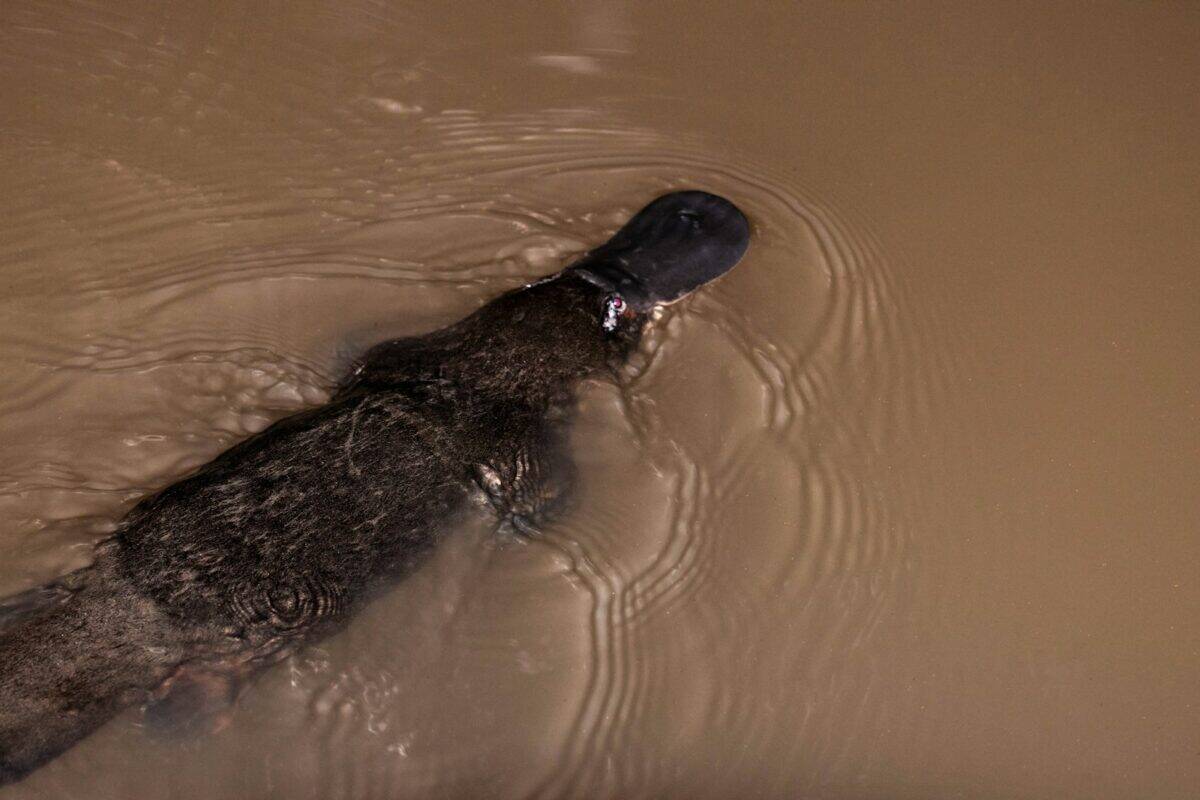
The duck-billed platypus (Ornithorhynchus anatinus) is already famous for its bizarre collection of features: a duck-like bill, beaver-like tail, otter-like feet, and the ability to lay eggs despite being a mammal. Less known is the platypus’s sophisticated electric sense, making it one of the few mammals capable of electroreception. While platypuses don’t generate electricity like electric eels, they possess thousands of electroreceptors embedded in their sensitive bills that can detect the tiny electric fields produced by the muscle contractions of their prey—primarily small invertebrates, crustaceans, and insect larvae.
When hunting, platypuses close their eyes, ears, and nostrils completely while underwater, effectively becoming blind and deaf. Instead, they rely on their electroreceptors to create a detailed electric “image” of their surroundings. Research has demonstrated that platypuses can detect electric fields as weak as 50 nanovolts per centimeter—about 10,000 times more sensitive than what humans can achieve with modern technology. The electroreceptors work in conjunction with mechanoreceptors (touch sensors) in the bill to provide the platypus with a comprehensive understanding of its environment. This electric sense is essential for their survival, as platypuses forage in murky, low-visibility streams and ponds of eastern Australia. Interestingly, the genes responsible for the platypus’s electroreception are active during embryonic development in the skin that will form the bill, revealing how this unique sensory system develops. This remarkable adaptation represents one of the most sophisticated examples of electroreception in the animal kingdom outside of fish and showcases how different evolutionary pathways can lead to similar specialized sensory systems.
Bumblebees Surprising Electric Field Detectors

While bumblebees don’t generate electric shocks like electric eels, recent research has revealed that these industrious pollinators can detect and use electric fields in fascinating ways. As bees fly through the air, the friction between their wings and the air causes them to accumulate a positive electric charge, similar to how rubbing a balloon against hair generates static electricity. This charge can reach up to 200 volts, though at extremely low current. When bees approach flowers, which typically have a negative charge, the resulting electric field interaction helps pollen jump from the flower to the bee’s positively charged body, increasing pollination efficiency.
More remarkably, scientists have discovered that bumblebees can sense these electric fields and use them to gather information about flowers. Studies have shown that bees can detect whether a flower has been recently visited by another bee based on changes in the flower’s electric field. When a bee visits a flower, some of its positive charge transfers to the flower, temporarily altering the flower’s electric signature. Other bees can detect this change, helping them avoid recently depleted flowers and improving their foraging efficiency. Researchers at the University of Bristol demonstrated that bumblebees can even be trained to distinguish between different artificial electric fields, suggesting these fields serve as an additional sensory dimension for these insects. The bee’s ability to detect electric fields comes from mechanosensory hairs on their bodies that move in response to electric forces. This discovery represents one of the most unexpected examples of bioelectricity utilization in the animal kingdom and highlights how much we still have to learn about seemingly familiar creatures.
Electric Skates The Eel’s Lesser-Known Relatives

Electric skates (family Rajidae) are often overshadowed by their more famous electric relatives like rays and eels, but they possess impressive bioelectric capabilities. These flat, diamond-shaped cartilaginous fish are found in temperate and tropical oceans worldwide, with species like the clearnose skate (Raja eglanteria) and little skate (Leucoraja erinacea) being well-studied examples. Unlike the kidney-shaped electric organs in rays, skates have a more slender electric organ system located in their tail region. While less powerful than electric rays, skates can still produce discharges between 15-30 volts, sufficient to stun small prey and deter predators.
What makes electric skates particularly interesting to scientists is how they use electricity for both hunting and communication. Skates emit two distinct types of electric pulses: strong pulses for defense and weaker ones for communication and mate location. During mating season, male skates produce specific electrical patterns that attract females and signal their reproductive readiness. Research at the Marine Biological Laboratory in Woods Hole, Massachusetts, has revealed that different skate species have evolved species-specific electrical signatures, helping prevent hybridization in areas where multiple skate species coexist. Unlike many electric fish that evolved in freshwater environments, skates developed their electric organs independently in marine environments, providing a fascinating example of convergent evolution. Electric skates have become valuable model organisms for studying the genetics and evolution of bioelectricity, with recent genome sequencing efforts revealing the molecular pathways that allowed these animals to convert muscle tissue into specialized electricity-generating organs over millions of years of evolution.
Mormyrids Africa’s Electric Signal Specialists
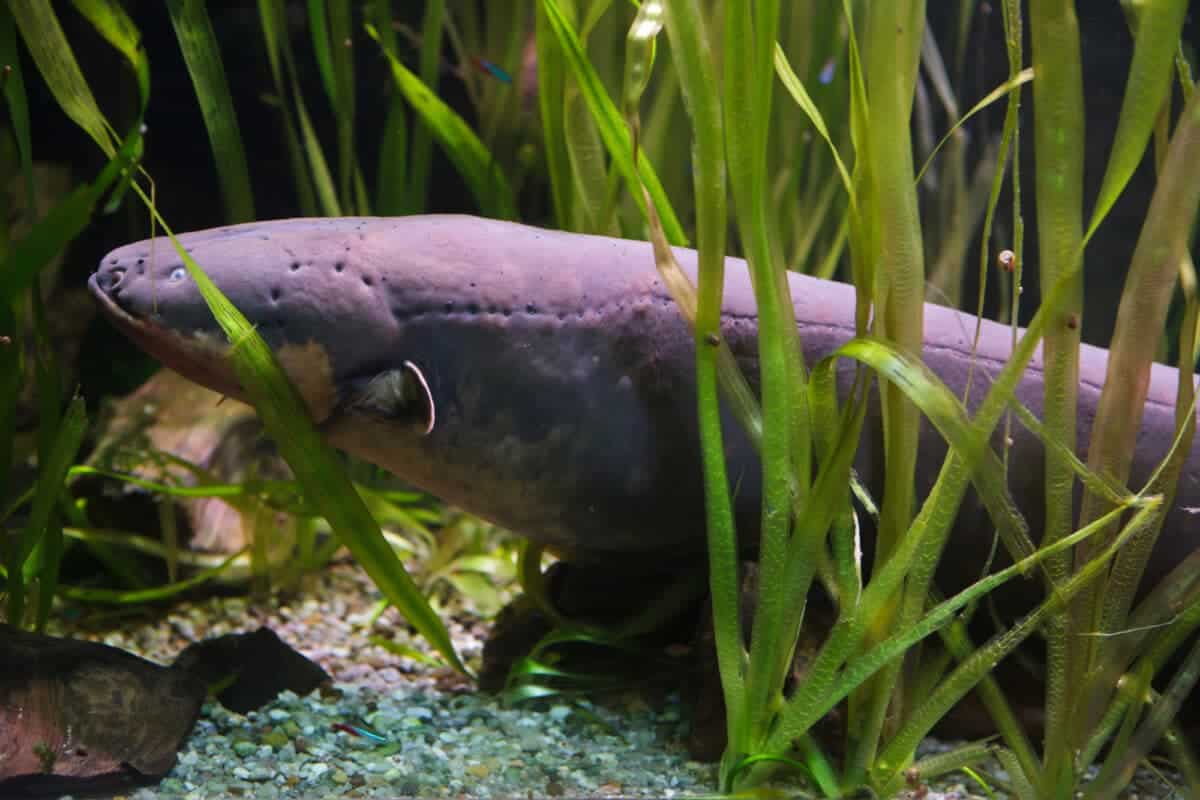
Mormyrids, commonly known as elephant fishes or baby whales, comprise a family of freshwater fish with about 200 species native to African rivers and lakes. These peculiar-looking fish are characterized by elongated snouts, small eyes, and rigid bodies. All mormyrids are weakly electric fish, possessing an electric organ in their tail derived from modified muscle cells. Unlike the powerful shocks of electric eels, mormyrids produce weak electric discharges typically less than 1 volt, which they use primarily for navigation, communication, and mate selection rather than stunning prey.
What makes mormyrids extraordinary is the complexity of their electrical communication system. Each species has evolved a unique Electric Organ Discharge (EOD) pattern—functioning essentially as a species-specific electrical “signature.” Within species, individuals have distinct electrical “fingerprints” that convey information about size, sex, social status, and reproductive readiness. Males and females often have noticeably different EOD patterns, with males typically producing longer-duration signals. During courtship, pairs engage in elaborate electrical “conversations,” synchronizing and modifying their discharge patterns. Remarkably, mormyrids possess brain-to-body weight ratios comparable to those of birds and marsupials, with a significantly enlarged cerebellum dedicated to processing electrical information. This enlarged brain, called the mormyrid brain, has become a model system for neuroscientists studying how brains process sensory information. Recent research has revealed that some mormyrid species can detect the electric signals of predatory catfish and adjust their own electrical output to avoid detection—essentially employing electrical camouflage. Their specialized sensory abilities and communication systems make mormyrids one of the most sophisticated examples of bioelectricity in the animal kingdom.
Echidnas Primitive Electroreceptive Mammals

Echidnas, along with platypuses, are the only living members of the monotremes—the most primitive group of mammals that still lay eggs rather than giving birth to live young. Found throughout Australia and New Guinea, echidnas (primarily the short-beaked echidna, Tachyglossus aculeatus) possess a lesser-known but remarkable ability: electroreception. While not as sensitive as their platypus relatives, echidnas have electroreceptors in their elongated.
Conclusion:

The astonishing diversity of animals capable of generating or sensing electricity underscores the power and creativity of evolution. From the high-voltage shocks of electric eels and rays to the subtle electric fields detected by bees and platypuses, bioelectricity serves a wide range of functions including navigation, communication, predation, and defense. These electric abilities, whether used to stun prey, locate mates, or sense the environment in total darkness, demonstrate how different species have evolved unique solutions to survive and thrive in their habitats. As scientists continue to study these creatures, their adaptations not only deepen our understanding of the natural world but also inspire innovations in fields such as neuroscience, robotics, and bioengineering. Nature’s electrifying ingenuity is a powerful reminder of the complexity and wonder that lies beneath the surface of life on Earth.
Worried about unexpected vet bills?
Pet insurance can cover thousands in unexpected vet costs. Get a free quote from Lemonade in under 2 minutes.
Get My Free Quote →Sponsored · Opens Lemonade.com

As a little kid, I fell in love with nature, wildlife, and animals. Living in the USA, South Africa, Italy, China and Germany gave me the opportunity to discover the world's Wildlife. My favorite animals are Mountain Gorillas, Siberian Tigers, and Great White Sharks.
I'm a certified PADI Open Water Diver, went to Everest Base Camp and Trekked Gorillas in Uganda. I hold a Master of Science in Economics and Finance.
Please send any feedback to feedback@animalsaroundtheglobe.com
- 13 Popular Dog Breeds Vets Secretly Wish You’d Stop Choosing - June 11, 2026
- 11 Bizarre Things Hummingbirds Secretly Love (But Most Gardeners Ignore) - June 11, 2026
- 12 Differences Between Old World and New World Monkeys - June 10, 2026