


The ocean’s apex predator, the great white shark, has long captivated our imagination and instilled both fear and awe. When reports surface about record-breaking specimens, particularly in U.S. waters, marine biologists, shark enthusiasts, and the public alike take notice. In recent years, several sightings of massive great white sharks along American coastlines have sparked debates about whether we’re witnessing the largest great whites ever documented in U.S. territories. This article explores the evidence behind these claims, examines the most notable contenders for the title, and puts these sightings into scientific context.
Understanding Great White Shark Sizes

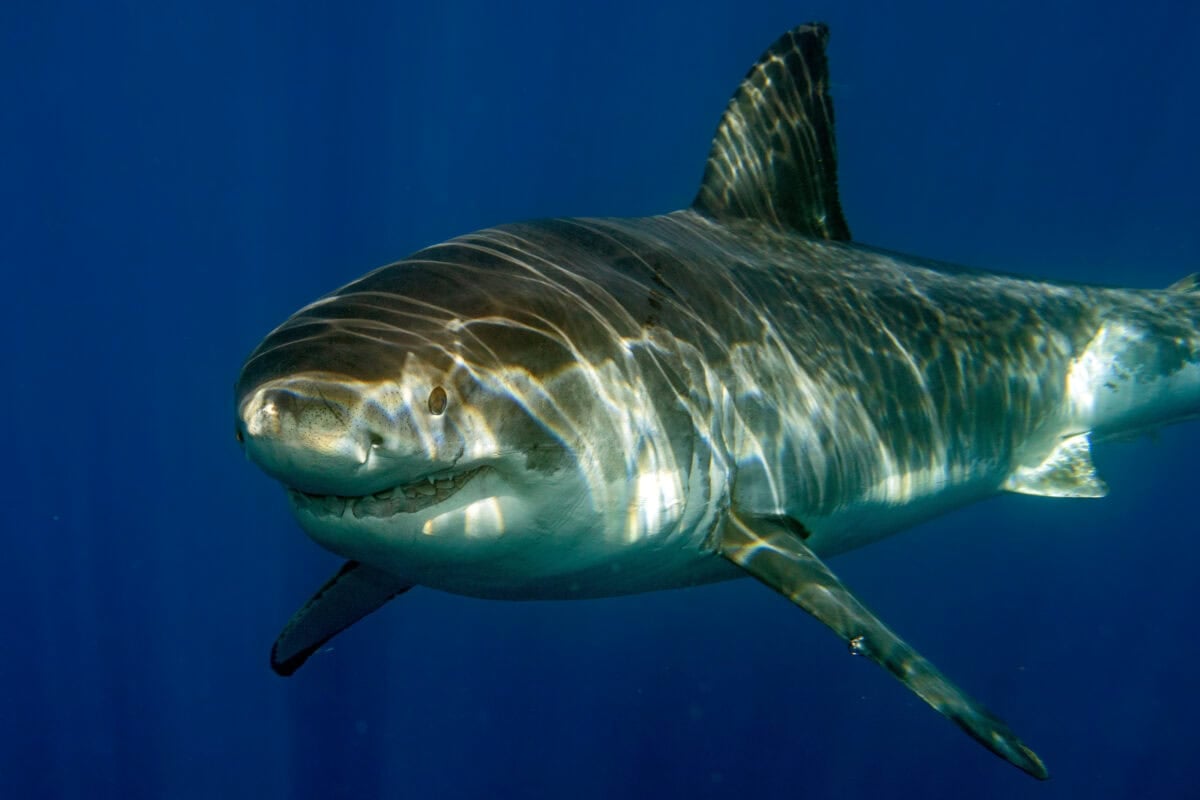
Great white sharks (Carcharodon carcharias) are among the largest predatory fish on the planet. Female great whites typically grow larger than males, with average adults measuring between 15-16 feet in length. Males generally reach maturity at around 8-9 years, measuring 11-13 feet, while females mature later at 12-14 years, reaching 15-16 feet. The maximum size potential for great whites has been a subject of scientific debate, with most experts agreeing that they can exceed 20 feet in exceptional cases, though such specimens are extremely rare. Weight estimates suggest adult great whites typically range from 1,500-4,000 pounds, with the largest individuals potentially exceeding 5,000 pounds.
Deep Blue: The Famous Pacific Giant

When discussing enormous great whites in U.S. waters, Deep Blue immediately comes to mind. First documented near Guadalupe Island, Mexico, and later spotted off Hawaii (which counts as U.S. waters), Deep Blue is estimated to be approximately 20 feet long and weighing around 4,500 pounds. This massive female shark gained international fame when marine biologist Ocean Ramsey swam alongside her off Oahu in January 2019. While Deep Blue doesn’t permanently reside in U.S. waters, her appearances near Hawaii make her a contender for the largest great white documented in American territorial waters. Researchers believe Deep Blue is between 45-50 years old, showcasing how these apex predators can continue growing throughout their long lifespans.
The Atlantic Contender: The Cape Cod Giant

On the East Coast, reports from Cape Cod, Massachusetts, have included sightings of exceptionally large great whites in recent years. In 2019, researchers from the Atlantic White Shark Conservancy documented a female great white estimated to be 17-18 feet long—extraordinarily large for Atlantic waters. This shark, nicknamed “The Queen” by some researchers, represents one of the largest specimens ever documented in the Atlantic U.S. coastal waters. Cape Cod has seen an increasing population of great whites in the past decade, attributed to the rebounding seal populations that provide an abundant food source. While not as large as Deep Blue, this Atlantic specimen nonetheless represents an exceptional size for the region.
Record-Breaking Claims and Scientific Verification

Despite frequent claims about massive great whites exceeding 25 feet in length, most such reports lack scientific verification. Marine biologists emphasize the importance of distinguishing between estimated measurements based on visual sightings and actual scientific measurements. The largest scientifically verified great white was caught near Ledge Point, Western Australia, in 1987, measuring 19.7 feet and weighing approximately 4,200 pounds. Within U.S. waters specifically, the largest verified specimens have generally been in the 17-20 foot range. It’s worth noting that accurate size measurement of living specimens in the wild presents significant challenges, often leading to overestimations during brief encounters.
The California Coast’s Notable Giants

California’s waters have hosted some remarkable great white specimens over the years. Researchers working with Stanford University’s Marine Science program have tagged several large sharks exceeding 18 feet along the California coast, particularly near the Farallon Islands—an area known as the “Red Triangle” due to its high concentration of great whites. In 2019, a particularly large female estimated at around 18 feet was documented near Santa Cruz. While impressive, these California giants still don’t quite match the proportions of Deep Blue. The California coast serves as a crucial feeding ground for great whites, who often migrate between the state’s waters and an area in the Pacific known as the “White Shark Café,” located between Baja California and Hawaii.
Technology Revolutionizing Shark Measurements

Modern technology has revolutionized how researchers document and measure great white sharks. Drones now provide aerial perspectives that help scientists make more accurate size estimations than traditional boat-based observations. Additionally, advanced tagging systems with built-in measuring capabilities offer more precise data. OCEARCH, a non-profit marine research organization, has pioneered techniques to briefly capture, measure, and tag large white sharks. Their data has revealed several specimens exceeding 15 feet in U.S. waters, though none have surpassed the 20-foot mark with verified measurements. These technological advances help separate fact from fiction when examining claims about record-breaking sharks.
Historical Records and Legendary Specimens

Historical records suggest there may have been even larger great whites in U.S. waters in the past. A specimen reportedly caught off Long Island in 1916 was claimed to be 22 feet long, though this measurement has been disputed by modern scientists. Similarly, a great white caught near Block Island, Rhode Island in 1933 was reported to be over 20 feet, but again, verification remains challenging given the limited documentation techniques of the era. These historical accounts, while intriguing, often lack the scientific rigor of modern measurement methods, making it difficult to determine if today’s largest specimens are indeed record-breakers or simply better documented than their historical counterparts.
The Impact of Climate Change on Great White Distributions

Climate change is altering the traditional distribution patterns of great white sharks in U.S. waters. Warming ocean temperatures have expanded the northern range of these predators, with significant populations now being documented in areas where they were historically rare, such as the Gulf of Maine. Research suggests that larger, older sharks may be better equipped to adapt to changing conditions and expand into new territories.
This raises the possibility that as climate patterns shift, we might see more exceptionally large specimens appearing in previously unusual locations along U.S. coastlines. Some scientists hypothesize that changing oceanic conditions could potentially influence maximum size potential, though more research is needed to confirm this theory.
Size Estimation Challenges and Common Misconceptions

Accurately measuring great white sharks presents significant challenges. When viewed from boats or underwater, the impressive girth and intimidating presence of these predators often lead to size overestimations. Studies have shown that even experienced observers tend to overestimate shark lengths by 15-30% in open water encounters. Furthermore, distortions from underwater photography and camera angles can make sharks appear larger than they actually are. Many viral photos purporting to show “record-breaking” sharks have later been debunked through scientific analysis. Without standardized measuring techniques—ideally with the shark in a controlled environment alongside reference points—claims about “largest ever” specimens should be approached with healthy skepticism.
Tracking Massive Sharks: Notable Tagged Giants

Satellite tagging programs have provided unprecedented insights into the movements of large great whites in U.S. waters. OCEARCH’s tracking data has followed several massive sharks, including “Mary Lee,” a 16-foot female who became famous as people followed her movements along the Eastern Seaboard. Another notable giant, “Katharine,” measured 14.5 feet when tagged and continued growing as researchers tracked her extensive journeys.
In the Pacific, a large male named “Jaws” measuring over 15 feet has been monitored traveling between California and Hawaii. These tracking programs not only provide size data but reveal how these large apex predators migrate across vast distances, often crossing between different U.S. coastal regions and international waters.
Why Size Matters: Ecological Significance

The presence of exceptionally large great whites in an ecosystem indicates more than just impressive statistics—it suggests a healthy marine environment. Large, mature sharks play crucial roles in oceanic food webs and typically represent older individuals who have successfully navigated decades of challenges. Female great whites don’t reach sexual maturity until they’re approximately 15 feet long, meaning the largest specimens are often important for population reproduction.
The largest sharks can take down larger prey, including adult elephant seals and even small cetaceans, fulfilling a unique ecological niche. From a conservation perspective, protecting waters where these marine giants thrive is essential for maintaining balanced marine ecosystems, as removing top predators can trigger cascading effects throughout the food web.
Media Sensationalism vs. Scientific Reality
Media coverage of large great white sharks often veers into sensationalism, with headlines proclaiming “monster” sharks and “record-breakers” without sufficient evidence. The 1975 film “Jaws” created a lasting cultural impression of massive great whites that exceeds biological reality, with the fictional shark in the movie estimated at 25 feet—larger than any scientifically verified specimen.
When evaluating claims about the “largest ever” great white in U.S. waters, it’s essential to distinguish between scientifically verified data and entertainment-driven hyperbole. While genuinely large sharks deserve recognition and study, exaggerated claims can undermine legitimate conservation efforts by portraying these essential predators as monsters rather than vital components of marine ecosystems.
Conclusion: The Ongoing Search for Giants

Based on current scientific evidence, Deep Blue—at approximately 20 feet long and over 4,500 pounds—remains the largest reliably documented great white shark observed in U.S. waters, specifically during her appearances near Hawaii. While historical claims and unverified reports suggest there may have been larger specimens, none have been confirmed with modern scientific methods. The search for record-breaking sharks continues as research technology improves, potentially revealing even larger individuals in the future. Regardless of whether we’ve already seen the largest great white in U.S. waters or if greater giants remain undiscovered, these magnificent apex predators deserve our respect, protection, and continued scientific study as they fulfill their crucial ecological roles in our oceans.

From exploring the marine wonders in the Azores and witnessing the vast savannas of Kenya, to delving deep into the rich biodiversity of South Africa and traversing iconic landscapes in Australia and the US like Yellowstone, Chris's experiences are vast.
With a penchant for diving alongside sharks, the ocean holds a special place in his heart.
Through his academic insights, he champions wildlife conservation, striving with 'Animals Around The Globe' to cultivate a profound connection between humans and animals, enhancing our mutual appreciation.
Connect with him at Feedback@animalsaroundtheglobe.com.
- The Lizard That Shoots Blood From Its Eyes - July 21, 2026
- What Happens If Fireflies Stop Glowing? - July 21, 2026
- Coyotes Are Thriving in Every U.S. State — Even New York City - July 21, 2026