

Beneath the frigid Arctic waters swims one of nature’s most peculiar marine mammals – the narwhal, often dubbed “the unicorn of the sea.” What makes this elusive whale truly remarkable is its distinctive spiral tusk, a modified tooth that protrudes from the upper left jaw of males and occasionally females. This extraordinary appendage has captivated human imagination for centuries, inspiring myths and scientific curiosity alike. The narwhal’s singular feature has made it an icon of the Arctic ecosystem and a fascinating subject of ongoing research. As climate change transforms their icy habitat, understanding these mysterious cetaceans has become increasingly urgent, making the story of the whale with the spiral tooth more compelling than ever.
The Narwhal’s Evolutionary Origins

The narwhal (Monodon monoceros) belongs to the Monodontidae family, which includes only one other living species – the beluga whale. These two Arctic specialists diverged from a common ancestor approximately 5 million years ago during the early Pliocene epoch. Fossil evidence suggests that narwhals have inhabited Arctic waters for at least 45,000 years, evolving specialized adaptations for life in the extreme polar environment. Their closest relatives outside their immediate family are porpoises and oceanic dolphins, all belonging to the odontocete (toothed whale) suborder. Unlike most toothed whales that possess multiple functional teeth, the narwhal’s dentition evolved along a dramatically different path, resulting in the extraordinary spiral tusk that defines the species today. This evolutionary trajectory represents a specialized adaptation likely driven by sexual selection and possibly other functions still being unraveled by scientists.
Anatomy of the Spiral Tusk

The narwhal’s iconic tusk is actually an elongated upper left canine tooth that spirals counterclockwise as it grows, potentially reaching lengths of up to 10 feet (3 meters), though typically averaging 7 feet (2.1 meters). This extraordinary dental anomaly is unique among cetaceans and penetrates the upper lip, growing straight out from the head. What makes the tusk particularly remarkable is its structure – it contains millions of nerve endings and is covered by a permeable surface that may allow the whale to sense environmental conditions such as water temperature, pressure, and salinity. The tusk is also incredibly flexible, capable of bending up to 12 inches in any direction without breaking. Most astonishingly, the spiral pattern forms naturally as the tooth develops, creating what is essentially a left-handed helix. While most narwhals have a single tusk, approximately 1 in 500 males develop two tusks, with the right canine also growing outward. Though commonly called a “horn” in historical accounts, the biological reality of this modified tooth is far more complex and scientifically fascinating than any mythical attribution.
The Mystery of Tusk Function

For centuries, the function of the narwhal’s extraordinary tusk puzzled scientists and naturalists. Recent research has revealed multiple potential uses for this specialized sensory organ. Primarily, the tusk appears to serve as a sexual characteristic, with males using it to establish dominance hierarchies – a hypothesis supported by observations of males rubbing tusks in a behavior called “tusking.” However, the tusk’s hydrodynamic sensing capabilities suggest it also functions as a sophisticated environmental probe. Studies using drone footage have documented narwhals using their tusks to stun fish before feeding, tapping prey with quick, precise movements. The highly innervated structure may also help narwhals detect subtle changes in water conditions, potentially aiding in navigation and locating feeding grounds. Some researchers speculate the tusk might play a role in breaking through ice in emergency situations, though this remains unconfirmed. Perhaps most intriguingly, the tusk contains an annual growth record similar to tree rings, providing scientists with valuable data about the animal’s life history and environmental conditions over time. The multiplicity of potential functions suggests the tusk evolved under complex selective pressures rather than serving a single purpose.
Narwhal Biology Beyond the Tusk

While the tusk dominates discussions about narwhals, these marine mammals possess numerous other remarkable adaptations. Adults typically reach 13-18 feet (4-5.5 meters) in length and weigh between 1,760-3,530 pounds (800-1,600 kilograms), with females generally smaller than males. Their mottled black and white coloration provides excellent camouflage in Arctic waters, with older individuals appearing almost completely white. Unlike most cetaceans, narwhals lack a dorsal fin – an adaptation that allows them to swim easily under ice sheets. They possess a thick layer of blubber (up to 4 inches/10 cm) that comprises up to 40% of their body weight, providing crucial insulation in frigid waters. Narwhals are among the deepest-diving marine mammals, routinely descending to 4,900 feet (1,500 meters) and capable of reaching depths exceeding 6,000 feet (1,800 meters). Their specialized cardiovascular system allows them to reduce blood flow to non-essential organs during these remarkable dives, which can last up to 25 minutes. Additionally, narwhals possess one of the most specialized diets among cetaceans, feeding primarily on Greenland halibut, Arctic cod, and squid in deep-water environments.
The Narwhal in Indigenous Culture

For the Inuit and other Arctic indigenous peoples who have coexisted with narwhals for millennia, these whales hold profound cultural significance. Traditional hunting of narwhals has provided crucial sustenance in the harsh Arctic environment, with the skin and blubber (known as muktuk) offering an important source of vitamin C in a landscape where fresh fruits and vegetables are scarce. The tusk has been transformed into tools, artwork, and ceremonial objects of great spiritual importance. In Inuit mythology, the narwhal’s distinctive spiral tusk originated from a woman dragged into the ocean by a harpoon line, her twisted hair transforming into the characteristic spiral tusk. Many traditional stories portray narwhals as deeply spiritual beings with supernatural origins. Indigenous knowledge has provided scientists with valuable insights into narwhal behavior, migration patterns, and biology. Today, indigenous communities continue to hunt narwhals under carefully managed quotas, balancing traditional practices with conservation concerns. These communities also play a vital role in contemporary research and conservation efforts, combining traditional ecological knowledge with modern scientific approaches to protect this iconic Arctic species.
Historical Misconceptions and the Unicorn Legend

Throughout European history, narwhal tusks commanded extraordinary value and mystique, often traded as authentic unicorn horns with supposed magical properties. During the Middle Ages and Renaissance, these “alicorn” specimens were worth many times their weight in gold, believed to neutralize poison, cure melancholy, and even extend life. The Danish throne includes a ceremonial seat constructed in the 1670s using narwhal tusks thought to be unicorn horns, demonstrating their historical value. Queen Elizabeth I reportedly paid £10,000 – roughly equivalent to the cost of a castle at the time – for a narwhal tusk presented as a unicorn horn. The misidentification persisted even as European exploration of the Arctic increased, with many naturalists believing the spiraled appendages came from a type of sea unicorn rather than a whale. Not until the late 17th century did Western science begin to correctly identify the source of these mysterious tusks. The narwhal-unicorn connection represents a fascinating intersection of natural history, commerce, and mythology, illustrating how an actual biological phenomenon can transform into legend when encountered outside its natural context. Even today, the narwhal continues to be called the “unicorn of the sea,” a linguistic reminder of this centuries-old misunderstanding.
Narwhal Distribution and Migration Patterns

Narwhals are true Arctic specialists with a circumpolar distribution concentrated in the waters of Canada, Greenland, Norway, and Russia. Unlike many whale species, they don’t undertake long-distance migrations to warmer waters but instead follow seasonal ice movements within their Arctic range. The global population, estimated at approximately 170,000 individuals, divides into distinct subpopulations with separate migration routes and wintering grounds. During summer months, narwhals gather in shallow coastal waters and fjords that have become ice-free. As autumn approaches and sea ice begins to form, they migrate to deeper offshore wintering grounds where they spend up to six months beneath dense pack ice, surfacing to breathe in limited openings called polynyas. This winter habitat makes them particularly vulnerable to climate change, as shifting ice conditions alter access to breathing holes. Their site fidelity is remarkable, with satellite tracking revealing that individuals return to the same summer and winter locations year after year, following precise migration corridors. This specialized distribution pattern, coupled with their slow reproductive rate – females give birth to a single calf every three years after a 14-month gestation period – makes population recovery difficult if disruptions occur to any particular subpopulation.
Modern Scientific Research Techniques

Studying narwhals presents unique challenges due to their remote Arctic habitat and elusive nature, spurring innovative research approaches. Modern scientists employ a combination of satellite tagging, passive acoustic monitoring, aerial surveys, and environmental DNA (eDNA) sampling to track these mysterious whales. Particularly groundbreaking has been the use of crittercams – specialized video cameras temporarily attached to narwhals that provide unprecedented footage of their underwater behavior, including the first documentation of tusk use for feeding. Researchers have also developed minimally invasive methods to collect biological samples, including biopsy darting and analyzing exhaled breath condensate from blowholes. Genetic analysis reveals population structures and relationships between different narwhal groups, while stable isotope studies of tusks provide long-term records of dietary shifts and environmental changes. Perhaps most promising is the integration of traditional indigenous knowledge with these technological approaches, creating comprehensive research partnerships that respect cultural perspectives while advancing scientific understanding. Drone technology has revolutionized behavioral observation, allowing researchers to monitor narwhal social interactions without disturbing the animals. Together, these research methods are gradually illuminating the complex life history of this enigmatic Arctic whale, though many aspects of narwhal biology remain poorly understood compared to other cetacean species.
Conservation Challenges in a Changing Arctic

Narwhals face mounting conservation challenges as their Arctic ecosystem undergoes rapid transformation. Climate change represents the most pervasive threat, with Arctic temperatures warming at more than twice the global average, dramatically reducing sea ice extent and altering prey distribution. This shifting icescape disrupts traditional migration routes and potentially limits access to crucial deep-water feeding grounds. Industrial development brings additional pressures, including increased shipping through newly ice-free Arctic passages, creating noise pollution that may interfere with the narwhals’ sensitive echolocation and communication. Oil and gas exploration introduces risks of habitat degradation and potential catastrophic spills in remote regions where cleanup would prove extremely difficult. Narwhals show particular sensitivity to anthropogenic disturbances, often reacting to noise by implementing dramatic escape dives that can cause physiological stress or even stranding events. Though currently classified as “Least Concern” on the IUCN Red List, certain subpopulations face more significant threats, with the East Greenland population listed as “Critically Endangered.” Traditional subsistence hunting continues under managed quotas, though concerns exist about sustainable harvest levels for some populations. Successful conservation will require international cooperation across the narwhal’s range, incorporating indigenous perspectives and addressing cumulative impacts rather than single threats in isolation.
The Tusk Trade: Historical and Contemporary

The narwhal tusk has been a valued commodity for centuries, moving through complex trade networks from Arctic hunters to distant markets. Historically, Viking and medieval European traders acquired tusks from indigenous peoples, marketing them as unicorn horns commanding astronomical prices due to their purported magical properties. A single tusk could sell for the equivalent of several million dollars in today’s currency during peak demand. While the unicorn myth has faded, contemporary tusk trade continues under strict regulation. Legal trade occurs primarily through indigenous communities with subsistence hunting rights, who may sell tusks with proper documentation. Current market values range from $15,000 to $30,000 for a high-quality specimen, with prices varying based on size, spiraling pattern, and condition. Unfortunately, illegal poaching and black market trafficking remain persistent problems, with tusks sometimes entering markets through fraudulent documentation or smuggling. International regulations, including CITES (Convention on International Trade in Endangered Species) Appendix II listing, require export permits for legal trade. Various countries have implemented additional restrictions; for instance, the United States allows narwhal product imports only from Canada under strict documentation requirements. Education efforts focus on informing potential buyers about legal requirements and the importance of supporting only legitimate, sustainable sourcing that benefits indigenous communities rather than illegal trafficking networks.
Narwhal Social Structure and Communication
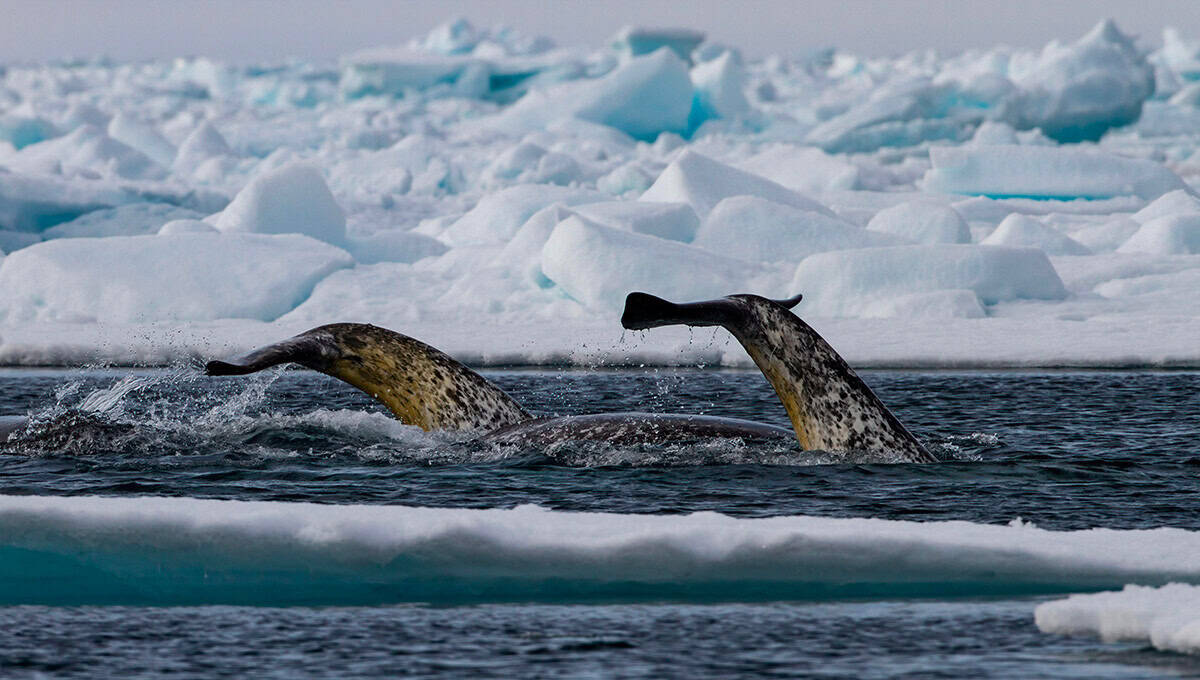
Narwhals maintain complex social structures that researchers are only beginning to understand. They typically travel in pods of 5-10 related individuals, though these smaller groups often congregate into much larger assemblages of hundreds or even thousands during seasonal migrations. Unlike many whale species with male-dominated social hierarchies, narwhal groups appear to organize around matrilines, with females and their offspring forming the core social units. Social bonds seem particularly important during winter months when narwhals navigate limited breathing holes in dense pack ice, requiring coordinated behavior for survival. Their communication system involves a sophisticated repertoire of clicks, whistles, and pulsed sounds that likely convey information about identity, location, and environmental conditions. Research suggests narwhals produce specialized echolocation clicks that may help them locate ice openings and navigate in the dark Arctic winter. Intriguing observations of “tusking” behavior, where males cross and rub their tusks together, may represent a form of tactile communication potentially related to establishing dominance hierarchies or strengthening social bonds. Some scientists hypothesize that the highly innervated tusk might even be capable of detecting the bioelectric fields of other narwhals, adding another potential dimension to their social interactions. Though vocalization patterns have been recorded, the specific meanings of different call types remain largely undeciphered, representing an active area of ongoing research.
Narwhals in Popular Culture and Art

The narwhal’s distinctive appearance has secured its place in contemporary popular culture, appearing across various media with increasing frequency. Children’s literature has embraced the narwhal as a whimsical character in books like “Not Quite Narwhal” and “Narwhal: Unicorn of the Sea,” often using its unicorn-like appearance to explore themes of belonging and identity. The whale has become a recurring motif in interior design and fashion, adorning everything from clothing to home décor items, particularly in Scandinavian-influenced styling. Digital culture has further amplified narwhal popularity, with memes featuring narwhals gaining viral status and the infamous “Narwhal Song” accumulating hundreds of millions of views online. Wildlife documentaries including BBC’s “Blue Planet” have captured stunning footage of narwhals, introducing these elusive creatures to global audiences. Contemporary artists draw inspiration from both scientific understanding and cultural mythology, with narwhal imagery appearing in paintings, sculptures, and mixed-media installations that often highlight Arctic conservation concerns. Museums worldwide display historical narwhal tusks alongside educational exhibits explaining their biological function and cultural significance. This cultural presence serves an important ambassadorial role, raising public awareness about Arctic ecosystems and the conservation challenges facing these remarkable whales. Interestingly, the narwhal’s representation has evolved from mysterious sea unicorn to a more scientifically accurate portrayal, reflecting growing environmental awareness and scientific literacy.
The Continuing Mystery of the Spiral Tooth

Despite centuries of fascination and modern scientific investigation, the narwhal’s spiral tooth continues to present unresolved questions that captivate researchers. The extraordinary dental development that produces a left-handed helix extending up to ten feet remains incompletely understood at the genetic and developmental level. Scientists still debate the evolutionary pathway that led to this unique adaptation, with some suggesting it represents sexual selection run to extreme, while others point to potential ecological functions driving its development. The hydrodynamic sensing capabilities of the tusk have been demonstrated through identification of millions of nerve endings, but exactly what information narwhals gather through this sensory organ and how they process it remains speculative. The observation that some females – approximately 15% – develop tusks raises questions about gender-specific functions and the selective pressures at work. Even more peculiarly, some males develop two tusks, suggesting developmental plasticity whose triggers remain unknown. The narwhal’s spiral tooth exemplifies how even in an age of advanced scientific inquiry, nature still harbors profound mysteries. As research technologies advance and investigators gain more opportunities to observe these elusive Arctic whales, the spiral tooth will undoubtedly continue revealing new insights about sensory biology, evolutionary processes, and specialized adaptations to extreme environments. The continuing enigma of this extraordinary dental modification ensures the narwhal will remain a subject of scientific wonder for generations

- The Whale With a Spiral Tooth - July 17, 2026
- The Arctic Wind Pattern That’s Bringing Cold Snaps to Texas - July 16, 2026
- This Insect Has the Quickest Strike in Nature - July 16, 2026
Leave a comment
You must be logged in to post a comment.