
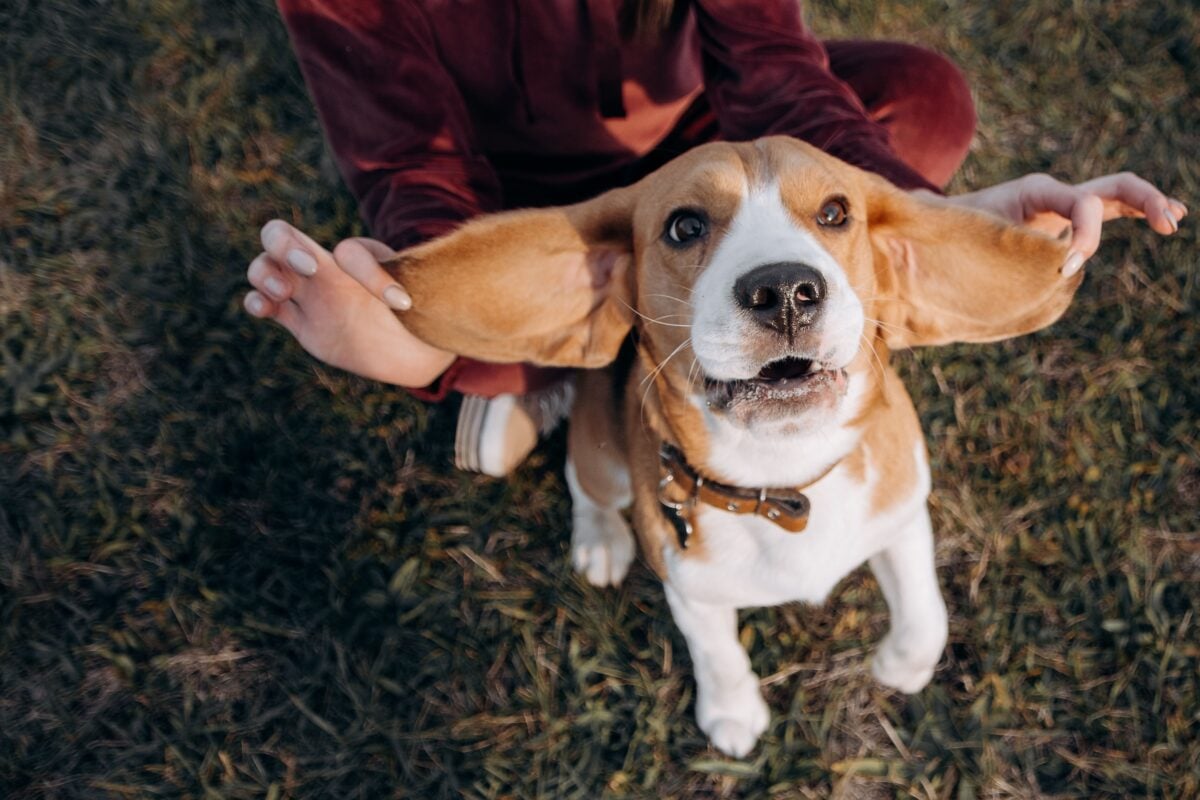
Ever wondered how your dog seems to understand you so well? Recent research reveals that , shedding light on the deep bond between humans and their canine companions.
Discovering the Canine ‘Voice Area’
In a groundbreaking study, scientists trained dogs to remain still in an fMRI scanner, allowing them to observe brain activity in response to various sounds. They found that, much like humans, dogs have a dedicated ‘voice area’ in their brains that responds specifically to vocal sounds. This area is located in a similar region to that of humans, suggesting a shared evolutionary trait.
Interestingly, this voice area in dogs showed heightened activity when exposed to familiar human voices, indicating that dogs not only recognize but also process these voices in a specialized manner. This finding helps explain why dogs are so attuned to their owners’ voices and can distinguish them from others.
Emotional Processing of Human Voices

Beyond mere recognition, dogs also process the emotional content of human voices. The study revealed that certain brain regions in dogs are more responsive to positive emotional cues, such as laughter, compared to negative ones like crying. This mirrors the human brain’s response to emotional vocalizations, highlighting a shared mechanism for processing emotions.
This emotional attunement may be why dogs are often sensitive to their owners’ moods and can provide comfort during distressing times. Their ability to process emotional nuances in human voices underscores the depth of the human-dog relationship.
Evolutionary Implications

The presence of a specialized voice area in both human and dog brains suggests that this trait may have evolved over 100 million years ago, dating back to a common ancestor. This challenges the notion that such brain structures are unique to primates and indicates a more ancient origin for voice processing capabilities.
Understanding this shared evolutionary trait provides insight into how dogs have become such integral parts of human society, capable of complex social interactions and communication.
Training Dogs for fMRI Studies
Conducting fMRI studies with dogs posed unique challenges, as the animals needed to remain perfectly still during scans. Researchers employed positive reinforcement techniques, training dogs over several months to lie motionless in the scanner. This innovative approach allowed scientists to gather high-quality data without causing stress to the animals.
The success of this training not only facilitated the current study but also opens the door for future research into canine cognition and behavior, offering a non-invasive method to explore the canine mind.
Comparing Canine and Human Auditory Processing
While both species have dedicated voice areas, there are notable differences in auditory processing. In humans, a significant portion of the auditory cortex is devoted to processing vocal sounds, whereas in dogs, a larger area responds to non-vocal sounds. This suggests that, although dogs are attuned to human voices, their auditory systems are optimized for a broader range of sounds.
These differences highlight the adaptability of the canine brain and its ability to process a diverse array of auditory information, which is essential for survival and social interaction.
Implications for Human-Dog Communication

Understanding that dogs process human voices in specialized brain regions has practical implications for training and communication. It suggests that dogs are more responsive to vocal cues than previously thought, emphasizing the importance of tone and emotion in commands and interactions.
By leveraging this knowledge, owners can enhance their communication with their dogs, leading to stronger bonds and more effective training outcomes.
Future Directions in Canine Cognitive Research

This study paves the way for further exploration into how dogs perceive and interact with the human world. Future research could investigate how different breeds process human voices, the impact of age on auditory processing, and how training influences these neural mechanisms.
Such studies will deepen our understanding of canine cognition and may lead to improved methods for training, therapy, and companionship.
Conclusion
The discovery that dogs process familiar human voices in specialized brain regions underscores the profound connection between humans and their canine companions. This shared neural mechanism not only explains dogs’ remarkable responsiveness to human vocalizations but also highlights the evolutionary depth of our bond. As we continue to unravel the mysteries of canine cognition, one can’t help but wonder: what other secrets do our loyal friends hold?

- Animal Cognition Says Ravens Can Remember Individual Human Faces for Years After a Single Encounter - July 17, 2026
- 8 US States With the Most Wolverines - July 17, 2026
- Neuroscience Says When a Sea Otter Holds Another Otter's Paw While Sleeping It Isn't Just Endearing – It's a Bond Maintenance Behaviour That Runs on the Same Social Chemistry That Humans Use to Keep Their Closest Relationships Intact. - July 17, 2026