
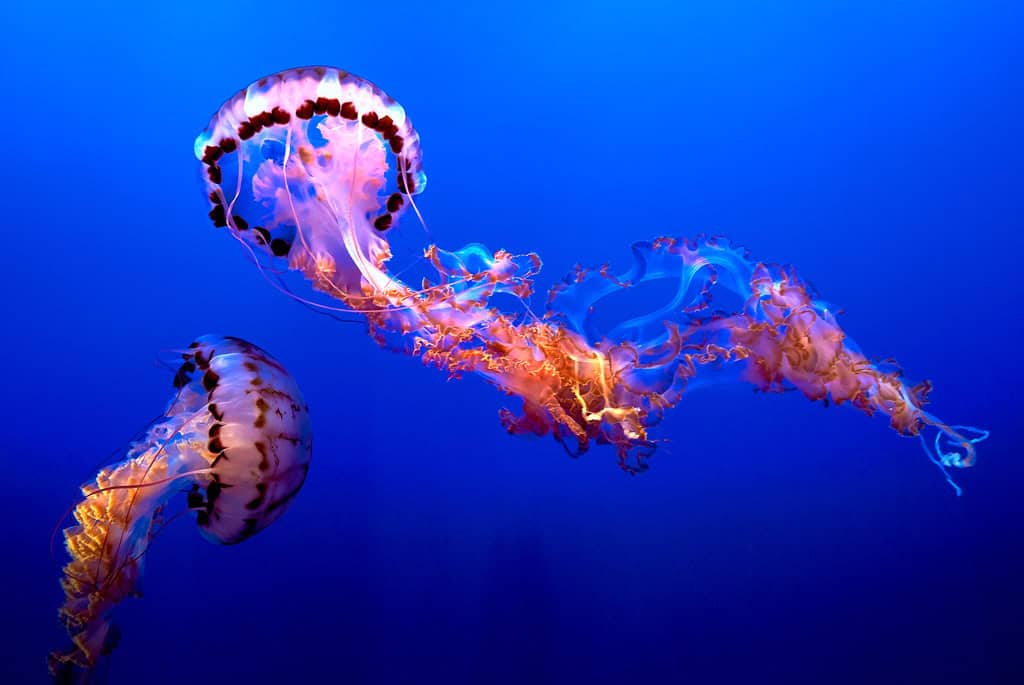
Deep in the world’s oceans lives a creature that seems more science fiction than reality. Certain jellyfish species have evolved remarkable mechanisms to not just capture prey, but to control it through sophisticated biological weapons. These gelatinous predators, despite lacking brains, employ complex neurotoxins and physical adaptations that allow them to manipulate their victims’ behavior and physiology. From venom that induces paralysis to specialized structures that ensure prey capture, these jellyfish represent one of nature’s most fascinating examples of predatory control. This article explores the extraordinary mechanisms jellyfish use to dominate their prey and how these adaptations have helped them thrive for over 650 million years in Earth’s oceans.
The Ancient Predators of the Deep
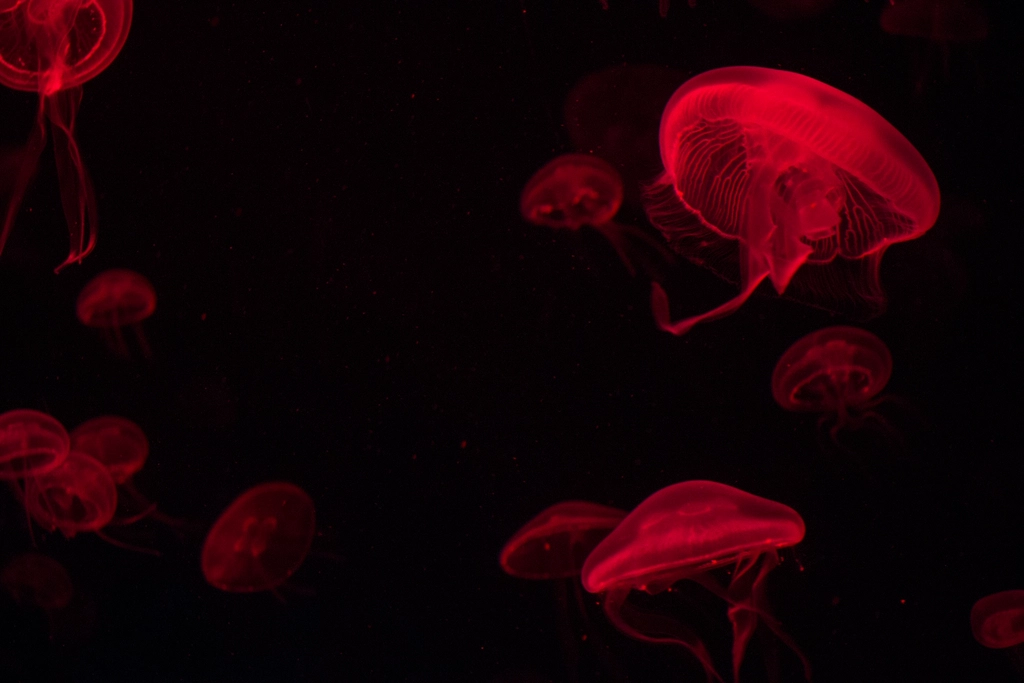
Jellyfish belong to the phylum Cnidaria, one of the oldest animal groups on Earth, having evolved over 650 million years ago. Despite their simple body structure—consisting primarily of water (up to 95%), with no brain, heart, or central nervous system—these creatures have developed sophisticated predatory mechanisms. Their longevity as a species speaks to the effectiveness of their hunting strategies, which have remained relatively unchanged for hundreds of millions of years. These ancient hunters have perfected the art of prey capture and control through evolutionary adaptations that compensate for their physical simplicity, allowing them to thrive in virtually every ocean environment from shallow coastal waters to the deepest ocean trenches.
The Deadly Arsenal: Specialized Nematocysts

The primary weapons in a jellyfish’s arsenal are specialized cells called nematocysts, housed within structures known as cnidocytes. These microscopic capsules contain coiled, venomous harpoons that can fire with remarkable speed—in just 700 nanoseconds, making them one of the fastest cellular processes in nature. When triggered by physical contact or chemical signals, these nematocysts explosively discharge, injecting venom into the prey. A single jellyfish tentacle can contain thousands to millions of these stinging cells, creating an efficient capture system. The box jellyfish, for example, possesses approximately 5,000 nematocysts per tentacle, each capable of delivering a potent neurotoxin that can paralyze small fish almost instantly. This sophisticated firing mechanism operates through a pressure-based system that requires no neural input, allowing even these brainless creatures to execute precise attacks.
Neurotoxic Control Mechanisms

The venom injected by jellyfish contains complex neurotoxins that directly interfere with the prey’s nervous system. These toxins target ion channels in nerve cell membranes, disrupting normal electrical signaling and often causing paralysis. For example, the box jellyfish’s venom contains proteins that create pores in cell membranes, allowing an uncontrolled influx of calcium ions that triggers cell death and tissue destruction. In smaller prey, this leads to almost instantaneous immobilization. Some jellyfish toxins specifically target neuromuscular junctions, preventing prey from coordinating escape movements. The Portuguese man-of-war produces toxins that simultaneously affect both the cardiovascular and nervous systems of prey, ensuring rapid incapacitation. This multi-system attack demonstrates the sophisticated biochemical control these seemingly simple organisms can exert over their victims’ bodies.
The Box Jellyfish: Nature’s Perfect Predator

Among jellyfish species, the box jellyfish (Chironex fleckeri) stands out as perhaps the most sophisticated predator. Unlike most jellyfish that drift passively and encounter prey by chance, box jellyfish actively hunt using a cluster of 24 eyes grouped into four sophisticated visual structures called rhopalia. These eyes provide nearly 360-degree vision and allow the creature to navigate toward prey with purpose. Their venom is among the most potent in the animal kingdom—a single box jellyfish contains enough toxin to kill 60 adult humans. When they strike fish prey, the venom causes immediate paralysis by attacking multiple body systems simultaneously. The box jellyfish can then control the movement of its prey by retracting its tentacles, drawing the immobilized victim up to its digestive cavity. This combination of active hunting and powerful venom makes the box jellyfish an apex predator in its ecosystem despite its seemingly fragile construction.
Irukandji Syndrome: Mind Control Through Venom

Perhaps the most disturbing example of jellyfish control over other organisms comes from the tiny Irukandji jellyfish. Only about the size of a fingernail, this species produces venom that causes a unique and severe condition in humans called Irukandji syndrome. What makes this syndrome remarkable is how it affects the mind and behavior of victims. The venom triggers an enormous release of catecholamines (stress hormones), causing victims to experience a sense of impending doom, extreme anxiety, and irrational behavior. In prey animals, this neurological manipulation likely prevents escape even if physical paralysis is incomplete. Scientists believe this psychological component of the venom evolved specifically to control prey behavior, ensuring that even if the physical symptoms don’t fully immobilize the victim, the psychological effects prevent effective escape responses. This represents one of the most sophisticated examples of biochemical behavior modification in the natural world.
The Portuguese Man-of-War’s Coordinated Hunting Strategy
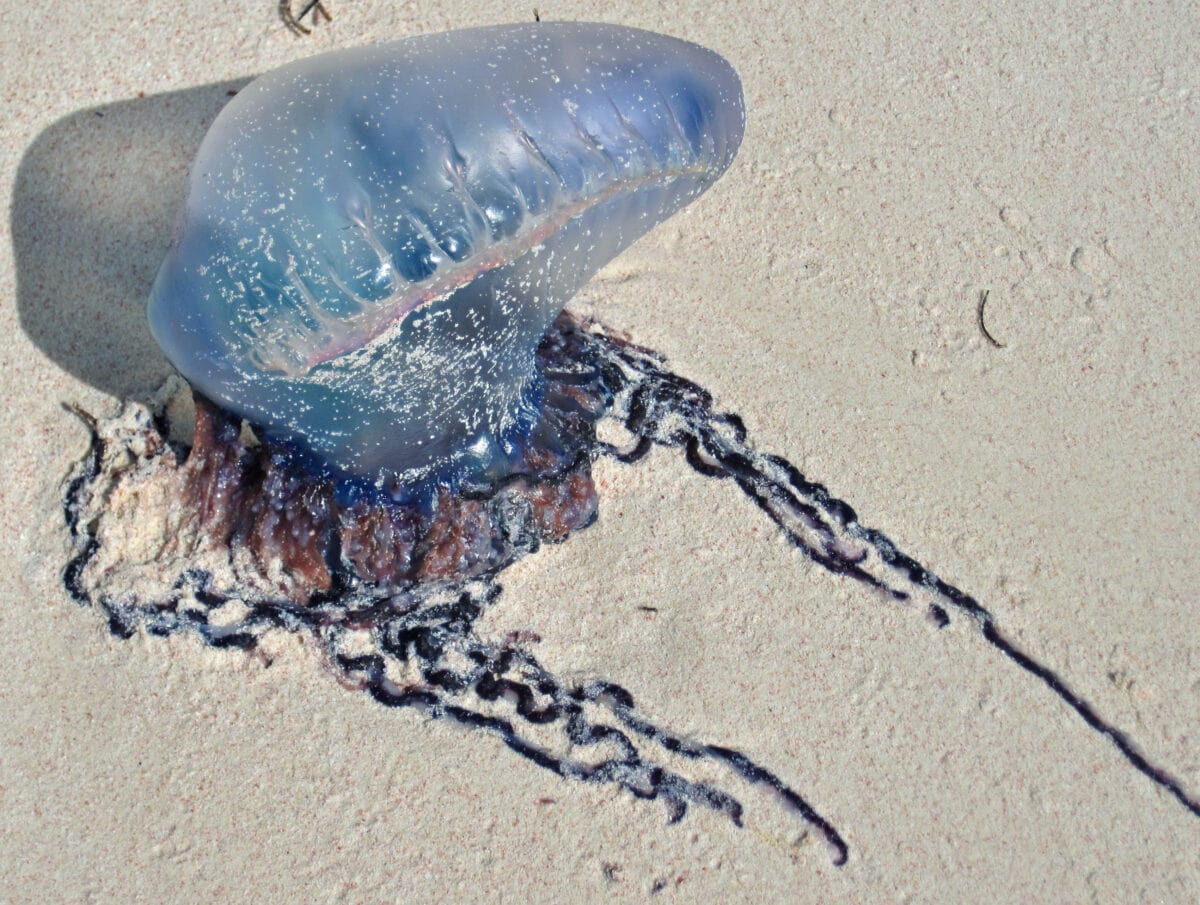
The Portuguese man-of-war (Physalia physalis), though technically a colonial organism composed of specialized individual animals (zooids) rather than a true jellyfish, demonstrates remarkable prey control mechanisms. Its tentacles can extend up to 100 feet (30 meters) below the surface, creating an extensive fishing net. When prey contacts these tentacles, specialized contractile cells rapidly shorten, wrapping around the victim and bringing it into contact with more stinging cells. This coordinated contraction happens without central nervous control, instead relying on a decentralized system that allows different parts of the tentacle to respond independently. The venom delivery is equally sophisticated, with different types of nematocysts specialized for penetrating different prey types. Some contain barbed threads that hook into prey tissue, while others inject spreading toxins that affect larger areas. This diversified approach ensures control over a wide variety of prey species, from small fish to larger crustaceans.
Bioluminescent Lures: Attracting and Confusing Prey

Some deep-sea jellyfish species have evolved bioluminescent capabilities that serve as sophisticated prey control mechanisms. Species like Atolla wyvillei, commonly known as the coronate medusa, produce pulsing rings of blue light when disturbed. This “burglar alarm” display initially evolved as a defense mechanism to attract predators that might eat whatever was attacking the jellyfish. However, this same light display also attracts curious smaller organisms that become prey themselves. The crystal jellyfish (Aequorea victoria) produces green fluorescent protein that creates a glowing ring around its margin, attracting planktonic organisms that mistake the light for bioluminescent prey of their own. These light displays effectively control prey behavior by manipulating their natural attraction to light sources in the deep sea environment. Once drawn in by these hypnotic displays, prey organisms swim directly into the jellyfish’s trailing tentacles, where they are stung and captured.
Chemical Camouflage and Mimicry

Some jellyfish species have developed chemical mimicry to control prey behavior. These jellyfish produce compounds that mimic the chemical signals used by prey species, essentially creating an olfactory illusion that manipulates victim behavior. For example, certain hydromedusae release chemicals similar to those emitted by copepods (small crustaceans) during mating. This chemical deception attracts male copepods seeking mates, drawing them directly into the jellyfish’s tentacles. Other species release compounds that mimic food sources for target prey, creating a chemical lure that operates beyond visual detection. This chemical manipulation represents a sophisticated form of predatory control that works even in dark or murky waters where visual hunting would be impossible. The ability to hijack prey communication systems demonstrates how jellyfish have evolved multiple sensory approaches to controlling prey behavior.
Physical Adaptations for Prey Manipulation

Beyond their venomous capabilities, jellyfish possess physical adaptations specifically designed for prey control. Their tentacles contain specialized muscle cells that can contract rapidly when prey is detected, preventing escape. The umbrella-shaped bell of many jellyfish species can pulse rhythmically, creating water currents that draw prey toward waiting tentacles. Some species, like the upside-down jellyfish (Cassiopea), have evolved to rest upside-down on the ocean floor, extending their tentacles upward to capture prey swimming overhead. This position allows them to create feeding currents by pulsing their bells, actively controlling the movement of water and potential prey toward their tentacles. The sticky nature of jellyfish tentacles also plays a crucial role in prey capture, with specialized adhesive cells working alongside stinging cells to ensure that once contacted, prey remains attached long enough for the venom to take effect.
Digestive Control: Breaking Down Prey While Alive

Once prey is captured and immobilized, jellyfish employ another form of control through their digestive processes. Unlike many predators that kill prey outright, some jellyfish begin digesting their victims while they are still alive. Their digestive enzymes break down prey tissues externally before ingestion, a process called extracellular digestion. These powerful enzymes can rapidly dissolve soft tissues, allowing the jellyfish to absorb nutrients directly through its tentacles or mouth-arms. In some species, like the moon jellyfish (Aurelia aurita), prey remains alive but immobilized during the early stages of this process, trapped in a state of paralysis while being slowly digested. This method of digestion represents another level of physiological control, as the jellyfish essentially transforms its prey into a nutrient solution without requiring complex internal digestive systems. The efficiency of this process allows jellyfish to handle prey much larger than themselves.
Evolutionary Arms Race: Prey Adaptations and Jellyfish Countermeasures
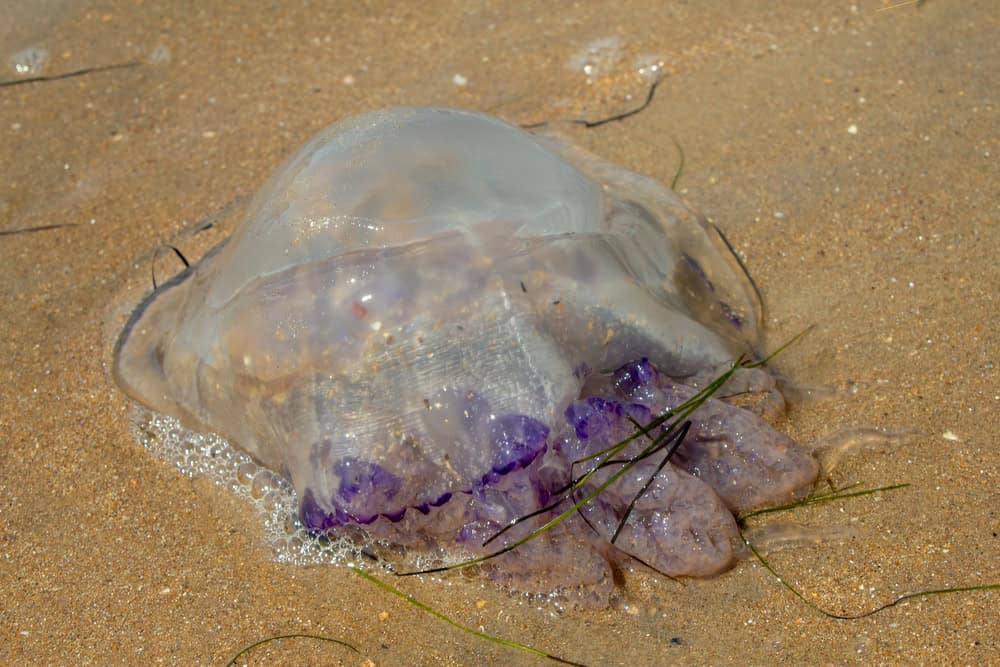
The relationship between jellyfish and their prey represents a classic evolutionary arms race. As prey species develop resistance to jellyfish venom or behavior that helps them avoid capture, jellyfish evolve more sophisticated control mechanisms. Some fish species have developed mucus coatings that reduce the effectiveness of nematocyst attachment, while others have learned to recognize and avoid jellyfish shapes. In response, certain jellyfish have evolved increasingly potent venoms or altered their hunting strategies. The upside-down jellyfish, for example, releases mucus containing stinging cells into the water, creating a “mobile hunting ground” that can capture prey without direct contact. This adaptation overcomes the avoidance behaviors of more agile prey. Similarly, some jellyfish species have developed specialized nematocysts that can penetrate the protective scales of fish, demonstrating how the control mechanisms continuously evolve in response to prey defenses.
Human Applications: Biomedical Research and Pharmaceutical Development

The sophisticated prey control mechanisms of jellyfish have not gone unnoticed by human researchers. The complex neurotoxins found in jellyfish venom are being studied for potential medical applications, particularly in pain management and neurology. Green fluorescent protein, first isolated from the crystal jellyfish, has revolutionized biomedical research by allowing scientists to track protein expression and cellular processes in living organisms. Some jellyfish venoms contain compounds that can selectively target cancer cells while leaving healthy cells untouched, offering promising avenues for cancer treatment research. The box jellyfish’s venom, despite its deadly reputation, contains proteins that may help treat cardiac conditions by precisely controlling calcium channels in heart muscle cells. These biomedical applications demonstrate how the prey control mechanisms evolved by jellyfish over millions of years may ultimately benefit human health through novel pharmaceutical developments.
The Future of Jellyfish Predation in Changing Oceans

As our oceans continue to change due to climate change, pollution, and overfishing, jellyfish populations are thriving in many regions. Rising ocean temperatures, reduced oxygen levels, and the removal of jellyfish predators and competitors all favor jellyfish proliferation. This population boom could significantly alter marine ecosystems, as jellyfish predation and prey control mechanisms affect food webs throughout the oceans. Some marine biologists predict that certain ocean areas may shift toward “jellyfish seas” where these gelatinous predators dominate the ecosystem. Their efficient prey control mechanisms, combined with their ability to thrive in degraded environmental conditions, may give jellyfish an edge in the marine environments of the future. Understanding how jellyfish control their prey is becoming increasingly important for predicting these ecosystem shifts and potentially mitigating their impacts on marine biodiversity and fisheries. As these ancient predators continue to adapt and evolve, their sophisticated mechanisms for controlling prey will likely play a crucial role in shaping the future of marine ecosystems worldwide.
Conclusion

The jellyfish’s ability to control its prey represents one of nature’s most fascinating examples of predatory adaptation. Despite their simple body structure and lack of central nervous system, these ancient creatures have evolved sophisticated mechanisms—from lightning-fast nematocysts and complex neurotoxins to bioluminescent lures and chemical manipulation—that allow them to effectively capture, immobilize, and consume prey. As oceans continue to change, understanding these predatory relationships becomes increasingly important for marine ecology and conservation efforts. The study of jellyfish prey control mechanisms not only illuminates an evolutionary success story spanning 650 million years but also offers promising applications in biomedical research and pharmaceutical development that may benefit human health. These gelatinous predators remind us that evolutionary sophistication doesn’t always require structural complexity, and that some of nature’s most effective adaptations can be found in its seemingly simplest creatures.

- The Most Vulnerable Mammals Facing a Hotter Planet - July 30, 2026
- The Bird That Can Recognize More Faces Than a Human - July 29, 2026
- How Army Ants Coordinate Massive Raids Without a Leader - July 29, 2026