


In the shadowy realm of nocturnal hunting, snakes have evolved one of nature’s most remarkable adaptations: the ability to “see” heat. Unlike humans, who become virtually blind in darkness, certain snake species possess specialized organs that detect infrared radiation, allowing them to locate warm-blooded prey even in complete darkness. This infrared vision gives these reptiles a significant advantage as predators, enabling them to strike with precision when their prey can’t see them coming. The sophisticated thermal detection system represents one of the animal kingdom’s most fascinating evolutionary developments, turning these serpents into highly efficient nighttime hunters.
The Science Behind Infrared Detection

Infrared detection in snakes isn’t technically “vision” in the traditional sense. Rather than using their eyes, infrared-sensitive snakes possess specialized sensory organs called pit organs or loreal pits. These organs detect infrared radiation (heat) emitted by warm-blooded animals. The pit organs contain thousands of temperature-sensitive receptors that can detect minute temperature differences—as small as 0.003°C—between an object and its surroundings.
This information is processed by the snake’s brain alongside visual data, creating a thermal “image” of their environment that allows them to perceive warm objects against cooler backgrounds. Scientists have discovered that this sensory information travels along the same neural pathways as visual information, integrating with visual data to create a comprehensive perception of the snake’s surroundings.
Pit Vipers: Masters of Thermal Detection

Pit vipers represent the most well-known group of snakes with advanced infrared detection capabilities. This family includes rattlesnakes, cottonmouths, copperheads, and some of the world’s most venomous species. Their name derives from the distinctive heat-sensitive pit organs located between their eyes and nostrils on each side of the head. These facial pits are remarkably sophisticated organs, essentially functioning as directional infrared sensors.
The pit structure includes a membrane stretched across the pit’s opening, which responds to infrared radiation by detecting temperature changes. When infrared radiation warms one area of the membrane more than another, the snake can determine the direction of the heat source. This directional sensitivity allows pit vipers to triangulate the precise location of prey with extraordinary accuracy, even in pitch darkness.
Pythons and Boas: A Different Approach
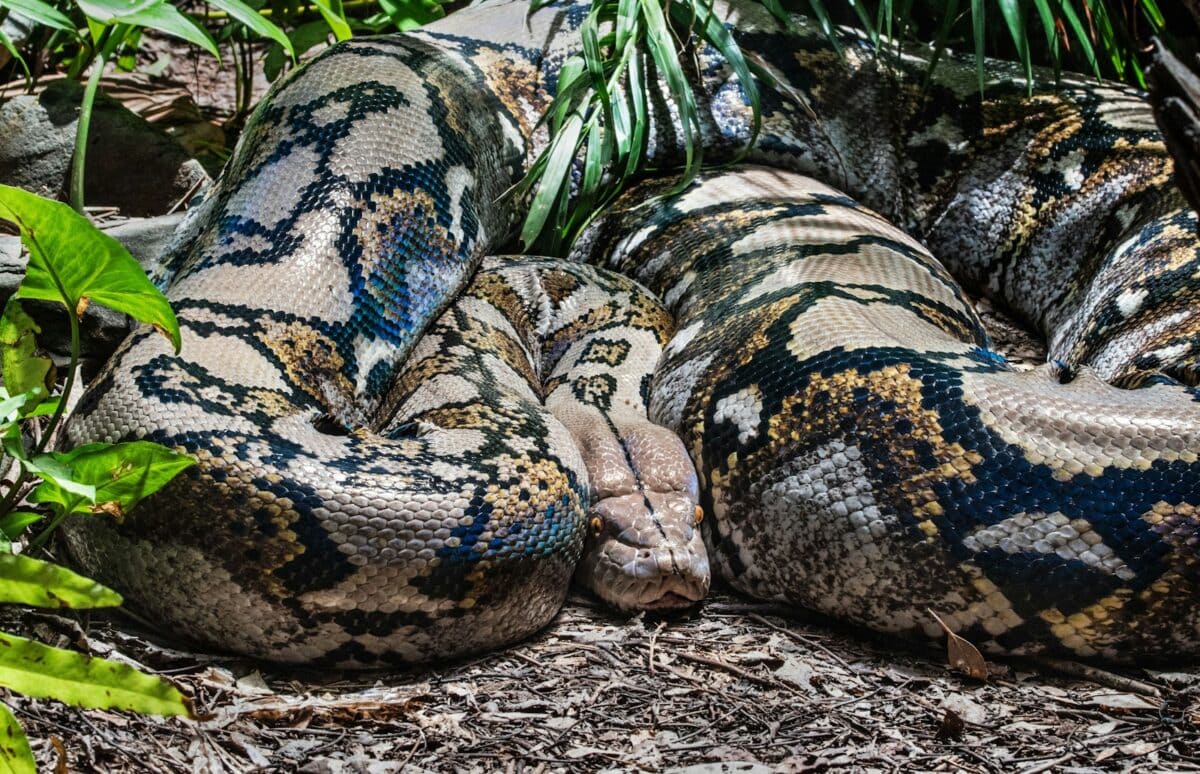
While pit vipers have their characteristic facial pits, pythons and boas have evolved a different infrared detection system. These snakes possess smaller heat-sensitive labial pits along their upper and lower lip scales. Though smaller than the facial pits of vipers, these labial pits work on similar principles, enabling the detection of infrared radiation.
Researchers have found that some large constrictor species, like the reticulated python and Burmese python, have more than 30 individual pit organs distributed along their lips. This arrangement provides these snakes with a wide-angle thermal detection field, allowing them to monitor a broader area for potential prey. This adaptation is particularly valuable for ambush predators that remain motionless until an unsuspecting prey animal comes within striking distance.
The Evolutionary Advantage

The evolution of infrared detection in snakes represents a remarkable case of convergent evolution, having developed independently in both the pit viper lineage and the python/boa family. This suggests the significant adaptive advantage this sense provides for nocturnal predators. The ability to detect prey through thermal radiation offers several key benefits: it allows snakes to hunt in complete darkness, detect prey hidden in vegetation or burrows, and strike with precision at vital areas of the prey’s body.
For cold-blooded reptiles that often hunt warm-blooded mammals and birds, this adaptation helps overcome the metabolic advantage their prey might otherwise have. Fossil evidence suggests that infrared-sensing capabilities began evolving approximately 30 million years ago, coinciding with the diversification of mammalian prey species and changes in global climate patterns.
Molecular Mechanics of Heat Detection

At the molecular level, infrared detection in snakes involves specialized ion channels in the membranes of sensory cells within the pit organs. The primary heat sensor identified in pit-bearing snakes is TRPA1 (transient receptor potential ankyrin 1), a protein that acts as a molecular temperature sensor. When exposed to infrared radiation, these channels open, allowing ions to flow into the sensory cells and generating nerve signals that are transmitted to the brain.
What makes snake TRPA1 channels remarkable is their extreme sensitivity—they can be activated by temperature changes of less than a tenth of a degree Celsius. Through genetic studies, scientists have discovered that snake TRPA1 has undergone significant evolutionary modifications compared to the same protein in other vertebrates, explaining its enhanced heat sensitivity. This molecular adaptation represents one of the most sensitive natural temperature detection systems known in the animal kingdom.
Neural Processing of Infrared Information

Once detected by the pit organs, infrared information must be processed by the snake’s brain to create a usable sensory perception. Neurological studies have revealed that infrared signals travel along the trigeminal nerve to the optic tectum, the same brain region that processes visual information from the eyes. This arrangement allows snakes to integrate thermal and visual data, creating a composite sensory picture of their environment.
The optic tectum in infrared-sensing snakes is notably larger than in other reptiles, reflecting the importance of this sensory modality. Using advanced imaging techniques, researchers have demonstrated that when a snake is presented with both visual and infrared stimuli, neurons in the optic tectum respond to both inputs, suggesting a truly integrated sensory experience rather than two separate perceptual channels. This neural integration allows for extremely precise targeting during predatory strikes.
Hunting in Complete Darkness

The practical advantage of infrared sensing becomes most apparent when observing snakes hunting in complete darkness. In laboratory studies where pit vipers were placed in light-proof environments with rodent prey, the snakes demonstrated strike accuracy comparable to their performance in lighted conditions. This confirms that infrared detection alone provides sufficient information for successful predation.
Thermal imaging studies of hunting snakes reveal that they typically target the warmest parts of prey animals—often the head and neck region—which contain vital organs and major blood vessels. This thermal targeting explains the remarkable precision of snake strikes, which frequently hit the most vulnerable areas of prey animals. For nocturnal species like many rattlesnakes, this ability to hunt effectively without any visual light represents their primary feeding strategy, allowing them to exploit ecological niches unavailable to strictly visual predators.
Range and Limitations of Infrared Detection

While extraordinarily sensitive, a snake’s infrared detection system does have limitations. The effective range varies by species but typically extends from a few centimeters to approximately one meter for most pit vipers. Larger species with more developed pit organs, such as some pythons, may detect heat signatures from slightly greater distances. Environmental factors significantly affect performance—high ambient temperatures reduce the thermal contrast between prey and background, limiting detection effectiveness.
Similarly, recently deceased prey rapidly lose their heat signature, explaining why many infrared-sensing snakes show little interest in cold prey. The directionality of the sense also has limits; snakes can determine the general location of a heat source but may need to adjust their position to pinpoint it precisely. These limitations help explain behavioral adaptations like the ambush hunting strategy common among infrared-sensing species, which minimizes the distance at which prey must be detected.
Comparing Snake Infrared Vision to Modern Technology

The infrared detection capabilities of snakes have inspired technological developments in thermal imaging. Modern thermal cameras function on similar principles to snake pit organs, detecting infrared radiation and translating it into visible images. However, in many ways, snake infrared systems still outperform human technology. While high-end thermal cameras can detect temperature differences of approximately 0.05°C, pit vipers can detect differences as small as 0.003°C—more than ten times more sensitive.
Additionally, the biological system operates with remarkable energy efficiency, requiring minimal metabolic energy compared to the power demands of electronic systems. Military and surveillance technologies continue to study snake infrared systems for inspiration in developing more sensitive, energy-efficient thermal detection devices. Some bioinspired sensors have already been developed based on the structure and function of snake pit organs, demonstrating the value of biomimicry in technological innovation.
Infrared Vision and Defensive Behaviors

Beyond hunting, infrared detection serves important defensive functions for snakes. The ability to detect warm-blooded animals approaching in darkness allows snakes to respond to potential predators before visual detection would be possible. This explains observations of rattlesnakes exhibiting defensive behaviors—coiling, rattling, and striking postures—when approached by humans or other large mammals in complete darkness.
For smaller infrared-sensing snakes that might themselves be prey for larger predators, this early-warning system provides crucial time to escape or prepare defensive responses. Studies on captive pit vipers have demonstrated that they can distinguish between threatening and non-threatening warm objects based on size and movement patterns, showing selective defensive responses to potential predators while ignoring smaller, non-threatening warm objects. This discriminatory ability helps conserve energy by preventing unnecessary defensive behaviors.
Adaptations for Different Habitats

The infrared sensing capabilities of snakes show fascinating adaptations to different habitats and hunting strategies. Arboreal (tree-dwelling) pit vipers often have their pit organs angled slightly upward, improving detection of prey moving through tree canopies. Desert-dwelling species typically have more sensitive pit organs to compensate for the greater thermal background noise in hot environments. Aquatic specialists like water moccasins (cottonmouths) can detect the heat signatures of prey partially submerged in water, as water does not block infrared radiation.
In tropical rainforests, where visual hunting is limited by dense vegetation and low light, species like the bushmaster have particularly well-developed infrared systems. These habitat-specific adaptations highlight the evolutionary fine-tuning of infrared sensing to local ecological conditions and demonstrate how this sensory modality has contributed to the successful colonization of diverse environments by these specialized predators.
Research and Future Discoveries

Scientific understanding of snake infrared detection continues to advance through multidisciplinary research. Recent studies using functional MRI have mapped the brain activity of snakes exposed to infrared stimuli, revealing previously unknown neural pathways. Genetic research is identifying additional molecular components involved in the transduction of infrared signals. One particularly promising area involves the study of TRPA1 channel variations across different snake species, which may explain differences in thermal sensitivity.
Ongoing comparative studies between infrared-sensing and non-sensing snake species provide insights into the evolutionary development of this sensory modality. As research techniques advance, scientists anticipate discovering more about how snakes integrate infrared information with other senses and how this integrated perception influences complex behaviors beyond simple predation. These discoveries not only enhance our understanding of snake biology but also continue to inspire biomimetic technologies and provide insights into sensory processing applicable to broader neuroscience.
Conclusion
The infrared detection capabilities of certain snake species represent one of nature’s most remarkable sensory adaptations, transforming these reptiles into highly specialized nocturnal predators. Through millions of years of evolution, pit vipers, pythons, and boas have developed extraordinarily sensitive thermal detection systems that allow them to perceive their environment in ways fundamentally different from human experience.
This unique sensory modality provides a compelling example of how evolution can produce specialized solutions to ecological challenges, in this case enabling effective predation in darkness. As research continues to unravel the complexities of snake infrared sensing—from the molecular mechanisms to neural processing and behavioral impacts—we gain deeper appreciation for the remarkable diversity of sensory experiences in the animal kingdom and potential inspiration for new technological developments based on nature’s designs.

From exploring the marine wonders in the Azores and witnessing the vast savannas of Kenya, to delving deep into the rich biodiversity of South Africa and traversing iconic landscapes in Australia and the US like Yellowstone, Chris's experiences are vast.
With a penchant for diving alongside sharks, the ocean holds a special place in his heart.
Through his academic insights, he champions wildlife conservation, striving with 'Animals Around The Globe' to cultivate a profound connection between humans and animals, enhancing our mutual appreciation.
Connect with him at Feedback@animalsaroundtheglobe.com.
- How Snakes Use Infrared Vision to Hunt in the Dark - August 6, 2026
- The Most Aggressive Animal Found in Each State - August 5, 2026
- The Fish That Can Survive on Land for Days - August 5, 2026
Leave a comment
You must be logged in to post a comment.