

The vast oceans covering over 70% of our planet are home to some of the most remarkable intelligent life forms on Earth. While we often associate intelligence with land mammals like primates and elephants, the underwater world boasts creatures with impressive cognitive abilities that have evolved to meet the unique challenges of marine environments. From problem-solving octopuses to tool-using dolphins, marine animals display fascinating forms of intelligence that sometimes rival or even surpass their terrestrial counterparts. This article explores 17 of the most intelligent ocean animals ever documented, showcasing their remarkable cognitive abilities, social structures, and adaptive behaviors that have helped them thrive in their watery domains.
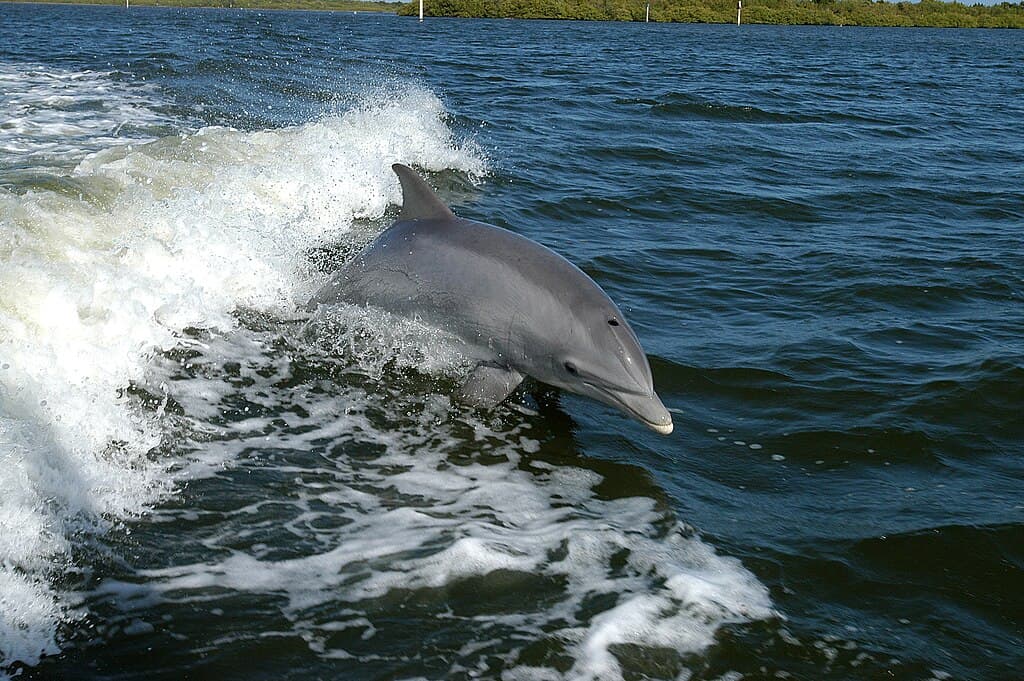
15. Bottlenose Dolphins The Ocean’s Cognitive Champions

Bottlenose dolphins (Tursiops truncatus) consistently rank among the most intelligent creatures on Earth, with cognitive abilities that rival those of great apes. These magnificent marine mammals possess the largest brain-to-body mass ratio of any animal after humans, featuring a highly developed neocortex—the part of the brain responsible for problem-solving and self-awareness. Research has demonstrated that bottlenose dolphins can recognize themselves in mirrors, understand symbolic language, comprehend abstract concepts, and even plan for the future. In the wild, they use signature whistles as individual names, essentially calling each other by name within their pods, demonstrating a sophisticated communication system. Perhaps most impressively, they exhibit cultural transmission of knowledge, where behaviors like using sponges as protective tools while foraging are taught across generations, showcasing a level of intelligence that continues to astonish researchers.
14. Octopuses Masters of Problem-Solving
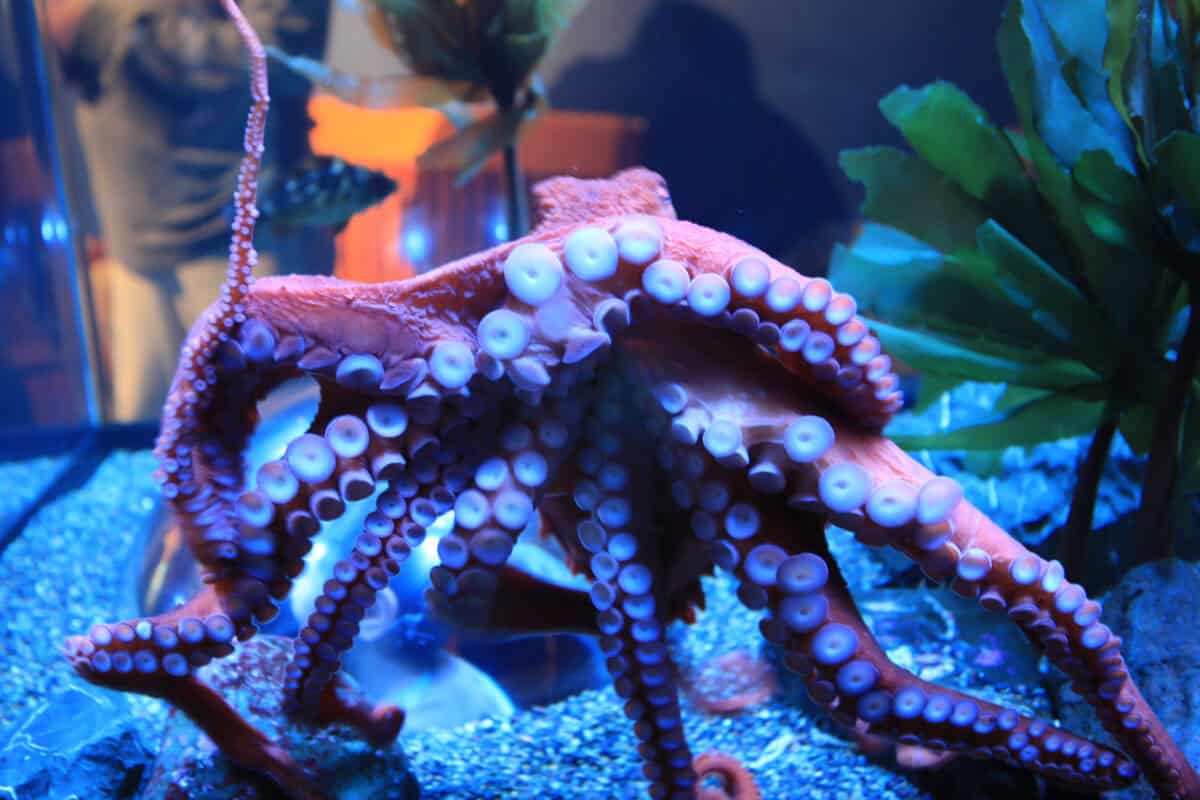
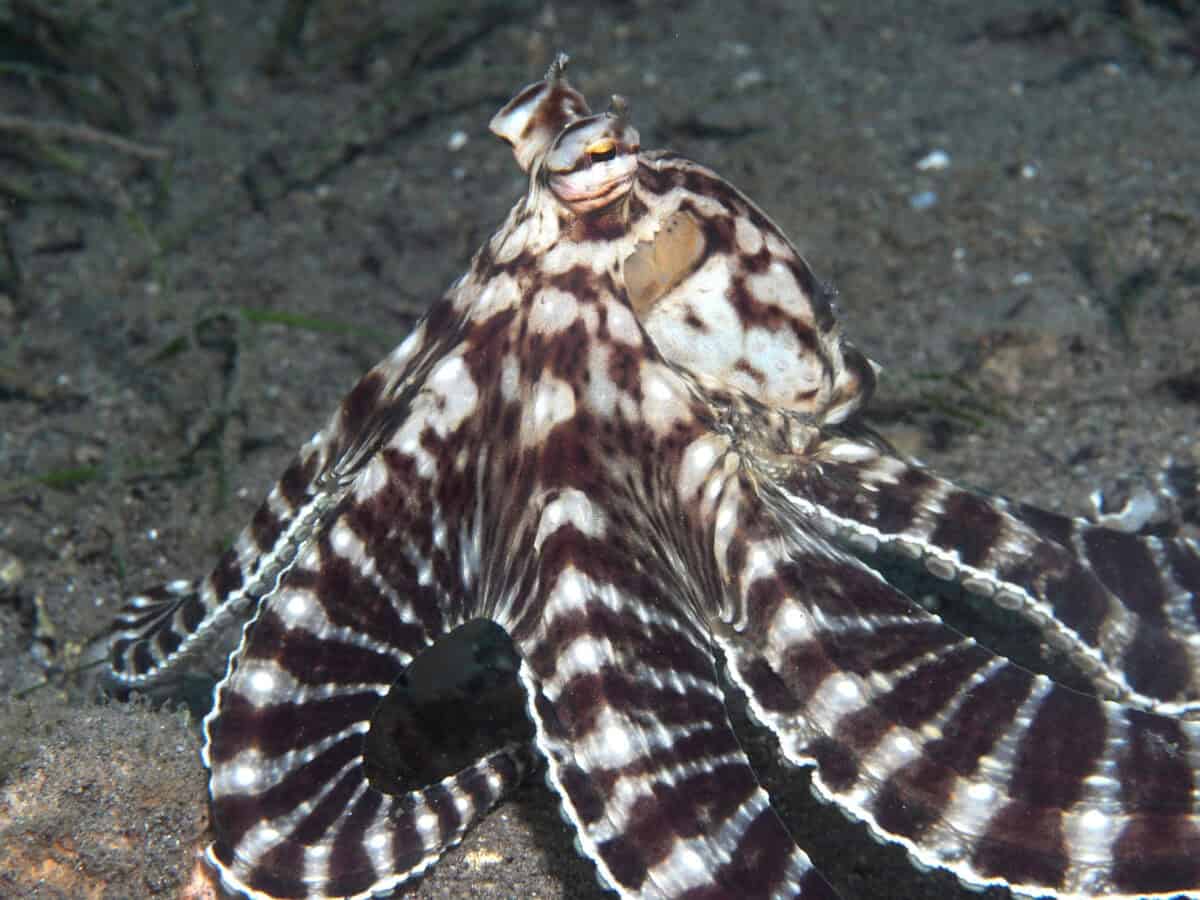
Octopuses represent a fascinating evolutionary puzzle—invertebrates with intelligence levels that seem improbable given their evolutionary distance from humans. The common octopus (Octopus vulgaris) and its relatives possess around 500 million neurons, with two-thirds distributed throughout their eight arms, creating a unique form of distributed intelligence. These remarkable cephalopods can solve complex mechanical puzzles, navigate mazes, use tools, and even escape from sealed containers by unscrewing lids from the inside. Famous octopus intelligence demonstrations include opening childproof pill bottles, assembling pieces of coconut shells as portable shelters, and learning through observation. Most astonishingly, octopuses can recognize individual human faces and exhibit distinct responses to different researchers, even though their vision systems evolved completely independently from vertebrates. Their intelligence is all the more remarkable considering their short lifespan of typically just 1-2 years, with no parental instruction since adults die shortly after reproduction.
13. Orcas (Killer Whales): Cultural Sophisticates

Orcas (Orcinus orca), the largest members of the dolphin family, display some of the most sophisticated cultural behaviors ever documented in non-human animals. These apex predators possess the second-largest brain of any marine mammal, with a highly developed limbic system that processes emotions and social connections. Different orca populations around the world have developed distinct hunting techniques, vocalizations, and social structures that are passed down through generations—essentially forming unique cultural identities. Some pods specialize in beach hunting, intentionally stranding themselves temporarily to capture seals, while others have developed cooperative wave-washing techniques to knock prey off ice floes. Perhaps most impressive is their development of pod-specific “dialects” that differ between groups, even when they share overlapping territories. Research has also documented complex emotions in orcas, including what appears to be grief when pod members die, showcasing their profound social intelligence and emotional capacity.
12. Sperm Whales Social Network Specialists

Sperm whales (Physeter macrocephalus) possess the largest brain of any animal on Earth, weighing up to 18 pounds (8 kg), and utilize this impressive neural hardware to maintain complex social structures. These deep-diving cetaceans organize themselves into matrilineal family units with distinctive vocal codas (patterns of clicks) that serve as cultural identifiers, essentially functioning as family dialects. Recent research suggests that these codas may represent a sophisticated communication system approaching the complexity of language, with different click patterns potentially carrying specific meanings. Sperm whales demonstrate babysitting behaviors where adults take turns watching over young while others dive for food, showing advanced cooperative strategies. Their neocortex is highly developed for processing social information and communication, and they maintain life-long social bonds within their family units. Perhaps most impressively, sperm whales engage in synchronized hunting techniques where groups coordinate to herd and capture prey in the lightless depths—a feat requiring sophisticated communication and planning in complete darkness.
11. Manta Rays Unexpected Intelligence

Manta rays (Manta birostris and Manta alfredi) have surprisingly emerged as one of the ocean’s intellectual standouts, particularly noteworthy as their intelligence evolved along a completely different evolutionary path than mammals or cephalopods. These graceful filter-feeders possess the largest brain-to-body weight ratio of any fish, with especially developed areas for learning, problem-solving, and social intelligence. In groundbreaking mirror tests, mantas have demonstrated potential self-recognition—a rare cognitive ability previously documented only in certain mammals and birds. They exhibit social learning behaviors, where individuals observe and copy techniques from others, and maintain complex social networks with preferred associations that can last for years. Manta rays also show remarkable curiosity, often approaching divers repeatedly and appearing to study them, suggesting an unusual level of interest in novelty for a fish. Their intelligence may have evolved to support their complex feeding strategies, which require coordinating group movements to maximize plankton intake in ever-changing ocean conditions.
10. Harbour Porpoises Acoustic Intelligence Specialists

Harbour porpoises (Phocoena phocoena), though often overshadowed by their dolphin relatives, possess a sophisticated form of intelligence specially adapted to their acoustic world. These small cetaceans have developed one of the most precise biosonars on the planet, capable of detecting objects as small as 2.5 centimeters at distances of 30 meters in murky waters. Their brains feature highly developed auditory processing centers that allow them to create detailed “sound pictures” of their environment. Research indicates that porpoises can distinguish between objects of different materials based solely on echolocation, essentially “seeing” not just the shape but also the composition of objects through sound. They demonstrate remarkable acoustic memory, recognizing specific sound signatures over extended periods, and can navigate through complex underwater landscapes using only their biosonar. These abilities represent a specialized form of intelligence that has evolved to process acoustic information with precision that sometimes exceeds our technological capabilities in similar underwater conditions.
9. Sharks Underestimated Ocean Intellectuals

Sharks, particularly species like the great white (Carcharodon carcharias) and tiger sharks (Galeocerdo cuvier), possess significantly higher intelligence than they’re traditionally credited with. Contrary to the “mindless eating machine” stereotype, these cartilaginous fish demonstrate impressive learning capabilities, social behaviors, and problem-solving skills. Great whites have demonstrated observational learning, where individuals watch others’ behavior before attempting new tasks themselves. Lemon sharks (Negaprion brevirostris) have been documented in controlled studies learning tasks faster than many mammals, and retaining that knowledge for months or years. Several shark species engage in cooperative hunting, coordinating their movements to herd prey into confined spaces. Perhaps most intriguingly, research indicates sharks possess impressive spatial memory, returning to specific locations across vast oceanic distances with pinpoint accuracy year after year. Their brains, while structured differently than mammals, feature enlarged cerebellums and telencephalons—regions associated with complex processing, learning, and memory—suggesting an evolutionary convergence toward intelligence despite following a completely different evolutionary path.
8. Humpback Whales Creative Problem-Solvers

Humpback whales (Megaptera novaeangliae) demonstrate a remarkable form of collective intelligence through their innovative feeding strategies. Their signature “bubble net feeding” technique involves groups of whales swimming in coordinated circles while releasing air bubbles to create a curtain that concentrates prey, showcasing both cooperative behavior and sophisticated planning. What makes this particularly impressive is that different populations have developed regional variations of this technique—essentially cultural adaptations to local conditions. These massive cetaceans also show remarkable tool use in their feeding strategies, slapping their tails to stun fish or using their pectoral fins to “herd” prey. Perhaps most famously, humpbacks create some of the most complex vocalizations in the animal kingdom, with their elaborate songs following specific syntactical rules that evolve over time. Males learn these songs from each other, with new elements spreading across entire ocean basins in what researchers describe as a form of cultural transmission. Their neural architecture includes specialized spindle cells—previously thought unique to humans and great apes—which are associated with social awareness, empathy, and rapid intuitive decision-making.
7. Sea Turtles Navigational Geniuses

Sea turtles, particularly leatherbacks (Dermochelys coriacea) and green sea turtles (Chelonia mydas), possess specialized cognitive abilities centered around their extraordinary navigational prowess. These ancient reptiles undertake some of the longest migrations of any marine animal, traveling thousands of miles between feeding and nesting grounds with astonishing precision. Research has revealed that they utilize multiple complex navigational cues, including detecting Earth’s magnetic field to determine both latitude and longitude—essentially creating a bicoordinate magnetic map of the world. Green sea turtles have demonstrated impressive spatial memory, returning to specific feeding areas with pinpoint accuracy after lengthy migrations. Experiments have shown they can process polarized light patterns to determine direction and potentially time of day. Beyond navigation, sea turtles show behavioral flexibility in feeding strategies, with individuals adapting their techniques based on local prey availability. Their specialized intelligence represents a fascinating case of cognitive evolution focused on solving specific ecological challenges rather than developing general problem-solving abilities, demonstrating how different selective pressures can shape intelligence in unique ways.
6. Groupers Collaborative Hunters
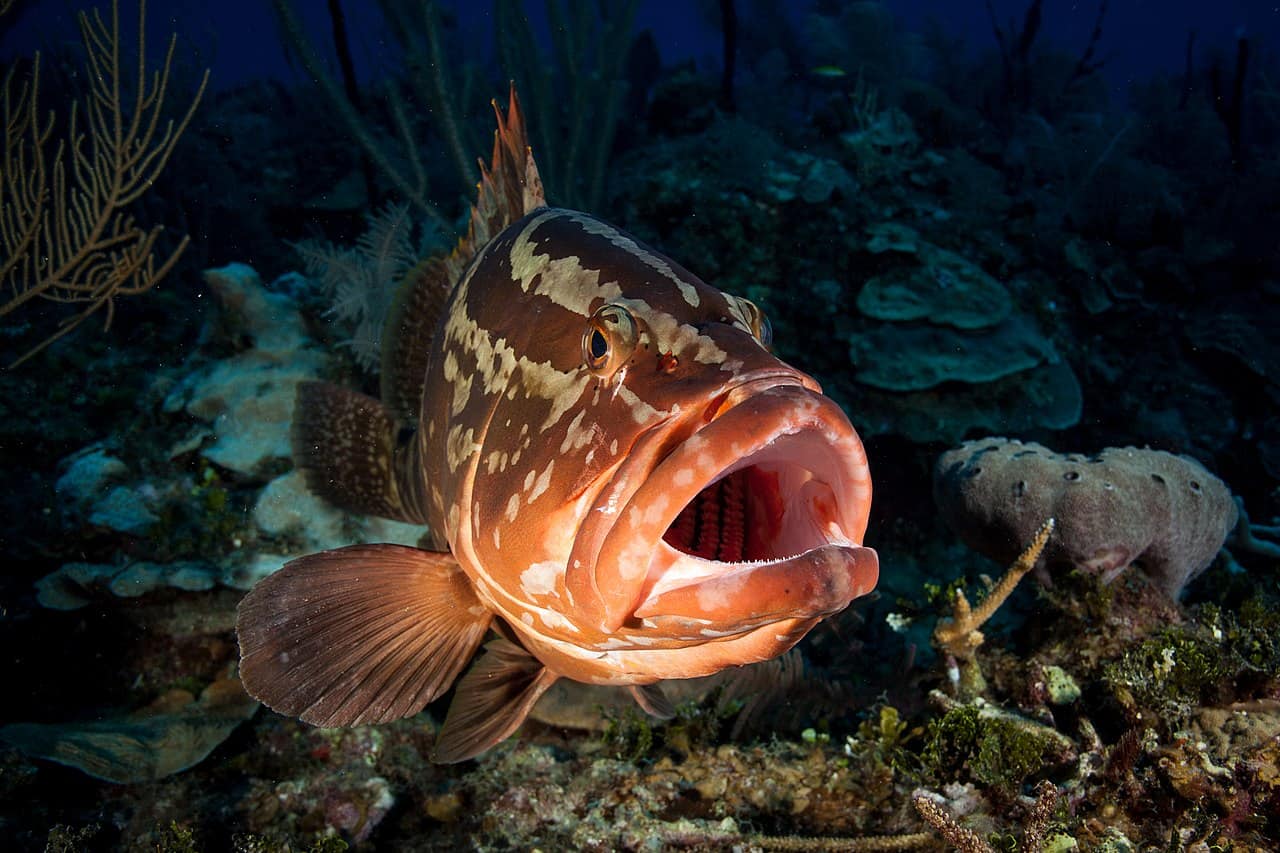
Certain grouper species, particularly the roving coral grouper (Plectropomus pessuliferus), demonstrate sophisticated cognitive abilities through their collaborative hunting behaviors with other species. These reef fish have been documented initiating coordinated hunts with moray eels by using specific head-shaking gestures to recruit hunting partners—one of the rare documented cases of referential communication in fish. The grouper guides the eel through the reef, using the eel’s slender body to flush prey from crevices while the grouper waits to catch escaping fish. This represents true collaborative hunting rather than mere opportunistic feeding. Some grouper species also engage in cooperative hunting with octopuses, showing remarkable behavioral flexibility. Research indicates groupers can recognize individual moray eels and preferentially recruit those who have been successful hunting partners in the past, suggesting they maintain social memory. These fish can also adapt their hunting strategies based on prey location and behavior, showing an understanding of cause and effect. Such sophisticated interspecies cooperation requires advanced cognitive abilities including planning, communication, and behavioral coordination—cognitive feats once thought exclusive to mammals and birds.
5. Sea Lions Adaptable Marine Intellectuals
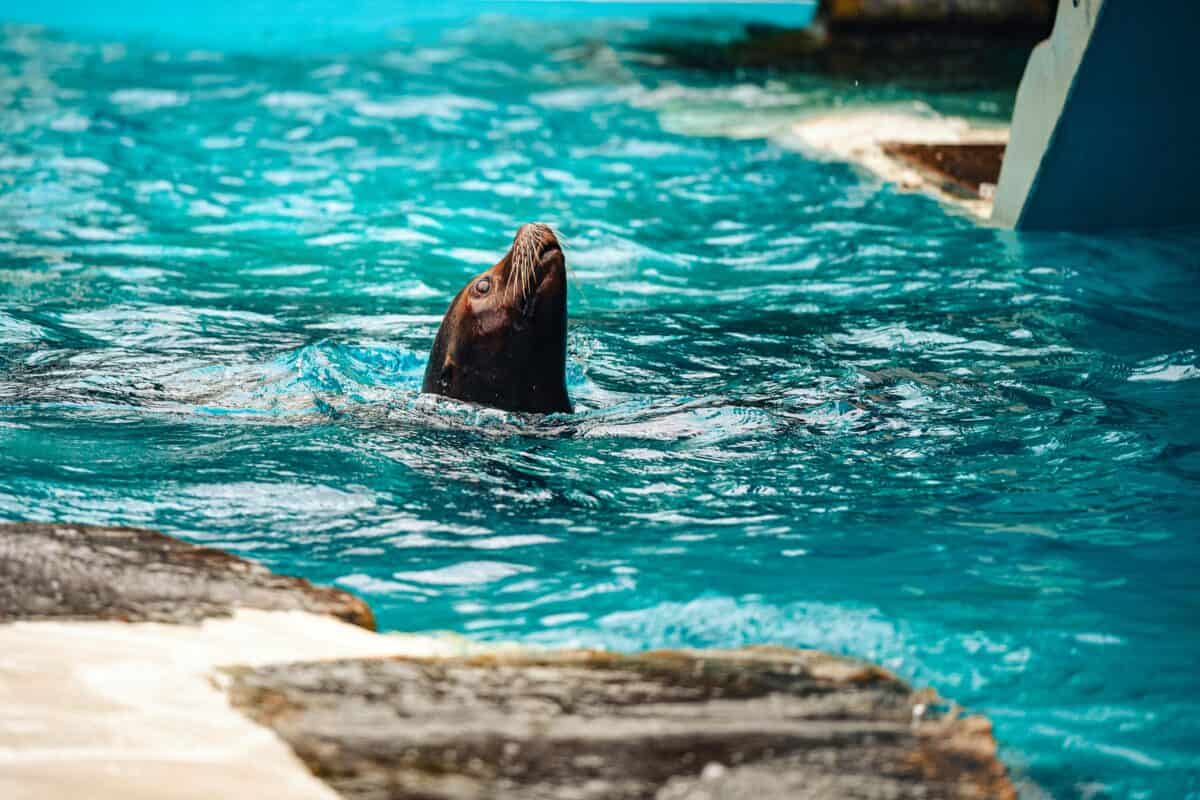
California sea lions (Zalophus californianus) and their relatives demonstrate remarkable cognitive flexibility and learning capabilities that rival many primates. These pinnipeds possess highly developed prefrontal cortices—brain regions associated with executive functions like planning and inhibition control. In laboratory settings, sea lions have demonstrated abstract concept formation, understanding relationships like “same” and “different” between objects with no physical similarities. They excel at learning complex sequences of behaviors and can remember them for years without practice. Perhaps most impressively, Rio (a female sea lion at the University of California, Santa Cruz) demonstrated the ability to understand simple syntax and semantic relationships, grasping that the order of commands changes their meaning—a foundational aspect of language. In the wild, sea lions show behavioral innovation when hunting, with documented cases of individuals developing unique feeding strategies like specializing in hunting certain fish species using specific techniques. They also demonstrate impressive social intelligence, maintaining complex hierarchical structures within their colonies and recognizing dozens of other individuals by their distinctive vocalizations.
4. Cleaner Wrasse Fish with Self-Awareness

The cleaner wrasse (Labroides dimidiatus), a small tropical reef fish, has dramatically changed our understanding of fish intelligence through groundbreaking research demonstrating potential self-awareness. These fish, barely a few inches long, passed a modified version of the mirror self-recognition test—the gold standard for testing self-awareness previously thought to be achievable only by great apes, elephants, dolphins, and magpies. When researchers placed a colored mark on their throats that was only visible in a mirror, the wrasses attempted to scrape off the mark by rubbing against surfaces, suggesting they recognized the reflection as themselves. Beyond this remarkable achievement, cleaner wrasse demonstrate sophisticated social cognition in their cleaning stations, where they remove parasites from larger client fish. They remember hundreds of regular clients, adjust their service quality based on client options (providing better service when clients have alternative cleaning stations), prioritize certain clients over others based on value, and even manipulate clients through tactical deception. They can also track the value of different reef areas and plan their movements to maximize efficiency—all with a brain smaller than a grain of rice.
3. Cuttlefish Masters of Deception

Cuttlefish, particularly the common cuttlefish (Sepia officinalis), possess remarkable cognitive abilities centered around their sophisticated visual processing and memory systems. These cephalopods have demonstrated the ability to pass a modified version of the marshmallow test—a delayed gratification assessment traditionally used to measure self-control in children. When presented with a less preferred prey item immediately available versus a preferred prey visible but delayed, cuttlefish can wait for the better reward, showing impulse control previously thought limited to vertebrates. Their memory capabilities are equally impressive, with documented ability to remember what, where, and when specific events occurred—a complex form of memory called episodic-like memory. Perhaps most remarkable is their deceptive capability—male cuttlefish can display female coloration patterns on one side of their body facing a rival male while simultaneously displaying male courtship patterns on the other side facing a female, essentially communicating two different messages to two different audiences simultaneously. Their neural architecture, while entirely different from vertebrates, has independently evolved specialized brain regions for complex processing, showing remarkable evolutionary convergence with mammalian brains despite following a completely separate evolutionary path for over 550 million years.
2. Gray Whales Adaptable Survivors

Gray whales (Eschrichtius robustus) demonstrate remarkable behavioral flexibility and problem-solving abilities that have helped them survive despite significant human hunting pressure and environmental changes. These massive cetaceans have shown impressive adaptability in their feeding strategies, switching techniques based on prey availability and environmental conditions. Some gray whales have developed a unique feeding strategy called “snorkeling,” where they position themselves vertically in shallow water with their heads down and tails up, creating minimal disturbance while feeding on bottom sediments. Research has documented their exceptional spatial memory, with individuals remembering specific feeding locations along their 10,000+ mile annual migration routes—the longest migration of any mammal. Gray whales also demonstrate sophisticated social learning, with calves carefully observing and imitating their mothers’ specialized feeding techniques during their first year of life, a critical knowledge transfer period. Perhaps most impressively, they’ve shown the ability to solve novel problems when faced with changing conditions, with some populations developing entirely new feeding strategies when traditional prey becomes scarce—a form of cultural innovation that has allowed them to persist despite significant environmental challenges.
1. Mantis Shrimp Visual Processing Prodigies

Mantis shrimp, particularly peacock mantis shrimp (Odontodactylus scyllarus), possess a specialized form of intelligence centered around their extraordinary visual processing capabilities. These remarkable crustaceans have the most complex eyes in the animal kingdom, featuring 16 types of photoreceptors (humans have just three) and the ability to see polarized light and multiple wavelengths of UV light invisible to most other creatures. What makes them truly remarkable is how their neural architecture processes this visual information. Unlike humans, who process color in the brain, mantis shrimp perform much of this processing directly in their eyes, using a unique visual system that researchers are still working to fully understand. This specialized processing allows them to make instant visual decisions critical for hunting and communication. They demonstrate remarkable learning capabilities, recognizing and remembering individual conspecifics they’ve previously fought, and can learn the timing patterns of prey movements to increase hunting success. Their specialized hunting technique—delivering the world’s fastest animal movement with their club-like appendages—requires precise neural timing.
Conclusion:
The ocean is not only a realm of physical extremes and evolutionary marvels—it is also a cradle of unexpected intelligence. From the self-recognizing cleaner wrasse to the culture-bearing orca, the variety of cognitive strategies exhibited by marine animals challenges long-held assumptions about the nature and evolution of intelligence. These animals have developed problem-solving abilities, communication systems, social learning, memory, and even emotional complexity in environments as diverse as sunlit coral reefs and the lightless abyssal plains. What’s especially compelling is that many of these species—such as octopuses, manta rays, and cuttlefish—evolved their intelligence along completely different evolutionary paths than mammals, highlighting the incredible versatility of nature’s solutions to survival. As we continue to explore and understand these remarkable creatures, it becomes clear that intelligence is not a singular trait but a spectrum of adaptations shaped by environment, social structure, and ecological demands. Protecting these animals and their habitats not only preserves biodiversity—it safeguards some of the most extraordinary minds on our planet.

As a little kid, I fell in love with nature, wildlife, and animals. Living in the USA, South Africa, Italy, China and Germany gave me the opportunity to discover the world's Wildlife. My favorite animals are Mountain Gorillas, Siberian Tigers, and Great White Sharks.
I'm a certified PADI Open Water Diver, went to Everest Base Camp and Trekked Gorillas in Uganda. I hold a Master of Science in Economics and Finance.
Please send any feedback to feedback@animalsaroundtheglobe.com
- 10 Most Unbreakable Bonds Between Dogs and Their Owners - July 19, 2026
- 12 Baby Animals You Will Only See Once a Year - July 19, 2026
- 11 Popular Animals in U.S. State Symbols - July 19, 2026