


The great white shark, scientifically known as Carcharodon carcharias, has captivated human imagination for centuries. As one of the ocean’s apex predators, this magnificent creature inspires both fear and fascination. Beyond the sensationalized portrayal in popular media lies a complex, highly evolved animal with remarkable adaptations and behaviors. From their incredible hunting abilities to their surprising longevity, great whites continue to amaze scientists and ocean enthusiasts alike. This article delves into twenty fascinating facts about these misunderstood marine predators, shedding light on their biology, behavior, and crucial role in marine ecosystems. Prepare to be astonished by these incredible revelations about one of nature’s most perfect predators.
16. Ancient Predators with Prehistoric Lineage
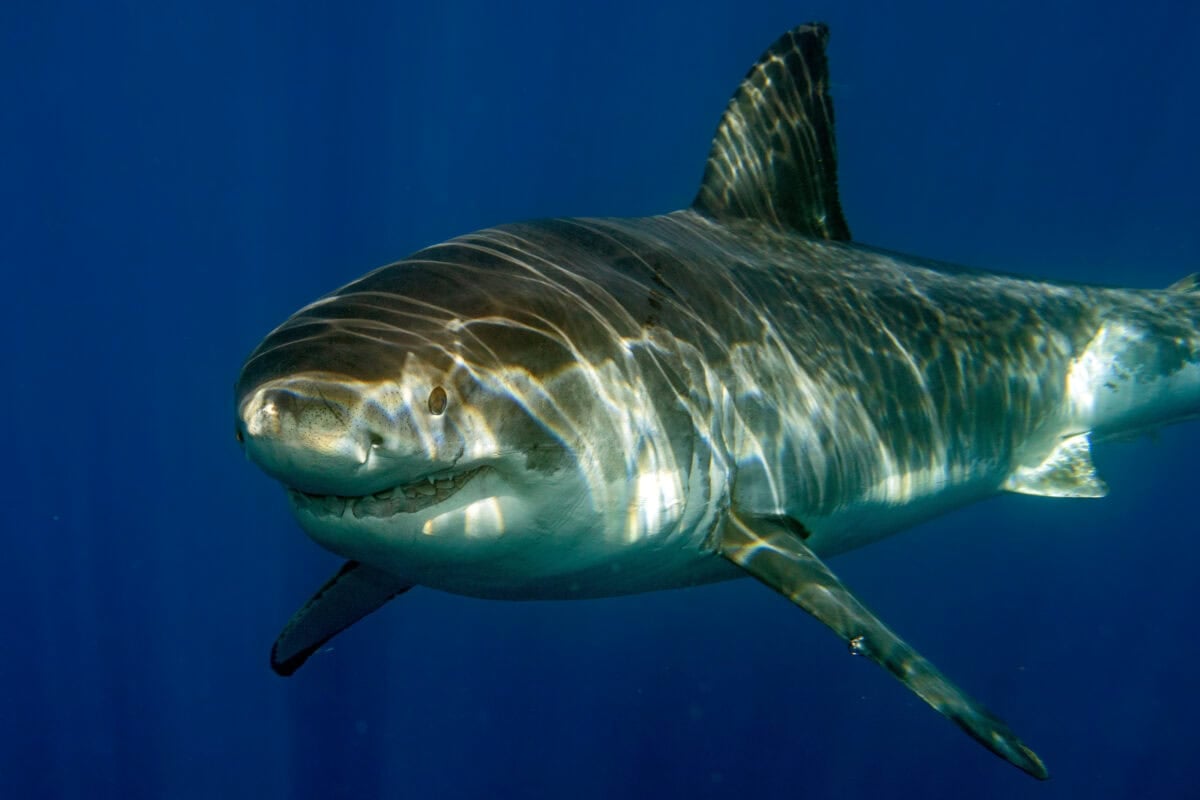
Great white sharks belong to an ancient lineage that has existed for millions of years. Their ancestors swam in our oceans approximately 16 million years ago during the Miocene epoch, though the great white species as we know it today evolved around 4 million years ago. This makes them one of the oldest shark species still swimming in our oceans. Remarkably, their design has remained relatively unchanged over millions of years, demonstrating the effectiveness of their evolutionary adaptations. Fossil evidence shows that ancient great whites were even larger than today’s specimens, with some paleontological findings suggesting prehistoric versions could reach lengths of up to 30 feet—considerably larger than modern great whites.
15. Sensory Superpowers Beyond Vision
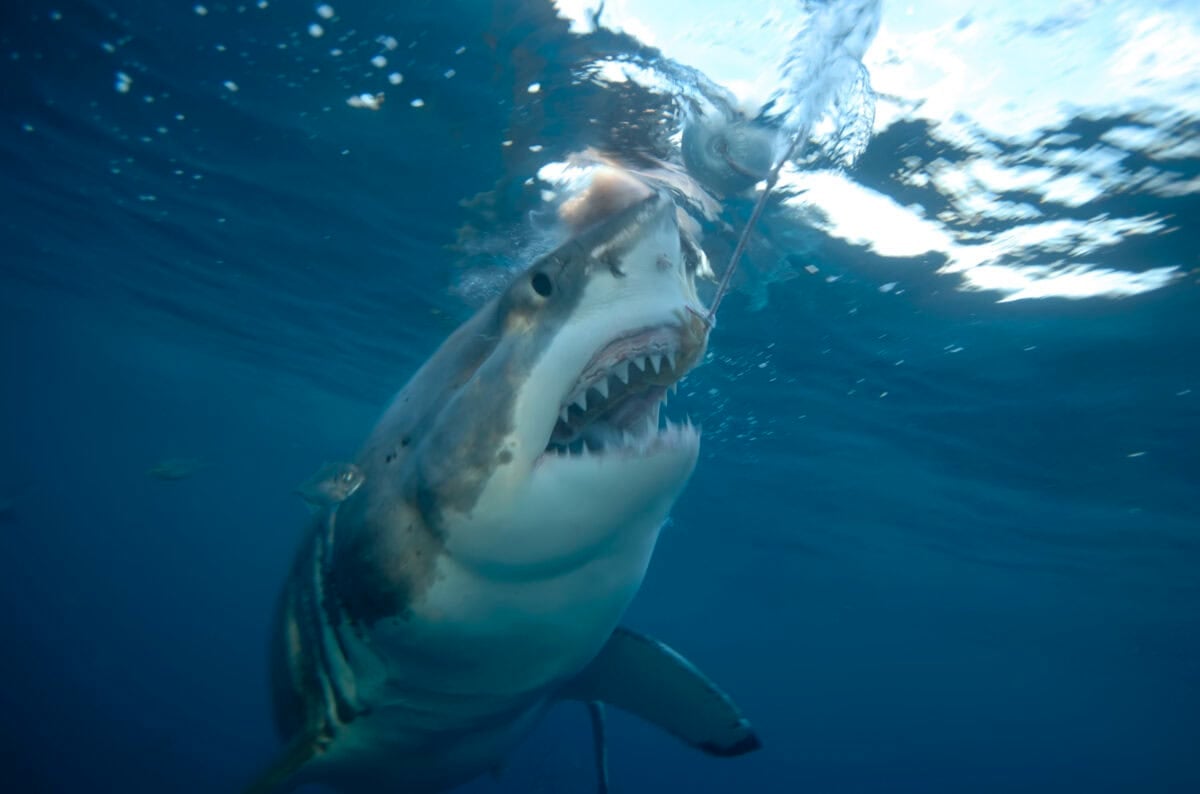
Great white sharks possess sensory abilities that far surpass human capabilities. Their most remarkable sense is their ability to detect electromagnetic fields through specialized organs called ampullae of Lorenzini, located in their snouts. These jelly-filled pores can detect minute electrical discharges from muscle movements of potential prey, even those buried beneath sand. Additionally, great whites have an exceptional sense of smell, capable of detecting a single drop of blood in 25 gallons (100 liters) of water. Their lateral line system—a series of fluid-filled canals running along their bodies—allows them to sense pressure changes and movements in water from considerable distances. These combined sensory capabilities make them incredibly effective hunters, able to locate prey in complete darkness or murky waters where visibility is severely limited.
14. Thermoregulation: Warm-Blooded Sharks

Unlike most fish and other shark species, great white sharks are partially endothermic, meaning they can generate and maintain body heat independently of the surrounding water temperature. This rare adaptation, known as regional endothermy, is achieved through a specialized network of blood vessels called the rete mirabile (“wonderful net”). This system functions as a heat exchanger, allowing the shark to keep its vital organs and swimming muscles warmer than the surrounding water. By maintaining higher body temperatures, great whites can swim faster, process food more efficiently, and hunt in colder waters where their prey might seek refuge. This adaptation gives them a significant advantage over their prey and enables them to thrive in waters ranging from tropical to near-freezing temperatures, greatly expanding their potential habitat range.
13. Record-Breaking Size and Growth

Great white sharks are among the largest predatory fish in the world. While the average adult measures between 11-16 feet (3.4-4.9 meters) in length, the largest reliably measured specimen reached an astonishing 20 feet (6.1 meters). Female great whites are typically larger than males, demonstrating sexual dimorphism common in many shark species. Weight-wise, adult great whites commonly range from 1,500-2,400 pounds (680-1,088 kg), though exceptional individuals have been estimated to weigh over 4,000 pounds (1,800 kg). Their growth rate is relatively slow, with juveniles growing approximately 25-30 cm per year until maturity. This slow growth contributes to their vulnerability as a species, as they require many years to reach reproductive age and replace population losses. Their impressive size develops gradually over their lifetime, with some evidence suggesting they continue growing, albeit more slowly, throughout their adult lives.
12. Hunting Strategies and Predatory Behaviors

Great white sharks employ sophisticated hunting strategies that demonstrate remarkable intelligence and adaptability. Their primary hunting technique involves a powerful surprise attack from below, often launching themselves completely out of the water in a behavior known as breaching. When hunting seals, they strike with such force that they can propel both themselves and their prey up to 10 feet (3 meters) into the air. This strategy takes advantage of their camouflage from below, where their dark dorsal surface blends with the deep water. Great whites also exhibit strategic patience, often circling prey to assess the situation before attacking. Interestingly, they employ different hunting tactics depending on the prey species and environmental conditions. Research has shown they can learn from experience, modifying their approach based on previous successes or failures. Their calculated hunting behavior contradicts the common misconception of sharks as mindless eating machines, revealing instead a complex predator with highly evolved hunting strategies.
11. Phenomenal Tooth Regeneration

A great white shark’s dentition is one of nature’s most efficient designs for predation. These sharks possess several rows of triangular, serrated teeth—up to 300 teeth arranged in as many as seven rows. What makes their dental arrangement particularly remarkable is their continuous regeneration system. Throughout their lifetime, great whites will produce and shed thousands of teeth. When a tooth breaks or becomes worn, another from the rows behind moves forward to replace it, typically within 24 hours. This conveyor belt-like system ensures the shark always has sharp, functional teeth for hunting. A single great white may go through as many as 20,000 teeth in its lifetime. Each tooth is perfectly designed for its function—the upper teeth are broader and serrated for slicing, while the lower teeth are pointed for gripping prey. This specialized dentition allows great whites to effectively process different types of prey, from fish to marine mammals.
10. Long-Distance Migration Patterns

Great white sharks are among the most mobile creatures in the ocean, undertaking epic migrations that span thousands of miles. Satellite tracking has revealed individuals traveling over 12,000 miles (19,000 kilometers) in a single year. One famous female great white, nicknamed “Nicole,” was documented traveling from South Africa to Australia and back—a round trip of more than 20,000 miles (32,000 kilometers)—representing the longest recorded migration of any swimming animal. These migrations often follow seasonal patterns related to feeding, breeding, and possibly parturition (giving birth). Remarkably, great whites demonstrate precise navigation abilities, often returning to the exact same coastal locations year after year. Scientists believe they may use Earth’s magnetic field, temperature gradients, and ocean currents as navigational cues. These extensive migration patterns complicate conservation efforts, as the sharks regularly cross international boundaries and move between protected and unprotected waters.
9. Exceptional Longevity Among Sharks

Great white sharks are among the longest-lived cartilaginous fish, with recent research indicating they can live significantly longer than previously thought. Current scientific estimates suggest great whites can live 70 years or more, with some individuals potentially reaching ages of 70-100 years. Determining a shark’s age is challenging because, unlike bony fish, sharks don’t have otoliths (ear stones) with annual growth rings. Instead, scientists examine growth bands in vertebrae, though these bands may not form annually. Recent studies using radiocarbon dating and bomb carbon (from nuclear testing) as chronological markers have helped revise age estimates upward. This exceptional longevity has important implications for conservation, as it suggests populations recover even more slowly from depletion than previously understood. Their long life span also indicates that great whites have naturally low mortality rates in the absence of human-induced threats, an adaptation that has helped them survive as a species for millions of years.
8. Complex Social Hierarchies and Behaviors

Contrary to their solitary reputation, great white sharks exhibit sophisticated social behaviors and establish clear hierarchies when gathering at feeding grounds. Researchers have documented complex interactions at seal colonies and whale carcasses, where multiple sharks may feed simultaneously. These gatherings operate under a distinct pecking order typically determined by size, with larger females generally dominating access to prime feeding opportunities. Submissive behaviors include giving way, changing swimming patterns, or temporarily leaving the area when a dominant individual approaches. Interestingly, great whites appear to recognize individual members of their species, adjusting their behavior based on previous interactions. They communicate through body language, with subtle postures and movements conveying intent and dominance status. Some research suggests they may even form loose social bonds or partnerships. These observations challenge the stereotype of sharks as solitary, mindless predators and reveal a species with nuanced social intelligence.
7. Impressive Swimming Speed and Efficiency

Great white sharks are remarkable swimmers, combining power with efficiency in their movement through water. Their average cruising speed is approximately 3-5 mph (5-8 km/h), but when pursuing prey or breaching, they can accelerate to impressive bursts of 25-35 mph (40-56 km/h). This makes them among the fastest sharks in the ocean. Their speed and agility come from several adaptations, including their streamlined, torpedo-shaped body designed to minimize drag. Their rigid dorsal fin provides stability, while their crescent-shaped tail (caudal fin) generates powerful forward thrust. Great whites also possess specialized dermal denticles—tiny tooth-like scales covering their skin—that reduce turbulence and drag as they swim. Perhaps most impressively, they achieve this speed while maintaining incredible energy efficiency. Studies have shown that great whites can travel vast distances using relatively little energy by utilizing ocean currents and maintaining an optimal swimming depth. This efficiency is crucial for a predator that must sometimes travel thousands of miles between feeding grounds.
6. Mysterious Reproduction and Development

Despite decades of scientific study, the reproductive biology of great white sharks remains shrouded in mystery. Scientists have never documented mating or birth in the wild, making this a significant gap in our understanding of their life cycle. What we do know is that great whites are ovoviviparous—embryos develop inside eggs within the mother’s body, and pups are born live once fully developed. During gestation, which is estimated to last 12-18 months, the developing embryos practice oophagy—consuming unfertilized eggs produced by the mother for nourishment. A female great white typically gives birth to 2-10 pups, each measuring approximately 4-5 feet (1.2-1.5 meters) long at birth. These pups are immediately independent and must fend for themselves. Sexual maturity comes late—males mature at around 8-10 years, while females may not reproduce until they’re 12-18 years old. This reproductive strategy—few offspring born at advanced development, after a long gestation, with late sexual maturity—makes great white populations particularly vulnerable to depletion.
5. Diet Evolution Throughout Life

A great white shark’s diet undergoes a fascinating transformation as it matures. Juvenile great whites, typically less than 9 feet (2.7 meters) in length, primarily feed on fish, rays, and smaller sharks. Their diet is constrained by their size and the relative sharpness but narrowness of their teeth. As they grow larger and their jaws strengthen, great whites undergo an ontogenetic shift in their feeding habits. Around 10-12 feet (3-3.7 meters) in length, they begin incorporating marine mammals like seals, sea lions, dolphins, and porpoises into their diet. This shift coincides with physical changes in their teeth and jaw musculature that allow them to tackle larger, energy-rich prey. Contrary to popular belief, great whites don’t actively hunt humans and rarely consume them even after accidental attacks. Their preferred prey remains high-fat marine mammals, especially pinnipeds (seals and sea lions). Interestingly, studies of stable isotopes in shark tissues reveal that individual great whites often specialize in specific prey types, suggesting dietary preferences may vary among individuals within the same population.
4. The White Shark Café Mystery

One of the most puzzling aspects of great white shark behavior is their annual gathering at a remote location in the Pacific Ocean midway between Baja California and Hawaii. Dubbed the “White Shark Café” by researchers, this seemingly featureless area of open ocean becomes home to dozens of great whites for several months each year. Satellite tracking has revealed that sharks from both North American and Asian waters make the long journey to this specific region between April and July. What makes this behavior particularly mysterious is that the area contains relatively little obvious food for these predators. Recent research suggests the gathering may be related to mating, as both males and females congregate there, with males displaying distinctive diving behaviors—rapid oscillations between the surface and depths of 300 meters—potentially as part of courtship. Other theories propose the sharks may be feeding on deep-sea squid or other prey not readily apparent from surface observations. The White Shark Café represents one of the most intriguing unsolved mysteries in shark biology and highlights how much we still have to learn about these elusive animals.
3. Resilience and Healing Abilities

Great white sharks possess remarkable healing capabilities that allow them to recover from serious injuries. Their immune systems are highly effective at preventing infection—a necessity for predators that frequently sustain wounds during hunting or from competing sharks. Researchers have documented great whites recovering from massive injuries, including large bites from other sharks, boat propeller wounds, and even harpoon injuries. One documented case involved a female great white with a fishing gaff embedded in her head; when resighted months later, the wound had completely healed with no signs of infection. Their healing is facilitated by antibacterial properties in their blood and specialized adaptations of their immune system. Additionally, great whites can replace damaged or lost teeth throughout their lives, ensuring that dental injuries don’t compromise their ability to feed. This extraordinary resilience contributes to their longevity and success as a species. However, these healing abilities have limitations, and human-inflicted injuries—particularly those related to fishing gear entanglement—remain a significant threat to their survival.
2. Vision and Color Perception

Great white sharks have more sophisticated vision than many people realize. Their eyes are approximately 5 cm in diameter—about the size of a golf ball—and are adapted for both dim and bright conditions. Unlike the common misconception that sharks see only in black and white, research has confirmed that great whites possess color vision, though their color perception differs from humans. They have a high concentration of rod cells that enhance vision in low-light conditions, making them effective hunters even at dawn and dusk. Their eyes are also equipped with a reflective layer called the tapetum lucidum (similar to cats and other nocturnal animals) that enhances light sensitivity by reflecting light back through the retina. One fascinating adaptation is the nictitating membrane—a protective third eyelid that rolls over the eye during feeding or when the shark is attacking prey, providing protection while maintaining some visibility. Additionally, great whites can dilate and contract their pupils to adjust to different light conditions, further enhancing their visual capabilities across various environments and depths.
1. Cultural Significance and Historical Perceptions

Throughout human history, great white sharks have occupied a significant place in cultural narratives and beliefs. Ancient Hawaiian culture revered sharks as ‘aumakua’ (deified ancestral spirits), with great whites holding special status. Pacific Islander traditions often incorporated sharks into their mythology as both protectors and feared predators. The perception of great whites dramatically shifted in the modern era, particularly after the 1975 release of Steven Spielberg’s “Jaws,” which portrayed them as vengeful man-eaters. This film single-handedly transformed public perception, creating a wave of shark fear and contributing to widespread shark hunting. The cultural impact was so profound that Peter Benchley, the author of the novel on which the film was based, later became a shark conservationist, expressing regret over the negative portrayal. In recent decades, documentaries like “Blue Planet” and “Shark Week” programming have helped reshape public perception by presenting more scientifically accurate portrayals. Despite these efforts, the great white remains a powerful symbol in human culture—representing both primal fear and natural majesty—that continues to influence conservation attitudes and policy decisions regarding shark protection.
Conclusion:

The great white shark is far more than the fearsome image often portrayed in films and headlines. As we’ve explored through these twenty remarkable facts, this apex predator is a marvel of evolution—equipped with cutting-edge sensory systems, advanced hunting strategies, and a complex social structure. From their prehistoric roots and mysterious migrations to their unparalleled healing abilities and misunderstood nature, great whites reveal a world of scientific intrigue and ecological importance. Understanding and appreciating these animals not only dispels long-held myths but also emphasizes the need to protect them. As vital players in maintaining marine ecosystem balance, great white sharks deserve both our respect and our stewardship. The more we learn, the more we realize they are not monsters, but masterpieces of the natural world.

As a little kid, I fell in love with nature, wildlife, and animals. Living in the USA, South Africa, Italy, China and Germany gave me the opportunity to discover the world's Wildlife. My favorite animals are Mountain Gorillas, Siberian Tigers, and Great White Sharks.
I'm a certified PADI Open Water Diver, went to Everest Base Camp and Trekked Gorillas in Uganda. I hold a Master of Science in Economics and Finance.
Please send any feedback to feedback@animalsaroundtheglobe.com
- 13 Cat Breeds That Get Along with Dogs - July 20, 2026
- The 12 Largest Dog Breeds That Still Love to Cuddle - July 20, 2026
- 12 Pet Habits That Secretly Mean They Love You - July 20, 2026