


The natural world is a treasure trove of bizarre adaptations, surprising behaviors, and almost unbelievable characteristics that often surpass anything human imagination could create. From microscopic organisms with extraordinary abilities to massive creatures with seemingly impossible features, the animal kingdom constantly reminds us that truth is indeed stranger than fiction. The following collection of facts highlights just how wonderfully weird, surprisingly sophisticated, and utterly fascinating the creatures that share our planet can be. These scientifically verified phenomena demonstrate that sometimes, reality is far more creative and astonishing than any fantasy novel or science fiction story could ever be.
The Immortal Jellyfish Reverses Its Life Cycle

While humans have spent centuries searching for the fountain of youth, one jellyfish species has apparently discovered the secret to biological immortality. The Turritopsis dohrnii, commonly known as the immortal jellyfish, possesses the remarkable ability to revert to its juvenile polyp stage after reaching sexual maturity. When faced with environmental stress, physical damage, or even natural aging, this jellyfish can transform its mature cells back into stem cells through a process called transdifferentiation. This biological reset allows the creature to begin its life cycle anew, potentially repeating this cycle indefinitely. Scientists believe this unique ability makes the immortal jellyfish the only biologically immortal creature known to science. While they can still die from predation or disease, their ability to escape death by old age presents fascinating implications for regenerative medicine and aging research.
Mantis Shrimp Have the Most Complex Eyes in the Animal Kingdom

The unassuming mantis shrimp packs an extraordinary visual system that makes human vision seem primitive by comparison. These marine crustaceans possess compound eyes mounted on stalks that can move independently of each other, providing them with depth perception using just one eye – a feat impossible for humans. Most remarkably, while humans have three types of color-receptive cones in our eyes, mantis shrimp have up to 16 different photoreceptor types. They can see ultraviolet light, infrared light, and even detect polarized light. Their visual processing system is so sophisticated that they can perceive the polarization of reflected light, essentially giving them a form of “color vision” in polarization. This allows them to detect transparent prey and communicate with other mantis shrimp using patterns invisible to most other creatures. Some species can even see circular polarized light, a visual ability not found elsewhere in nature.
Pistol Shrimp Create Underwater Sonic Booms

The pistol shrimp, despite measuring only a few centimeters in length, produces one of the loudest sounds in the ocean using a specialized claw that works like a biological gun. When this shrimp rapidly closes its enlarged claw, it creates a cavitation bubble that travels at speeds up to 62 mph (100 km/h) and generates a sound reaching 218 decibels – louder than a gunshot. The collapsing bubble also briefly produces temperatures nearly as hot as the surface of the sun, at around 8,000°F (4,400°C). This microsecond flash of extreme heat and pressure can stun or kill small prey and is used by the shrimp for hunting and territorial defense. The collective snapping of colonies of pistol shrimp is so loud that it can interfere with submarine sonar and underwater communication equipment. This tiny creature’s ability to essentially “shoot” with sound and heat represents one of nature’s most impressive weapons systems.
Tardigrades Can Survive in the Vacuum of Space

Tardigrades, affectionately known as water bears or moss piglets, are microscopic eight-legged animals that have redefined our understanding of extreme survival. These tiny creatures (typically 0.5mm long) can withstand conditions that would be instantly fatal to almost all other life forms. When faced with desiccation, tardigrades enter a state called cryptobiosis, where they expel almost all water from their bodies, retract their heads and limbs, and form a barrel-shaped structure called a tun. In this state, they can survive temperatures from near absolute zero (-458°F/-272°C) to well above boiling (300°F/149°C), radiation levels thousands of times higher than what would kill a human, pressures six times greater than those in the deepest ocean trenches, and even the vacuum of outer space. In 2007, tardigrades became the first animals to survive exposure to space when researchers sent them into orbit. They not only survived but some even reproduced successfully after returning to Earth. Their extraordinary resilience stems from unique proteins that protect their cells from damage during extreme conditions.
Lyrebirds Are Nature’s Ultimate Sound Mimics
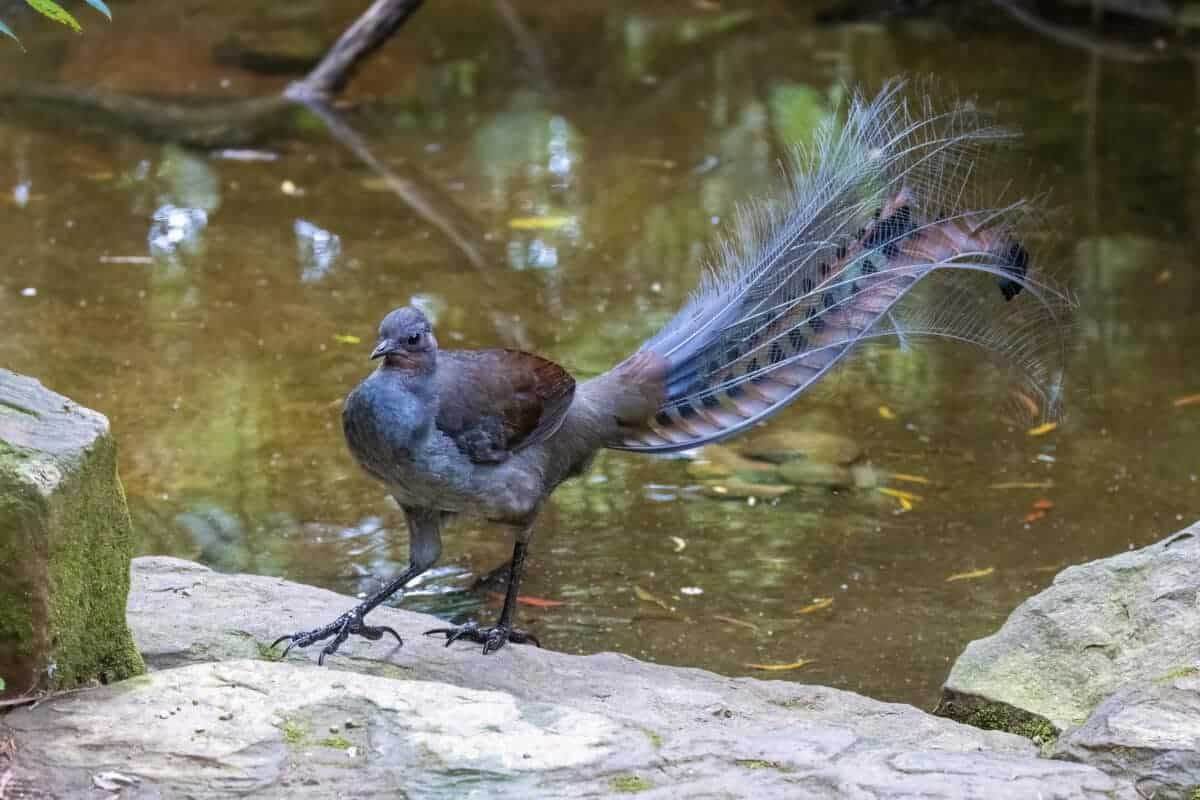
The lyrebird of Australia possesses perhaps the most sophisticated vocal mimicry abilities of any creature on Earth. These ground-dwelling birds can perfectly replicate virtually any sound they hear in their environment with astonishing accuracy. Their repertoire extends far beyond mimicking other bird calls – lyrebirds have been documented accurately reproducing the sounds of camera shutters, car alarms, chainsaws, construction equipment, human speech, and even entire orchestral pieces. A famous wildlife recording captured a lyrebird perfectly imitating the sounds of foresters working nearby, including chainsaw noises complete with the motor starting, running, and cutting through wood. This extraordinary mimicry serves primarily as a mating display, with males incorporating more complex and varied sounds to attract females. The lyrebird’s syrinx (vocal organ) has unique structural adaptations that enable this remarkable acoustic flexibility, allowing it to reproduce sounds across a wider frequency range than most other birds.
Some Ants Practice Agriculture and Animal Husbandry

Long before humans developed farming approximately 12,000 years ago, certain ant species had already mastered the art of agriculture. Leafcutter ants, found in tropical forests throughout the Americas, cultivate vast underground fungus gardens that serve as their primary food source. These ants don’t directly eat the leaves they harvest; instead, they use the plant material to feed their cultivated fungi, which they then consume. The relationship has become so specialized that neither the ants nor their fungi can survive without each other. Even more remarkably, some ant species practice a form of animal husbandry by “farming” aphids. These ants protect aphids from predators, transport them to new feeding sites, and even selectively breed them. In return, the ants “milk” the aphids by stroking them with their antennae, stimulating the release of honeydew, a sweet substance the ants collect as food. Some farming ant species have even developed adaptations to prevent their aphid “livestock” from developing wings and escaping, effectively domesticating them over millions of years of co-evolution.
The Platypus Hunts Using Electroreception
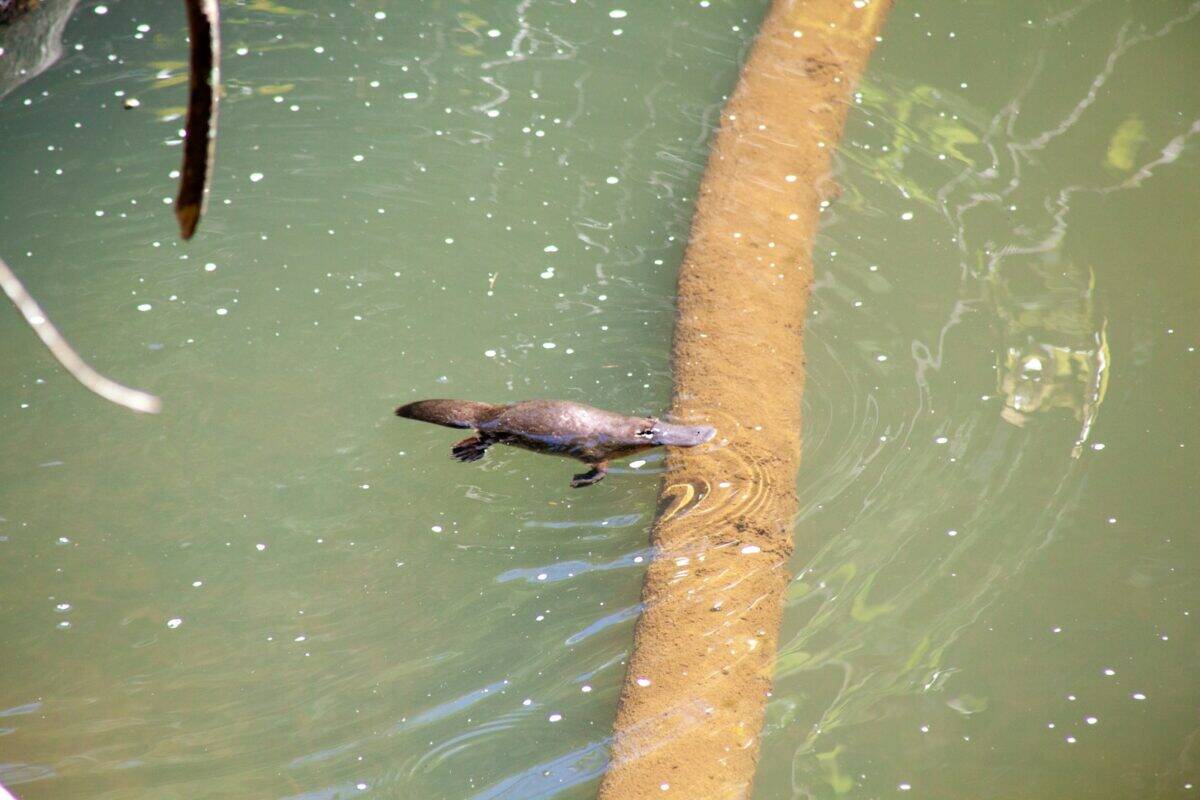
The duck-billed platypus already stands out as one of nature’s oddest creations – a venomous, egg-laying mammal with a duck-like bill and beaver-like tail. But perhaps its most extraordinary feature is invisible to the human eye: the platypus hunts underwater with its eyes, ears, and nose closed, relying instead on electroreception. Their distinctive bill contains approximately 40,000 electroreceptors capable of detecting the tiny electrical fields generated by muscle contractions in prey animals. This sixth sense allows platypuses to locate shrimp, insects, and small fish hiding in murky water or buried in river sediment with remarkable precision. When hunting, the platypus sweeps its bill from side to side, creating a three-dimensional electrical map of its surroundings. Only a few other mammals, including echidnas and some dolphin species, possess any electroreceptive ability, but none approach the sophistication of the platypus system. This adaptation, combined with their other unusual characteristics, makes platypuses living evidence of their ancient evolutionary lineage, having diverged from other mammals approximately 166 million years ago.
The Mimic Octopus Masters Disguise

The mimic octopus (Thaumoctopus mimicus) elevates camouflage to an art form, going beyond mere color changing to actually impersonate other marine species. Discovered in 1998 in the waters of Indonesia, this remarkable cephalopod can transform its appearance, movement patterns, and behavior to mimic at least 15 different marine animals. When threatened, it might flatten its body and extend its arms to resemble a toxic flatfish, or hide six of its arms and wave the remaining two in opposite directions to mimic a venomous sea snake. It can also convincingly impersonate lionfish, jellyfish, mantis shrimp, sea anemones, and stingrays. What makes the mimic octopus truly exceptional is that it appears to select its disguise strategically based on which predator it’s facing, demonstrating not just mimicry but contextual decision-making about which dangerous species would most effectively deter the particular threat. This suggests a level of intelligence and adaptive behavior previously unknown in octopuses, making it one of the animal kingdom’s most sophisticated masters of deception.
Bombardier Beetles Create Chemical Explosions

The bombardier beetle has evolved one of nature’s most explosive defense mechanisms, employing sophisticated chemistry that human engineers still struggle to replicate. When threatened, this insect mixes two separately stored chemicals – hydrogen peroxide and hydroquinones – in a specialized chamber reinforced with insulating materials. These chemicals react with catalytic enzymes to create a violent exothermic reaction, producing a boiling, caustic spray that the beetle can aim with remarkable precision at predators. The reaction generates temperatures reaching 212°F (100°C) and propels the chemical spray at speeds of up to 22 mph (35 km/h), often with an audible popping sound. Most remarkably, the beetle can fire multiple pulses in rapid succession, up to 20 times before depleting its chemical reserves. The precision engineering of the beetle’s internal chemistry lab includes specialized glands, storage chambers, reaction vessels, and directional nozzles that prevent the insect from harming itself in the process. This complex chemical defense system has become a source of inspiration for researchers developing new propulsion systems, drug-delivery mechanisms, and combustion technologies.
The Axolotl Can Regenerate Almost Any Body Part
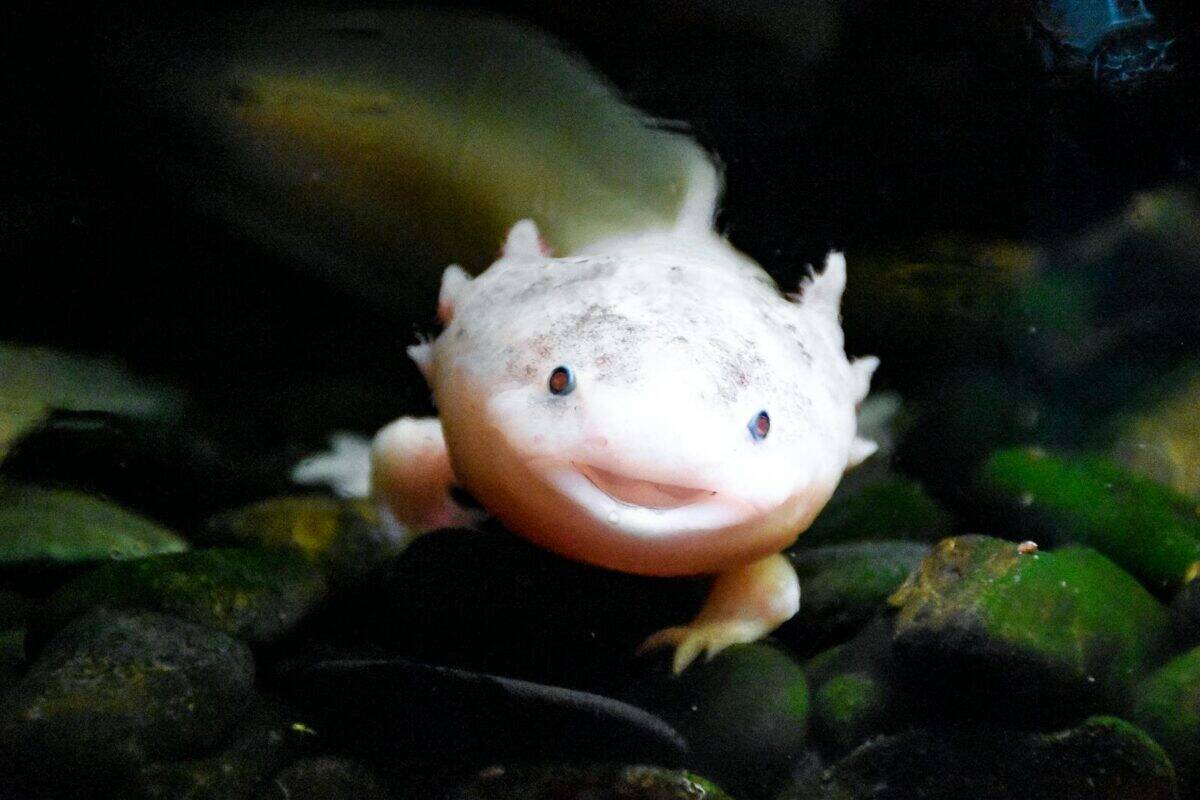
The axolotl, a salamander native to Mexico, possesses regenerative abilities that border on the supernatural. Unlike most vertebrates, which have limited regenerative capabilities, axolotls can regrow entire limbs, parts of their brain, spinal cord, heart, and other vital organs without forming scar tissue. They can even regenerate the same body part multiple times with no decrease in functionality. The secret to this remarkable ability lies in their specialized cells that can dedifferentiate – essentially turning back their biological clock to become stem-cell-like – when regeneration is needed. When an axolotl loses a limb, the wound quickly forms a blastema, a mass of dedifferentiated cells that then redevelop into the appropriate tissues, perfectly recreating the lost appendage down to the finest details of bone, muscle, and nerve connections. Even more astonishingly, when parts of an axolotl’s heart are removed, the animal doesn’t form scar tissue like mammals would; instead, it regenerates the missing cardiac tissue and restores full functionality. Medical researchers are intensely studying axolotls in hopes of unlocking regenerative treatments for human conditions like spinal cord injuries, heart damage, and limb loss.
Honey Bees Communicate Through Dance

Honey bees have developed one of the most sophisticated communication systems in the animal kingdom, conveying complex information through a series of movements known as the “waggle dance.” When a foraging bee discovers a valuable resource like a rich flower patch, it returns to the hive and performs this intricate dance on the vertical surface of the honeycomb. The dance consists of a straight run during which the bee waggle its abdomen from side to side, followed by a return loop to the starting point. The angle of the straight run relative to the vertical indicates the direction of the food source in relation to the sun, while the duration of the waggle portion communicates the distance to the resource – longer dances indicate greater distances. The vigor of the dance conveys the quality of the food source. Remarkably, other worker bees can interpret this abstract symbolic communication and translate it into flight paths, often finding food sources up to 8 miles (13 kilometers) away with impressive accuracy. This system represents one of the few known examples of symbolic language in non-human animals and was so extraordinary that Karl von Frisch, who decoded it, was awarded the Nobel Prize for his discovery.
The Peacock Spider’s Elaborate Mating Dance
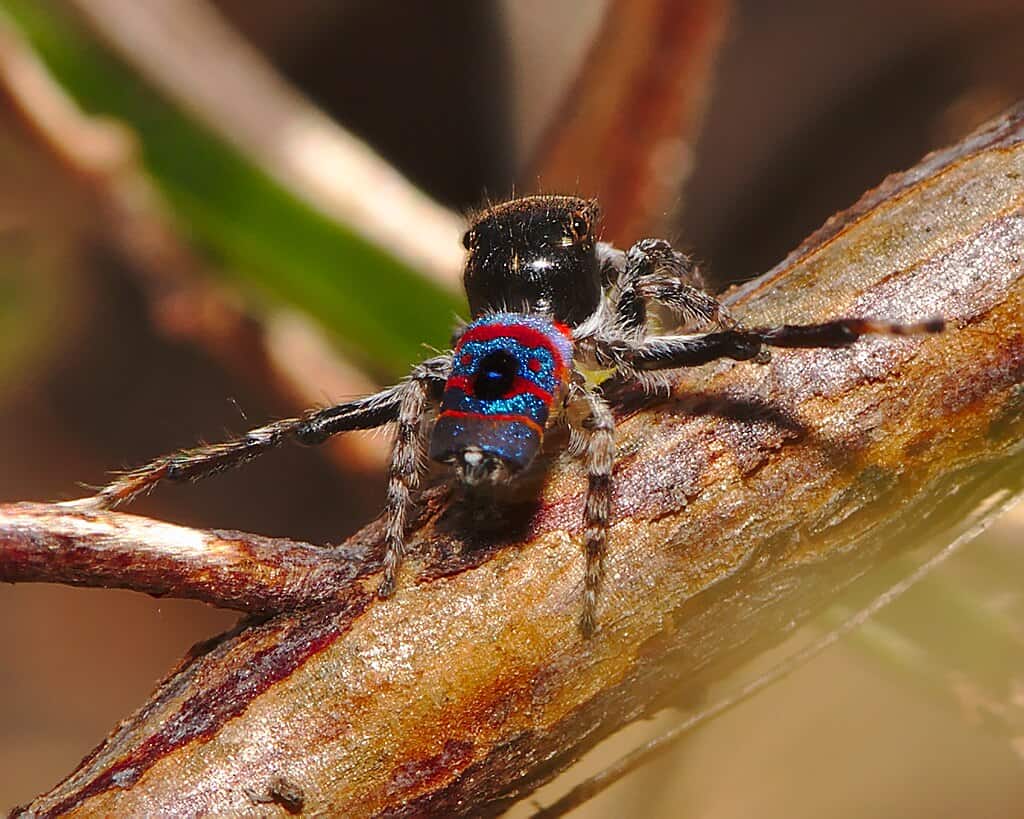
Despite measuring just 4-5mm in length, the male peacock spider performs perhaps the most elaborate and colorful courtship display relative to its size in the animal kingdom. Native to Australia, these tiny arachnids have evolved stunning patterns on their abdomens featuring iridescent scales that reflect the full spectrum of colors. During courtship, the male raises a pair of decorated flaps on his abdomen like a peacock’s tail, elevates his third pair of legs, and performs a precisely choreographed dance involving rhythmic vibrations, sidesteps, and abdominal movements that showcase his colorful patterns. Each of the 80+ species of peacock spiders has its own unique dance routine and abdominal pattern. The performance must be flawless – female peacock spiders are extremely selective and will attack and eat males who fail to impress. High-speed photography has revealed that some species incorporate precise vibrational components into their dance that create specific frequencies the female can detect. The intricate nature of these displays challenges our understanding of visual communication in invertebrates and demonstrates how sexual selection can drive the evolution of complex behaviors even in tiny animals with presumably simple nervous systems.
Wood Frogs Freeze Solid for Winter

The wood frog (Lithobates sylvaticus) employs one of the most extreme survival strategies in the vertebrate world – it literally freezes solid during winter. As temperatures drop, these remarkable amphibians allow up to 65% of their total body water to freeze, essentially turning into frog-shaped ice cubes. Their hearts stop beating, their blood stops flowing, and they cease breathing entirely. By conventional definitions, they appear dead. This remarkable adaptation is made possible by the frogs’ liver, which converts glycogen into glucose when freezing begins. This glucose acts as a natural antifreeze that prevents the complete freezing of cellular contents while allowing intercellular water to freeze. Additionally, these frogs produce specialized proteins that control ice crystal formation, preventing cellular damage. When spring arrives and temperatures rise, the frogs thaw from the inside out – their hearts begin beating before the rest of the body fully liquefies, pumping the glucose-rich blood throughout the body to speed the thawing process. Within hours of thawing, the frogs resume normal activities as if nothing extraordinary happened, having survived body temperatures as low as 21°F (-6°C) and multiple freeze-thaw cycles in a single winter.
Hagfish Produce Enormous Amounts of Slime
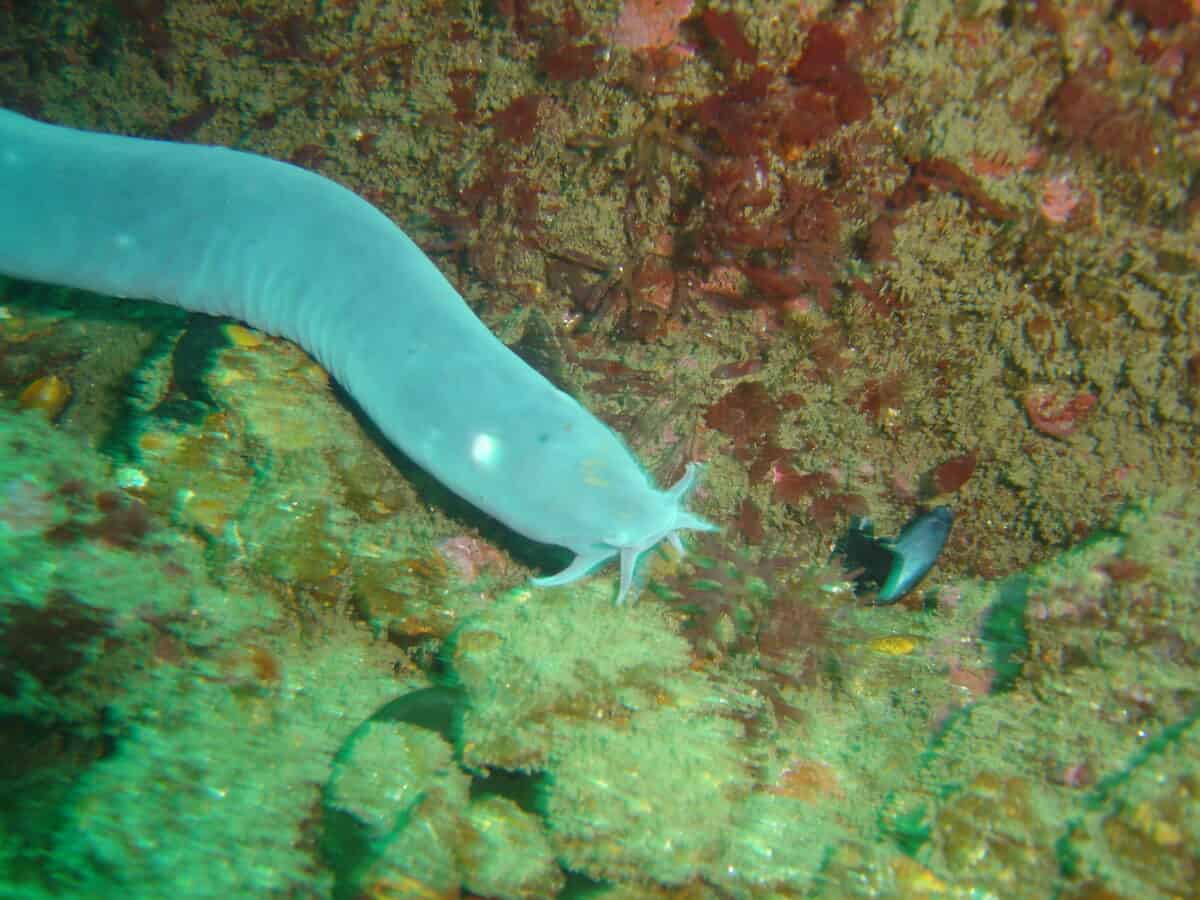
The hagfish, a jawless marine creature that has remained virtually unchanged for 300 million years, deploys perhaps the most unusual defense mechanism in the animal kingdom: when threatened, it instantly produces massive quantities of slime. A single hagfish can generate enough slime in seconds to turn a 5-gallon bucket of water into a gelatinous mass. This slime is produced by specialized glands containing cells called gland thread cells, each containing a single, tightly-coiled protein thread measuring 12-16 centimeters long but just 1-3 micrometers in diameter. When released into seawater, these threads uncoil and combine with mucus to expand up to 10,000 times their original volume. The resulting material is one of nature’s most remarkable substances – a non-Newtonian fluid with properties of both solid and liquid that efficiently clogs the gills of predatory fish, forcing them to retreat or risk suffocation. The hagfish itself avoids becoming entrapped in its own defense by tying itself into a knot and sliding the knot down its body, scraping off the slime. Materials scientists are actively researching hagfish slime for applications ranging from sustainable fabrics to military defense, as its protein threads are stronger than nylon and almost as strong as spider silk.
Conclusion:

From jellyfish that reverse aging to frogs that freeze themselves solid, the animal kingdom never ceases to astonish. These 20 facts don’t just illustrate nature’s creativity — they reveal how little we truly know about the biological frontiers of life on Earth. Creatures across every corner of the globe, from the depths of the ocean to the microscopic realm, have evolved solutions to survival that defy logic and stretch the limits of scientific understanding. Their abilities challenge our assumptions about what’s possible in biology, inspire cutting-edge technology and medicine, and remind us that reality can be far more imaginative than fiction. As we continue to explore and study the natural world, it’s clear that nature’s strangest secrets are still waiting to be uncovered — and they’re likely to be even weirder than we can imagine.

As a little kid, I fell in love with nature, wildlife, and animals. Living in the USA, South Africa, Italy, China and Germany gave me the opportunity to discover the world's Wildlife. My favorite animals are Mountain Gorillas, Siberian Tigers, and Great White Sharks.
I'm a certified PADI Open Water Diver, went to Everest Base Camp and Trekked Gorillas in Uganda. I hold a Master of Science in Economics and Finance.
Please send any feedback to feedback@animalsaroundtheglobe.com
- 12 Sea Animals Believed to Bring Luck or Doom - July 29, 2026
- The Lizard That Can Run on Water – Nature’s Real-Life Jesus Lizard - July 29, 2026
- Why Some Fish Can Live in Both Freshwater and Saltwater - July 29, 2026