

In the animal kingdom, finding a mate isn’t simply about swiping right or sending a charming text message. Wild animals have evolved some of the most elaborate, bizarre, and downright spectacular courtship rituals imaginable. These fascinating behaviors showcase nature’s creativity and the powerful drive to pass on genetic material. From hypnotic dances to death-defying stunts, these mating rituals demonstrate just how far creatures will go in the name of reproduction. Let’s explore 15 of the most extraordinary animal courtship rituals that truly need to be seen to be believed.
14. Peacock Spider’s Dazzling Dance
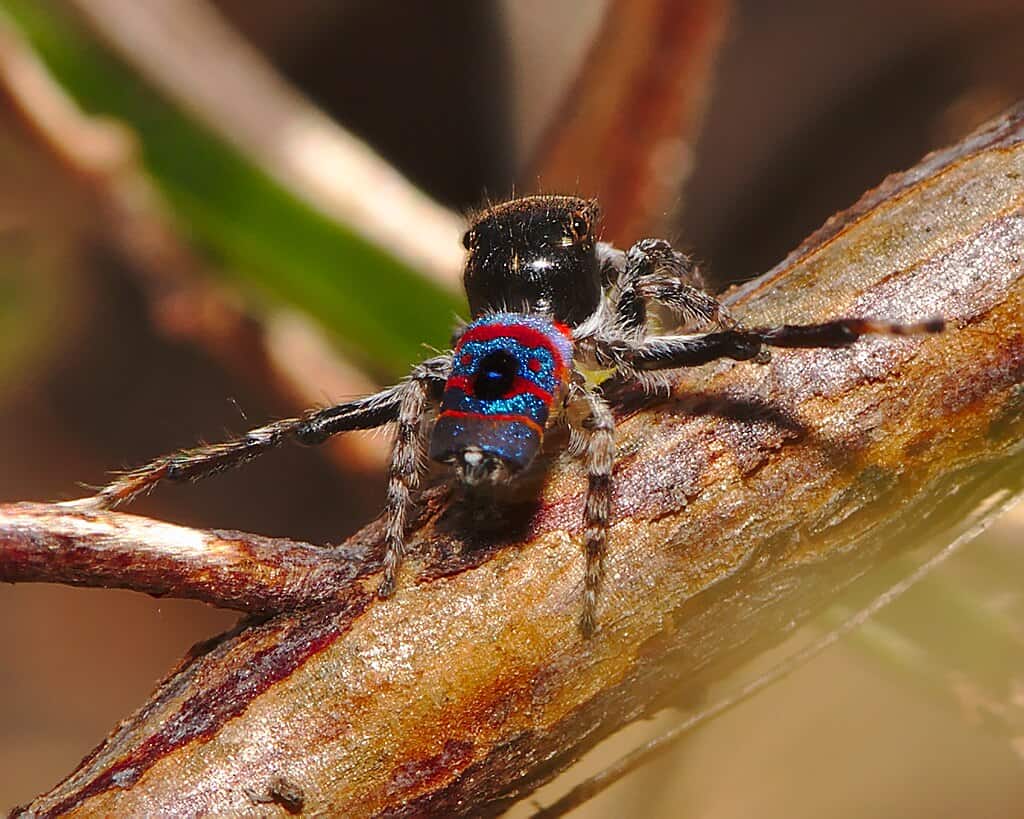
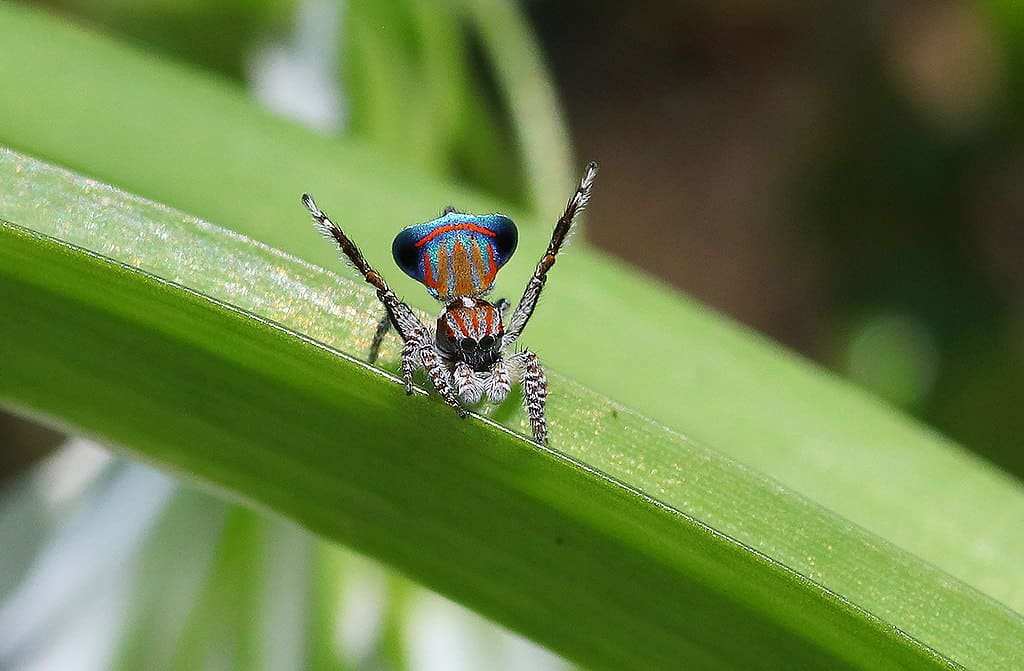
The tiny peacock spider (Maratus species), measuring just 4-5mm, puts human dancers to shame with its elaborate courtship display. The male spider raises and extends a brilliantly colored abdominal flap adorned with intricate patterns that resemble a peacock’s tail. While displaying this colorful fan, he lifts his third pair of legs and performs a complex dance routine, vibrating and moving side to side in perfect rhythm. What makes this ritual particularly remarkable is that different peacock spider species each have their own unique dance moves and colorful patterns. If the female isn’t impressed, she may eat her suitor, adding a rather high-stakes element to this performance. This tiny arachnid’s routine is so captivating that videos of their dances have become internet sensations, earning them the nickname “the world’s cutest spider.”
13. Birds of Paradise and Their Spectacular Transformation
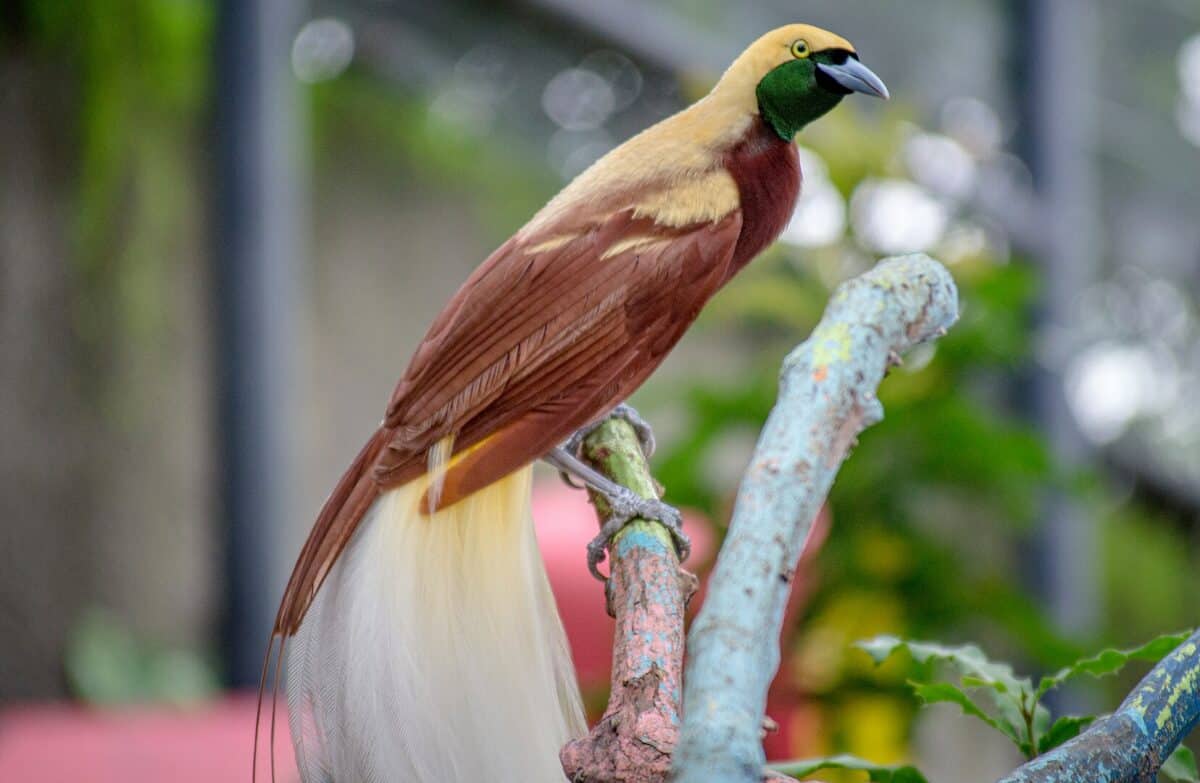
The birds of paradise from New Guinea and eastern Australia have evolved some of the most elaborate courtship displays in the avian world. The male Superb Bird of Paradise transforms his appearance dramatically during courtship by spreading his black cape feathers to create an elliptical shape with a brilliant blue breast shield at the center, making him appear as an abstract smiling face. He then performs a precise dance, hopping around a potential mate while making clicking sounds. The Parotia species creates a meticulously cleaned “dance floor” in the forest before performing, while the male Greater Bird of Paradise assembles with other males in a lek (communal display area) to show off his plumage. These extraordinary rituals developed over millions of years in an environment with few predators, allowing sexual selection to drive the evolution of these spectacular displays that seem almost otherworldly in their complexity.
12. The Deadly Love Dance of Praying Mantises

Perhaps one of the most notorious mating rituals in nature belongs to the praying mantis, where romance can quite literally cost the male his head. The courtship begins with the male approaching the female cautiously, often swaying gently from side to side. If she shows receptivity, he will leap onto her back to mate. What happens next has fascinated and horrified nature enthusiasts for generations: the female sometimes decapitates and consumes her mate during or after copulation. While this cannibalistic behavior doesn’t occur in all mantis species or encounters (studies suggest it happens in less than 30% of natural matings), it serves an evolutionary purpose. The male’s body provides valuable nutrition for the female and her future offspring. Interestingly, a male mantis can continue mating even after being decapitated, as the reproductive function is controlled by ganglia in his abdomen rather than his brain—a remarkable if somewhat grim adaptation to ensure his genes survive even if he doesn’t.
11. Pufferfish’s Underwater Crop Circles

In the waters off Japan, male pufferfish (specifically the species Torquigener albomaculosus) create one of the ocean’s most mysterious and beautiful structures. Using nothing but their fins, these 5-inch fish meticulously craft large, intricate circular patterns in the sand that span nearly 7 feet in diameter. Working tirelessly for up to nine days, the male decorates his creation with carefully selected shells and rocks, and creates unique ridges and valleys that form a geometric masterpiece. The purpose? To attract a female, of course. When a female pufferfish approves of the design, she deposits her eggs in the center of the circle, which the male then fertilizes. Beyond being visually stunning, these underwater “crop circles” serve practical purposes—the ridges help channel water currents to oxygenate the eggs and possibly remove sediment. This remarkable behavior wasn’t even scientifically documented until 1995, making it one of the more recently discovered complex animal courtship rituals in the natural world.
10. The Sage Grouse’s Inflatable Air Sac Display

The greater sage grouse of North America performs one of the most bizarre and distinctive courtship displays in the avian world. Males gather at communal mating grounds called leks, where they compete for female attention through an extraordinary ritual. The male sage grouse inflates two yellow-olive air sacs on his chest until they resemble water balloons, then forcefully expels the air to create a distinctive “pop-swish-pop” sound that can be heard up to two miles away. While producing this unusual soundtrack, he fans his spiky tail feathers, raises his pointed head feathers, and struts around with his chest puffed out. This performance takes place at dawn, creating a surreal scene as dozens of males compete simultaneously across the grassland stage. The ritual is so energetically demanding that males may lose up to 10% of their body weight during the breeding season. Females carefully evaluate the performances, typically selecting only the most impressive males, with research indicating that fewer than 10% of males secure 80% of all matings—making this one of nature’s most competitive dating scenes.
9. Frigatebird’s Inflated Scarlet Throat Pouch
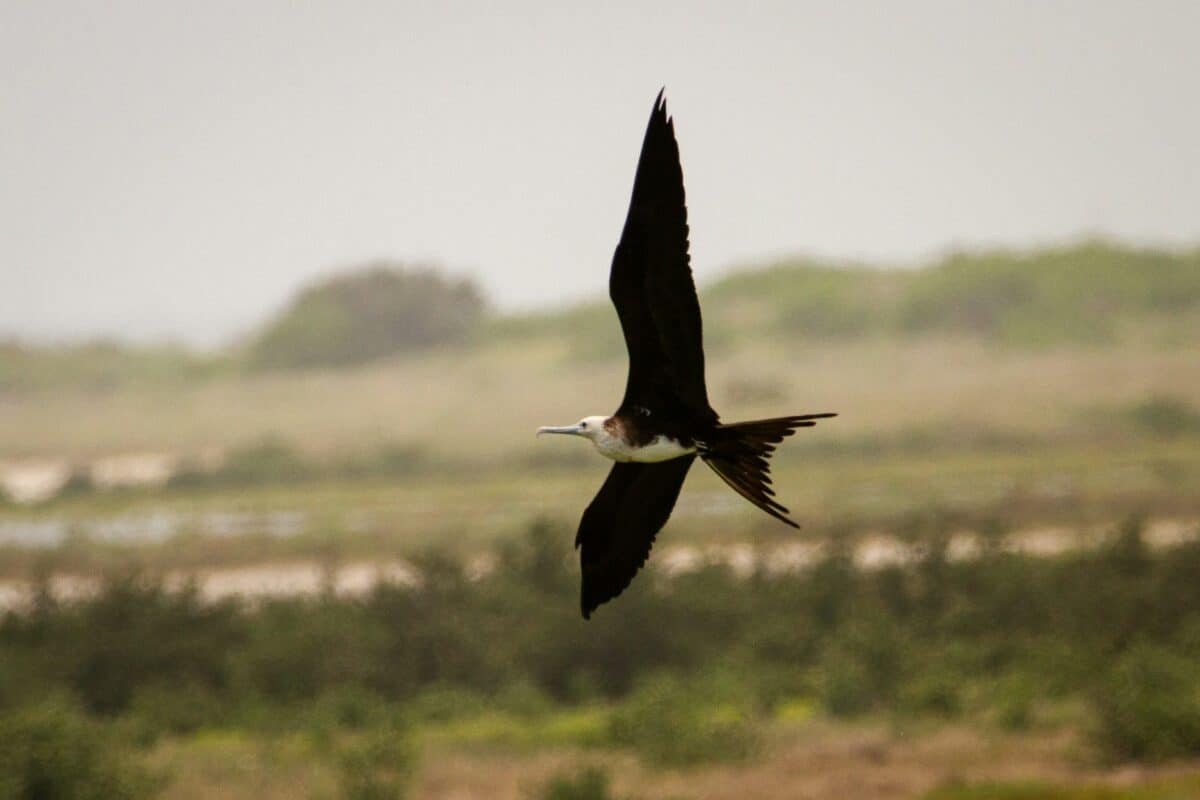
The male frigatebird takes balloon animals to a whole new level with his extraordinary courtship display. During breeding season, these seabirds inflate a massive scarlet throat pouch called a gular sac, transforming it into a bright red heart-shaped balloon that can take up to 20 minutes to fully inflate. Perched prominently on coastal bushes or trees, the male throws back his head, spreads his wings, and vibrates them rapidly while producing a drumming sound. This inflated red beacon is visible from great distances and signals to females flying overhead that he’s available and ready to mate. The spectacle becomes even more impressive when dozens or even hundreds of males display simultaneously in breeding colonies. The size and vibrancy of the pouch is thought to indicate the male’s health and genetic quality. When a female shows interest by landing nearby, the male intensifies his display, clattering his bill and waving his head from side to side. This remarkable courtship ritual has earned frigatebirds the nickname “Man-o’-War birds,” as their dramatic red pouches resemble the bright sails of warships from a distance.
8. Bowerbird’s Elaborate Art Installations
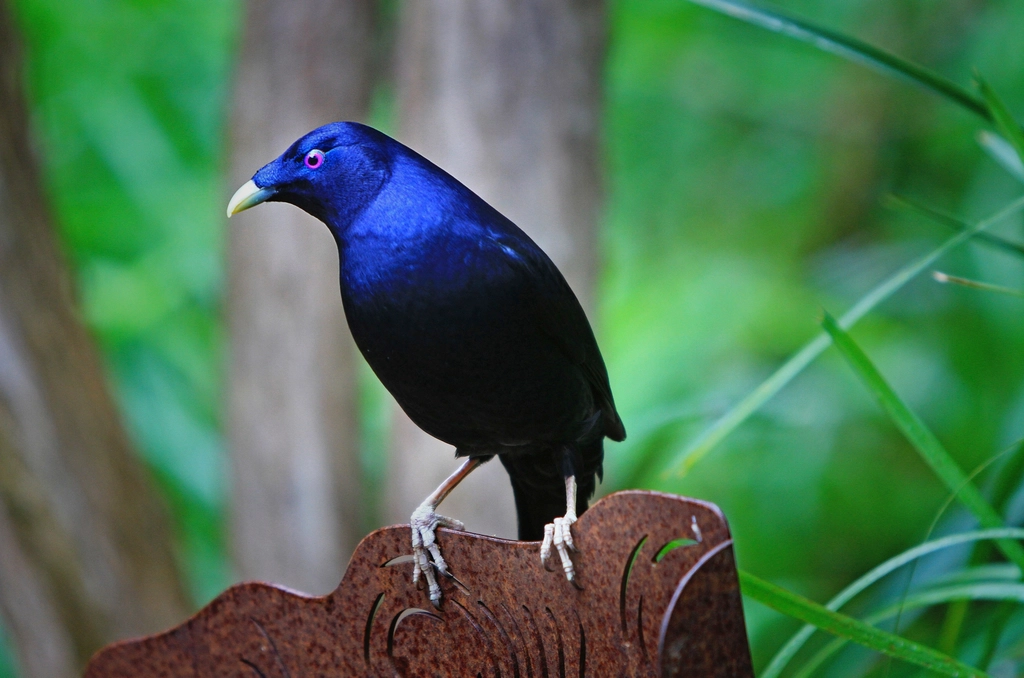
Male bowerbirds are nature’s dedicated architects and interior decorators, creating some of the most complex structures built by any animal aside from humans. Different species build different styles of bowers—tunnel-like structures or maypole-type arrangements of sticks—but all share an obsession with collection and curation. The Satin Bowerbird of Australia has a particular fondness for blue objects, meticulously gathering blue feathers, flowers, berries, and even human-made items like bottle caps or plastic bits to decorate his bower. The Vogelkop Bowerbird of New Guinea builds a roofed hut-like structure with a “front lawn” where he arranges colorful fruits, flowers, fungi, and beetle shells by color, creating a stunning visual display. Some bower birds even create optical illusions by arranging objects from smallest to largest, making the bower appear larger from the female’s perspective. Beyond building, males spend hours maintaining and improving their bowers, often stealing decorations from rivals or replacing wilted flowers with fresh ones. When a female visits, the male performs an energetic dance, picking up his prized decorations to show them off while producing a complex series of calls and mimicry. Scientists believe these elaborate structures evolved as a way for females to assess male cognitive abilities and dedication—essentially, the bower serves as an external representation of the male’s genetic quality.
7. The Shocking Electric Love of Elephantnose Fish
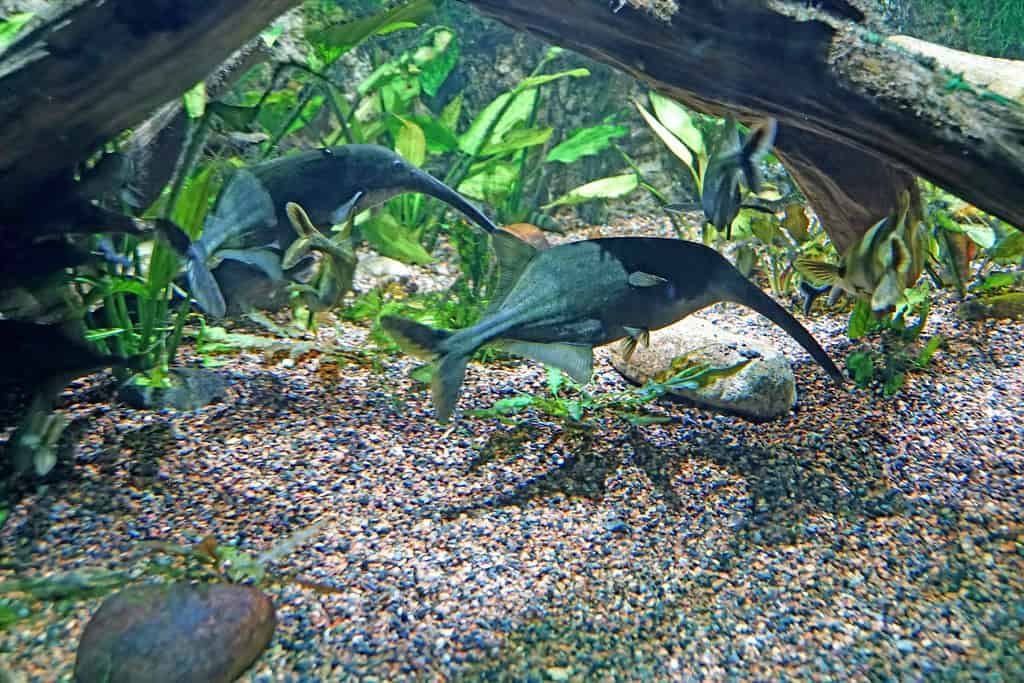
The Peters’ elephantnose fish (Gnathonemus petersii) takes a more electrifying approach to courtship—quite literally. These freshwater fish from West and Central Africa have specialized electric organs in their tails that generate weak electric fields used for navigation and communication. During courtship, males dramatically change their electrical output, producing distinct electrical pulses that serve as their unique signature to attract females. The male creates a complex pattern of electrical discharges, essentially composing an “electric serenade” that can last for hours. Females can detect subtle differences in these electrical patterns, evaluating the male’s strength and health through his electrical output. What makes this ritual particularly fascinating is how it demonstrates evolution’s creativity—these fish have essentially developed their own private communication channel that works perfectly in murky waters where visual displays would be ineffective. The electrical courtship also allows the fish to communicate complex information without making sound that might attract predators. This sophisticated use of bioelectricity represents one of the most unique sensory adaptations in the animal kingdom and a courtship ritual that truly operates beyond human perception without specialized equipment.
6. Flamingo’s Synchronized Group Dancing

Flamingos take the concept of dance parties to spectacular heights with their elaborate group courtship rituals. Rather than performing individual displays, these iconic pink birds engage in massive synchronized dance routines involving dozens or even hundreds of flamingos moving in coordinated harmony. The display begins with head flagging—birds turning their heads rapidly from side to side—before transitioning to wing salutes where they flash their contrasting black wing feathers. The group then moves into a remarkable marching display, with the entire flock walking in tight formation with their necks outstretched and heads held high, occasionally making sharp synchronized turns that create rippling waves of pink through the assembly. What makes this ritual particularly unique is that it serves as both a bonding activity and a way for individuals to find compatible partners within the group. The synchronized movements help stimulate the birds’ reproductive systems and strengthen pair bonds. Flamingos are monogamous during each breeding season, and these elaborate group displays ensure that all birds reach breeding condition together, resulting in synchronized nesting that provides better protection for their young. This magnificent spectacle of pink choreography can last for weeks before pairs finally break off to mate and build their distinctive mud nest mounds.
5. The Manakin’s Moonwalk and Sonic Snaps
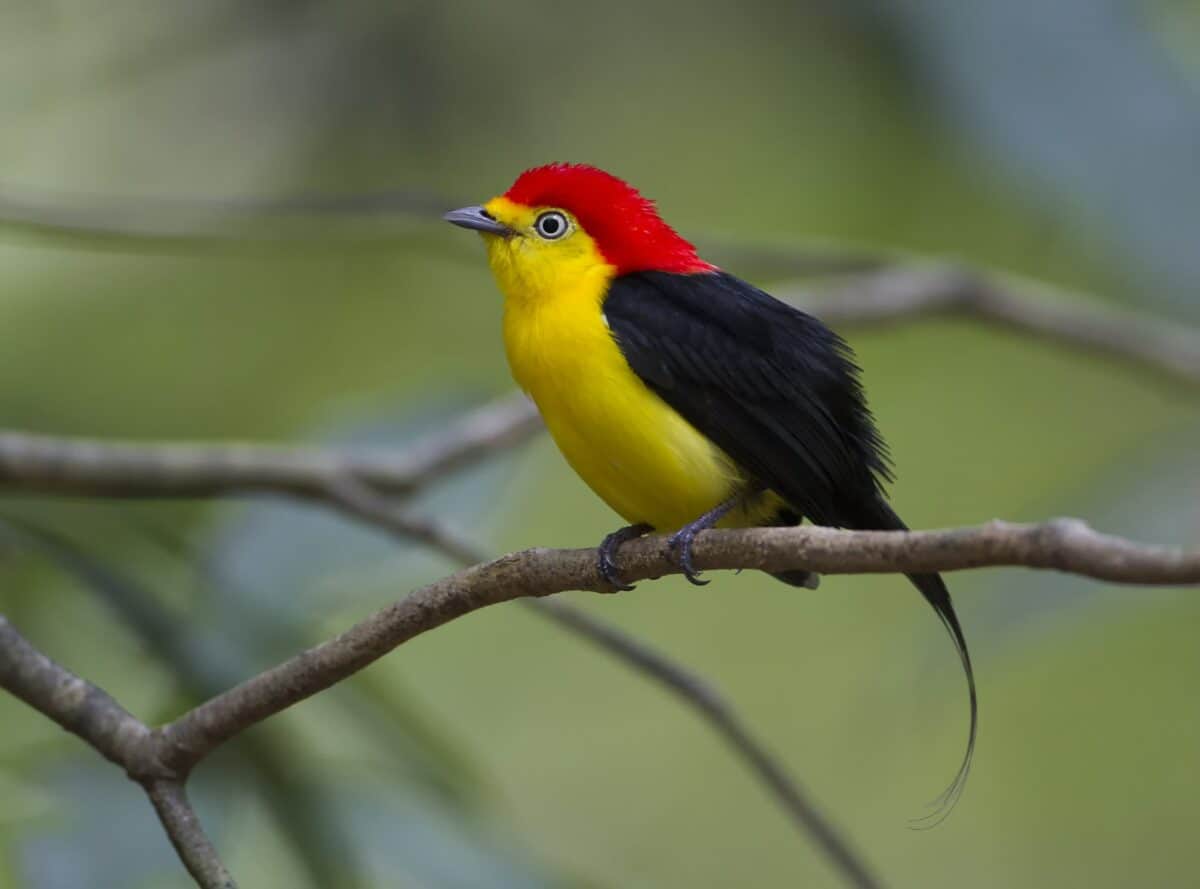
The manakin family of birds from Central and South America could give professional dancers a run for their money with their extraordinary repertoire of courtship moves. The Golden-collared Manakin performs rapid-fire wing snaps that sound like firecrackers, producing this sound not with his voice but by hitting his wings together above his back at an astonishing 60 times per second. The Red-capped Manakin performs what scientists have called the “moonwalk,” sliding backward along branches in a move reminiscent of Michael Jackson’s famous dance step. Perhaps most impressive is the Club-winged Manakin, which has actually evolved specialized wing feathers that function like violin strings. By rubbing them together, he produces a pure, resonant tone—the only bird known to make music through mechanical means rather than through its voice box. These elaborate performances take place in small clearings called leks, where males gather to compete for female attention. Young males spend up to seven years practicing these precise movements before they perfect them enough to attract mates. The manakins demonstrate the remarkable power of sexual selection to drive the evolution of complex behaviors and specialized anatomical adaptations solely dedicated to impressing potential mates.
4. The Deadly Bedchamber of Anglerfish
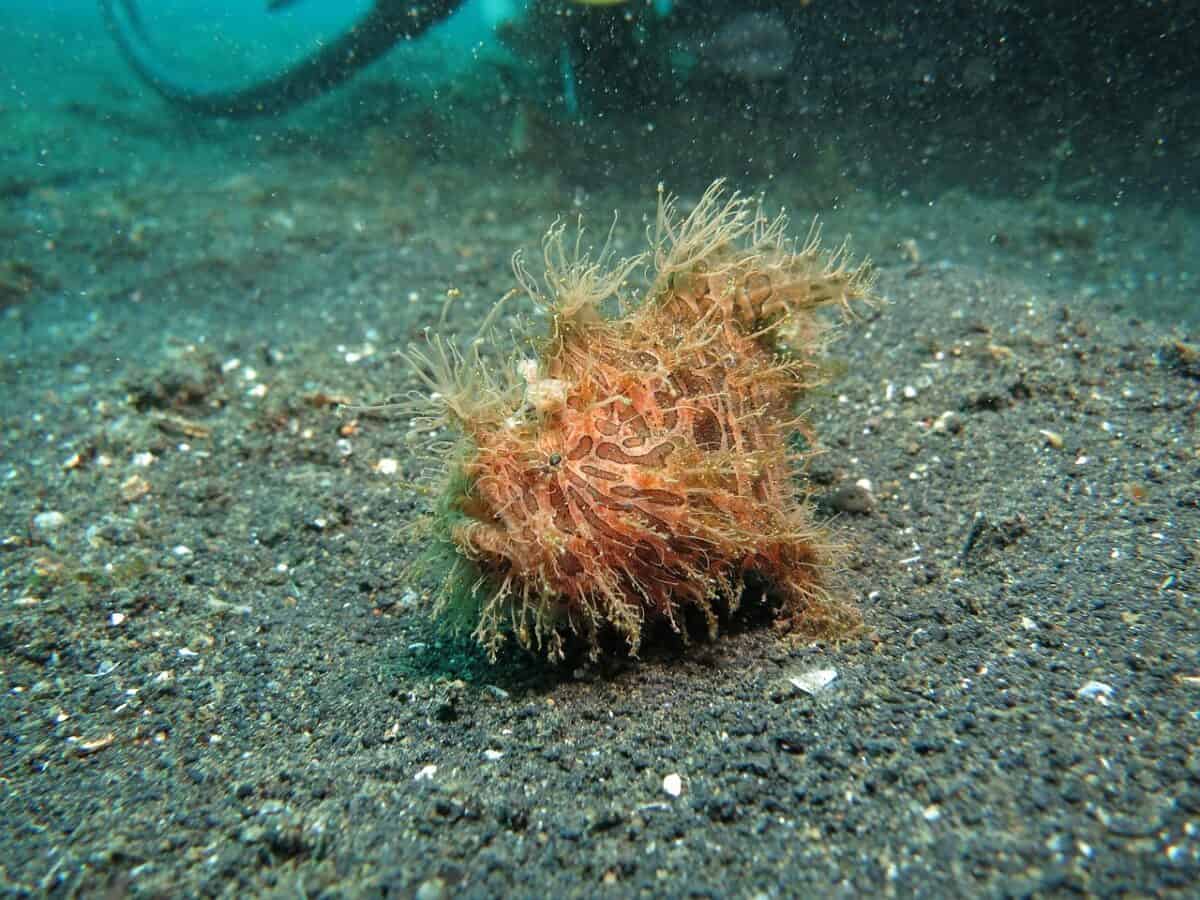
Deep in the darkest parts of the ocean, anglerfish engage in perhaps the most extreme form of commitment in the animal kingdom. The tiny male anglerfish (which may be up to 40 times smaller than the female) spends his life searching for a mate in the vast, dark ocean. When he finally finds a female, he bites into her body and releases an enzyme that dissolves his mouth and her skin, fusing them together. Over time, the male essentially becomes a permanent parasite, his body atrophying until he’s nothing more than a pair of gonads attached to the female, receiving nutrients from her bloodstream and providing sperm whenever she’s ready to spawn. Some female anglerfish collect multiple males, carrying them like living sperm packets throughout their lives. This extreme sexual dimorphism and parasitic mating strategy evolved as a solution to the challenge of finding mates in the deep sea, where encounters are exceedingly rare. While perhaps not the most romantic courtship ritual, it represents one of the most dramatic examples of sexual selection pushing evolution to extraordinary lengths. From the male’s perspective, his entire existence is devoted to finding and merging with a female—a level of dedication that puts even the most lovestruck human romantics to shame.
3. Humpback Whale’s Oceanic Symphony

Male humpback whales are the ocean’s most dedicated composers, creating complex songs that can last up to 30 minutes and be heard for miles underwater. These songs contain distinct themes that are repeated in specific patterns, with phrases, rhythms, and frequencies that change and evolve over time. What’s particularly fascinating is that all males in a specific region sing roughly the same song, but this composition gradually changes throughout the breeding season, with all whales adopting the new versions—essentially creating cultural music trends that spread through whale populations. These songs serve multiple purposes in courtship: attracting distant females, competing with other males, and potentially coordinating social activities within breeding grounds. Males will often sing for hours or even days, performing these acoustic marathons while suspended head-down in the water column. Beyond their songs, male humpbacks also engage in physical competitions called “heat runs,” where they battle for a female’s attention by breaching (jumping clear of the water), tail-slapping, and bubble-net blowing. These magnificent 40-ton animals demonstrate that even the ocean’s giants must put on impressive performances to win mates, creating what might be the most sophisticated non-human music on the planet.
2. Houbara Bustard’s Frenetic Feather Explosion

The male houbara bustard of North Africa and Asia performs what might be the most energetically extreme courtship display among birds. When trying to attract a mate, this typically dignified-looking bird undergoes a remarkable transformation. He begins by retracting his head while erecting specialized white feathers on his neck and head that create what looks like a puffball or feather duster. With this dramatic new appearance, he proceeds to run in random directions at high speed, sometimes covering hundreds of meters in this frantic display. As he runs, he makes booming vocalizations that can be heard over remarkable distances across the desert landscape. This bizarre sprint-and-boom routine can continue for hours each day, with males losing significant body weight during the breeding season due to the extreme energy expenditure. Research has shown that females prefer males who can maintain this exhausting display for longer periods, suggesting it serves as an honest indicator of the male’s health and genetic quality. The houbara bustard’s courtship has been described as looking like a cross between a ghost and an out-of-control washing machine—a truly unique spectacle that demonstrates how sexual selection can drive the evolution of behaviors that would otherwise seem completely irrational.
1. Giraffe’s “Necking” Battles and Urine Testing

Giraffes have developed courtship rituals that quite literally play to their strengths—their massive necks. Male giraffes engage in a behavior aptly called “necking,” where they swing their long necks to deliver powerful blows to their opponent’s body using their ossicones (horn-like protrusions on their heads). These battles can be surprisingly violent, with males sometimes knocking each other unconscious. The victor earns the right to approach females in estrus. But before mating, male giraffes perform a peculiar ritual known as the “flehmen response”—they nudge the female’s rear end to encourage her to urinate, then taste the urine to analyze her reproductive status through a specialized organ in the roof of their mouth. If hormonal analysis confirms she’s in estrus, the male will follow her persistently, fending off other suitors until she accepts him. The female’s acceptance isn’t guaranteed; she must be convinced of the male’s dominance and genetic quality. This combination of dramatic combat followed by sophisticated chemical analysis shows how giraffes have evolved both physical and physiological adaptations specifically for courtship.
Conclusion:

From electrifying serenades to high-stakes dances and architectural masterpieces, the animal kingdom’s mating rituals reveal just how inventive—and intense—evolution can be when it comes to reproduction. These astonishing courtship behaviors aren’t just performances; they are survival strategies honed over millennia to attract the fittest partners and ensure the continuation of each species. Whether it’s a tiny spider performing a technicolor dance or a whale singing across vast ocean expanses, these rituals underscore the incredible diversity of life on Earth—and the universal drive to connect, impress, and ultimately, reproduce. Nature’s version of romance may be strange, dramatic, and sometimes deadly, but it’s always unforgettable.

As a little kid, I fell in love with nature, wildlife, and animals. Living in the USA, South Africa, Italy, China and Germany gave me the opportunity to discover the world's Wildlife. My favorite animals are Mountain Gorillas, Siberian Tigers, and Great White Sharks.
I'm a certified PADI Open Water Diver, went to Everest Base Camp and Trekked Gorillas in Uganda. I hold a Master of Science in Economics and Finance.
Please send any feedback to feedback@animalsaroundtheglobe.com
- 12 Fierce Rivalries in the Animal Kingdom - August 13, 2026
- 14 Wild Animal Courtship Rituals You Have to See to Believe - August 13, 2026
- 17 Reasons Bison Are a Conservation Success Story - August 13, 2026
Leave a comment
You must be logged in to post a comment.