


Nature’s diversity extends far beyond what meets the eye, especially when it comes to reproduction. While humans have their own courtship rituals, the animal kingdom showcases reproductive behaviors that range from bizarre and dangerous to downright otherworldly. These evolutionary adaptations ensure species survival, often at extraordinary costs. From birds that perform elaborate dances to insects that offer themselves as post-mating meals, the natural world’s breeding rituals reveal nature’s incredible complexity and creativity. Join us on this fascinating journey through some of the strangest breeding behaviors that have evolved across various species throughout our planet’s ecosystems.
The Deadly Romance of Praying Mantises

Perhaps one of the most infamous mating rituals in the animal kingdom belongs to the praying mantis. The female’s habit of cannibalizing her mate during or after copulation has fascinated scientists for generations. This behavior, called sexual cannibalism, occurs in approximately 25% of natural mantis mating encounters. The male approaches the female cautiously, sometimes performing a hypnotic dance to appease her before attempting to mount.
What makes this ritual particularly strange is that the male can continue mating even after the female has bitten off his head, as the male mantis’s reproductive reflexes are controlled by ganglia in the abdomen rather than the brain. Research suggests this sacrifice isn’t just macabre—it’s strategic. Headless males mate longer and fertilize more eggs, while the female gains nutritional benefits that boost her egg production. In this deadly dance, the male’s genetic legacy continues even as he becomes his partner’s post-coital meal.
Pufferfish’s Underwater Sand Mandalas

Off the coast of Japan, male pufferfish create what might be the ocean’s most elaborate work of art to attract a mate. These small fish, typically no larger than 12 centimeters long, meticulously craft intricate circular patterns in the sand, working continuously for up to nine days. Using nothing but their fins, they create symmetrical designs spanning up to 2 meters in diameter, complete with radiating ridges, decorative pebbles, and shell fragments.
The patterns serve multiple purposes—they act as visual attractants for females, reduce water currents around potential eggs, and highlight the male’s stamina and genetic fitness. When a female approves of a particular design, she deposits her eggs in the center depression, which the male then fertilizes. What makes this ritual especially remarkable is that these complex designs weren’t scientifically documented until 1995, highlighting how many natural wonders likely remain undiscovered in our oceans.
Anglerfish’s Parasitic Fusion
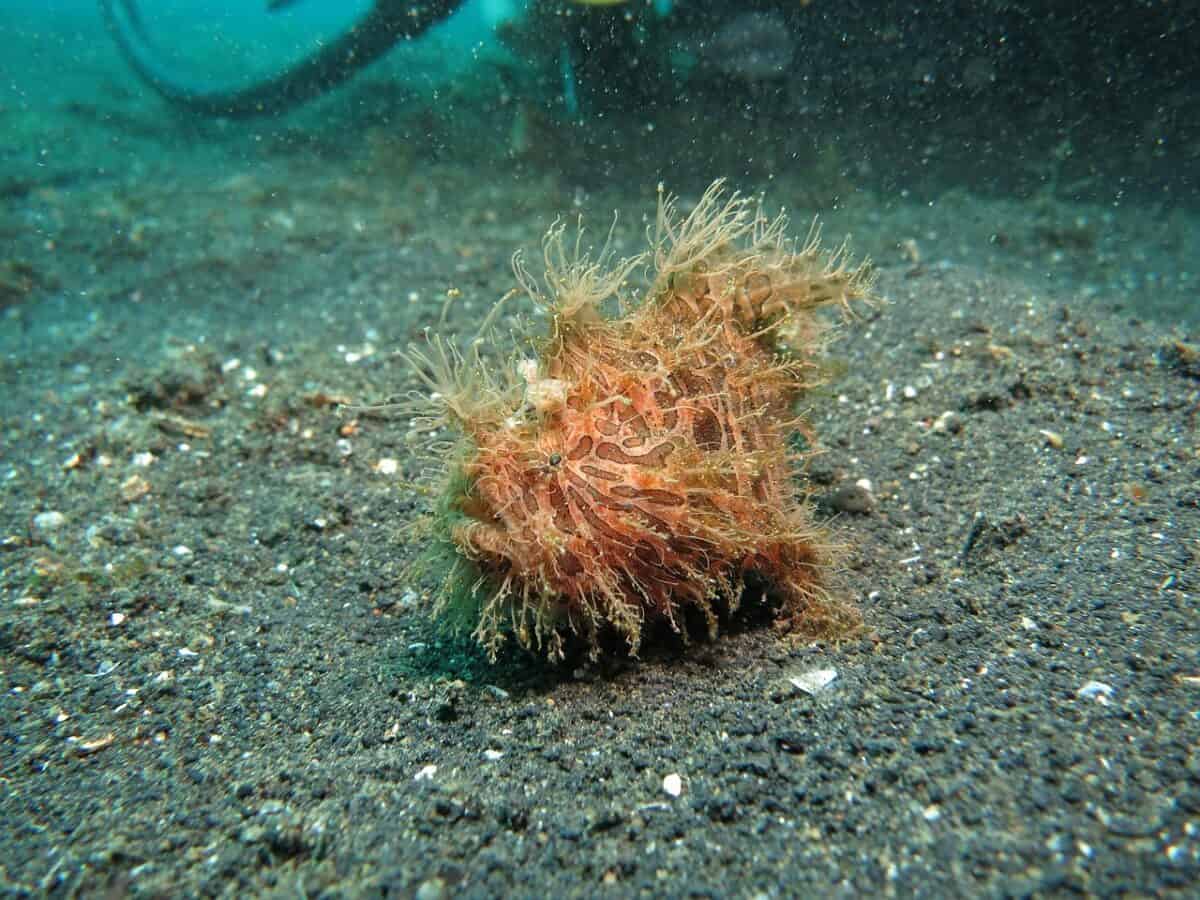
In the dark abyss of the deep sea, anglerfish engage in perhaps the most extreme form of sexual dimorphism and mating known in vertebrates. The females, which can grow up to a meter long, dwarf the males, which may be no larger than a few centimeters. When a male finds a female—no small feat in the vast darkness—he bites into her body and releases an enzyme that dissolves his mouth and her skin at the attachment point.
Gradually, their tissues fuse together, connecting their blood vessels until the male essentially becomes a parasitic appendage on the female’s body. His eyes and most internal organs degenerate until he’s nothing more than a sperm-producing attachment. Some female anglerfish have been found with multiple males fused to their bodies, creating a bizarre polyandrous arrangement where the female carries her “harem” of males wherever she goes, ensuring she always has sperm available when needed. This dramatic sacrifice of independence represents one of the most extreme evolutionary adaptations for reproduction in the animal kingdom.
The Elaborate Courtship of Bowerbirds

Male bowerbirds of Australia and New Guinea have evolved one of the most aesthetically sophisticated mating displays in nature. Rather than relying on physical attributes alone, these avian architects construct elaborate structures called bowers—tunnel-like passages or maypole-like towers made of sticks and grasses. The male then decorates his creation with meticulously arranged collections of colorful objects—flowers, berries, shells, insect wings, and even human-made items like bottle caps or plastic pieces, often sorted by color.
The satin bowerbird specifically prefers blue objects, going to great lengths to collect anything of this hue. Beyond building these structures, males perform complex dances and vocalizations when a female approaches. The female visits multiple bowers before choosing a mate, assessing not just the quality of construction but the artistic arrangement of decorations. Research has shown that males with the most impressive bowers mate with significantly more females, suggesting these birds have evolved a genuine aesthetic sense—a trait once thought unique to humans.
Red-Sided Garter Snake Mating Balls

Each spring in Manitoba, Canada, tens of thousands of red-sided garter snakes emerge from communal hibernation dens to participate in one of the most spectacular mating events in the reptile world. When females emerge from hibernation, they release a pheromone that drives males into a frenzy. What follows is a remarkable sight: dozens, sometimes hundreds, of males simultaneously pursue and wrap themselves around a single female, forming what biologists call a “mating ball.”
These writhing masses of snakes can contain up to 100 males competing for a single mating opportunity. The competition is so intense that some males have evolved to produce “female mimicking pheromones” that confuse rival males and reduce competition. The female eventually manages to mate with one successful male before slithering away to feeding grounds. The sheer scale of this ritual, with thousands of snakes concentrated in a small area, creates one of nature’s most unusual breeding spectacles and has become a tourist attraction despite its seemingly nightmarish quality to ophidiophobes.
Flatworm Penis Fencing

Marine flatworms engage in what biologists colorfully describe as “penis fencing”—possibly one of the strangest competitive mating behaviors in the animal kingdom. These hermaphroditic creatures possess both male and female reproductive organs but prefer to play the male role in reproduction since producing sperm requires less energy than producing eggs. When two flatworms encounter each other, they engage in a duel using their penis-like organs, which can be located anywhere on their bodies and sometimes exist in multiple numbers.
During these battles, which can last up to an hour, each flatworm attempts to pierce the skin of its opponent with its sharp reproductive organ while avoiding being pierced itself. The “winner” injects sperm into the loser, who must then take on the energetically costly female role of carrying and laying the fertilized eggs. This bizarre ritual represents an evolutionary arms race where the stakes are high—determining which individual will bear the greater reproductive burden—and has resulted in the evolution of increasingly complex and specialized reproductive structures across flatworm species.
Bedbugs and Traumatic Insemination
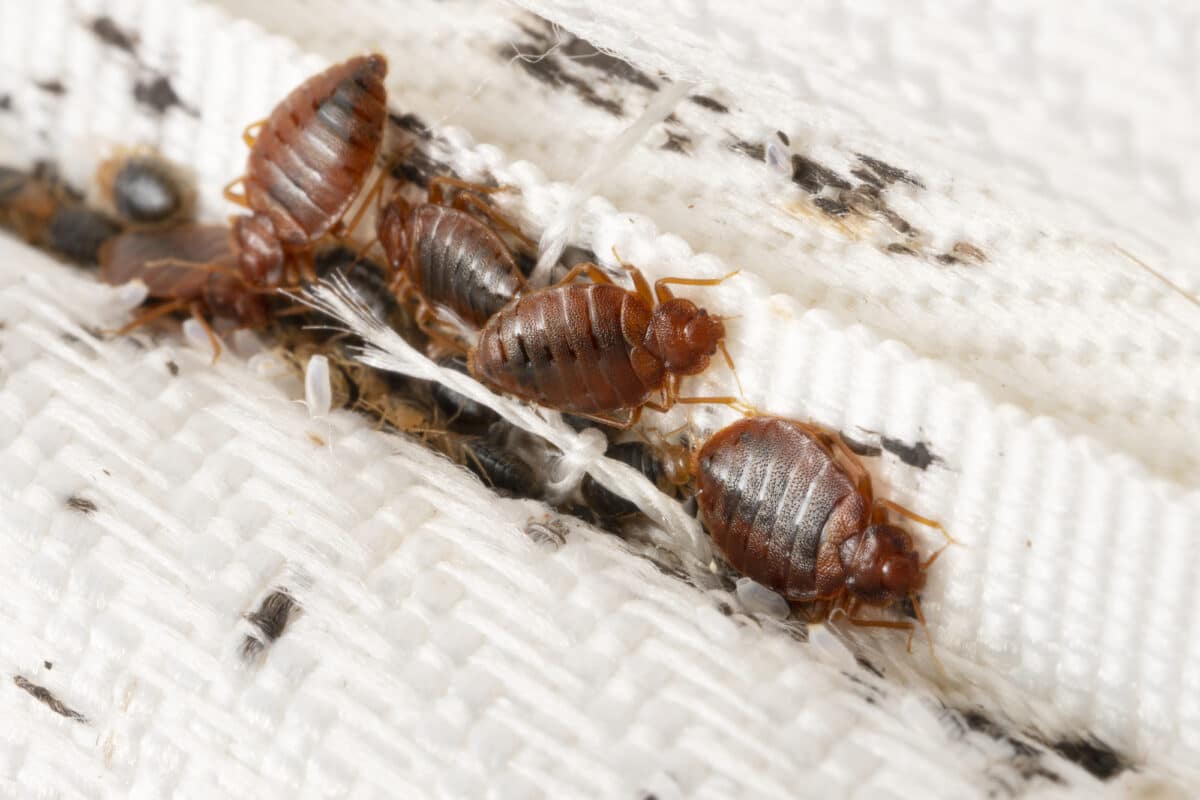
The common bedbug employs one of the most violent mating methods in the insect world through a process known as “traumatic insemination.” Rather than using the female’s reproductive tract, the male bedbug has evolved a specialized, knife-like reproductive organ that he uses to pierce the female’s abdomen, injecting sperm directly into her body cavity. This bypasses her reproductive tract entirely, with the sperm then traveling through her bloodstream to reach her ovaries. This violent process causes significant physical trauma and can shorten the female’s lifespan by up to 30%.
In response, females have evolved a specialized organ called the spermalege—a reinforced area of the abdomen that minimizes damage when pierced. The evolutionary arms race has continued, with some female bedbugs developing behaviors to avoid excessive mating, including hiding from males after feeding or positioning themselves to make insemination more difficult. Scientists believe this unusual mating system evolved as a way for males to overcome female resistance and ensure their reproductive success, regardless of the cost to their partners.
The Barnacle’s Impressive Proportions
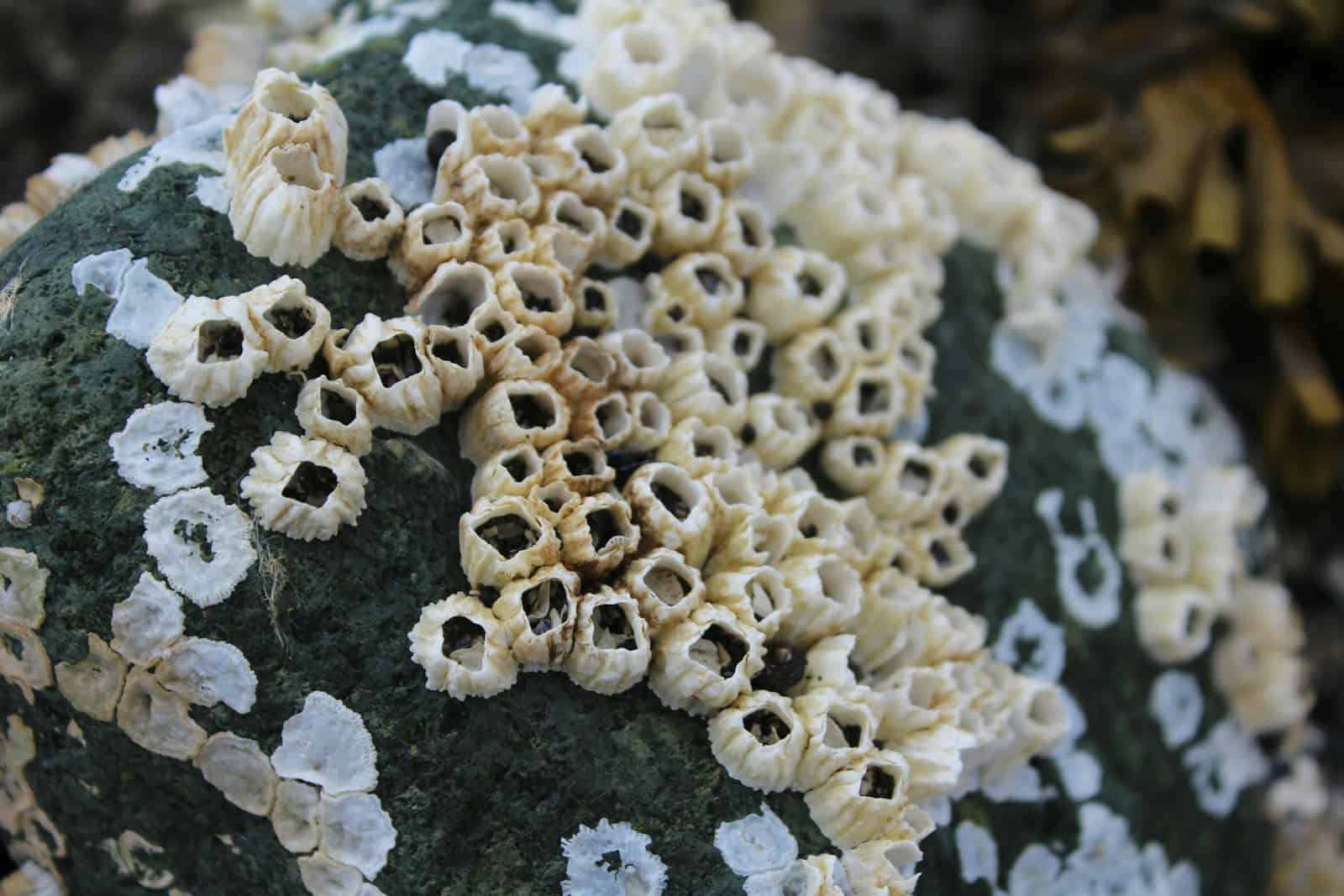
Barnacles may seem like unassuming creatures cemented to rocks and ship hulls, but they possess one of the most disproportionate reproductive adaptations in the animal kingdom. These crustaceans have the longest penis relative to body size of any animal—up to eight times their body length when fully extended. This extraordinary adaptation evolved because adult barnacles are sessile, permanently attached to surfaces and unable to move to find mates. Their extendable penis allows them to reach neighboring barnacles for reproduction while remaining firmly attached to their substrate.
The penis is remarkably flexible, capable of searching and probing the surrounding area for potential mates, and contains sensory structures that help locate receptive partners. Different barnacle species have evolved penis shapes and lengths optimized for their specific habitats—those in wave-swept environments tend to have shorter, stouter penises that can withstand turbulence, while those in calmer waters often possess longer, more flexible organs. This remarkable adaptation demonstrates how reproductive pressure can drive the evolution of extreme anatomical features when mobility is constrained.
Hyena’s Pseudo-Penis Puzzle

Female spotted hyenas possess one of the most masculinized reproductive systems among mammals, featuring a pseudopenis that is actually an enlarged clitoris. This organ can extend up to seven inches long and is capable of erection just like a male penis. The female’s reproductive tract runs through this elongated clitoris, meaning that mating, urination, and even birth must occur through this narrow canal. This creates one of nature’s most difficult birth processes—females must push their cubs through a birth canal that makes a sharp bend and is only about an inch in diameter.
First-time mothers have a mortality rate of up to 60%, and cubs often suffocate during the arduous journey. Scientists believe this unusual anatomy evolved due to high levels of androgens (male hormones) that female hyenas are exposed to in the womb, which may help establish their famously aggressive dominance in hyena society. The resulting reproductive system exemplifies how social and behavioral adaptations can sometimes evolve at the expense of reproductive efficiency, creating one of nature’s most peculiar anatomical paradoxes.
The Honeybee’s Explosive Mating

The mating ritual of honeybees involves one of the most dramatic conclusions in the insect world. When a virgin queen bee reaches sexual maturity, she embarks on her nuptial flight, soaring high into the air followed by a cloud of male drones. Mating occurs mid-flight, with the queen potentially mating with up to 20 different drones over several days. What makes this ritual particularly remarkable is its explosive ending—when a drone successfully mates with the queen, his endophallus (reproductive organ) everts with such force that it ruptures from his body with an audible pop.
The drone then falls to the ground, paralyzed, and dies shortly afterward. This evolutionary sacrifice ensures the drone’s sperm remains firmly lodged within the queen, who stores it in her spermatheca. This sperm storage allows her to fertilize eggs for the remainder of her life—up to five years—producing up to 2,000 eggs per day during peak season. The drone’s dramatic reproductive suicide represents one of nature’s ultimate genetic investments, trading individual survival for the chance to father thousands of offspring.
The Bizarre Birth of Surinam Toads

The Surinam toad of South America has developed one of the most visually disturbing reproductive processes in the amphibian world. During mating, the male and female perform an elaborate underwater somersaulting dance. As the female releases eggs, the male fertilizes them and presses them onto her back. Her skin then swells around each egg, forming individual pockets that completely encase the developing embryos.
For the next 3-4 months, the female carries her offspring embedded in her back in these honeycomb-like chambers, where they develop directly from egg to toadlet without a tadpole stage. When development is complete, the fully formed toadlets burst through her skin one by one, creating a scene reminiscent of science fiction that can be unsettling to human observers. This remarkable adaptation protects the vulnerable eggs and tadpoles from predators in their aquatic environment. After the young have emerged, the female sheds her specialized skin layer and begins the cycle again, demonstrating one of nature’s most unusual examples of parental investment.
The Deep-Sea Seadevil’s Luminous Lure
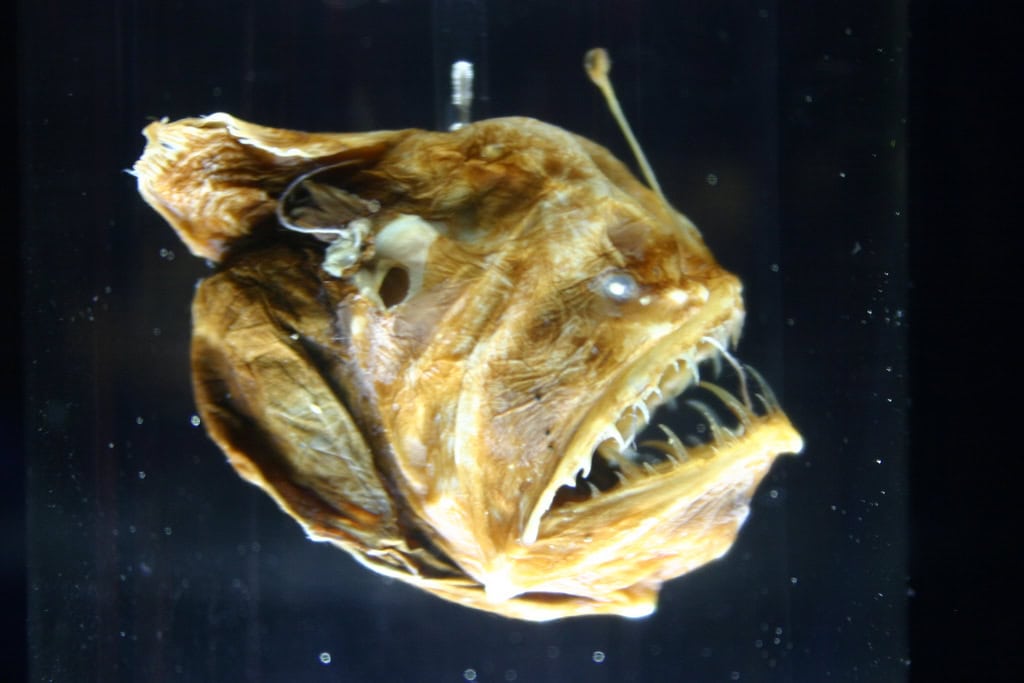
The female deep-sea seadevil, a type of anglerfish, employs one of the ocean’s most effective hunting and mating strategies simultaneously. Living in the pitch-black depths below 3,000 feet, she possesses a bioluminescent lure that extends from her head, containing symbiotic bacteria that produce a ghostly blue-green light. This fishing rod-like appendage serves a dual purpose—it attracts prey in the darkness and also signals her presence to potential mates. Males, which are tiny in comparison (sometimes less than an inch long compared to the female’s foot-long body), have large nostrils that can detect the female’s pheromones from great distances.
When a male locates a female, he bites into her body and their tissues fuse, with the male eventually becoming a permanent parasite whose only function is to provide sperm when the female is ready to spawn. Some female seadevils have been found with multiple males attached to their bodies, ensuring a constant supply of sperm in an environment where encounters between the sexes are exceptionally rare. This extreme sexual parasitism represents one of the most dramatic examples of reproductive specialization in the vertebrate world.
Nature’s Reproductive Ingenuity: Beyond Our Imagination

The extraordinary diversity of breeding rituals across the animal kingdom demonstrates the incredible adaptability of life on Earth. These bizarre reproductive strategies have evolved over millions of years in response to specific environmental pressures, physical limitations, and competitive challenges. What might seem strange or even disturbing to human observers represents finely tuned evolutionary solutions to the fundamental challenge of passing genes to the next generation.
These adaptations remind us that natural selection works not toward what seems logical or aesthetically pleasing to humans, but toward what functions effectively in specific ecological contexts. As we continue to explore remote habitats and study lesser-known species, scientists will undoubtedly discover even more remarkable reproductive behaviors that further expand our understanding of life’s boundless creativity. The strange breeding rituals of the wild serve as a humbling reminder that despite all our scientific advances, nature’s ingenuity still surpasses the limits of human imagination.

From exploring the marine wonders in the Azores and witnessing the vast savannas of Kenya, to delving deep into the rich biodiversity of South Africa and traversing iconic landscapes in Australia and the US like Yellowstone, Chris's experiences are vast.
With a penchant for diving alongside sharks, the ocean holds a special place in his heart.
Through his academic insights, he champions wildlife conservation, striving with 'Animals Around The Globe' to cultivate a profound connection between humans and animals, enhancing our mutual appreciation.
Connect with him at Feedback@animalsaroundtheglobe.com.
- Why Spiders Don’t Get Stuck in Their Own Webs - July 20, 2026
- What Scientists Found in a 10,000-Year-Old Beehive - July 20, 2026
- This Spider Builds Fake Decoys of Itself - July 20, 2026