


The ocean, covering more than 70% of our planet, remains one of Earth’s most mysterious frontiers. Within its vast depths live creatures that have evolved remarkable abilities that might seem like something straight out of a comic book. These marine “superpowers” aren’t fictional—they’re extraordinary adaptations that help these animals survive in some of the most challenging environments on Earth. From animals that can regenerate body parts to others that produce their own light, the underwater world hosts an array of impressive abilities that often go unnoticed by humans. Let’s dive into the fascinating world of 16 marine animals with extraordinary powers that might just make you reconsider what’s possible in nature.
15. The Immortal Jellyfish (Turritopsis dohrnii)

Perhaps the most astonishing marine superpower belongs to the aptly named immortal jellyfish. When faced with danger, starvation, or physical damage, this remarkable creature can revert its cells to an earlier developmental stage through a process called transdifferentiation. After reverting to a polyp stage, it can then begin its life cycle anew. Theoretically, this biological reset button allows the immortal jellyfish to live forever, barring disease or predation. Scientists are studying these tiny, bell-shaped creatures (usually measuring only 4-5mm in diameter) for insights that might revolutionize human medicine, particularly in the fields of aging and cellular regeneration. Though they possess biological immortality, most don’t achieve it in practice due to predators and environmental threats.
14. The Electric Eel’s Powerful Shock

Despite its name, the electric eel (Electrophorus electricus) is actually not an eel but a knifefish. Native to the Amazon and Orinoco river basins, this creature possesses one of nature’s most impressive defensive mechanisms. Three specialized electric organs—the main organ, Hunter’s organ, and Sachs’ organ—comprise about 80% of its body, allowing it to generate powerful electric discharges of up to 860 volts with 1 amp of current. These bioelectric weapons serve multiple purposes: stunning prey, defending against predators, and even helping the eel navigate murky waters through electroreception. The electric eel can precisely control its electrical output, using lower voltages for hunting and higher voltages when threatened. This remarkable adaptation has inspired researchers developing bioelectric batteries and medical devices.
13. The Mimic Octopus’s Master Disguise

Discovered in 1998 off the coast of Indonesia, the mimic octopus (Thaumoctopus mimicus) possesses what might be the ocean’s most versatile disguise system. Unlike other octopuses that can change color and texture, the mimic octopus can transform its entire body shape and behavior to impersonate at least 15 different marine species, including sea snakes, lionfish, flatfish, and jellyfish. This remarkable cephalopod makes split-second decisions about which dangerous animal to impersonate based on the specific threat it faces. With specialized skin cells called chromatophores, papillae for texture changes, and extraordinary muscle control, the mimic octopus creates convincing imitations that fool predators. This sophisticated mimicry represents one of the most advanced defensive adaptations ever observed in marine life and demonstrates a level of intelligence rarely seen in invertebrates.
12. The Mantis Shrimp’s Knockout Punch

The peacock mantis shrimp (Odontodactylus scyllarus) might look colorful and unassuming, but it possesses the animal kingdom’s most powerful pound-for-pound punch. Its specialized appendages, called dactyl clubs, can accelerate underwater faster than a .22 caliber bullet—reaching speeds of 23 meters per second with a force of 1,500 Newtons. This “smashing” attack happens so quickly that it creates cavitation bubbles that collapse and produce temperatures nearly as hot as the sun’s surface (4,400°C) and a pressure wave that can stun prey even if the punch misses. The mantis shrimp’s club material is so incredibly durable that materials scientists study it to develop better body armor, helmets, and aircraft frames. Perhaps equally impressive, mantis shrimps have the most complex vision systems known to science, with up to 16 types of photoreceptors (humans have just three) that can perceive ultraviolet, infrared, and polarized light.
11. The Pistol Shrimp’s Sonic Weapon

The pistol shrimp (family Alpheidae) might be small, typically measuring only 3-5cm, but it wields one of the most remarkable weapons in nature. One of its asymmetrical claws has evolved into a specialized snapping mechanism that, when closed rapidly, creates a cavitation bubble that travels at 62 miles per hour and reaches temperatures of nearly 8,000°F (4,400°C)—almost as hot as the sun’s surface. When this bubble collapses, it produces a sound reaching 218 decibels, louder than a gunshot and capable of stunning or killing small prey. The resulting shockwave can also produce a brief flash of light through sonoluminescence. Colonies of pistol shrimp can produce enough noise to interfere with underwater communication and sonar equipment. This miniature powerhouse demonstrates how evolutionary adaptations can create extraordinary capabilities in even the smallest creatures.
10. The Hagfish’s Slime Defense
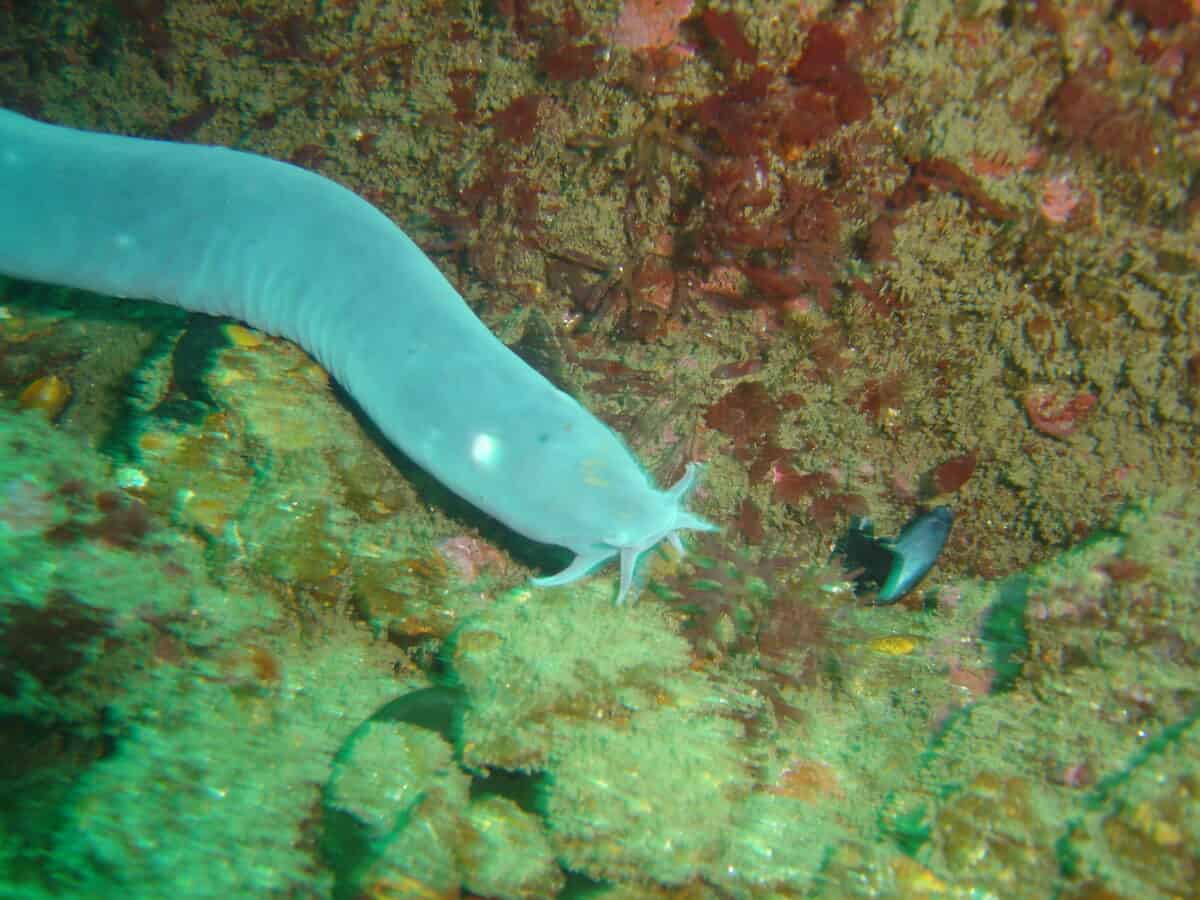
The hagfish, often described as one of the most disgusting creatures in the ocean, possesses one of the most effective defensive mechanisms in the animal kingdom. When threatened, this primitive, eel-like fish can produce up to 5.5 gallons (20 liters) of slime in less than a second from specialized slime glands along its body. This remarkable substance expands by absorbing water and contains thousands of microscopic protein threads that are stronger than nylon and almost as strong as spider silk. Just one teaspoon of hagfish slime protein can expand to fill a bucket when combined with water. The slime effectively clogs the gills of would-be predators, forcing them to retreat or risk suffocation. After deploying this defense, the hagfish cleans itself by tying its body into a knot and sliding the knot from head to tail, scraping off the slime. Scientists are studying hagfish slime for applications in sustainable fabrics, protective clothing, and medical applications.
9. The Deep-Sea Anglerfish’s Living Lure

In the lightless depths of the ocean’s midnight zone, the female anglerfish (family Lophiiformes) has evolved one of nature’s most ingenious hunting adaptations. The fleshy appendage extending from her forehead is actually a modified dorsal spine containing bioluminescent bacteria that produce a blue-green light. This natural fishing rod, called an illicium, dangles a glowing lure (esca) in front of the anglerfish’s massive jaws, attracting curious prey in the otherwise pitch-black environment. What makes this relationship truly remarkable is the symbiotic partnership with bacteria, which receive nutrients from the fish while providing light that helps the anglerfish hunt. Perhaps equally unusual is the anglerfish’s reproductive strategy—the tiny male permanently fuses to the female’s body, eventually sharing her circulatory system and becoming essentially a parasitic sperm provider. This extreme sexual dimorphism represents one of the most dramatic examples of specialized gender roles in the animal kingdom.
8. The Archerfish’s Precision Shooting
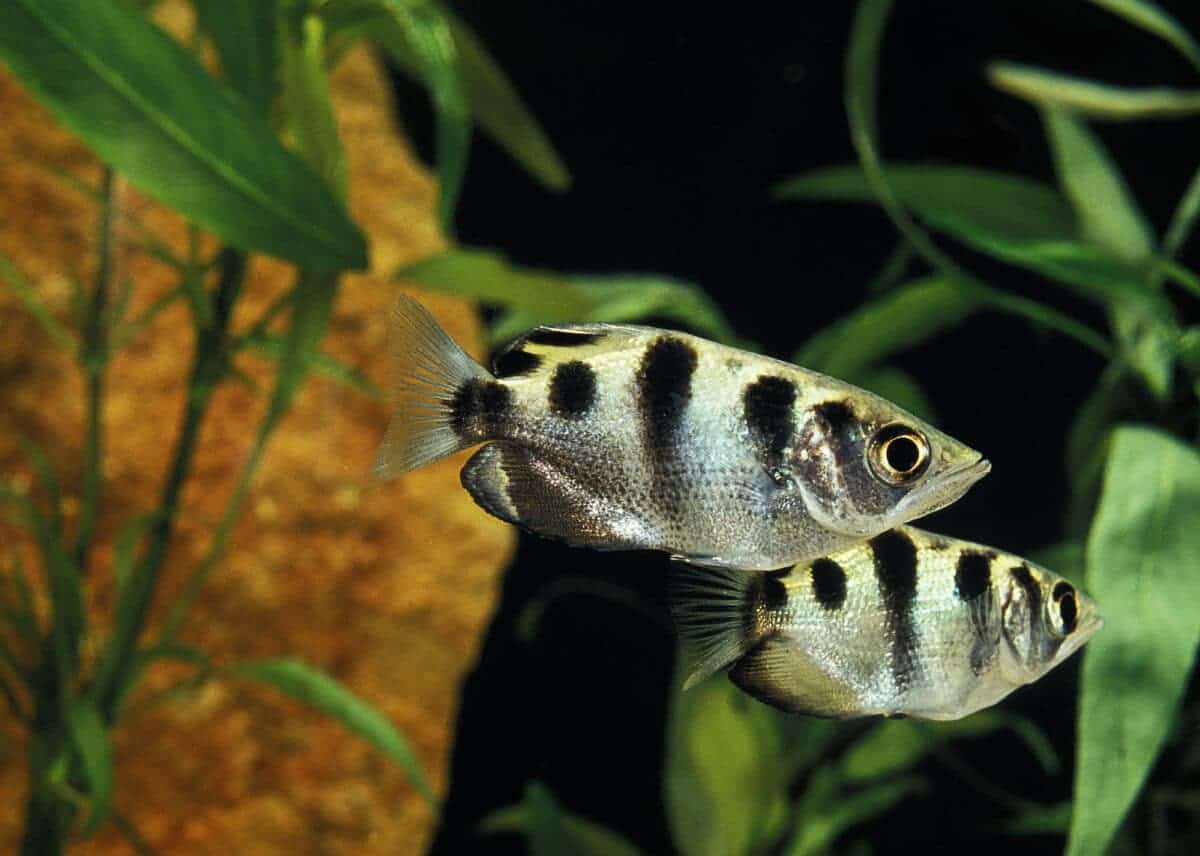
The archerfish (family Toxotidae) has developed an extraordinary hunting technique that demonstrates remarkable precision and an understanding of complex physics. These fish can shoot down insects and small creatures resting on vegetation above the water by firing precisely aimed jets of water from their specialized mouths. What makes this ability truly impressive is that the archerfish must account for light refraction at the water-air boundary and adjust its aim accordingly—essentially solving complex physics equations instinctively. They can hit targets up to 3 meters away with remarkable accuracy and generate forces up to five times their body weight through their water jets. Juvenile archerfish learn this skill through observation rather than instinct, showing a sophisticated learning capability. Scientists have determined that archerfish don’t just spit water randomly; they modulate the water stream, creating a focused “water bullet” that arrives at the target with maximum impact, demonstrating a level of sophistication that has inspired engineering applications.
7. The Sperm Whale’s Sonic Cannon
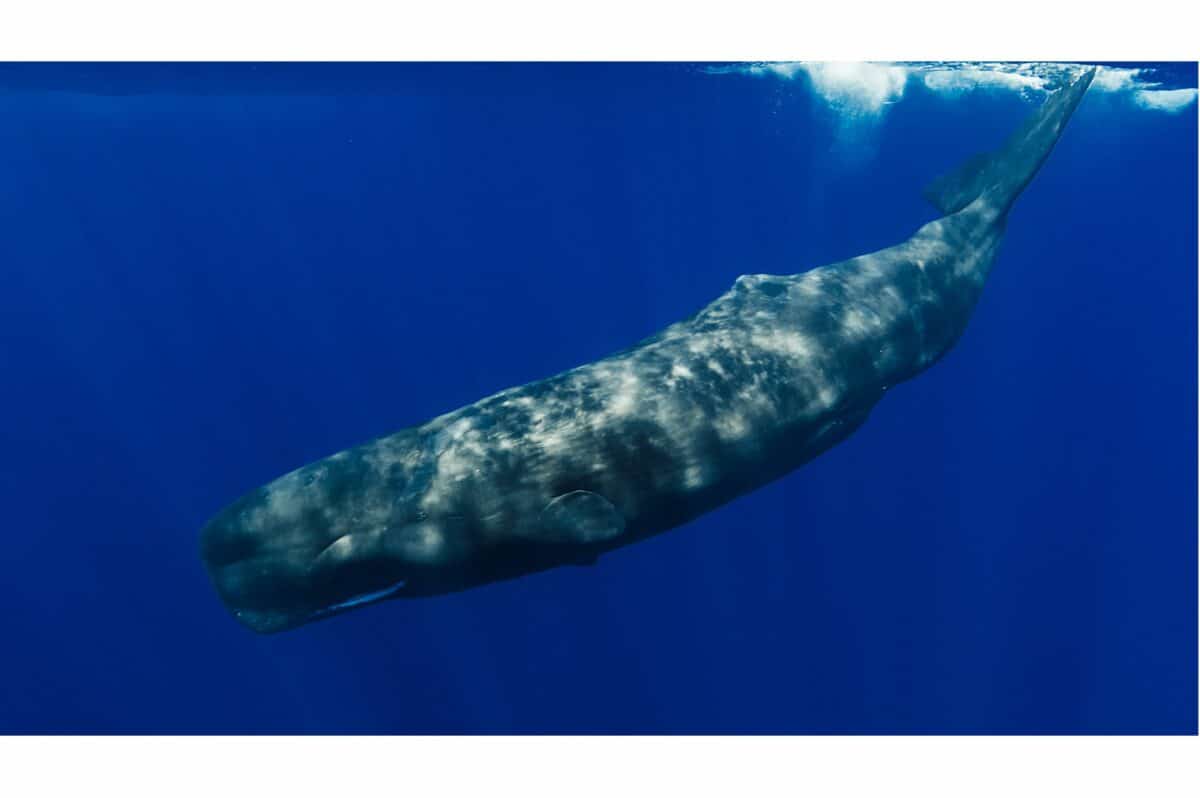
The sperm whale (Physeter macrocephalus), the largest toothed predator on Earth, possesses the loudest biological sound system in the animal kingdom. Their massive, oil-filled forehead, called a spermaceti organ, can generate focused clicks exceeding 230 decibels—louder than a rocket launch and powerful enough to potentially stun or even kill prey. These directional sound waves may allow sperm whales to debilitate giant squid during their deep-sea hunting dives that can reach depths of over 3,000 meters. The spermaceti organ acts as an acoustic lens, focusing sound waves like a biological sonar cannon. Sperm whales also possess the largest brain of any animal (weighing up to 18 pounds) and communicate using complex patterns of clicks called codas that vary between different whale clans, suggesting a sophisticated form of culture. Their unique anatomy allows them to dive deeper and hold their breath longer than any other air-breathing vertebrate, staying submerged for up to 90 minutes while hunting in the ocean’s twilight zone.
6. The Pufferfish’s Tetrodotoxin Defense
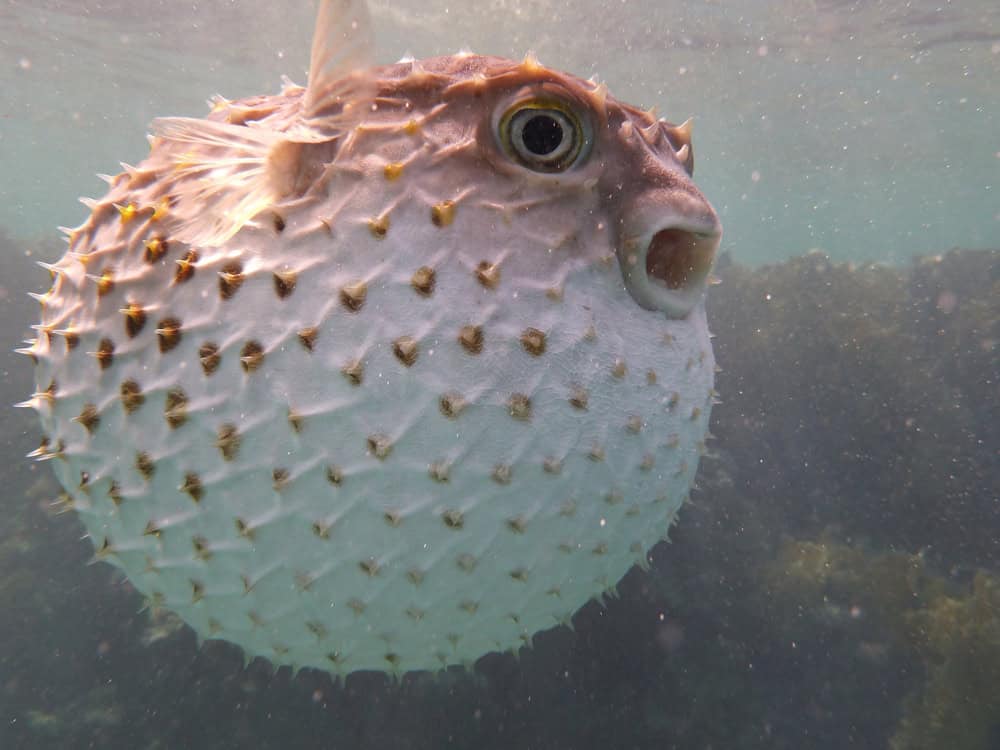
The pufferfish (family Tetraodontidae) combines two remarkable defense mechanisms into one deadly package. When threatened, these fish can rapidly intake water or air to inflate themselves to several times their normal size, transforming into a spiny, unappetizing ball that’s difficult for predators to swallow. More impressively, most pufferfish species produce tetrodotoxin (TTX), one of the most potent neurotoxins known to science—1,200 times more deadly than cyanide. A single pufferfish can carry enough toxin to kill up to 30 adult humans, and there is no known antidote. Remarkably, the pufferfish doesn’t produce this toxin itself but acquires it through its diet and symbiotic bacteria. Despite its deadly nature, pufferfish (fugu) is considered a delicacy in Japan, where specially licensed chefs prepare it to leave just enough toxin to create a tingling sensation without fatal consequences. Scientists are investigating tetrodotoxin for potential medical applications in pain management, as it blocks sodium channels in nerve cells.
5. The Tardigrade’s Indestructibility

Though not exclusively marine, tardigrades (water bears) inhabit marine environments and deserve mention for their nearly indestructible nature. These microscopic animals, typically 0.1-1.5mm long, possess extreme survival capabilities that border on supernatural. Tardigrades can survive temperatures from near absolute zero (-458°F/-272°C) to well above boiling (300°F/149°C), withstand pressures six times greater than those in the deepest ocean trenches, tolerate radiation levels 1,000 times greater than what would kill a human, and live without water for up to 30 years in a dehydrated state called cryptobiosis. During this remarkable suspended animation, they replace water in their cells with a sugar called trehalose and essentially shut down their metabolism to 0.01% of normal. When rehydrated, even after decades, they can resume normal activities within hours. Tardigrades have even survived in the vacuum of space during controlled experiments. These abilities stem from special proteins that protect their DNA from damage and extensive DNA repair mechanisms. Their extraordinary resilience has made them subjects of intense scientific study for applications in medicine, long-term food storage, and even space travel.
4. The Box Jellyfish’s Lethal Venom

The box jellyfish (class Cubozoa), particularly the Australian species Chironex fleckeri, possesses what might be the most sophisticated venom delivery system in the marine world. Unlike most jellyfish, box jellyfish are active hunters with 24 eyes grouped into four clusters that can detect light, dark, and movement. Their tentacles contain millions of microscopic cnidocysts (stinging cells) that fire harpoon-like structures upon contact, delivering venom directly into the victim’s tissue. This venom is among the most lethal known to science, capable of killing a human in as little as two to five minutes. It attacks the heart, nervous system, and skin cells simultaneously. Most remarkably, the box jellyfish’s venom is cardiotoxic, neurotoxic, and dermatonecrotic all at once—a combination rarely seen in nature. Each tentacle can contain enough venom to kill 60 adult humans. Despite their deadly nature, box jellyfish have sophisticated navigation abilities, actively swimming at speeds up to 4.6 meters per minute and maneuvering through complex root systems in mangrove swamps.
3. The Sea Cucumber’s Self-Evisceration

Sea cucumbers (class Holothuroidea) possess one of the most dramatic defensive mechanisms in the animal kingdom—voluntary self-evisceration. When threatened, certain species can expel their internal organs, including parts of their digestive tract, respiratory trees, and reproductive organs, through their anus or a rupture in their body wall. Some species take this further by producing Cuvierian tubules, sticky toxic threads that entangle predators while the sea cucumber escapes. What makes this ability truly remarkable is that sea cucumbers can fully regenerate their expelled organs within a few weeks. Their body walls contain a unique collagen that can switch between solid and liquid states under neural control, allowing them to liquefy parts of their bodies to squeeze through tiny spaces or stiffen to anchor themselves. Additionally, some species harbor toxic compounds called holothurins that make them unpalatable to predators. Scientists study sea cucumber regenerative abilities for insights into tissue regeneration and wound healing applications in human medicine.
2. The Cuttlefish’s Hypnotic Display

The cuttlefish (family Sepiidae) possesses perhaps the most sophisticated color-changing system in the animal kingdom. Their skin contains up to 10 million specialized chromatophore cells controlled by direct neural connections, allowing them to change color, pattern, and even skin texture in less than a second. What makes this ability truly extraordinary is that cuttlefish are colorblind, yet can precisely match complex backgrounds. They use polarized light perception instead of color vision to achieve this remarkable camouflage. Beyond camouflage, male cuttlefish display a unique courtship strategy—they can create different patterns on each side of their body, showing a female-attracting display on one side while displaying male-deterring patterns on the other side facing rival males. Perhaps most impressive is their ability to produce pulsating bands of color that move across their bodies in mesmerizing waves, potentially hypnotizing prey before striking. This hypnotic display, combined with their W-shaped pupils and high-speed attack using two specialized feeding tentacles, makes the cuttlefish one of the ocean’s most sophisticated predators despite its relatively small size.
1. The Narwhal’s Sensory Tusk

The narwhal (Monodon monoceros), often called the “unicorn of the sea,” possesses one of the most unusual sensory organs in the marine world. What appears to be a horn is actually an elongated tooth (typically the left canine) that spirals counterclockwise up to 10 feet in length and contains up to 10 million nerve endings. Recent research reveals this tusk is a sophisticated sensory organ capable of detecting subtle changes in temperature, pressure, salinity, and possibly chemical concentrations in seawater. The tusk’s porous outer layer allows seawater to contact the sensitive inner pulp. Males often “tusk” each other in non-violent displays or rub tusks with other narwhals in what may be a form of sensory information exchange. Some narwhals develop two tusks, and rarely, females develop a tusk as well. This extraordinary adaptation helps narwhals navigate Arctic waters and potentially locate food and mates in their extreme habitat. The narwhal’s ability to dive over 1,800 meters (5,900 feet) and withstand the intense pressure of deep Arctic waters further demonstrates.
Conclusion:

he ocean is more than just a vast expanse of saltwater—it’s a living library of evolutionary marvels. From jellyfish that defy aging to shrimp that punch with the force of a bullet, these 16 marine creatures showcase just how imaginative and extreme nature can be. Their “superpowers” aren’t science fiction—they’re the result of millions of years of adaptation in one of the planet’s most challenging environments. Whether it’s the regenerative abilities of sea cucumbers, the electricity of eels, or the sonic weapons of whales and shrimp, these animals push the boundaries of what’s biologically possible. Many of these adaptations are now inspiring breakthroughs in medicine, robotics, materials science, and beyond. As we continue to explore the deep, we’re not just uncovering strange creatures—we’re revealing nature’s hidden playbook of innovation. These extraordinary marine animals remind us that the ocean still holds countless secrets—and some of them are nothing short of superhuman.

As a little kid, I fell in love with nature, wildlife, and animals. Living in the USA, South Africa, Italy, China and Germany gave me the opportunity to discover the world's Wildlife. My favorite animals are Mountain Gorillas, Siberian Tigers, and Great White Sharks.
I'm a certified PADI Open Water Diver, went to Everest Base Camp and Trekked Gorillas in Uganda. I hold a Master of Science in Economics and Finance.
Please send any feedback to feedback@animalsaroundtheglobe.com
- 13 Cat Breeds That Get Along with Dogs - July 20, 2026
- The 12 Largest Dog Breeds That Still Love to Cuddle - July 20, 2026
- 12 Pet Habits That Secretly Mean They Love You - July 20, 2026