

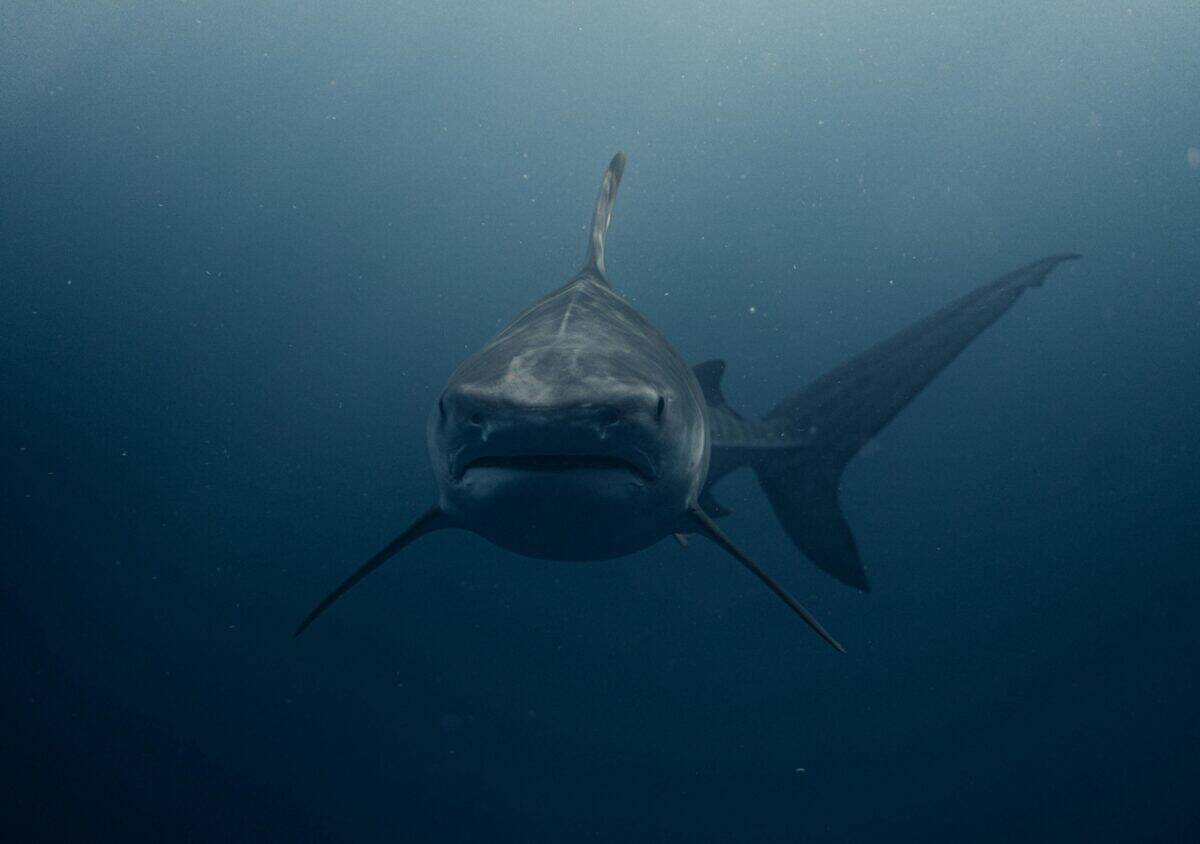
In the mysterious depths of our oceans, something remarkable is happening. Marine biologists and shark researchers around the world have been documenting a curious phenomenon: many shark species appear to be growing larger than their historical averages. This trend, observed across multiple species and ocean regions, has sparked intense scientific interest and debate. While initial observations were met with skepticism, mounting evidence suggests this is not merely anecdotal but represents a genuine biological shift. Scientists have been working diligently to understand the underlying causes of this phenomenon, and recent research has begun to shed light on these oceanic giants’ expanding proportions. The implications of larger sharks extend beyond mere scientific curiosity, potentially affecting marine ecosystems, conservation efforts, and even human interactions with these apex predators.
The Growing Evidence

The first indications of increasing shark sizes emerged from long-term tagging programs and fisheries data. Studies comparing contemporary specimens with historical records show statistically significant increases in average length and weight across several species. For instance, research published in the Journal of Marine Biology documented that great white sharks (Carcharodon carcharias) in the North Atlantic have increased in average length by approximately 8% over the past four decades.
Similar patterns have been observed in bull sharks, tiger sharks, and even some deep-sea species. Marine biologists from the University of Miami have tracked over 3,000 tiger sharks since 1990, noting an average weight increase of 6-7% in adult specimens. Perhaps most compelling is the consistent nature of these findings across geographically distinct shark populations, suggesting a global rather than localized phenomenon.
Climate Change and Warming Oceans

One of the primary factors scientists believe is contributing to shark growth is climate change—specifically, warming ocean temperatures. Sharks, like most fish, are ectothermic, meaning their body temperature and metabolic functions are directly influenced by their environment. In warmer waters, sharks can potentially experience faster growth rates as their metabolism accelerates. Dr. Sarah Jenkins, a marine ecologist at Woods Hole Oceanographic Institution, explains: “When ocean temperatures rise within a certain optimal range for a particular species, we often see accelerated growth patterns.
For many shark species, slightly warmer waters can mean more efficient digestion, faster cellular processes, and ultimately, larger body sizes.” This phenomenon aligns with what biologists call the “temperature-size rule,” where ectothermic animals often grow larger in warmer environments, provided food resources are sufficient. The gradual warming of our oceans—which have absorbed more than 90% of excess heat from greenhouse gas emissions—may be creating conditions that promote increased growth in many shark species.
Protected Status and Conservation Success

Another significant factor contributing to larger sharks may be the success of conservation efforts implemented in recent decades. Many shark species, once heavily fished and hunted, have received protected status in waters around the world. These protections have allowed shark populations to recover somewhat and individuals to live longer lives. Dr. Robert Chen of the Pacific Shark Research Center notes, “When sharks are protected from fishing pressure, they have the opportunity to reach their full growth potential and natural lifespans.
What we may be seeing is not necessarily sharks growing larger than their historical maximum sizes, but more individuals surviving long enough to approach those maximum sizes.” The banning of shark finning in many regions and the establishment of marine protected areas have created safe havens where sharks can grow older and larger. The recovery of shark populations in places like Palau, which declared its waters a shark sanctuary in 2009, provides compelling evidence for this theory. Researchers have documented larger average sizes in several shark species within these protected zones compared to similar populations in unprotected areas.
Prey Abundance and Changing Diets

The availability and quality of prey also play crucial roles in determining shark growth patterns. Some experts suggest that changes in marine food webs may be contributing to increased shark sizes. In certain regions, conservation efforts have not only protected sharks but have also allowed their prey species to recover. Additionally, shifts in fishing practices have altered the availability of different food sources. Dr. Maria Gonzalez, a marine ecologist at the Scripps Institution of Oceanography, explains that “in some ecosystems where humans have reduced fishing pressure on medium-sized fish that sharks prey upon, we’re seeing greater abundance of high-quality food for these predators.”
Interestingly, some shark species appear to be adapting their diets in response to changing ocean conditions. Research on great white sharks off the coast of Australia has shown that they may be targeting prey with higher fat content, such as seals, which provide more calories and could potentially fuel larger body growth. These dietary shifts, whether caused by changing prey availability or behavioral adaptations, may be providing sharks with improved nutrition that supports larger body sizes.
The Role of Natural Selection
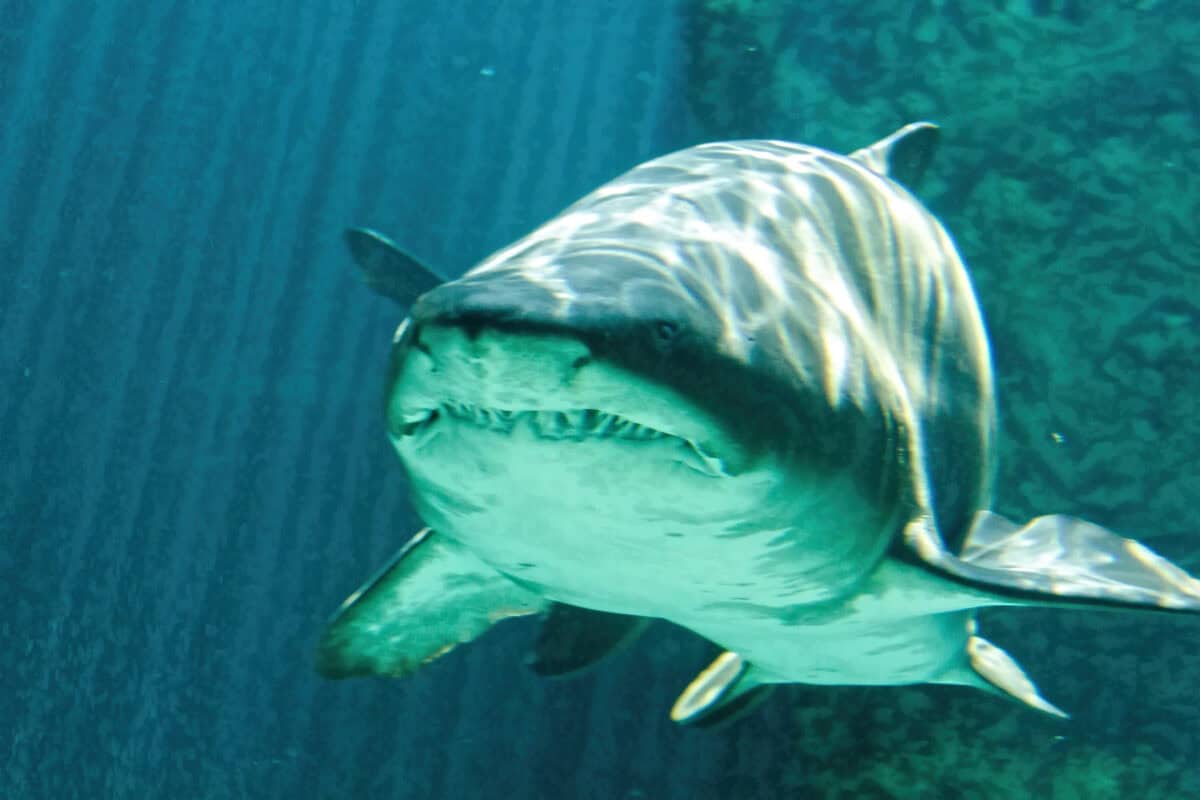
Evolutionary pressures may also be driving the trend toward larger sharks. Human activities have dramatically altered marine ecosystems, potentially creating selective pressures that favor larger individuals. For instance, fishing practices often target medium-sized sharks, potentially removing them from the gene pool and giving larger individuals a reproductive advantage. Dr. Thomas Williams of the Marine Biological Association explains, “Larger sharks may have better survival rates in the face of human pressures like fishing.
They can swim faster to escape nets, they’re harder to land when hooked, and some fishing gear is actually designed to catch smaller individuals.” Additionally, larger females typically produce more offspring, potentially accelerating this selective process. Climate change is creating another set of selective pressures—larger bodies can store more energy reserves, potentially helping sharks better weather fluctuations in prey availability that come with changing ocean conditions. This combination of human-induced and environmental selective pressures could be driving shark populations toward larger average sizes through natural selection processes.
Regional Variations in Growth Patterns
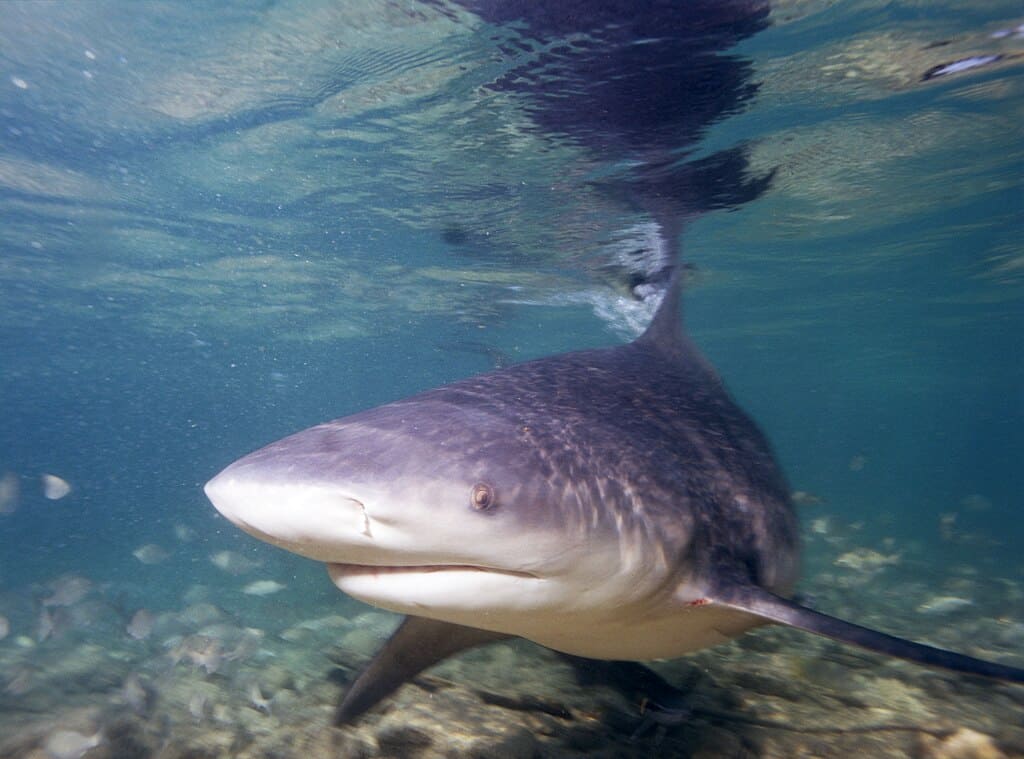
The trend toward larger sharks is not uniform across all ocean regions. Scientists have observed significant variations in growth patterns depending on geographic location, local environmental conditions, and human activities. In the North Atlantic, for example, white sharks appear to be growing larger at a faster rate than their counterparts in the Mediterranean. Similarly, bull sharks in the Gulf of Mexico have shown more pronounced size increases than populations in the western Pacific. These regional differences provide important clues about the factors driving shark growth. Areas experiencing more rapid ocean warming, for instance, tend to show more dramatic increases in shark sizes.
Regions with stronger marine protection measures also exhibit more significant growth trends. Dr. Rebecca Torres from the Australian Institute of Marine Science points out that “these regional variations are actually helping us identify the most important factors influencing shark growth. By comparing different populations experiencing different conditions, we can better understand the complex interplay of factors at work.” These geographic patterns also highlight the importance of considering local contexts when developing conservation and management strategies for shark populations.
Technological Advancements in Shark Research

Modern technological advancements have revolutionized our ability to study sharks, providing unprecedented insights into their growth patterns. Satellite tagging, acoustic monitoring, and drone surveys allow researchers to track shark movements, behaviors, and growth with remarkable precision. These technologies have played a crucial role in documenting the trend toward larger sharks. Advanced imaging techniques like photogrammetry—using calibrated photographs to measure size—have enabled non-invasive size monitoring of free-swimming sharks.
Dr. James Harrison, who specializes in marine technology at the University of California, San Diego, explains that “twenty years ago, we simply didn’t have the tools to accurately measure and track large numbers of sharks in their natural environment. Today, we can monitor hundreds of individuals over their lifetimes, giving us much more reliable data on growth patterns.” Genetic sampling techniques have also advanced significantly, allowing researchers to analyze shark DNA for growth-related genes and potential evolutionary changes. These technological innovations not only confirm the trend toward larger sharks but also provide vital data for understanding the underlying causes.
Potential Ecosystem Impacts

The increasing size of apex predators like sharks could have far-reaching consequences for marine ecosystems. Larger sharks generally consume more prey and may target different species than their smaller counterparts, potentially altering predator-prey dynamics throughout the food web. Some researchers express concern about potential cascading effects, where changes in shark predation patterns influence multiple trophic levels. For instance, if larger sharks consume more rays, ray populations might decline, potentially leading to increases in the shellfish that rays typically feed on.
Dr. Samantha Lee of the Marine Conservation Society notes that “apex predators like sharks play crucial roles in maintaining ecosystem balance. When these predators change—whether in abundance or size—we often see ripple effects throughout the system.” However, other scientists point out that larger sharks might actually enhance ecosystem stability in some contexts. Larger predators tend to be more selective in their feeding, potentially reducing the overall pressure on prey populations. They may also help control populations of mesopredators—mid-level predators that can otherwise become overabundant and disrupt ecosystem balance. Understanding these complex ecological relationships remains a priority for researchers studying the phenomenon of increasing shark sizes.
Implications for Human-Shark Interactions

The trend toward larger sharks naturally raises questions about human safety and shark attack risk. While shark attacks remain extremely rare—typically fewer than 10 fatal attacks occur worldwide each year—the psychological impact of potentially larger sharks cannot be ignored. However, experts emphasize that size alone does not necessarily indicate increased aggression or likelihood of attacks. Dr. Christopher Neff, a policy analyst specializing in shark attack politics, explains that “there’s no evidence suggesting larger sharks are more likely to bite humans.
In fact, mature sharks typically have more refined hunting strategies focused on their natural prey.” Nevertheless, the public perception of risk could influence beach management policies, tourism, and conservation efforts. Some coastal communities have already responded by enhancing beach safety measures, including improved surveillance and education programs. Dr. Maria Rodriguez, who studies human-wildlife conflict at the University of Miami, suggests that “transparent communication about the actual risks, which remain incredibly low, is essential. We need to balance legitimate safety concerns with accurate information about shark behavior.” Conservation organizations emphasize that understanding shark behavior and respecting their habitat is the most effective approach to reducing the already minimal risk of negative interactions.
Challenges in Measurement and Verification

Despite the compelling evidence for increasing shark sizes, researchers face significant challenges in verifying and quantifying this trend. Sharks are notoriously difficult to study in their natural environment, and historical size records are often incomplete or potentially biased. Dr. Jason Chen, a statistician specializing in marine biology data at the University of Washington, points out that “we need to be cautious about potential sampling biases. Historically, there was often a tendency to record and preserve particularly large specimens, which could skew our perception of average sizes in the past.” Additionally, different measurement techniques used over time can complicate direct comparisons.
Some researchers measure total length, while others use fork length (from the snout to the fork in the tail), and conversion between these measurements introduces potential errors. Modern research protocols attempt to address these issues through standardized measurement techniques, larger sample sizes, and statistical methods that account for potential biases. Long-term monitoring programs using consistent methodologies are particularly valuable, as they provide more reliable data on size trends over time. Despite these challenges, the overall weight of evidence from multiple independent studies using different methodologies continues to support the conclusion that many shark species are indeed growing larger.
Species-Specific Growth Patterns

The trend toward larger sizes is not uniform across all shark species. Some species show more dramatic growth changes than others, reflecting their unique biology and ecological circumstances. Great white sharks and bull sharks appear to show the most significant increases, with some populations exhibiting average size increases of 8-10% compared to historical records.
Tiger sharks and some hammerhead species also show noticeable growth trends, though less pronounced. Interestingly, some smaller shark species like the Atlantic sharpnose shark show little evidence of increasing sizes. Dr. Elena Perez, who specializes in shark evolutionary biology at the University of Florida, explains that “species with faster growth rates, longer lifespans, and more flexible diets seem to be showing the most significant size increases.
These traits allow them to take better advantage of changing conditions.” Migratory species that can follow shifting prey distributions or seek optimal water temperatures also appear more likely to exhibit increased growth. Deep-sea sharks, which inhabit more stable environments less affected by surface warming, generally show less pronounced size changes. These species-specific patterns provide valuable insights into the mechanisms driving shark growth and highlight the importance of tailored conservation approaches that consider the unique characteristics of different shark species.
Future Research Directions

As evidence for increasing shark sizes continues to mount, researchers are developing new studies to better understand this phenomenon and its implications. Several research institutions are establishing long-term monitoring programs specifically designed to track shark growth patterns with standardized methodologies. Advanced technologies, including environmental DNA (eDNA) sampling and autonomous underwater vehicles equipped with sophisticated imaging systems, promise to enhance data collection capabilities.
Genomic studies are investigating whether genetic factors might be contributing to larger sizes, potentially identifying genes associated with growth that might be under selection pressure. Dr. Michael Tanaka of the International Shark Research Consortium outlines several key questions driving future research: “We need to understand whether these changes represent a temporary response to current conditions or a longer-term evolutionary shift.
We also need better models to predict how different species will respond to further environmental changes.” Collaborative international research efforts are particularly important, as they allow scientists to compare growth patterns across different ocean regions and regulatory frameworks. Citizen science initiatives involving recreational divers and fishers are also providing valuable supplementary data, particularly in regions where formal research resources are limited. These diverse research approaches promise to deepen our understanding of the complex factors influencing shark growth in our changing oceans.
Conclusion

The growing evidence that sharks are increasing in size represents a fascinating biological response to our changing world. Multiple factors appear to be driving this trend, including warming oceans, conservation successes, changing prey availability, and potential evolutionary pressures. While challenges remain in precisely quantifying and understanding these changes, the consistency of observations across different species and regions suggests a genuine biological shift is occurring. The implications of larger sharks extend from ecosystem dynamics to conservation strategies and human-shark interactions.
As our oceans continue to change under human influence, monitoring and understanding such biological responses becomes increasingly important. The story of growing sharks reminds us that marine ecosystems are dynamic and responsive, with complex adaptations to environmental change that we are only beginning to comprehend. Through continued research and thoughtful conservation approaches, we can work to ensure these magnificent apex predators continue to fulfill their vital ecological roles in healthy ocean ecosystems.

From exploring the marine wonders in the Azores and witnessing the vast savannas of Kenya, to delving deep into the rich biodiversity of South Africa and traversing iconic landscapes in Australia and the US like Yellowstone, Chris's experiences are vast.
With a penchant for diving alongside sharks, the ocean holds a special place in his heart.
Through his academic insights, he champions wildlife conservation, striving with 'Animals Around The Globe' to cultivate a profound connection between humans and animals, enhancing our mutual appreciation.
Connect with him at Feedback@animalsaroundtheglobe.com.
- The Most Powerful Hurricane to Threaten U.S. Shores This Century - July 21, 2026
- From Leopards to Peacocks: The Animals That Influence Fashion - July 21, 2026
- This Animal Can Change Color Faster Than a Chameleon - July 21, 2026