

Once declared extinct in the wild, the black-footed ferret has become one of North America’s most remarkable conservation success stories. Through innovative captive breeding programs, dedicated scientists and wildlife managers have pulled this charismatic prairie predator back from the brink of extinction. The journey to save North America’s only native ferret species represents one of the most intensive and successful wildlife recovery efforts in history, combining cutting-edge science with passionate conservation work. This article explores how captive breeding has transformed the fate of the black-footed ferret, the challenges overcome, and the continuing efforts to ensure this unique species thrives once again across the American prairie landscape.
The Near Extinction of America’s Native Ferret

The black-footed ferret (Mustela nigripes) once thrived throughout the Great Plains, from Canada to Mexico, as a specialized predator of prairie dogs. By the mid-20th century, however, the species faced catastrophic decline. Widespread prairie dog eradication programs eliminated approximately 98% of the ferret’s prey base and habitat. As prairie dog colonies disappeared under government-sponsored poisoning campaigns to convert grasslands to agriculture, black-footed ferret populations plummeted.
By 1979, the species was considered extinct in the wild until a small population was discovered in Meeteetse, Wyoming in 1981. This remnant colony, consisting of just 129 individuals, offered the last hope for the species. When disease struck this final wild population, wildlife managers made the critical decision to capture the surviving 18 ferrets for a captive breeding program – the species’ only chance for survival.
The Launch of the Captive Breeding Program

The black-footed ferret captive breeding program began in 1985 as a last-ditch effort to save the species. The U.S. Fish and Wildlife Service, in partnership with the Wyoming Game and Fish Department and other conservation organizations, established a breeding facility at the Sybille Wildlife Research Center in Wyoming. Starting with just 18 founder animals—seven males and eleven females—the program faced enormous challenges.
Most significantly, scientists had very limited knowledge about black-footed ferret breeding behavior, nutrition, and health needs. The initial breeding attempts yielded disappointing results, with only four kits surviving in the first year. However, persistence and adaptive management allowed the program to gradually refine husbandry techniques. By 1987, the program moved to the National Black-footed Ferret Conservation Center near Fort Collins, Colorado, which remains the hub of captive breeding efforts today.
The Science Behind Breeding Success

Developing successful breeding protocols for black-footed ferrets required significant scientific innovation. Researchers discovered that manipulating light cycles could stimulate breeding outside the natural spring season, allowing for multiple breeding opportunities throughout the year. Artificial insemination techniques were developed to maximize genetic diversity from the limited founder population. Scientists also pioneered embryo transfer and cryopreservation of genetic material, creating a genetic bank for the species.
Diet formulation presented another challenge, as researchers worked to replicate the ferrets’ natural prairie dog diet in captivity. Perhaps most impressive was the genetic management system implemented to minimize inbreeding and maintain genetic diversity despite the severe bottleneck of just seven breeding founders. Today, every black-footed ferret alive is descended from these seven individuals, yet careful genetic management has preserved approximately 86% of the original genetic diversity—a remarkable achievement in conservation genetics.
Building a Network of Breeding Facilities

As the breeding program gained momentum, managers recognized the need to expand beyond a single facility to reduce the risk of catastrophic loss. Beginning in 1990, the U.S. Fish and Wildlife Service established the Black-footed Ferret Recovery Implementation Team (BFFRIT), which coordinated efforts to create a network of breeding facilities across North America. Today, six facilities participate in the breeding program: the National Black-footed Ferret Conservation Center in Colorado, the Smithsonian Conservation Biology Institute in Virginia, the Louisville Zoo in Kentucky, the Cheyenne Mountain Zoo in Colorado, the Phoenix Zoo in Arizona, and the Toronto Zoo in Canada.
This network approach has been crucial for both increasing production capacity and reducing risk. Each facility follows standardized protocols while contributing unique expertise to the program. Together, these facilities have produced over 9,000 black-footed ferret kits in captivity, providing a steady supply of animals for reintroduction efforts while maintaining a captive population of approximately 300 breeding ferrets.
Preparing Ferrets for the Wild

Breeding black-footed ferrets in captivity was only half the challenge; preparing them for successful release into the wild presented equally complex problems. Captive-born ferrets lack the natural hunting and survival skills they would learn from their mothers in the wild. To address this, breeding facilities developed pre-conditioning programs where ferrets destined for release are housed in more naturalistic environments with live prairie dogs and artificial burrow systems. These environments allow ferrets to develop critical hunting skills and appropriate fear responses to predators.
At the National Black-footed Ferret Conservation Center, special pre-conditioning pens include prairie dog tunnels, various substrates, and limited human contact. Young ferrets are exposed to live prey and taught to hunt, a critical skill for survival post-release. Research shows that ferrets that undergo this pre-conditioning have significantly higher survival rates after release. These protocols have been continuously refined since the first reintroduction attempts in 1991, dramatically improving release success rates from less than 10% initially to over 30% today.
The First Reintroductions and Early Challenges

The first reintroduction of captive-bred black-footed ferrets took place in Wyoming’s Shirley Basin in 1991, marking a pivotal moment in the species’ recovery. This initial release involved 49 ferrets, but the results were sobering—predation, disease, and difficulty adapting to the wild environment resulted in high mortality rates. Over the next several years, reintroduction techniques were methodically improved through trial and error. Researchers discovered that releasing ferrets in the fall, when young animals would naturally disperse, improved survival rates.
They also learned that “soft releases,” where ferrets are kept in acclimation pens at the release site for several days before full release, helped the animals adjust to their new environment. Disease management emerged as a critical challenge, particularly sylvatic plague—a bacterial disease that decimates both prairie dog colonies and ferrets. Vaccination protocols were developed for captive ferrets prior to release, and managers began dusting prairie dog colonies with insecticide to control the fleas that transmit plague. By the late 1990s, these refined techniques had significantly improved post-release survival, paving the way for expanded reintroduction efforts.
Expanding Across the American West

Following improvements in reintroduction techniques, the recovery program expanded to multiple sites across the historic range of the black-footed ferret. Since 1991, over 30 reintroduction sites have been established across 8 states in the U.S. (Wyoming, Montana, South Dakota, Arizona, Colorado, Utah, Kansas, and New Mexico), plus sites in Canada and Mexico. Not all sites have been successful, but several have achieved self-sustaining populations. The Aubrey Valley site in Arizona and Conata Basin in South Dakota have been particularly successful, with ferrets breeding in the wild and maintaining populations over multiple generations.
These expansion efforts have required extensive collaboration between federal agencies, state wildlife departments, tribal governments, private landowners, and conservation organizations. The recovery program has also created innovative programs like the Safe Harbor Agreement, which encourages private landowner participation by providing regulatory assurances. By 2022, approximately 390 breeding adult ferrets were estimated to exist in the wild across all reintroduction sites—a remarkable achievement from extinction, though still well below the recovery goal of 3,000 breeding adults.
Advances in Reproductive Technology

The black-footed ferret recovery program has pioneered innovative reproductive technologies that have applications far beyond this single species. In 2008, scientists at the Smithsonian Conservation Biology Institute successfully produced black-footed ferret kits using artificial insemination with frozen sperm, a first for the species. This breakthrough allowed genetic material from long-dead ferrets to be incorporated into the breeding population, effectively reaching back in time to expand the genetic diversity of the species.
In an even more remarkable development, in 2020, a black-footed ferret named Elizabeth Ann was born—the first cloned endangered species native to North America. Elizabeth Ann was created using genetic material preserved from Willa, a wild ferret that died in 1988 and had no living descendants. Willa’s genes represent genetic diversity not present in the current population. While still experimental, these advanced reproductive technologies offer new hope for addressing the genetic bottleneck that remains the species’ greatest long-term threat. The success with black-footed ferrets provides a model for similar work with other endangered species facing genetic limitations.
Disease Management Innovations
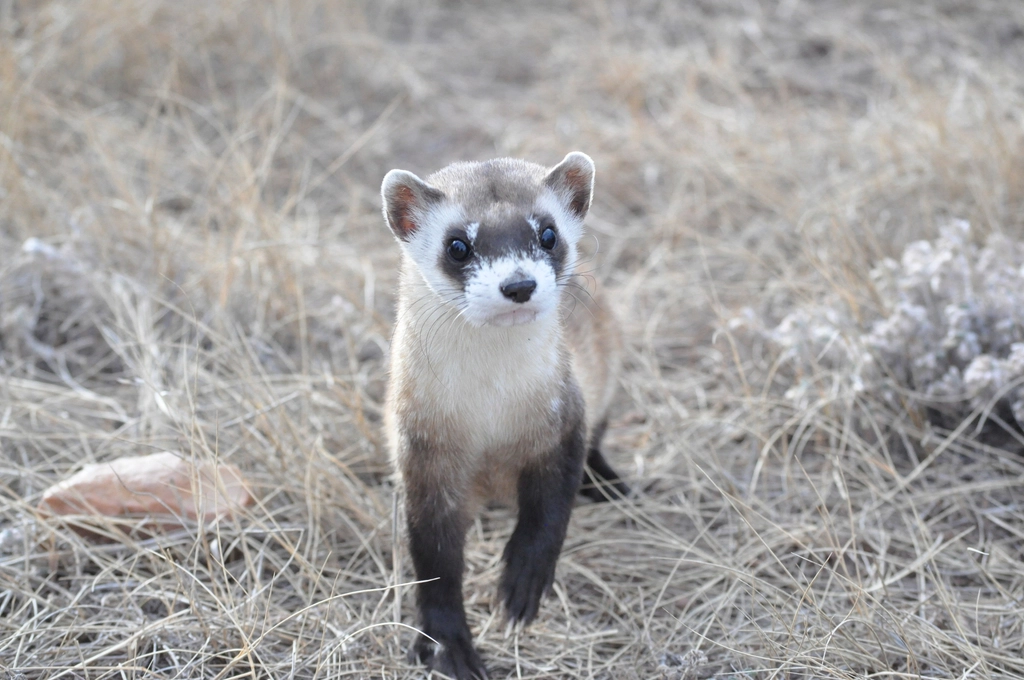
Disease management represents one of the most significant challenges in black-footed ferret recovery. Sylvatic plague, caused by the bacterium Yersinia pestis (the same pathogen responsible for human bubonic plague), can kill nearly 100% of prairie dogs in a colony and is also directly fatal to ferrets. The captive breeding program developed vaccination protocols for ferrets prior to release, but protecting the prairie dog prey base proved more difficult. In recent years, several innovative approaches have been implemented. Managers now regularly dust prairie dog burrows with insecticide to kill plague-carrying fleas.
More recently, researchers have developed and field-tested an oral vaccine for prairie dogs delivered through baits. Initial results show promise, with vaccinated prairie dog colonies showing significantly higher survival during plague outbreaks. Another disease of concern is canine distemper virus, which nearly eliminated the last wild ferret population in the 1980s. All captive-bred ferrets now receive distemper vaccinations before release. These disease management techniques have improved ferret reintroduction success, but plague remains a persistent threat requiring ongoing mitigation efforts at all reintroduction sites.
The Role of Public and Private Partnerships

The success of the black-footed ferret recovery program would not be possible without extensive collaboration between government agencies, private organizations, and individuals. The program operates through the Black-footed Ferret Recovery Implementation Team (BFFRIT), a multi-stakeholder group that includes representatives from federal and state agencies, zoos, conservation organizations, and private landowners. Financial support comes from diverse sources, including government funding, zoo conservation programs, and private donations.
Organizations like the World Wildlife Fund, Defenders of Wildlife, and the National Fish and Wildlife Foundation have contributed significantly to recovery efforts. Private landowners have also played a crucial role, as approximately 80% of potential ferret habitat is on private land. In 2013, the U.S. Fish and Wildlife Service established a programmatic Safe Harbor Agreement to encourage private landowner participation by providing assurances against additional regulatory requirements. Tribal partnerships have been particularly successful, with the Cheyenne River Sioux, Lower Brule Sioux, and Rosebud Sioux tribes in South Dakota managing some of the most successful reintroduction sites. These collaborative approaches have become a model for endangered species recovery efforts.
Measuring Success and Current Status

After nearly four decades of recovery efforts, the black-footed ferret has made remarkable progress. From functional extinction in the wild, the species now has approximately 390 breeding adults across multiple reintroduction sites, plus a stable captive population of around 300 animals. The U.S. Fish and Wildlife Service recovery plan defines downlisting criteria that include establishing at least 1,500 breeding adults in 10 or more populations, with at least 30 breeding adults in each population, across at least 6 of 12 states within the historic range. Full recovery (delisting) would require 3,000 breeding adults across the species’ range.
While current numbers remain below these targets, several sites have achieved self-sustaining populations where ferrets breed successfully in the wild. Monitoring efforts track population trends through spotlight surveys, where researchers count ferret eyeshine at night to estimate population size. Genetic monitoring helps assess diversity levels in both captive and wild populations. While much work remains, the black-footed ferret has moved from a species on the brink of extinction to one with a genuine chance at recovery—a testament to the effectiveness of the captive breeding program and subsequent reintroduction efforts.
Ongoing Challenges and Future Directions

Despite significant progress, the black-footed ferret recovery program faces substantial ongoing challenges. Habitat loss continues as prairie ecosystems are converted to agriculture and development. Prairie dog populations, essential for ferret survival, remain at approximately 2% of their historic levels. Climate change poses new threats, potentially altering the suitability of current and future reintroduction sites. Disease management, particularly for sylvatic plague, requires constant vigilance and intervention. Perhaps most concerning is the genetic bottleneck created by the small founder population—all current ferrets descend from just seven individuals, limiting genetic diversity despite careful management.
Future recovery efforts will focus on expanding the range of reintroduction sites, developing more effective plague management techniques, and potentially incorporating new genetic material through advanced reproductive technologies. The program is also exploring innovative approaches like the creation of conservation banks, where landowners could receive credits for maintaining ferret habitat. While significant challenges remain, the success to date provides hope that with continued dedication and support, the black-footed ferret can fully recover and once again fulfill its ecological role across the American prairie.
Conclusion

The captive breeding and recovery of the black-footed ferret stands as one of conservation biology’s most inspiring success stories, transforming a species declared extinct in the wild into one with a genuine chance at long-term survival. From just 18 remaining individuals in 1985, dedicated conservation efforts have produced thousands of ferrets and established multiple wild populations across North America. The program’s innovations in genetic management, reproductive technology, disease control, and multi-stakeholder collaboration have created a model for endangered species recovery worldwide.
While challenges remain, particularly in expanding habitat, managing disease, and addressing genetic limitations, the black-footed ferret’s journey from the edge of extinction demonstrates what is possible when science, dedication, and collaboration align behind a common conservation goal. As this recovery effort continues, it reminds us that even species on the brink can be saved with sufficient commitment, resources, and innovative approaches—offering hope for biodiversity conservation in an increasingly challenging world.

From exploring the marine wonders in the Azores and witnessing the vast savannas of Kenya, to delving deep into the rich biodiversity of South Africa and traversing iconic landscapes in Australia and the US like Yellowstone, Chris's experiences are vast.
With a penchant for diving alongside sharks, the ocean holds a special place in his heart.
Through his academic insights, he champions wildlife conservation, striving with 'Animals Around The Globe' to cultivate a profound connection between humans and animals, enhancing our mutual appreciation.
Connect with him at Feedback@animalsaroundtheglobe.com.
- Why Spiders Don’t Get Stuck in Their Own Webs - July 20, 2026
- What Scientists Found in a 10,000-Year-Old Beehive - July 20, 2026
- This Spider Builds Fake Decoys of Itself - July 20, 2026