


The American South is a region rich in biodiversity, cultural significance, and natural splendor. From the misty swamps of Louisiana to the rolling hills of Tennessee, this distinct part of the United States harbors an incredible array of wildlife that has shaped the region’s identity. These animals aren’t just inhabitants of the southern landscape; they’re living symbols that embody the resilience, mystique, and charm that define the spirit of the South. Let’s explore ten iconic animals that have become inextricably linked with southern heritage, from legendary predators to humble creatures that have found their way into folklore, cuisine, and the collective southern consciousness.
The American Alligator Ancient Guardian of Southern Waters

No animal epitomizes the wild, primordial nature of the South quite like the American alligator (Alligator mississippiensis). These prehistoric reptiles have patrolled southern waterways for millions of years, surviving extinction events that claimed the dinosaurs. Found throughout the southeastern United States from North Carolina to Texas, alligators are most abundant in Florida and Louisiana, where they inhabit swamps, marshes, rivers, and lakes.
Growing up to 15 feet long and weighing up to 1,000 pounds, these armored behemoths are the South’s largest predators. Their presence has shaped southern culture profoundly – featuring in folklore, serving as university mascots, and even appearing on dinner plates. After facing near-extinction in the mid-20th century due to overhunting, alligators made a remarkable comeback thanks to conservation efforts. Today, their population exceeds one million, making them a conservation success story and a living symbol of southern resilience and adaptability.
The Majestic White-Tailed Deer Soul of Southern Forests

The white-tailed deer (Odocoileus virginianus) bounds through southern forests with a grace that has captivated hunters, wildlife enthusiasts, and artists for generations. These elegant ungulates can be found in every southern state, adapting remarkably well to various habitats from dense woods to suburban neighborhoods. With their distinctive white undertails that flash like flags when they sense danger, these deer have become embedded in southern hunting traditions and cuisine.
Southern hunting culture revolves significantly around these deer, with generations of families participating in seasonal hunts that provide not just recreation but also sustainable food sources. Venison remains a staple in traditional southern cooking, from jerky to stews and sausages. The deer’s adaptability mirrors the southern spirit – resilient through hardship, thriving despite challenges, and maintaining dignity and beauty even when threatened. Conservation efforts have helped white-tailed deer populations rebound from historical overhunting, making them one of the most successful large mammals in North America today.
The Eastern Diamondback Rattlesnake Symbol of Deadly Beauty
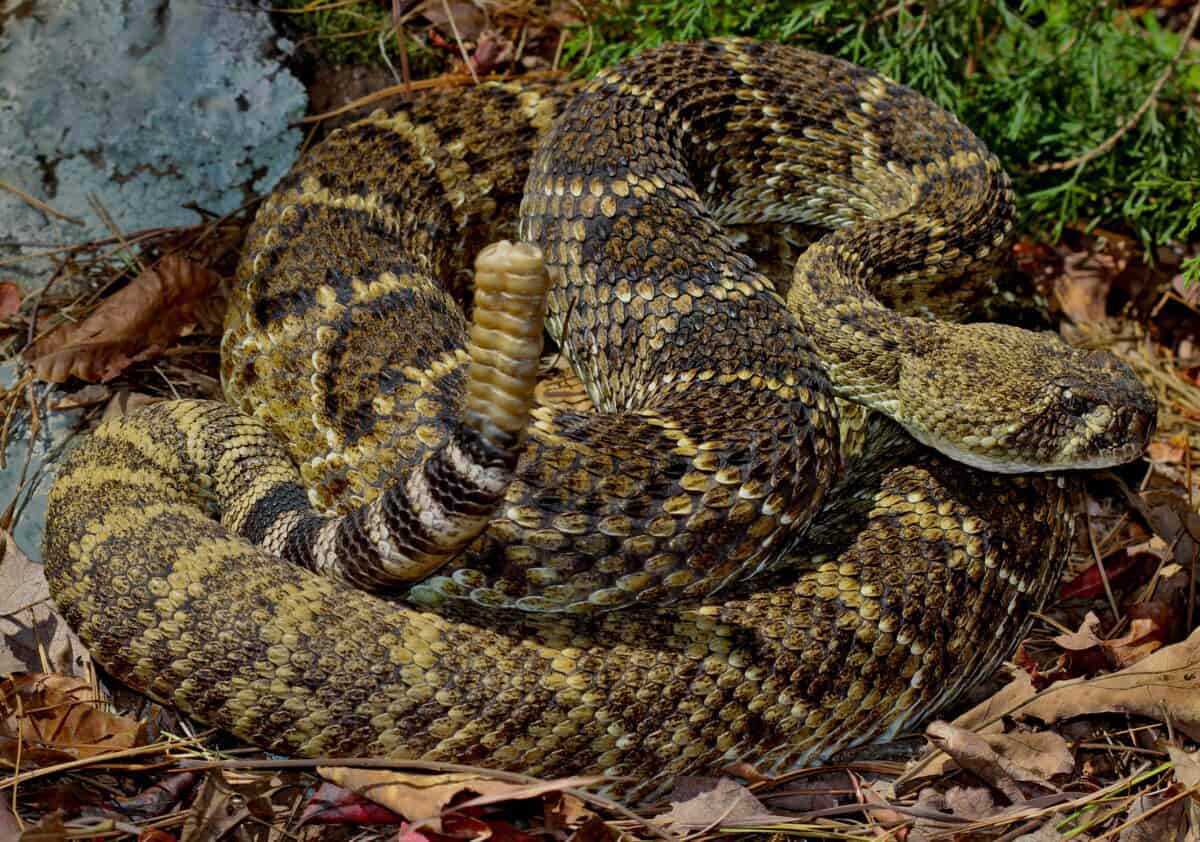
Few creatures inspire as much respect and caution in the South as the Eastern diamondback rattlesnake (Crotalus adamanteus). As North America’s largest venomous snake, reaching lengths of up to 8 feet, this imposing reptile embodies both the danger and beauty of the southern wilderness. Its distinctive diamond-patterned body and characteristic rattle serve as nature’s warning system, a fair notice before striking that reflects the southern code of honor.
Native to coastal regions from North Carolina to eastern Louisiana, including all of Florida, these magnificent predators prefer pine flatwoods, palmetto thickets, and dry sandy areas. Unfortunately, habitat destruction and indiscriminate killing have caused their numbers to decline dramatically, with some states now offering them protection. The diamondback features prominently in southern folklore and has become a powerful motif in regional art, literature, and even on the Gadsden flag with its famous “Don’t Tread On Me” warning. Like the independent spirit of the South itself, the rattlesnake asks only for respect and distance – a powerful metaphor for southern values of self-reliance and personal boundaries.
The Carolina Wren Tiny Singer with a Mighty Voice
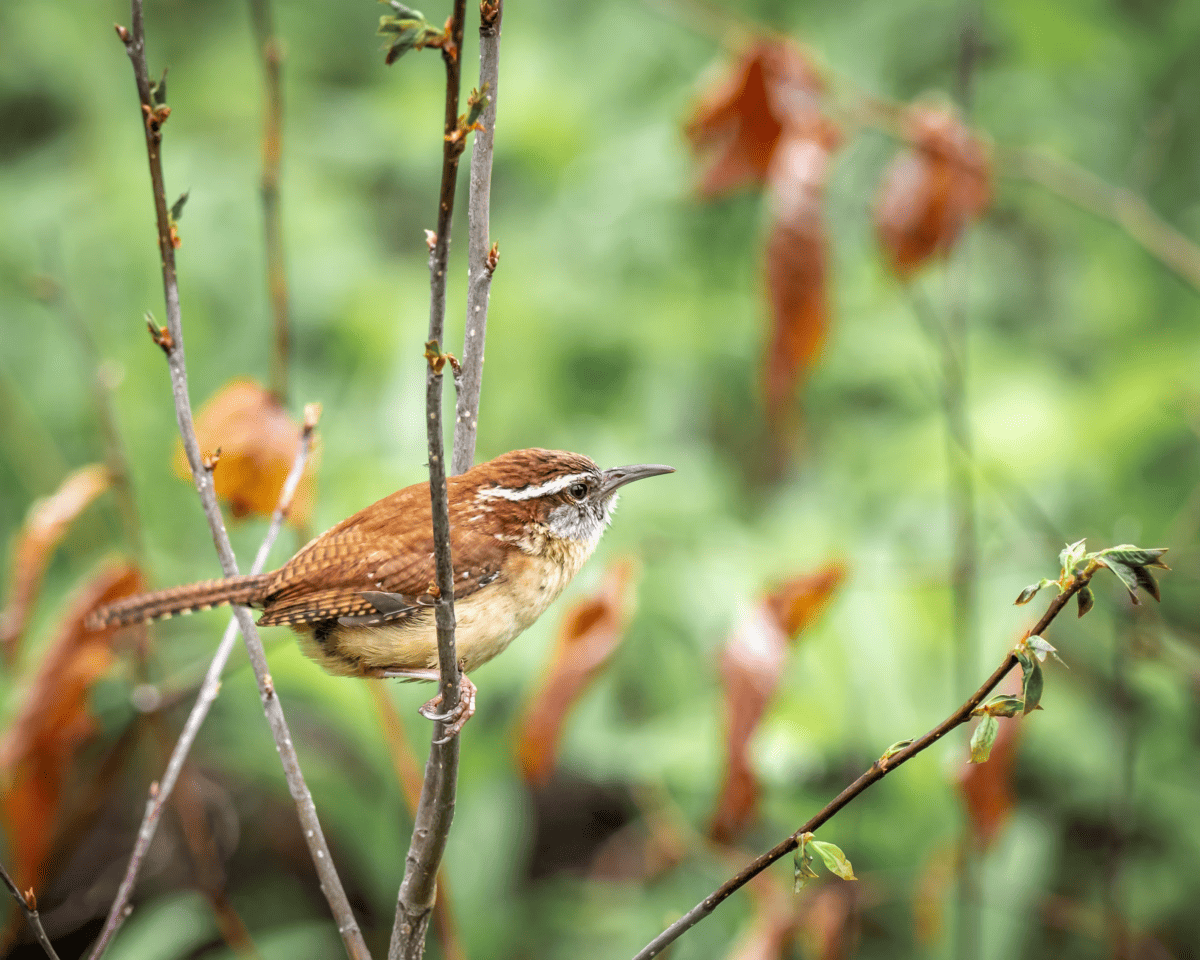
The Carolina wren (Thryothorus ludovicianus) may be small in stature – typically weighing less than an ounce – but its boisterous, melodious song resonates through southern gardens, forests, and neighborhoods with remarkable power. This cheerful, rusty-brown bird with a distinctive white eyebrow stripe and upturned tail has been the official state bird of South Carolina since 1948, embodying the region’s warm, hospitable nature and musical traditions.
These wrens demonstrate remarkable adaptability, making homes in natural cavities, abandoned equipment, mailboxes, and even hanging plants on porches – reflecting the southern knack for making do with available resources. They form monogamous pairs that often stay together year-round, singing duets and sharing parental responsibilities, mirroring the strong family bonds valued in southern culture. Their varied diet of insects, spiders, fruit, and seeds helps control pest populations in gardens and farms across the South. Despite their tiny size, Carolina wrens face winter’s challenges with determination, often becoming beloved visitors to backyard bird feeders during harsh weather – a testament to the resilience that characterizes both these birds and the southern spirit.
The Channel Catfish Backbone of Southern Waterways

The channel catfish (Ictalurus punctatus) swims through the southern consciousness as deeply as it does through the region’s rivers and lakes. This iconic freshwater fish, with its distinctive whisker-like barbels and forked tail, has fed southern families for generations and created a culture all its own. Native to the Mississippi River basin and Gulf Coast drainages, channel catfish thrive in the warm waters of the South, growing to impressive sizes – sometimes exceeding 50 pounds, though most caught for food are considerably smaller.
Catfishing in the South transcends mere recreation; it’s a cultural institution that brings together families and communities. From elaborate noodling traditions (hand-fishing in underwater holes) to all-night fishing expeditions along muddy banks, the pursuit of catfish has spawned countless stories, techniques, and recipes passed down through generations. The catfish’s ability to thrive in diverse conditions – from pristine lakes to muddy creeks – reflects the adaptability prized in southern culture. Furthermore, the rise of catfish farming, particularly in states like Mississippi, Alabama, and Arkansas, has transformed these whisker-bearing fish into an important economic resource. Fried catfish, often served with hushpuppies and coleslaw, remains an essential component of authentic southern cuisine, appearing at everything from family gatherings to high-end restaurants embracing southern foodways.
The Eastern Wild Turkey America’s Original Feast Bird
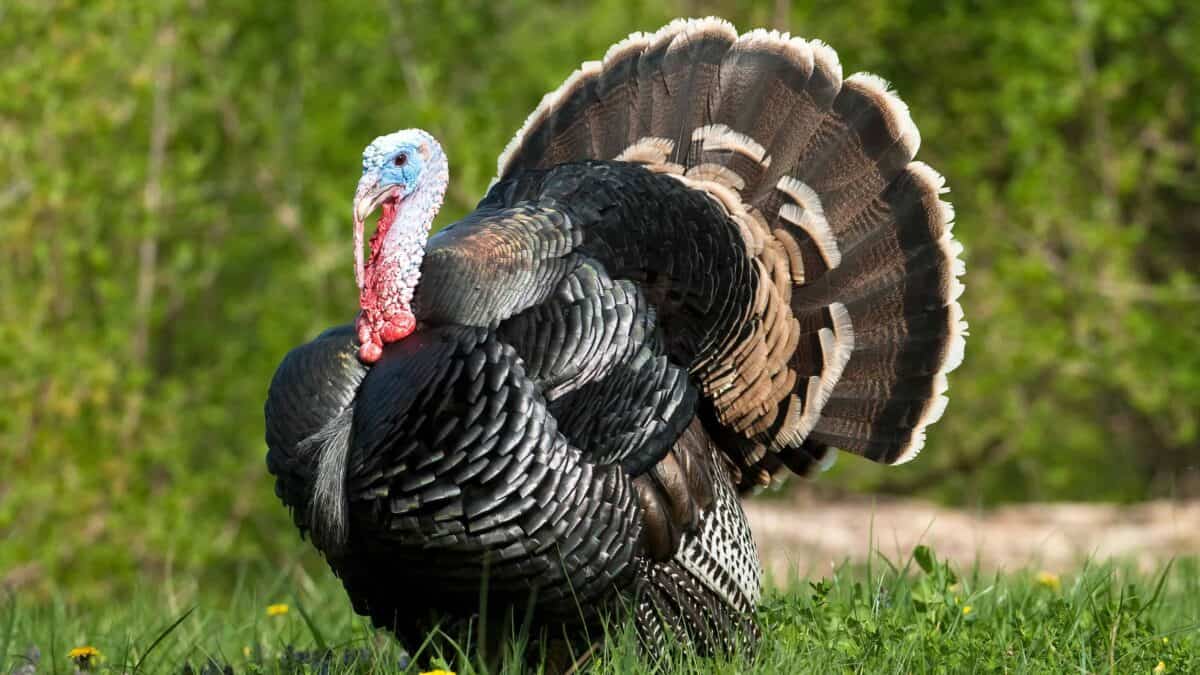
The eastern wild turkey (Meleagris gallopavo silvestris) struts through southern woodlands with a dignity that belies its sometimes comical appearance. With iridescent feathers that shimmer bronze and copper in the sunlight, impressive beards (on males), and a spectacular mating display, these birds have captivated southerners since pre-colonial times. Native Americans throughout the South relied on these birds for food and used their feathers for ceremonial purposes long before European settlement.
Turkey hunting in the South has evolved into a springtime ritual that combines skill, patience, and an intimate knowledge of the land. The challenge of outsmarting these surprisingly wary birds – with their exceptional eyesight and hearing – has created a dedicated hunting culture with specialized calls, camouflage techniques, and hunting strategies. After facing near-extinction in the early 20th century due to overhunting and habitat loss, wild turkeys made a remarkable comeback thanks to conservation efforts. Today, more than 7 million wild turkeys roam North America, with the highest populations found in southern states like Texas, Alabama, and Missouri. The wild turkey’s return from the brink exemplifies the conservation ethic that has taken root in the modern South, balancing tradition with sustainability for future generations.
The Red Fox Clever Spirit of Southern Folklore

With its flame-colored coat and legendary cunning, the red fox (Vulpes vulpes) has slipped into southern folklore, literature, and hunting traditions as smoothly as it moves through dawn-lit fields. These adaptable canids can be found throughout the South, from coastal plains to mountain forests, urban edges to farmlands. Their intelligence and problem-solving abilities have earned them a prominent place in southern storytelling traditions, often cast as the clever trickster outwitting larger predators – a metaphor that resonated deeply during challenging periods of southern history.
Fox hunting in the South evolved differently than its British counterpart, with “fox chasing” becoming the predominant form – where the goal is not to kill the fox but to enjoy the chase and the musical baying of hounds in pursuit. This tradition created a culture of specialized breeding for “foxhounds” and community gatherings that celebrated rural life. Today, while traditional fox hunting has declined, the red fox remains an important ecological presence, helping control rodent populations and adapting remarkably well to human-altered landscapes. Their nocturnal habits and elusive nature mean many southerners may never spot one, yet their haunting nighttime calls and occasional daybreak sightings add a touch of wild mystery to the southern landscape, reminding residents that beyond the cultivated fields and manicured lawns, the clever spirit of the wilderness endures.
The Mourning Dove Melancholy Songbird of Southern Evenings
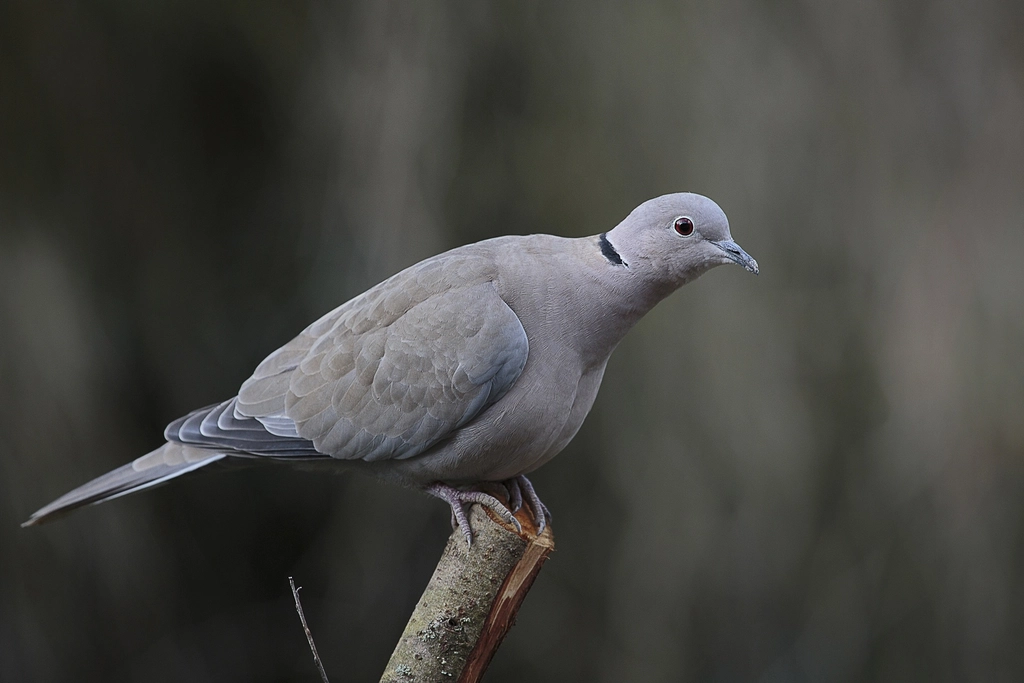
Few sounds evoke the languid peace of a southern evening quite like the soft, plaintive cooing of the mourning dove (Zenaida macroura). With their gentle gray-brown coloration, slender build, and distinctive long, pointed tails, these birds are ubiquitous across the South, from suburban backyards to agricultural fields and woodland edges. Their melancholy calls – which gave them their name – provide a soundtrack to southern life that resonates with the region’s appreciation for both beauty and sorrow.
Beyond their aesthetic contributions, mourning doves hold cultural significance as popular gamebirds throughout the South. Dove hunting season openings in early September are significant social events in many southern communities, bringing together multiple generations for time-honored traditions. Conservation-minded management has allowed these birds to remain abundant despite harvest, with an estimated population of 350 million in North America. These birds also embody the southern connection to agriculture – they primarily feed on seeds from native plants and agricultural crops, making them both beneficiaries of and contributors to the southern farming landscape. Their simple ground nests, rapid reproduction rate (potentially raising up to six broods annually), and ability to thrive alongside human development demonstrate an adaptability that parallels the South’s own resilience through changing times.
The Nine-Banded Armadillo Unexpected Southern Icon

Perhaps no animal represents the quirky, unexpected side of southern identity better than the nine-banded armadillo (Dasypus novemcinctus). Though relatively recent arrivals to most of the South – having expanded northward from Mexico and Texas throughout the 20th century – these armored mammals have quickly become embedded in southern culture. With their prehistoric appearance, leathery shells divided into nine flexible bands (hence their name), and peculiar habit of leaping straight upward when startled (often to their detriment on highways), armadillos bring an element of the bizarre to southern fauna.
Now found from Texas to South Carolina and as far north as southern Missouri, these insectivorous mammals have adapted remarkably well to southern landscapes, particularly appreciating the warm climate and soft soils that make digging for their favorite foods – insects, grubs, and other invertebrates – easier. Their presence in suburban yards, where they excavate conical feeding holes overnight, often creates a love-hate relationship with homeowners. Despite occasional garden damage, their voracious appetite for insect pests provides ecological benefits. Armadillos have inspired southern folk art, roadside attractions, regional mascots, and even featured as an unexpected protein source during the Great Depression, earning the nickname “Hoover hog.” Their unusual reproductive strategy – giving birth to genetically identical quadruplets from a single fertilized egg – adds to their biological fascination. Despite facing challenges from urbanization and vehicles (their jumping reflex makes them particularly vulnerable to cars), the armadillo’s continued expansion throughout the South demonstrates a tenacity that southerners can’t help but admire.
The Blue Crab Treasure of Southern Coastal Cuisine

The Chesapeake blue crab (Callinectes sapidus) scuttles sideways through southern coastal waters and straight into the region’s culinary heart. With its bright blue claws, olive-green carapace, and aggressive disposition, this crustacean defines coastal food traditions from Maryland’s Chesapeake Bay down through the Gulf Coast. The scientific name translates to “beautiful savory swimmer,” an apt description for a creature celebrated for both its striking appearance and incomparable flavor.
Blue crabs support vital commercial and recreational fisheries throughout southern coastal states, with annual harvests valued in the hundreds of millions of dollars. Beyond their economic importance, these crabs have created rich cultural traditions – from Louisiana crab boils to Maryland crab feasts – that bring communities together around newspaper-covered tables piled high with seasoned crustaceans. The labor-intensive process of picking meat from steamed crabs has traditionally created opportunities for conversation and storytelling, reinforcing community bonds. Environmental challenges including habitat loss, pollution, and overfishing have threatened blue crab populations in recent decades, prompting conservation measures and growing awareness of sustainability issues. The blue crab’s lifecycle – moving between freshwater, brackish, and saltwater environments – connects various southern ecosystems, making it not just a delicacy but an indicator species whose health reflects the overall condition of vital southern waterways.
The Southern Fox Squirrel Charismatic Forest Acrobat

The southern fox squirrel (Sciurus niger niger) brings flamboyant personality to southern forests and parklands with its exceptionally large size – nearly twice that of common gray squirrels – and stunning color variations that range from silver-gray to jet black, often with striking white facial markings. Native to mature pine and mixed pine-hardwood forests from Virginia to East Texas, these impressive rodents require large territories and open forest understories, making them less adaptable to urbanization than their smaller gray cousins.
These charismatic squirrels have played important roles in southern life, from providing sustenance for early settlers and indigenous peoples to featuring in hunting traditions that continue today. Their preference for longleaf pine ecosystems – once the dominant forest type across much of the South but now reduced to about 3% of its historical range – has made them unwitting ambassadors for one of North America’s most endangered forest systems. Conservation efforts for longleaf pine benefit these squirrels, whose habit of burying acorns and pine seeds contributes to forest regeneration. With their bold demeanor, spectacular aerial acrobatics, and distinctive barking calls, fox squirrels bring wilderness character even to semi-developed areas, reminding southerners of their region’s wild heritage even as landscapes continue to change.
Conclusion: The Enduring Spirit of Southern Wildlife

These ten iconic animals represent just a fraction of the incredible biodiversity that defines the American South, yet each embodies aspects of the region’s character that resonate deeply with its human inhabitants. From the prehistoric power of the alligator to the delicate song of the Carolina wren, these creatures have shaped southern culture, cuisine, recreation, and identity in profound ways. Their stories intertwine with human histories – sometimes harmoniously, sometimes contentiously – creating a shared narrative of adaptation, resilience, and endurance. As the South continues to evolve amid environmental and social changes, these animals remain living connections to both the wild past and a hopeful future where southern ecosystems retain their distinctive character. The protection and celebration of these iconic species isn’t just about conservation biology; it’s about preserving the multifaceted spirit of a region where nature and culture have always been inseparably linked.

As a little kid, I fell in love with nature, wildlife, and animals. Living in the USA, South Africa, Italy, China and Germany gave me the opportunity to discover the world's Wildlife. My favorite animals are Mountain Gorillas, Siberian Tigers, and Great White Sharks.
I'm a certified PADI Open Water Diver, went to Everest Base Camp and Trekked Gorillas in Uganda. I hold a Master of Science in Economics and Finance.
Please send any feedback to feedback@animalsaroundtheglobe.com
- 10 Surprising Roles Spiders Play in Human Medicine - July 28, 2026
- 10 Animals Scientists Did not Know Existed in the US - July 28, 2026
- 13 Sinkholes That Swallowed Entire Neighborhoods - July 28, 2026