

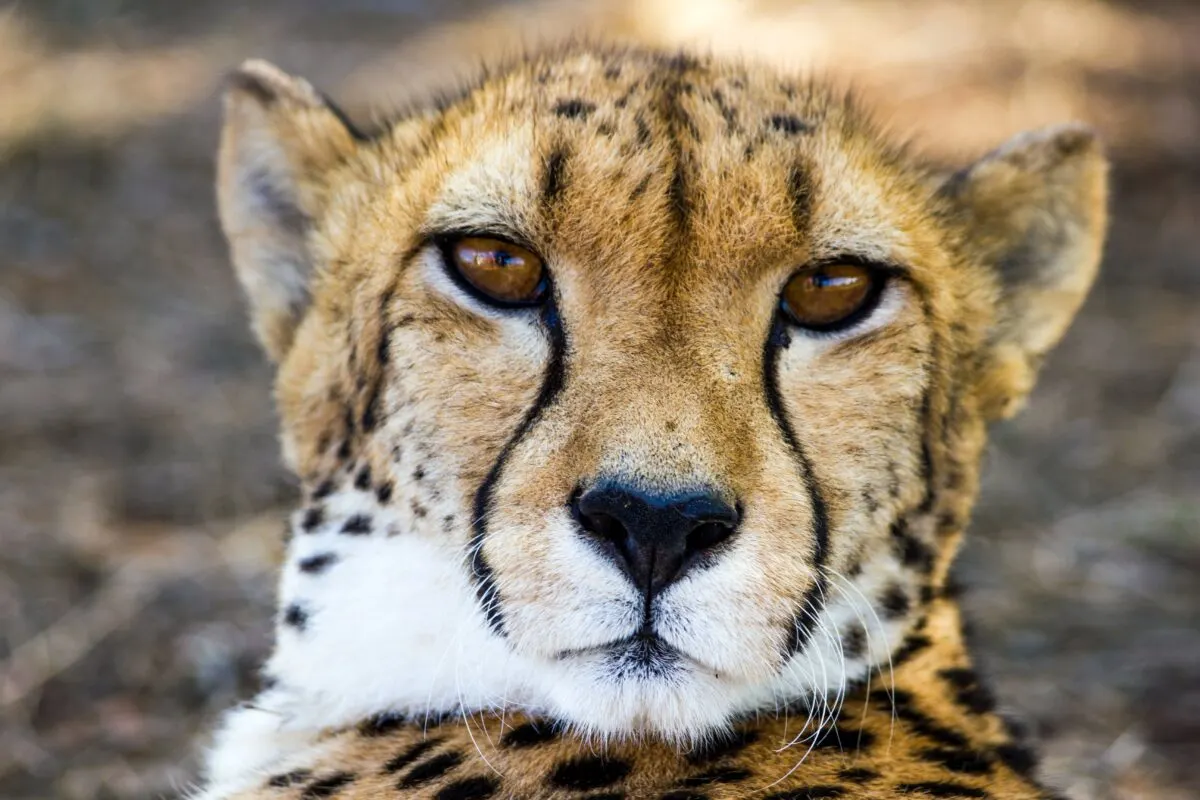
Ever wondered what makes cheetah cubs so special? These adorable, furry babies are far more fascinating than you might think. While everyone knows cheetahs as the world’s fastest land animals, their cubs hold secrets that will surprise even the most devoted animal lovers. From their remarkable survival strategies to their hidden talents, these little speedsters are packed with incredible adaptations that help them navigate one of nature’s most challenging childhoods.
They’re Born Looking Like Tiny Honey Badgers

Here’s something that’ll blow your mind – cheetah cubs are born with a thick, silvery-grey mantle of fur running down their backs that gives them a mohawk-type appearance. This isn’t just for show though. The mantle helps camouflage the cubs by imitating the look of an aggressive animal called a honey badger. This mimicry may help deter predators such as lions, hyenas, and eagles from attempting to kill them. Cubs lose their mantle at about three months of age. It’s like nature gave them their own built-in disguise costume! Think of it as the ultimate evolutionary Halloween trick – looking like something much scarier than you actually are. If cubs survive their crucial first 2 months, they emerge from the den having grown a mantle of raised hair along their back. This mantle provides both warmth and safety, disguising them as an aggressive honey badger to discourage predators.
Their Survival Rate is Shockingly Low

Cub mortality is higher in protected areas like national parks and wildlife reserves where proximity to large predators is greater than in non-protected areas. In such areas, the cheetah cub mortality can be as high as 90%. Fewer than one in 10 cubs will survive during this time, as they perish from predation by other large predators such as lions and hyenas, or from injuries. 90% of Cheetahs born die with in the first 3 months, 50% of which are destroyed by predators. The other 40% fall victim to lack of genetic diversity. That’s a brutal reality that makes every surviving cheetah cub a true miracle. Of the 12 litters observed in the Serengeti National Park, 7 entire litters were killed by predators and 1 starved because the mother was killed by predators. It’s like playing the lottery, except with much worse odds.
They Use Bird-Like Sounds to Communicate

They continue to move dens frequently and communicate through soft bird like chirps and yelps. Cheetah cubs emit bird-like chirping sounds when calling their mothers, and a bleating sound when they are distressed or separated from their mothers. This staccato vocalization is used by family members to communicate with one another. Often, mothers will use this vocalization when they want their cubs to either stay put or follow them. A chirp (or a “stutter-bark”) is an intense bird-like call and lasts less than a second. Cheetahs chirp when they are excited, for instance, when gathered around a kill. Other uses include summoning concealed or lost cubs by the mother, or as a greeting or courtship between adults. Imagine hearing what sounds like exotic birds, only to discover it’s actually a family of big cats having a conversation!
They’re Surprisingly Good Tree Climbers

Cheetah cubs are very active and playful. Trees provide good observation points and allow for development of skills in balancing. The cubs’ semi non-retractable claws are sharper at this age and help them grip the tall ‘playtrees’ they climb with their siblings. Trees provide good observation points and allow for development of skills in balancing. The cubs’ semi non-retractable claws are sharper at this age and help them grip the tall ‘playtrees’ they climb with their siblings. While adult cheetahs are notoriously poor climbers due to their speed adaptations, cubs are like little acrobats in the trees. This reduces the risk of losing balance during runs, but compromises the cat’s ability to climb trees. It’s fascinating how they lose this ability as they grow up – sort of like how kids are naturally flexible but adults aren’t.
Their Eyes Don’t Open for Nearly Two Weeks

Cubs’ eyes open between 10 days and 2 weeks. The eyes are shut at birth, and open in four to 11 days. At birth, Cheetahs are blind, but within 10 days their eyes open and they can see. At birth, the cubs weigh 8.5 to 15 ounces and are blind and helpless. Their mother will groom them patiently, purring quietly and providing them warmth and security. During this vulnerable period, they’re completely dependent on their mother’s care and protection. At 4 – 10 days old, the cubs will open their eyes and begin to crawl around the nest area. Think of it like nature’s way of keeping them safe in their den while they’re most vulnerable.
They Weigh Less Than a Bag of Sugar at Birth

At birth, the cubs weigh 8.5 to 15 ounces and are blind and helpless. A cub weighs less than a pound and is born blind and helpless. At birth, cubs weigh about 250 to 300 grams (slightly more than half a pound). To put this in perspective, that’s about the same weight as a can of soda or a small bag of sugar! He is a good eater and weighed in at a healthy 634 grams, or just under a pound and a half. He’s a little larger than a Beanie Baby stuffed animal. Cubs born in the wild weigh 150–300 g (5.3–10.6 oz) at birth, while those born in captivity tend to be larger and weigh around 500 g (18 oz). It’s amazing how something so tiny can grow into the world’s fastest land animal.
They Have Their Own Nursery Relocation Service

They will live in a secluded nest until they are about six to eight weeks old, being regularly moved by their mother from nest to nest to avoid detection by predators. Mother move cubs from den to den many times. If this is not the case the mother will return and move the cubs from one location to another to better hide the smell of her young from predators. Sometimes the mother will even wait until night falls to return to her cubs, so that she is not as easily followed. It’s like having a paranoid security expert for a mom who keeps changing safe houses. Mothers keep their cubs hidden in their den for 6 to 8 weeks to keep them protected from predators such as lions, hyenas and leopards. This constant relocation is exhausting for the mother but absolutely essential for the cubs’ survival.
They Get Their Teeth at Three Weeks Old

They get teeth by the time they are 3 week old. Newborn cubs might spit a lot and make soft churring noises; they start walking by two weeks. At around 5 months old, their mother introduces meat and stops nursing them by covering her nipples with hind-legs, rolling onto her belly or sitting up. It’s remarkable how quickly these little ones develop their predatory equipment. Cubs cease suckling c. 16 weeks of age. By three weeks, they’re already showing signs of becoming the apex predators they’re destined to be. The timing is perfect – just as they’re getting more mobile and curious about the world around them, they’re also developing the tools they’ll need to survive in it.
They Practice Hunting Through Play Fighting

Juvenile cubs are extremely energetic and begin developing their survival skills through play. They chase, stalk and wrestle each other, climb trees, and ‘hunt’ smaller animals. At 5 months old, the cubs are playing with one another, sharpening their stalking, chasing, and wrestling skills in a playful manner. She also begins releasing her captured prey for the cubs to practice chasing and re-catching, but she still has to perform the kill. What looks like innocent play is actually serious survival training. Cheetah cubs stay with their mother for one and a half to two years, during which time they learn from their mother and practice hunting techniques with playful games. Learning to hunt is the most critical survival skill that the cubs will develop. At one year of age, cheetah cubs participate in hunts with their mother. It’s like they’re attending the world’s most exclusive and dangerous military academy, except it’s all disguised as fun and games.
They Can Accidentally Sabotage Their Mother’s Hunts

At this point, the cubs watch their mother hunt and begin to develop their impressive eyesight. As vital as this process is, it can be detrimental to the hunt as cubs often give away their position and notify the prey. During these first few months she cannot move far or fast and cub mortality is highest. Although rare, mother cheetahs have been known to scavenge a carcass when too many hunts have failed. Mothers also tend to leave a kill faster with cubs to decrease encountering scavenging predators. Imagine trying to do your job while your kids are “helping” – that’s basically what cheetah mothers deal with every day. Cheetah cubs kill less than 10% of the prey, which the family feeds on. The cubs’ enthusiasm often outweighs their stealth skills, making them adorable but ineffective hunting partners.
They Stay With Their Siblings After Mom Leaves
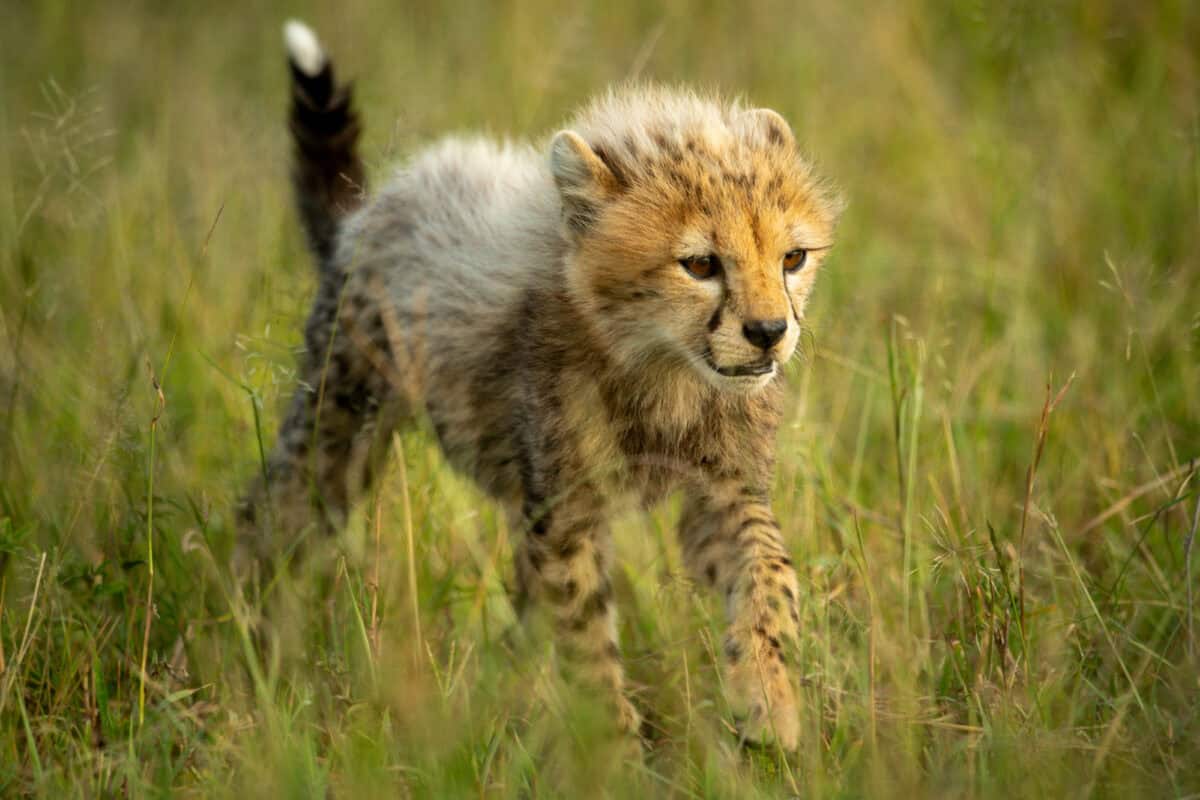
Cubs remain with their mother for the first 18 months of life. After this time, siblings form separate groups whose members remain together for another 6 months. Females are often the first to leave these sibling groups. The cubs then stay on together for another 6 to 8 months, after which the females will leave on their own and the males will go on to stay together for life. The cubs stay together for a few months until the female(s) claim territories separate but adjacent to each other’s and their mother’s’. The males stick together for the rest of their lives, or seek another male coalition, and go far from their mother and sisters’ ranges. It’s like a natural transition from family life to independence, with the boys forming their own “brotherhood” while the girls strike out on their own. Once the mother leaves the cubs, they often stay together in sibling groups for several months before the males and females go their separate ways. This sibling bond provides crucial support during their most vulnerable transition period.
They’re Fed a Special Formula When Hand-Raised

Animal care staff are feeding the cub a special, commercial formula recommended by the Species Survival Plan about eight times a day. We are feeding him a special, commercial formula recommended by the Species Survival Plan (SSP) for hand-rearing cheetah cubs. At one week old, we feed him eight times a day, or every 3 hours on average. This weekend we will go to seven times a day. The National Zoo’s Department of Nutrition Science has the world’s largest animal milk repository, but there have not been enough cheetah milk samples collected for a formula to be created. Most large cats will not tolerate the hands-on contact needed to collect the samples. On top of the challenge of identifying individuals on the cam, cheetah cubs will ‘nurse sleep’. The same happens when we hand-rear cubs: I will be feeding the cub and he will randomly doze off with the bottle in his mouth. It’s like having the world’s most specialized baby formula, designed specifically for creating future speed demons. The fact that they fall asleep while nursing is probably the most relatable thing about these wild predators!
Conclusion

Cheetah cubs are living proof that the most incredible journeys often begin with the smallest steps. From their honey badger disguises to their tree-climbing acrobatics, these remarkable little creatures pack more surprises into their first year than most animals do in a lifetime. Every cheetah cub that survives to adulthood has beaten incredible odds, overcome numerous challenges, and mastered skills that would put Olympic athletes to shame. Their story reminds us that even the world’s fastest animals started as tiny, vulnerable babies who needed their mother’s protection and guidance. Next time you see a cheetah racing across the African savanna, remember the incredible journey that brought them there. Pretty amazing to think all that speed and power once fit in a package smaller than your morning coffee, isn’t it?

As a little kid, I fell in love with nature, wildlife, and animals. Living in the USA, South Africa, Italy, China and Germany gave me the opportunity to discover the world's Wildlife. My favorite animals are Mountain Gorillas, Siberian Tigers, and Great White Sharks.
I'm a certified PADI Open Water Diver, went to Everest Base Camp and Trekked Gorillas in Uganda. I hold a Master of Science in Economics and Finance.
Please send any feedback to feedback@animalsaroundtheglobe.com
- 11 Most Endangered Insects Buzzing in America Today - July 22, 2026
- 10 Most Frequently Googled Animal Birth Facts - July 22, 2026
- 10 Incredible Migration Journeys in the Animal Kingdom - July 22, 2026