

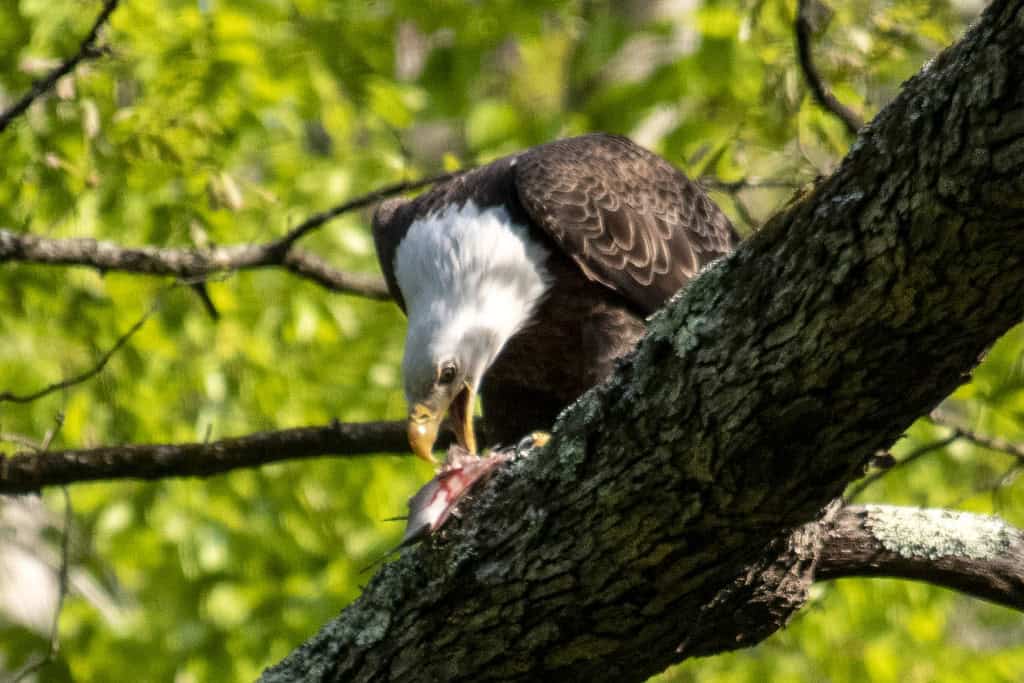
The bald eagle (Haliaeetus leucocephalus), America’s national bird and symbol of freedom, has long captivated both wildlife enthusiasts and scientists with its majestic appearance and remarkable hunting abilities. These apex predators, with their distinctive white heads and tails contrasting against chocolate-brown bodies, are renowned for their fishing prowess and powerful talons. But what exactly constitutes the diet of these magnificent birds of prey? The answer is far more complex and surprising than many people realize.
While the classic image of a bald eagle shows it snatching fish from water surfaces with precision, recent research has unveiled fascinating aspects of their feeding habits that challenge long-held assumptions. From unexpected food sources to adaptive feeding behaviors, bald eagles have demonstrated remarkable dietary flexibility that has helped them recover from near extinction in the mid-20th century. This article explores the multifaceted diet of bald eagles, highlighting recent scientific discoveries that have surprised even veteran ornithologists.
Fish: The Staple Food Source
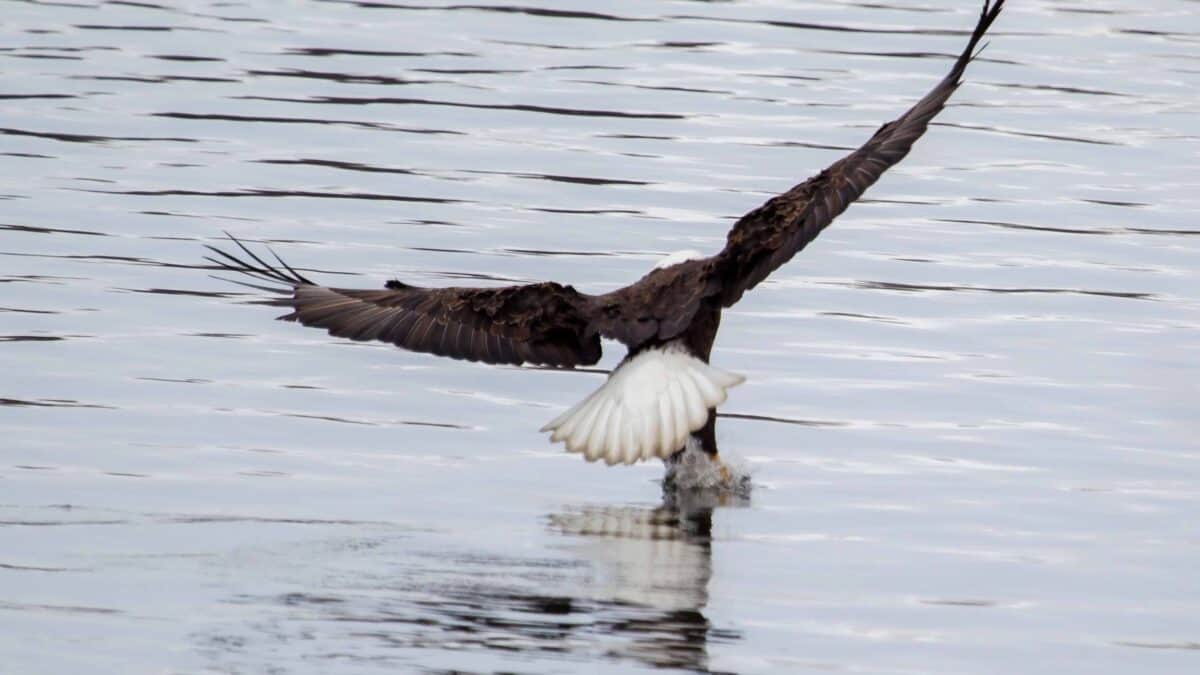
Fish constitute approximately 60-90% of the bald eagle’s diet in most habitats, cementing their reputation as skilled fishers. Eagles prefer fish species that swim near the water’s surface, making them easier to capture with minimal submersion. Common targets include salmon, trout, bass, pike, and catfish, though the specific species vary by region and availability. Their remarkable vision allows them to spot fish from significant heights, sometimes exceeding 1,000 feet above water bodies.
Scientists have documented bald eagles’ ability to carry fish weighing up to 4-5 pounds, though they typically target smaller specimens. Interestingly, bald eagles don’t always catch their own fish. They frequently engage in piracy, stealing catches from other birds like ospreys or from mammals like river otters. This kleptoparasitic behavior conserves energy and represents an intelligent adaptation that maximizes feeding efficiency without expending the effort of hunting.
Waterfowl: An Important Secondary Food Source

When fish are scarce or weather conditions make fishing difficult, bald eagles readily shift their attention to birds, particularly waterfowl. Ducks, geese, coots, and gulls make up a significant portion of their diet during winter months when lakes and rivers freeze over. Eagles employ various hunting techniques for capturing birds, including surprise attacks from above and exhausting chases that force waterfowl to tire. They may also target birds weakened by disease or injury, serving an important ecological function by removing vulnerable individuals from populations.
What has surprised researchers is the extent to which some eagle populations specialize in hunting birds. In certain regions of the Pacific Northwest and the Chesapeake Bay, some bald eagles have developed hunting techniques specifically adapted for capturing waterfowl. These eagles may work in pairs, with one bird flushing prey while the other executes the capture—a level of cooperative hunting previously thought rare in these typically solitary hunters. This specialization demonstrates the bald eagle’s behavioral plasticity and ability to adapt hunting strategies to local food resources.
Mammals: Surprising Diversity in Eagle Prey
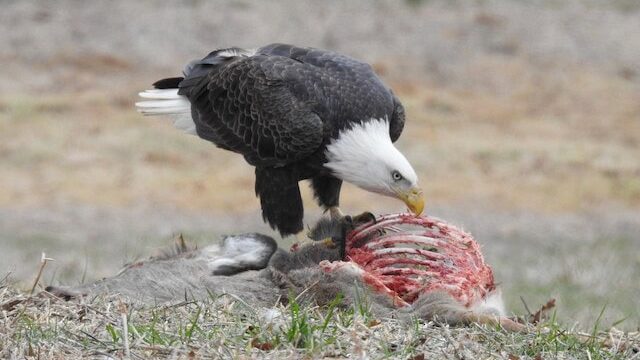
One of the most significant scientific revelations about bald eagle diets in recent decades has been the extent to which they consume mammals. While once considered occasional opportunistic feeding, research now indicates that mammals constitute a regular and sometimes substantial portion of their diet, particularly during seasons when other prey is scarce. Eagles target rabbits, hares, muskrats, squirrels, and even young deer fawns. Their ability to lift prey weighing approximately 4-5 pounds enables them to carry small mammals back to nesting sites or feeding perches.
Camera trap studies at nest sites have documented bald eagles bringing in a wider variety of mammalian prey than previously thought, including surprising species like domestic cats in suburban areas and fox kits in rural settings. This dietary flexibility has likely contributed to the bald eagle’s successful recolonization of diverse habitats across North America. Researchers speculate that as eagles continue to expand into more urbanized environments, their mammalian prey selection may further diversify, potentially creating new predator-prey dynamics in human-modified landscapes.
Carrion: Nature’s Cleanup Crew
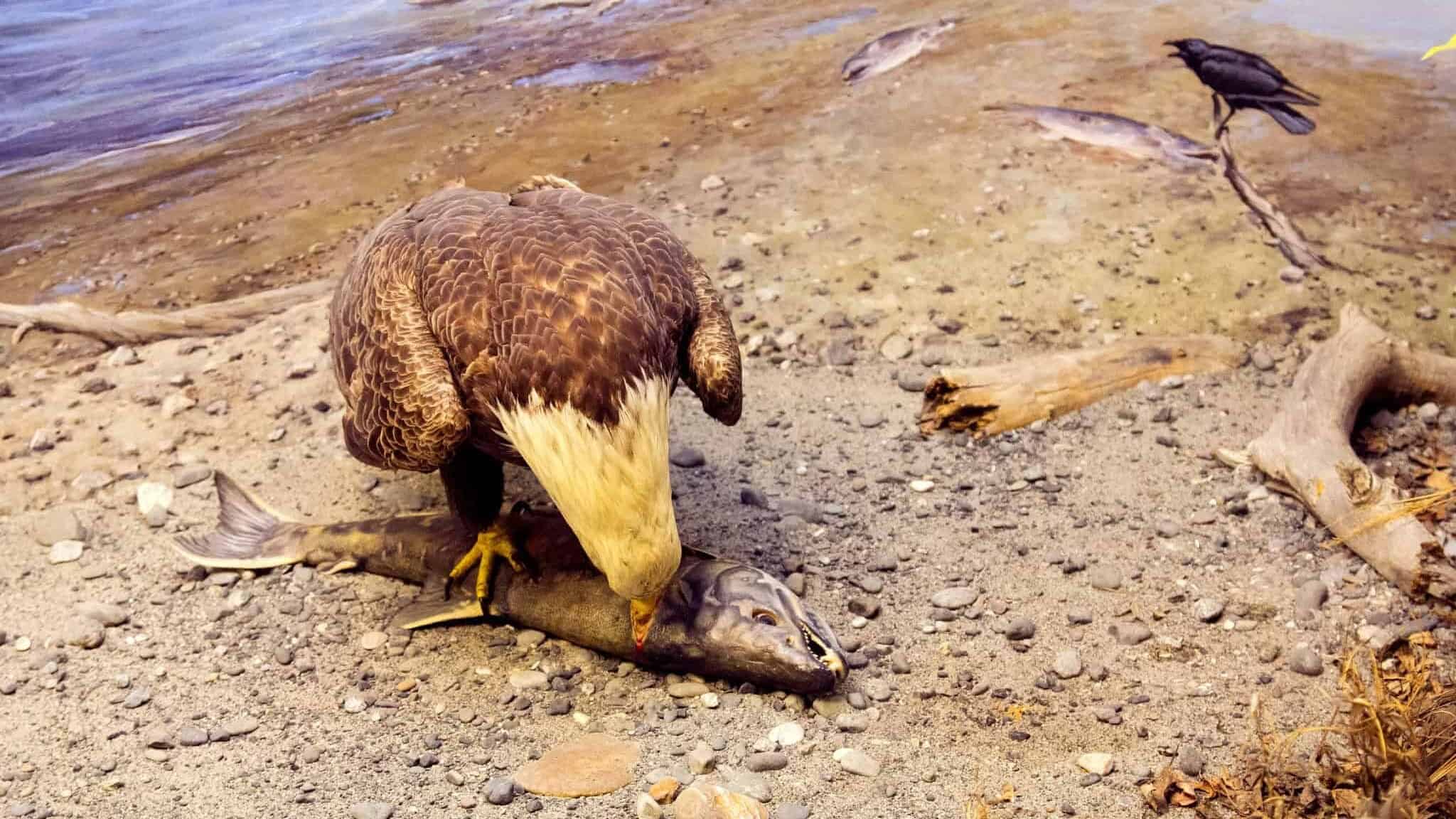
Contrary to their noble image, bald eagles readily scavenge carrion, functioning as important ecological recyclers. This behavior has surprised many who held the misconception that these majestic birds feed exclusively on live prey. Eagles are frequently observed feeding on roadkill, dead fish that wash ashore, or animals that have succumbed to disease or starvation. During salmon runs, eagles gather in large numbers to feast on the dead and dying fish that have completed their spawning journey, creating spectacular congregations of hundreds of birds at sites like Chilkat Bald Eagle Preserve in Alaska.
Recent studies using GPS tracking and stable isotope analysis of feathers have revealed that carrion comprises a larger portion of bald eagle diets than previously estimated—up to 50% for some individuals, especially during winter months. This scavenging behavior has proven advantageous for bald eagles recovering from population declines, as it provides reliable food sources requiring minimal energy expenditure. Scientists now recognize that this willingness to consume carrion has been crucial to the species’ survival and recovery, highlighting how a behavior once considered undignified actually represents an intelligent adaptation to environmental conditions.
Reptiles and Amphibians: Opportunistic Feeding
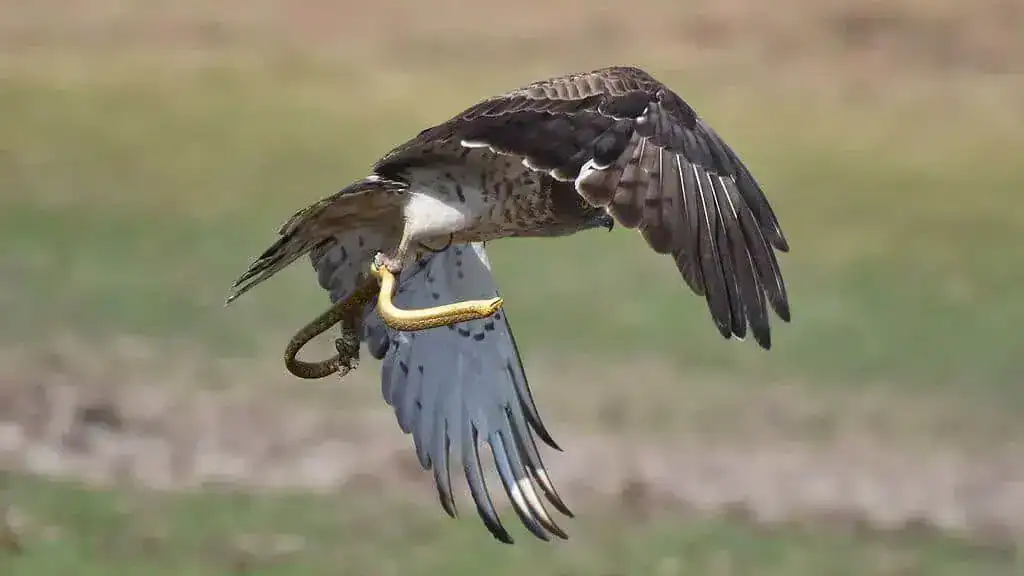
Bald eagles opportunistically prey on reptiles and amphibians, though these constitute a smaller portion of their overall diet. Turtles, snakes, lizards, and frogs become targets when they’re readily available, particularly in southern regions of the eagles’ range. Eagles have been observed capturing turtles from shallow waters and dropping them from heights onto hard surfaces to break their shells—a sophisticated tool-using behavior that demonstrates their problem-solving abilities.
What has particularly intrigued researchers is evidence that some eagle populations have developed specialized techniques for targeting specific reptile species. In Florida, for instance, some bald eagles have become adept at hunting invasive Burmese pythons, potentially providing an unexpected ecosystem service by helping control this destructive non-native species. Similarly, eagles in certain western habitats have been documented preying on rattlesnakes, displaying remarkable skill in avoiding the venomous strikes while successfully capturing these dangerous reptiles.
Unexpected Food Items: Garbage and Human Food
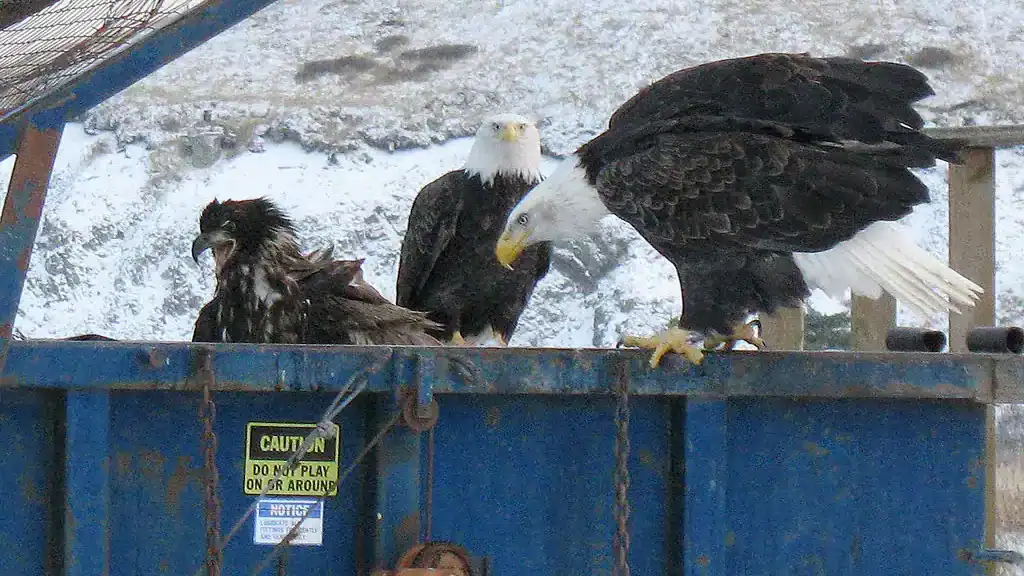
One of the most surprising recent discoveries about bald eagle diets has been their increasing consumption of human food waste. As eagle populations have recovered and expanded into more urbanized environments, researchers have documented these birds feeding at landfills, scavenging from dumpsters, and even stealing food from picnic sites. Analysis of nest debris and regurgitated pellets from urban eagle territories has revealed food packaging, processed meat remnants, and other unmistakable signs of human food consumption.
This dietary adaptation reflects the bald eagle’s remarkable behavioral flexibility but also raises conservation concerns. Eagles consuming human food waste may be exposed to harmful chemicals, plastic, or other contaminants. They may also become habituated to human presence, potentially leading to conflict situations. Long-term studies are now examining how this relatively new feeding behavior might affect eagle health, reproduction, and natural foraging behaviors. The scientific community remains divided on whether this adaptation represents a beneficial expansion of food resources or a potential threat to the species’ wild integrity.
Seasonal Shifts in Diet
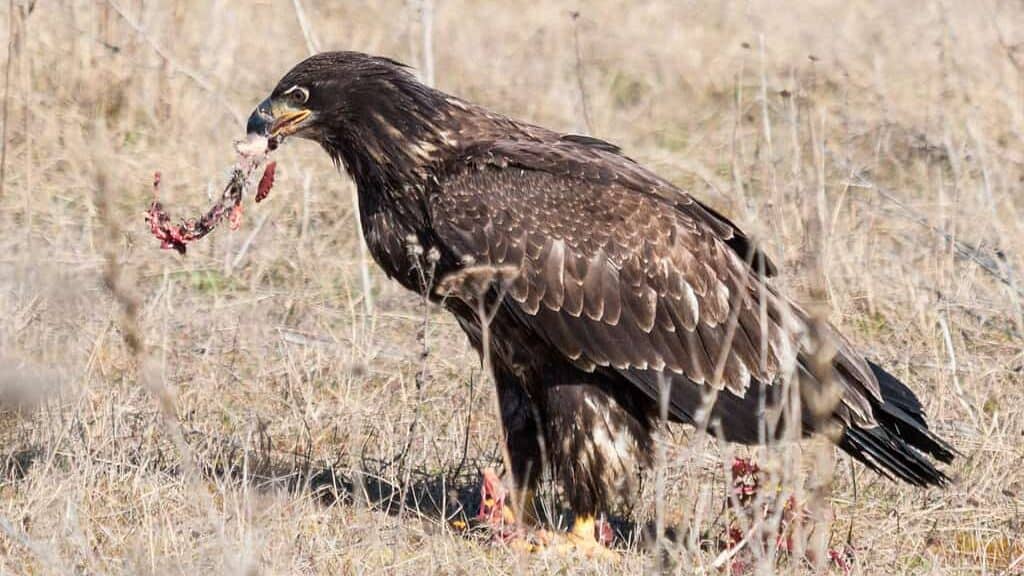
Bald eagles demonstrate remarkable dietary plasticity throughout the year, adjusting their feeding habits to match prey availability. During spring and summer, fish often dominate their diet, especially in regions with abundant salmon runs or spawning events of other fish species. Winter brings significant shifts toward waterfowl and carrion in northern habitats as water bodies freeze and fish become less accessible. These seasonal patterns vary substantially by geographic location, with southern eagle populations experiencing less dramatic dietary shifts than their northern counterparts.
What has surprised scientists is the speed and effectiveness with which eagles can switch food sources. Research using next-generation GPS tracking devices has revealed that individual eagles can completely transform their foraging behavior within days in response to sudden changes in prey availability. For example, after a mass fish die-off event, tracked eagles rapidly shifted from fishing to scavenging, then returned to their previous hunting patterns once the temporary resource was depleted. This flexibility likely explains why bald eagles have successfully adapted to human-altered landscapes where natural food resources may fluctuate unpredictably.
Regional Dietary Variations

Geographic location significantly influences bald eagle diets, creating distinctive regional feeding patterns. Coastal populations rely heavily on marine fish and seabirds, while inland eagles target freshwater species and terrestrial prey. In Alaska and the Pacific Northwest, salmon constitute a critical food resource, with some eagle populations timing their breeding seasons to coincide with salmon runs. Florida eagles frequently consume water snakes and turtles alongside their fish diet, while Chesapeake Bay populations show higher rates of waterfowl predation.
Recent comparative studies across different populations have revealed more pronounced regional specialization than previously recognized. DNA metabarcoding of fecal samples from nests across North America has identified over 400 different prey species, with surprisingly little dietary overlap between distant populations. This regional adaptation likely facilitated the species’ recovery by allowing eagles to exploit the most abundant local food resources. Researchers now view bald eagles not as dietary generalists but as “regional specialists,” capable of developing localized feeding strategies optimized for specific habitats.
Hunting Techniques and Adaptations
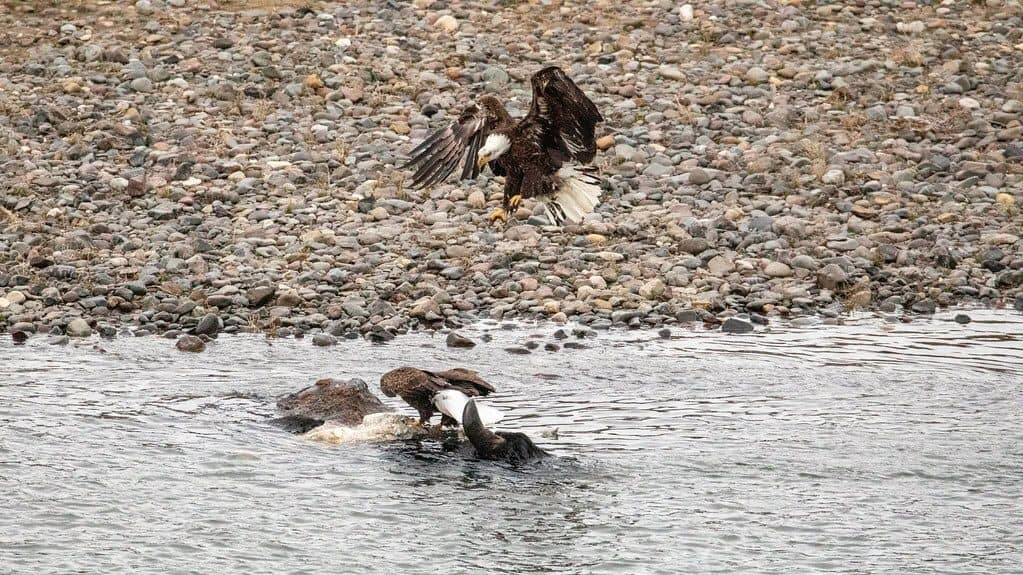
Bald eagles employ diverse hunting strategies tailored to different prey types. When fishing, they typically soar above water bodies, spot fish near the surface, then execute a controlled dive with feet extended forward to snatch prey with minimal body contact with water. For capturing birds, eagles may use surprise attacks from above or behind vegetation, or pursue waterfowl until exhaustion forces them to land. When hunting mammals, they combine soaring reconnaissance with powerful stoops from height. Their remarkable vision—estimated to be four to eight times sharper than human eyesight—enables detection of prey from impressive distances.
Advanced biomechanical studies have recently revealed specialized adaptations that enhance hunting efficiency. Their talons can exert an estimated 400 pounds per square inch of pressure, easily piercing fish scales or mammal hides. Unique foot adaptations include spicules (tiny projections) on their footpads that improve grip on slippery fish. Perhaps most surprising to researchers has been documentation of eagles altering their hunting techniques based on experience, suggesting cognitive learning rather than purely instinctual behavior. Eagles observed over multiple years show progressive refinement of their hunting methods, particularly when targeting novel prey species.
Feeding Behaviors at Different Life Stages
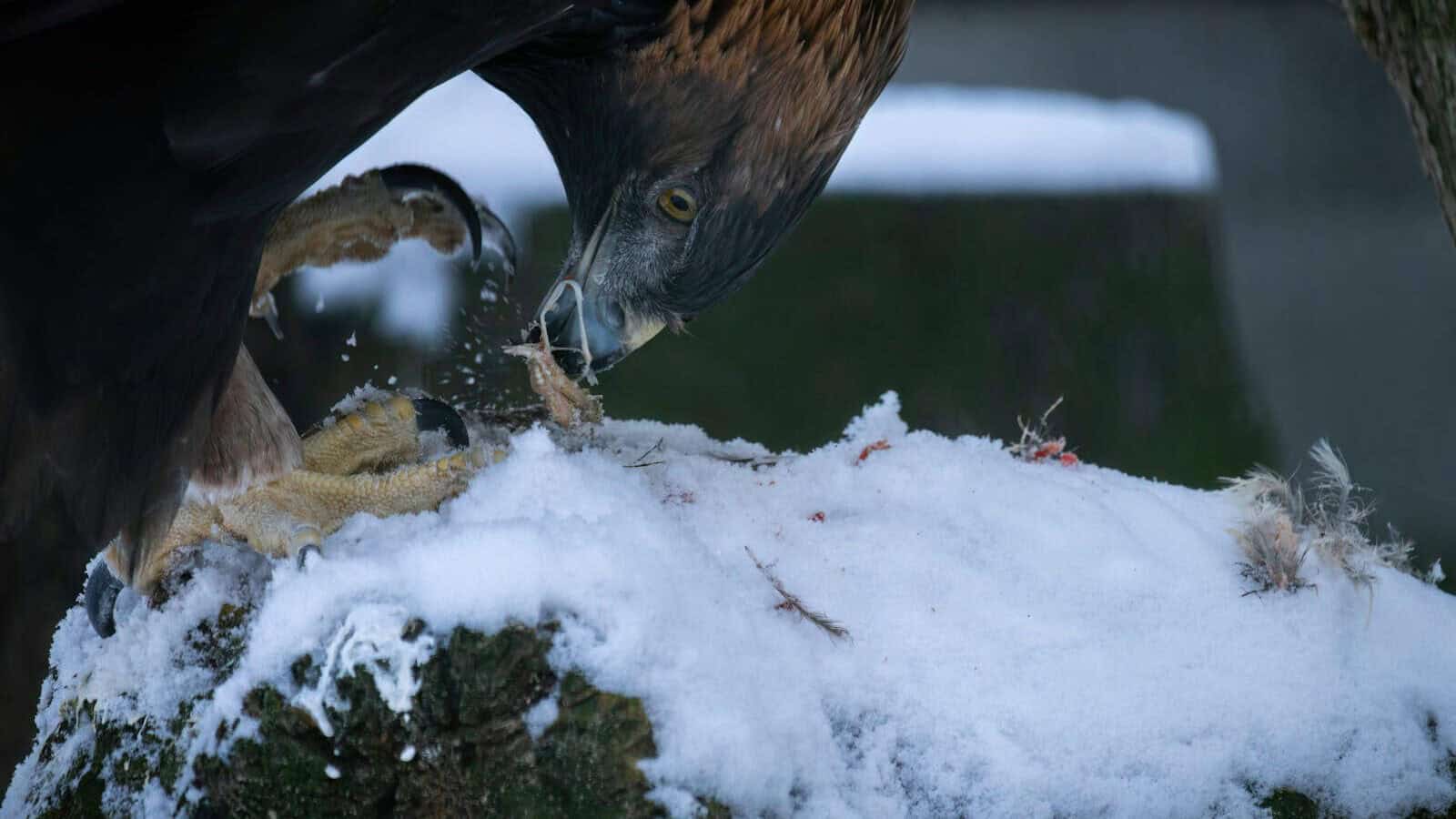
Bald eagles’ dietary preferences and hunting abilities evolve significantly throughout their lifespans. Juvenile eagles, identifiable by their uniformly dark plumage, typically lack the hunting proficiency of adults and rely heavily on scavenging during their first years. Research tracking young eagles shows they spend up to 75% more time foraging than adults while securing less food, demonstrating the importance of learning in developing effective hunting skills. They don’t achieve full adult plumage with the characteristic white head and tail until approximately five years of age, coinciding with improved hunting success rates.
During breeding season, eagle diets shift to accommodate the nutritional needs of growing nestlings. Parents prioritize high-protein, easily digestible foods like fish for young eaglets, gradually introducing other prey types as nestlings mature. Camera studies at nest sites have documented adults tearing food into appropriately sized pieces for different stages of nestling development. Perhaps most fascinating is the recent discovery that adult pairs with established territories maintain consistent dietary preferences over years, suggesting that successful hunting strategies become ingrained once developed and may even be passed culturally between generations.
Scientific Research Methods Unveiling Dietary Secrets

The scientific understanding of bald eagle diets has evolved dramatically thanks to innovative research technologies. Traditional methods involved direct observation and analysis of prey remains found at nest sites, providing useful but limited insights. Modern approaches include stable isotope analysis of feathers and blood samples, which reveals the proportional contribution of different food sources over time periods ranging from days to months. DNA metabarcoding of fecal samples can identify specific prey species with remarkable precision, even when visual evidence has disappeared.
The most revolutionary advances have come from telemetry studies using GPS transmitters. These devices not only track eagle movements but can identify feeding events through characteristic movement patterns. When combined with accelerometer data showing specific body positions, researchers can determine hunting success rates and energy expenditure during different foraging strategies. Camera traps at nests provide continuous monitoring of food deliveries, while specially designed “eagle-cams”—cameras attached directly to birds—have captured unprecedented footage of hunting and feeding behaviors from the eagle’s perspective. These technological innovations continue to transform scientific understanding of bald eagle feeding ecology.
Conservation Implications of Dietary Knowledge

Understanding bald eagle diets has profound implications for conservation efforts. Their position as apex predators makes them sensitive indicators of ecosystem health, with their dietary patterns reflecting the availability and condition of numerous prey species. The historical decline of bald eagles due to DDT contamination demonstrated how environmental toxins can concentrate through food webs, particularly in fish-eating predators. Today, ongoing dietary research helps identify emerging threats, including new contaminants, fishery declines, or habitat alterations that might impact prey availability.
Knowledge of regional dietary specialization now informs habitat protection strategies, ensuring that conservation efforts target the specific resources needed by local eagle populations. For example, protecting salmon spawning grounds benefits Pacific Northwest eagles, while preserving wetlands supporting diverse waterfowl populations aids eagles in the Great Lakes region. As climate change alters prey distributions and availability, understanding dietary flexibility helps scientists predict how eagles might adapt to these shifts. The remarkable recovery of bald eagles from fewer than 500 breeding pairs in the 1960s to over 300,000 individuals today stands as a conservation success story informed by detailed understanding of their feeding ecology.
The dietary habits of bald eagles reflect a fascinating intersection of opportunism, specialization, and adaptation that continues to surprise researchers. Far from being limited to the stereotypical fish diet, these magnificent birds have demonstrated remarkable flexibility in their feeding strategies, consuming everything from waterfowl to mammals, reptiles, and even human food waste. This adaptability has undoubtedly contributed to their successful recovery and recolonization of diverse habitats across North America.
Scientific research utilizing cutting-edge technologies continues to uncover new aspects of eagle feeding ecology, challenging long-held assumptions and revealing increasingly complex dietary patterns. Regional specialization, seasonal shifts, and individual learning all contribute to a nuanced picture of bald eagle diets that defies simple categorization. The ongoing discovery of unexpected prey items and novel hunting techniques underscores how much remains to be learned about even this intensively studied species.
For conservation, this expanding knowledge of eagle diets provides crucial insights for habitat protection and management decisions. It also serves as a reminder of the interconnectedness of ecosystems, as the health of eagle populations ultimately depends on the availability of diverse prey species across multiple food webs. As these majestic birds continue to adapt to changing environments, including increasingly human-dominated landscapes, their dietary choices will remain a critical area of scientific investigation and a window into their remarkable ecological resilience.
The story of what bald eagles eat is ultimately a story of survival through adaptation—a testament to the species’ intelligence and flexibility that has allowed it to reclaim its place as one of North America’s most iconic and successful predators. As research techniques continue to advance, we can expect further surprises about the feeding ecology of this magnificent national symbol.

- 14 Fascinating Facts About Rattlesnakes - June 16, 2026
- How Elephants Remember Friends After Decades - June 16, 2026
- 12 Spiders Adapting to Rising Temperatures - June 16, 2026