


The rugged, diverse landscapes of Northern California’s mountain ranges harbor a remarkable array of rare and specialized species that have adapted to survive in these challenging environments. From the towering peaks of the Sierra Nevada to the ancient forests of the Klamath Mountains, these ecosystems serve as refuges for plants and animals found nowhere else on Earth. Many of these species face mounting challenges from climate change, habitat loss, and human encroachment, making their continued survival increasingly precarious. This article explores some of the most fascinating rare species that have carved out niches in Northern California’s mountainous terrain, examining their unique adaptations, ecological significance, and the conservation efforts aimed at ensuring their future in these spectacular but vulnerable habitats.
Sierra Nevada Red Fox: A Tenacious Mountain Dweller

The Sierra Nevada red fox (Vulpes vulpes necator) represents one of California’s rarest mammals, with an estimated population of fewer than 50 individuals surviving in the high elevations of the Sierra Nevada and Cascade ranges. Distinguished by its rusty-red fur, black-backed ears, and white-tipped tail, this small fox has evolved specific adaptations for life in snowy, high-altitude environments. Their compact bodies, dense fur, and furred footpads allow them to navigate deep snow efficiently while maintaining body heat in temperatures that regularly plunge below freezing.
Long considered possibly extinct in the Sierra Nevada, wildlife biologists confirmed their continued presence in 2010 near Sonora Pass, sending waves of excitement through the conservation community. These elusive predators typically live above 7,000 feet elevation, hunting small mammals and birds while avoiding competition with larger predators. Their extreme rarity earned them protection under the California Endangered Species Act in 2015, though they face ongoing threats from climate change, which is reducing their specialized high-altitude habitat, as well as potential competition from more common lowland red foxes moving into warming mountain environments.
Pacific Fisher: Forest Sentinel on the Brink

The Pacific fisher (Pekania pennanti), a member of the weasel family, persists in scattered populations throughout Northern California’s mountainous forests. These cat-sized carnivores are characterized by their dark brown fur, long bodies, and bushy tails. Despite their name, fishers rarely catch fish, instead preferring to hunt porcupines, snowshoe hares, and small mammals while also consuming fruits and fungi. They require large swaths of mature forest with dense canopy cover and abundant dead trees for denning and resting sites, making them particularly vulnerable to habitat fragmentation and logging practices.
In the Klamath Mountains and parts of the southern Cascades, small fisher populations cling to existence in isolated forest patches. Their numbers have declined dramatically due to historical fur trapping, logging of old-growth forests, and more recently, poisoning from illegal marijuana grow operations. Research has shown that fishers are particularly susceptible to rodenticides used at these sites, causing secondary poisoning when they consume contaminated prey. Conservation efforts include reintroduction programs in parts of their historical range, creation of wildlife corridors between fragmented habitats, and working with timber companies to implement fisher-friendly forest management practices.
Wolverine: Ghost of the Northern Sierra
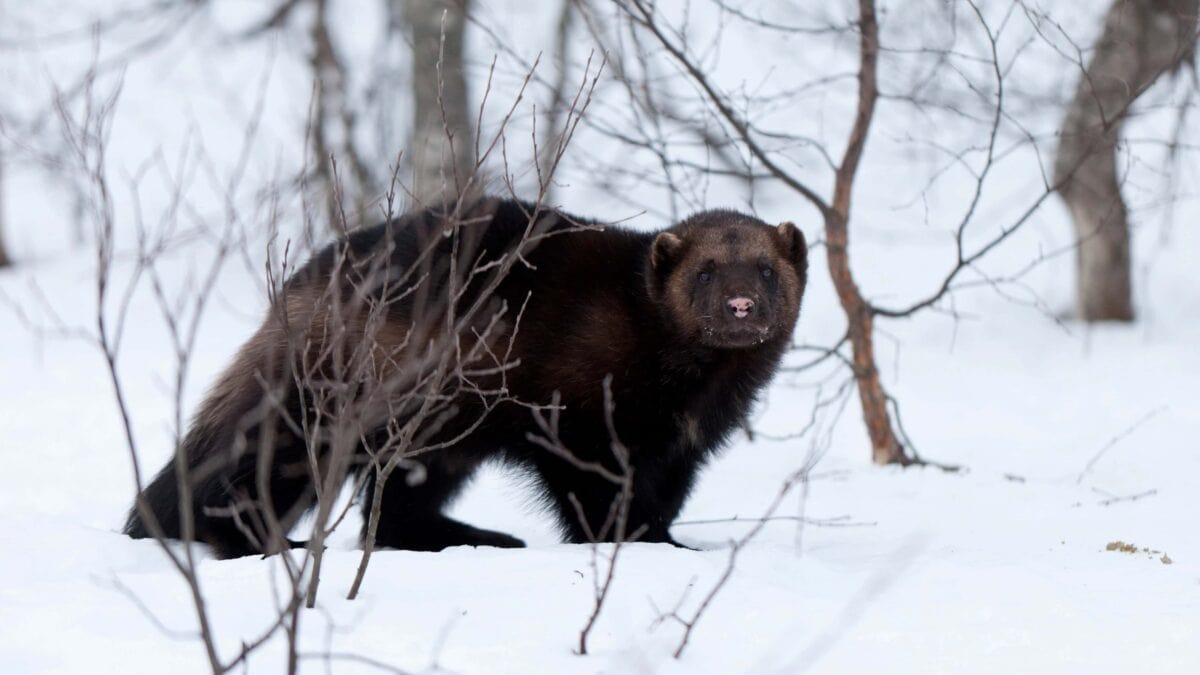
The wolverine (Gulo gulo) stands as perhaps the most enigmatic predator in California’s mountains, with only occasional confirmed sightings in recent decades. These powerful members of the weasel family possess incredible strength for their size, enabling them to take down prey much larger than themselves and defend kills against wolves and bears. Adapted for life in harsh alpine environments, wolverines feature thick, water-resistant fur, oversized paws that act as natural snowshoes, and incredibly strong jaws that can crush frozen meat and bones.
Long thought extirpated from California, a lone male wolverine was photographed in the Tahoe National Forest in 2008, generating hope that these rare carnivores might be returning to their historical range. Subsequent DNA analysis revealed this individual likely dispersed from Idaho, traveling hundreds of miles to reach the Sierra Nevada. Wolverines require vast territories and depend on persistent spring snowpack for denning, making them particularly vulnerable to climate change impacts. While California currently lacks a breeding population, ongoing monitoring efforts using wildlife cameras and environmental DNA sampling continue in hopes of detecting additional wolverines that might have made their way into the state’s northern mountains.
Sierra Nevada Bighorn Sheep: Masters of Vertical Terrain

The Sierra Nevada bighorn sheep (Ovis canadensis sierrae) represents one of North America’s most impressive conservation success stories after nearly vanishing entirely in the 1990s. These magnificent ungulates are perfectly adapted to the precipitous slopes and jagged peaks of the eastern Sierra Nevada, where their specialized hooves provide remarkable traction on near-vertical rock faces. Males develop massive, curved horns that can weigh up to 30 pounds, while females possess shorter, more slender horns. Their keen eyesight allows them to spot predators from great distances in their open alpine habitat.
By 1995, disease outbreaks and predation had reduced the entire subspecies to approximately 100 individuals, prompting emergency protection under the federal Endangered Species Act. An intensive recovery program including captive breeding, reintroductions, predator management, and disease prevention has gradually rebuilt their numbers to around 600 animals distributed across several mountain ranges. These efforts represent a remarkable turnaround, though the population remains vulnerable to disease transmission from domestic sheep, climate-related habitat changes, and potential genetic bottlenecks due to their historically low numbers. Hikers in the eastern Sierra occasionally glimpse these magnificent animals navigating seemingly impossible terrain with effortless grace.
California Golden Trout: Jewels of Alpine Waters

The California golden trout (Oncorhynchus mykiss aguabonita), California’s state freshwater fish, evolved in the isolated high-altitude streams of the southern Sierra Nevada. These stunning fish showcase brilliant coloration with golden-yellow sides, a reddish lateral stripe, and distinctive olive-green backs spotted with black. Their specialized physiology allows them to thrive in cold, low-oxygen waters above 8,000 feet elevation where few other fish species can survive. Originally confined to the South Fork Kern River and Golden Trout Creek watersheds, their striking appearance led to widespread introductions throughout California’s mountain lakes and streams.
Despite their expanded range, pure-strain golden trout face significant threats in their native habitat. Hybridization with introduced rainbow trout threatens their genetic integrity, while non-native brown trout actively prey upon them. Climate change poses additional challenges as warming temperatures allow competing fish species to move upstream into previously golden trout-exclusive habitats. Conservation efforts include removing non-native fish from certain watersheds, constructing barriers to prevent rainbow trout access, and establishing refuge populations in selected high lakes. Genetic monitoring helps identify pure populations, while angling regulations including catch-and-release requirements in certain waters help protect remaining stocks of this iconic alpine species.
Cascades Frog: Disappearing High-Country Amphibian
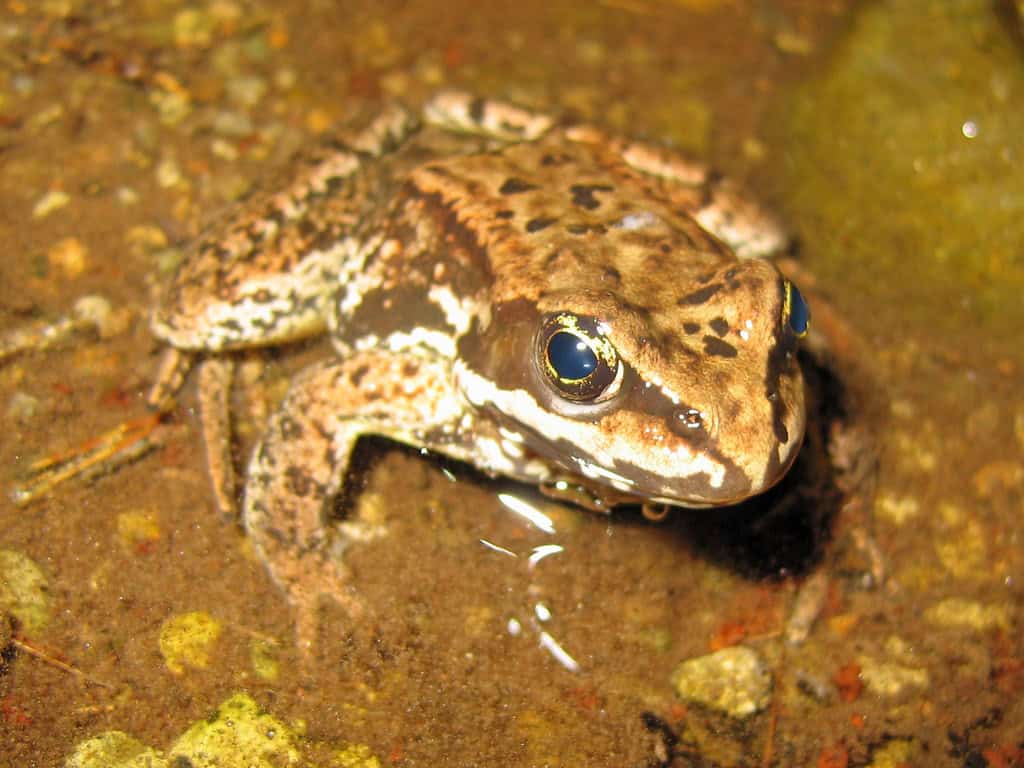
The Cascades frog (Rana cascadae) inhabits wet meadows, ponds, and lake shores in the Klamath Mountains and southern Cascades of Northern California, where it has experienced alarming population declines in recent decades. These medium-sized frogs display olive-green to brown coloration with distinctive black spotting and downward-oriented eyes that allow them to see potential predators while floating at the water’s surface. Unlike many frogs that require permanent water bodies, Cascades frogs have adapted to breed in ephemeral snowmelt pools and shallow lake margins, timing their reproduction to the short mountain summer.
Scientists have documented localized extinctions of numerous Cascades frog populations, particularly in the southern portions of their range. The species faces multiple threats, including habitat degradation, introduced fish that prey on tadpoles, and most significantly, the spread of the deadly chytrid fungus (Batrachochytrium dendrobatidis) that has devastated amphibian populations worldwide. Research suggests that climate change may exacerbate these threats by altering snowmelt patterns crucial for breeding and potentially enhancing fungal growth conditions. Conservation efforts include habitat protection in wilderness areas, removal of non-native fish from key breeding sites, and captive rearing programs that aim to bolster wild populations while developing potential resistance to the fungal pathogen.
Whitebark Pine: Sentinel of the Alpine Zone
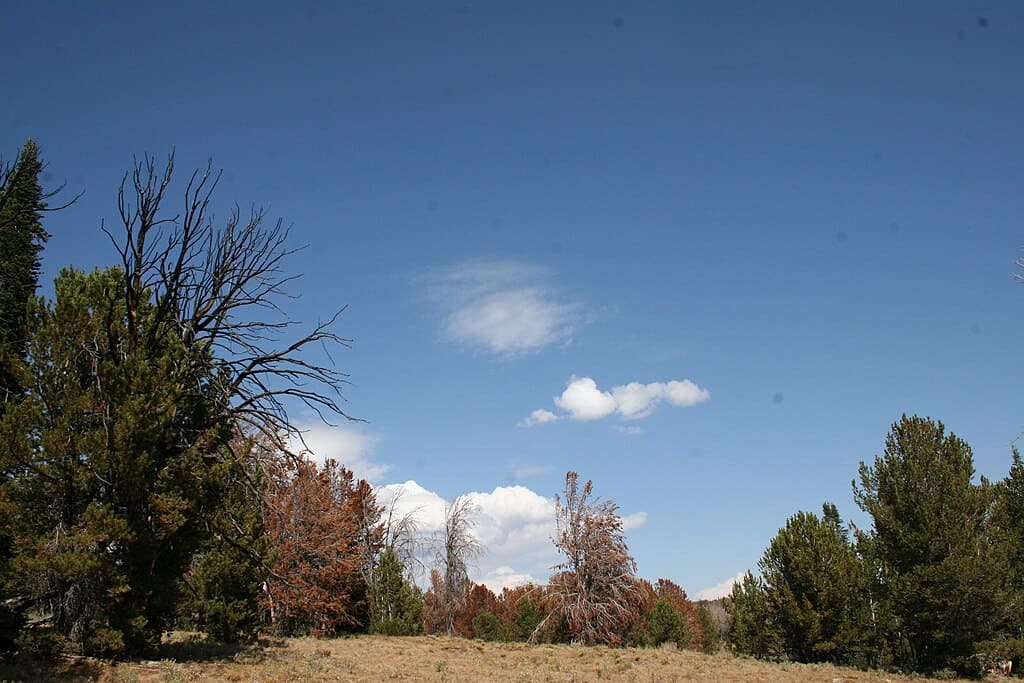
The whitebark pine (Pinus albicaulis) stands as a keystone species of high-elevation forest ecosystems in Northern California’s mountains, particularly in the Sierra Nevada and southern Cascades. These slow-growing, long-lived trees can survive for more than 1,000 years despite growing in some of the harshest conditions imaginable—windswept ridges and granite outcroppings above 8,000 feet where few other trees can establish. Their distinctive features include five-needled clusters, purplish-brown cones that remain closed upon maturity, and gnarled, wind-sculpted growth forms at the highest elevations that give them an ancient, almost bonsai-like appearance.
Whitebark pine populations face catastrophic declines throughout their range due to a perfect storm of threats. White pine blister rust, an introduced fungal pathogen, has killed millions of trees since arriving in North America. Meanwhile, warming temperatures have enabled mountain pine beetle outbreaks at elevations previously protected by cold winters. These combined threats have reduced whitebark pine populations by 90% in some areas. Conservation strategies include identifying and propagating rust-resistant trees, conducting controlled burns to reduce competition from other conifers, and protecting remaining healthy stands. The species’ decline carries profound ecological consequences, as its nutritious seeds provide essential food for numerous wildlife species including Clark’s nutcrackers, red squirrels, and grizzly bears in more northern portions of its range.
Mount Eddy Draba: Botanical Treasure of Serpentine Soils

The Mount Eddy draba (Draba carnosula) represents one of California’s most restricted plant endemics, growing exclusively on the serpentine slopes of Mount Eddy and nearby peaks in the Klamath Mountains. This diminutive member of the mustard family forms small cushions of fleshy, spoon-shaped leaves topped with clusters of tiny white flowers during its brief summer blooming period. Its highly specialized physiology allows it to tolerate serpentine soils, which contain high levels of magnesium and heavy metals toxic to most plants while being deficient in essential nutrients like calcium.
Found only above 7,500 feet elevation on north-facing slopes and cirque basins, the Mount Eddy draba occupies a remarkably narrow ecological niche. Its entire global distribution encompasses less than 10 square miles, making it exceptionally vulnerable to disturbance. While its remote habitat has provided some natural protection, potential threats include climate change, which could allow competing vegetation to encroach on its specialized habitat, and recreational impacts from hikers and climbers. Botanical researchers continue monitoring its small populations while developing ex-situ conservation strategies including seed banking and experimental cultivation techniques that might help preserve this botanical rarity should wild populations decline.
Trinity Alps Salamander: Ancient Lineage in Isolated Springs
The Trinity Alps salamander (Hydromantes platycephalus), a member of the web-toed salamander family, represents a remarkable evolutionary story in Northern California’s mountains. These secretive amphibians inhabit cool, moist microhabitats including spring seeps, cave entrances, and rock crevices in the Trinity Alps and nearby ranges. Unlike most salamanders that require standing water for reproduction, they lay their eggs in moist underground chambers where they develop directly into miniature versions of the adults without an aquatic tadpole stage. Their specialized adaptations include projectile tongues that can extend up to 80% of their body length to capture prey and the ability to climb vertical rock faces using specialized toe pads.
Genetic research suggests these salamanders share ancestry with European cave salamanders, representing a remarkable biogeographic connection between continents. Their highly fragmented distribution pattern indicates they may be relics of a formerly widespread group that became isolated in suitable microhabitats as the climate warmed following the last ice age. Each isolated population shows genetic distinctiveness, suggesting they may represent multiple undescribed species rather than a single entity. Conservation concerns include habitat disturbance from mining activities, changes to hydrological systems that maintain their specialized habitats, and climate change impacts that could reduce the availability of cool, moist retreats these moisture-dependent amphibians require for survival.
Marbled Murrelet: From Ocean to Ancient Forest

The marbled murrelet (Brachyramphus marmoratus) exemplifies one of the most unusual life histories among Northern California’s rare species, splitting its existence between two radically different environments. These robin-sized seabirds spend most of their lives on the ocean, diving for small fish and invertebrates in nearshore marine waters. However, unlike other seabirds that nest colonially on coastal islands or cliffs, marbled murrelets fly up to 50 miles inland to nest on the moss-covered branches of ancient redwoods and Douglas firs in the coastal mountains of Northern California, including the Klamath range.
Their cryptic mottled plumage provides perfect camouflage against the bark and lichen of old-growth trees, while their nests—simple depressions on wide, mossy branches—remain incredibly difficult for researchers to locate. This dependence on old-growth forest has led to dramatic population declines following extensive logging of ancient forests. Listed as threatened under the Endangered Species Act, California’s marbled murrelet population faces multiple threats including loss of nesting habitat, increased predation by corvids (jays and ravens) associated with human development, and changes in ocean conditions affecting their food supply. Conservation efforts focus on protecting remaining old-growth stands, developing forest management practices that accelerate development of suitable nesting structures in younger forests, and reducing human-associated food sources that attract predators in murrelet habitat.
Lassen Smelowskia: Volcanic Survivor
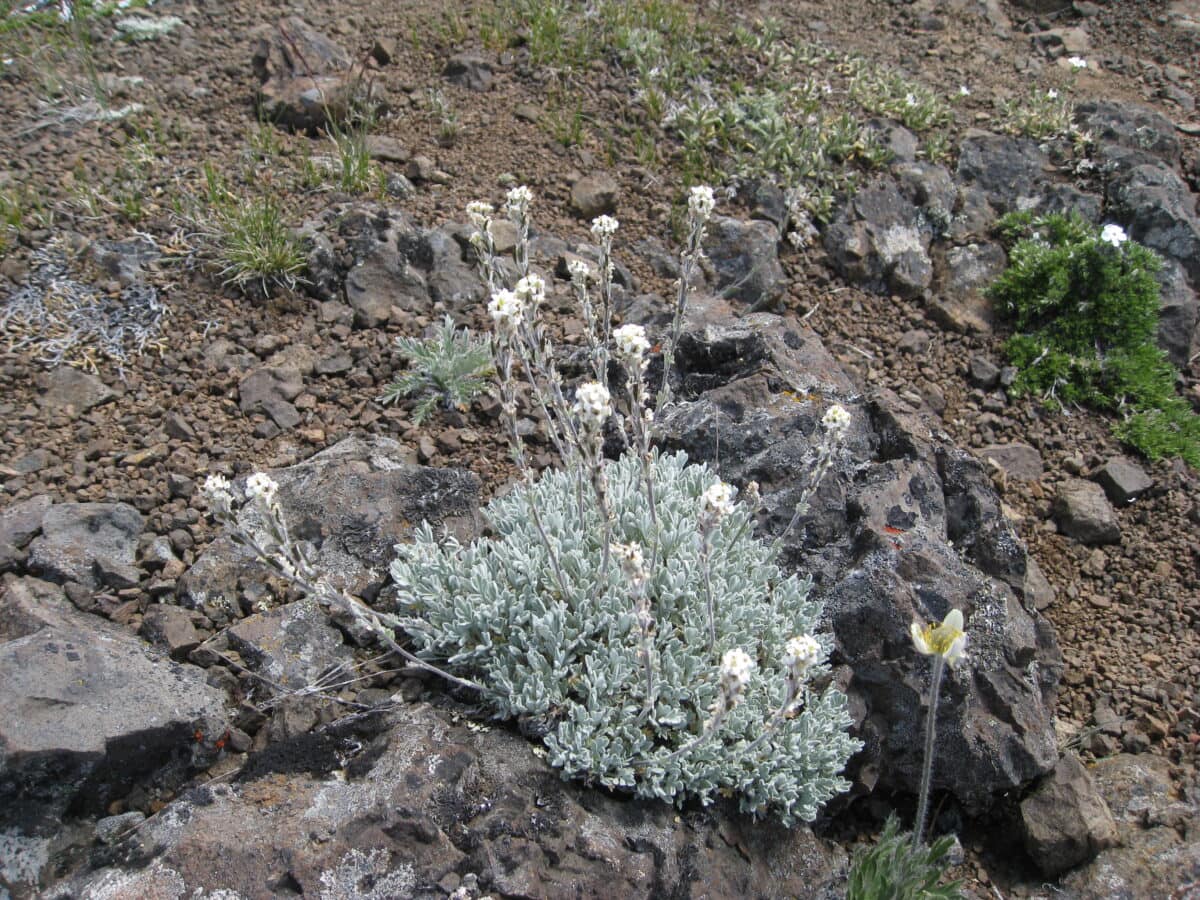
The Lassen smelowskia (Smelowskia ovalis var. congesta) represents a botanical specialist that has evolved to thrive in one of California’s most extreme environments—the barren volcanic slopes and cinder fields of Lassen Peak in the southern Cascades. This diminutive member of the mustard family forms small rosettes of silvery, divided leaves that help reflect intense solar radiation while conserving moisture. During its brief summer flowering period, it produces clusters of small white flowers on short stalks, rarely exceeding six inches in height. Its extensive root system anchors it in the loose volcanic substrate while accessing moisture trapped beneath the surface.
Found only on Lassen Peak and a few nearby volcanic formations, this plant has adapted to survive frequent disturbance from volcanic activity, extreme temperature fluctuations, high winds, and an extremely short growing season. While protected within Lassen Volcanic National Park, it faces potential threats from climate warming that could allow lower-elevation plants to colonize its specialized habitat and from inadvertent trampling by hikers venturing off established trails. Park botanists monitor its populations and have established seed collections to preserve its genetic diversity. The plant’s remarkable adaptations to volcanic environments make it valuable for scientific study of evolution in extreme conditions and potential applications in restoration of disturbed volcanic landscapes.
The rare species that call Northern California’s mountains home face unprecedented challenges in the coming decades. Climate change represents perhaps the most pervasive threat, as warming temperatures force cold-adapted species to move upslope, eventually running out of suitable habitat at mountain summits. Habitat fragmentation from development, resource extraction, and infrastructure isolates populations and prevents natural migration in response to changing conditions. Meanwhile, introduced species, diseases, and altered fire regimes further stress these specialized mountain dwellers that have evolved over millennia to occupy specific ecological niches.
Despite these daunting challenges, conservation success stories like the recovery of Sierra Nevada bighorn sheep demonstrate that determined action can reverse decline when sufficient resources and scientific knowledge are applied. Protected areas including national parks, wilderness areas, and special management zones provide crucial refuges, while innovative approaches such as wildlife corridors, assisted migration, and ex-situ conservation offer potential solutions for species facing habitat loss. Most importantly, growing public awareness of these rare mountain species and their ecological importance has fostered strong constituencies advocating for their protection. By combining scientific research, habitat protection, and public engagement, there remains hope that future generations will still encounter these remarkable species in the wild, continuing to inspire wonder and demonstrating nature’s remarkable capacity for adaptation and resilience in California’s majestic mountain landscapes.

- How Crickets Chirp Using Their Wings - July 20, 2026
- The Largest Sea Turtle Ever Rescued Off North Carolina - July 20, 2026
- The Ocean’s Escape Artist: Why Octopuses Outsmart Us All - July 20, 2026
Leave a comment
You must be logged in to post a comment.