


The animal kingdom is full of fascinating adaptations, but some creatures have developed particularly surprising abilities that seem to defy their evolutionary design. While fish and other aquatic animals have gills that allow them to extract oxygen from water, certain air-breathing animals have evolved remarkable strategies to spend extended periods underwater without specialized respiratory organs. These adaptations range from metabolic changes to physical modifications that allow these primarily terrestrial or semi-aquatic creatures to remain submerged far longer than one might expect. From mammals to reptiles and even some insects, these animals push the boundaries of their physiology in ways that continue to fascinate scientists and nature enthusiasts alike. Let’s dive into the world of 15 amazing animals that don’t need to breathe underwater—but do anyway.
12. Sea Turtles Masters of Underwater Hibernation

Sea turtles are perhaps the most impressive non-fish breathers in the ocean. Despite having lungs rather than gills, these remarkable reptiles can remain underwater for extraordinary periods. Depending on the species and activity level, sea turtles can hold their breath anywhere from 4-7 hours during routine activities. However, when resting or sleeping, some species can remain submerged for astonishing periods—green sea turtles have been documented staying underwater for up to 5 hours while active and potentially several hours more while resting.
The secret to their underwater endurance lies in their incredibly slow metabolism when at rest. Sea turtles can reduce their heart rate to conserve oxygen—sometimes to just one beat every nine minutes. This adaptation, called bradycardia, allows them to use oxygen extremely efficiently. Additionally, sea turtles can store large amounts of oxygen in their muscles and blood, and their bodies are highly tolerant of the buildup of carbon dioxide that would be toxic to many other species. During colder months, some sea turtles enter a hibernation-like state underwater, further slowing their metabolism and oxygen requirements.
11. Hippos Underwater Nappers

Hippopotamuses spend up to 16 hours a day in the water despite being mammals that breathe air. These massive creatures can stay underwater for up to 5 minutes at a time, and what’s particularly remarkable is that they can sleep underwater. Hippos have evolved a reflexive response that allows them to rise to the surface, take a breath, and then sink back down—all while remaining asleep. Their nostrils and ears close automatically when submerged, preventing water from entering.
Hippos don’t actually swim or float—they’re too dense for that. Instead, they push off from the river bottom and move by a series of bounds, almost like underwater galloping. Their eyes, ears, and nostrils are positioned on top of their heads, allowing them to keep most of their body submerged while still being able to see, hear, and breathe. This adaptation helps them stay cool during the day (hippos don’t sweat and are vulnerable to overheating) while allowing them to remain vigilant against predators. Despite their aquatic lifestyle, hippos can’t actually breathe underwater—they’re just extraordinarily adapted to minimize their need to surface.
10. Crocodiles and Alligators Reptilian Breath-Holders

Crocodilians, including crocodiles and alligators, are air-breathing reptiles that have mastered the art of underwater stealth. These predators can remain completely submerged for 1-2 hours when resting, thanks to several specialized adaptations. Like sea turtles, they can dramatically slow their heart rate underwater, sometimes to just 2-3 beats per minute. This bradycardia allows them to conserve oxygen and remain motionless while waiting for prey. Their metabolism is also remarkably efficient, enabling them to use oxygen sparingly.
An interesting feature of crocodilian anatomy is the palatal valve at the back of their throat. This specialized flap of tissue seals off their airway, allowing them to open their mouths underwater without drowning—crucial for their ambush hunting technique. Additionally, crocodiles and alligators can redirect blood flow away from non-essential organs while submerged, prioritizing oxygen delivery to the brain and other vital organs. When active, their underwater time is reduced to about 20-30 minutes, but this is still impressive for an air-breathing reptile. Some species have even been observed using tools like sticks to lure birds, demonstrating their intelligence and adaptation to semi-aquatic life.
9. Diving Bell Spiders Underwater Air Reservoirs
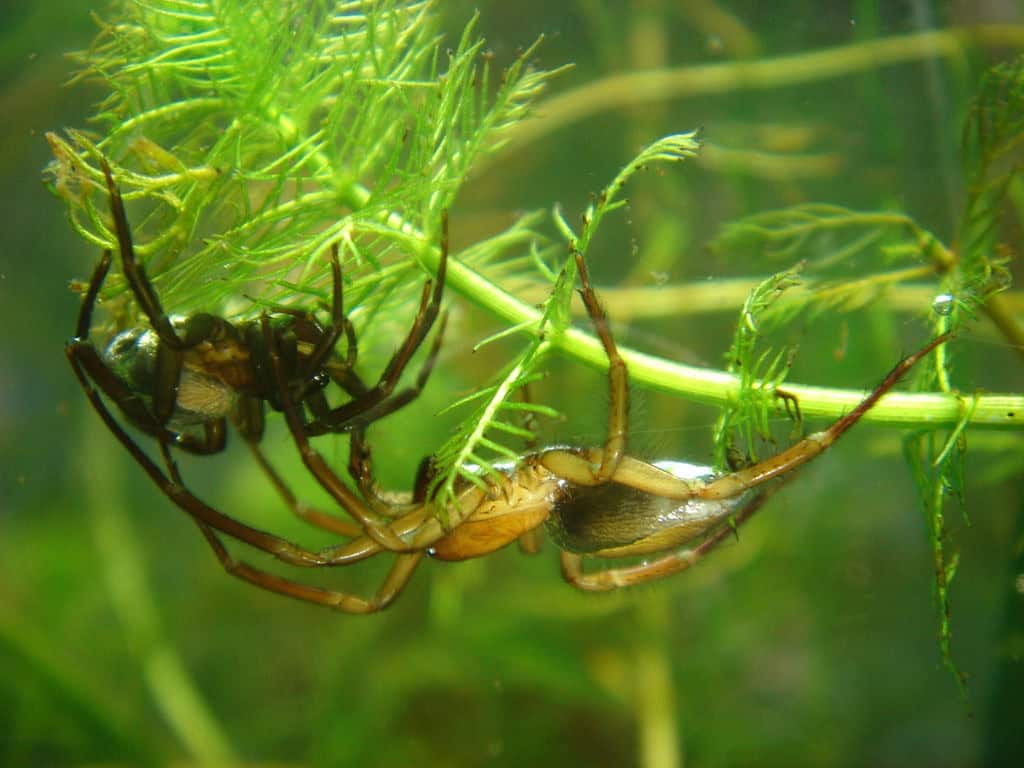
The diving bell spider (Argyroneta aquatica) is the only spider in the world that spends almost its entire life underwater. Despite needing to breathe air like all spiders, this remarkable arachnid has evolved an ingenious solution: it creates its own underwater “diving bell” filled with air. The spider constructs this bell by spinning a dome-shaped web between aquatic plants and repeatedly traveling to the surface to collect air bubbles, which it traps in specialized hairs on its abdomen and legs. It then releases these bubbles under the web, gradually filling the structure with air.
Once constructed, this bell serves as both home and oxygen supply. Research has shown that these diving bells function as physical gills, allowing oxygen from the surrounding water to diffuse into the air bubble while carbon dioxide diffuses out. This exchange can maintain oxygen levels in the bell for more than 24 hours before the spider needs to replenish it. Inside this underwater sanctuary, diving bell spiders eat, mate, lay eggs, and raise their young—all while surrounded by water. Males build smaller, temporary bells, while females create larger, more permanent structures. These remarkable spiders have effectively created their own personal SCUBA systems, allowing them to colonize an underwater niche unavailable to other arachnids.
8. Beavers Aquatic Engineers

Beavers are semi-aquatic mammals renowned for their dam-building abilities, but their underwater adaptations are equally impressive. These rodents can remain submerged for up to 15 minutes at a time, which is remarkable considering they’re primarily terrestrial mammals. Beavers have transparent nictitating membranes (third eyelids) that function like built-in goggles, allowing them to see clearly underwater. Their nostrils and ears have special valves that close automatically when submerged, keeping water out of their respiratory system.
The beaver’s most distinctive underwater adaptation is its large, flat, paddle-like tail, which serves multiple functions. It acts as a rudder while swimming, provides propulsion with powerful strokes, and serves as a fat storage reserve for winter months. Beavers also have large lungs and livers that allow them to process more oxygen and store more blood. Their dense fur is waterproof, consisting of two layers: a soft, insulating under-layer and coarse guard hairs coated with waterproofing oils from special glands. These adaptations allow beavers to remain active year-round, even swimming under ice during winter months when they primarily subsist on cached food supplies stored near their lodges.
7. Water Shrews Tiny Aquatic Marvels
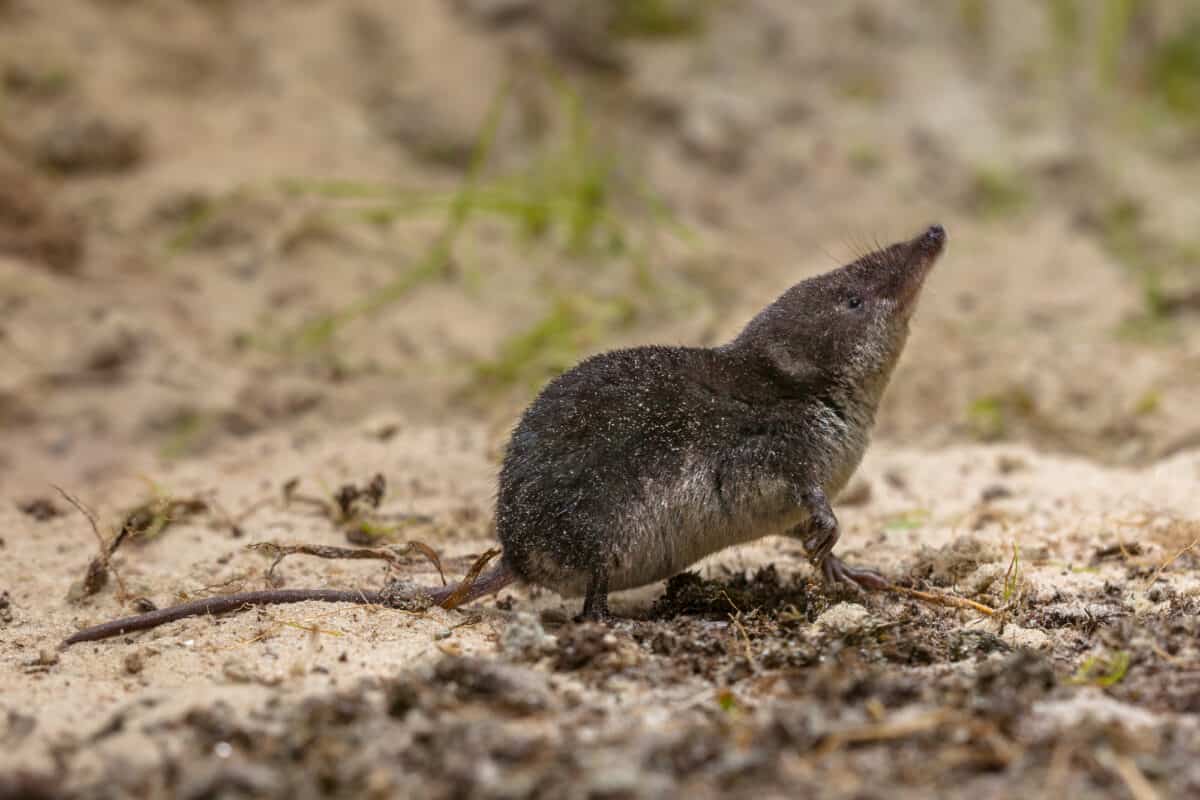
Water shrews (genus Neomys) might be small—weighing just 8-23 grams—but these tiny mammals are remarkable underwater hunters. Despite their diminutive size, water shrews can dive and remain active underwater for up to 20 seconds at a time. This may not sound impressive compared to larger animals, but considering their extremely high metabolism (shrews must eat almost constantly to survive), this represents a significant adaptation. Their fur has unique structural properties that trap air bubbles, creating a silvery appearance underwater and providing both insulation and buoyancy.
What makes water shrews particularly fascinating is their ability to hunt by detecting prey through bubbles. Research has shown that these shrews can detect the movements of aquatic prey by sensing disturbances in water with their sensitive whiskers. Some species, like the American water shrew (Sorex palustris), have partially webbed feet and stiff hairs on their feet and tail that provide additional swimming power. They’ve also developed a unique physiological adaptation: their blood contains higher levels of hemoglobin than other shrews, allowing them to store more oxygen. Water shrews are venomous hunters, using toxic saliva delivered through specialized teeth to immobilize prey like aquatic insects, small fish, and crustaceans—making them one of the few venomous mammals on Earth.
6. Marine Iguanas The Ocean’s Only Lizard
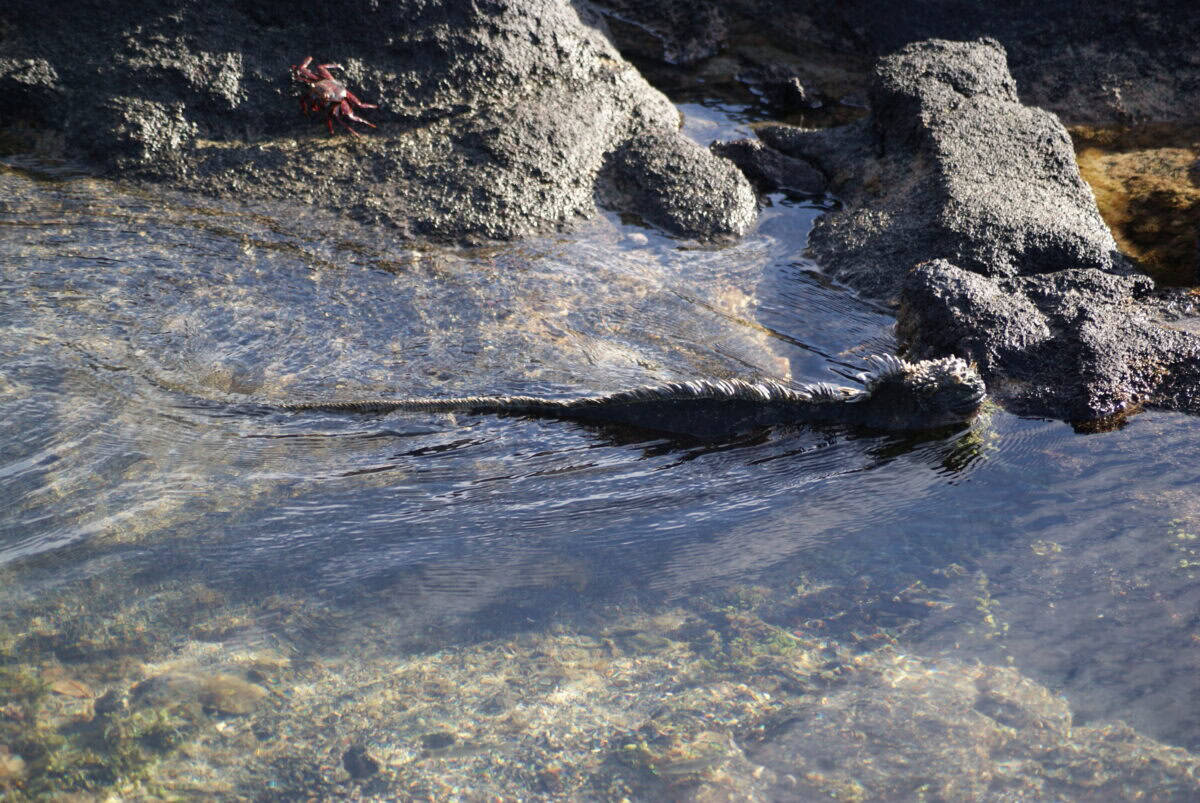
Marine iguanas (Amblyrhynchus cristatus), found only in the Galápagos Islands, are the world’s only sea-going lizards. These remarkable reptiles can hold their breath for up to 30 minutes while diving to depths of 30 feet to forage for their preferred food: underwater algae. To prepare for these extended dives, marine iguanas have evolved several specialized adaptations. They have flattened tails that provide powerful swimming propulsion and blunt snouts with sharp teeth perfectly designed for scraping algae off rocks.
One of their most remarkable adaptations is their ability to shrink their bodies—including their bones—during food shortages. During El Niño events, when algae becomes scarce, these iguanas can reduce their length by up to 20% and their body mass by as much as 35%. When food becomes plentiful again, they return to their normal size. Marine iguanas have also developed specialized glands connected to their nasal passages that filter excess salt from their bloodstream. After feeding on saltwater algae, they expel concentrated salt solution through their nostrils in a process often described as “sneezing salt.” This unique adaptation, along with efficient kidneys, allows them to maintain proper salt balance despite their marine diet—solving a problem that would kill most other reptiles.
5. Platypuses Electroreceptive Divers
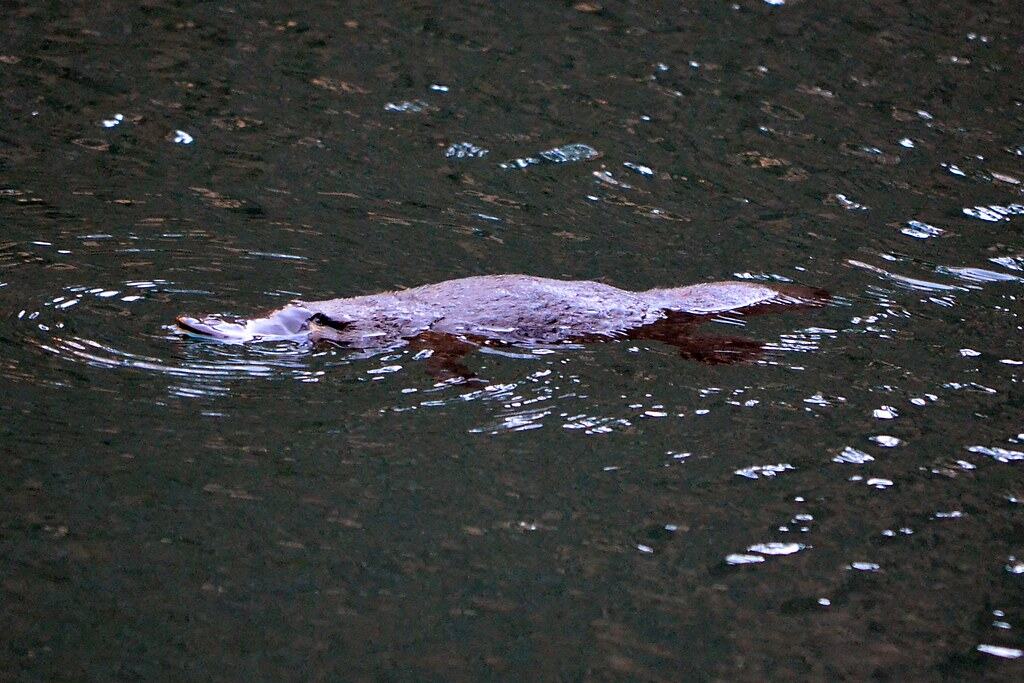
The platypus (Ornithorhynchus anatinus) is already famous for its bizarre appearance—combining a duck-like bill, beaver-like tail, and otter-like feet—but its underwater abilities are equally remarkable. These egg-laying mammals can remain submerged for 30 seconds to over a minute during active foraging and up to 10 minutes when resting. While underwater, platypuses close their eyes, ears, and nostrils completely, essentially cutting off most of their senses. So how do they hunt in murky waters? They’ve evolved one of the animal kingdom’s most sophisticated electroreception systems.
The platypus bill contains approximately 40,000 electroreceptors and 60,000 mechanoreceptors, allowing them to detect the tiny electrical fields generated by the muscle movements of their prey and the physical disturbances they create in the water. This “sixth sense” lets them hunt effectively in complete darkness or turbid water. When diving, platypuses store food in special cheek pouches, returning to the surface to consume their catch. Their dense, waterproof fur provides excellent insulation in cold water, and their webbed feet make them powerful swimmers. Uniquely among mammals, male platypuses are venomous, with painful venom delivered through spurs on their hind legs—though this adaptation is used for territorial disputes rather than hunting.
4. Elephant Seals Deep-Diving Champions

Elephant seals are among the most impressive mammalian divers on the planet. Northern elephant seals (Mirounga angustirostris) routinely dive to depths of 1,000-2,000 feet and can remain underwater for an astonishing 1-2 hours. Southern elephant seals (Mirounga leonina) dive even deeper—reaching depths over 7,800 feet (2,388 meters) and staying submerged for up to 2 hours. This remarkable ability is made possible by several specialized adaptations. Their blood contains an exceptionally high volume of red blood cells—up to 65% of blood volume compared to 45% in humans—allowing them to store massive amounts of oxygen.
Elephant seals also collapse their lungs during deep dives, preventing nitrogen absorption that would cause decompression sickness. Their muscles contain high levels of myoglobin (an oxygen-binding protein), giving their flesh a nearly black appearance and providing additional oxygen storage. During dives, they undergo extreme bradycardia, slowing their heart rate from 55-120 beats per minute to just 4-15 beats per minute. They also restrict blood flow to non-essential organs, directing oxygen-rich blood primarily to the brain and heart. Perhaps most remarkably, elephant seals can tolerate extremely low oxygen conditions that would cause brain damage in humans, with their brain cells having special adaptations to function in hypoxic conditions. These capabilities make them true champions of the deep, despite being air-breathing mammals.
3. Diving Birds Feathered Submariners
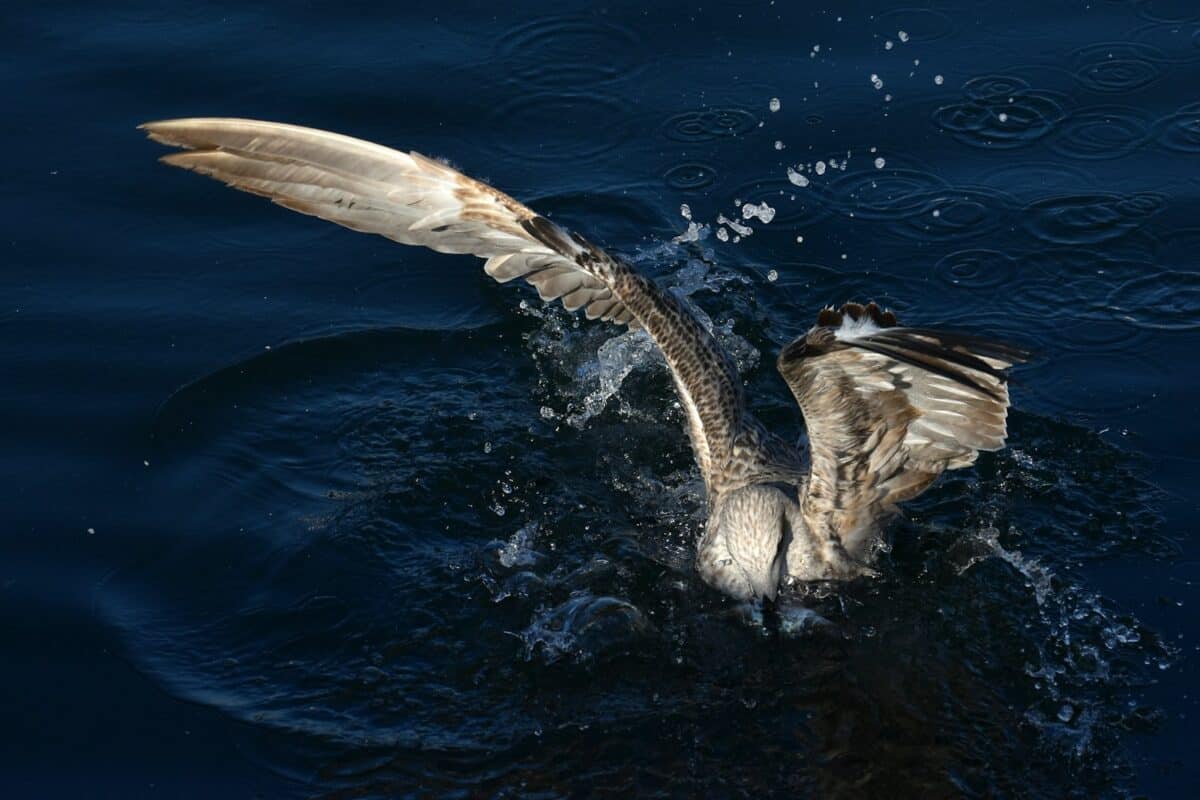
Several bird species have evolved impressive underwater abilities despite lacking gills. Emperor penguins are perhaps the most notable, capable of diving to depths of 1,755 feet (535 meters) and staying submerged for up to 20 minutes. Their bodies are packed with myoglobin-rich muscles that store oxygen, and they can slow their heart rate from 100 beats per minute to just 20 beats per minute while diving. Before deep dives, they exhale most of the air in their lungs, reducing buoyancy and preventing decompression sickness.
Other remarkable diving birds include the common murre (Uria aalge), which can dive to 590 feet (180 meters) and uses its wings to literally “fly” underwater. The marbled murrelet (Brachyramphus marmoratus) dives to catch fish and can remain submerged for up to 40 seconds. Cormorants are also exceptional divers, with the Imperial shag (Leucocarbo atriceps) recorded diving to depths of 390 feet (119 meters). These birds have special feathers that become waterlogged, reducing buoyancy, and strong feet positioned far back on their bodies for powerful underwater propulsion. Some species, like the American dipper (Cinclus mexicanus), have specialized nasal flaps that prevent water entry, higher hemoglobin counts than other songbirds, and denser bones that reduce buoyancy—allowing them to literally walk along stream bottoms hunting for aquatic insects.
2. Otters Tool-Using Aquatic Hunters

Otters are semi-aquatic mammals that have evolved remarkable underwater capabilities. Sea otters (Enhydra lutris) can hold their breath for up to 5 minutes and dive to depths of 330 feet (100 meters) when foraging. Unlike most marine mammals, they lack blubber and instead rely on the densest fur in the animal kingdom—up to one million hairs per square inch—to stay warm in cold waters. This incredibly dense coat traps a layer of air that provides insulation. Their metabolic rate is also extremely high, about 2-3 times what would be expected for a mammal of their size, helping them maintain body temperature.
River otters (Lontra canadensis) can remain underwater for up to 8 minutes and close their ears and nostrils while submerged. All otter species have powerful tails for swimming and partially webbed feet for maneuverability. What makes sea otters particularly fascinating is their tool use—they’re one of the few non-primates that regularly use tools, carrying favorite rocks in underarm pouches to crack open shellfish. They also have loose skin pouches across their chest where they store both food items and tools while diving. The giant otter (Pteronura brasiliensis) of South America is the longest member of the weasel family, growing up to 5.6 feet (1.7 meters) long, and uses complex vocalizations to coordinate group hunting in water—demonstrating both physical and behavioral adaptations to their semi-aquatic lifestyle.
1. Water Voles Rodent Submariners

When we think of underwater survival, gills usually come to mind. Yet, nature is full of surprises—and some air-breathing animals have found clever ways to spend extended time beneath the surface. These creatures don’t technically need to breathe underwater, but they’ve evolved fascinating adaptations that allow them to do so anyway, whether it’s holding their breath for astonishing durations or absorbing oxygen in unexpected ways.
From amphibians that breathe through their skin to reptiles that can store oxygen in their cloacas, these animals challenge our basic understanding of how breathing works. In this article, we’ll dive into 15 remarkable species that blur the line between air and water, thriving in both worlds with strategies that defy expectations.
Conclusion:

These 12 animals reveal just how inventive and adaptable life can be. Although they don’t possess gills and rely on lungs for breathing, they’ve evolved to dive, swim, and live in aquatic environments with remarkable efficiency. Whether it’s a sea snake gliding through coral reefs or a sloth surprising us with its slow-motion swim, these species show that the boundary between land and water isn’t as fixed as we once thought.
What makes them even more fascinating is how they’ve optimized their time underwater—not out of necessity, but strategy. Whether it’s hunting, escaping predators, or simply cooling off, these creatures demonstrate that breathing air doesn’t mean staying dry. Their amphibious behavior challenges our assumptions and reminds us that evolution is full of creative solutions to life’s challenges—even when it means holding your breath for minutes or hours at a time.

As a little kid, I fell in love with nature, wildlife, and animals. Living in the USA, South Africa, Italy, China and Germany gave me the opportunity to discover the world's Wildlife. My favorite animals are Mountain Gorillas, Siberian Tigers, and Great White Sharks.
I'm a certified PADI Open Water Diver, went to Everest Base Camp and Trekked Gorillas in Uganda. I hold a Master of Science in Economics and Finance.
Please send any feedback to feedback@animalsaroundtheglobe.com
- The Best Ways to Introduce New Fish to an Existing Aquarium - July 30, 2026
- 10 Creatures With the Strongest Jaws on Earth - July 30, 2026
- 14 Animals Endangered in the U.S. And Whats Being Done - July 30, 2026