


In the dense forests of central Africa, gorillas have developed sophisticated communication systems that go far beyond vocalizations. Among these, their use of eye contact stands as one of the most nuanced and powerful methods of social interaction. Unlike humans, who often maintain eye contact to show attentiveness and build connection, gorillas employ gaze behaviors in highly context-specific ways that can communicate everything from threatening dominance to peaceful intentions. Understanding these visual cues offers profound insights into gorilla society, hierarchy, and the delicate balance of power within their groups. Through generations of evolution, these magnificent great apes have refined their ocular communication to maintain social harmony and resolve potential conflicts before they escalate into physical confrontations.
The Evolutionary Significance of Gorilla Eye Contact

Gorillas, as highly social primates, have evolved complex systems of non-verbal communication that help maintain group cohesion and establish clear social hierarchies. Eye contact behavior in gorillas represents a sophisticated adaptation that allows these powerful animals to navigate their social environment without constant physical confrontation. From an evolutionary perspective, this development has been crucial for species survival, as it minimizes potentially dangerous physical altercations that could threaten group stability or result in serious injury.
Scientists believe that the nuanced use of eye contact among gorillas emerged as groups became more complex and social hierarchies more established. The white sclera (the “whites” of the eyes) in gorillas is much less visible than in humans, making their gaze direction less obvious—a feature that allows for subtle communication and may have evolved specifically to moderate aggressive encounters. This evolutionary adaptation demonstrates how gorillas have developed refined methods of social negotiation that balance the need for clear dominance structures with the importance of group harmony and cooperation.
Direct Staring as Dominance Display

One of the most powerful and unmistakable ways gorillas assert dominance is through direct, prolonged eye contact. When a dominant silverback wants to establish or reinforce his authority, he will fix his gaze firmly on a subordinate, creating an intense staring contest that communicates clear superiority. This direct eye contact is rarely misinterpreted within gorilla society and serves as an unambiguous assertion of rank. The dominant male’s stare is typically accompanied by other dominance displays such as chest-beating, standing tall, or advancing slowly toward the subordinate.
Research has shown that these dominance stares typically last between five and fifteen seconds—long enough to make the point unmistakably clear but usually not prolonged to the point of triggering actual physical aggression. The effectiveness of this visual assertion of dominance is evident in the typical response: subordinates almost always break eye contact quickly and assume submissive postures, acknowledging the silverback’s superior position. This eye contact ritual effectively reinforces social hierarchy without the risks associated with physical confrontation.
Gaze Aversion as a Sign of Submission

The counterpart to the dominant stare is the submissive response of gaze aversion. When confronted with direct eye contact from a more dominant individual, subordinate gorillas will quickly look away, often directing their gaze downward or to the side. This avoidance of eye contact is one of the most important and universal signals of submission in gorilla society. By breaking eye contact, the subordinate gorilla effectively communicates, “I recognize your dominance and pose no challenge to your authority.”
This submissive behavior is frequently accompanied by other deferential displays, such as crouching lower, presenting the back, or even lying prone on the ground with face averted. Field researchers have documented that the speed with which a subordinate averts their gaze correlates directly with the strength of the dominance relationship—individuals will look away almost instantly when confronted by a much higher-ranking group member. This behavioral response helps maintain peace within the group by clearly acknowledging and reinforcing the established social hierarchy without escalation to physical confrontation.
The Sideways Glance of Uncertain Dominance

Between the extremes of direct dominance staring and complete gaze aversion lies a more subtle form of eye contact: the sideways glance. This occurs most commonly between gorillas of similar rank or in situations where dominance relationships are being negotiated or tested. Rather than making full, frontal eye contact, a gorilla will observe another from the side, maintaining peripheral awareness while not committing to a full dominance display. This sidelong glance allows the gorilla to monitor the other individual’s behavior and reactions without overtly challenging their status.
Primatologists have observed that sideways glances are particularly common during periods of social transition, such as when young males are maturing and beginning to test their position in the hierarchy, or when new individuals join an established group. These glances represent a cautious middle ground—neither directly challenging nor fully submitting. They allow gorillas to gather social information and assess potential responses before deciding whether to escalate to more direct forms of communication. The frequency of these sideways glances often increases during periods of social tension, serving as a barometer for the stability of the group’s hierarchy.
Mutual Gaze as a Sign of Peace and Bonding

Not all eye contact between gorillas signals dominance or submission. In certain contexts, particularly among closely bonded individuals like mothers and infants or long-term social allies, mutual gaze can serve as an important bonding mechanism. This peaceful mutual eye contact typically occurs during periods of relaxation, such as during grooming sessions or rest periods. Unlike the tense dominance stare, peaceful mutual gaze is characterized by relaxed facial muscles, partial eyelid closure, and often accompanied by physical proximity or contact.
Studies of captive gorilla groups have documented that mothers and infants engage in significantly more mutual gaze than other social pairs, suggesting its importance in attachment formation. Similarly, bonded adult gorillas who have established strong affiliative relationships may engage in brief periods of mutual gaze during social interactions. This form of eye contact strengthens social bonds and reinforces the cooperative relationships that are essential to group cohesion. Unlike human societies where extended mutual gaze is common in close relationships, even peaceful gorilla mutual gaze tends to be briefer and more subtle, reflecting the different social norms that govern gorilla interaction.
Eye Contact Behavior Among Silverbacks
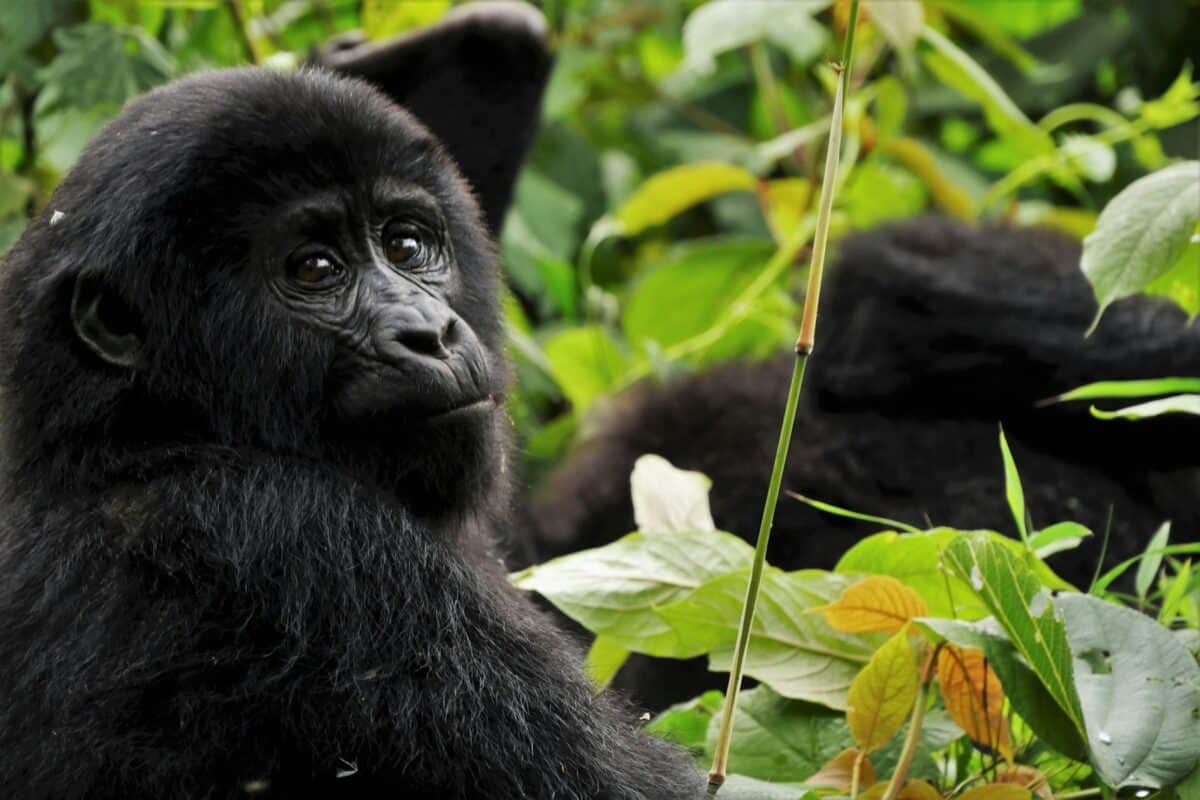
Among adult male silverbacks, eye contact dynamics reach their most complex and potentially volatile form. When two silverbacks encounter each other, whether within the same group or during an inter-group meeting, their eye contact behavior follows carefully choreographed patterns that help determine whether the interaction will escalate to conflict. Initially, silverbacks often engage in what researchers call “assessment staring”—brief, intense eye contact followed by looking away, then re-engaging. This pattern allows each male to gauge the other’s confidence, physical condition, and willingness to escalate.
In multi-male groups, which are less common but do exist in mountain gorilla populations, researchers have observed that the dominant silverback will occasionally tolerate brief eye contact from subordinate males, especially if they are related. However, these interactions are tightly regulated, with the subordinate male carefully timing the duration of eye contact and often accompanying it with submissive vocalizations or gestures. Between silverbacks of different groups, eye contact is typically minimized to prevent triggering territorial aggression. Instead, these males often engage in parallel display behaviors, like chest-beating and vegetation breaking, while maintaining minimal direct visual engagement—a strategy that allows for mutual display without direct confrontation.
The Role of Context in Interpreting Gorilla Gaze

The meaning of eye contact in gorillas cannot be understood in isolation from other contextual factors. The same gaze behavior can have dramatically different significance depending on body posture, facial expression, vocalizations, and the recent history of interaction between the individuals involved. For example, direct eye contact accompanied by a relaxed posture and soft vocalizations may signal interest rather than dominance, while the same eye contact with tense muscles and bared teeth clearly communicates a threat.
Environmental context also plays a crucial role in how gorillas use and interpret eye contact. During feeding, when competition for resources might naturally increase tension, gorillas typically minimize eye contact to avoid triggering dominance interactions. Conversely, during rest periods when the group is relaxed, brief eye contact may be more tolerated. Time of day, presence of estrous females, proximity to territorial boundaries, and even weather conditions can all influence how gorillas employ and interpret visual communication signals. This context-dependency highlights the sophistication of gorilla social cognition and their ability to adjust communication strategies based on multiple environmental and social variables.
Maternal Eye Contact with Infants

The mother-infant relationship in gorillas features unique patterns of eye contact that differ significantly from other social pairings. Unlike the dominance-submission dynamic that characterizes many adult interactions, mother gorillas engage in relatively frequent mutual gaze with their infants, particularly during the first few months of life. This maternal gaze serves multiple functions, including monitoring the infant’s condition, maintaining proximity, and establishing the deep bond that will ensure maternal care and protection throughout the infant’s development.
Research conducted on both wild and captive gorilla groups indicates that mothers and infants engage in mutual gaze sessions that typically last between two and eight seconds—longer than most other social eye contact in gorilla society. Interestingly, as infants mature, the pattern of eye contact gradually shifts to incorporate more of the dominance-submission dynamics that will characterize their adult social interactions. By age three to four, young gorillas have typically learned to avert their gaze appropriately when confronted by dominant group members, while still maintaining the unique visual connection with their mothers. This transition illustrates how eye contact behaviors are both innate and learned, with young gorillas gradually acquiring the social rules that will govern their adult communication.
Cross-Species Eye Contact with Humans
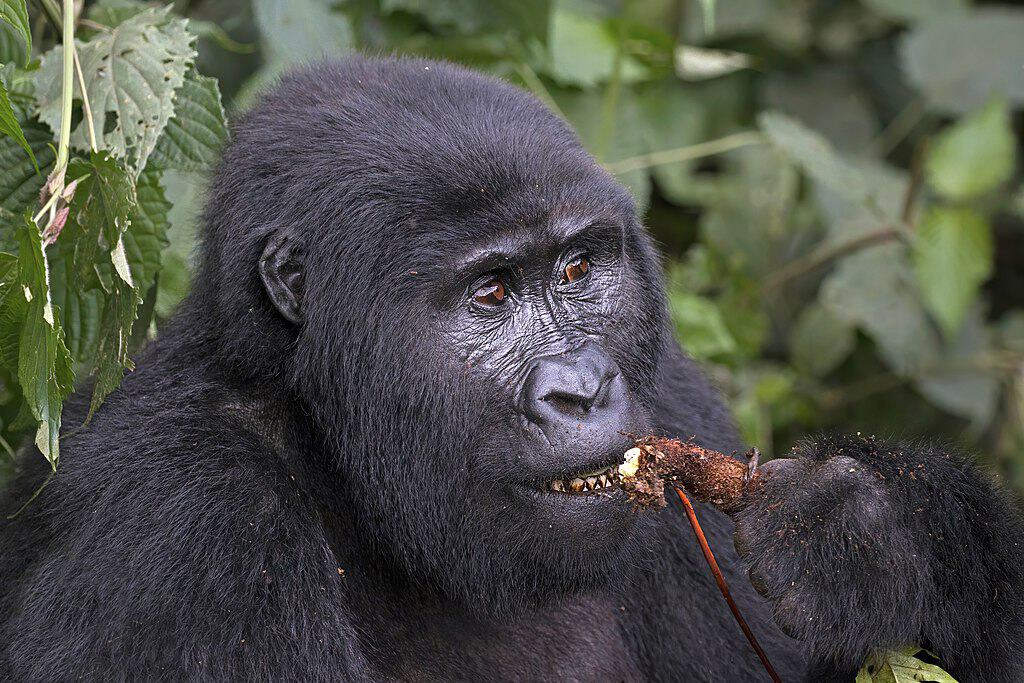
When gorillas interact with humans, their eye contact behaviors reveal fascinating insights about their perception of other species and their ability to adapt their communication strategies. In zoological settings, gorillas typically show variations of their natural eye contact patterns when interacting with human keepers or visitors. Long-term caretakers often report that gorillas will make more sustained eye contact with them than they would with unfamiliar humans, suggesting that gorillas can distinguish between individuals and modify their visual communication accordingly.
However, even with familiar humans, gorillas rarely engage in the prolonged mutual gaze that is common in human-to-human interaction. Most gorillas continue to perceive direct staring as potentially threatening, regardless of species. Primatologists and zoo professionals are trained to avoid prolonged direct eye contact with gorillas, especially with dominant silverbacks, as this can be perceived as a challenge. Instead, they often employ the sideways glance technique used by gorillas themselves, observing the animals peripherally rather than with a direct stare. This cross-species adaptation highlights both the deep-rooted nature of gorilla visual communication patterns and the importance of humans understanding and respecting these patterns when interacting with these great apes.
Differences Across Gorilla Species and Populations

While all gorilla species utilize eye contact as a significant component of their social communication, subtle differences exist between eastern gorillas (Gorilla beringei), which include mountain gorillas, and western gorillas (Gorilla gorilla). Mountain gorillas, which typically live in larger, more cohesive social groups, have been observed to tolerate more frequent brief eye contact between group members. This may reflect their more complex social structure and the need for more nuanced communication within larger groups that often contain multiple males.
Western lowland gorillas, which typically live in smaller groups with more fluid membership, tend to exhibit more pronounced dominance-related eye contact behaviors, with clearer avoidance patterns among subordinates. Researchers hypothesize that these differences may relate to ecological factors, with mountain gorillas’ more abundant food resources allowing for larger, more stable groups that require more sophisticated social negotiation. Additionally, gorillas raised in captivity sometimes show modified eye contact behaviors compared to their wild counterparts, occasionally exhibiting more tolerance for direct gaze due to their regular exposure to human observation. These variations across populations remind us that gorilla communication, while governed by general principles, remains adaptable to specific social and environmental contexts.
How Researchers Study Gorilla Eye Contact

Studying eye contact behavior in gorillas presents unique methodological challenges that researchers have addressed through increasingly sophisticated techniques. Traditional field observation requires researchers to maintain sufficient distance to avoid influencing the gorillas’ natural behavior while still being close enough to accurately record subtle eye movements. Modern research often supplements direct observation with video recording that allows for frame-by-frame analysis of eye contact duration, direction, and associated behaviors. Some studies employ multiple synchronized cameras to capture interactions from different angles, providing a more complete picture of visual communication events.
In captive settings, researchers have developed even more precise methods, including eye-tracking technology adapted for great apes that can document exactly where gorillas direct their gaze during social interactions. These studies have revealed that gorillas, like humans, focus primarily on the face during social interactions, but unlike humans, they spend less time fixated specifically on the eyes and more time scanning the entire facial region. Complementary studies examining hormonal responses during different types of eye contact interactions have shown that direct staring encounters can trigger stress hormone release in subordinate individuals, providing physiological evidence for the powerful impact of visual dominance displays. Together, these methodological approaches are building an increasingly detailed understanding of how gorillas use their eyes to navigate their complex social world.
The Importance of Understanding Gorilla Eye Contact

Understanding how gorillas use eye contact carries significance far beyond academic interest, offering practical applications for conservation, captive management, and our broader understanding of primate evolution. For conservation field workers and researchers, recognizing and respecting gorilla visual communication patterns is essential for safe and effective interaction with wild populations. By avoiding behaviors that might be perceived as threatening, such as direct staring, conservation personnel can minimize stress to the animals and reduce the risk of aggressive responses. Similarly, in zoological settings, training staff and educating visitors about appropriate eye contact behavior contributes significantly to gorilla welfare by reducing potentially stressful interactions.
From an evolutionary perspective, studying gorilla eye contact provides valuable insights into the development of primate communication systems and the origins of human social behavior. The differences between gorilla and human eye contact patterns—particularly humans’ unique adaptation for highly visible eye direction and our comfort with mutual gaze—highlight the distinctive evolutionary path our species has taken toward more cooperative social structures. By continuing to deepen our understanding of gorilla visual communication, we not only improve our ability to protect these magnificent great apes but also gain perspective on our own evolutionary history and the rich diversity of primate social systems that have evolved on our planet.

From exploring the marine wonders in the Azores and witnessing the vast savannas of Kenya, to delving deep into the rich biodiversity of South Africa and traversing iconic landscapes in Australia and the US like Yellowstone, Chris's experiences are vast.
With a penchant for diving alongside sharks, the ocean holds a special place in his heart.
Through his academic insights, he champions wildlife conservation, striving with 'Animals Around The Globe' to cultivate a profound connection between humans and animals, enhancing our mutual appreciation.
Connect with him at Feedback@animalsaroundtheglobe.com.
- Desert Foxes Make a Comeback in U.S. National Parks - July 21, 2026
- The Sacred Goose of Ancient Rome: Protector of the Capitol - July 21, 2026
- Top 10 Animal Encounters in Europe - July 21, 2026