
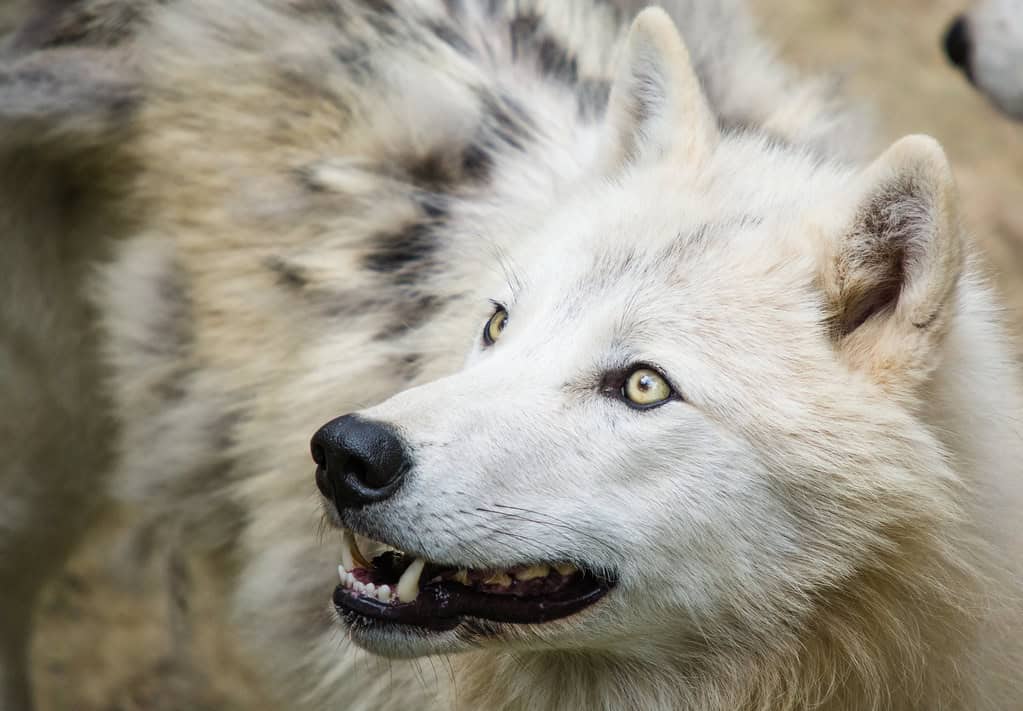
HBO’s Game of Thrones captivated audiences worldwide with its intricate storylines and mythical elements, including the formidable dire wolves that served as loyal companions to the Stark children. These massive, intelligent creatures, portrayed as supersized versions of gray wolves with an almost supernatural connection to their human counterparts, sparked widespread fascination. However, the dire wolves that roamed North America until approximately 13,000 years ago tell a far different story than their fictional counterparts.
Real dire wolves (Aenocyon dirus, formerly Canis dirus) were indeed formidable predators of the late Pleistocene epoch, but they diverged significantly from both their pop culture representation and what scientists initially believed about them. Recent genetic research has revolutionized our understanding of these ancient canids, revealing that they were not simply larger versions of gray wolves but rather a distinct evolutionary lineage that followed a separate path for millions of years. This fascinating revelation has opened up new perspectives on one of North America’s most iconic prehistoric predators.
A Brief History of Dire Wolf Discovery

The scientific discovery of dire wolves dates back to 1854, when the first fossilized remains were found in Evansville, Indiana. Initially described by Joseph Leidy, the specimens were recognized as belonging to a large, wolf-like canid distinct from modern wolves. However, it wasn’t until the extensive excavations at the La Brea Tar Pits in Los Angeles that dire wolves truly captured scientific attention. Over 4,000 individual dire wolf specimens have been recovered from this single location, making it the most abundant large carnivore found at the site and providing researchers with an unprecedented sample size to study.
Throughout the 20th century, paleontologists generally assumed dire wolves were closely related to gray wolves, perhaps representing a specialized offshoot of the wolf lineage that had adapted to hunting the megafauna of Pleistocene North America. This classification placed them firmly within the genus Canis alongside gray wolves, coyotes, and domestic dogs. However, as we’ll see, modern genetic analysis would eventually challenge this long-held assumption and completely rewrite the dire wolf’s evolutionary story.
Size and Physical Characteristics

Contrary to their portrayal in Game of Thrones, where dire wolves appear as enormous, bear-sized creatures, real dire wolves were only moderately larger than today’s gray wolves. Adult dire wolves typically weighed between 150-175 pounds (68-79 kg) and stood about 31-33 inches (80-85 cm) at the shoulder. While certainly imposing, this made them roughly 25% heavier than the largest modern gray wolves, not the mythical giants depicted in fantasy.
The dire wolf’s build was also distinctive—stockier and more robust than modern wolves, with shorter, stronger limbs and a broader, more powerful head and neck. Their teeth were significantly larger and more robust than those of gray wolves, an adaptation that likely evolved for crushing bone and processing tougher prey. This specialized dentition suggests dire wolves were hypercarnivores—animals whose diet consists of more than 70% meat—and likely specialized in taking down large herbivores of the Pleistocene period. These physical adaptations reflect their ecological niche as apex predators in a landscape populated by megafauna.
Revolutionary DNA Findings

In 2021, a groundbreaking study published in the journal Nature revolutionized our understanding of dire wolves. For the first time, scientists successfully extracted and analyzed ancient DNA from dire wolf fossils dating back 13,000-50,000 years. The results were stunning and unexpected: dire wolves were not closely related to gray wolves at all. In fact, the genetic evidence revealed that dire wolves had diverged from the lineage leading to gray wolves and coyotes approximately 5.7 million years ago, following a completely separate evolutionary path in North America while the ancestors of gray wolves evolved in Eurasia.
This genetic divergence was so significant that researchers proposed reclassifying dire wolves into their own genus, Aenocyon (meaning “terrible wolf”), rather than remaining in the Canis genus with wolves and domestic dogs. The DNA analysis further revealed that unlike gray wolves and coyotes, which have occasionally hybridized throughout their evolutionary history, dire wolves appear to have remained genetically isolated. Despite coexisting with gray wolves and coyotes in North America for thousands of years, there is no evidence of interbreeding, suggesting they were too genetically distant to produce viable offspring—much like lions and tigers today, which can hybridize only under artificial conditions.
Habitat and Distribution

Dire wolves were exclusively a New World species, evolving and thriving solely in the Americas. Their fossil record indicates they ranged from southern Canada throughout the United States and Mexico, extending into South America as far as Peru and Bolivia. This extensive range demonstrates their adaptability to various environments, from the temperate forests of North America to the grasslands of the Great Plains and even parts of the tropics in Central and South America.
The majority of dire wolf fossils have been recovered from the southern and western United States, particularly from California, Texas, and Florida, suggesting these regions may have supported particularly dense populations. Unlike the fictional dire wolves of Game of Thrones, which are portrayed as creatures of the frozen north, real dire wolves appear to have preferred warmer, more temperate climates. Their absence from the far northern regions of North America during the Pleistocene suggests they may not have been as well-adapted to extremely cold environments as gray wolves, which had evolved in Eurasia and were better equipped for arctic conditions.
Hunting Behavior and Diet

Analysis of dire wolf skeletons reveals important clues about their hunting behavior. Their robust build and shorter limbs suggest they were pursuit predators rather than ambush hunters, capable of sustained chases but perhaps lacking the top-end speed of some other predators. Unlike the portrayed supernatural hunting abilities in fiction, dire wolves likely hunted in packs like modern wolves, using teamwork to bring down prey significantly larger than themselves. This social hunting strategy would have allowed them to target the abundant megafauna of Pleistocene North America, including bison, horses, ground sloths, and perhaps even juvenile mammoths and mastodons.
Isotope analyses of dire wolf bones from the La Brea Tar Pits suggest they had a specialized diet focused on large herbivores. Wear patterns on their teeth indicate they frequently crushed bones, likely to access nutritious marrow. Interestingly, these same studies suggest that dire wolves and the contemporary saber-toothed cats (Smilodon) targeted different prey species, reducing direct competition despite sharing the same habitat. This ecological specialization may explain some of the dire wolf’s unique adaptations, including their powerful jaws and robust dentition, which were well-suited for processing large, struggling prey and consuming carcasses efficiently.
Social Structure and Behavior
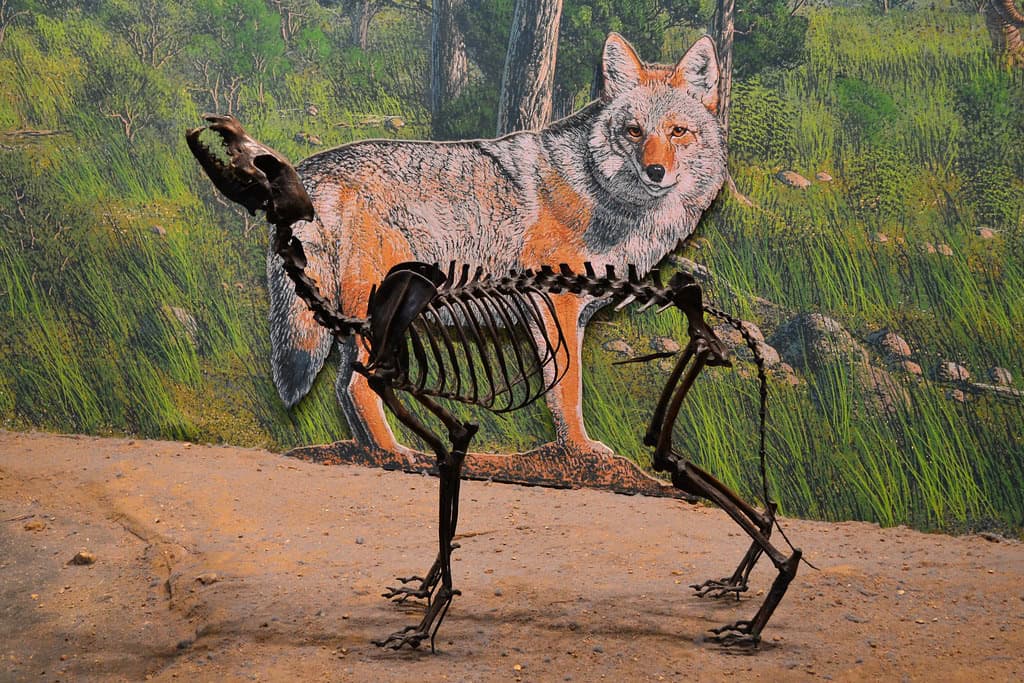
While we cannot directly observe the behavior of extinct species, comparative analysis with modern canids and careful examination of dire wolf fossils provide some insights into their likely social structure. Given their close ecological niche to modern wolves and the advantages of cooperative hunting for targeting large prey, dire wolves almost certainly lived and hunted in packs. However, the fictional portrayal of dire wolves as having telepathic bonds with humans or possessing near-human intelligence represents pure fantasy rather than scientific possibility.
The large number of dire wolf fossils found at sites like the La Brea Tar Pits may offer clues about their social behavior. Many specimens show evidence of healed injuries, suggesting that injured individuals could survive for extended periods, likely supported by their pack members. This parallels observations in modern wolf packs, where social support allows injured wolves to recover. Additionally, the age distribution of fossils indicates dire wolves often lived to advanced ages with significant wear on their teeth, potentially suggesting a social structure where older, experienced individuals remained valuable members of the pack even as their physical capabilities declined.
Competition with Other Predators

The Pleistocene landscape of North America featured an impressive array of large predators competing for resources. Dire wolves shared their environment with gray wolves, American lions, saber-toothed cats, short-faced bears, and American cheetahs, creating a complex predator guild unlike anything in North America today. This diversity of predators suggests a prey-rich environment capable of supporting multiple apex predators through niche specialization.
Evidence from the La Brea Tar Pits indicates dire wolves may have been particularly successful in this competitive landscape. They represent the most common large carnivore in the fossil assemblage, suggesting they were either more abundant than other predators or perhaps more likely to be trapped while scavenging. Despite this apparent success, the presence of so many competing predators likely influenced dire wolf behavior and ecology, perhaps driving some of their specializations in hunting strategy and prey selection. This competitive environment stands in stark contrast to the fictional portrayal in Game of Thrones, where dire wolves are presented as uniquely powerful creatures without significant natural competitors.
Extinction: The End of the Dire Wolf

Dire wolves disappeared from the fossil record approximately 13,000 years ago, coinciding with the end of the last Ice Age and the broader extinction event that eliminated many of North America’s large mammals. This extinction event, which claimed approximately 80% of North America’s large mammals, drastically transformed the continent’s ecology. The disappearance of megafauna like mammoths, mastodons, giant ground sloths, and large species of bison eliminated the dire wolf’s primary prey base, likely contributing significantly to their extinction.
Unlike gray wolves, which had evolved in Eurasia and possessed greater genetic diversity and adaptability, dire wolves appear to have been unable to adjust to the rapidly changing post-Ice Age environment. Their specialized adaptations for hunting large prey became liabilities in a world where such prey was increasingly scarce. Climate change, shifting ecosystems, competition with more adaptable gray wolves, and potentially human hunting pressure may have all contributed to their decline. The dire wolf’s extinction represents a significant loss in canid diversity and marked the end of a unique evolutionary experiment that had persisted for millions of years in the Americas.
Dire Wolves in Popular Culture
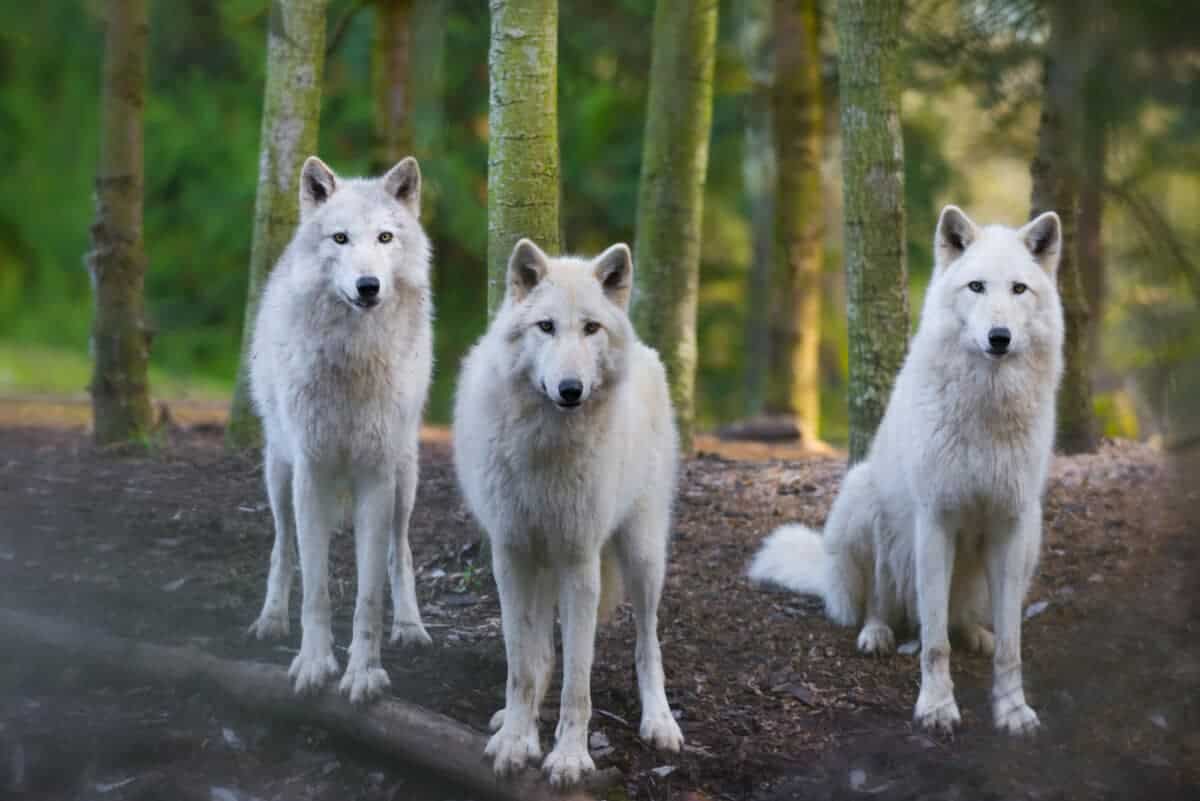
While Game of Thrones certainly brought dire wolves into the mainstream consciousness, their presence in popular culture predates the HBO series. In fact, George R.R. Martin’s inclusion of dire wolves in his A Song of Ice and Fire series was inspired by the real prehistoric species, though he significantly altered their characteristics for storytelling purposes. In the books and subsequent television adaptation, dire wolves are portrayed as exceptionally large, intelligent creatures with near-mystical connections to the Stark children, characteristics that make for compelling fiction but bear little resemblance to the actual animals.
Beyond Game of Thrones, dire wolves have appeared in numerous other works of fantasy and science fiction, often depicted with varying degrees of scientific accuracy. They feature in role-playing games like Dungeons & Dragons, appear in various video games, and have been portrayed in documentaries about prehistoric life. This cultural fascination with dire wolves reflects a broader human interest in magnificent predators and extinct megafauna, though the scientific reality of these animals is often overshadowed by more dramatic fictional portrayals. The significant divergence between the real dire wolf and its fictional counterparts highlights the importance of distinguishing between science-based understanding and creative interpretation.
Closest Living Relatives: Not What We Expected
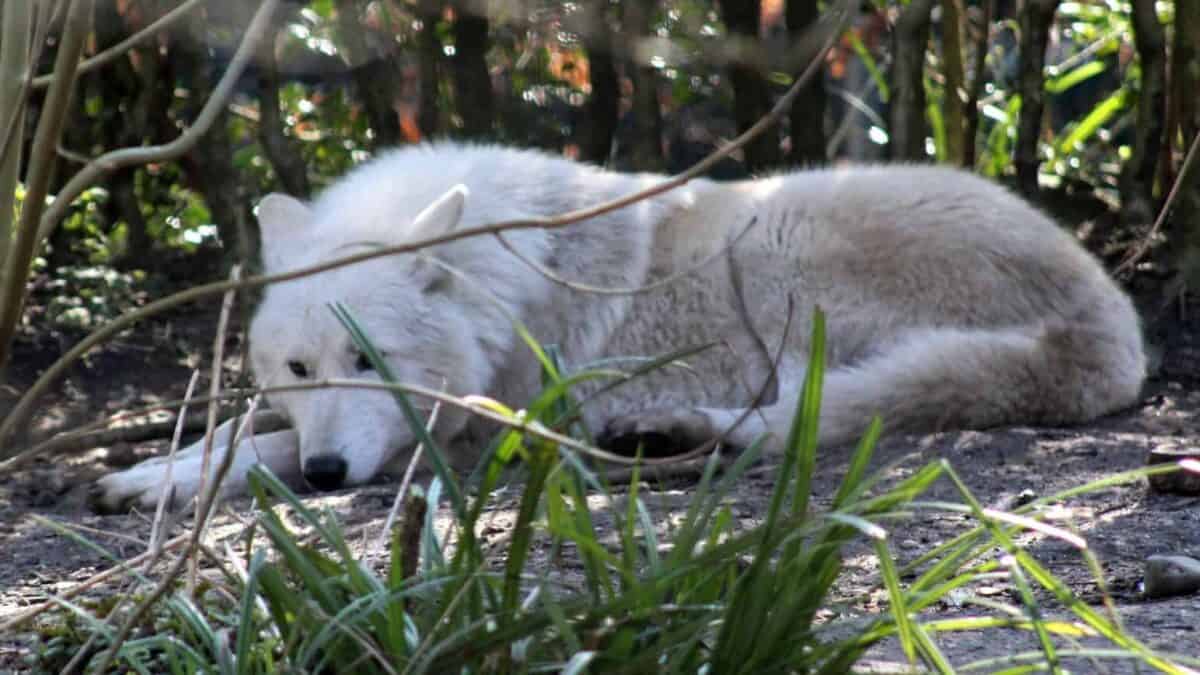
Perhaps the most surprising revelation from the 2021 genetic study was the identification of the dire wolf’s closest living relatives. Rather than gray wolves or other members of the genus Canis as previously assumed, dire wolves’ nearest contemporary cousins appear to be jackals and African wild dogs, though even these relationships are distant. This discovery fundamentally reshapes our understanding of canid evolution, suggesting that the resemblance between dire wolves and gray wolves represents convergent evolution—where similar ecological pressures led to similar adaptations in unrelated lineages—rather than close genetic relationship.
This evolutionary distance helps explain why dire wolves went extinct while gray wolves survived the end-Pleistocene extinction event. Gray wolves, with their Eurasian origin, broader genetic diversity, and greater adaptability, were better equipped to adjust to changing conditions. Dire wolves, as a more specialized lineage with a longer, more isolated evolutionary history in the Americas, lacked the genetic flexibility to adapt to the rapidly changing post-Ice Age world. This evolutionary perspective provides a poignant counterpoint to the fictional portrayal of dire wolves as supernatural survivors, when in reality, they represent an evolutionary branch that ultimately reached its end.
Modern Scientific Research Methods

The revolutionary insights into dire wolf biology have been made possible by remarkable advances in paleogenetic techniques. Until recently, extracting usable DNA from specimens tens of thousands of years old presented nearly insurmountable challenges, particularly in the warm environments where many dire wolf fossils have been found. New methods targeting specific regions of the genome, particularly the dense and protective petrous bone of the skull, have finally allowed researchers to access genetic material preserved for millennia.
Beyond genetics, modern research on dire wolves incorporates a multidisciplinary approach. Geometric morphometrics allows precise analysis of skull and skeletal shapes, revealing subtle differences between dire wolves and other canids. Isotopic analysis of bone collagen provides insights into diet and habitat use. Advanced dating techniques, including accelerator mass spectrometry radiocarbon dating, allow precise determination of when dire wolves lived and when they disappeared. These scientific methods provide a far more accurate, if less romantic, picture of dire wolves than their fictional portrayals, revealing them as fascinating products of evolution rather than creatures of fantasy.
Conclusion: Separating Fact from Fiction
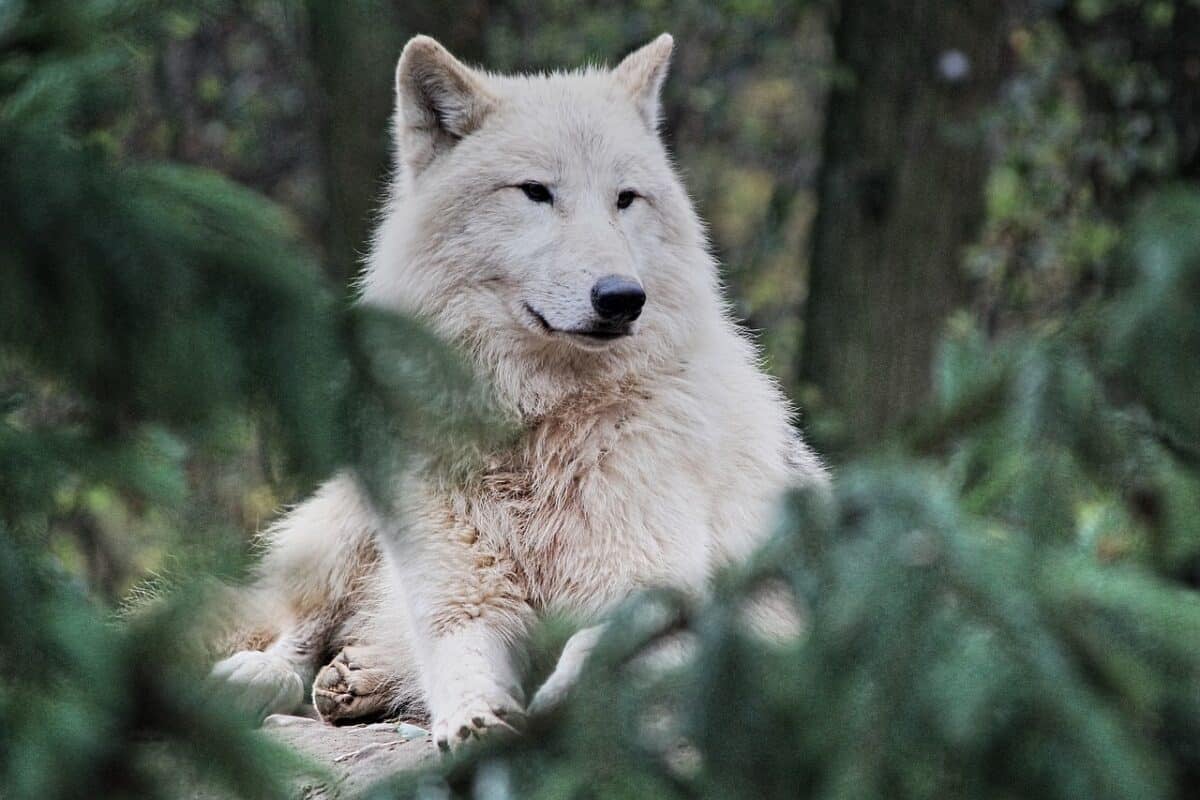
The real dire wolf offers a fascinating case study in how scientific understanding can diverge dramatically from popular perception. While Game of Thrones presented dire wolves as supersized, quasi-magical companions with deep bonds to humans, the scientific evidence reveals a unique predator that followed its own evolutionary path for millions of years before disappearing as North America’s Ice Age came to an end. Their story is no less compelling for being grounded in evolutionary biology rather than fantasy.
The recent revolutionary discoveries about dire wolf genetics remind us that science continues to unveil new insights about the prehistoric world, sometimes overturning long-held assumptions in the process. What was once considered a close relative of the gray wolf is now recognized as a distinct lineage that deserves its own genus, representing a unique experiment in canid evolution that thrived for millions of years before changing environments led to its extinction.
Perhaps most importantly, the scientific reality of dire wolves highlights the value of distinguishing between artistic interpretations and biological facts. While fictional portrayals serve important cultural and entertainment purposes, the actual evolutionary history of dire wolves connects us to the real prehistoric world of North America—a world that was stranger and more fascinating than fiction. As we continue to uncover the secrets of extinct species through advancing scientific methods, we gain not only knowledge about the past but also insights into the complex processes that have shaped life on our planet.
In the end, the true story of dire wolves—their evolution, adaptation, success, and ultimate extinction—offers a window into the dynamic history of life on Earth, where species rise and fall as environments change, leaving only bones and DNA as testament to their existence. This scientific narrative, though lacking telepathic bonds and magical elements, tells a story every bit as epic as any fantasy.

- The Bird That Can Recognize More Faces Than a Human - July 29, 2026
- How Army Ants Coordinate Massive Raids Without a Leader - July 29, 2026
- 13 Largest Horses in the World - July 29, 2026