


When it comes to raw power in the animal kingdom, bite force is one of nature’s most impressive displays of strength. From prehistoric predators to modern-day hunters, the ability to crush, tear, and puncture has evolved into remarkable biological weapons. This ranking explores the 18 animals with the most formidable bite forces in the world, measured in pounds per square inch (PSI) or newtons. These incredible creatures demonstrate nature’s engineering at its finest—jaws and teeth designed through millions of years of evolution to perform specific functions essential for survival, whether hunting prey, defending territory, or processing tough foods. As we journey through this list, you’ll discover surprising facts about familiar animals and meet some lesser-known species with astonishing capabilities.
Understanding Bite Force: How It’s Measured

Before diving into the rankings, it’s important to understand how bite force is measured and compared across different species. Scientists typically express bite force in pounds per square inch (PSI) or newtons (N), with the former being more commonly used in popular literature. These measurements represent the pressure exerted by an animal’s jaws at the point of tooth contact.
Researchers use several methods to determine bite force, including mathematical modeling based on skull structure and muscle attachment, force transducers placed between an animal’s teeth, and extrapolation from smaller specimens to estimate force in larger or extinct species. It’s worth noting that bite force can vary within species depending on factors like age, size, and health, and some measurements—particularly for dangerous predators—are necessarily estimates rather than direct measurements.
18. American Alligator (2,125 PSI)

The American alligator opens our list with an impressive bite force of approximately 2,125 PSI. Native to the southeastern United States, these reptiles have remained virtually unchanged for millions of years, a testament to their evolutionary success. Their powerful jaws are designed to grab and hold struggling prey, using a “death roll” technique to tear manageable chunks from larger animals.
What makes the American alligator’s bite particularly effective is not just its strength but its specialized teeth. Unlike the serrated teeth of crocodiles, alligators have broader, more rounded teeth perfect for crushing turtle shells and mammal bones. Their bite force is concentrated primarily on their back teeth, while the front teeth are designed more for gripping. Despite their fearsome reputation, American alligators rarely attack humans unless provoked or defending territory.
17. Gorilla (1,300 PSI)

Despite their largely vegetarian diet, gorillas possess a remarkable bite force of approximately 1,300 PSI. These great apes use their powerful jaws primarily for processing tough plant materials like bamboo stems, nuts, and fibrous fruits. Their bite force comes from massive temporal muscles and a specialized skull structure that efficiently translates muscle power into jaw pressure.
Male gorillas, particularly silverbacks, have larger canine teeth and stronger bites than females, using this power during territorial disputes and to establish dominance. What’s particularly impressive about gorilla bite force is that it’s achieved without the predatory adaptations seen in carnivores. Instead, their powerful bite represents an adaptation to their herbivorous lifestyle, demonstrating how even plant-eaters can develop formidable oral weaponry when their diet demands it.
16. Spotted Hyena (1,100 PSI)

Often mischaracterized as mere scavengers, spotted hyenas are actually skilled hunters with one of the most powerful bites among mammals, measuring approximately 1,100 PSI. Their impressive jaws allow them to crush bones that other predators must leave behind, extracting nutritious marrow and calcium. This ability gives hyenas a unique ecological niche, enabling them to extract maximum nutrition from carcasses.
The spotted hyena’s bite strength comes from specialized jaw muscles and premolar teeth adapted specifically for bone-crushing. These carnassial teeth work like scissors, and when combined with their powerful jaw muscles, they can process almost any part of their prey. Hyenas can digest bone, horn, and even teeth, with specialized stomach acids completing the process their powerful jaws begin. This adaptation allows them to survive in harsh environments where every calorie counts.
15. Jaguar (1,500 PSI)

The jaguar holds the title of strongest bite relative to body size among all big cats, with a force of approximately 1,500 PSI. This New World predator uses its exceptional jaw strength to hunt in a unique manner among felids. Rather than suffocating prey with a throat bite like lions or tigers, jaguars often deliver a powerful bite directly through the skull of their prey, piercing the brain and causing instant death.
This specialized killing technique allows jaguars to take down prey with extraordinarily thick hides and skulls, including caimans, capybaras, and giant river turtles. Their powerful bite is supported by a more robust skull and stronger neck muscles than other comparably-sized cats. Jaguars are also excellent swimmers and can carry large prey items up trees, making them versatile predators across the varied ecosystems of Central and South America.
14. Hippopotamus (1,800 PSI)

Despite being herbivores, hippopotamuses possess one of the most dangerous bites in the animal kingdom, measuring approximately 1,800 PSI. Their massive canine teeth can grow up to 20 inches (50 cm) long and are used primarily for fighting other hippos during territorial disputes rather than feeding. When hippos open their mouths to nearly 180 degrees, they display an impressive threat that few animals would challenge.
What makes hippos particularly dangerous is their aggressive temperament combined with this exceptional bite force. Responsible for more human fatalities in Africa than any other large animal, hippos can easily snap a small boat in half or sever a human limb with a single bite. Their plant-based diet demonstrates that powerful bites evolved not just for predation but for various ecological and social functions across different species.
13. Lion (650 PSI)

The lion’s bite force of approximately 650 PSI might seem modest compared to others on this list, but it’s perfectly adapted to their hunting strategy. Rather than crushing bones or piercing skulls, lions use their bite to clamp down on the throat of prey, restricting airflow and blood circulation. This technique requires endurance rather than explosive power, allowing lions to maintain their grip until the prey succumbs.
The social hunting structure of lion prides complements their bite strategy. While their bite might not match some other predators pound for pound, lions rarely hunt alone. Multiple lions working together can bring down prey much larger than themselves, with different pride members playing specialized roles. Their canine teeth are designed for piercing and gripping rather than crushing, and when combined with their social hunting tactics, this makes lions formidable predators despite not having the strongest bite force.
12. Tiger (1,050 PSI)

Tigers possess a bite force of approximately 1,050 PSI, significantly stronger than their lion cousins. This increased power reflects their solitary hunting style—without pride members to assist, tigers need greater individual strength to subdue prey. Their powerful bite allows them to take down animals as large as gaur (wild cattle) and adult water buffalo, which can weigh over 2,000 pounds.
A tiger’s bite is complemented by other adaptations for solo hunting. Their larger skull provides more attachment area for jaw muscles, while their longer canine teeth—the longest of any living big cat at up to 3 inches—help deliver deep, fatal wounds. Tigers typically kill by biting the throat or neck, using their powerful jaws to crush the windpipe or sever the spinal cord. This combination of bite force and precision makes tigers among the most efficient predators on Earth.
11. Great White Shark (4,000 PSI)

The great white shark delivers an astonishing bite force estimated at up to 4,000 PSI, though exact measurements vary between studies. This massive power allows them to bite through turtle shells, seal bones, and even boat hulls in some cases. Their bite force is magnified by rows of serrated, triangular teeth that can number over 300 in adult specimens, with continuous replacement throughout their lifetime.
What makes the great white’s bite particularly devastating is how it’s deployed. Unlike many predators that maintain continuous pressure, great whites often use an initial powerful “sample bite” followed by a retreat to wait for blood loss to weaken the prey. Their specialized sensory system can detect blood in water at concentrations as low as one part per million, allowing them to track injured prey. This hunting strategy minimizes risk to the shark while maximizing energy efficiency—important for a predator that requires significant caloric intake.
10. Grizzly Bear (1,200 PSI)

Grizzly bears demonstrate the versatility of powerful bites with a force of approximately 1,200 PSI. Unlike specialized predators, grizzlies are omnivores whose jaws must process everything from berries and nuts to salmon and elk. Their dental structure reflects this dietary diversity, with sharp canines for hunting and flat molars for grinding plant material. This adaptability allows grizzlies to thrive across varied habitats from coastal regions to mountain meadows.
The grizzly’s bite force comes from massive temporal muscles that attach to a specialized sagittal crest on their skull. This anatomical feature, combined with their thick neck muscles, allows them to exert tremendous pressure through their jaws. Despite their fearsome biting capability, grizzlies actually obtain the majority of their calories from plant sources in most regions, using their powerful jaws to dig for roots and tubers or crack open nuts. This omnivorous flexibility has helped grizzlies survive in changing environments where purely carnivorous species might struggle.
9. Bull Shark (1,350 PSI)

Bull sharks possess a bite force of approximately 1,350 PSI, making them pound-for-pound one of the strongest biters among sharks. While this absolute force is less than that of larger shark species, bull sharks compensate with remarkable aggression and adaptability. Their bite is particularly dangerous because they can thrive in both saltwater and freshwater environments, bringing their powerful jaws to river systems where other large sharks cannot go.
The bull shark’s bite effectiveness comes from their broad, triangular upper teeth designed for slicing and their pointed lower teeth for gripping. This dental arrangement, combined with their stocky build and powerful jaw muscles, makes them efficient predators in murky, low-visibility environments. Bull sharks have been documented swimming thousands of miles up the Amazon and Mississippi Rivers, and their ability to regulate salt balance in their bodies allows them to make these remarkable journeys while maintaining their predatory capabilities.
8. Nile Crocodile (5,000 PSI)
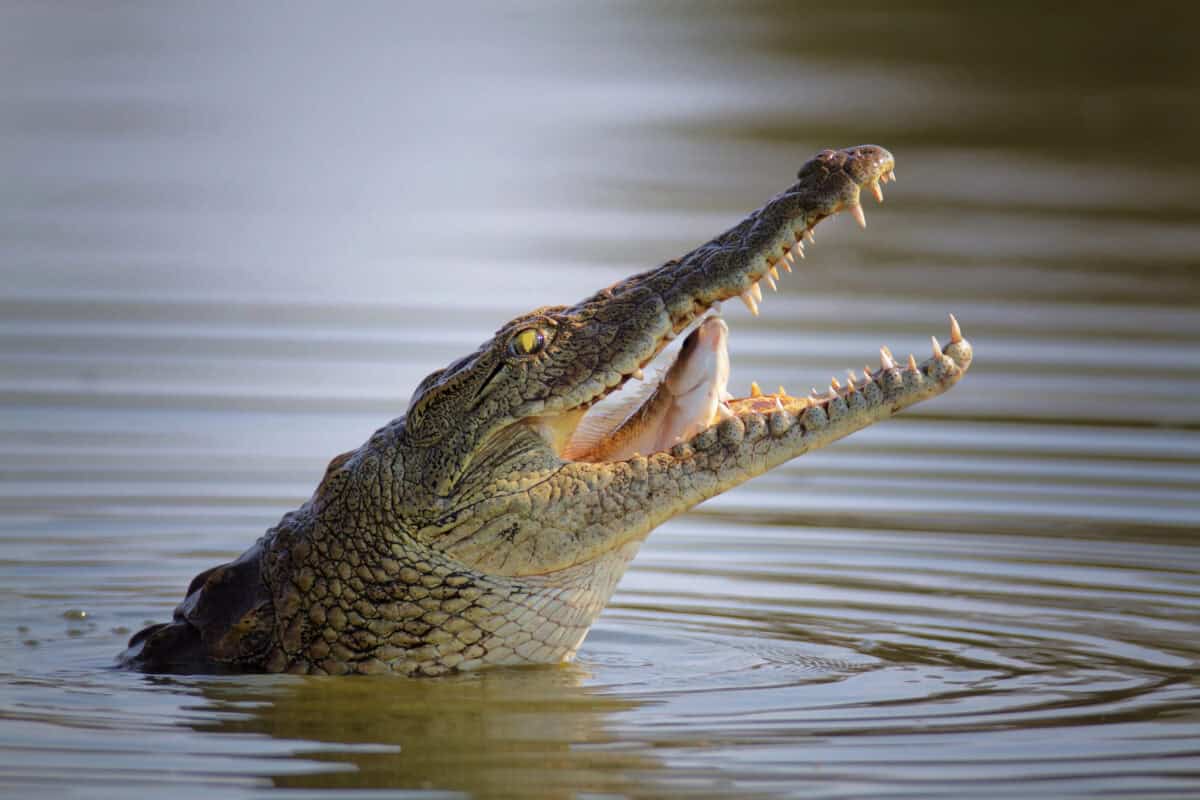
The Nile crocodile boasts one of the most powerful bites in the modern animal kingdom, with a force estimated at approximately 5,000 PSI. These massive reptiles use their incredible jaw strength to capture and drown large prey, including wildebeest, zebras, and occasionally humans. What makes their bite particularly effective is the contrast between opening and closing strength—while crocodile jaws can be held shut with human hands, the muscles that close them deliver tons of pressure.
Nile crocodiles combine their powerful bite with ambush hunting techniques, lying nearly submerged at water’s edge until prey approaches to drink. Once they clamp down, they typically execute a “death roll”—spinning their entire body to tear manageable chunks from larger animals. Their conical teeth are designed for gripping rather than chewing, and they often store larger kills underwater to decompose slightly before feeding. This hunting strategy has remained virtually unchanged for millions of years, testifying to its effectiveness.
7. Saltwater Crocodile (3,700 PSI)
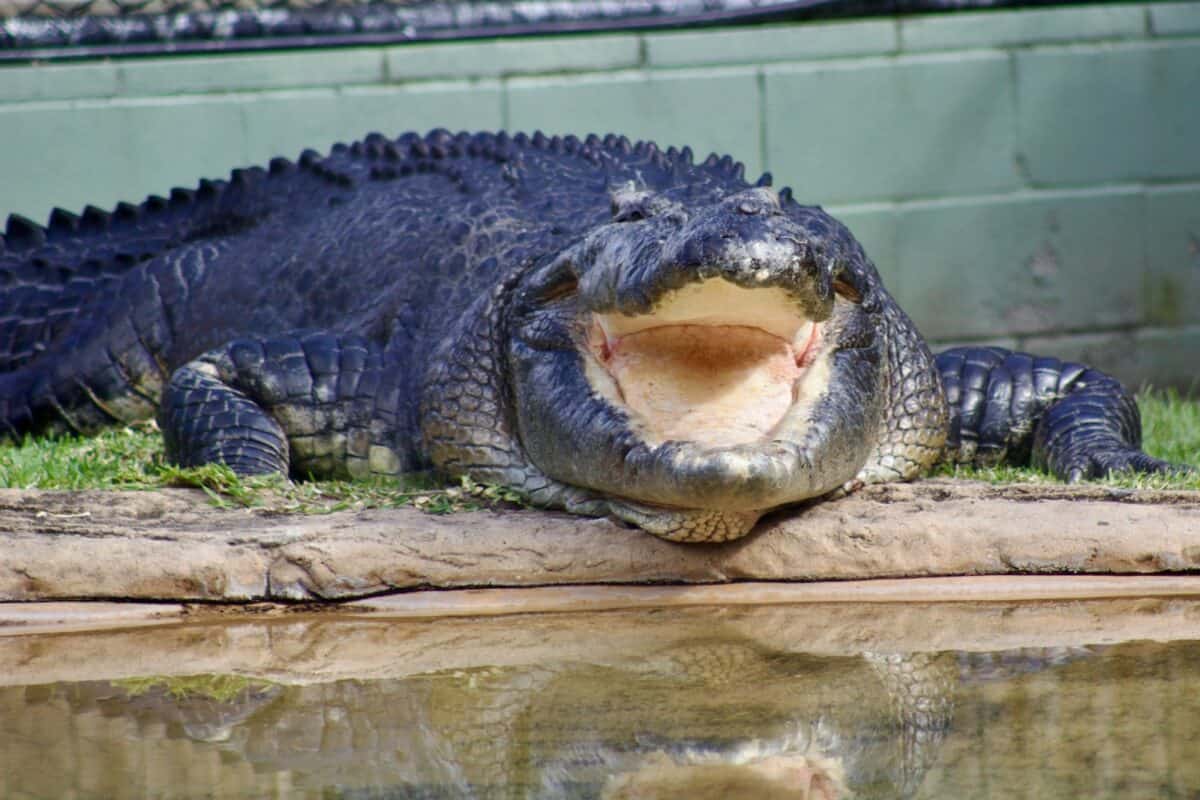
The saltwater crocodile, Earth’s largest living reptile, delivers a bone-crushing bite of approximately 3,700 PSI. While this measurement is sometimes reported as lower than the Nile crocodile’s bite, the saltwater crocodile compensates with sheer size—specimens can reach over 20 feet long and weigh more than a ton. Their massive jaws contain 66 teeth designed to grip rather than chew, allowing them to hold onto large struggling prey while performing their signature death roll.
What makes saltwater crocodiles particularly impressive is their combination of bite force with speed and agility. Despite their bulk, they can launch themselves vertically from water with explosive force to capture prey, and can swim at speeds up to 18 mph (29 km/h). Their ability to live in both freshwater and saltwater environments extends their range throughout Southeast Asia, northern Australia, and the islands of the Pacific, making them one of the most widely distributed large predators on Earth.
6. Polar Bear (1,200 PSI)

Polar bears exert a bite force of approximately 1,200 PSI, similar to their grizzly cousins but specialized for their unique Arctic lifestyle. Their elongated skull and more prominent canine teeth reflect their highly carnivorous diet compared to other bear species. This specialized bite allows them to process their primary prey—ringed and bearded seals—efficiently, breaking through blubber and bone to access the calorie-rich nutrients needed to survive in frigid environments.
Unlike many predators on this list, polar bears operate in an environment with few competing large carnivores, allowing them to evolve as the undisputed top predator of the Arctic. Their bite force is complemented by enormous paw strength used to break through ice to access seal breathing holes. As climate change reduces sea ice coverage, polar bears increasingly face nutritional challenges, as their specialized hunting techniques and powerful bite are optimized for hunting seals from sea ice platforms rather than more omnivorous foraging.
5. Orca (19,000 PSI)

Orcas, or killer whales, possess one of the most powerful bites in the ocean, estimated at an incredible 19,000 PSI. This tremendous force allows them to feed on virtually any marine creature, including great white sharks, seals, and even other whales. Their specialized teeth vary depending on the pod’s preferred diet—some have sharper teeth for processing fish, while mammal-hunting orcas have slightly blunter teeth better suited for gripping blubber.
What makes the orca’s bite particularly effective is how it’s deployed through learned hunting techniques. Different orca populations have developed specialized hunting strategies passed down through generations, from creating waves to wash seals off ice floes to intentionally beaching themselves to capture prey on shorelines. Their intelligence allows them to adapt their powerful bite to various prey and situations, making them perhaps the most versatile predator in the ocean. This combination of raw power and cognitive flexibility puts orcas near the top of our bite force ranking.
4. Hippopotamus (1,825 PSI)
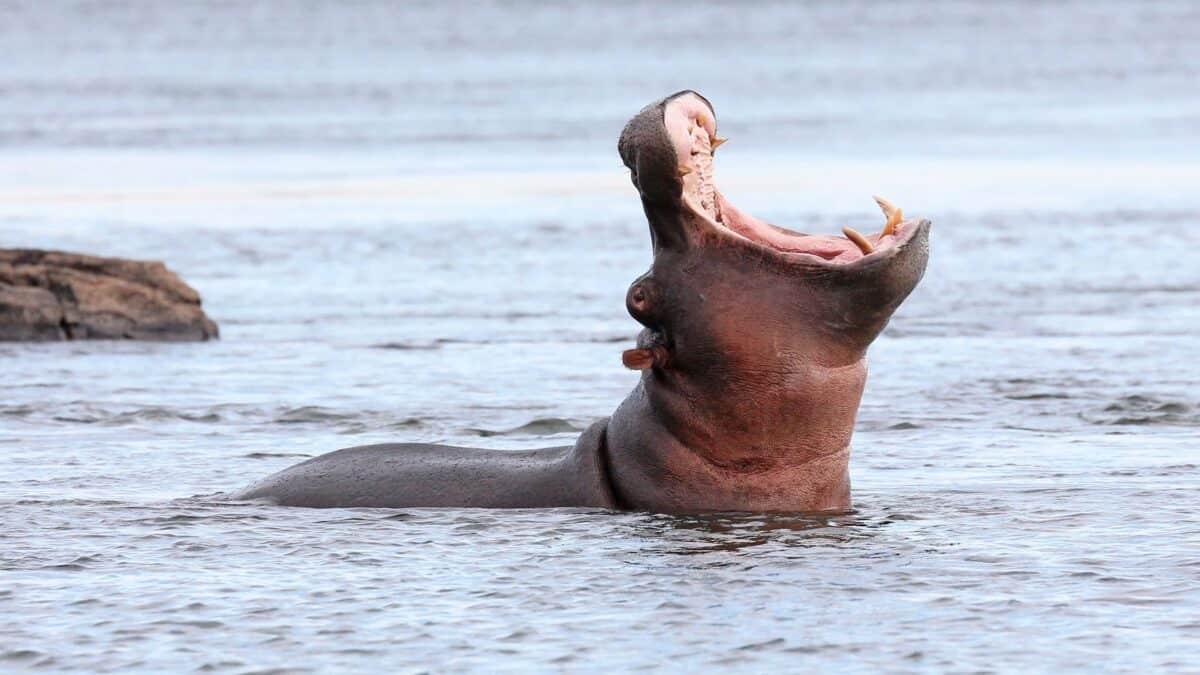
The hippopotamus earns a second mention on our list because some studies place their bite force significantly higher than others, with estimates ranging up to 1,825 PSI. What makes the hippo bite particularly impressive is that it’s found in an herbivore that uses this power primarily for defense and territorial disputes rather than feeding. Their massive canine teeth can grow over 20 inches long and are constantly sharpened as upper and lower tusks grind against each other.
Despite their plant-based diet, hippos are responsible for more human deaths in Africa than any other large animal, demonstrating how effectively they use their bite force. Their semi-aquatic lifestyle allows them to approach potential threats undetected, and they can run surprisingly fast on land—up to 19 mph (30 km/h)—despite weighing up to 3,300 pounds. When threatened, a hippo can snap a small boat or canoe with a single bite, making them one of Africa’s most dangerous animals despite not being predatory.
3. American Alligator (2,980 PSI)

The American alligator makes a second appearance on our list because more recent research has recorded bite forces up to 2,980 PSI in large specimens, significantly higher than previously thought. This variation demonstrates how bite force can change with size, age, and individual specimens, even within the same species. Large male al…ligators, in particular, can generate significantly more pressure than smaller individuals, making them even more formidable apex predators in their native freshwater habitats.
This elevated bite force enhances the alligator’s ability to capture and subdue a wide variety of prey, from fish and birds to deer and wild pigs. Their unique ambush hunting style—lying in wait near the water’s edge—combined with this crushing power, allows them to strike with explosive speed and precision. The updated PSI estimate reaffirms the American alligator’s position as one of the most powerful biters among modern reptiles, further cementing its role as both a relic of prehistoric evolution and a master of contemporary wetland ecosystems.
2. Nile Crocodile (5,000 PSI)

The Nile crocodile holds the record for the most powerful confirmed bite of any living animal—an astonishing 5,000 PSI. Native to sub-Saharan Africa, these ancient reptiles are formidable ambush predators, lying motionless in the shallows before erupting into a blur of power to seize prey. Once clamped between their vice-like jaws, victims are subjected to the infamous “death roll,” a violent spinning maneuver used to dismember or drown prey. Their diet includes fish, antelope, birds, zebras, and even large predators like lions, making them among Africa’s top apex predators.
Nile crocodiles also exhibit surprisingly complex social behaviors. During nesting season, females guard their nests aggressively and even assist hatchlings by gently rolling unhatched eggs in their mouths—a remarkable degree of maternal care for a reptile. They often congregate at preferred basking and feeding spots, forming loose hierarchies where dominant individuals secure the best positions. These reptiles have survived since the age of the dinosaurs, and their physiology reflects it: a semi-aquatic lifestyle, armored skin, and an incredibly efficient metabolism allow them to go months without eating if necessary.
In terms of ecological importance, Nile crocodiles help regulate populations of herbivores and scavengers, maintaining balance within river and wetland ecosystems. Their presence can structure the behavior of other animals in the environment, altering migration routes and water usage patterns of prey species. Unfortunately, they often come into conflict with humans due to shared water sources and their potential danger, leading to tension in rural communities. Conservation programs now aim to mitigate conflict through education and habitat management, recognizing that this fearsome predator is also a keystone species.
1. Saltwater Crocodile (Over 7,700 PSI)

The saltwater crocodile (Crocodylus porosus) is the largest living reptile and potentially the most powerful biter in the animal kingdom. While the most conservative measurements estimate their bite at 3,700 PSI, larger specimens—some exceeding 20 feet in length and 2,000 pounds—are believed to produce bite forces that surpass 7,700 PSI, although these figures remain unconfirmed in live trials. Native to Southeast Asia, northern Australia, and parts of the Indian subcontinent, “salties” can thrive in both freshwater rivers and saltwater coastlines, even venturing into the open sea.
Saltwater crocodiles are true apex predators, preying on everything from fish and crustaceans to water buffalo, sharks, and even humans. Their hunting strategy involves stealth and patience: lurking underwater with only their eyes and nostrils exposed, they strike with explosive speed. Once a prey item is seized, it is either swallowed whole or violently torn apart using a death roll or powerful thrashing. Their teeth are designed not to chew but to grip and rip, with conical, pressure-resistant shapes that are nearly impossible to break.
What sets saltwater crocodiles apart isn’t just their strength but their intelligence and territorial behavior. Males defend large territories aggressively, and studies suggest they may remember successful hunting locations for years. Hatchlings are born with powerful instincts and even vocalize from within their eggs to alert the mother, who will often help them emerge and transport them to water in her mouth. Despite their prehistoric appearance, saltwater crocodiles continue to evolve in real-time, adapting to human encroachment by learning to avoid boats and even altering hunting times to remain undetected. Their sheer power, resilience, and strategic behavior make them one of the most dangerous and fascinating predators alive today.
Conclusion: Nature’s Crushing Edge

Bite force is more than just a measure of an animal’s strength—it’s a window into evolution’s creative problem-solving. Whether used to devour prey, defend territory, or compete for mates, these jaw-dropping numbers reflect millions of years of adaptation and survival. Yet, sheer bite force isn’t always the mark of the deadliest animal. As seen with lions and orcas, intelligence, social behavior, and hunting strategy often tip the scales of power.
Ultimately, what unites all these creatures—from the stealthy jaguar to the thunder-jawed crocodile—is the precision and purpose with which they use their bite. Nature doesn’t waste power—it refines it. And in doing so, it gives us a terrifying yet fascinating glimpse into the anatomy of dominance.

From exploring the marine wonders in the Azores and witnessing the vast savannas of Kenya, to delving deep into the rich biodiversity of South Africa and traversing iconic landscapes in Australia and the US like Yellowstone, Chris's experiences are vast.
With a penchant for diving alongside sharks, the ocean holds a special place in his heart.
Through his academic insights, he champions wildlife conservation, striving with 'Animals Around The Globe' to cultivate a profound connection between humans and animals, enhancing our mutual appreciation.
Connect with him at Feedback@animalsaroundtheglobe.com.
- A Bear Journey Through The USA: 18 Best Bear Photos from 18 US States - July 19, 2026
- Elephant Matriarchs Know Every Waterhole for Miles - July 19, 2026
- Top 10 Dinosaur Relatives Still Roaming Earth Today - July 19, 2026