

Loyalty, a characteristic often attributed to humans, is also prominently displayed throughout the animal kingdom. In the wild, numerous species exhibit remarkable loyalty to their mates, groups, or even to other species. This loyalty manifests through various behaviors—from lifelong mating commitments to sacrificial protection of the group. While domesticated animals like dogs are widely recognized for their loyalty, wild animals demonstrate this trait in ways that are often more crucial to their survival and reproductive success. This article explores the most loyal animal species found in natural habitats, examining how their fidelity contributes to their ecological success and what we can learn from these remarkable demonstrations of animal faithfulness.
Understanding Animal Loyalty in the Wild

In biological terms, loyalty in wild animals is rarely about emotional attachment as humans understand it. Instead, it typically represents evolutionary adaptations that enhance survival and reproductive success. Scientists refer to these behaviors as “evolutionary stable strategies”—traits that have been selected over thousands of generations because they provide advantages in specific ecological contexts.
These loyalty behaviors can include monogamous pair bonding, group defense mechanisms, reciprocal altruism, and parental investment. What makes these behaviors particularly fascinating is how they sometimes appear to contradict the “survival of the fittest” principle, with individuals occasionally putting themselves at risk to protect others. However, through the lens of inclusive fitness and kin selection, such apparently selfless acts can be understood as strategies that ultimately promote the survival of shared genes.
Gray Wolves: The Ultimate Pack Loyalists

Gray wolves (Canis lupus) exemplify loyalty in their intricate pack structures. These highly social canids form family units typically consisting of a breeding pair and their offspring from multiple years. The pack’s social bonds are reinforced through elaborate greeting ceremonies, cooperative hunting, and collective pup-rearing. Wolf loyalty extends beyond mere cooperation—it’s foundational to their survival strategy.
Research has documented wolves risking their lives to defend injured pack members and sharing food with wolves too old or injured to hunt. A 2017 study published in the journal Behavioral Ecology found that pack members will significantly increase care for injured wolves, bringing them food and licking their wounds to promote healing. This level of loyalty makes evolutionary sense, as the pack’s collective success depends on maintaining sufficient numbers and experienced members who carry knowledge about territory and hunting strategies.
African Elephants: Matriarchal Loyalty Through Generations

African elephants (Loxodonta africana) demonstrate extraordinary loyalty within their matriarchal family units. These groups, led by the oldest and often largest female, can contain multiple generations of related females and their young. Male elephants eventually leave the herd, while females typically remain with their maternal family for life—a commitment that can span 60-70 years. This female-centered loyalty creates knowledge repositories, with matriarchs remembering migration routes, water sources, and danger zones over decades.
The depth of elephant loyalty is perhaps most poignantly observed in their mourning behaviors. Elephants have been documented standing guard over their dead for days, covering the bodies with branches and soil, and returning to the remains of family members years after death. Dr. Joyce Poole, an elephant behavior expert, has documented cases where elephants have traveled over 100 miles to visit the remains of deceased herd members, suggesting emotional bonds that persist beyond death—arguably one of the most profound demonstrations of loyalty in the animal kingdom.
Emperor Penguins: Enduring Loyalty in Extreme Conditions

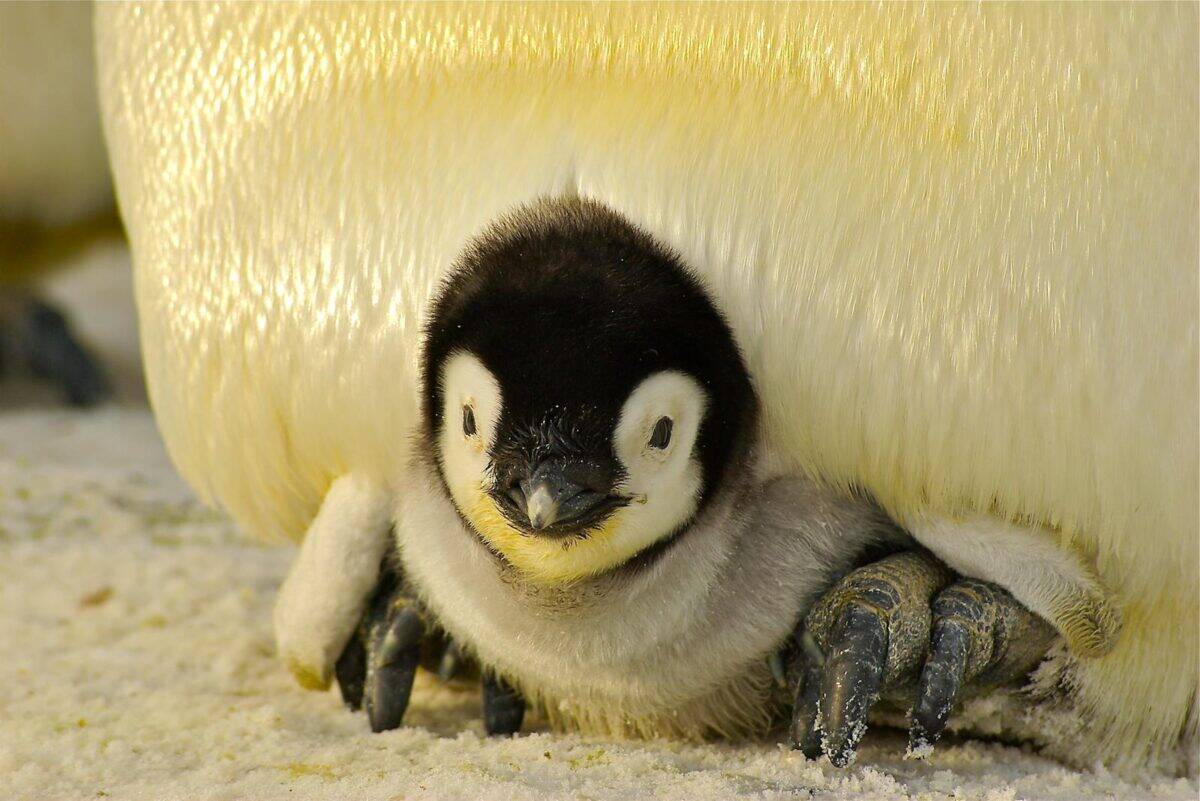
Emperor penguins (Aptenodytes forsteri) display remarkable loyalty under the harshest conditions on Earth. During the Antarctic winter, when temperatures plummet to -40°F and winds reach 89 mph, these birds engage in one of nature’s most demanding displays of parental dedication. After the female lays a single egg, she transfers it to her mate and returns to the sea to feed. The male then balances the egg on his feet, covered by a special brood pouch, for about 65-75 days without eating.
This extraordinary period of fasting—while enduring the Antarctic winter—represents one of the most demanding acts of parental commitment in the animal kingdom. The males lose approximately 45% of their body weight during this incubation period. Meanwhile, the females demonstrate their own form of loyalty by returning at precisely the right time to relieve their mates, navigating back to their specific partners among thousands of nearly identical penguins. This synchronized loyalty system has evolved over millennia as the only viable reproductive strategy in their extreme environment.
Beavers: Lifelong Partners and Cooperative Engineers

Beavers (Castor canadensis and Castor fiber) are among the few mammals that form lifelong monogamous bonds. Once paired, these industrious rodents remain together until one dies, working cooperatively to build and maintain their elaborate dams and lodges. Both parents invest heavily in raising their young, called kits, with older siblings often helping to care for newer offspring—creating multi-generational family units.
The engineering feats accomplished by beaver pairs demonstrate their remarkable cooperation. A typical beaver dam requires moving tons of material and constant maintenance, tasks that would be impossible without coordinated effort. Their loyalty extends to territorial defense, with mated pairs protecting their waterways from intruders. Research from the University of Alberta has shown that beaver pairs that remain together for multiple years build more sophisticated structures and raise more successful offspring than newly formed pairs, highlighting the evolutionary advantages of their loyal partnerships.
Albatrosses: The Ocean’s Most Faithful Partners
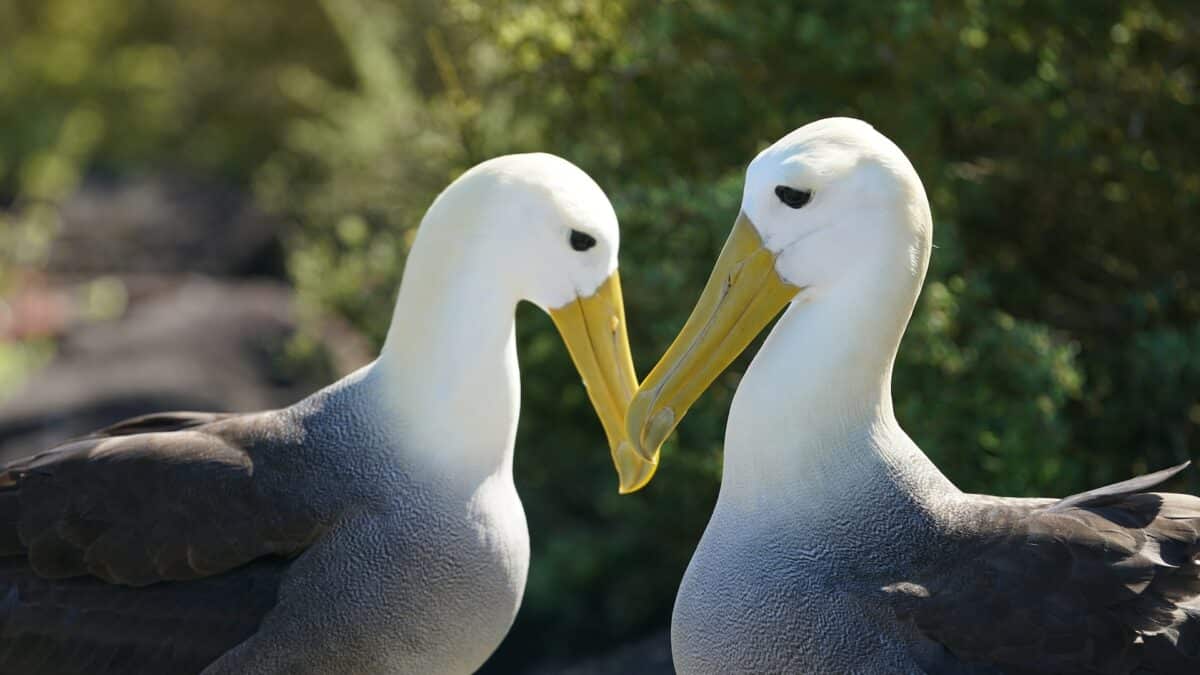
Albatrosses, particularly the Laysan albatross (Phoebastria immutabilis), represent some of the most faithful animals on Earth. These seabirds typically spend years perfecting elaborate courtship dances before selecting a mate—a partner they’ll keep for life. With lifespans that can exceed 60 years, this commitment often means decades of partnership. Studies conducted by biologists at the Midway Atoll National Wildlife Refuge found that less than 4% of albatross pairs separate after forming a bond.
The practical aspects of albatross loyalty are impressive. Partners take turns incubating their single egg for months, often while the other travels thousands of miles across the ocean to find food. They return to the exact same nesting site year after year, sometimes after spending months apart in different parts of the ocean. Their reunions involve ritualized greeting ceremonies that reaffirm their bond. This unwavering loyalty makes evolutionary sense for a species that reproduces slowly (laying just one egg every one to two years) and must invest significant parental resources to raise their young successfully.
Prairie Voles: Neurochemical Foundations of Fidelity

Prairie voles (Microtus ochrogaster) have become the subjects of groundbreaking research into the biological basis of monogamy and loyalty. Unlike 95% of mammal species, prairie voles form lifelong pair bonds after mating. This unusual fidelity has made them crucial to understanding the neurochemistry behind attachment. Research has revealed that prairie voles experience a surge of oxytocin and vasopressin during mating, which essentially rewires their brains to form a permanent attachment to their partner.
The loyalty of prairie voles extends beyond simple mating fidelity. Pairs share parenting duties, defend their territory together, and often show signs of distress when separated. When a partner dies, the surviving vole rarely forms a new pair bond. Scientists at Emory University have found that blocking certain receptors in the prairie vole’s brain can prevent pair bonding, while stimulating these same receptors can induce attachment without mating—providing remarkable insights into how loyalty might be neurologically hardwired in certain species, including potentially in humans.
Flamingos: Long-term Loyalty in Pink Formations

Contrary to popular belief that flamingos might be promiscuous due to their large colony sizes, research has revealed that many flamingo species maintain loyal partnerships for decades. A 2014 study at the WWT Slimbridge Wetland Centre tracked flamingo pairs over 25 years and discovered that many greater flamingos (Phoenicopterus roseus) remained faithful to the same partner throughout the entire study period. This loyalty persists despite living in colonies that can number in the thousands.
Flamingo loyalty manifests in synchronized behaviors that strengthen their bond. Pairs perform elaborate courtship dances together, build and defend their nest as a team, and take turns incubating their single egg. Both parents produce a specialized “crop milk” to feed their chick, requiring coordinated parental investment. Dr. Paul Rose, who led the flamingo research, noted that these birds can recognize their partner’s call among thousands of others, allowing them to reunite even after separating in massive flocks during feeding. This vocal recognition system helps maintain their long-term bonds even within enormous social groups.
French Angelfish: Aquatic Partners for Life

While fish aren’t typically associated with loyalty, French angelfish (Pomacanthus paru) defy this stereotype with their lifelong partnerships. These striking black and yellow reef dwellers form monogamous pairs as juveniles and remain together until death, which can be over 15 years in the wild. Marine biologists have observed that paired angelfish swim in synchronization, feed together, and defend their territory as a coordinated unit against intruders.
The loyalty of French angelfish serves practical purposes in their coral reef habitat. Their territories contain both feeding areas and cleaning stations where smaller fish remove parasites from their bodies. By maintaining stable partnerships, they can effectively defend these valuable resources. Researchers have noted that when one partner is caught by a predator or fisherman, the remaining angelfish often exhibits behavior that appears similar to grieving, sometimes abandoning the territory they once defended so vigorously and declining to form new partnerships. This represents one of the few documented cases of apparent partner fidelity among fish species.
Crows and Ravens: Corvid Commitment
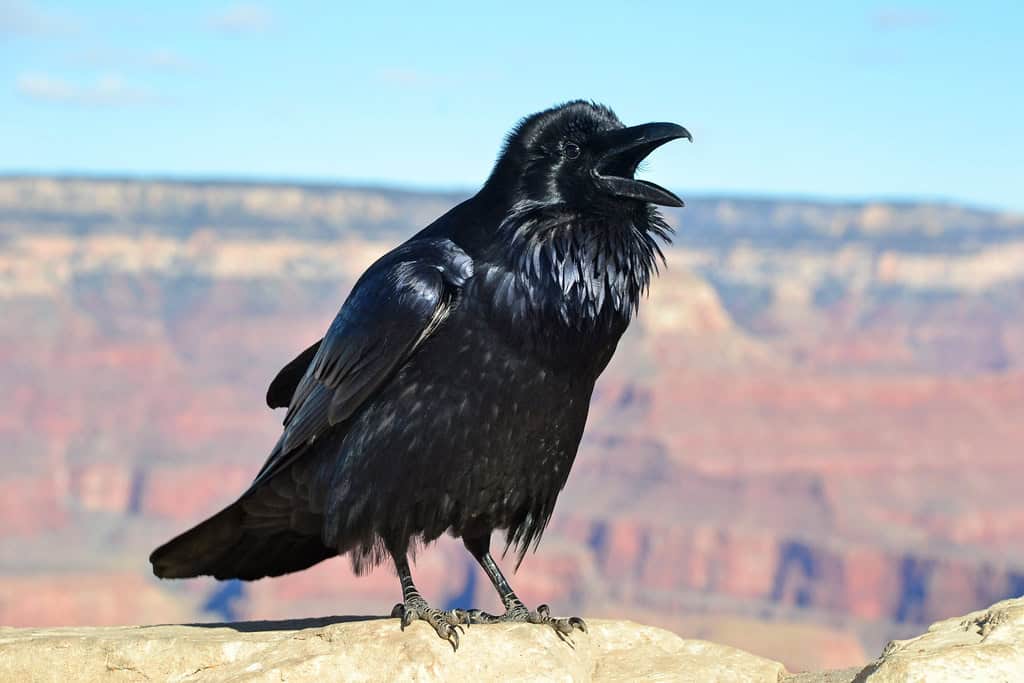
Crows and ravens, members of the highly intelligent corvid family, form some of the most sophisticated loyal relationships among birds. Common ravens (Corvus corax) typically mate for life, forming partnerships that can last over 15 years. These bonds extend beyond reproduction to include complex cooperative behaviors. Mated pairs defend territories together, collaborate in problem-solving, and even engage in play behavior that strengthens their relationship.
The loyalty of corvids is particularly noteworthy given their exceptional cognitive abilities. Research from the University of Vienna has demonstrated that ravens remember individuals who have helped or harmed them for years and adjust their behavior accordingly. They also engage in consolation behavior, where birds will comfort members of their social group who have lost fights or experienced stress. This combination of high intelligence and social loyalty makes corvids unique among birds—they don’t just remain together out of instinct, but appear to maintain relationships through active social choices, perhaps the closest parallel to human-like loyalty in the avian world.
Gibbons: The Primate World’s Most Faithful Partners
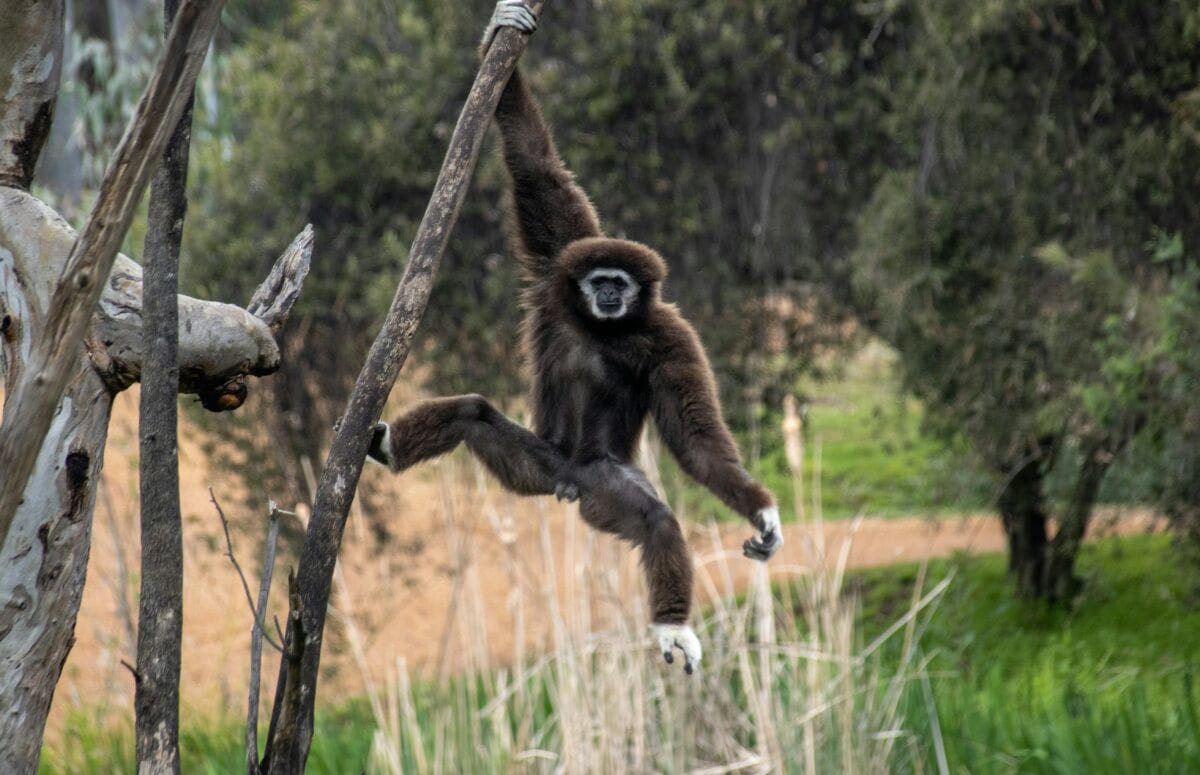
Among our primate relatives, gibbons (family Hylobatidae) stand out for their exceptional loyalty. These small apes form monogamous pairs that typically last for life—a rarity among mammals and particularly unusual among primates. Gibbon pairs defend their territory together through coordinated duets that serve to both strengthen their bond and warn away competitors. These complex vocal performances are so synchronized that researchers can often identify specific pairs by their distinctive duetting patterns.
Gibbon loyalty extends to family life, with both parents investing heavily in raising offspring. Males, unlike in many primate species, play an active role in carrying and protecting young gibbons. Research from anthropologists at the University of Wisconsin-Madison suggests that gibbon monogamy evolved due to the benefits of paternal care and territory defense in their forest canopy niche. However, recent studies using genetic analysis have revealed that gibbon fidelity, while impressive, isn’t perfect—with occasional “extra-pair copulations” occurring. Nevertheless, their long-term social monogamy represents one of the strongest examples of partner loyalty among our evolutionary relatives.
Shingleback Lizards: Reptilian Romance That Lasts
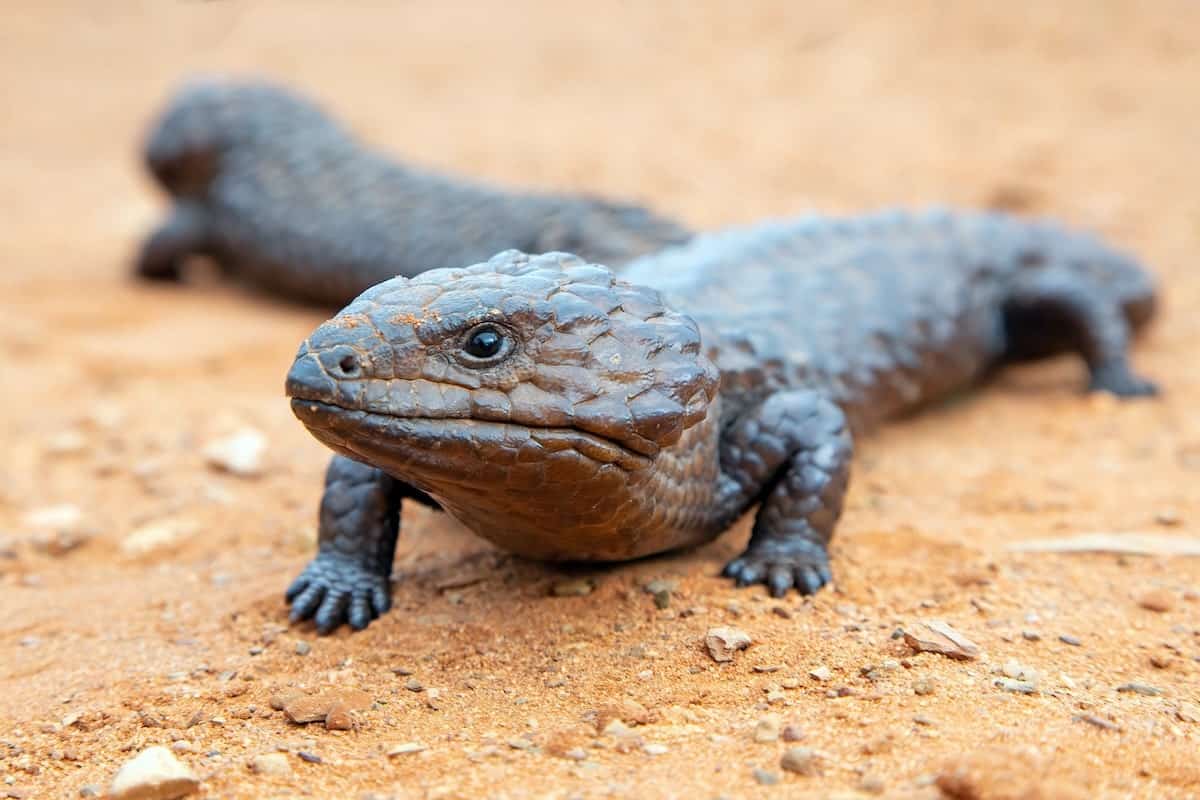
In the reptile world, where loyalty and long-term bonds are exceedingly rare, the shingleback lizard (Tiliqua rugosa) of Australia stands as a remarkable exception. These distinctive stumpy-tailed skinks form pair bonds that can last over 20 years—effectively their entire adult lives. Research by Dr. Michael Bull of Flinders University tracked individual lizards in the wild for decades and discovered pairs that reunited year after year during breeding season, even after spending months apart.
What makes shingleback loyalty particularly extraordinary is how it defies reptilian norms. In a class of animals where males typically mate with as many females as possible and provide no parental care, shinglebacks invest in finding and keeping a compatible partner. During their annual reunions, these lizards engage in affectionate behaviors like tongue-flicking and body rubbing to reestablish their bond. Their loyalty appears to serve practical purposes—familiar pairs produce more offspring and show better coordination in defending against predators compared to newly formed pairs. This rare example of reptilian monogamy suggests that loyalty can evolve in any animal group when the evolutionary benefits are significant.
The Evolutionary Significance of Wild Animal Loyalty
The diverse examples of loyalty across the animal kingdom raise fascinating questions about why such behaviors evolved in certain species but not others. From an evolutionary perspective, loyalty represents a trade-off—the benefits of maintaining long-term bonds must outweigh the potential advantages of seeking multiple partners or prioritizing individual survival. For species like wolves and elephants, group loyalty creates adaptive advantages through knowledge sharing and cooperative defense. For monogamous pairs like albatrosses and gibbons, loyalty ensures consistent parental investment in offspring that require extensive care.
Understanding animal loyalty also provides insights into our own species’ evolutionary history. Humans show remarkable capacity for loyalty to partners, family members, and larger social groups—traits that likely evolved because they enhanced our ancestors’ survival in challenging environments. By studying loyalty across diverse animal species, we gain perspective on the biological roots of what we often consider a uniquely human virtue. The fact that loyalty has independently evolved in species as different as elephants, penguins, and lizards suggests that this trait represents a fundamental adaptation to certain ecological challenges rather than a quirk of human morality. In its various forms across species, animal loyalty reminds us that cooperation and commitment have deep evolutionary roots.

- What Happens If a Whale Dies in the Ocean? - July 21, 2026
- Why You Should Stop Feeding Ducks at the Park - July 21, 2026
- The Secret Language of Dolphins Decoded by Researchers - July 20, 2026