

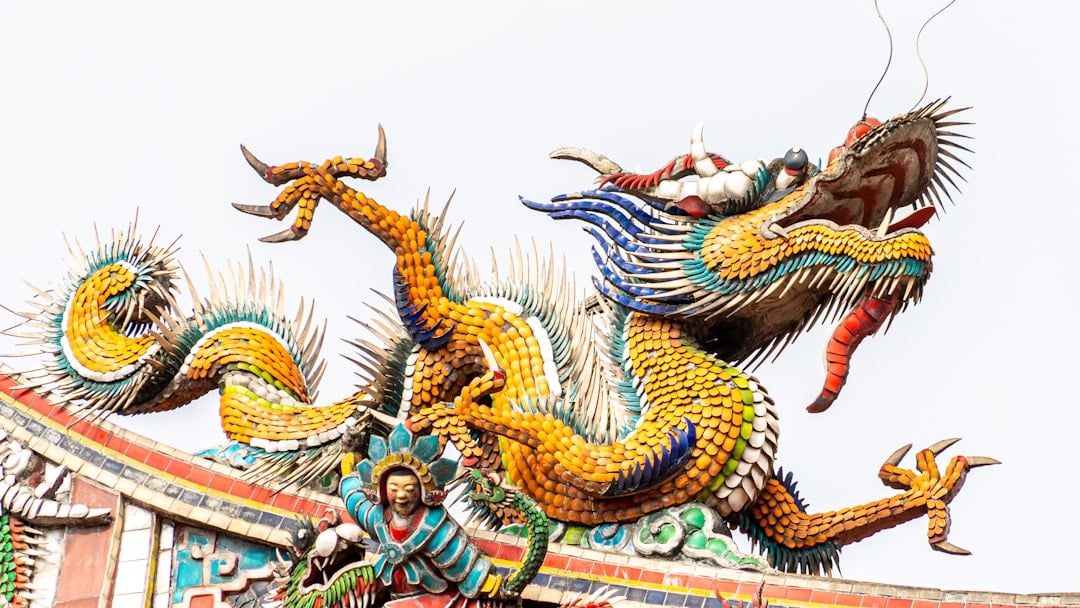
Twelve animals, one celestial race, and a calendar still guiding celebrations across the world — it sounds unbelievable until you realize people welcome each Lunar New Year by honoring the winners. This story isn’t just charming folklore; it’s the backbone of how millions talk about personality, luck, and time. The TED-Ed lesson by Megan Campisi and Pen-Pen Chen brings this myth to life with vivid animation and crisp storytelling, making an old legend feel startlingly fresh. The tale is playful, a little cutthroat, and surprisingly moral — and that tension is exactly why it sticks. It’s also why the Chinese zodiac feels personal even if you don’t usually care about astrology. What starts as a river crossing becomes a map for years, relationships, and rhythms of culture that refuse to fade.
The Great Race: How a Heavenly Contest Set the Calendar
At the heart of the video is a race ordered by the Jade Emperor, the ruler of the heavens, who needed a way to measure time. He announced that the first twelve animals to cross a river would each earn a place in the new calendar, in the exact order they finished. The premise is simple, but the choices the animals make along the way are anything but. We meet an early-rising Rat who is clever but not exactly noble, and an Ox who is strong, steady, and generous. We feel the current’s pull, the scramble at the banks, and the high stakes of a divine contest that will decide how people name their years. It’s a story that explains time by revealing character, and that’s why it lingers long after the race ends. The TED-Ed narration moves briskly, but every beat lands with personality and purpose.
“The first twelve animals to make it across the river would earn a spot on the zodiac calendar in the order they arrived.”
The finish order becomes legend: Rat darts off the Ox’s head to grab first; Ox accepts second with quiet grace; Tiger claws into third after battling the current; Rabbit, too small for the waves, hops across stones and a log to claim fourth; Dragon, powerful enough to fly, pauses to help others and lands fifth; Snake startles Horse to slip into sixth, with Horse seventh; a raft carrying Sheep (Goat), Monkey, and Rooster arrives next, and they politely sort out eighth, ninth, and tenth; Dog, distracted by play in the water, splashes in at eleventh; Pig, delayed by a snack and a nap, waddles across for twelfth. The order feels earned and symbolic, as if the animals’ choices were the real test. That’s the genius of the myth: it lets a calendar double as a character study, and a character study double as a memory tool. The race becomes the reason the zodiac reads like a story you can recite from heart, year after year. ([amara.org](https://amara.org/videos/K8oaVGlB7YJ4/en/1767739/))
Who’s in the Zodiac—and Why This Order Matters
The twelve animals aren’t just mascots; they double as shorthand for traits people like to talk about. Rat often stands for wit and resourcefulness, Ox for reliability and grit, Tiger for courage, and Rabbit for tact and kindness. Dragon gets the aura of benevolence and power, Snake of strategy, Horse of independence, and Goat (or Sheep) of empathy and cooperation. Monkey symbolizes playful cleverness, Rooster punctual pride, Dog steady loyalty, and Pig easygoing abundance. In everyday life, those associations become a social script — friends tease each other about “tiger energy,” parents predict personalities for a new baby, and coworkers swap stories about who’s most “ox-like” under pressure. The video taps this cultural habit and shows why the sequence matters: it isn’t random; it’s remembered because it mirrors human nature in animal form. Even if you’re skeptical, the labels offer a shared language for talking about strengths, quirks, and timing. ([china.org.cn](https://www.china.org.cn/english/en-12sx/index.htm?utm_source=openai))
From Myth to Calendar: Shengxiao, Stems, Branches, and the 60‑Year Cycle
The zodiac is called shēngxiào, and your shǔxiàng is the animal assigned to your birth year — but the system is deeper than twelve signs on repeat. Traditional timekeeping layers the Twelve Earthly Branches (the animal cycle) with the Ten Heavenly Stems (linked to the five classical elements and yin/yang), creating a sexagenary, or 60‑year, cycle. That’s why two people can both be “Dragon” yet belong to different element-and-polarity combinations, shaping how festivals, art, and even naming traditions describe their year. The video walks through this clearly, pointing out examples like “yang metal monkey” or “yin fire pig” to show how the math of time and the poetry of symbols combine. It’s elegant, ancient, and surprisingly practical: a mnemonic for history, a rhythm for holidays, and a scaffold for memory. And because Lunar New Year shifts between late January and mid‑February, your zodiac sign starts on the holiday, not January 1 — a detail that often surprises people checking their year. The structure is complex, but the story makes it approachable without watering it down. ([amara.org](https://amara.org/videos/K8oaVGlB7YJ4/en/1767739/))
Variations, the Missing Cat, and a Tradition That Travels
One reason the tale endures is its flexibility: as it spread across Asia, communities tuned parts of the story to fit local life. The TED-Ed lesson notes that Vietnam celebrates a Cat where China uses Rabbit, and in some Thai traditions a Naga — a mythical serpent — replaces the Dragon. Many popular retellings also explain why Cat never made the list at all, turning the Rat–Cat rivalry into a cautionary aside about forgetfulness or betrayal. These shifts don’t break the story; they prove it’s alive, adapting while keeping the same skeleton of the race and its moral beats. The result is a shared myth with regional accents — instantly recognizable yet proudly local. When streets glow red at Lunar New Year and storefronts fill with this year’s animal, you’re seeing the race retold in color and sound. That energy keeps the zodiac present-tense, not just a relic of the past. ([amara.org](https://amara.org/videos/K8oaVGlB7YJ4/en/1767739/))
What the TED‑Ed Lesson Adds
Campisi and Chen’s script trims the myth to its strongest moments and lets the animation add warmth, humor, and texture. The narration is brisk without being rushed, and the visual choices — a startled horse, a determined rabbit, a benevolent dragon — do quiet character work that makes each animal’s moment memorable. The lesson also steps beyond the race to explain the calendar’s mechanics, which is where many retellings stumble; here, it’s crisp and digestible. Details like shēngxiào, the Earthly Branches, and the sexagenary cycle are introduced just long enough to make sense, then woven back into the story so nothing feels like a detour. The credit roll underscores the craft: educators Megan Campisi and Pen‑Pen Chen with animation by Marta Prokopová and a full creative team, a reminder that clear storytelling is a team sport. For context, the video was published on January 26, 2017, and it remains one of TED‑Ed’s most replayable cultural explainers. ([ed.ted.com](https://ed.ted.com/lessons/the-myth-behind-the-chinese-zodiac-megan-campisi-and-pen-pen-chen?utm_source=openai))
Using the Zodiac Today: Practical Notes and Everyday Examples
Because zodiac years begin on Lunar New Year, someone born in early January may belong to the previous year’s animal — a common surprise when people first look up their sign. Families fold the zodiac into celebrations, pairing decorations and greetings with the year’s animal and swapping playful predictions about character and luck. Friends consult signs for fun compatibility checks or to pick “lucky” dates, fully aware that tradition here is more about meaning and memory than hard forecasts. Designers, brands, and city festivals turn the annual animal into art, merchandise, and parades, proving how a myth can double as a cultural engine. Educators also use the race to teach narrative, ethics, and world history in one tidy package: courage, cunning, cooperation, and consequence have never been easier to visualize. And for anyone new to the calendar, the TED‑Ed lesson offers a quick, accurate start — a bridge from a charming story to the living rhythm of the lunar year. ([ed.ted.com](https://ed.ted.com/lessons/the-myth-behind-the-chinese-zodiac-megan-campisi-and-pen-pen-chen/digdeeper?utm_source=openai))
Source: Original YouTube Video

- This River Delta Is a Magnet for Endangered Birds - July 17, 2026
- New Fossils in Baja California Reveal a Never-Before-Seen Grouper - July 17, 2026
- The Most Venomous Animal on Land—And How It Kills - July 17, 2026