
America’s story doesn’t begin with the arrival of European settlers or the signing of the Declaration of Independence. Long before written records, ancient peoples left behind puzzling traces that still confound experts today. From egg-shaped stones covered in cryptic symbols to perfectly engineered circles carved into bedrock, these discoveries raise more questions than they answer.
What makes these finds so captivating is their refusal to fit neatly into our understanding of history. Some defy explanation with their precision and sophistication. Others hint at cultural exchanges that shouldn’t have been possible according to conventional timelines. Let’s explore ten of the most bewildering archaeological mysteries scattered across the United States.
The Maine Penny

An 11th-century Norwegian silver coin was recovered at the Goddard site in Brooklin, Maine during archaeological work in 1957. The coin dates to the reign of Olaf Kyrre and is consistent with medieval Norwegian minting. Here’s the thing: this single coin has sparked decades of debate about Norse exploration far beyond their known settlements.
Of the nearly 20,000 objects found over a 15-year period at the Goddard Site, the coin was the sole non-native artifact. That’s what makes it so peculiar. If Vikings actually walked the shores of Maine, wouldn’t we expect to find more evidence?
Mainstream belief is that it was brought to Maine from Labrador or Newfoundland (where Vikings are known to have established colonies as early as the late 10th century) via an extensive northern trade network operated by indigenous peoples. Still, the possibility of direct contact between Old World and New World peoples centuries before Columbus can’t be entirely dismissed. The penny sits in a display case today, a tiny metal disc that could rewrite what we know about pre-Columbian contact.
Lake Winnipesaukee Mystery Stone
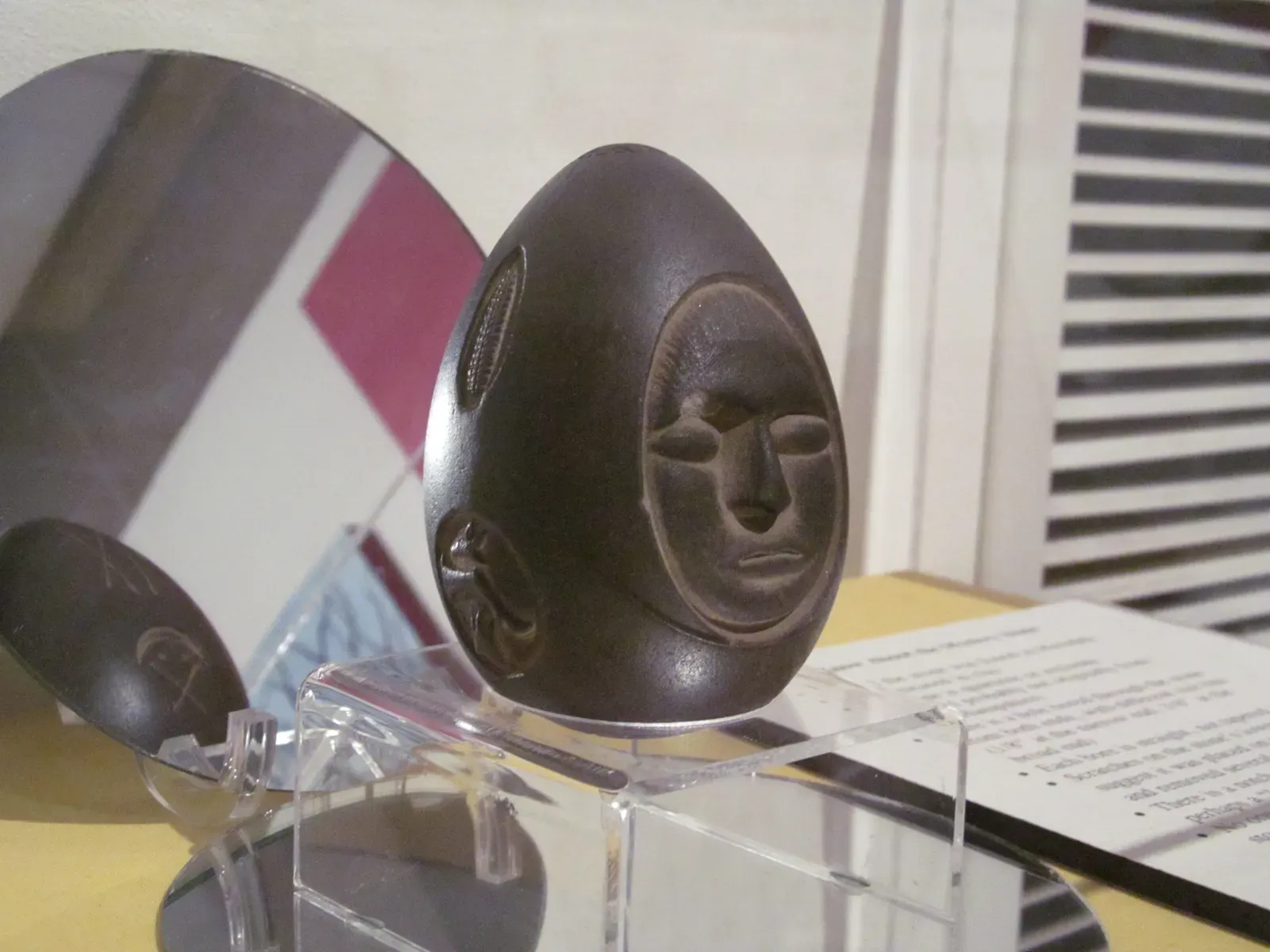
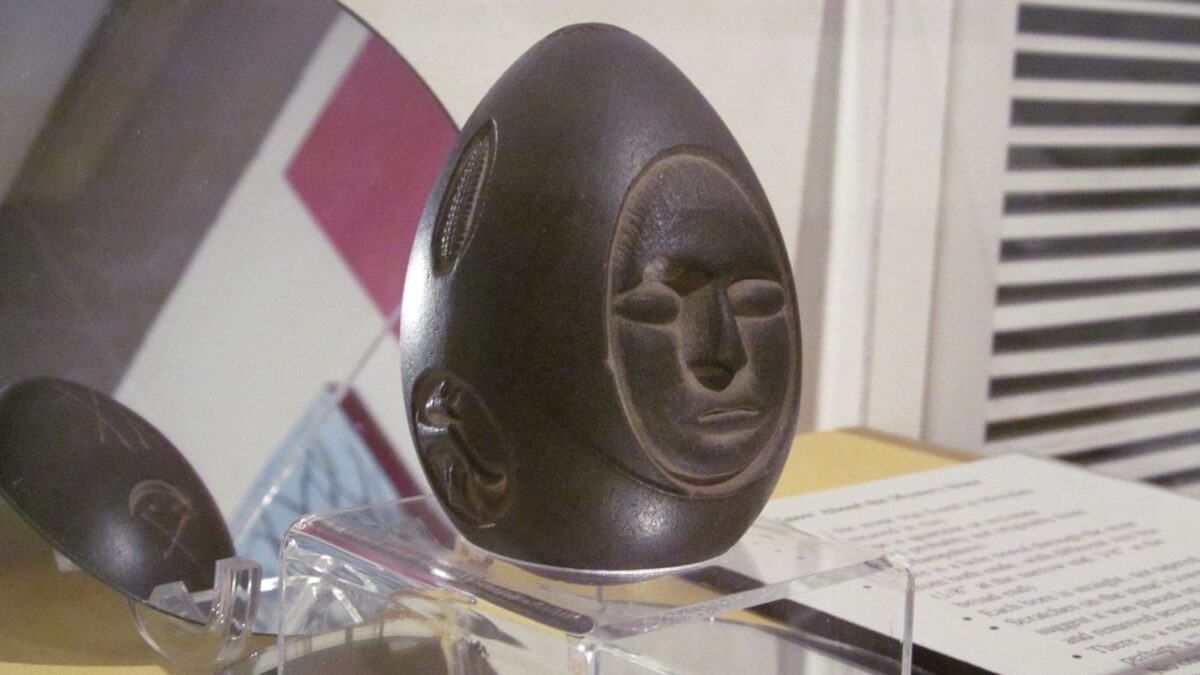
Discovered in 1872 buried close to Lake Winnipesaukee in New Hampshire, the eponymous mystery stone is dark, smooth, egg-shaped, and about 10 centimeters (4 in) tall and 6.4 centimeters (2.5 in) wide. On its surface are a number of carved symbols and images, including a face, ears of corn, and a teepee, among other unknown images.
Let’s be real – nobody knows who made this thing. It doesn’t match any known Native American artifact style from the region. The craftsmanship suggests deliberate design, not random decoration.
One theory proposes it commemorated a peace treaty between tribes, but honestly, that feels like speculation. The symbols don’t align with documented tribal iconography. Some researchers have even suggested it might be a hoax, though the circumstances of its discovery make that less likely. The stone remains one of New England’s most perplexing relics, its purpose lost to time.
The Miami Circle

The Miami Circle was only unearthed in 1998 when a Florida developer knocked down a 1950s apartment complex, revealing a circular pattern of holes in the limestone bedrock. Picture construction workers stumbling onto something that would halt a multi-million dollar development project. The 38-foot-wide circle contains 24 precise holes arranged in a perfect geometric pattern, suggesting advanced mathematical knowledge.
The feature comprises a ring of cut basins and post-holes carved into the limestone bedrock. Radiocarbon dates and artifact associations link it to the Tequesta people. The circle’s layout indicates a substantial structure that likely served ceremonial or communal functions. What we don’t understand is how a hunter-gatherer society achieved such geometric precision without modern surveying tools.
The State of Florida purchased the site to preserve it, recognizing its significance even though its exact purpose remains elusive. You can view it today through protective glass panels, a testament to engineering prowess that preceded European contact by roughly two millennia.
Great Serpent Mound
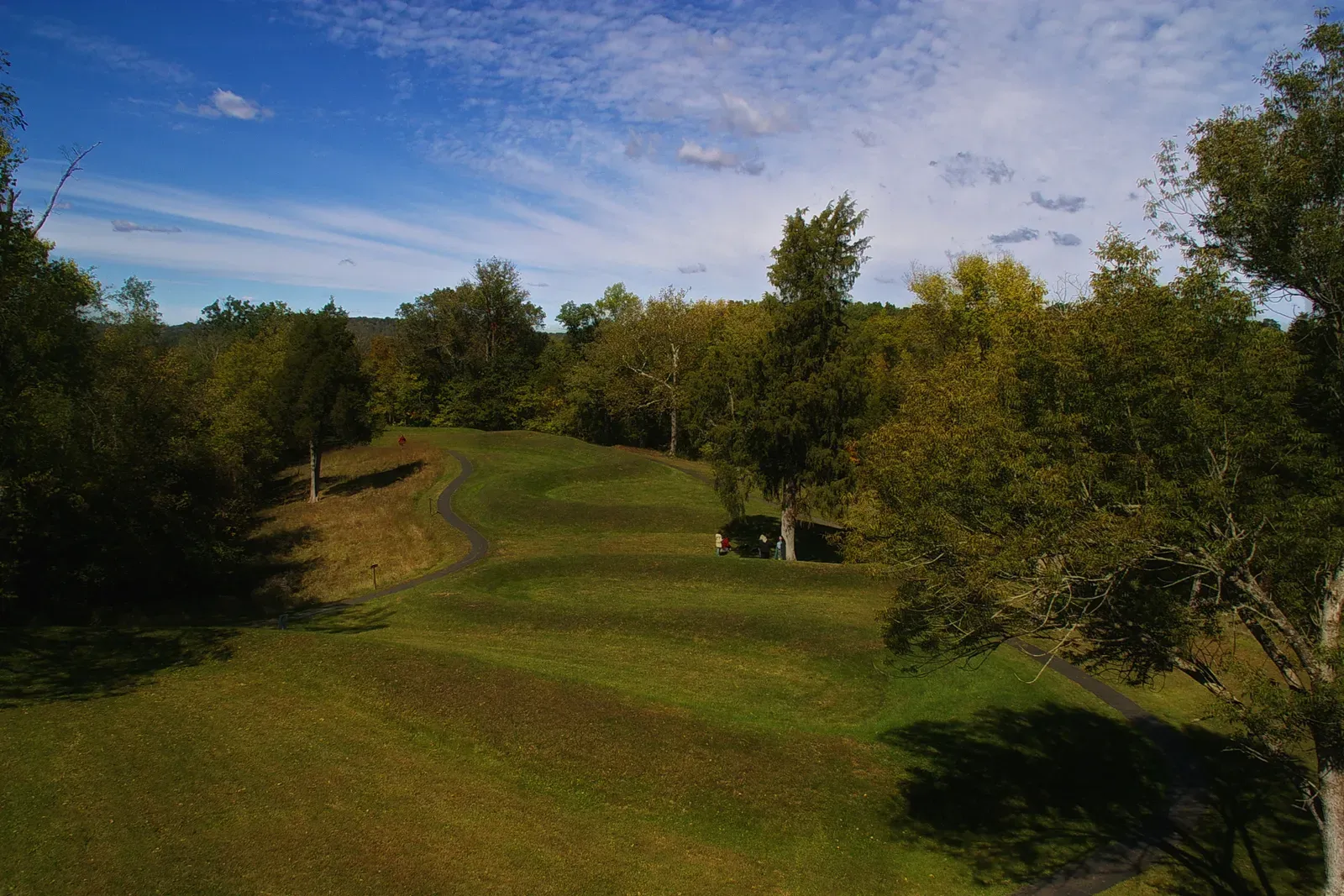
The Great Serpent Mound is an ancient earthwork discovered in Ohio. It’s an effigy mound, which is a mound in the form of an animal, in this case a giant snake. Archaeologists have been unable to figure out what culture built it, when it was built, or what its use was. Stretching more than a quarter mile, this serpentine earthwork remains one of North America’s most enigmatic monuments.
Radiocarbon dating has suggested that the mound may have been built around AD 1000, while other studies have suggested it could be around 2,000 years old. Even its age is disputed. Some scholars believe it was used in religious ceremonies and possibly sacrificial offerings. Others believe it is some sort of calendar, due to its astrological alignments.
The precision with which the serpent form was constructed suggests sophisticated planning and coordinated labor. Yet we still can’t definitively say whether it represented a deity, tracked celestial events, or served some other purpose entirely. The snake watches over the Ohio landscape, keeping its secrets.
Casa Grande Ruins
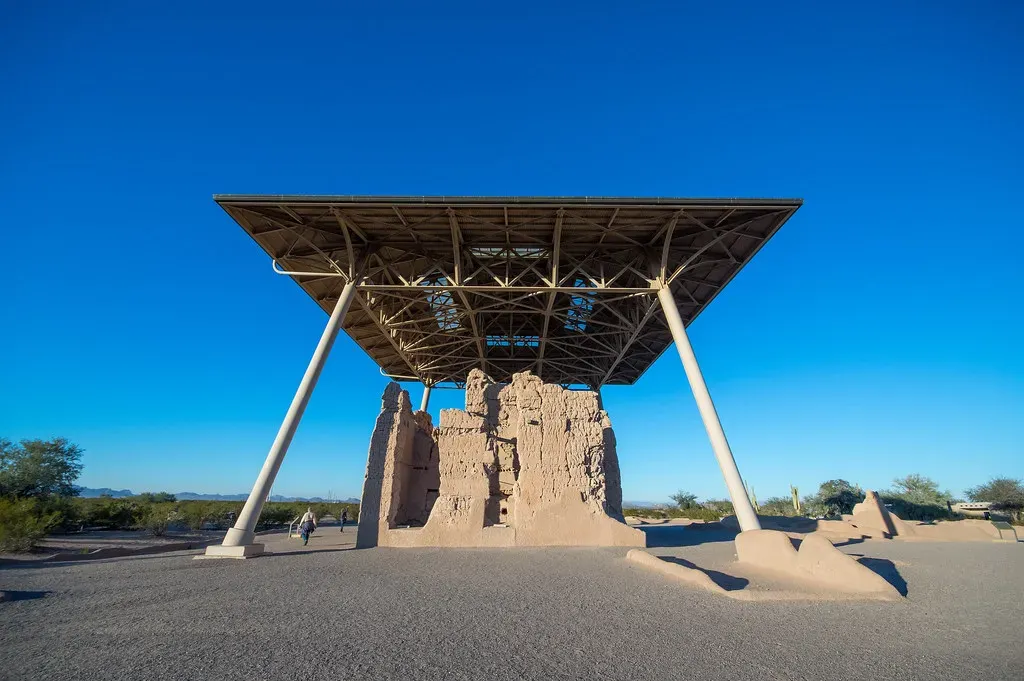
Archaeologists understand some things about Casa Grande in Arizona. They know that it was probably constructed in the early 13th century, that the builders used adobe, and that the full complex included several other adobe structures and a ball court, and was once surrounded by a wall. The four-story central structure dominates the site, built with precision that impresses even modern engineers.
What they don’t know is what the four-story central building was for: a guard tower, a grain silo, a house of worship, or something else. Every theory has problems. It’s too elaborate for simple storage, too isolated for effective defense, and its astronomical alignments don’t quite match known ceremonial patterns.
The site was abandoned nearly half a century before Columbus’s voyage to the Americas, long after the nearby Hopi had moved away, and was too ruined for early Spanish explorers to do their own investigating into what it was. Today the main building is under a protective roof built by Civil Conservation Corps workers in the 1930s. It stands as America’s first protected prehistoric ruins, a monument to ingenuity we can admire but not fully comprehend.
Judaculla Rock
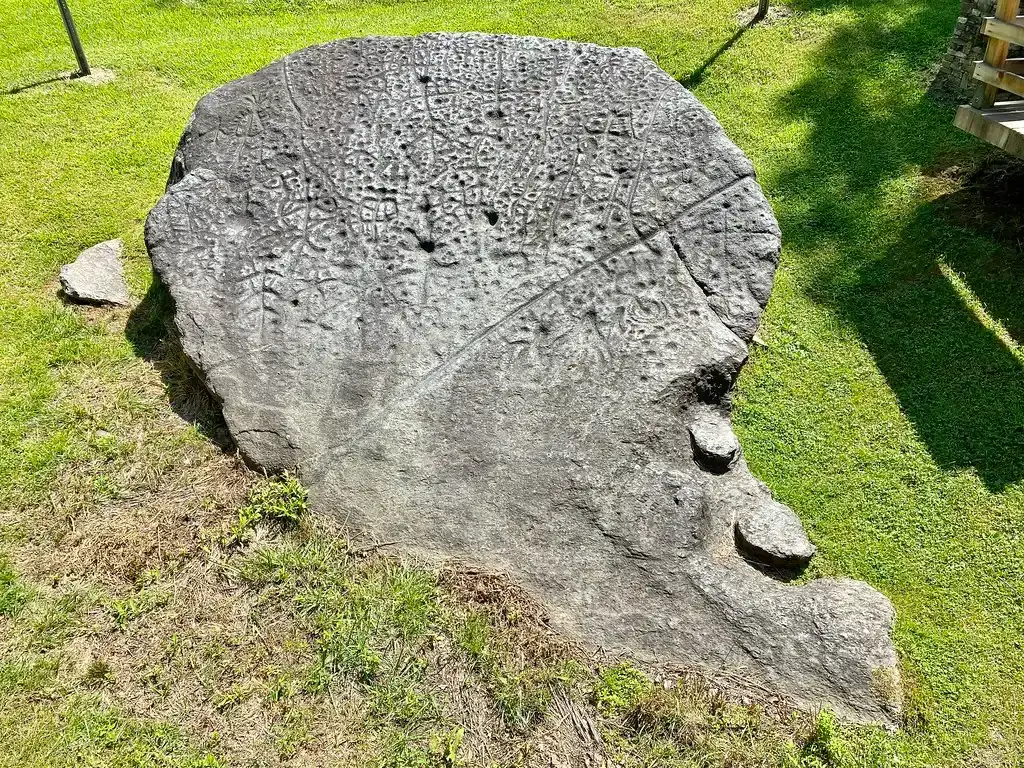
For years, the Cherokee people who lived near the soapstone boulder now known as Judaculla Rock used it as a sort of billboard, etching so many petroglyph designs into the North Carolina stone that even today it’s difficult to tell exactly how many there are. The boulder also sports seven grooves, the mythical footprints of a legendary giant, which contemporary archaeologists attribute to ancient masons mining the soapstone to make bowls.
Cherokee legend speaks of Judaculla, a slant-eyed giant who ruled the mountains. The grooves supposedly mark where he leaped from his mountaintop home. Research has been slow; soapstone is naturally fragile, and the Cherokee also still see the rock as a sacred artifact. But the Cherokee are working with visitors and researchers to give them access while still preserving the stone.
The petroglyphs themselves defy interpretation. Layers upon layers of carvings overlap, some clearly Cherokee, others potentially predating them by centuries. The boulder represents a palimpsest of human activity, each generation adding its mark without erasing what came before. It’s a humbling reminder that some knowledge may be permanently lost.
Hemet Maze Stone
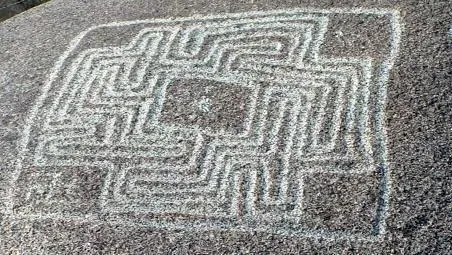
The Hemet Maze stone only has a single carving, but an intriguing one: a three-foot square with an intricate interlocking maze pattern. Archaeologists have only found a handful of other instances of this particular design used in North American rock art, all of them in California, and have no idea about their origin, meaning, or significance.
The swastika-like pattern is more common in Hindu and Buddhist art than on this continent. Unfortunately, the pattern inspired a vandal to add his or her own swastika to the design sometime in the 20th century, and the rock is now only visible from behind a chain link fence. The defacement adds insult to mystery.
The geometric sophistication suggests mathematical understanding that seems advanced for its estimated age. Some have theorized it represents a map, others a spiritual journey, still others an astronomical chart. Honestly, without cultural context or comparable examples, we’re essentially guessing. The maze keeps its meaning locked away, possibly forever.
Blythe Intaglios
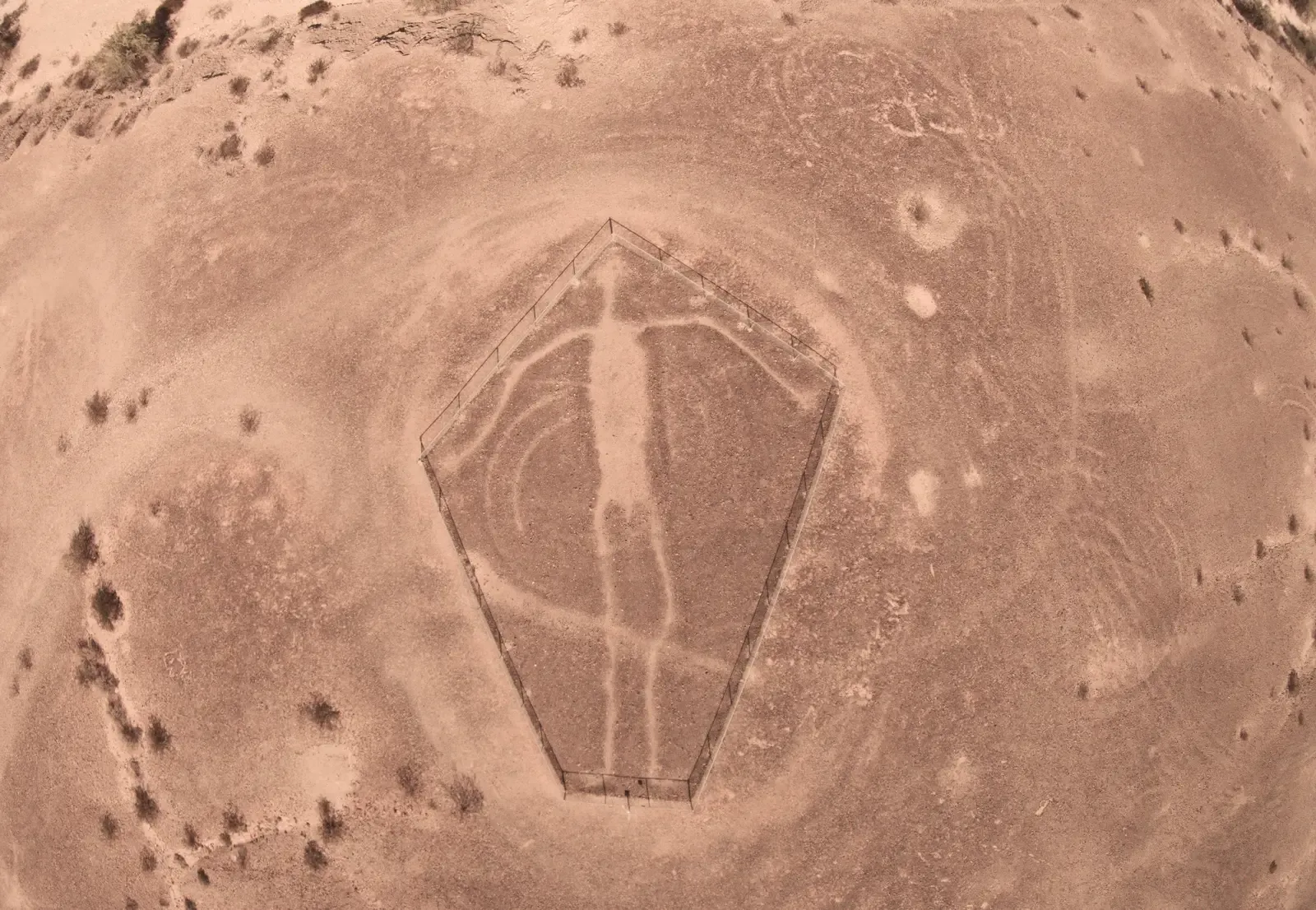
Stretching across the California desert near the Colorado River, the Blythe Intaglios show enormous ground figures depicting human forms, animals, and geometric shapes that can only be fully appreciated from the air. Created by scraping away desert pavement to reveal lighter soil underneath, these massive geoglyphs range from 95 to 171 feet in length.
The oversized figures were probably created between 450 and 2,000 years ago and are generally credited to the Mohave and the Quechan. The geoglyphs were only discovered in the 1930s by a pilot flying overhead. That window of dating uncertainty spans more than fifteen centuries. Their purpose is unknown. They may be connected to sacred ceremonial dances once held in the area or could even be ancient star maps.
Like Peru’s Nazca Lines, these figures seem designed for viewers in the sky. That raises uncomfortable questions about why ancient peoples would create artwork only visible from an impossible vantage point.
Poverty Point
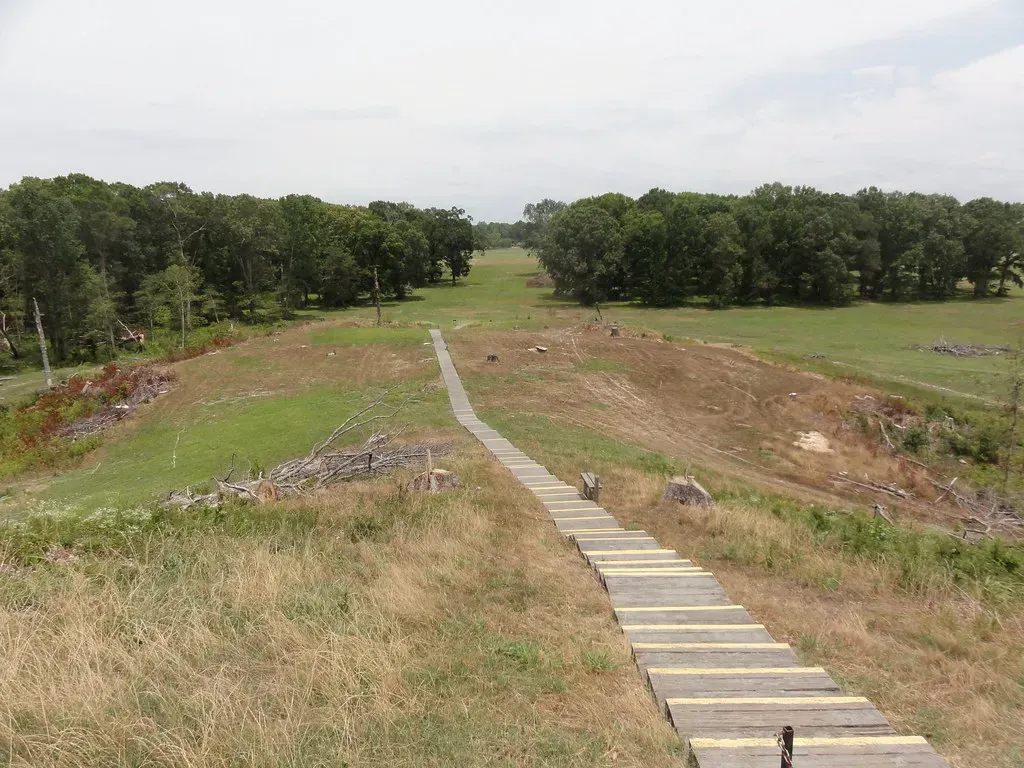
One of the most significant archaeological sites in the US was built over 3,500 years ago by a complex hunter-gatherer society. Now a UNESCO World Heritage Site, the earthworks complex, known as Poverty Point, consists of six concentric earthen ridges and several mounds that are thought to have been used for housing, storage, and ritual ceremonies.
Rising from Louisiana’s landscape lies the Poverty Point Mounds; these massive earthworks represent one of North America’s most sophisticated ancient construction projects. The site’s precise geometric design and enormous scale required advanced engineering knowledge that seemed impossible for its time period. Built without modern tools or even pottery technology, these mounds continue to challenge archaeological understanding of prehistoric societies.
The sheer organizational capacity required to construct Poverty Point defies conventional assumptions about hunter-gatherer societies. We’re talking about coordinated labor on a scale typically associated with agricultural civilizations. Yet these people apparently lacked permanent agriculture or pottery. The site stands as evidence that social complexity doesn’t follow a simple evolutionary ladder.
Kensington Runestone
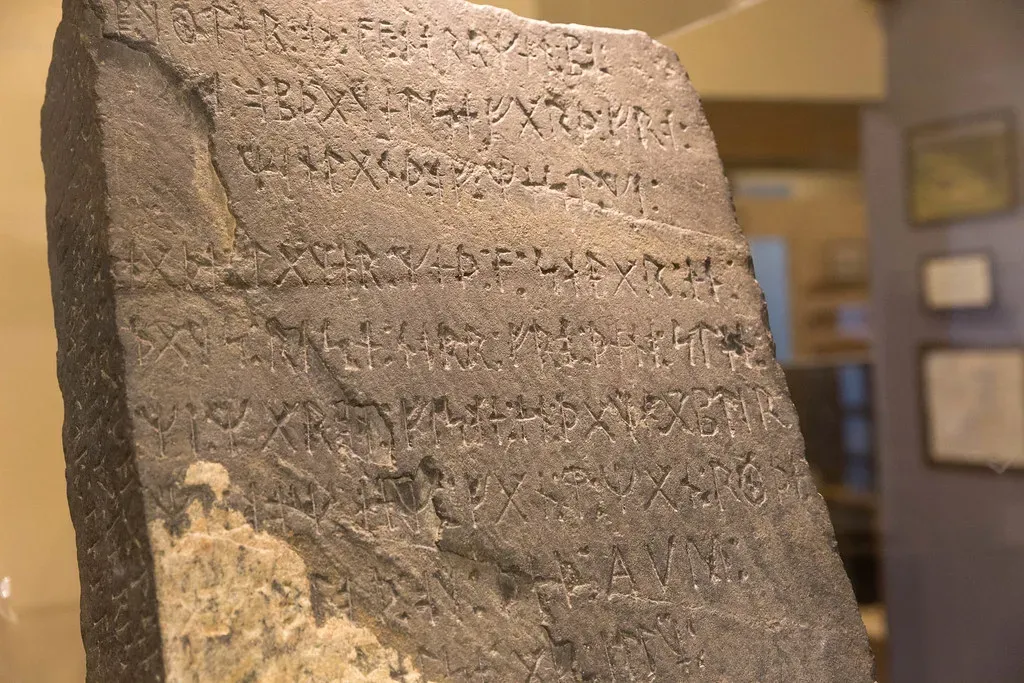
Found in central Minnesota in 1898, the Kensington Runestone is a lovely piece of stone upon which a great many old Scandinavian letters are inscribed. But it is what’s written on the runestone that’s the most controversial — a supposed record left by Scandinavian explorers dated to 1362. If authentic, it would push Norse exploration deep into the continental interior more than a century before Columbus.
The American public, and particularly Swedes settling in Minnesota, adored the find when it was publicized, but linguists and other experts were not nearly as entranced. When they examined it a century ago, they near unanimously determined it to be a 19th-century production. Despite some disagreement, that consensus remains today.
The linguistic evidence against authenticity seems compelling. The runes contain grammatical forms and word choices that didn’t exist in 14th-century Scandinavian languages. Still, passionate defenders argue that weathering patterns on the stone indicate genuine age. The runestone occupies a frustrating middle ground between tantalizing possibility and probable hoax, a reminder that not every mystery has a satisfying resolution.
Conclusion
These ten artifacts represent just a fraction of America’s unexplained archaeological heritage. Each challenges us to rethink assumptions about ancient peoples’ capabilities, movements, and connections. Some mysteries may eventually yield to better dating techniques or new analytical methods. Others might remain permanently enigmatic, their creators’ intentions lost when oral traditions faded and languages died.
What strikes me most is how these objects humble us. We live in an age of unprecedented technological sophistication, yet we can’t definitively explain a stone circle carved into Florida bedrock or a maze etched into California granite. Perhaps that’s the real lesson: that knowledge is fragile, easily lost across the centuries, and that the people who came before us were far more capable and complex than we sometimes imagine.
Which of these mysteries intrigues you most? Would you have expected ancient hunter-gatherers to construct massive geometric earthworks without metal tools or written plans?

- 12 Architectural Wonders From The Ancient World That Inspire Us Today - July 18, 2026
- 6 Beautiful Ancient Cities That Time Forgot (But Shouldn’t) - July 18, 2026
- 6 Common Animal Behaviors That Are Often Misunderstood by Humans - July 18, 2026