
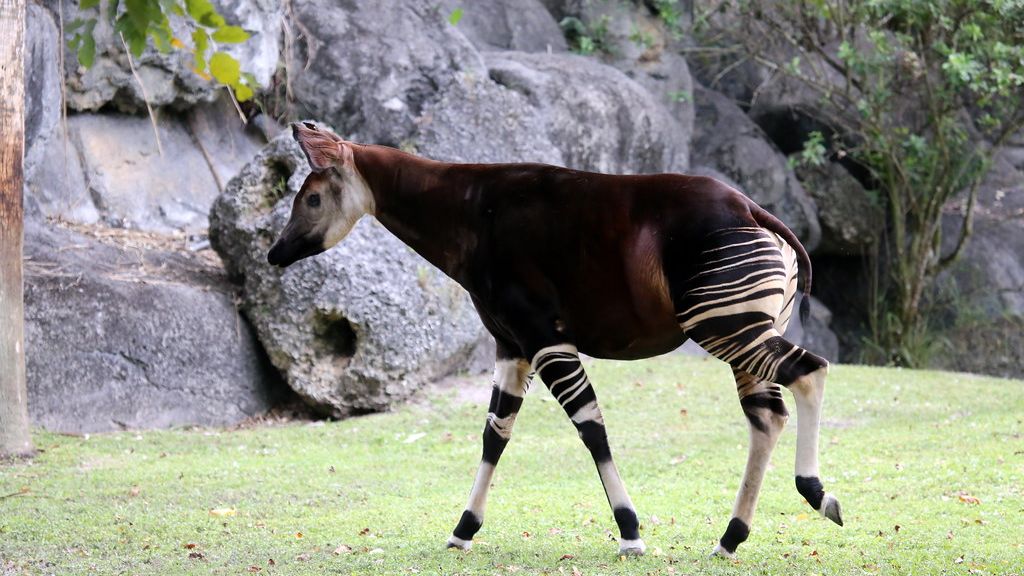
Think you know your way around the animal kingdom? You might want to think again. Somewhere deep in the rainforests of Central Africa, there’s a creature that looks like nature couldn’t decide what it wanted to create. Part zebra, part giraffe, part something entirely unique. The okapi has managed to stay hidden from western science for centuries, lurking in the shadows of dense jungles.
Despite living on the same planet as us, this enigmatic mammal remained a mystery until relatively recently. Let’s be real, if someone described an okapi to you without showing you a picture, you’d probably think they were making it up. So let’s dive into the fascinating world of this elusive beast.
1. The Okapi Wasn’t Discovered By Western Scientists Until 1901
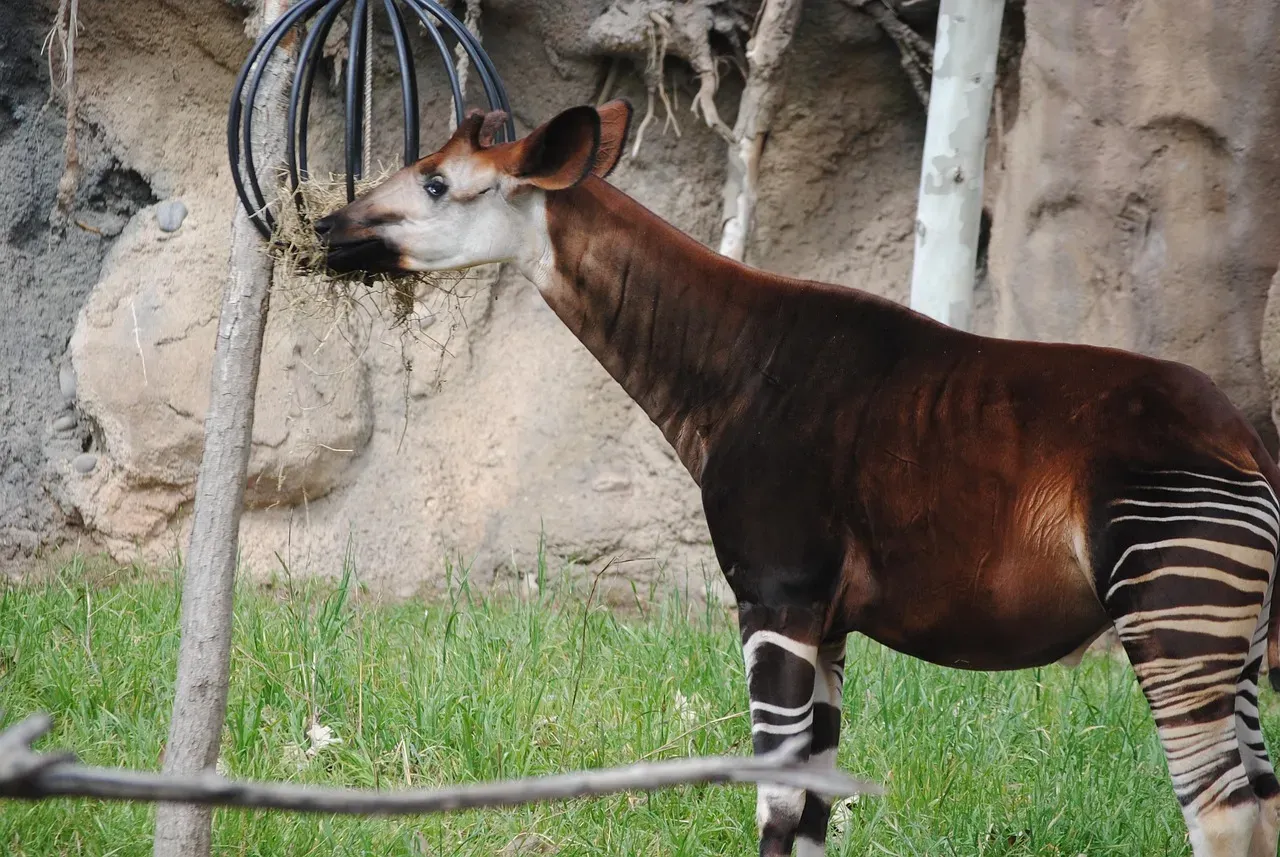
While indigenous people of the Ituri Forest knew of okapis for generations, scientists did not know of okapis until 1901. Here’s the thing: the okapi existed all along, of course, but it took Western explorers a remarkably long time to document it. Europeans in Africa had heard of an animal that they came to call the African unicorn, and it was brought to prominent European attention by speculation found in press reports covering Henry Morton Stanley’s journeys in 1887.
Stanley mentioned a kind of donkey that the natives called the atti, which scholars later identified as the okapi. The credit for finally documenting this mysterious creature goes to British commissioner Sir Harry Johnston. Though Johnston did not see an okapi himself, he did manage to obtain pieces of striped skin and eventually a skull, from which the okapi was correctly classified as a relative of the giraffe in 1901.
Can you imagine being the scientist who received those first pieces of striped hide? The confusion and excitement must have been incredible. The specific name johnstoni is in recognition of Johnston, who first acquired an okapi specimen for science from the Ituri Forest.
2. It’s The Only Living Relative Of The Giraffe
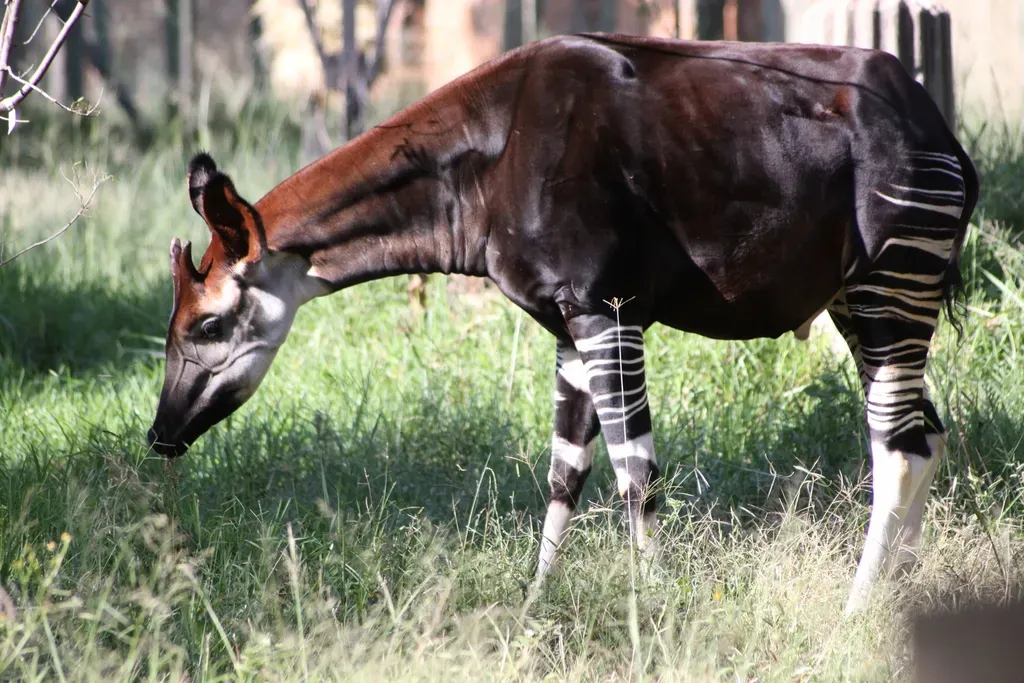
Although the okapi has striped markings reminiscent of zebras, it is most closely related to the giraffe, and the okapi and the giraffe are the only living members of the family Giraffidae. I know it sounds crazy, but those stripes are basically just camouflage. This makes the okapi one of the rarest family trees in the mammal world.
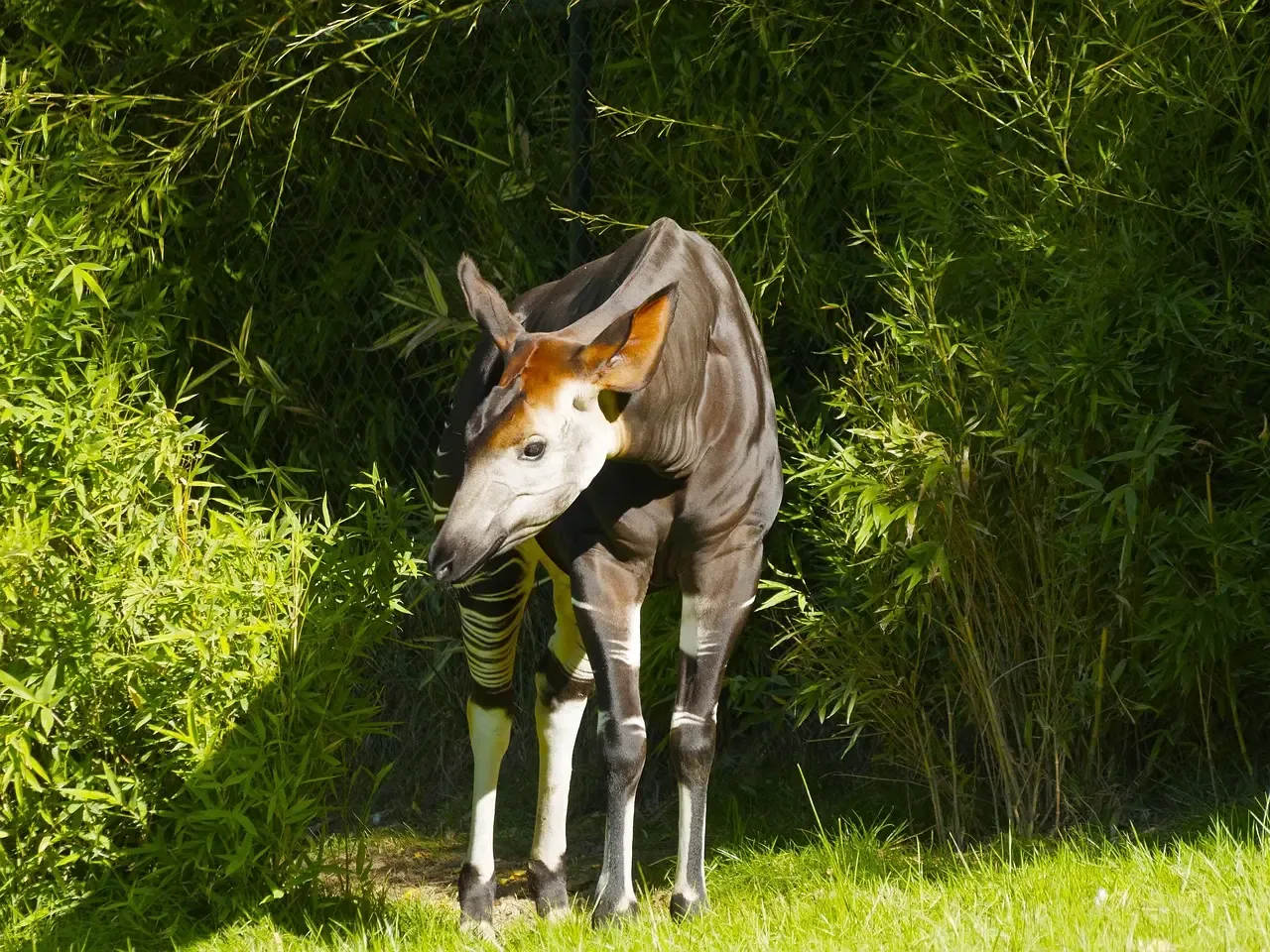
Known as the forest giraffe, the okapi looks more like a cross between a deer and a zebra, nevertheless it’s the giraffe’s only living relative. The resemblance becomes clearer when you look at their heads. If you look at an okapi’s head, you’ll notice a resemblance to a giraffe, with very large upright ears which catch even slight sounds.
Both species share some remarkable features. Just like the giraffe and cow, the okapi has four stomachs that aid with digesting tough plants, and also like its giraffe cousin, the okapi has a long dark tongue that can strip leaves from branches. Okapis live in rainforests where they must dodge obstacles like dangling tree branches, trunks and roots, so they have shorter legs and necks to help them navigate their forest habitat.
3. They Have An Incredibly Long And Versatile Tongue
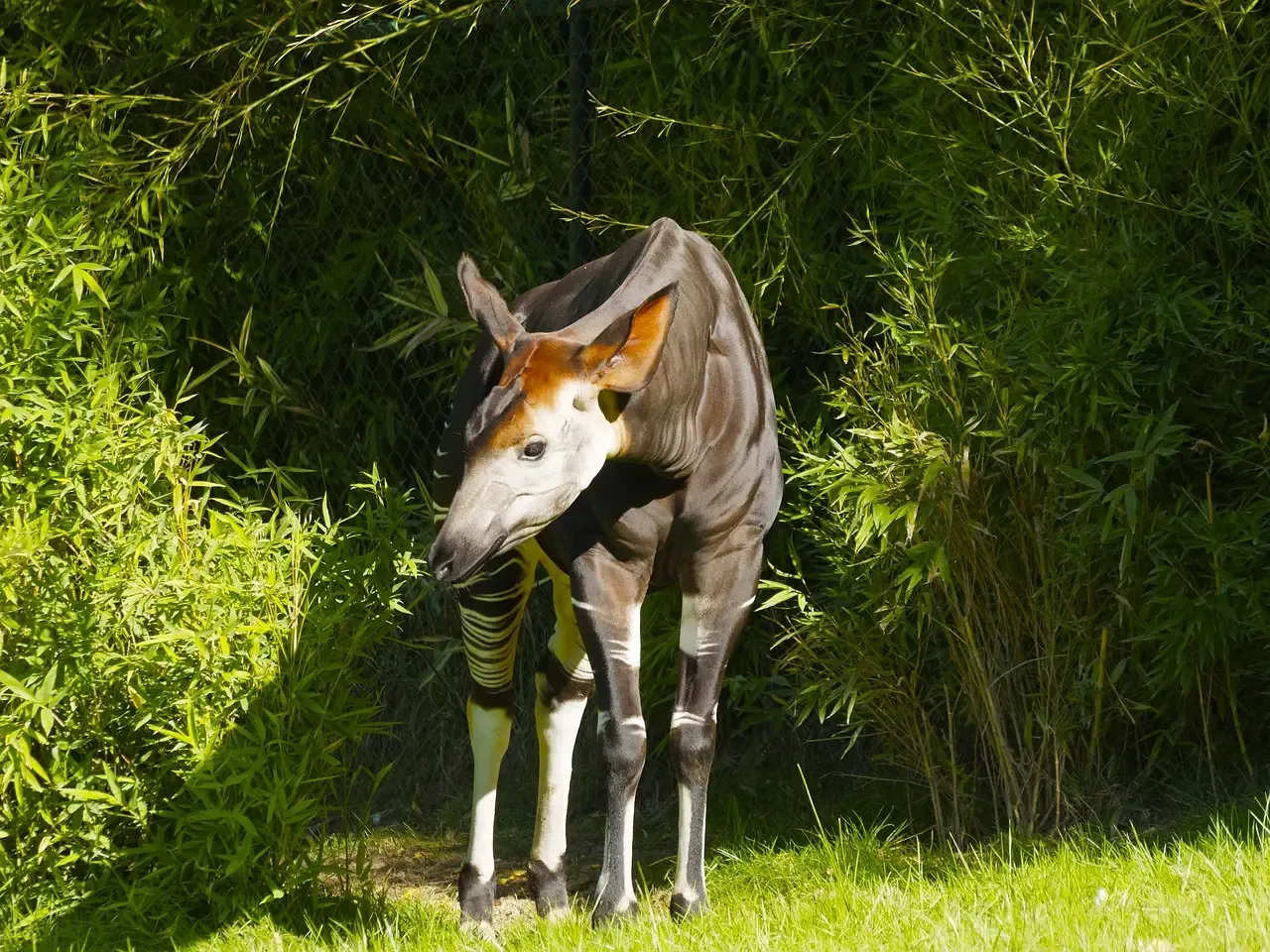
They are unique in the Ituri Forest as they are the only known mammal that feeds solely on understory vegetation, where they use their 18-inch-long tongues to selectively browse for suitable plants. That’s roughly the length of a standard ruler, if you can picture that. It’s hard to say for sure, but this might be one of the most useful tongues in the entire animal kingdom.
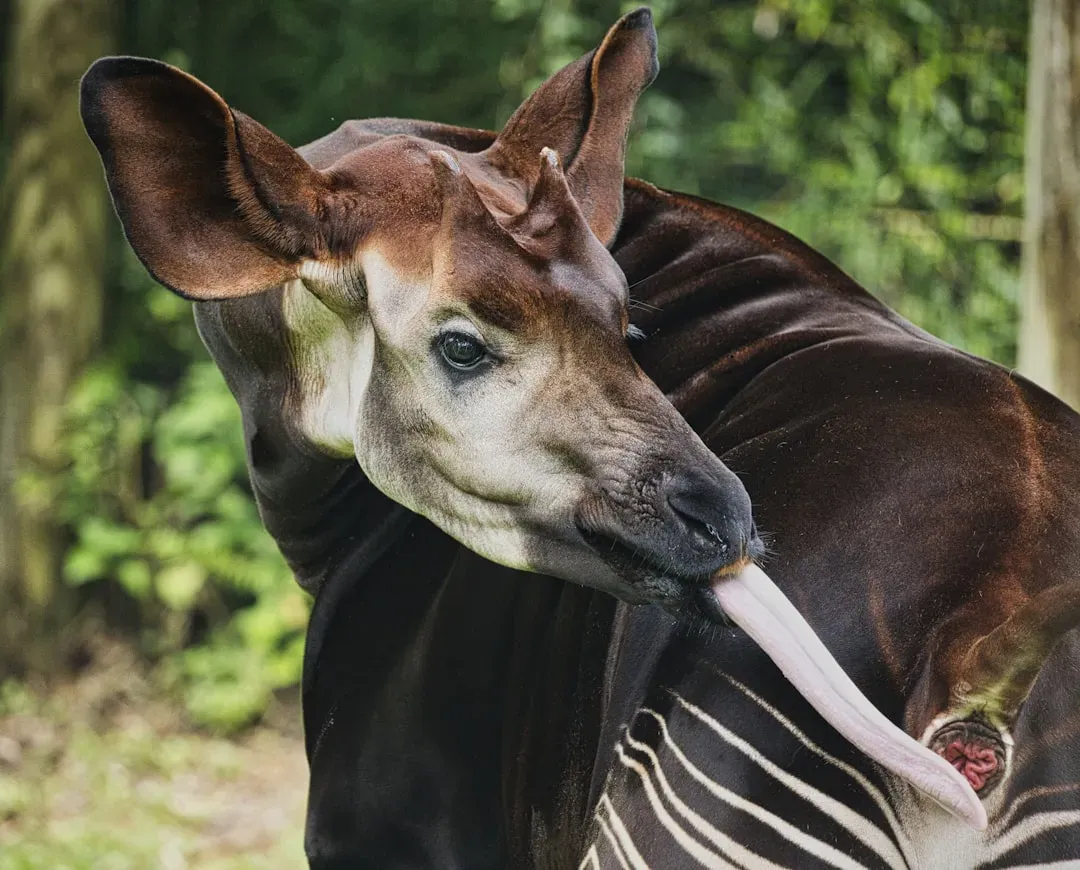
The tongue isn’t just for eating. The tongue is also used to groom their ears and eyes. Thanks to its extra long tongue, the okapi is one of the only mammals in the world that can lick its own ears. Think about that for a second – when was the last time you could clean your own ears with your tongue?
Among the notable okapi adaptations are its large ears which can move independently and an extra-long blue-black tongue, which is used to grasp and enfold leaves before stripping them from branches. The color alone is striking, ranging from dark blue to almost black. This powerful, prehensile tongue allows okapis to be incredibly selective feeders, carefully choosing the best leaves and buds from the dense forest undergrowth.
4. Their Stripes Are Actually Brilliant Camouflage
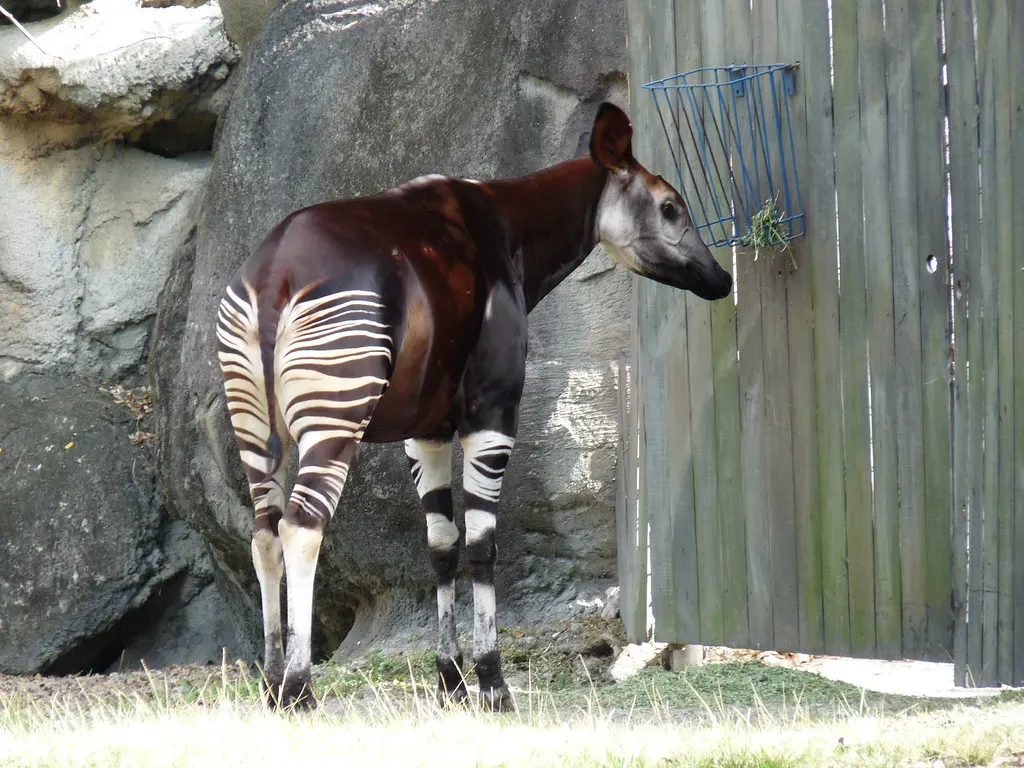
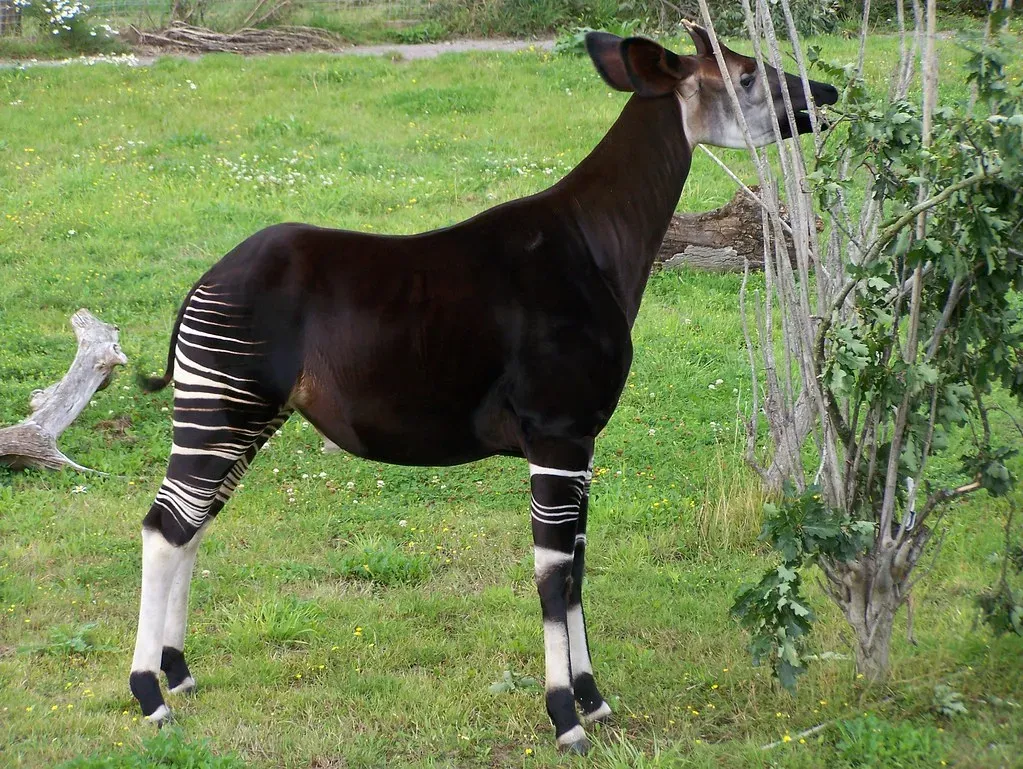
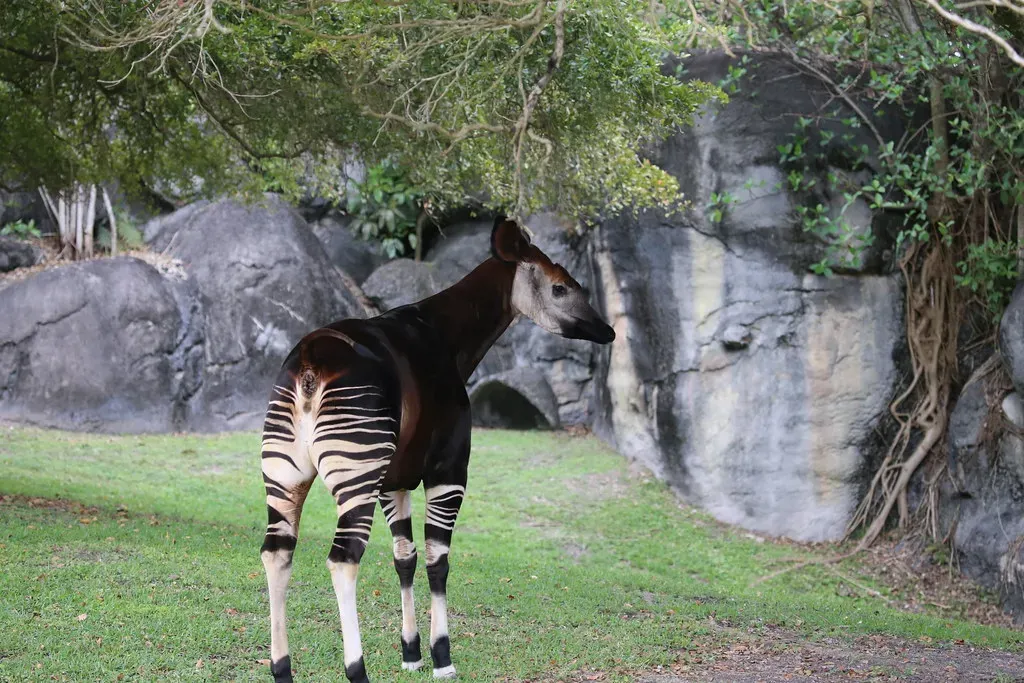
When you first see an okapi, those bold zebra-like stripes seem like they’d make the animal stand out. Yet the opposite is true. A striking set of white stripes extends across its rump and down the hind legs, and the stripes are thought to resemble streaks of sunlight penetrating the dark forest, enabling the okapi to blend in with its surroundings.
It can blend into its surroundings thanks to the brown and white stripes on its rump, which mimic the appearance of streaks of sunlight coming through the trees. The dappled light in a rainforest creates patterns of light and shadow that perfectly match the okapi’s unique markings. The stripes offer great camouflage when an okapi stands in the partial sunlight filtering through the dense rainforest, and may also help a young okapi follow their mother through the dark forest.
Their distinctive stripes are thought to act as camouflage by breaking up the outline of the body in the light and shade of the forest understory and are unique to each individual, which helps with identification. So not only do the stripes help them hide from predators like leopards, but each okapi has its own unique pattern, much like human fingerprints. Nature really thought this one through.
5. Okapis Live Exclusively In One Place On Earth
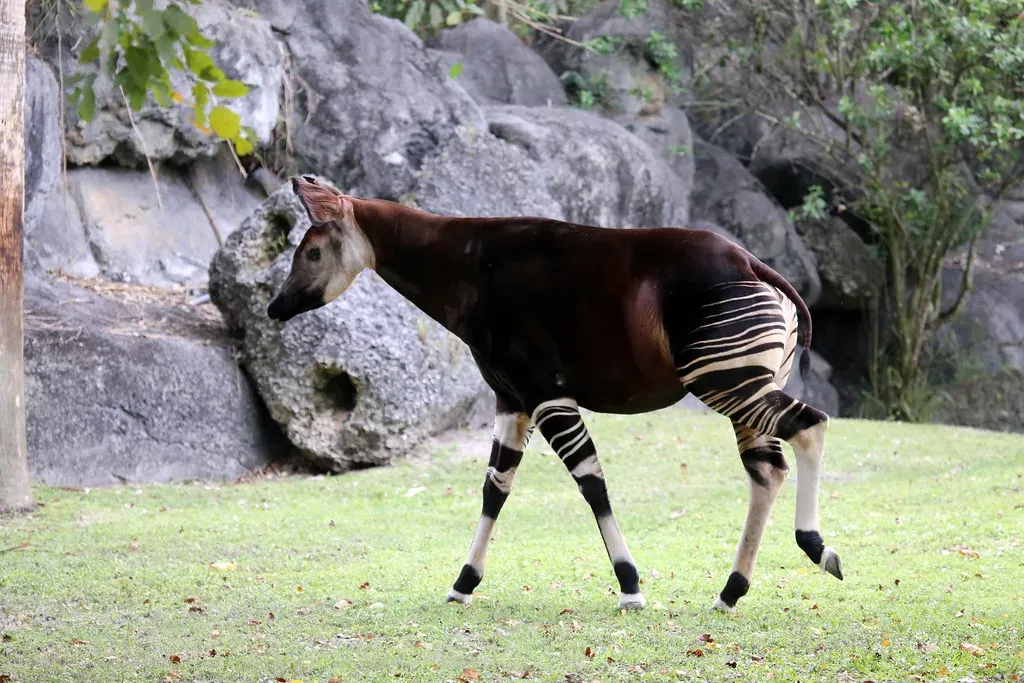
The okapi is an artiodactyl mammal that is endemic to the northeast Democratic Republic of the Congo in central Africa. That’s it. No other wild populations exist anywhere else on the planet. The okapi is native to the Ituri Rainforest in the Democratic Republic of Congo, the only place where it can be found in the wild.
Okapis inhabit canopy forests at altitudes of 500 to 1,500 meters. These aren’t just any forests – they’re dense, dark tropical rainforests where visibility is limited and movement is challenging. Plants grow so big and so close together in the Ituri rainforest that little sunlight makes its way to the forest floor, and okapi are well adapted to their dense, dark surroundings.
The restricted range makes conservation efforts both focused and critical. The Okapi Wildlife Reserve, a World Heritage Site in the Ituri Forest, is home to 5,000 okapis. Still, their limited habitat puts them at tremendous risk from deforestation and human encroachment.
6. They’re Surprisingly Solitary And Secretive
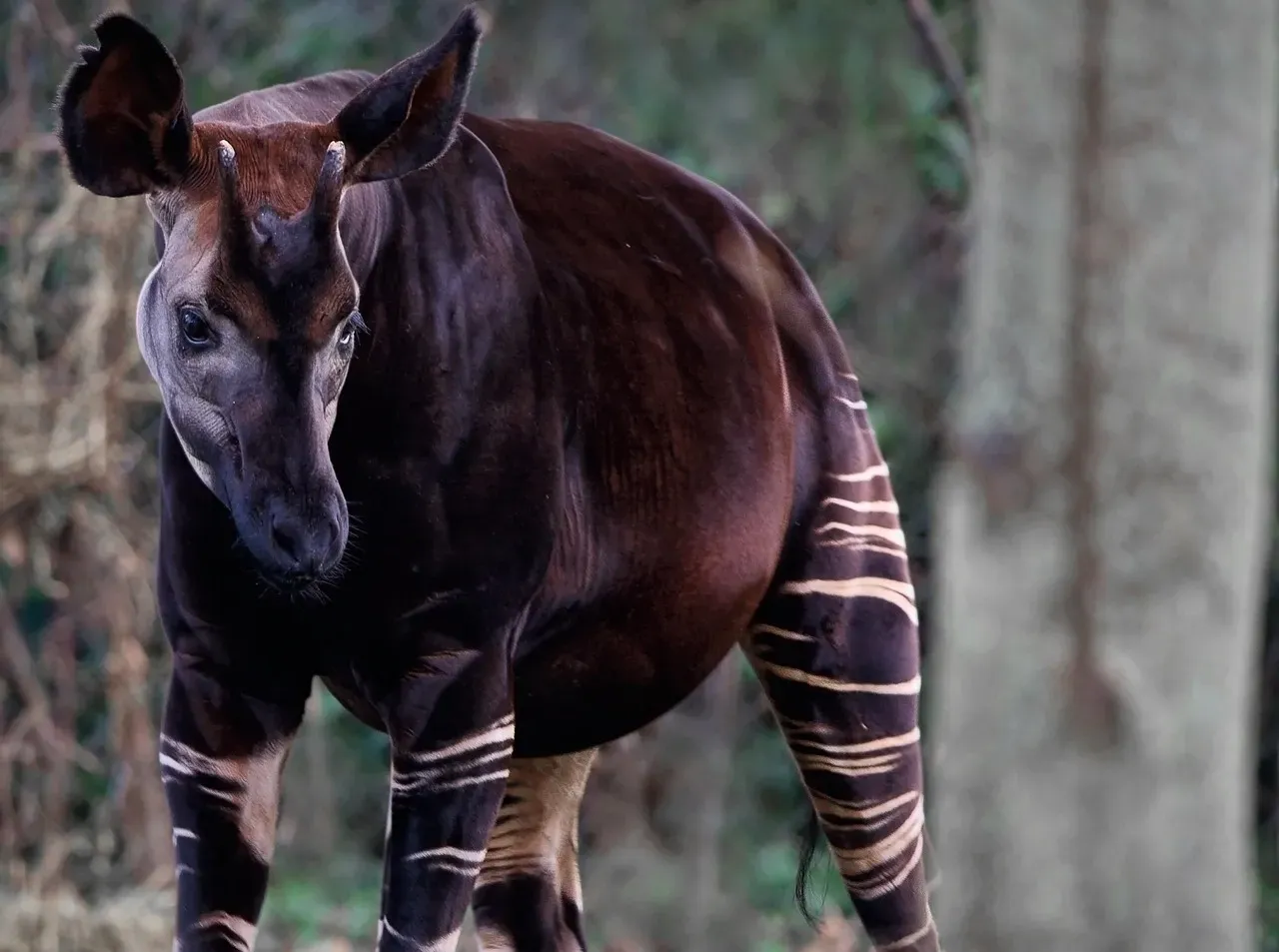
Okapis are primarily diurnal but may be active for a few hours in darkness, and they are essentially solitary, coming together only to breed. Unlike many herd animals that rely on group safety, okapis prefer to go it alone. Okapi are elusive, shy and gentle, and nearly impossible to observe in the wild due to their secretive nature.
Okapis are very wary, and their highly developed hearing alerts them to run when they hear people in the distance. This extreme caution is one reason they remained unknown to science for so long. Honestly, they’re basically forest ghosts. Okapi are solitary animals though their home ranges will overlap, with ranges averaging 3 to 5 square kilometers for adult females and up to 13 square kilometers for adult males.
While okapis travel for the most part by themselves within their home ranges, they still have ways of communicating with others whose ranges overlap – a scent gland on each foot leaves behind a sticky tar-like substance wherever they walk, marking their territory. They might be loners, but they’re not completely isolated. They just prefer their own company.
7. Baby Okapis Don’t Defecate For Over A Month
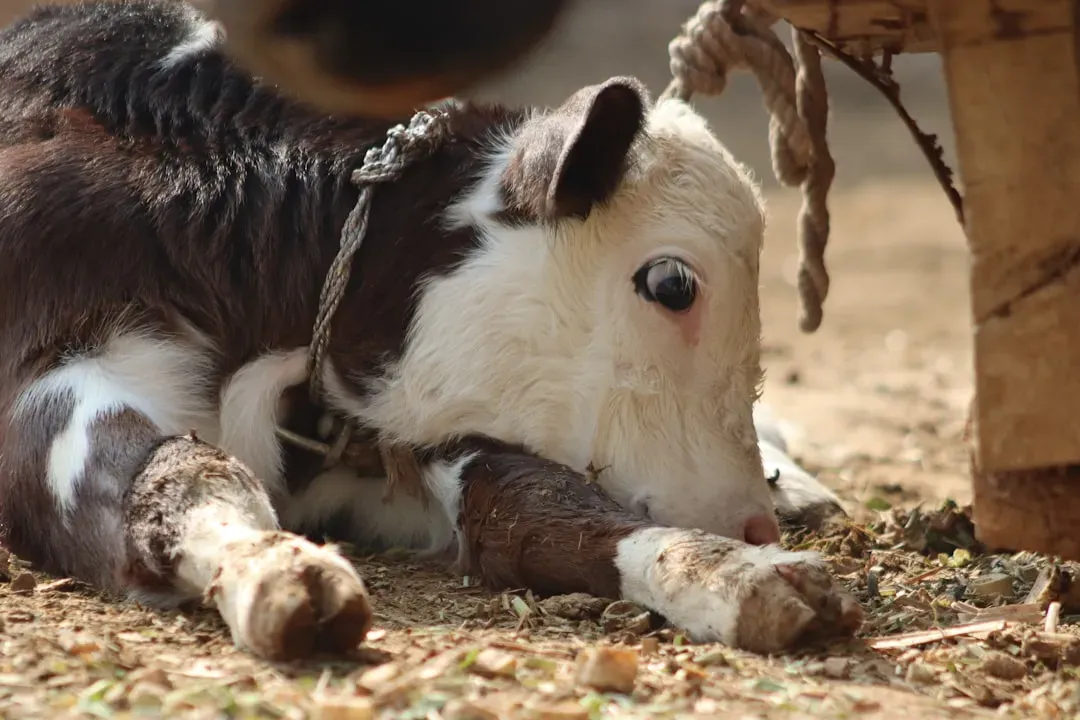
This might be one of the strangest adaptations in nature. An okapi calf is able to walk just 30 minutes after it’s born but can’t defecate until it’s at least a month old, so the smell of feces won’t attract predators. Let that sink in for a moment. These calves have evolved to hold everything in for weeks to avoid detection.
The juveniles are kept in hiding and nursing takes place infrequently, with juveniles starting to take solid food from three months and weaning taking place at six months. The mother keeps her baby hidden in dense vegetation during this vulnerable time. Female okapis are very protective of their young and will beat the ground with their hooves to ward off potential threats, however upon reaching six months of age a calf must fend for itself.
While adult okapis don’t vocalize much except when they’re ready to breed, calves will bleat, cough and whistle when their mother is away, and okapi mothers communicate with their calves by making infrasounds which are noises that are undetectable to the human ear. This secret communication system helps mothers and babies stay connected without alerting predators. Pretty clever, right?
8. They Eat Some Seriously Weird Stuff
Okapis are herbivores, feeding on tree leaves and buds, branches, grasses, ferns, fruits and fungi. That’s fairly standard for a forest herbivore. However, their dietary choices get more interesting from there. An okapi consumes between 45 and 60 pounds of food each day, including riverbed clay for minerals and salt, and will occasionally eat bat excrement for nutrients.
Yes, you read that correctly – bat feces. The okapi has been known to feed on over 100 species of plants, some of which are known to be poisonous to humans and other animals. Their digestive system can handle vegetation that would make us violently ill. Fecal analysis shows that none of those 100 species dominates the diet of the okapi.
They’re extremely selective browsers who know exactly what they need. They prefer to feed in treefall gaps, where more light penetrates the canopy and younger, more tender vegetation grows. Their dietary flexibility and willingness to consume unusual sources of nutrients help them thrive in an environment where resources can be scarce.
9. Okapis Are Critically Endangered
The International Union for the Conservation of Nature and Natural Resources classifies the okapi as endangered, with major threats including habitat loss due to logging and human settlement. The numbers are genuinely alarming. Researchers estimate the populations of these endangered animals may have been slashed in half over the past two decades.
Illegal mining and extensive hunting for bushmeat and skin have also led to a decline in populations. In 2012, a militia group killed 14 okapis at a conservation center located at the headquarters of the Okapi Conservation Project, and today poachers continue to kill okapis for their meat and skin while civil unrest in the Democratic Republic of Congo makes enforcement of wildlife protection laws increasingly difficult.
The Okapi Conservation Project was established in 1987 to protect okapi populations. Despite these efforts, the situation remains precarious. Human-induced deforestation also leads to fragmentation and destruction of crucial okapi habitats. The future of this extraordinary animal hangs in the balance, dependent on conservation efforts and political stability in one of the world’s most troubled regions.
10. They Have A Secret Communication System
San Diego Zoo Wildlife Alliance conservation scientists discovered that okapis have a secret language – they heard coughs, bleats and whistles quite often, but it wasn’t until they examined their recordings closely that they realized okapis also use other calls with very low frequencies that we cannot hear at all. These are called infrasonic calls.
One explanation is that these calls have evolved for communication between a mother and her baby while she’s out foraging, allowing a mother to check in with her offspring without alerting potential predators to the fact that her baby is vulnerable. Think about how sophisticated that is – an entire communication channel that predators simply cannot detect.
Okapis usually communicate using a quiet coughing noise and also snort loudly when disturbed, while an okapi mother and her calf call to each other using low-frequency sounds that predators cannot hear. This multilayered vocal system includes sounds we can hear and sounds we cannot, allowing okapis to convey different types of information in different situations. It’s yet another example of how perfectly this animal is adapted to its challenging environment.
Conclusion
The okapi stands as one of nature’s most remarkable success stories and cautionary tales rolled into one. This mammal managed to evolve in near perfect adaptation to its rainforest home, developing camouflage, dietary flexibility, silent communication, and survival strategies that kept it hidden from the outside world for millennia. Yet now, in the span of barely more than a century since its scientific discovery, we face the very real possibility of losing it forever.
What strikes me most is how much we still don’t know about okapis. Their secretive nature means countless behaviors and adaptations likely remain undocumented. Every okapi lost to poaching or habitat destruction takes those secrets with it. The Democratic Republic of Congo faces tremendous challenges, but protecting the okapi and its forest home benefits entire ecosystems and the communities that depend on them.
Did you realize just how unique and vulnerable this creature truly is? What do you think can be done to help protect them?
